
What if a 12-week plan could fit your messy life and still get real results?
Too many programs demand extremes and you burn out by week three.
This plan breaks three months into simple weekly steps that build on each other.
You’ll start with basic habits, add stronger workouts, then tighten portions, without flipping your life upside down.
By week 12 you’ll have a repeatable routine, steady fat loss, and strength you can keep.
This is a beginner roadmap that actually works.
12‑Week Program Overview With Weekly Structure
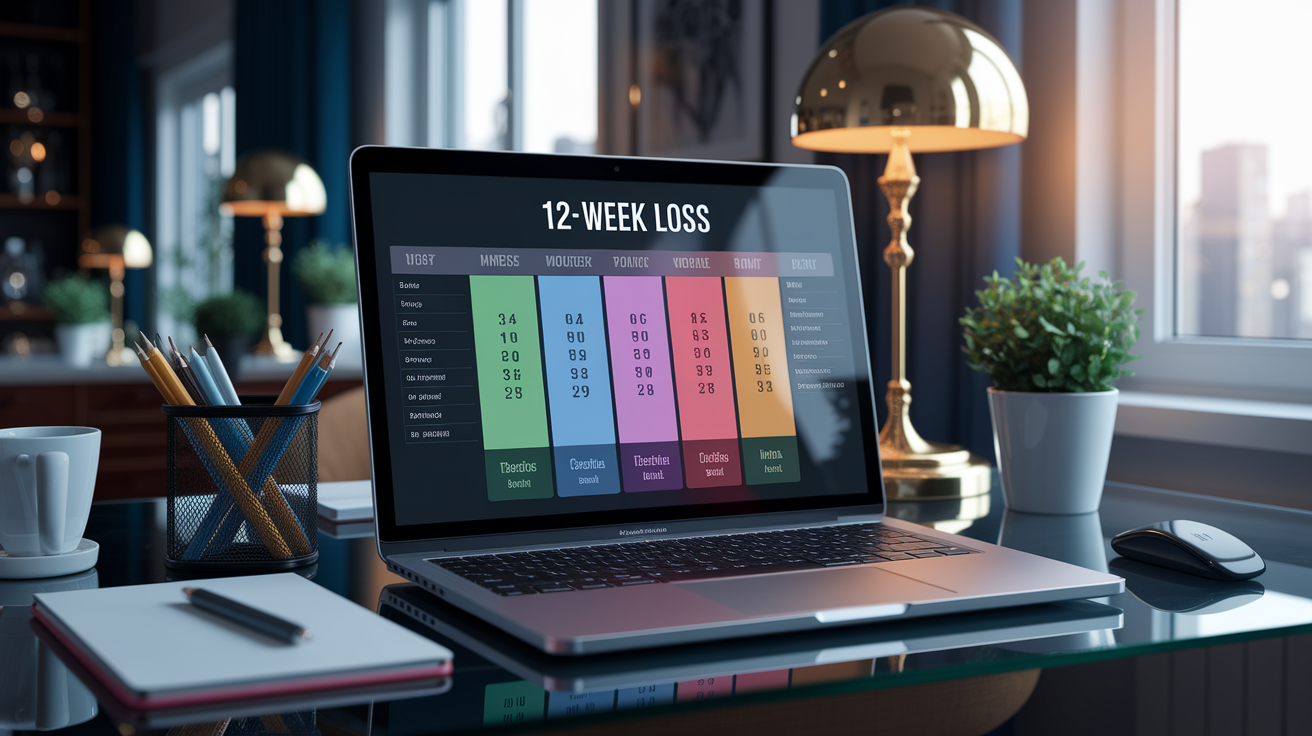
A structured 12‑week fat loss plan breaks three months into clear phases. Each week builds on the one before it without flipping your whole life upside down. You start with basic habits, add more movement, then dial in portions and intensity. The whole thing assumes you’ve never done this before and gives you room to adjust when life gets messy.
The weekly structure balances strength training, cardio, daily activity targets, and recovery. You’ll train three to five times per week depending on the phase, with rest days built into every single week. Calorie targets shift slightly every few weeks to keep fat loss steady without tanking your energy. The goal is sustainable progress. Not a sprint that leaves you burned out by week six.
Below is the complete roadmap showing weekly goals, target calorie ranges, and workout frequency. Use this table as your map. When you finish one week, move to the next row. If a week feels too hard, repeat it before moving forward.
| Week | Weekly Goal | Target Calories | Workout Frequency |
|---|---|---|---|
| 1 | Baseline setup and habit formation | Maintenance −200 to −300 | 3 sessions |
| 2 | Build meal prep routine and increase steps | Maintenance −200 to −300 | 3 sessions |
| 3 | Introduce resistance training basics | Maintenance −300 to −400 | 3 sessions |
| 4 | Stabilize weekly routine and track portion sizes | Maintenance −300 to −400 | 4 sessions |
| 5 | Progressive overload begins (add weight or reps) | Maintenance −400 to −500 | 4 sessions |
| 6 | Increase cardio duration slightly | Maintenance −400 to −500 | 4 sessions |
| 7 | Refine protein intake and add interval option | Maintenance −400 to −500 | 4 sessions |
| 8 | Assess progress and adjust portions if needed | Maintenance −400 to −500 | 4 sessions |
| 9 | Peak fat loss phase (highest training volume) | Maintenance −500 or small calorie cycle | 5 sessions |
| 10 | Add intervals and increase daily step target | Maintenance −500 or small calorie cycle | 5 sessions |
| 11 | Maintain intensity and fine tune recovery habits | Maintenance −500 or small calorie cycle | 5 sessions |
| 12 | Final push and prepare for maintenance phase | Maintenance −500 or small calorie cycle | 5 sessions |
Phase 1: Foundation (Weeks 1–4)

The first four weeks focus on building the basic habits that support every other part of the plan. You’re not trying to set records or drop dramatic weight. You’re learning how to eat consistent meals, move your body a few times per week, and recover properly. Most beginners skip this step and jump straight into high intensity plans, then quit by week three because nothing stuck.
During this phase you’ll train three to four days per week with simple full body resistance sessions and short cardio. Calorie targets stay close to maintenance with a small deficit, usually 200 to 400 calories below what you need to maintain weight. The priority is adherence, not aggression. You’re also hitting basic daily activity (7,000 to 10,000 steps), drinking half your bodyweight in ounces of water each day, and sleeping seven to nine hours per night.
Week 1: Baseline setup. Track your current food intake without changing anything yet. Complete three workouts, two full body strength sessions (bodyweight or light dumbbells, 2 sets of 10 to 12 reps per exercise) and one 20 minute walk or easy cardio session. Set up a meal prep block and write down three personal goals for the 12 weeks. Aim for 7,000 steps per day and 7 hours of sleep minimum.
Week 2: Build your meal prep routine. Cook 17 to 18 of your 21 main meals at home this week. Add one more workout day (total of three strength sessions or two strength plus two cardio sessions). Increase your step target to 8,000 per day. Start a simple food log to track hunger and fullness on a 1 to 10 scale before and after meals. Keep calories at maintenance minus 200 to 300.
Week 3: Introduce basic resistance training with dumbbells or bands. Perform three full body sessions using goblet squats, dumbbell rows, push ups or chest presses, and glute bridges (2 to 3 sets of 10 to 12 reps each). Add one 20 to 25 minute cardio session. Increase calorie deficit slightly to maintenance minus 300 to 400. Track portion sizes using hand size guides (protein equals 1 to 2 palm sizes, veggies equal half your plate, fats equal 1 to 2 thumb sizes). Aim for 8,000 steps and 7 to 9 hours of sleep.
Week 4: Stabilize your weekly routine. You should now have a predictable training schedule (example: Monday, Wednesday, Friday strength, Tuesday easy cardio, Thursday rest, Saturday cardio or active recovery, Sunday rest). Add one more workout day if energy allows (total of four sessions). Continue portioning meals by hand size and don’t weigh food or count every calorie. Increase steps to 9,000 per day. Evaluate your first month. Are you sleeping consistently, hitting most workouts, and eating home cooked meals? If yes, move to phase two. If not, repeat week four until habits feel automatic.
Phase 2: Progression (Weeks 5–8)
Weeks five through eight increase training intensity and refine your nutrition without overhauling the entire system. You’ve spent a month building habits. Now you add slightly heavier weights, a bit more cardio, and small tweaks to calorie or macro targets. This is where most people start seeing visible changes in strength, energy, and how clothes fit.
Training frequency stays at four sessions per week with an option to add a fifth lighter session if recovery allows. You’ll use progressive overload by adding one or two reps, increasing dumbbell weight by the smallest available jump, or shortening rest periods between sets. Cardio duration climbs from 20 to 30 minutes per session, and you can include one interval option (30 seconds faster effort, 90 seconds recovery, repeated for 15 to 20 minutes) on one cardio day each week.
Nutrition adjustments are small. You’ll drop another 100 calories if fat loss has stalled, or you’ll refine macros by increasing protein slightly (shoot for roughly 1 gram per pound of bodyweight) and making sure each meal includes a palm size serving of lean protein. Daily steps increase to 9,000 to 10,000, and sleep remains a non negotiable 7 to 9 hours per night.
| Week | Training Focus | Nutrition Adjustment |
|---|---|---|
| 5 | Add 1 to 2 reps per set or increase dumbbell weight by 2.5 to 5 lb. Include one interval cardio option (15 to 20 minutes). | Reduce calories to maintenance −400 to −500 if progress has slowed. Increase protein to around 1 g per lb bodyweight. |
| 6 | Increase cardio sessions to 30 minutes each. Keep strength training at 3 to 4 sets of 8 to 12 reps per exercise. | Continue maintenance −400 to −500. Track fiber intake and get fresh produce at every meal. |
| 7 | Introduce upper/lower training split if desired (Day 1: lower body, Day 2: upper body, Day 3: cardio, Day 4: full body or rest). Add second interval session if energy allows. | Refine portion sizes. Protein equals 1 to 2 palms, veggies equal half plate, fats equal 1 to 2 thumbs. No calorie reduction unless weight hasn’t moved in two weeks. |
| 8 | Assess strength gains. Can you lift heavier or complete more reps than week 5? Maintain current volume and intensity. | Check weekly average weight. If unchanged for 2 or more weeks, reduce calories by another 100 or increase daily steps by 1,000. |
Phase 3: Fat Loss Acceleration (Weeks 9–12)

The final four weeks are the peak fat loss phase. You’ve built a solid foundation, increased training load gradually, and your body is now adapted to consistent effort. This phase pushes intensity and volume slightly higher while keeping recovery strict. You’ll train five days per week, include more interval work, and maintain the calorie deficit or use small calorie cycling to keep adherence high.
Strength sessions focus on compound movements (squats, deadlifts, presses, rows) with progressive overload. Cardio sessions increase to 40 to 45 minutes, with at least two interval sessions per week (example: 30 seconds fast effort, 90 seconds recovery for 20 minutes). If energy drops or you feel run down, pull back one session or add an extra rest day. Consistency beats burnout every time.
Week 9: Train five days (three strength, two cardio). Add one interval cardio session (30 seconds hard, 90 seconds easy for 20 minutes). Keep strength sessions at 3 to 4 sets of 8 to 12 reps per exercise. Maintain calories at maintenance minus 500, or cycle calories (lower Monday to Friday, slightly higher Saturday and Sunday) to support adherence. Aim for 10,000 steps daily.
Week 10: Increase cardio to 40 minutes per session. Add incline walking or stair intervals if you want variety. Strength training stays consistent with progressive overload (add weight or reps when possible). Continue calorie cycling if it helps. Track energy and recovery closely. If sleep drops below 7 hours for more than two nights, add a rest day.
Week 11: Maintain training volume (five sessions per week). Include two interval cardio sessions and three strength sessions. Focus on movement quality and form over chasing new personal records. Adjust portions if hunger is very high, but don’t make large calorie increases. Keep daily steps at 10,000 and get 8 hours of sleep.
Week 12: Final push. Train five days with the same structure as week 11. Evaluate your full 12 week progress by comparing waist circumference, body composition measures, strength gains, and energy levels. If you’ve hit your goal, transition to a maintenance phase by gradually increasing calories by 100 to 200 per week. If you want to continue fat loss, take a one week diet break at maintenance calories, then start a new 4 to 8 week block with the same structure.
Nutrition Guidelines for Beginners
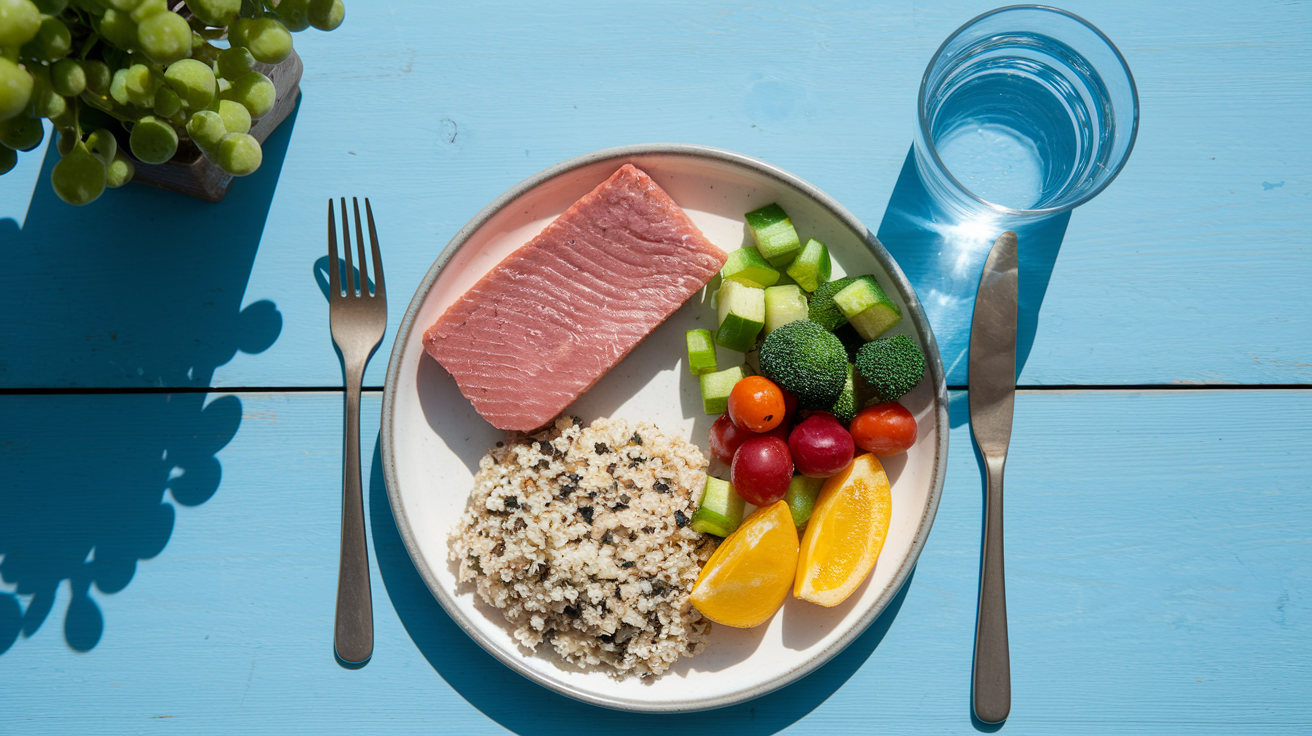
Creating a calorie deficit is the core requirement for fat loss, but doing it sustainably means building habits you can repeat every week. You don’t need to track every gram of food or avoid entire food groups. You need clear portion guidelines, a simple meal structure, and enough protein to support your workouts and preserve muscle while you lose fat.
Start by calculating a baseline calorie target. A rough starting point is your bodyweight in pounds multiplied by 12 to 14 (for moderate activity). Subtract 300 to 500 calories to create a deficit. If math feels overwhelming, use hand size portions instead. One to two palm size servings of protein per meal, half your plate filled with vegetables, one to two thumb size servings of fats, and a fist size portion of starch or fruit if you include it. That structure alone will put most beginners in a moderate deficit without needing a calculator.
Protein minimum: Shoot for roughly 1 gram of protein per pound of bodyweight, or about 30 grams per meal if you eat three to four times per day. This supports muscle retention and keeps you fuller longer.
Hydration baseline: Drink half your bodyweight in ounces of water each day (example: 160 lb equals 80 oz). Add more if you sweat heavily during workouts.
Meal timing: Eat within one to two hours after strength training if possible. Spread meals evenly across the day to manage hunger. Skipping meals usually leads to overeating later.
Portion control strategy: Use smaller plates, pre portion snacks into single servings, and keep high calorie foods out of easy reach. You can still eat foods you enjoy, just in controlled amounts.
Fiber target: Get fresh produce at every meal. Vegetables, berries, and some whole grains provide fiber that slows digestion and supports gut health.
Flexibility: If you miss a meal or eat out, adjust the next meal slightly or add 10 minutes of walking. One imperfect meal won’t ruin 12 weeks of work.
Food Lists and Simple Meal Frameworks
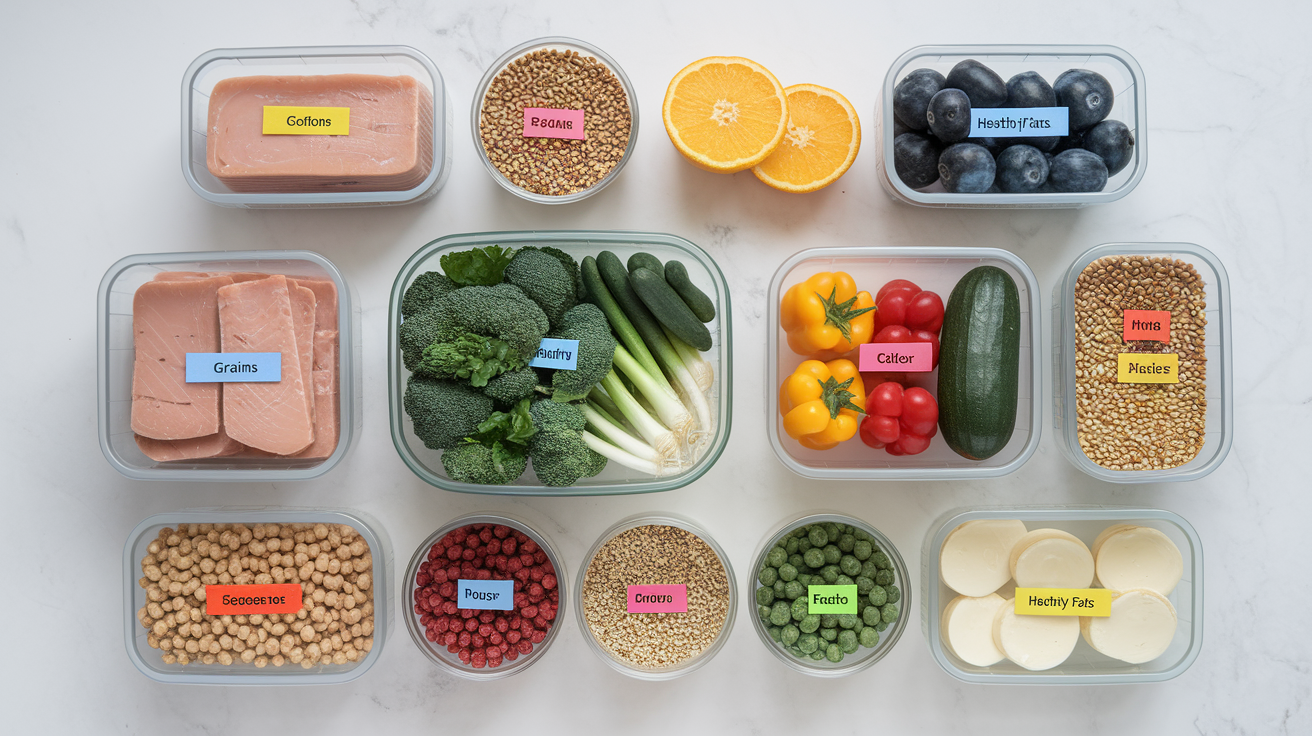
Stock your pantry and fridge with whole foods that support fat loss without requiring complicated recipes. You want lean proteins, plenty of vegetables, healthy fats, and a few starch or fruit options for post workout meals. Skip products with long ingredient lists, added sugars in the first three ingredients, or items marketed as “low fat” or “100 calorie snacks” that leave you hungry an hour later.
Here’s a simple shopping list to build meals around. These foods are nutrient dense, easy to prepare, and flexible enough to fit different taste preferences.
Lean proteins: chicken breast, turkey, lean ground beef or bison, white fish, salmon, eggs, Greek yogurt (plain, full fat or low fat), cottage cheese
Vegetables: spinach, kale, broccoli, cauliflower, bell peppers, zucchini, mushrooms, tomatoes, cucumbers, mixed salad greens
Healthy fats: avocado, raw nuts (almonds, walnuts, cashews), natural nut butters, olive oil, coconut oil, grass fed butter
Starches and grains (optional, post workout): sweet potatoes, white potatoes, rice (white or brown), oats, quinoa
Fruits: berries (strawberries, blueberries, raspberries), apples, bananas (limit to half a large banana or one small), oranges
Condiments and extras: sea salt, black pepper, garlic, herbs, mustard, hot sauce, apple cider vinegar, unsweetened coconut flakes
Build each meal using this framework: one to two palm size servings of protein, half your plate covered in vegetables, one to two thumb size servings of fat, and an optional fist size portion of starch or fruit if your activity level or training session calls for it. A sample dinner might be two grilled chicken thighs (protein), roasted broccoli and bell peppers (vegetables), half an avocado (fat), and a small sweet potato (optional starch). Breakfast could be two to three eggs scrambled with spinach and mushrooms, two slices of nitrate free turkey bacon, and a small bowl of berries. Keep it simple, repeat what works, and adjust portions if hunger or energy levels change.
Exercise Progressions for Beginners
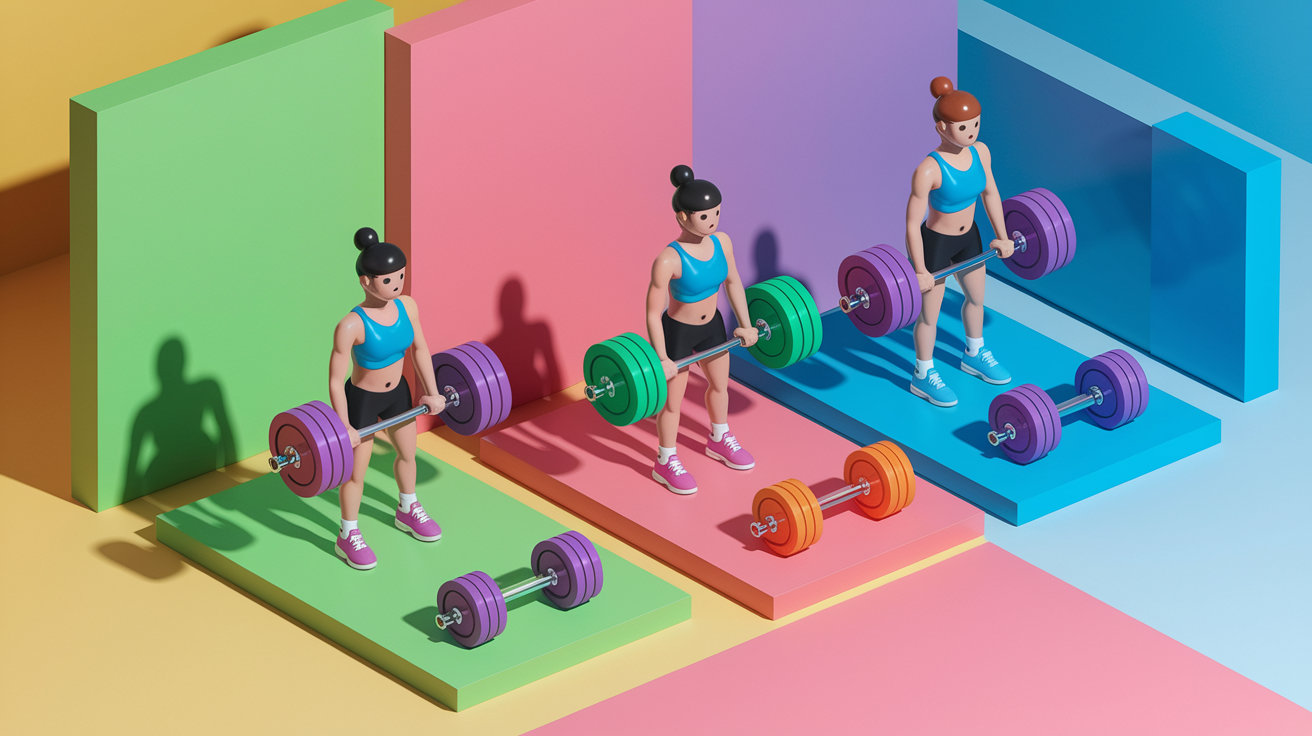
A beginner friendly training plan emphasizes movement quality, gradual load increases, and building confidence in five major patterns: push, pull, hinge, squat, and core. You don’t need advanced exercises or complicated splits. You need to practice basic movements with good form, then slowly add weight or reps every one to two weeks.
Start with bodyweight or very light dumbbells (5 to 15 pounds depending on the exercise). Focus on controlled reps with a two second lowering phase, a brief pause at the bottom, and a strong push or pull to return to the start. Rest 60 to 90 seconds between sets in weeks one to four, then reduce rest to 45 to 60 seconds in weeks five to eight if your conditioning improves.
Cardio progression is equally simple. Begin with 20 to 25 minutes of steady state walking, cycling, or swimming two to three times per week. In weeks five to eight, increase duration to 30 to 35 minutes and add one interval session (30 seconds faster effort, 90 seconds recovery for 15 to 20 minutes). In weeks nine to twelve, extend steady cardio to 40 to 45 minutes and include two interval sessions per week. If you hate traditional cardio, try hiking, dancing, rowing, or any activity that raises your heart rate and lets you hold a conversation with some effort.
Push movements: Push ups (start on knees if needed), dumbbell chest press, overhead press. Progress by adding reps (10 to 12, then 12 to 15), then increasing weight.
Pull movements: Dumbbell rows, resistance band rows, lat pulldowns, or assisted pull ups. Progress by increasing weight or moving to a harder band resistance.
Hinge movements: Dumbbell Romanian deadlifts, glute bridges, hip thrusts. Progress by adding weight in small jumps (2.5 to 5 lb per week).
Squat movements: Bodyweight squats, goblet squats, walking lunges. Progress by adding weight or increasing reps to 15 per set.
Core movements: Planks (front and side), dead bugs, bird dogs. Progress by extending hold time or adding light resistance.
Rest, Recovery, and Sleep Guidelines

Recovery is when your body repairs muscle, restores energy, and adapts to training. Without it, you’ll feel run down, performance will drop, and consistency will fall apart. Every week of this plan includes at least one full rest day, and most weeks include two. Use rest days for light walking, stretching, or complete rest depending on how you feel.
Sleep is the most underrated fat loss tool. Get seven to nine hours per night, every night. Poor sleep raises hunger hormones, lowers willpower, and makes every workout feel harder. If you’re consistently getting less than seven hours, fat loss will be slower no matter how perfect your training and nutrition are.
Set up a pre bed routine to improve sleep quality. Turn off screens 30 to 60 minutes before bed, keep your room cool and dark, and go to bed at the same time each night when possible. If you wake up very early or lack morning light, consider a wake light to support natural circadian rhythm. Three specific sleep goals to track: get at least 7 hours per night, finish your last meal two to three hours before bed, and skip caffeine after 2 PM.
Tracking Progress and Adjustments

Progress tracking keeps you accountable and shows whether your current plan is working. Beginners often rely only on the scale, but scale weight fluctuates daily due to water, food volume, and hormones. Use multiple measures to get a clearer picture.
Weigh yourself once per week at the same time (first thing in the morning, after using the bathroom, before eating) and track the weekly average over four weeks. If the average is dropping 0.5 to 1.0 kg (roughly 1 to 2 lb) per week, your deficit is working. If weight hasn’t changed in two weeks, reduce calories by 100 to 200 or increase daily steps by 1,000. If weight is dropping faster than 1 kg per week for more than two weeks, add 100 to 200 calories back to avoid losing muscle or crashing energy.
Scale weight: Use weekly averages, not daily fluctuations. Track over four week blocks to see trends.
Circumference measurements: Measure waist, hips, and thighs every two weeks. Fat loss often shows up here before the scale moves.
Progress photos: Take front, side, and back photos in the same lighting and clothing every two to four weeks. Visual changes are motivating when the scale stalls.
Performance tracking: Write down weights, reps, and sets for each workout. If you’re lifting heavier or completing more reps, you’re progressing even if the scale hasn’t moved.
Troubleshooting Common Fat Loss Problems
Most fat loss problems come down to inconsistency, underestimating food intake, or expecting results faster than your body can deliver. If progress stalls or you feel stuck, work through this checklist before making big changes.
Plateaus are normal. Your body adapts to a calorie deficit over time, and weight loss naturally slows after the first few weeks. If the scale hasn’t moved in two to three weeks, check your food log for portion creep (servings that have slowly grown larger), add 1,000 steps per day, or reduce calories by 100 to 200. Don’t slash calories dramatically or add extra workouts in a panic. Small tweaks work better than big swings.
Plateau longer than 3 weeks: Reduce calories by 100 to 200, or increase daily steps by 1,000 to 2,000. Track food portions more carefully for one week to spot hidden extras.
Overeating on weekends: Plan one higher calorie meal per week and keep the rest of the weekend consistent with weekday portions. Banking calories (eating slightly less Monday to Friday to “save” for Saturday) can work if it doesn’t trigger a binge.
Missed workouts: Life happens. If you miss one session, jump back in the next day. If you miss a full week, repeat that week before moving forward. Don’t try to make up missed sessions by doubling up.
Low motivation: Revisit your three personal goals from week one. Find a training partner or join an online accountability group. Switch one workout per week to an activity you actually enjoy.
Inconsistent habits: Pick one habit to fix this week. If sleep is the issue, focus only on getting 7 hours per night. If meal prep is the problem, commit to cooking just three dinners at home. Stack wins one at a time.
Sleep issues: If you’re averaging less than 6 hours per night, fat loss will be much harder. Sleep beats an extra workout. Go to bed 30 minutes earlier for one week and track how you feel.
Final Words
You’ve got a clear roadmap: a 12-week structure with Phase 1 setup, Phase 2 progression, and Phase 3 acceleration. Nutrition rules, simple meal lists, exercise progressions, recovery tips, tracking, and troubleshooting are all included.
Start by setting your baseline calories, scheduling three workouts this week, and locking in hydration and sleep goals. Track weight, photos, and performance. Make small weekly tweaks.
Use this 12-week structured fat loss plan for beginners as a practical guide. Stick with it—progress builds up fast.
FAQ
Q: What is the 12-week fat-loss program structure?
A: The 12-week fat-loss program structure breaks into three phases—foundation, progression, and acceleration—using 3–5 workouts weekly, gradual calorie ranges, and steady weekly fat-loss goals for consistent results.
Q: How many calories should I eat each week to lose fat?
A: The calories you should eat to lose fat use a modest deficit of about 200–500 kcal below maintenance, which supports steady fat loss while keeping energy and adherence high.
Q: What should I do in Weeks 1–4?
A: Weeks 1–4 focus on baseline setup with three resistance sessions, low-intensity cardio, a small calorie cut for adherence, and core habits: hydration, step targets, and consistent sleep.
Q: How do workouts change in Weeks 5–8?
A: Weeks 5–8 increase resistance load and cardio volume, add progressive overload, raise weekly steps or cardio duration, and make small calorie or macro adjustments to keep progress moving.
Q: What happens in Weeks 9–12 for fat-loss acceleration?
A: Weeks 9–12 accelerate fat loss with interval or incline cardio, higher strength training volume, and optional calorie cycling; the emphasis is on intensity, consistency, and smart recovery.
Q: How much protein and hydration should beginners aim for?
A: Beginners should aim for about 0.7–1.0 grams of protein per pound of bodyweight or a palm-sized protein at each meal, and roughly 2–3 liters of water daily, more with activity.
Q: What simple meal frameworks should I follow?
A: A simple meal framework is the plate method: half vegetables, a quarter lean protein, a quarter whole grains or starchy veg, plus a small healthy fat and regular meal timing.
Q: How should beginners progress exercises over 12 weeks?
A: Beginners should progress by practicing five patterns—push, pull, hinge, squat, core—then add reps, sets, or weight every 1–2 weeks and increase challenge once form is solid.
Q: How much rest and sleep do I need to support fat loss?
A: You need about 7–9 hours of sleep nightly, a 30-minute screen-free wind-down, consistent bedtimes, plus 1–2 active recovery days weekly with light mobility or walks.
Q: How do I track progress and adjust if I hit a plateau?
A: Track weight weekly, tape measurements, progress photos, and performance. If stalled two weeks, check adherence, reduce 100–200 kcal or add one session, then reassess.
Q: What common mistakes stop fat-loss progress and quick fixes?
A: Common mistakes are underestimating portions, inconsistent tracking, skipped workouts, poor sleep, and low protein. Fix them by logging food, scheduling training, improving sleep, and boosting daily protein.