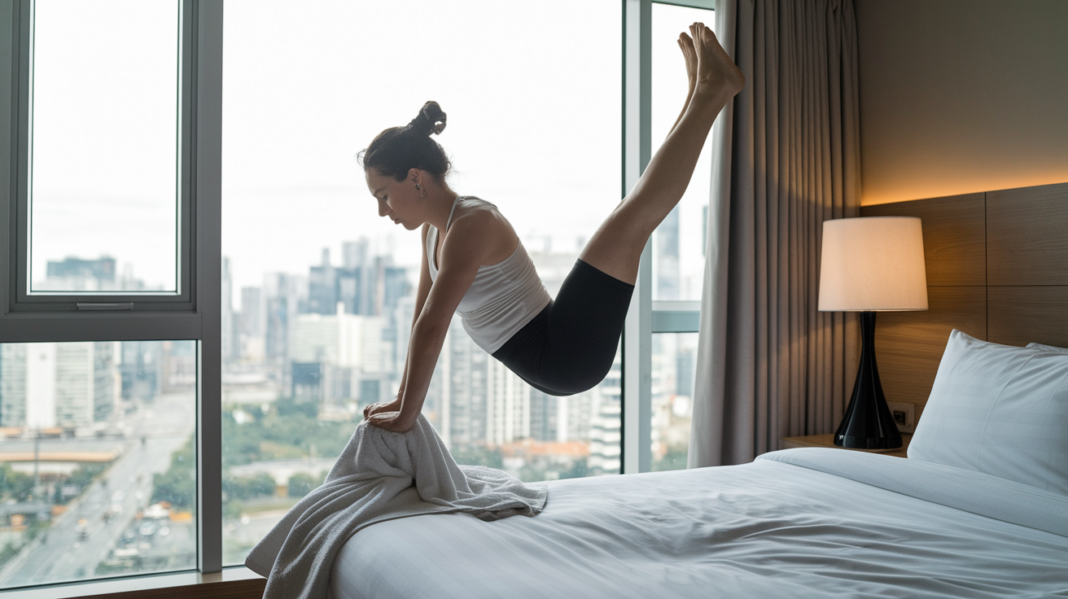
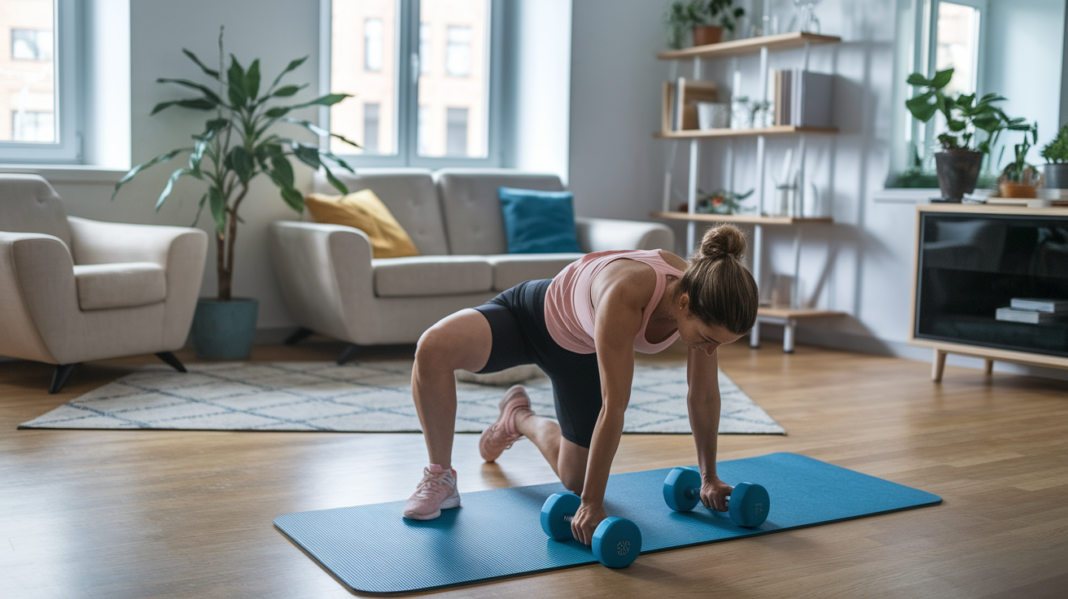
Think you need a gym to lose fat? Think again.
This simple, low-impact routine fits in any apartment and needs only a mat plus optional light dumbbells or bands.
Twelve to eighteen minutes of circuits, smart pacing, and small progressions give steady calorie burn without noise or bulky gear.
If you want a real, repeatable plan you can do three times a week, this guide shows exactly what moves to do, how long, and how to track progress.
Immediate Apartment-Friendly Fat Loss Routine With Minimal Equipment
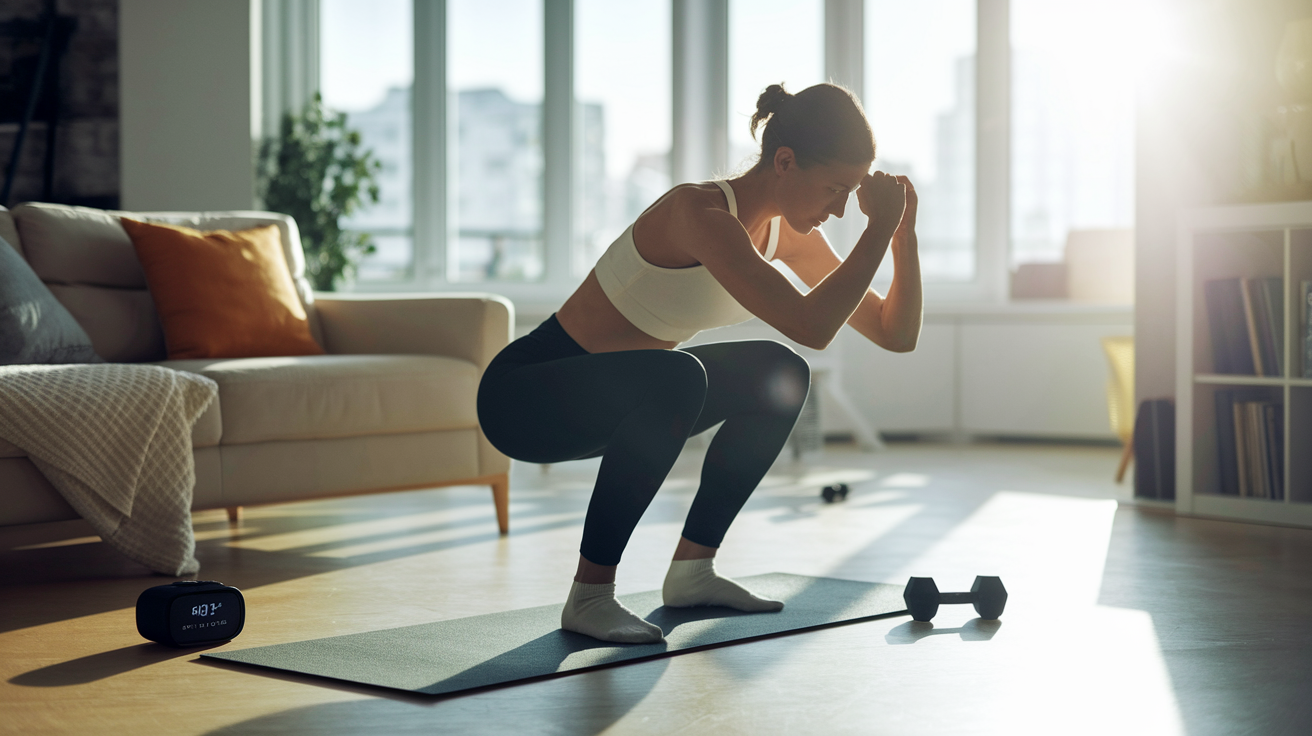
You can start burning fat today with a yoga mat and 12 minutes. This workout uses bodyweight movements and optional light dumbbells or resistance bands to create a quick circuit that respects your neighbors and fits your schedule.
The format’s simple. Work for 30 seconds, rest for 30 seconds, repeat. This timing mirrors proven HIIT protocols that elevate your heart rate and metabolism without requiring jumps or loud landings. If you’re new to this, start with two full rounds. Intermediate? Aim for three. Looking for a real challenge? Add light dumbbells to squats and lunges or increase work intervals to 40 seconds.
All six moves in this circuit qualify as low impact when you use controlled tempo and soft foot strikes. The entire sequence takes 12 to 18 minutes depending on rounds, fits in any living room or bedroom, and builds strength while supporting steady calorie burn.
Bodyweight squats: feet shoulder width, lower until thighs are roughly parallel, drive through heels
Reverse lunges: step one foot back, drop back knee toward the floor, return to standing and switch sides
Glute bridges: lie on your back, feet flat, lift hips until shoulders, hips, knees form a line, squeeze at the top
Plank holds: forearms or palms flat, body straight from head to heels, hold steady without letting hips sag
Mountain climbers (step in variation): plank position, step one knee toward chest then return, alternate legs at a steady pace
Standing side crunches: stand tall, lift one knee toward the same side elbow, contract your side abs, switch sides
Track your completed rounds in a simple notebook or phone app. If you can repeat this three times per week, you’ll notice improved endurance and visible body composition changes within four to six weeks when paired with sensible eating.
Low-Impact Minimal Equipment Exercises Optimized for Apartment Fat Loss
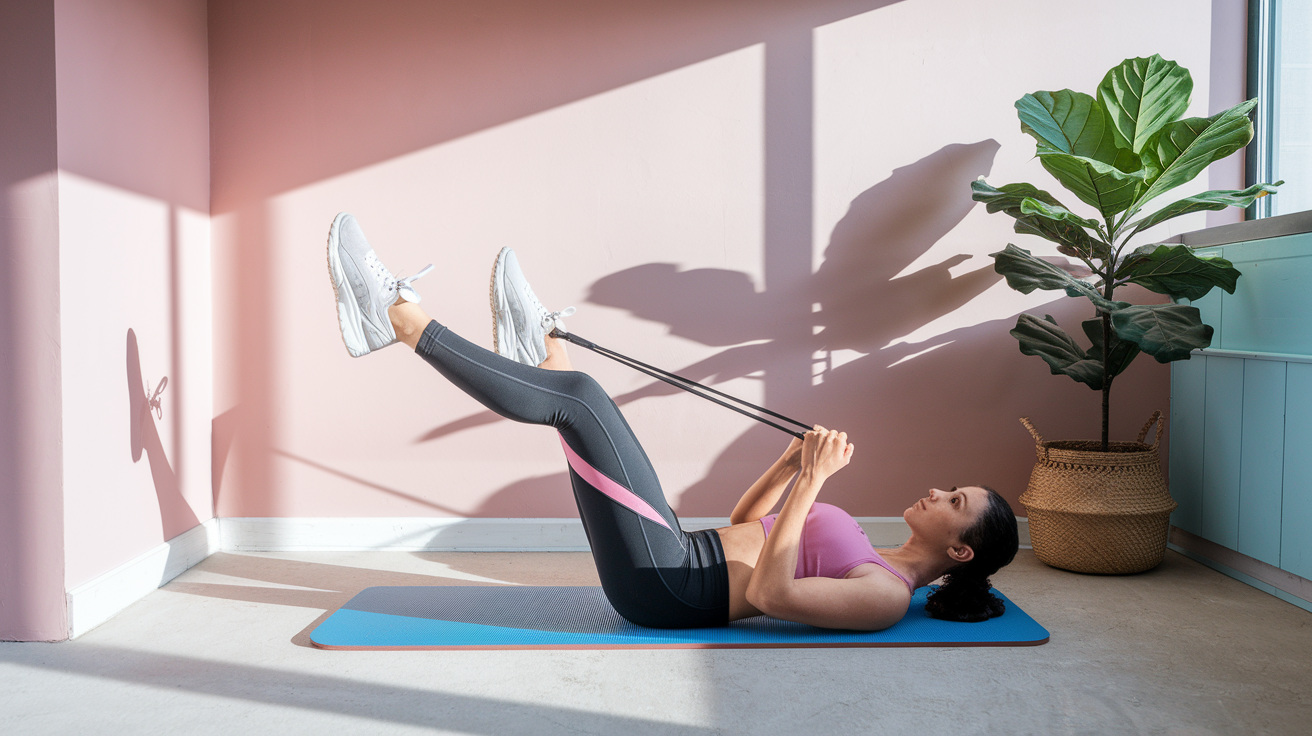
The best apartment fat loss movements deliver metabolic challenge without noise or vertical jump impact. When you live upstairs or share walls, choosing exercises that keep your feet close to the ground protects both your joints and your relationship with neighbors. Low impact moves rely on controlled tempo, time under tension, and strategic muscle engagement rather than explosive landings.
Slowing down your eccentric phase (the lowering portion of any exercise) creates serious calorie burn and muscle fatigue. A 3 second descent during a squat or glute bridge increases time under tension and metabolic demand far beyond quick reps. Isometric holds, like a 30 second plank or wall sit, force your muscles to work continuously and spike your heart rate in total silence. Pair these quiet options with flowing transitions, and you have a fat loss plan that never disturbs anyone.
Here are five mat exercises that maximize results in minimal space:
Donkey kickbacks: start on hands and knees, extend one leg back and up, squeeze your glute at the top, lower with control
Cross leg diagonal crunch: lie on your back, one ankle on opposite knee, crunch up twisting elbow toward lifted knee
Advanced leg crunches: lie flat, legs extended straight up or bent at 90 degrees, curl shoulders off the floor using core
Standing side crunch: lift one knee out to the side while bringing same side elbow down to meet it, squeeze obliques
Windshield wipers (bent knee version): lie on back, knees bent and lifted, slowly lower both knees to one side then the other, keeping shoulders flat
Each of these builds strength, definition, and endurance without a single thud. When your goal is sustainable fat loss, consistency beats intensity. Quiet movements you can repeat four times per week will always outperform loud sessions you avoid because of neighbor complaints.
Compact Minimal Gear Options for Apartment Fat Loss Routines
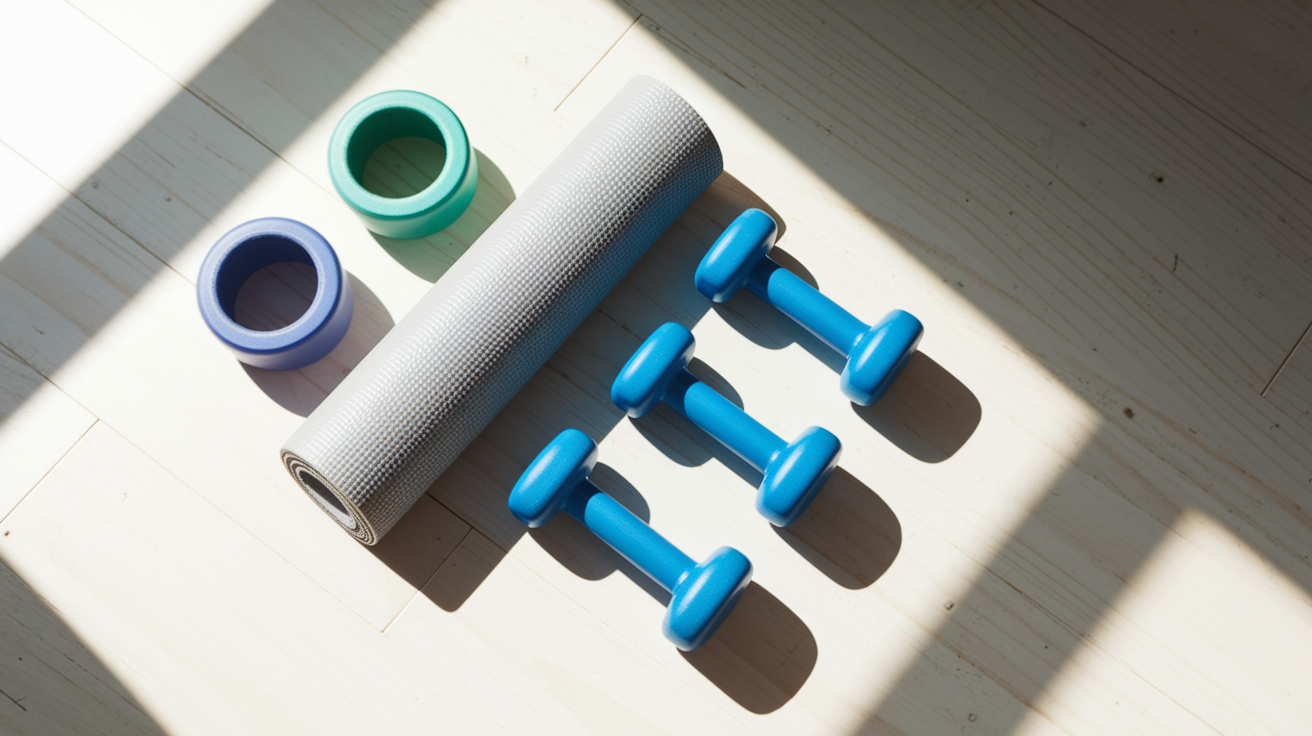
A minimalist gear list for apartment training fits in one small corner and costs less than a single month of gym membership. You need exactly four items to run every circuit in this guide: one exercise mat (foldable yoga mats work perfectly and store under a bed or couch), one set of light resistance bands in medium and light tensions, one pair of dumbbells between 5 and 15 pounds depending on your strength level, and optionally a single set of ankle weights for glute and leg work.
Adjustable dumbbells (like PowerBlock or Bowflex SelectTech systems) collapse the footprint of an entire rack into a single compact block. If your space is tight, one adjustable pair replaces ten sets of fixed weights and tucks neatly in a closet. Resistance bands deliver similar training stimulus with zero storage bulk. Loop a medium band around your thighs during glute bridges or hold a light band during standing rows, and you’ll add meaningful load to every bodyweight movement.
Your essential compact equipment list:
Foldable exercise mat: cushions your floor, reduces impact noise, rolls or folds flat for storage
Resistance band set: one light and one medium loop or tube band for upper and lower body loading
Single pair of dumbbells: 5 to 10 lbs for beginners, 10 to 15 lbs for intermediates, or one adjustable set
Optional ankle weights: 2 to 5 lbs per ankle to increase difficulty in glute bridges, leg lifts, and kickbacks
This setup supports every exercise in a resistance band fat loss plan and keeps your entire home gym footprint under two square feet. You’ll never trip over equipment, and neighbors will never hear clanging metal.
Structured Small-Space Fat Loss Circuits Using Minimal Equipment
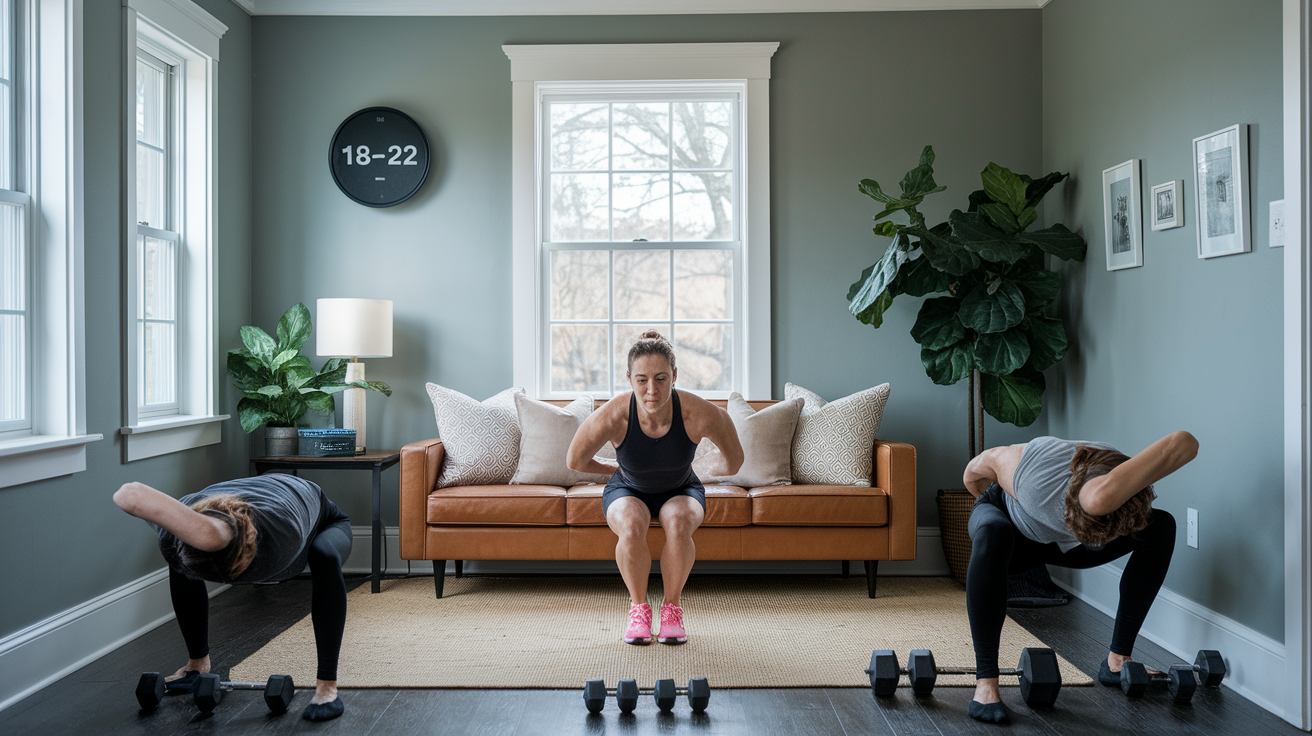
Circuits organize your exercises into timed or rep based rounds that keep your heart rate elevated and your muscles working continuously. The two most effective apartment friendly circuit training formats are strength based circuits (moderate reps with slightly longer rest) and low impact cardio circuits (shorter work intervals with minimal rest). Both styles fit any living room and require nothing more than your mat and optional dumbbells or bands.
Programming clarity matters. When you know exactly how many rounds to complete, how long to work, and when to rest, you spend zero mental energy guessing and all your focus on effort and form. The structures below have been tested in bedrooms, hotel rooms, and studio apartments. They work.
Strength Based Fat Loss Circuit
A full body apartment circuit for strength and fat loss uses 3 rounds of 6 to 8 exercises, 8 to 15 reps per move, with 60 to 90 seconds of rest between complete rounds. Choose a weight or band tension that makes the last two reps of each set challenging but controlled. Your goal is to fatigue the muscle without grinding form into the floor.
Sample exercises for one strength round:
Dumbbell goblet squats: hold one dumbbell at chest height, squat deep, stand
Banded glute bridges: loop band above knees, bridge up, push knees out against tension
Push ups (any variation): standard, incline, or knee push ups for 10 to 12 reps
Reverse lunges with optional dumbbells: 10 reps per leg, slow and controlled
Complete all exercises back to back, rest 60 to 90 seconds, then repeat for two more rounds. Total time is roughly 18 to 24 minutes depending on your rest intervals and rep speed.
Low Impact Cardio Circuit
Low equipment cardio circuits use timed intervals (typically 40 to 45 seconds of work followed by 15 to 20 seconds of rest) to keep your heart rate in the fat burning zone without jumping or stomping. Select 5 to 6 movements, perform them in sequence, rest briefly, and repeat for 3 rounds. The constant movement and short recovery windows create serious metabolic demand in about 15 to 20 minutes.
Choose exercises like step back lunges, plank shoulder taps, standing knee drives, slow mountain climbers (step in style), and banded lateral walks. Keep transitions smooth, control every landing, and your downstairs neighbors will never know you’re training.
| Circuit Type | Duration | Equipment Needed |
|---|---|---|
| Strength Based (3 rounds, 6–8 exercises) | 18–24 minutes | Mat, dumbbells or bands |
| Low Impact Cardio (3 rounds, 5–6 exercises) | 15–20 minutes | Mat, optional band |
| Express Circuit (2 rounds, 4–5 exercises) | 10–12 minutes | Mat only |
Progressive Fat Loss Training Without a Gym
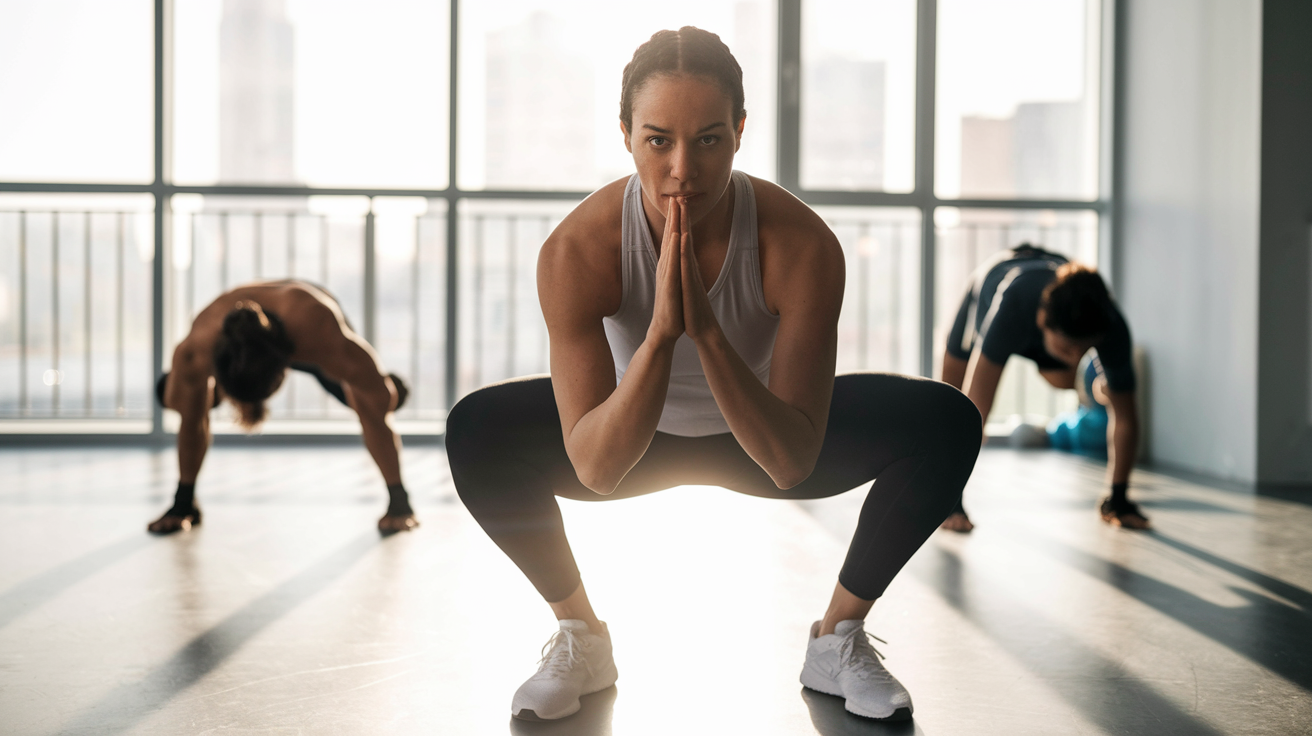
Progressive overload is the single factor that separates results from spinning your wheels. You can’t do the same 12 bodyweight squats forever and expect your body to keep changing. Progressive overload without gym access means adding reps, slowing tempo, shifting leverage, or moving to single limb variations every one to two weeks.
A 2019 study published in PeerJ tracked two groups over eight weeks. One doing traditional weight training, the other doing calisthenics. Both groups showed comparable improvements in muscle strength and body composition. The takeaway is clear. You don’t need a rack of dumbbells to build lean muscle and burn fat. You need a plan that systematically increases demand.
Five bodyweight strength progression strategies that work in apartments:
Add slow negatives: lower for 3 seconds on every squat, lunge, or push up to increase time under tension and fatigue
Increase reps or duration: if you’re doing 10 squats per set, move to 12, then 15. If you hold a plank for 30 seconds, aim for 45
Switch to single limb moves: replace standard glute bridges with single leg bridges. Swap regular lunges for Bulgarian split squats using a chair
Change leverage: elevate your feet during push ups to load your shoulders more. Perform pike push ups to progress toward handstand strength
Add isometric holds: pause at the bottom of a squat for 2 seconds, or hold the top of a glute bridge for 3 seconds before lowering
Track one or two of these tactics each week. Write down your reps, your tempo, or your hold times. When those numbers go up, your body has no choice but to adapt. That adaptation is fat loss, strength gain, and visible muscle definition, all without leaving your living room.
Sample Weekly Minimal Equipment Fat Loss Schedule for Apartments
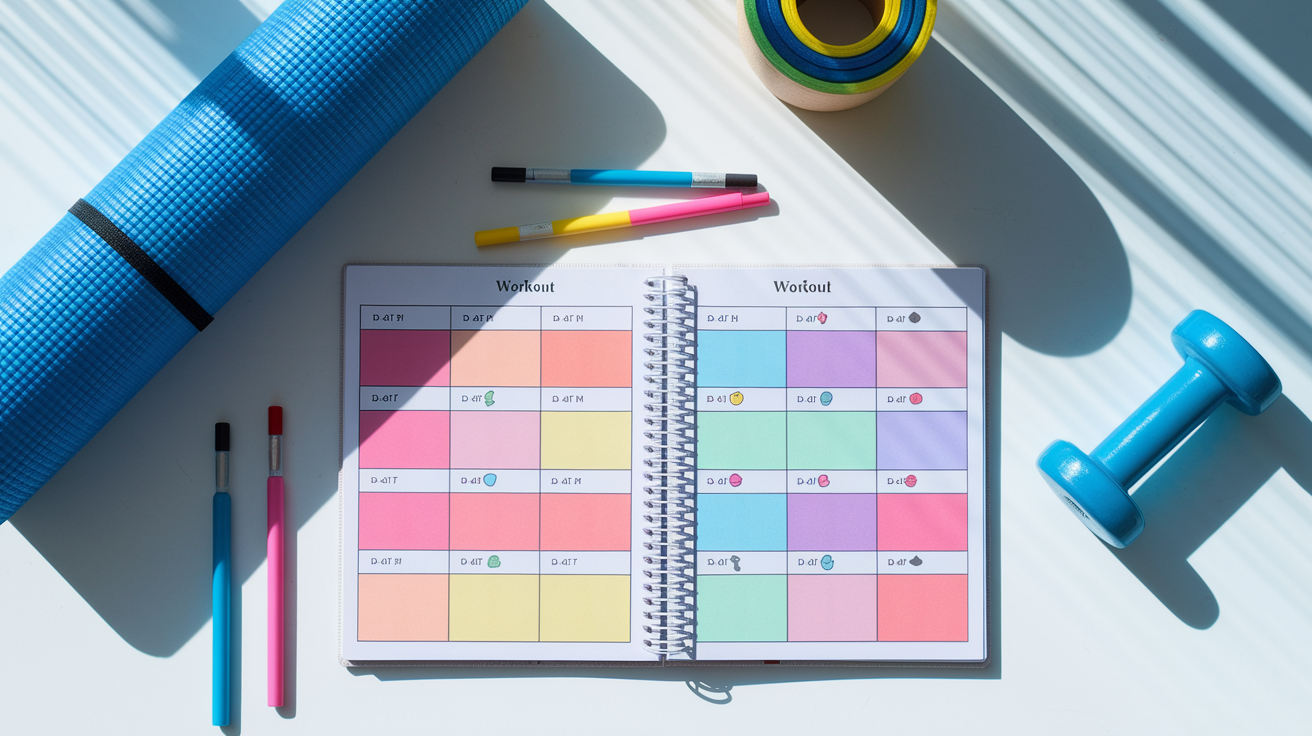
A realistic weekly scheduling for consistency plan includes four to five training days, one to two recovery or mobility days, and enough variety to keep you engaged without overcomplicating your week. Most people see the best fat loss results when they mix short strength circuits, low impact cardio intervals, and at least one longer Pilates or yoga session for active recovery and core work.
Here’s a sample weekly workout plan you can start this week:
Monday: 20 minute strength circuit (3 rounds, 6 exercises, 60 second rest between rounds)
Tuesday: 15 minute low impact cardio circuit (30 seconds work / 30 seconds rest, 3 rounds)
Wednesday: 20 minute Vinyasa flow or stretching session (downward dog, forward folds, slow transitions)
Thursday: Rest or 10 minute mobility routine (foam rolling, hip openers, light stretching)
Friday: 20 minute strength circuit (same structure as Monday, different exercises or increased reps)
Saturday: 15 to 20 minute Pilates core session (13 move sequence or select 8 moves, 30 to 45 seconds each)
Sunday: Full rest or gentle walk outside
Beginners should start with three sessions per week (Monday, Wednesday, Friday) and use the other days for walking or rest. Intermediate and advanced exercisers can layer in the extra cardio and Pilates days as energy and recovery allow. The key is repeating the same weekly structure for at least four weeks so your body adapts and your schedule becomes automatic.
Quiet Cardio Options and Neighbor-Friendly Modifications
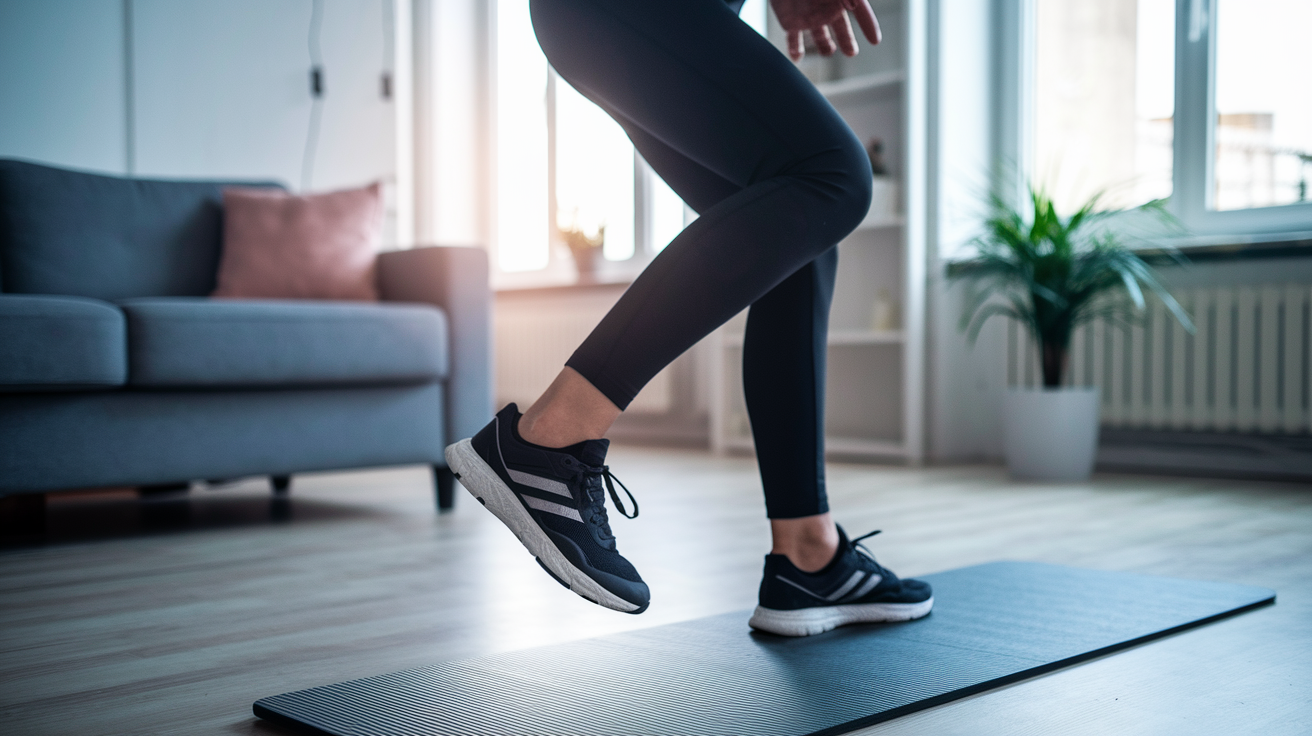
Exercise modifications for neighbors start with one rule: if it thumps, replace it. Jumping jacks become step touch jacks. Burpees become squat thrusts with a step back instead of a jump back. High knees become marching in place with a controlled lift. Every common cardio move has a low noise alternative that delivers similar heart rate and calorie burn benefits without the percussive impact.
Thick yoga mats or interlocking foam tiles absorb vibration and cushion landings. Soft soled training shoes or bare feet on a mat reduce floor contact noise far better than hard running shoes. Tempo matters too. Slow, controlled eccentrics and deliberate foot placements create zero ceiling disturbance. Schedule your 30 minute fat loss sessions during daytime or early evening hours when neighbors are awake and background noise levels are higher.
Five modifications that cut noise and protect downstairs peace:
Replace jump squats with pause squats: lower slowly, hold at the bottom for 2 seconds, stand with control
Swap burpees for squat thrusts: step back into plank instead of jumping, step forward, stand without a jump
Use step in mountain climbers: lift one knee toward chest then place foot back down softly, alternate steadily
Choose glute bridges over jump lunges: bridges are silent, effective for legs and glutes, and allow single leg progressions
Do marching in place instead of high knees: lift knees to hip height at a steady rhythm, land softly on the ball of each foot
Your neighbors will never complain about a workout they can’t hear, and you’ll still hit every fat loss and strength target on your list.
Core and Glute-Focused Minimal Equipment Fat Loss Moves for Small Spaces
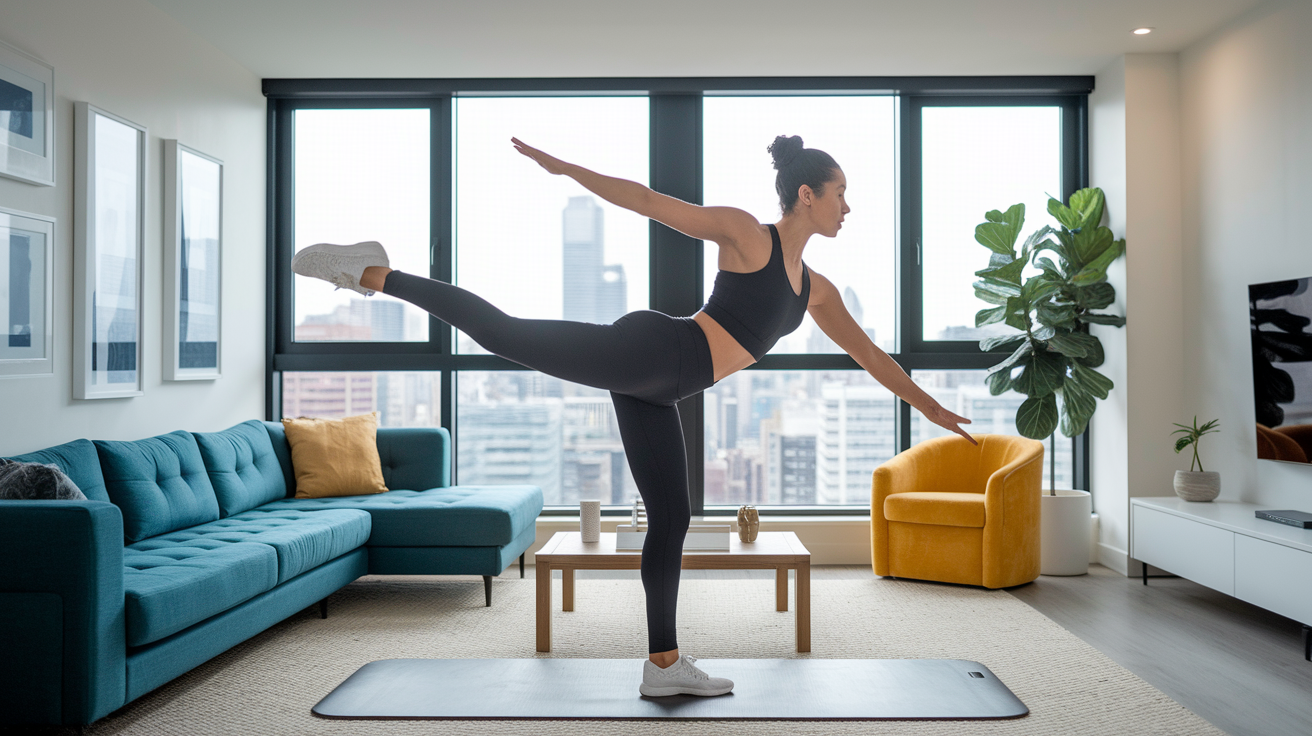
Your core and glutes are two of the largest, most metabolically active muscle groups in your body. Training them with focused, floor based movements creates serious calorie burn in a footprint smaller than a yoga mat. These moves require zero equipment, make no noise, and deliver visible results when repeated consistently over four to six weeks.
Lunges with a torso twist add rotational engagement to your obliques and deep core stabilizers. Standing side crunches hit the same muscle groups while keeping you upright and mobile. Floor moves like windshield wipers and diagonal crunches isolate the abdominals with precision and control. Pair these core focused fat burn moves with glute bridges and donkey kickbacks, and you have a complete lower body sculpting session that fits between your couch and coffee table.
Six quiet core and glute moves for tight spaces:
Donkey kickbacks: on hands and knees, extend one leg straight back and up, squeeze glute hard at the top, lower with control, 12 to 15 reps per side
Advanced leg crunches: lie flat, legs extended up or bent at 90 degrees, lift shoulders off the mat using core, 15 to 20 reps
Cross leg diagonal crunch: lie down, place right ankle on left knee, twist left elbow toward right knee, crunch up, 12 reps per side
Standing side crunch: stand tall, lift right knee out to the side, bring right elbow down to meet it, squeeze obliques, 15 reps per side
Windshield wipers (bent knee): lie on back, knees bent and lifted, lower both knees slowly to the left then right, shoulders stay flat, 10 reps per side
Single leg glute bridge: standard bridge position, extend one leg straight, lift hips using the grounded leg, hold 2 seconds at top, 10 to 12 reps per side
Run through this list as a single 10 minute circuit, or select three to four moves and add them to the end of any strength or cardio session. Your core and glutes will fatigue, your heart rate will stay elevated, and your apartment stays perfectly silent.
Nutrition and Recovery Strategies That Support Apartment Fat Loss
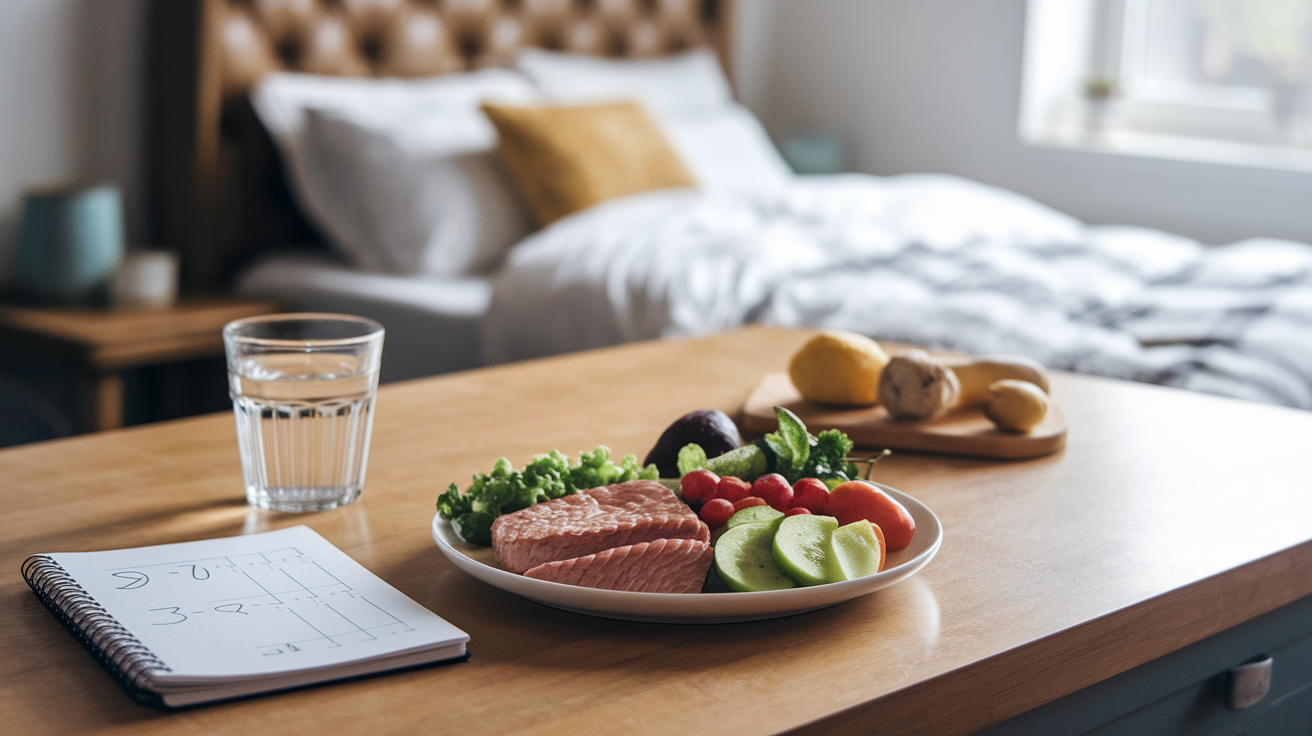
Fat loss happens when you consistently burn more calories than you consume over weeks and months. Your workout creates the stimulus (the calorie burn, the muscle fatigue, the metabolic boost), but your nutrition determines whether your body has the fuel to recover and the deficit needed to drop fat. A calorie deficit explained simply: eat slightly less energy than your body uses each day, and fat stores make up the difference.
Protein supports muscle repair and keeps you full longer. Aim for roughly 0.7 to 1 gram of protein per pound of body weight each day, spread across meals and snacks. Hydration matters during even short 10 minute sessions. Water regulates temperature, supports energy, and reduces cramping. Sleep is non negotiable. Poor sleep increases hunger hormones, tanks willpower, and makes every workout feel harder. Prioritize 7 to 8 hours per night, and you’ll see faster fat loss results than any supplement can deliver.
Recovery isn’t just rest days. Pilates, yoga, and slow mobility flows count as active recovery. They improve flexibility, reduce soreness, and keep you moving without adding fatigue. Foam rolling your quads, glutes, and upper back for 5 to 10 minutes after strength circuits speeds recovery and reduces next day stiffness.
Five nutrition basics for fat loss and recovery habits that support your apartment training:
Create a small calorie deficit: track food for one week to understand your baseline, then reduce portions by 10 to 15% or swap high calorie snacks for protein and vegetables
Eat protein at every meal: eggs, Greek yogurt, chicken, fish, tofu, lentils, or protein powder in a simple shake
Drink water before, during, and after workouts: aim for half your body weight in ounces per day as a starting point
Prioritize 7 to 8 hours of sleep: set a consistent bedtime, dim lights an hour before, keep your room cool and dark
Add 10 minutes of stretching or foam rolling: target sore areas after every strength session, or do a full body mobility routine on rest days
When your nutrition supports your training and your recovery supports your nutrition, fat loss becomes predictable and sustainable. You won’t need extreme plans or crash diets. Just consistent effort, sensible eating, and patience.
Final Words
Jump into a 12 to 15-minute quiet circuit: 30 seconds on, 30 seconds off, a mat plus light dumbbells or bands, and low-impact swaps if you need them.
Use the sample weekly plan, the progression tips, and the neighbor-friendly ideas to build consistency without extra noise.
Don’t forget nutrition, protein, hydration, and sleep. Those small habits speed recovery and results.
This minimal equipment fat loss workout routine for apartments is simple and flexible. Stick with it and you’ll see steady progress.
FAQ
Q: What is a safe, immediate apartment-friendly fat loss routine with minimal equipment?
A: A safe apartment-friendly fat loss routine with minimal equipment is a 12–15 minute circuit using 30 seconds work / 30 seconds rest, a mat and light dumbbells or bands, with low-impact options.
Q: What exact timing and format should I use for HIIT in an apartment?
A: The HIIT timing for apartments is 30 seconds on and 30 seconds off, keeping noise low. Aim for three rounds of four moves, or a 12–15 minute total session for beginners.
Q: What minimal equipment do I need for apartment fat loss workouts?
A: Minimal equipment needed is a mat, one pair of light dumbbells (2–10 lbs) or resistance bands, and small optional items like ankle weights. Everything fits in a closet.
Q: What quiet, low-impact exercise alternatives work for upstairs neighbors?
A: Quiet low-impact alternatives for upstairs neighbors replace jumps with controlled moves: squat thrusts instead of burpees, slow eccentrics, Pilates flows, and band rows. They cut noise and protect joints.
Q: Can I get fat-loss results with bodyweight and no gym?
A: You can get fat-loss results without a gym by progressing bodyweight moves: add reps, slow the lowering (3 seconds), use single-leg versions, change leverage, or add bands for resistance.
Q: What’s a sample 12–15 minute beginner-to-intermediate apartment routine?
A: A 12–15 minute sample beginner-to-intermediate routine is three rounds of four moves at 30s on/30s off: bodyweight squats, glute bridges, plank hold, and band rows. Rest one minute between rounds.
Q: How often should I train each week in a small-space plan?
A: A weekly schedule for apartments should include 4–6 sessions blending short HIIT, 10–20 minute Pilates, vinyasa flows, and 1–2 strength days, plus one mobility or rest day to recover.
Q: What core and glute moves work best in tight spaces?
A: Best core and glute moves for tight spaces are donkey kickbacks, advanced leg crunches, diagonal crunches, standing side crunches, windshield wipers, and single-leg glute bridges, all mat-friendly and quiet.
Q: How can I reduce noise during workouts to avoid bothering neighbors?
A: To reduce noise for neighbors, avoid jumping, use a thick mat, slow your landings, pick quieter moves, and schedule workouts at considerate hours to keep impact low.
Q: What basic nutrition and recovery tips support apartment fat loss?
A: Key nutrition and recovery tips for apartment fat loss are a modest calorie deficit, daily protein, good sleep, hydration, short mobility sessions, and using Pilates or yoga to aid recovery.