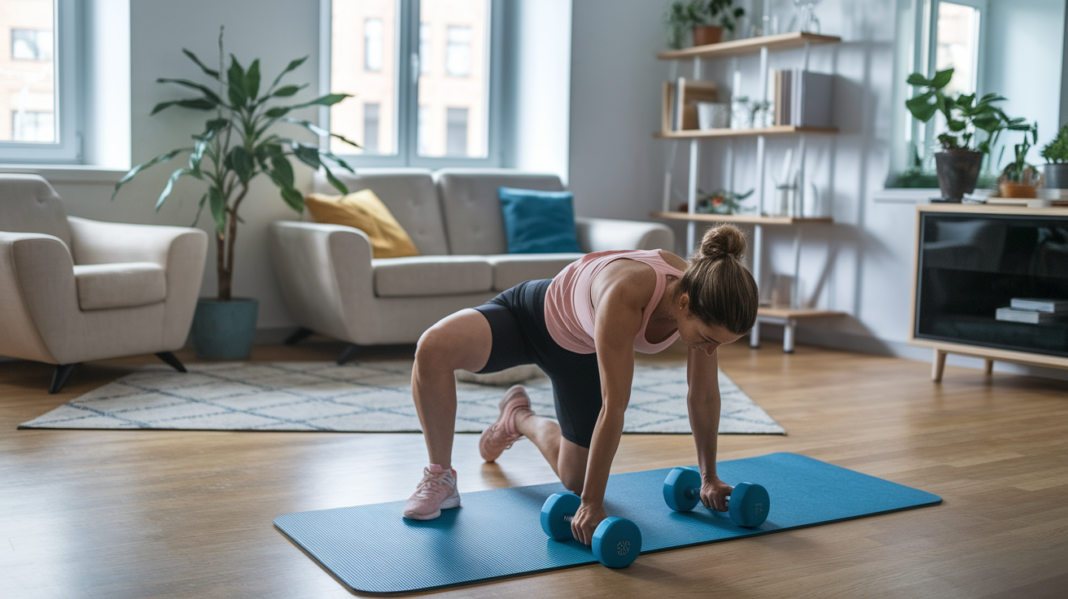
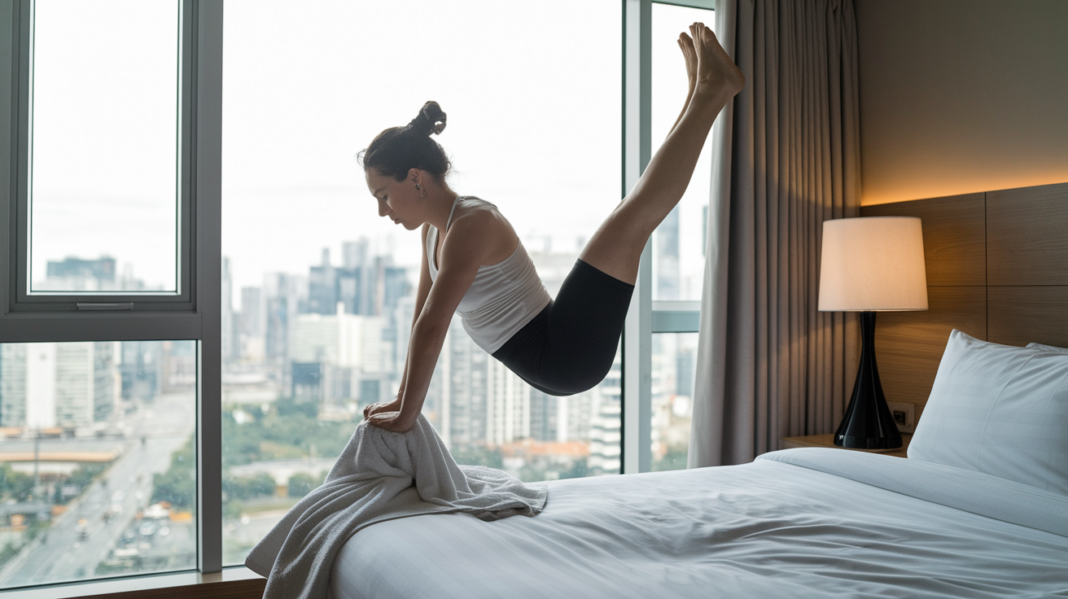
Think you need a gym to stay strong while traveling? Think again.
This simple, 20-minute hotel-room routine uses one towel and a sturdy surface to keep your strength, loosen stiffness, and boost energy on busy trips.
It fits tiny spaces, stays quiet for thin-walled hotels, and scales up or down for any level.
No extra gear, no banging noise—just two rounds of full-body moves you can do before coffee.
Read on to learn the exact circuit, room-check checklist, and easy progressions that actually work on the road.
Quick, Travel-Friendly Hotel-Room Routine for Busy Trips
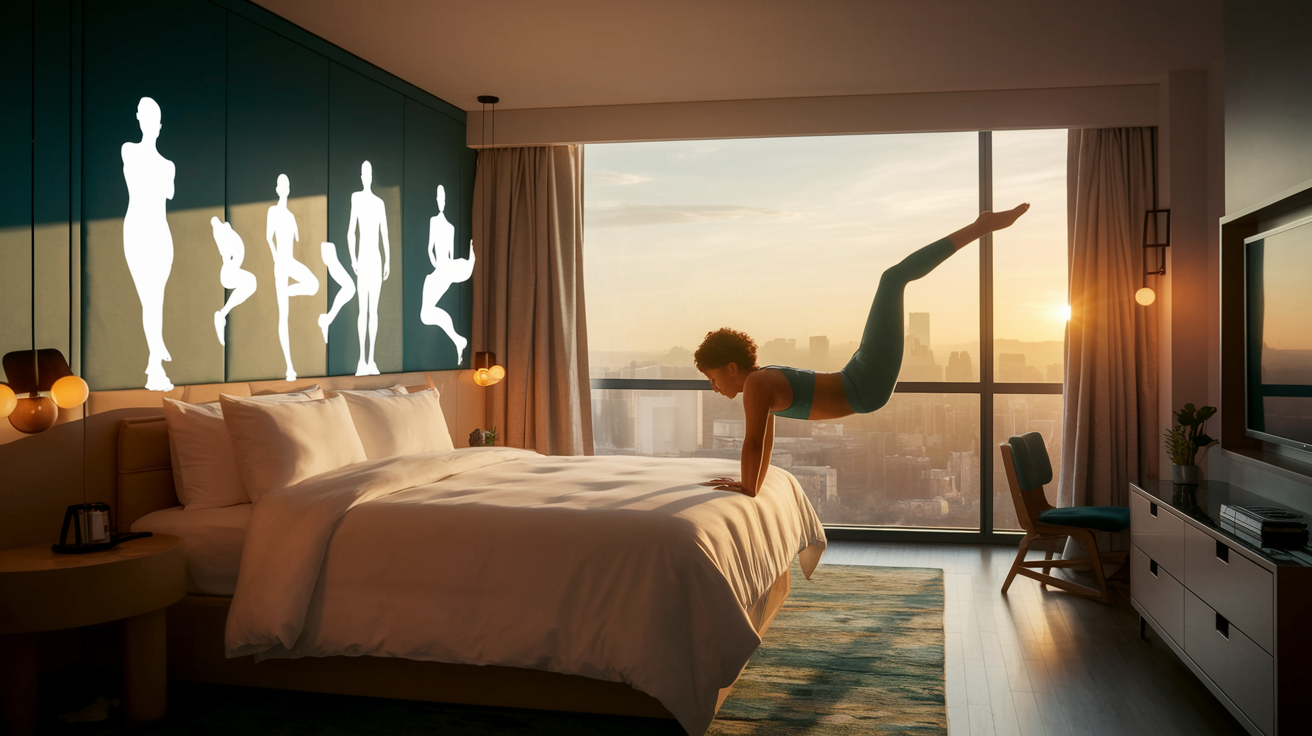
A travel-friendly workout for hotel rooms helps you hang onto strength, shake off stiffness, and keep your energy stable during trips when you don’t have gym access. This bodyweight circuit is built for small spaces and takes about 20 minutes when you finish two full rounds. It sticks to multi-muscle movements you can do standing up or with your hands on a bed, so you don’t have to lie on a questionable hotel floor.
You need two things: one bath towel and one sturdy elevated surface like a bed, desk, coffee table, or countertop. The circuit stays quiet because most moves are controlled and low impact, making it neighbor-friendly even early in the morning or late at night. You work through all seven exercises back to back with no rest between moves, then rest one minute (or longer if needed) before starting round two. This compact routine hits your glutes, legs, chest, back, arms, and core while keeping your breath rate up for a light cardio benefit.
The structure is simple. You hold the wall sit for 30 to 60 seconds depending on your current fitness, and you do 12 to 15 reps of every other move. Beginners can stick to the lower rep counts and shorter holds. Advanced users can extend the wall sit, slow the tempo, or add a heavier item across their lap. The quick 20-minute circuit adapts to your schedule whether you’re jet-lagged, pressed for time, or just want to move a little before your day starts.
The full circuit in order:
- Wall Sit (30 to 60 seconds)
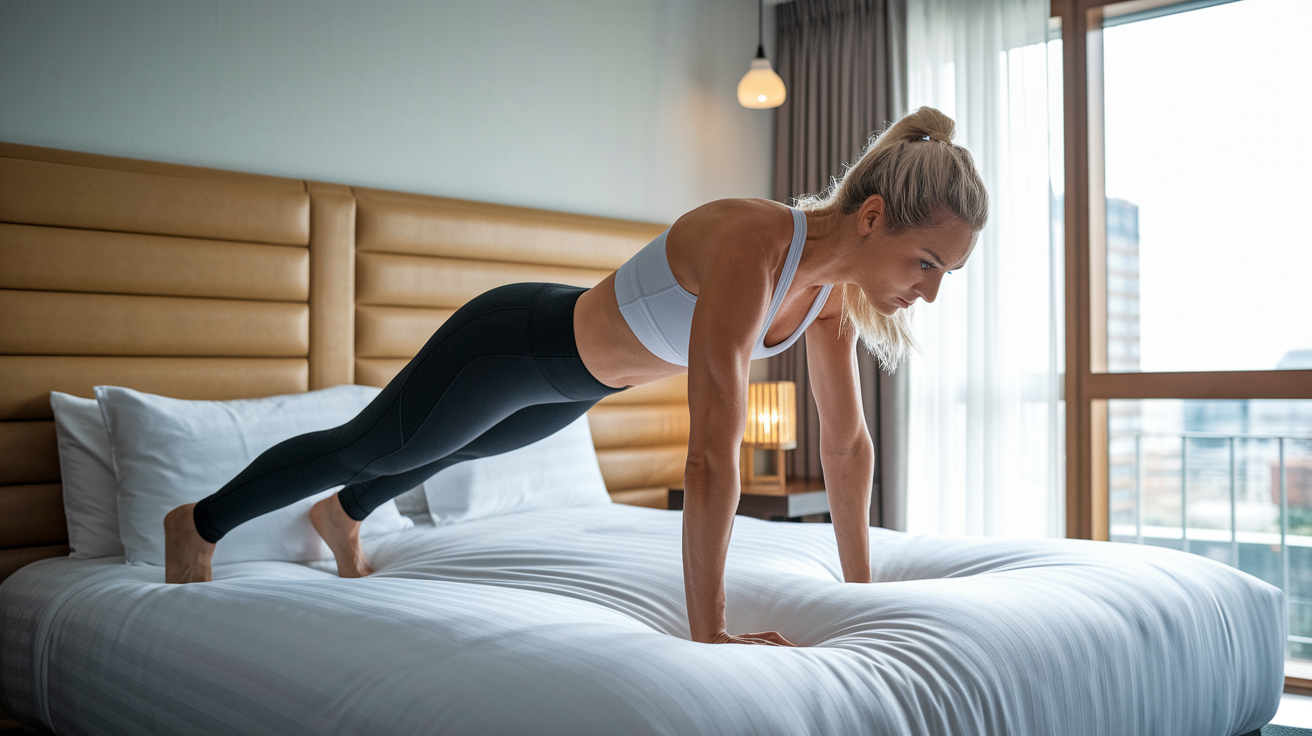
- Elevated Push-Up (12 to 15 reps)
- Elevated Plank Knee-to-Elbow (12 to 15 reps)
- Good Morning (12 to 15 reps)
- Triceps Dip (12 to 15 reps)
- Biceps Towel Curl (12 to 15 reps per side)
- Squat-to-Overhead Reach with Calf Raise (12 to 15 reps)
Adapting Any Hotel Room for Safe, Compact Training
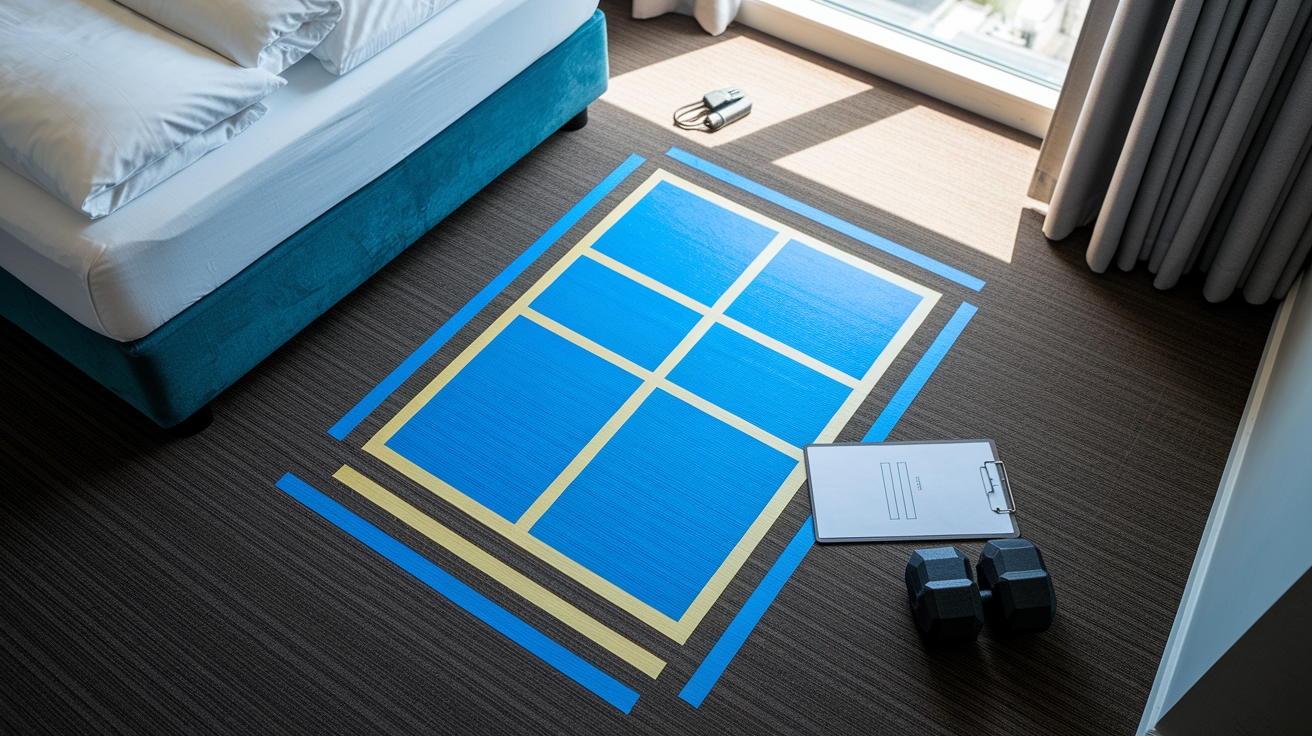
Before you start, spend two minutes scanning your space. Look for one stable vertical surface you can press your back against for wall sits and one bed edge, desk, or countertop that won’t slide when you push down on it. Move any small furniture, suitcases, or bags out of a footprint about the size of a yoga mat. That’s all the clearance you need.
If your room is tight, mark out the longest clear zone you have (usually between the bed and the window or desk) and confirm you can stand with arms overhead without hitting anything. Check that the floor isn’t slippery. If it is, stand on the bath mat or keep your shoes on.
Working upright or with your hands on an elevated surface keeps you off potentially dirty carpets and reduces the noise that bothers neighbors. A silent low-impact set like this also helps you maintain balance when the room is dim or when you’re still groggy from a long flight. You don’t need a lot of space. The entire routine fits in a strip narrow enough for one suitcase and one person.
Five strategies for tiny rooms:
- Rearrange movable furniture. Slide the desk chair or luggage rack into the hallway or bathroom to open up a small square of floor.
- Choose stable edges for support. Test the bed edge or desk with your full body weight before using it for dips or push-ups.
- Mark a safe foot-width zone. Lay down a towel to define your work area and prevent accidental slipping.
- Identify slip-free surfaces. Avoid polished tile or loose rugs. Stand on carpet, a mat, or textured vinyl.
- Select low-light or morning-friendly training spots. Near the window or bathroom door if the main lights are too harsh before coffee.
Eco-Friendly, Low-Waste Gear to Support a Travel Workout Routine
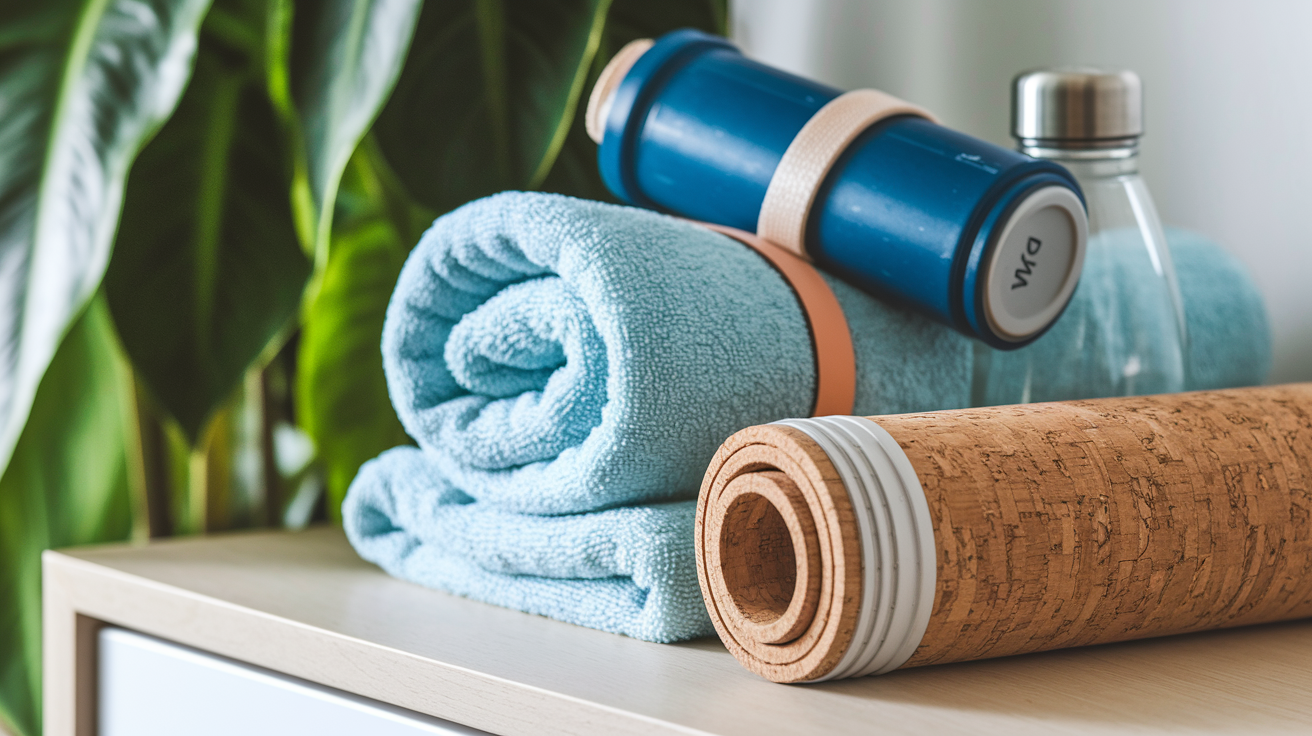
A travel-friendly workout for hotel rooms already minimizes environmental impact because it asks for almost nothing. You use one bath towel as resistance for curls and as a slider for hamstring work if your floor is smooth. You use the bed, desk, or coffee table instead of carrying a bench or step. That keeps your bag light and removes the need to buy single-use fitness accessories. Your towel is multifunctional. You dry off with it, protect your hands when gripping a door frame, and fold it under your foot when you need a smooth glide.
If you want to pack something extra, look for resistance bands made from recycled rubber or sustainably harvested latex. A compact yoga mat made from natural tree rubber or recycled wetsuit material gives you a clean surface in tight hotel rooms without adding much weight. Both items pack flat, last for years, and replace heavier, less portable tools.
| Item | Sustainable Benefit | How It Supports Travel Training |
|---|---|---|
| Hotel bath towel | Zero extra waste; already provided in most rooms | Acts as resistance for towel curls, sliding surface for hamstring work, and non-slip marker for your workout zone |
| Recycled-rubber resistance band | Made from reclaimed materials; long product lifespan | Adds progressive load to squats, glute bridges, and shoulder raises when bodyweight alone isn’t enough |
| Natural-rubber travel mat (foldable) | Biodegradable; free from PVC and synthetic foams | Provides clean, slip-resistant surface for planks, push-ups, and stretching without relying on hotel-room floors |
Time-Efficient Hotel-Room Workout Formats for Travelers
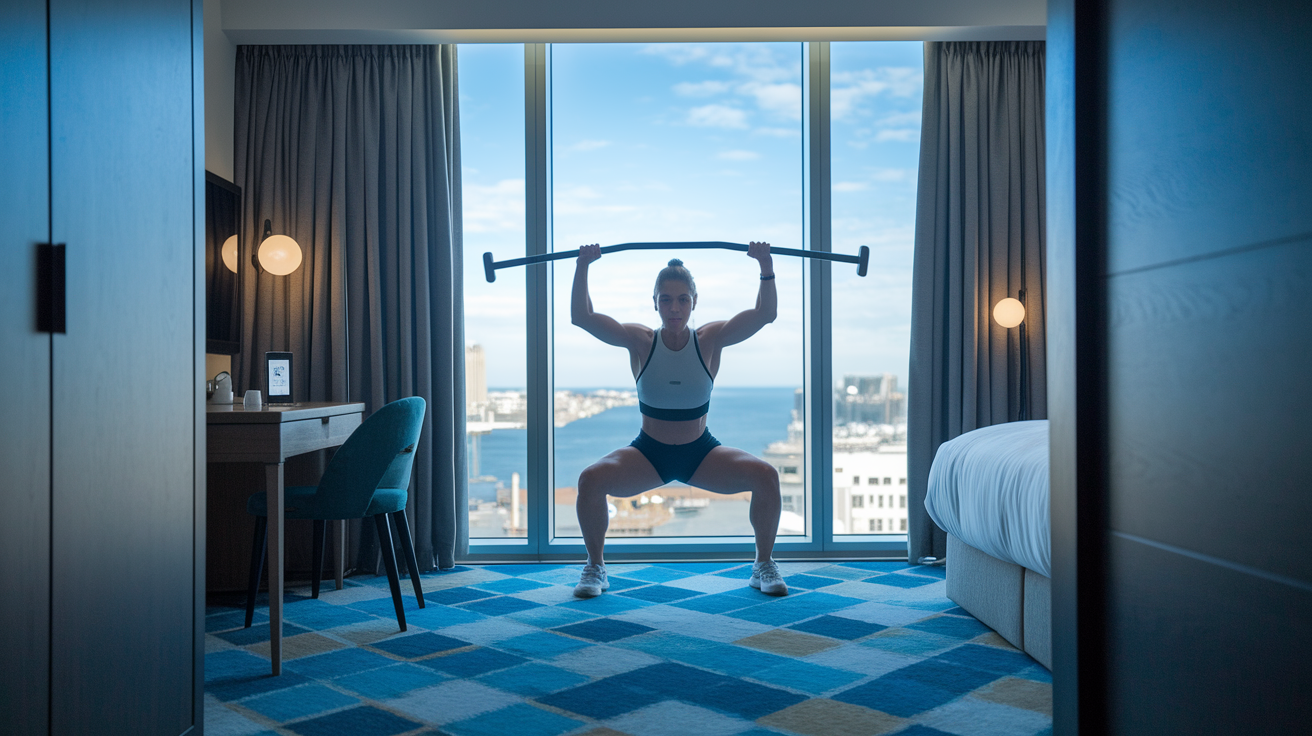
Circuits let you finish a complete session in the time it takes to check email. You move from one exercise straight into the next with no pause, which keeps your heart rate elevated and turns strength work into a hybrid cardio session. This format works well when you have a meeting in 30 minutes or when you just want to move a little before breakfast without showering twice. A seven-move nonstop circuit with one minute of rest after each round takes about 10 minutes per round, so two rounds land you right around 20 minutes total.
You can adjust the timing to match your energy. If you prefer intervals, work for 20 to 40 seconds per move instead of counting reps, rest 10 seconds between moves, and repeat. If you want more strength focus, slow each rep to a three-second descent and one-second pause at the bottom, then keep the 12 to 15 rep range. Both approaches fit inside a short window. Both deliver results when you do them regularly.
Hybrid blends like this work especially well early in the morning before your brain fully wakes up. The standing-only variations save time because you don’t transition between floor and upright positions. You just move through the list, rest, and repeat. If you’re squeezing in a session before a work call, set a timer for 20 minutes, start the circuit, and stop when the alarm goes off. Even one incomplete round is better than skipping entirely.
Adjustable, Noise-Conscious Training Progressions for Hotels
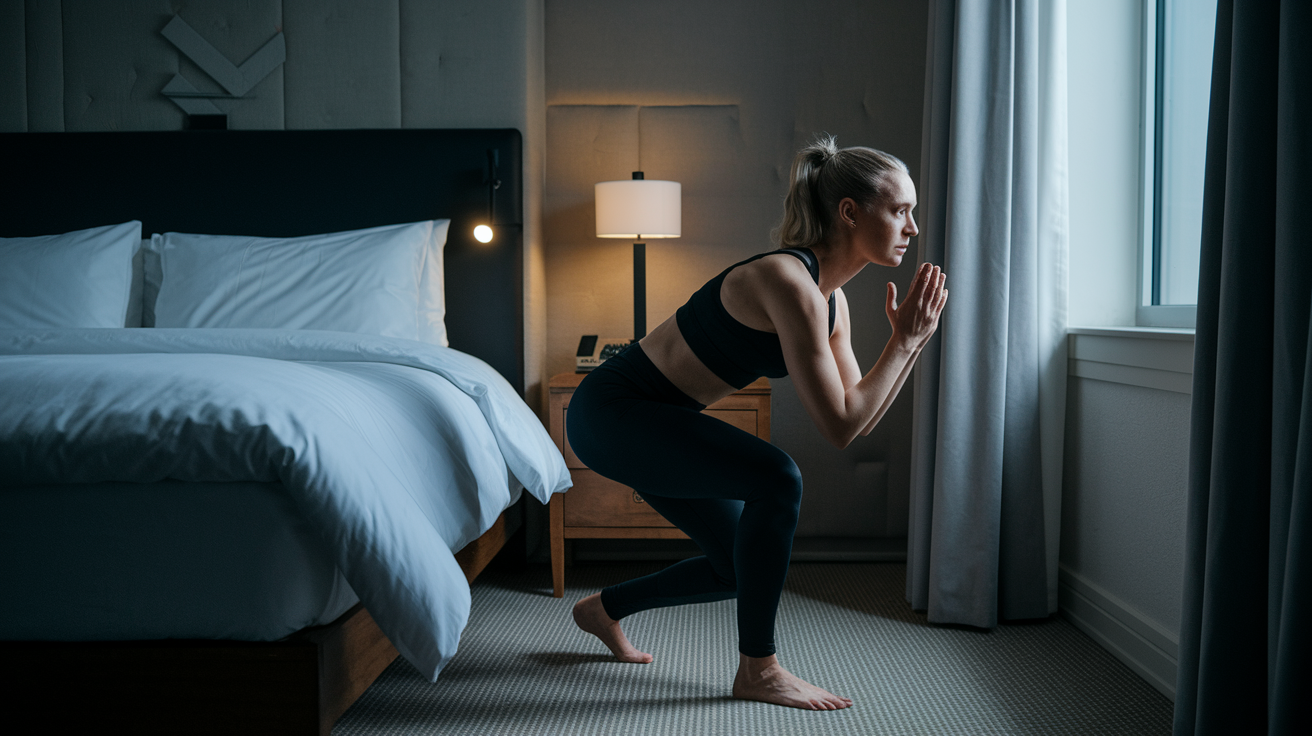
Hotel walls are thin and neighbors notice thumping. This routine keeps noise low by focusing on control, slow eccentrics, and isometric holds instead of jumps or explosive movements. The wall sit builds leg strength through time under tension. The elevated plank knee-to-elbow works your core and obliques with almost no sound. Triceps dips and towel curls let you scale intensity by changing foot position or how hard you pull against the towel, so you never need to drop weights or slam anything down.
You make the routine harder or easier by adjusting angles, tempo, or leverage. Moving your feet farther from the wall during a wall sit increases the load on your quads. Slowing the descent on push-ups or good mornings adds time under tension. Doing single-leg variations of squats, bridges, or towel curls forces each side to work independently, which builds stability and uncovers imbalances. All of these changes happen silently.
Six quiet replacements and modifications:
- Replace jump squats with slow-tempo squat-to-overhead reaches. You get similar leg and shoulder work without impact noise.
- Adjust push-up depth by raising your hands higher. Beginner-friendly and reduces wrist and shoulder load.
- Add isometric holds at the hardest point. Pause at the bottom of a dip or the parallel position of a wall sit for five extra seconds.
- Slow every rep to a four-second descent. This increases difficulty and keeps movement controlled and silent.
- Increase hinge depth on good mornings. Lean farther forward to load hamstrings and glutes more deeply.
- Use single-leg balance variations. Stand on one foot during towel curls or calf raises to engage stabilizers and core with zero extra equipment.
Sustainable Hydration, Recovery, and Jet-Lag Management for Travelers
Movement helps reset your internal clock when you cross time zones. A quick morning circuit signals to your body that it’s time to be awake, which can ease jet-lag symptoms faster than sitting still. The routine also reduces stiffness from long flights and improves mobility in your hips, shoulders, and spine. Hydration matters more during travel because cabin air is dry and you often forget to drink enough. Fill your reusable bottle as soon as you land, sip before you start your workout, and drink again immediately after.
Pack a collapsible silicone or stainless-steel bottle to skip buying single-use plastic in airports. Refill it at water fountains or ask hotel staff to top it up. If you’re in a location where tap water isn’t safe, carry a small filter bottle or purification tablets. Staying hydrated supports recovery, keeps your energy steady, and helps your muscles respond better to the work you’re doing.
Breathwork & Pre-Sleep Relaxation
After your circuit, spend three to five minutes on slow nasal breathing to bring your heart rate down and signal your nervous system that the effort is finished. Sit on the edge of the bed or stand near the window, inhale through your nose for a count of four, hold for four, exhale through your nose for six. Repeat five to ten cycles. This simple pattern reduces post-workout stress, helps you feel calmer before meetings or sightseeing, and makes it easier to fall asleep later if you trained in the evening. Controlled breathing also helps regulate circadian rhythm, especially when paired with morning light exposure, so open the curtains during your cooldown if you can.
Packing Light: Sustainable Fitness Essentials for Travel
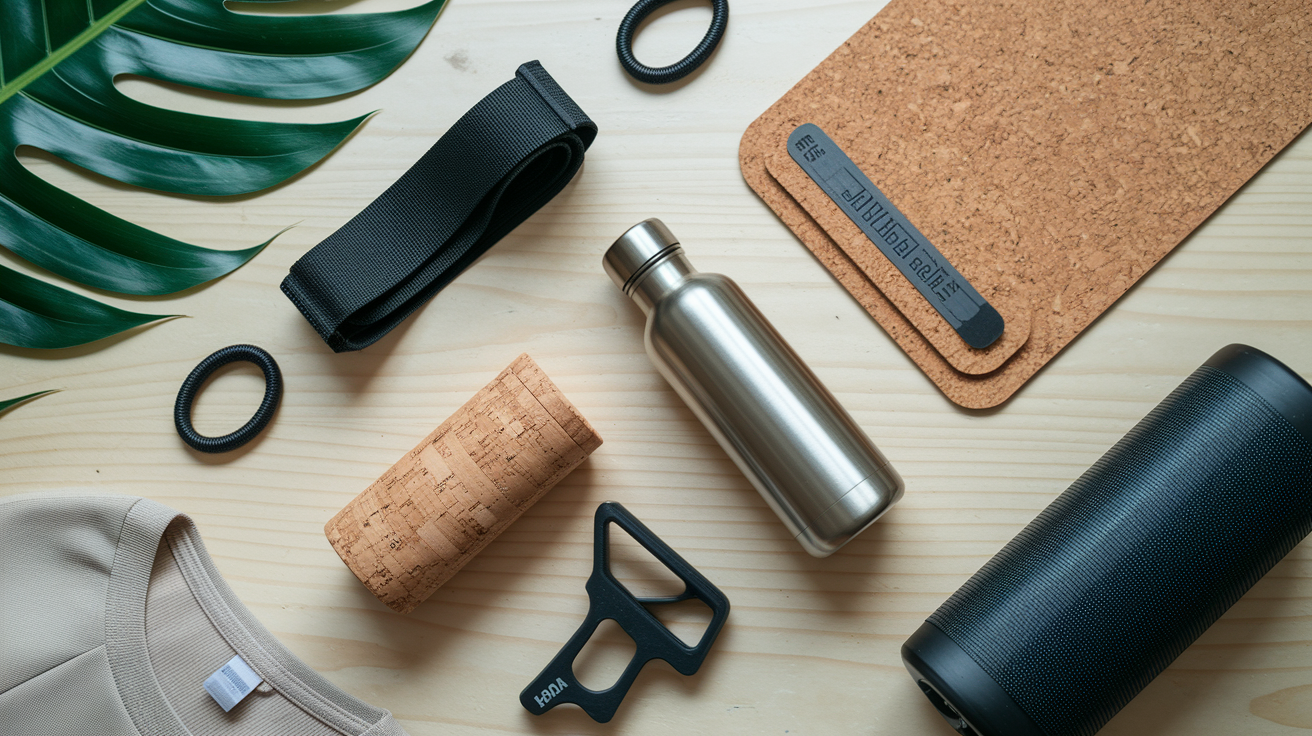
You don’t need much to keep a consistent routine on the road. Start with one or two sets of quick-dry workout clothes made from recycled polyester or organic cotton blends. These fabrics dry overnight when you hand-wash them in the hotel sink, so you can pack fewer items and do laundry as you go. Add a pair of supportive shoes if you plan to walk or run outside, but the in-room circuit works fine in socks or barefoot on carpet.
A sustainably made resistance band gives you progressive overload options without taking up much space in your bag. Look for bands with a closed loop design made from natural or recycled rubber, which tend to last longer and resist snapping. A foldable mat is optional but helpful if you want a clean surface for stretching or floor work. Choose one made from natural tree rubber, cork, or jute instead of PVC. Finally, bring a reusable water bottle (stainless steel or BPA-free plastic) so you can skip single-use bottles throughout your trip.
Four essentials to pack:
- Sustainably made resistance bands (closed loop, recycled rubber). Add load to squats, bridges, and rows. Compact and multi-use.
- Quick-dry workout apparel (recycled polyester or organic cotton blend). Wash in the sink, hang overnight, wear the next day.
- Foldable yoga mat (natural rubber, cork, or jute). Provides a clean, non-slip surface. Rolls or folds flat in your suitcase.
- Reusable water bottle (stainless steel or BPA-free). Refill throughout the day to stay hydrated without buying plastic bottles.
Safe, Joint-Friendly Alternatives for All Travel Situations
Traveling already stresses your joints. Long flights tighten your hips and lower back, carrying luggage strains your shoulders, and unfamiliar beds can leave you sore. A joint-friendly workout helps instead of adding to the problem.
Elevated push-ups and triceps dips let you adjust resistance by changing the height of your hands or the position of your feet, so you can find a version that doesn’t irritate your wrists or shoulders. Elevated planks protect your wrists compared to floor planks, and the knee-to-elbow variation keeps your spine neutral while working your obliques. Good mornings are a low-impact hinge movement that loads your hamstrings and glutes without the compression of a barbell squat. All these moves use slow, controlled tempos, which reduce joint stress and give you better feedback on form.
If you’re dealing with old injuries, fatigue, or just stiffness from the flight, choose the chair-assisted or bed-supported versions of each exercise. Sit on the edge of the bed for triceps dips instead of hovering in space. Rest your hands on a higher surface for push-ups. Shorten the wall-sit hold to 20 seconds and focus on keeping your knees aligned over your toes. These small changes let you stay consistent without risking a flare-up that derails the rest of your trip.
Maintain Long-Term Fitness Habits While Traveling
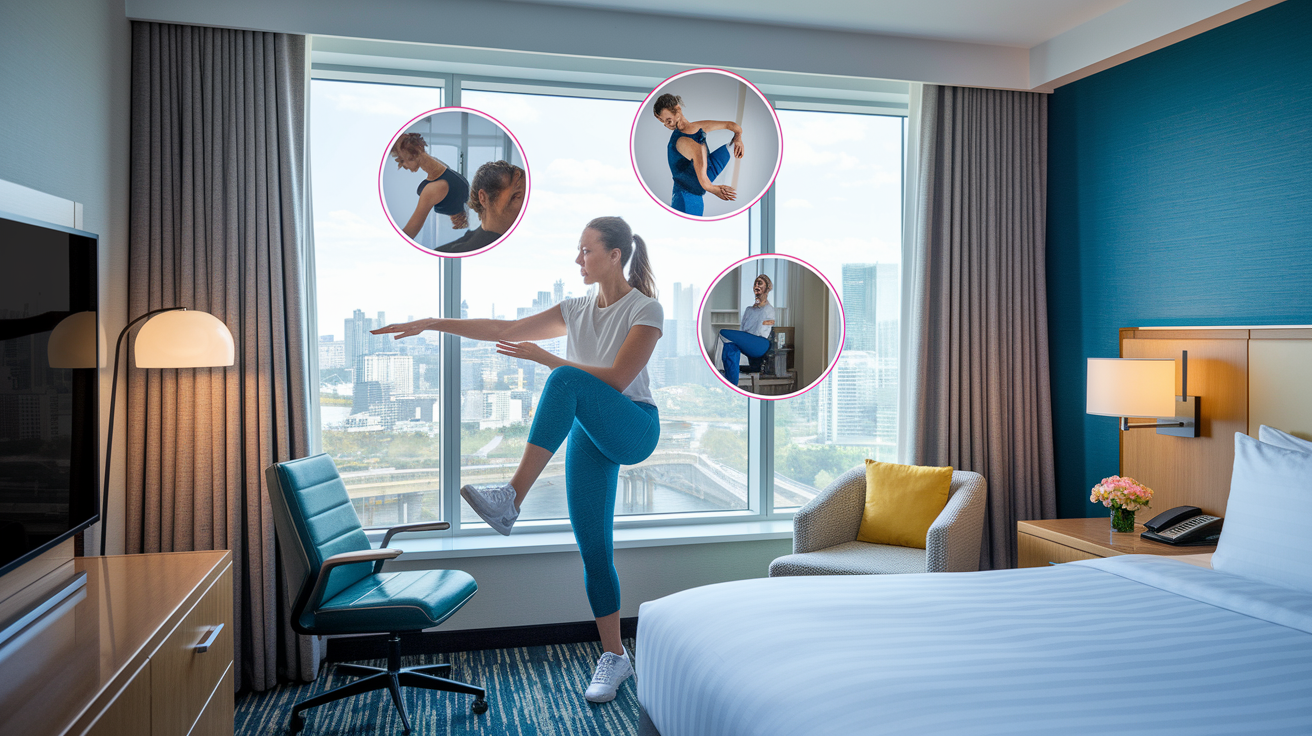
Consistency beats intensity when you’re on the road. If you can do ten minutes three mornings in a row, that’s better than skipping entirely because you think you need an hour. Anchor your routine to something you already do every trip (right after you wake up, before you shower, or while your coffee brews). That pattern becomes automatic after a few trips, and you stop negotiating with yourself about whether to work out.
A simple pre-flight mobility sequence helps you arrive less stiff. Before you board, find a quiet gate area and do slow squats, arm swings, and hip circles for three to five minutes. After you land, repeat the same moves in your hotel room to reset your body and shake off the cramped-seat feeling. If you’re jet-lagged or exhausted, swap the full circuit for a five-minute mobility flow. March in place for one minute, do ten slow squats, ten arm swings forward and back, and finish with five deep breaths. That counts as movement, keeps your habit alive, and often gives you enough energy to tackle the full session the next day.
When you’re traveling for sightseeing or business, look for ways to integrate movement into your schedule. Walk or bike to meetings when the weather allows. Take stairs instead of elevators. Stretch between conference sessions or while waiting for your ride. These micro-moments add up and make it easier to stay active without carving out a separate block of time.
Five micro-routines under five minutes each:
- Wake-up mobility flow. March in place 1 minute, ten slow squats, ten arm circles each direction, five deep breaths.
- Pre-meeting energizer. Ten elevated push-ups, 20-second wall sit, ten good mornings, repeat twice.
- Post-flight reset. Ten hip circles each leg, ten arm swings, ten slow squats, hold a 30-second wall sit.
- Midday posture break. Stand and reach overhead ten times, hinge forward into a good morning five times, hold a plank (hands on desk) for 20 seconds.
- Evening wind-down stretch. Slow squats with overhead reach (5 reps), seated or standing forward fold (hold 30 seconds), slow nasal breathing (5 cycles of 4-4-6).
Final Words
Start with the compact 7-move circuit and the simple warm-up. Do two rounds using a towel and the bed or desk for elevation. It fits tiny spaces, keeps noise low, and eases travel stiffness.
Scale intensity by changing tempo or elevation. Pack the small, eco-conscious items and try the micro-routines on busy days.
This travel-friendly sustainable workout routine for hotel rooms helps you stay consistent without extra gear. Small sessions stack into real progress. You’ve got this.
FAQ
Q: What workout can I do in a hotel room?
A: The workout you can do in a hotel room is a 7-move bodyweight circuit using a towel and an elevated surface. Do moves back-to-back, rest one minute, repeat two rounds for mobility and cardio.
Q: What is the 3-3-3 rule for workout?
A: The 3-3-3 rule for workout is a compact format: pick three exercises, perform three sets or rounds, and use about three minutes total rest between rounds to keep sessions short and effective.
Q: What is the 5-3-1 rule in gym?
A: The 5-3-1 rule in gym is a strength template: do a working set of five reps, a set of three, then a heavy single, raising weight gradually across weekly cycles.
Q: How to get a good workout in a hotel gym?
A: To get a good workout in a hotel gym, assess available equipment, choose compound moves, warm up, do a 20 to 40 minute circuit or supersets, focus on form, then finish with mobility and hydration.