Think you need heavy weights to build serious hamstring strength? You don’t.
Bodyweight hamstring work uses leverage, hip position, and controlled movement to load the back of your legs, no dumbbells or bands required.
You can do it in a hotel room, a park, or right next to your couch.
This post shows 12 no-equipment moves, from beginner bridges to assisted Nordic curls, that train hip extension and knee flexion, boost stability, and help protect your knees.
Follow the progressions and you’ll build real, usable strength without a gym.
Essential No-Equipment Movements for Stronger Hamstrings
Bodyweight hamstring exercises use nothing but your own resistance. No dumbbells, no bands, no machines. You’re working with leverage, body position, and controlled movement to load the back of your legs. These drills hit hip extension and knee flexion, the two things your hamstrings were built to do.
You can do them in a hotel room, a park, or next to your couch. Just floor space and the willingness to show up. That’s what makes them work when your schedule’s tight or you’re stuck somewhere without a gym.
Here are 12 no-equipment hamstring movements that build a strong posterior chain:
- Glute Bridge
- Single-Leg Glute Bridge
- Hamstring Walk-Outs
- Reverse Lunge
- Wall Glute March
- Standing Hamstring Curl
- Good Morning
- Forward Fold Pulses
- Nordic Curl (Assisted)
- Donkey Kicks
- Step-Through Lunge
- Standing Toe-Touch Stretch
These range from beginner-friendly patterns to tough eccentric work that’ll challenge you even if you lift regularly. Start with the basics and work up to the harder stuff as you get stronger. All of them are portable, easy to adjust based on how you’re feeling, and don’t need anything but consistency to get results.
Posterior Chain Bodyweight Training Benefits and Muscle Roles
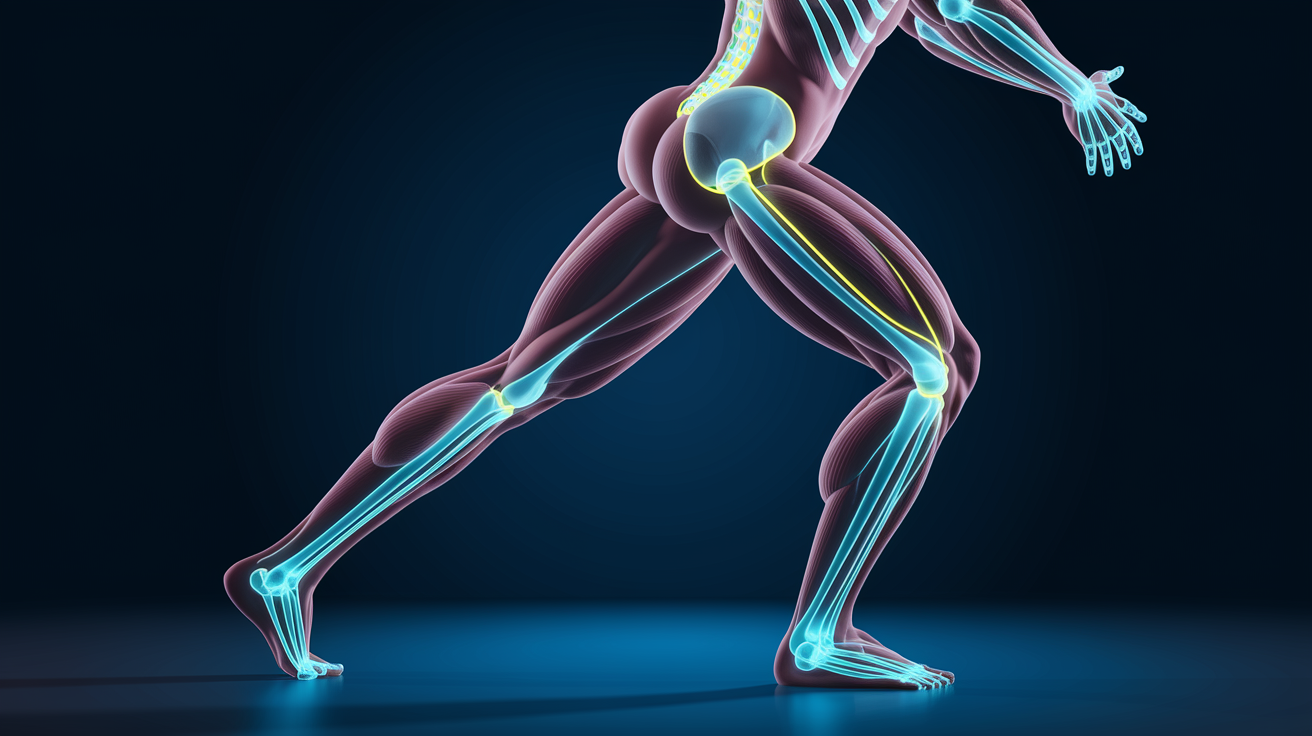
Your hamstrings do way more than bend your knee. They extend your hip, help slow down your quad with every step, and keep your pelvis stable when you’re walking, running, or climbing stairs. Weak hamstrings make knee injuries more likely and limit how much force you can produce during lunges, jumps, and sprints.
Training hamstrings with bodyweight movements teaches you the hip hinge, improves balance on one leg, and gets your posterior chain firing with your glutes and lower back. Dynamic hamstring drills before a session wake up those muscles and improve stability, which means better form and better output. Static stretches are better after training, when everything’s warm and more open to lengthening.
Think of hamstrings as your brakes. Every time your foot lands or you push off, your hamstrings slow the momentum your quads create. Training them improves that brake system, keeps your knees healthier, and makes your movement smoother over time.
Foundational Bodyweight Hamstring Movements and How to Perform Them
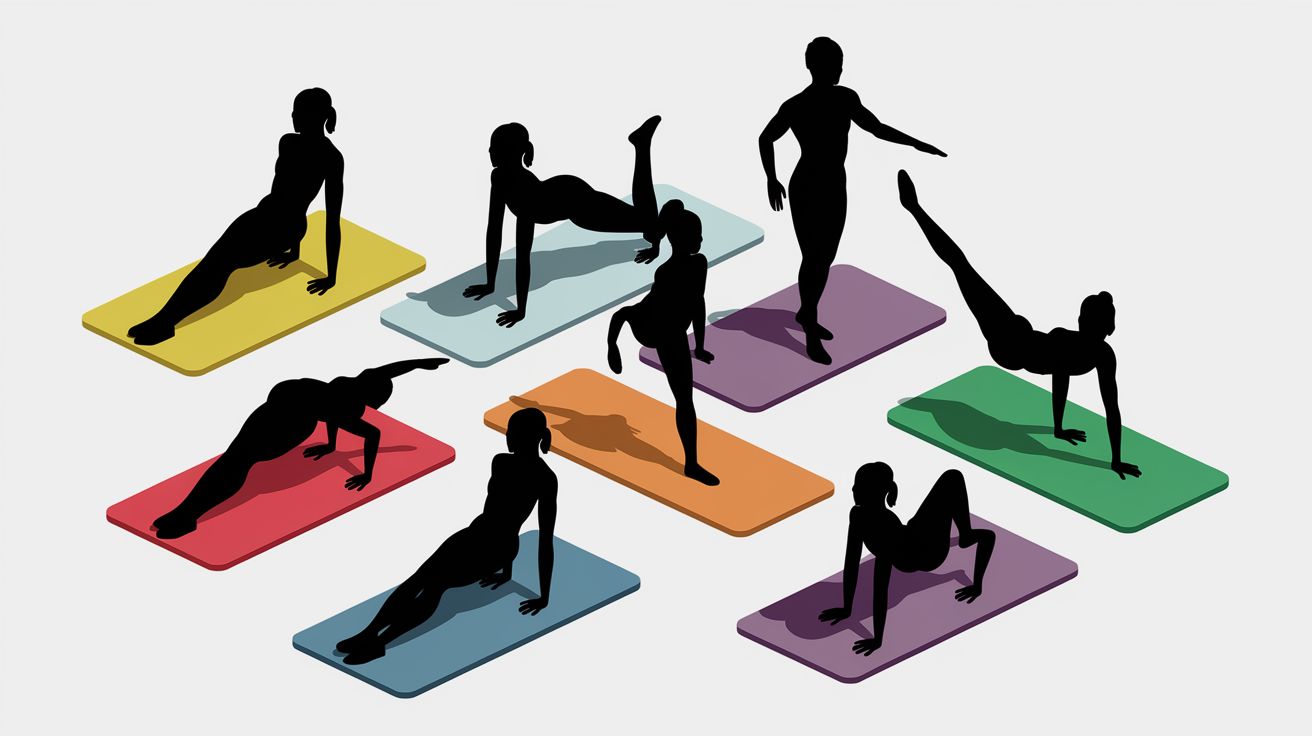
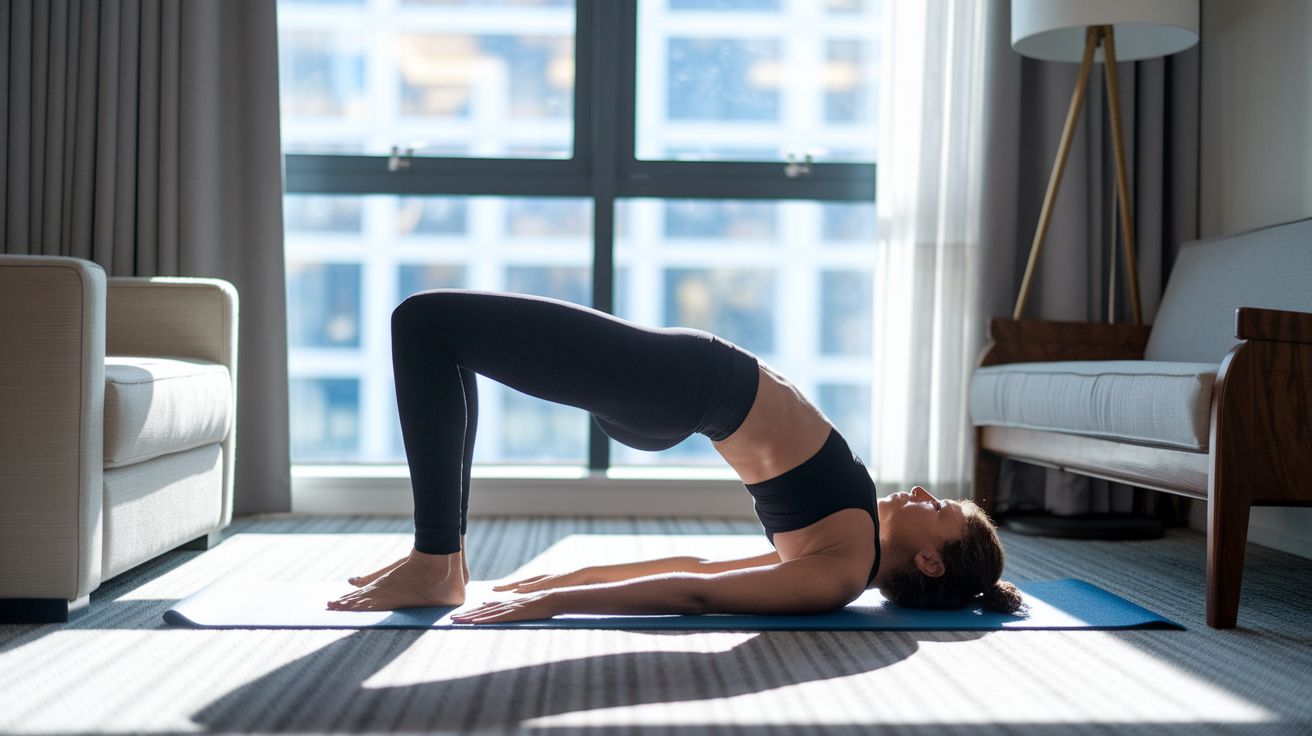
Glute Bridge
Lie on your back, knees bent, feet flat on the floor about hip-width apart. Squeeze your glutes and push through your heels until your body forms a straight line from shoulders to knees. Pause at the top. Lower slowly and repeat. Do 3 sets of 15 to 20 reps with short rest.
Single-Leg Glute Bridge
Same setup as a regular bridge, but extend one leg straight out in front of you. Drive through the heel of your planted foot and lift your hips until your body’s straight from shoulder to knee on the working side. Lower with control and finish all reps before switching. Do 3 sets of 10 to 12 reps per leg.
Good Morning
Stand with feet hip-width apart, fingertips lightly behind your ears. Keep a slight bend in your knees and push your hips back, lowering your torso until it’s nearly parallel to the floor. Your back stays flat and your core stays tight the whole time. Drive your hips forward to return to standing. Do 3 sets of 15 reps.
Standing Hamstring Curl
Stand on one leg, hands resting on a wall or chair for balance. Bend the opposite knee and bring your heel toward your glute, squeezing at the top. Lower your foot back down with control. Do 3 sets of 12 to 15 reps per side.
Donkey Kick
Get on your hands and knees, wrists under shoulders and knees under hips. Keeping one knee bent at 90 degrees, kick that leg back and up toward the ceiling. Squeeze your glute and hamstring at the top. Lower back to the start. Do 3 sets of 15 reps per leg.
Form cues to keep in mind:
- Keep a neutral spine. Don’t round your lower back or overarch.
- Press through your heels, not your toes, to get more hamstring and glute activation.
- Hinge at your hips, not your lower back, during Good Mornings and similar patterns.
- Keep your knees aligned with your toes. Don’t let them cave in.
- Control the lift and the lower. Slow tempo builds more strength.
Intermediate Bodyweight Hamstring Exercises for Increased Strength

Once you’re comfortable with the foundational movements and hitting consistent reps with clean form, intermediate exercises add instability, more range of motion, and unilateral demands. These variations need more control and expose weak spots in your posterior chain, especially around balance and coordination.
Reps drop a bit on intermediate moves. That’s on purpose. You’re shifting from building endurance to creating higher tension and refining movement patterns. Your hamstrings work harder per rep, which builds functional strength that carries over to more dynamic activities.
Hamstring Walk-Outs
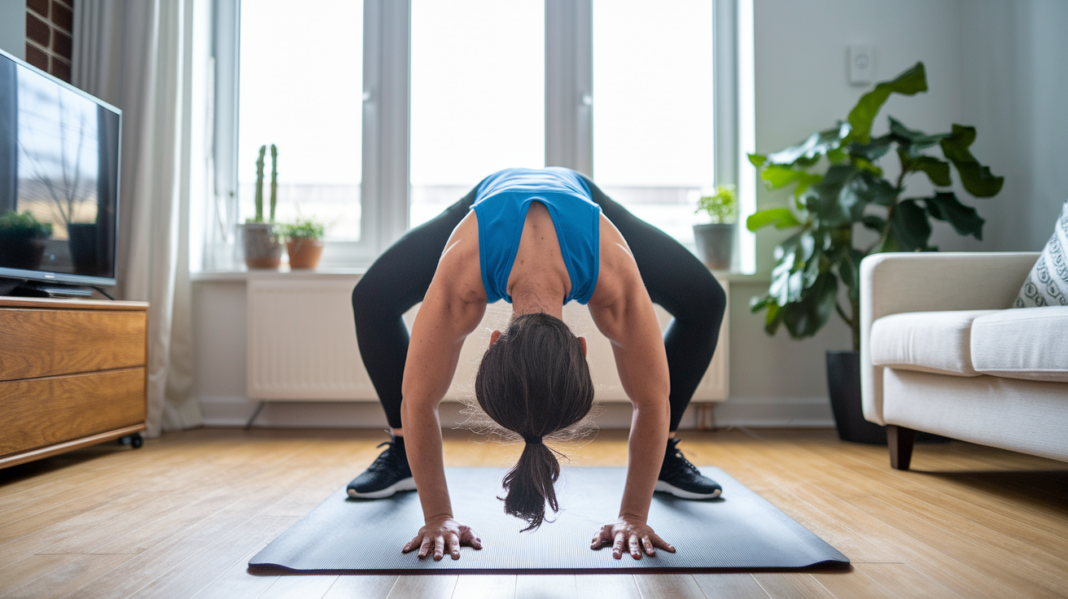
Start in a glute bridge with your hips fully extended. Keep your hips lifted and step one foot away from your body about an inch, then the other foot, moving in tiny steps. Walk your feet out as far as you can while keeping the bridge, then reverse to walk back in. Do 2 to 3 sets of 5 walk-outs, resting 30 to 60 seconds between sets.
Wall Glute March
Lie on your back with feet pressed against a wall and knees bent at about 90 degrees. Lift your hips into a bridge, then slowly march one foot up the wall a few inches while keeping your hips level. Return that foot and repeat on the other side. Do 3 sets of 8 to 10 reps per leg with steady, controlled movement.
Step-Through Lunge
Step back into a reverse lunge with your back knee hovering a couple inches above the floor. From that bottom position, drive forward through your front leg and step directly into a forward lunge on the opposite side without pausing. Alternate continuously, flowing from reverse to forward. Do 2 sets of 8 to 10 reps per side, focusing on smooth transitions and upright posture.
Advanced Bodyweight Hamstring Exercises for Maximum Tension
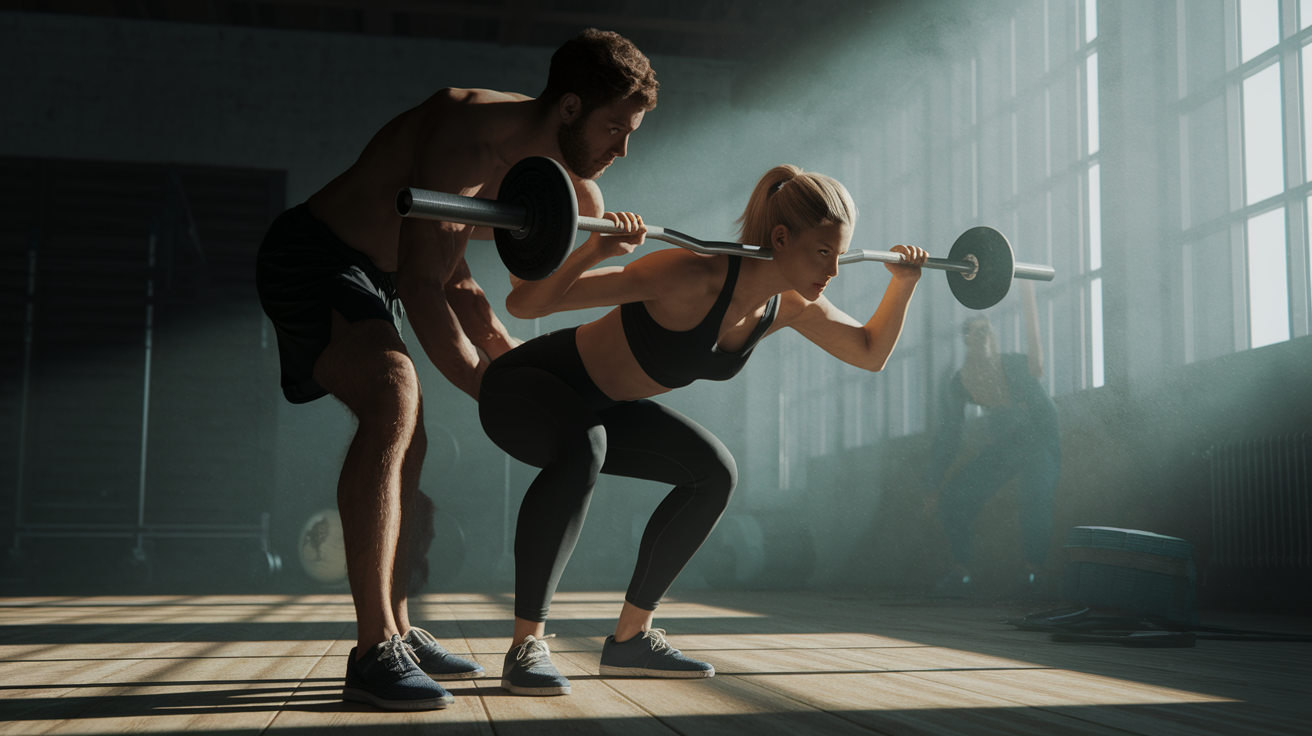
Advanced hamstring work brings in eccentric overload, higher stability demands, and full-range tension that pushes your posterior chain to its limit. These exercises are humbling, even for people who squat and deadlift heavy. If you’re not ready yet, that’s fine. They’re goals to work toward.
The most effective bodyweight hamstring exercise for building strength is the assisted Nordic curl. It loads your hamstrings eccentrically, the phase where muscle damage and adaptation happen most. You anchor your feet under a couch, partner’s hands, or heavy furniture, then slowly lower your torso toward the floor using only your hamstrings to control the descent. At first, you might only manage a few inches of controlled lowering before you collapse. That’s normal. Over weeks, you’ll gain range and control.
Sliding curls offer a similar challenge with slightly less intensity. Lie on your back with your heels on a towel or wear socks on a smooth floor. Lift your hips into a bridge and slide your heels toward your glutes, pulling with your hamstrings. The return phase, when you slide your feet back out, is where the real work happens. Keep your hips up the entire set.
Three advanced variations to add once intermediate moves feel manageable:
- Assisted Nordic Curl – Anchor feet, lower torso as slowly as possible, use your hands to catch yourself at the bottom, push back to the start. Do 2 to 3 sets of 5 reps.
- Sliding Hamstring Curl – Bridge position, heels on a towel or socks on smooth floor, slide heels in and out while keeping hips elevated. Do 3 sets of 8 to 12 reps.
- Slow-Tempo Romanian Deadlift – Bodyweight RDL with a 4-second lowering phase and 2-second hold at the bottom. Do 3 sets of 8 reps, focusing on the stretch in your hamstrings.
Common Mistakes When Performing Bodyweight Hamstring Exercises

Even simple bodyweight movements fall apart when you rush the reps or ignore positional cues. Poor form doesn’t just limit results, it shifts the load away from your hamstrings and onto your lower back or quads, which defeats the point.
The biggest mistake is rounding your back during hip hinge patterns like the Good Morning or bodyweight RDL. Your spine should stay neutral the entire time. If your lower back rounds, you’re either going too deep or your hamstrings are too tight to hinge cleanly yet. Shorten the range until your form improves.
Watch for these errors and the fixes that keep your hamstrings doing the work:
- Rounding your back in hinges – Keep your chest up and push your hips back instead of bending at the waist. If you’re rounding, reduce your range of motion.
- Landing stiff on jump variations – Always land with soft knees and controlled hip flexion. Stiff landings send impact through your joints instead of absorbing it with muscle.
- Not enough hip drive in bridges – Squeeze your glutes hard at the top and think about pushing the floor away with your heels, not just lifting your hips.
- Overusing quads in lunges – Keep your weight centered over your midfoot and push through your heel. If your knee drifts far forward, your quads take over and your hamstrings disengage.
- Poor ankle control in dynamic drills – In movements like the Handwalk, your hamstrings should do the stepping. If you’re driving with your hips or bending your knees, you’re compensating instead of isolating.
How to Progress Bodyweight Hamstring Exercises Over Time
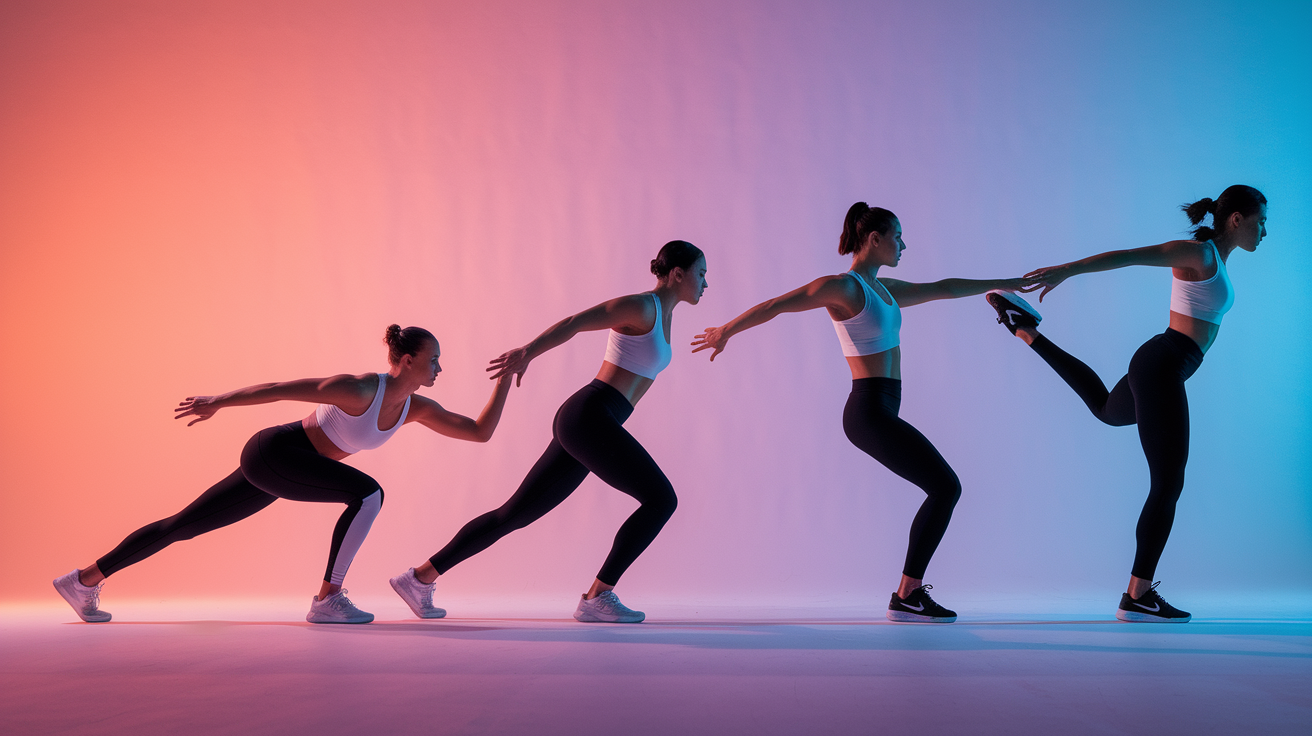
Progressive overload without weights means playing with variables other than load. You can add reps, slow down the tempo, hold peak contractions longer, or move to single-leg variations. All of these increase time under tension or demand more stability, which forces your hamstrings to adapt.
Start by extending your rep range. If you’re doing 3 sets of 10, push to 3 sets of 15, then 20. Once you hit 20 reps with clean form, the movement is probably too easy to keep driving strength gains. That’s when you shift to a harder variation or add tempo work. A 3-second lowering phase and 2-second hold at the bottom of a glute bridge will make 10 reps feel like 20.
Single-leg progressions are the simplest way to double the difficulty. A regular glute bridge becomes a single-leg bridge. A bodyweight RDL becomes a single-leg RDL. You’re suddenly balancing, stabilizing, and loading one limb with the work two used to share. Nordic curl negatives and sliding curls are also classic progressions for anyone chasing hamstring growth and resilience without a gym.
| Method | Example | Difficulty Increase |
|---|---|---|
| Tempo manipulation | 4-second eccentric on bridges or RDLs | Moderate to high |
| Single-leg variations | Single-leg bridge, single-leg RDL | High |
| Isometric holds | 2–3 second pause at peak contraction | Moderate |
Bodyweight Hamstring Workout Templates for Home or Travel
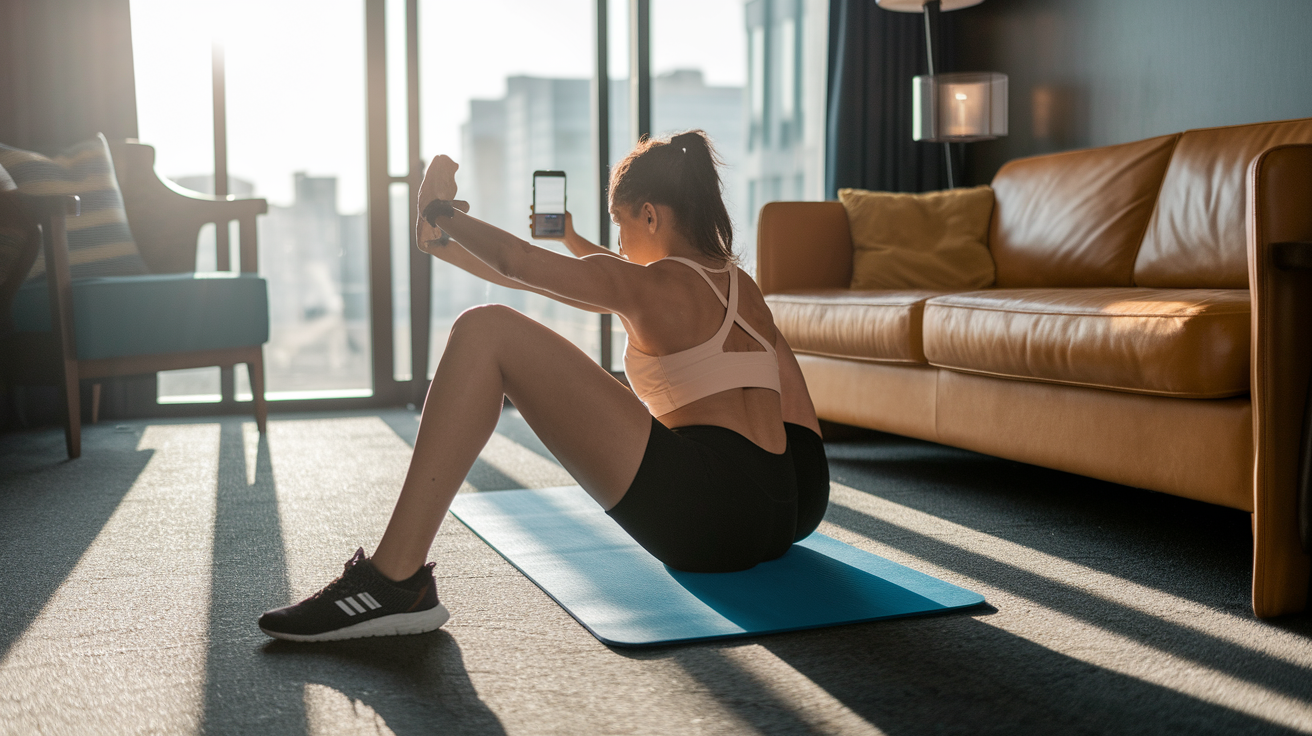
You don’t need an hour to train hamstrings well. A focused 20-minute circuit hits all the patterns your posterior chain needs and leaves you with enough energy to recover and repeat it two or three times per week. Circuits work well because they keep rest periods short, maintain tension across multiple angles, and let you move quickly through a variety of exercises without overthinking the structure.
Pick 8 to 10 exercises, do 2 sets of 10 reps per movement with 30 seconds of rest between sets, and cycle through the list twice. If you’re doing a circuit, complete all exercises once, rest 60 to 90 seconds, then repeat the full circuit. If you’re adding hamstring work to a leg session, pick 3 to 5 exercises and treat them as accessory movements after your main squats or lunges.
Programming flexibility matters when you’re working out at home or traveling. Some weeks you’ll have 30 minutes and full energy. Other weeks, 15 minutes is all you can manage. Both are fine. Consistency beats perfection every time.
Here’s a sample 20-minute bodyweight hamstring circuit you can do anywhere:
- Glute Bridge – 2×15
- Good Morning – 2×12
- Reverse Lunge – 2×10 per side
- Single-Leg Glute Bridge – 2×10 per side
- Standing Hamstring Curl – 2×12 per side
- Hamstring Walk-Outs – 2×5
- Donkey Kicks – 2×12 per side
- Forward Fold Pulses – 2×20
| Program Level | Exercises | Sets × Reps | Rest |
|---|---|---|---|
| Beginner | 5 foundational moves | 2×12–15 | 45 sec |
| Intermediate | 6–8 mixed difficulty | 3×10–12 | 30 sec |
| Advanced | 8–10 including eccentrics | 3×8–10 or 2×15 | 30 sec |
Hamstring Mobility and Flexibility Work to Complement Training
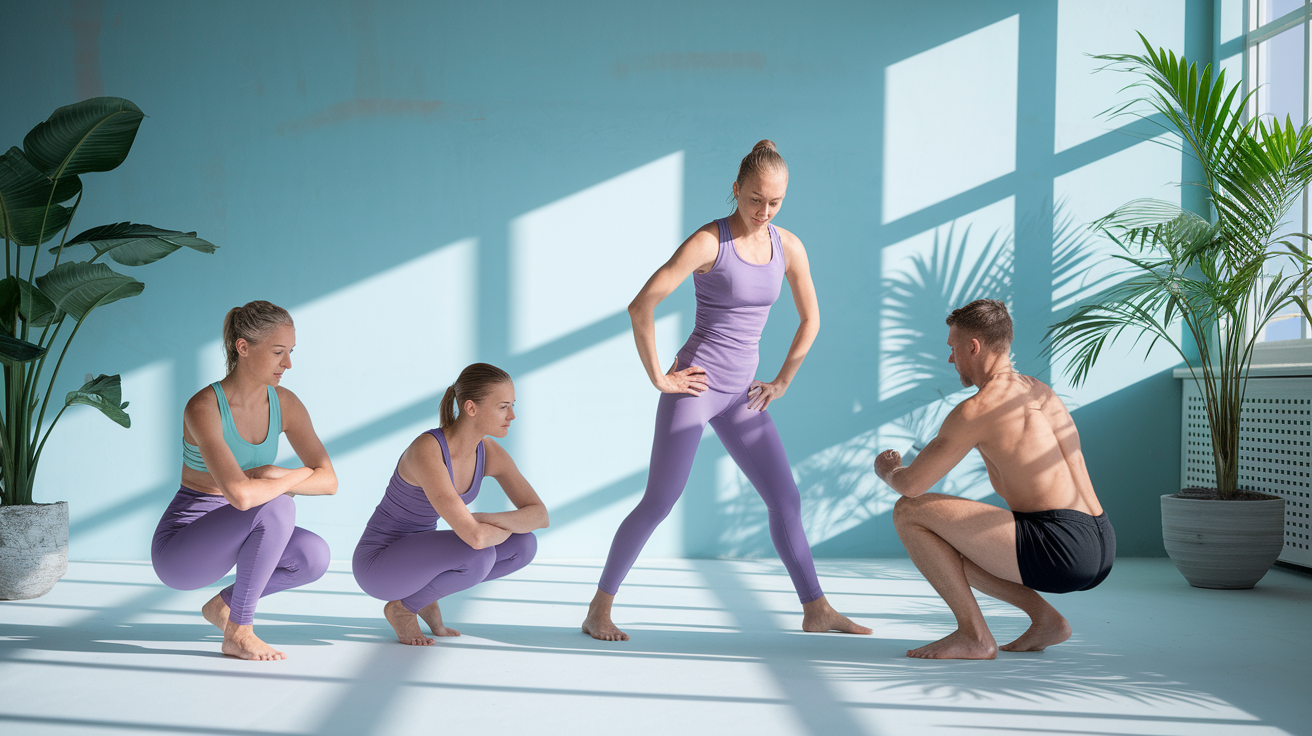
Tight hamstrings limit your squat depth, pull your pelvis into posterior tilt, and make hip hinge patterns feel stiff and uncomfortable. Mobility work won’t replace strength training, but it supports it by improving your range of motion and reducing the risk of compensatory movement patterns that shift load away from the muscles you’re trying to target.
Dynamic stretches and drills work best before your workout. They prepare your hamstrings to lengthen under load without temporarily reducing force output the way static stretching does. Save the longer, passive stretches for after training when your muscles are warm and more open to gains in flexibility. Forward fold pulses and standing toe-touch stretches are simple, effective options that need no equipment and take less than five minutes to complete.
Four movements to rotate into your warmup or cooldown:
- Knee Hugs – Stand tall, pull one knee toward your chest, hold for 2 seconds, release and step forward. Do 10 reps per side as part of a dynamic warmup.
- Forward Fold Pulses – Hinge at your hips and fold forward, letting your hands reach toward the floor. Pulse gently in the bottom position 20 times. Do 3 sets.
- Standing Toe-Touch Stretch – Stand with legs straight, reach toward your toes, and hold the deepest comfortable position for 20 to 30 seconds. Repeat 2 to 3 times post-workout.
- Sumo Squat-to-Stand – Squat down, grab the outsides of your feet, keep your arms straight inside your knees, and try to straighten your legs while holding your toes. Do 8 to 10 reps to open up your hamstrings and hips before lifting.
Final Words
Start using the 12 no‑equipment moves and the simple cues to build stronger hamstrings. They’re easy to do at home or on the road.
You read step‑by‑step basics for key drills, progression tips, common mistakes to avoid, and mobility work to stay safe. Slot the workout templates into busy weeks so you keep showing up.
Pick 3–5 exercises, train them 2–3 times per week, and add single‑leg or slow‑tempo progressions as you get stronger. These bodyweight hamstring exercises work anywhere and scale with you. Small, steady steps win.
FAQ
Q: Are there any bodyweight hamstring exercises? Can you build hamstrings without weights?
A: Yes — bodyweight hamstring exercises exist and you can build hamstring strength and size without weights by using progressive bodyweight moves like bridges, single‑leg variations, Nordic negatives, and tempo control.
Q: Can strengthening hamstrings help with knee pain?
A: Strengthening the hamstrings can reduce knee pain by improving knee stability, balancing quad pull, and helping decelerate the leg during walking and stairs, often easing strain on the joint.
Q: What are the best 3 hamstring exercises?
A: The best three hamstring exercises are Glute Bridge, Single‑Leg Glute Bridge, and Assisted Nordic Curl—covering strength, single‑leg control, and eccentric load for balanced hamstring development.