

Most busy adults get recovery completely wrong.
They chase flashy tools and skip the basics.
You don’t need ice baths or a closet of gadgets to keep training for years.
This post lays out a simple, high-impact recovery pyramid you can use in 10 to 30 minutes a day.
Focus on sleep, protein, hydration, light movement, stress relief, and planned deloads, ranked by return on time.
Read on to learn the exact steps to protect progress, avoid burnout, and keep training consistent with a packed schedule.
High‑Impact Recovery Strategies for a Sustainable Training Routine (Busy‑Adult Focus)
Most busy adults get recovery completely wrong. They buy foam rollers, sign up for ice bath sessions, and spend money on recovery gadgets while skipping the basics that actually work. Recovery isn’t about carving out more time. It’s about doing the right things in the right order.
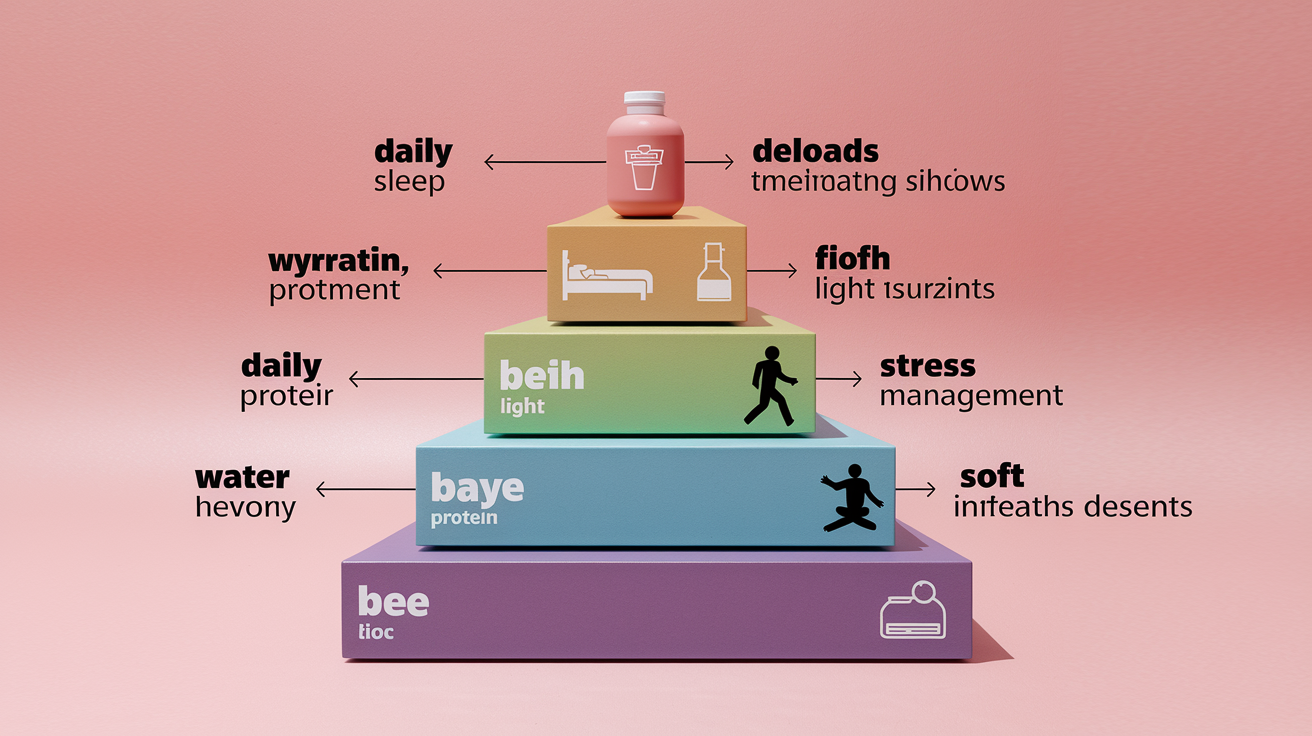
Picture recovery as a pyramid. Sleep forms the base because one bad night can trash a week of clean eating. Next up is daily protein and water. Your body needs both just to maintain muscle and keep basic systems running. Above that, you’ve got light movement and stress management. At the top sit the smaller tools like mobility drills and supplements. Most people flip this upside down, start with fancy tools at the top, then wonder why they still feel awful.
When you’re short on time, you choose based on impact per minute. A 20-minute nap or protein-heavy meal after training beats an hour of stretching if you slept five hours and skipped breakfast. The framework below shows you that priority order so you can fit recovery into a packed schedule without guilt.
Top Recovery Priorities for Busy Adults (Ranked by Impact)
- Sleep: 7 to 9 hours nightly with consistent bed and wake times within 30 minutes. Short naps (10 to 30 minutes) are fine.
- Daily Protein: 1.6 to 2.2 g/kg bodyweight spread across meals. Post-workout protein (20 to 40 g) within 1 to 2 hours.
- Hydration: 30 to 35 ml/kg bodyweight per day. Add 300 to 600 ml per 30 to 60 minutes of heavy sweating.
- Light Daily Movement: 10 to 20 minutes minimum (walking, easy cycling, mobility work) to support circulation and reduce stiffness.
- Stress Management: 3 to 10 minutes of breathing or mindfulness twice daily to lower cortisol and activate parasympathetic tone.
- Planned Deloads: Reduce training volume by 30 to 50% every 3 to 8 weeks to prevent overreaching and protect long-term progress.
If you’ve only got 30 minutes in a day for recovery, spend 10 on sleep prep, 10 on a post-workout meal or snack, and 10 on an easy walk or breathing session. Everything else is extra.
Daily Recovery Strategies for Busy Adults: Sleep, Naps, and Evening Routines

Sleep gives you the highest recovery return. Seven to nine hours per night lets your nervous system clear metabolic waste, lock in training adaptations, and reset stress hormones. If you’re consistently under seven hours, no amount of foam rolling or supplements will fix that gap. Protect your sleep window first.
Consistency matters as much as duration. Your body runs on a circadian rhythm that loves predictable timing. Keep your bedtime and wake time within a 30-minute window, even on weekends. If you go to bed at 10:30 PM most nights, don’t push it to midnight Friday and expect to feel sharp Saturday. Try to align your sleep with 90-minute cycles when possible. Six hours (four cycles) or 7.5 hours (five cycles) often feels better than 7 hours if it matches your natural rhythm.
Time‑Efficient Sleep Hygiene for Busy Schedules
Most sleep advice demands an hour-long wind-down routine. Forget that. A few targeted moves in 10 to 15 minutes can shift your body into rest mode without adding friction. The goal is simple signals that tell your nervous system it’s safe to shut down.
- Dim overhead lights 60 to 90 minutes before bed and use lamps or warm bulbs to support natural melatonin release.
- Limit screens (phones, laptops, TV) within one hour of bedtime or use blue-light filters and keep brightness low.
- Cut caffeine intake after 2 PM to avoid messing with deep sleep phases.
- Keep your bedroom cool (around 65 to 68°F) and dark to support uninterrupted sleep cycles.
- Use 3 to 10 minutes of slow diaphragmatic breathing or box breathing (4 seconds in, 4 hold, 4 out, 4 hold) before getting into bed to activate your parasympathetic system.
If your schedule forces a short sleep night (travel, late work deadline), a 10 to 30-minute nap the next day helps restore alertness. Avoid naps longer than 60 minutes or within three hours of bedtime because they can mess with your nighttime sleep quality and make the next night worse.
Nutrition‑Centered Recovery Strategies to Maintain a Sustainable Training Routine

Daily nutrition sets the floor for recovery. If you’re not eating enough total calories, your body will pull from protein stores to fuel basic function instead of using protein to rebuild muscle. Busy adults often under-eat during the day, then wonder why soreness sticks around for days. Your baseline is simple: eat enough to support daily activity, digestion, and training. Don’t starve your recovery for the sake of fat loss.
Protein is the most critical macronutrient for muscle repair. Shoot for 1.6 to 2.2 grams per kilogram of bodyweight each day. If you don’t track bodyweight in kilograms, target 20 to 40 grams of protein per meal across three to five meals. Post-workout, get 20 to 40 grams of protein within one to two hours after training. That window isn’t magic, but it’s practical. Pair that protein with 0.5 to 0.7 grams per kilogram of carbohydrates after intense sessions to replenish glycogen. After light or moderate workouts, the carb timing is less critical.
Hydration often gets ignored until performance drops. You need about 30 to 35 milliliters of water per kilogram of bodyweight daily. For a 70-kilogram adult, that’s roughly 2.1 to 2.5 liters. Add 300 to 600 milliliters per 30 to 60 minutes of heavy sweating. Electrolytes matter when sweat loss is high, but plain water works for most moderate sessions. If your urine is dark yellow by midday, you’re behind on hydration and recovery is already compromised.
| Target | Recommended Amount | Timing |
|---|---|---|
| Daily Protein | 1.6–2.2 g/kg bodyweight | Spread across 3–5 meals |
| Post‑Workout Protein | 20–40 g | Within 1–2 hours after training |
| Post‑Workout Carbs | 0.5–0.7 g/kg bodyweight | Within 1–2 hours (after intense sessions) |
| Daily Hydration | 30–35 ml/kg bodyweight | Throughout the day; add 300–600 ml per 30–60 min of heavy sweating |
Active Recovery and Movement Strategies for Busy Training Routines

Active recovery is low-intensity movement that boosts circulation, reduces stiffness, and speeds up the clearance of metabolic waste without adding fatigue. Schedule one to three short sessions per week, each lasting 20 to 40 minutes. Walking, easy cycling, swimming, or gentle yoga all work. Keep the intensity conversational. If you’re breathing hard, you’ve crossed into training territory and defeated the purpose.
Daily light movement is different from structured active recovery sessions. Even on non-training days, shoot for 10 to 20 minutes of easy walking or basic mobility work. This is especially important if you sit most of the day. Think of it as joint maintenance, not exercise. Motion keeps fluid moving through your tissues and prevents the stiffness that builds from sitting still.
Minimal‑Equipment Mobility and Soft‑Tissue Protocols (5–15 Minutes)
Mobility work doesn’t require a gym. Five to fifteen minutes targeting key areas can reduce tightness and improve movement quality. Foam rolling works best as a warm-up tool rather than a post-workout recovery method, but either way, keep it to 60 to 90 seconds per muscle group. A full-body roll takes about 5 to 10 minutes.
- Hips: 90/90 stretches, deep squats, or hip flexor lunges for 2 minutes total to address sitting-related tightness.
- Shoulders: Band pull-aparts, doorway stretches, or arm circles for 2 minutes to counter rounded posture and desk work.
- Thoracic Spine: Foam roller extensions, cat-cow stretches, or side-lying rotations for 2 minutes to restore upper-back mobility.
- Ankles: Calf stretches, ankle circles, or banded dorsiflexion for 1 to 2 minutes to support squat depth and walking mechanics.
A resistance band costs $10 to $30 and covers most mobility drills. A foam roller runs $15 to $40. Together, they give you a complete home setup for recovery work that fits into any schedule.
Stress‑Reduction Recovery Strategies for Consistent Training Progress

Chronic stress keeps your sympathetic nervous system in overdrive, which directly messes with muscle repair, sleep quality, and immune function. Training is a physical stress. If you layer it on top of work deadlines, family demands, and poor sleep, your body never gets the signal to recover. That’s when progress stalls and injuries start showing up.
Breathing exercises are the fastest way to activate your parasympathetic system and lower cortisol. Three to ten minutes twice daily is enough to shift your nervous system toward recovery mode. Box breathing works well: inhale for four seconds, hold for four, exhale for four, hold for four, and repeat for five to ten rounds. Diaphragmatic breathing (slow belly breaths) also works. Do one session in the morning or during your commute, and another before bed.
Simple Stress-Reduction Methods for Busy Adults
- Box Breathing: 4 seconds in, 4 hold, 4 out, 4 hold for 5 to 10 rounds. Total time 3 to 5 minutes.
- Diaphragmatic Breathing: Slow belly breaths (5 to 6 per minute) for 5 to 10 minutes to activate vagal tone.
- Short Mindfulness Practice: 3 to 5 minutes of focused attention on breath or body sensations to reset mental fatigue.
- HRV Tracking: Use a wearable or app to measure heart rate variability daily (1 to 3 minutes). If HRV drops more than 10% below baseline, reduce training intensity that day.
- Micro-Breaks During Work: 2 to 3 minute breathing or stretching breaks every 90 to 120 minutes to prevent cumulative sympathetic load.
These methods don’t add meaningful time to your schedule, but they signal your body that it’s safe to repair. That signal is what allows recovery to happen in the background while you go about your day.
Periodization and Deload Recovery Strategies for Long‑Term Training Sustainability
Even perfect daily recovery won’t prevent fatigue if you never back off training volume and intensity. Your body adapts to stress during rest, not during the workout itself. If you keep pushing every week without a break, adaptation slows down and injury risk climbs. Deload weeks are the scheduled brake that keeps long-term progress on track.
Plan a deload every three to eight weeks depending on training intensity, life stress, and how you feel. A simple structure is three weeks of increasing volume or intensity followed by one week of reduced load. During a deload week, cut your set count by 30 to 50 percent or drop intensity to 60 to 70 percent of your normal working weights for five to seven days. Keep daily mobility and sleep focus the same. The deload isn’t rest. It’s active recovery at a lower dose.
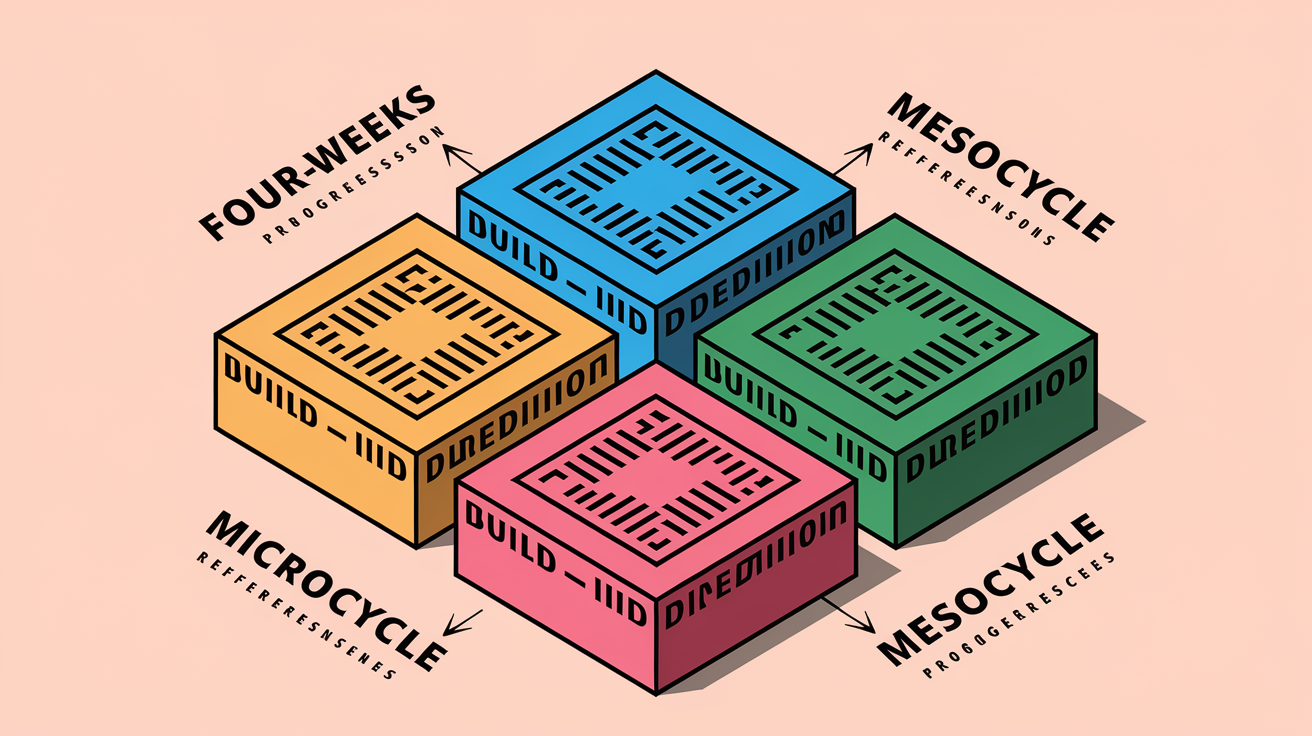
Micro and meso periodization sound fancy, but the concept is straightforward. A microcycle is one week. A mesocycle is a block of weeks tied to a specific goal. For busy adults, a simple four-week mesocycle works well: three weeks building, one week deload. If you’re running high stress at work or home, shorten the build phase to two weeks and deload more often. Listen to your body and adjust the schedule rather than forcing it.
When to Schedule a Deload Week
- Your performance is stagnating or decreasing despite consistent effort and nutrition.
- Heart rate variability (HRV) drops more than 10 percent below your baseline for multiple consecutive days.
- You feel persistent fatigue, irritability, or poor sleep quality that doesn’t improve with one or two rest days.
- Soreness lingers longer than usual (beyond 3 to 4 days) after normal training sessions.
Deloads feel easy in the moment, which makes people skip them. That’s the mistake. The deload is where your body consolidates the gains you’ve been chasing. Skip it, and you’ll eventually be forced into an unplanned break by fatigue or injury.
Time‑Efficient Recovery Scheduling Strategies for Busy Adults
Most people treat recovery as something they’ll do “when they have time,” which means it never happens. Recovery needs a slot in your calendar just like training does. The difference is that recovery can happen in micro-sessions scattered through the day. Ten minutes here, five minutes there, and twenty minutes in the evening adds up to real impact without requiring a dedicated hour.
Anchor recovery habits to daily routines you already do. Breathing exercises during your commute. A short walk at lunch. Mobility work while your coffee brews in the morning. Foam rolling while you watch TV before bed. The lower the friction, the more consistent you’ll be. If you wait for the perfect 45-minute window, you’ll skip recovery most weeks.
Example Daily Micro‑Recovery Schedule (10–30 Minutes Total)
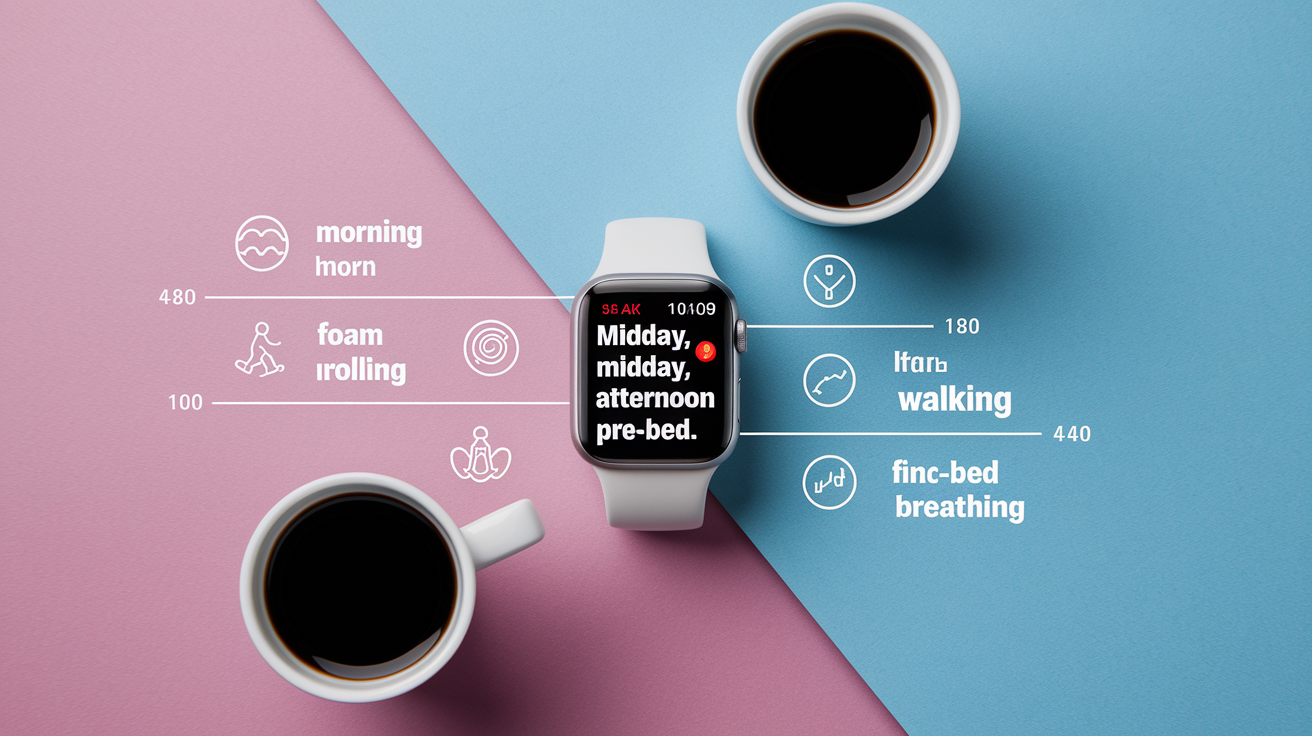
This schedule assumes a typical workday with limited free time. Total daily investment is 25 minutes, split into four short windows. Adjust timing to fit your actual day, but keep the structure: morning prep, midday movement, evening wind-down, pre-bed parasympathetic activation.
- Morning (5 minutes): Foam roll hips and upper back for 3 minutes, then 2 minutes of light stretching or mobility (hip flexors, thoracic rotations).
- Midday (10 minutes): Walk outside or around your building at an easy pace. Focus on nasal breathing and posture reset.
- Afternoon or Post-Workout (5 minutes): Get your post-workout protein and carbs (if training day) or a balanced snack. Hydrate with 300 to 500 ml water.
- Pre-Bed (5 minutes): Box breathing or diaphragmatic breathing for 3 to 5 minutes, then dim lights and prep your sleep environment.
On training days, replace the midday walk with post-workout active recovery if your session was intense. On rest days, add a second 10-minute walk or stretch morning mobility to 10 minutes. The key is keeping each block short enough that you won’t skip it.
Final Words
Get straight to it: sleep 7–9 hours, hit 1.6–2.2 g/kg protein, hydrate, move 10–20 minutes daily, use short naps, and deload every 3–8 weeks. These are the highest-return recovery moves.
Slide them into your day with micro-recovery windows, timed meals, and 3–10 minute breathing sessions. Watch energy, sleep, and soreness as your guide.
Use these recovery strategies to support a sustainable training routine for busy adults. Small, consistent steps add up—keep at it.
FAQ
What are the most time-efficient recovery strategies for busy adults?
The most time-efficient recovery strategies for busy adults include 7–9 hours of consistent sleep, daily protein at 1.6–2.2 g/kg, hydration of 30–35 ml/kg per day, 10–20 minutes of light movement, 3–10 minutes of breathing work, and planned deload weeks every 3–8 weeks.
How much sleep do you need for optimal muscle recovery?
You need 7–9 hours of sleep for optimal muscle recovery, maintaining consistent bed and wake times within 30 minutes to support circadian rhythm and maximize your body’s repair processes during rest.
What is the best protein intake for recovery on a sustainable training routine?
The best protein intake for recovery on a sustainable training routine is 1.6–2.2 grams per kilogram of bodyweight daily, spread across meals to support muscle repair and adaptation without overcomplicating your nutrition plan.
How much water should you drink daily for recovery and training?
You should drink 30–35 milliliters per kilogram of bodyweight daily for recovery and training, plus an additional 300–600 milliliters for every 30–60 minutes of sweating during workouts to maintain hydration and performance.
What should you eat after a workout for faster recovery?
After a workout, you should eat 20–40 grams of protein and 0.5–0.7 grams per kilogram of carbohydrates within 1–2 hours to support muscle repair, replenish glycogen, and optimize your recovery window.
How long should power naps be for recovery without disrupting sleep?
Power naps should be 10–30 minutes for recovery without disrupting sleep, as longer naps exceeding 60 minutes or naps taken too close to bedtime can interfere with nighttime sleep quality and circadian rhythm.
What counts as active recovery and how often should you do it?
Active recovery includes low-intensity activities like walking, cycling, yoga, or swimming at a conversational pace for 20–40 minutes, done 1–3 times per week to reduce muscle soreness and improve circulation without adding training stress.
How long should you foam roll each muscle for recovery?
You should foam roll each muscle for 60–90 seconds to improve tissue quality and reduce soreness, focusing on areas of tightness while maintaining consistent, controlled pressure over the targeted muscle groups.
What breathing techniques help with stress reduction and recovery?
Breathing techniques that help with stress reduction and recovery include box breathing, diaphragmatic breathing, and simple breath-holds practiced for 3–10 minutes twice daily to activate the parasympathetic nervous system and lower cortisol levels.
How often should you schedule deload weeks in your training routine?
You should schedule deload weeks every 3–8 weeks in your training routine, reducing volume by 30–50% for 5–7 days to allow your central nervous system and muscles to fully recover and prevent overtraining.
When should you reduce training intensity based on recovery markers?
You should reduce training intensity when your heart rate variability drops more than 10% from baseline, when fatigue accumulates across multiple sessions, or when performance declines despite adequate effort and nutrition.
How can busy adults fit recovery into a chaotic daily schedule?
Busy adults can fit recovery into a chaotic daily schedule by anchoring 10–30 minute micro-sessions to existing routines like morning breathing work, midday walking, lunch-break mobility, and pre-bed stretching to build sustainable habits.