

Think joint pain has to stop your cardio?
It doesn’t.
Low-impact cardio keeps at least one foot on the ground or uses equipment that removes the pounding from your joints, so you raise your heart rate without making knees, hips, or ankles angrier.
This post gives simple, coach-friendly routines you can do today: a 25-minute joint-safe interval plan, bodyweight moves for small spaces, and easy progressions for seniors, beginners, or people coming back from injury.
Short, practical, and repeatable, so you can get fitter without setbacks.
Immediate Low-Impact Cardio Routine for Joint-Friendly Fat Burn
Low-impact cardio means at least one foot stays on the ground, or you’re using equipment that takes away the repeated pounding from hard surfaces. It works for beginners building cardiovascular endurance from scratch, seniors who need balance and joint support, and anyone coming back from injury who wants to get their heart rate up without making knees, hips, or ankles angry.
Here’s a 25-minute template you can start today. Warm up for 5 minutes with easy marching in place, some arm circles, and hip swings to get blood moving and loosen things up. Then do 15 minutes of intervals: 3 minutes at a conversational effort where you can talk but you’re breathing harder, then 1 minute at a slightly tougher pace where talking gets choppy. Repeat that 3-minute/1-minute pattern three or four times. Cool down for 5 minutes with slow walking and some gentle stretches for hips, calves, and quads.
No equipment? Use these six bodyweight moves in sequence:
- March in place with high knees, pumping your arms.
- Side steps, moving left 4 steps then right 4 steps, keeping knees soft.
- Low-impact jacks, stepping one foot out at a time and raising opposite arm overhead.
- Step-back lunge taps, tapping your rear foot lightly instead of a full lunge, alternating legs.
- Standing oblique knees, bringing one elbow down to meet the opposite knee, alternating sides.
- Lateral shuffle, pushing off to glide side to side with quick, controlled steps.
Watch your perceived exertion throughout. Sharp joint pain means reduce the range or switch to a seated option. You’re aiming for steady effort you can repeat two or three times this week, not a single session that leaves you wrecked for days.
Benefits of Low-Impact Cardio for Strength, Endurance, and Joint Health
Low-impact activities give you the same cardiovascular improvements as high-impact work when you raise the intensity. Your heart rate climbs, your lungs work harder, you burn calories. The American Heart Association recommends at least 150 minutes per week of moderate aerobic exercise, and low-impact stuff like walking, cycling, rowing, and swimming all count. You build endurance, strengthen your heart, and boost your metabolic rate without the repetitive ground strike that can inflame joints or worsen existing pain.
Calorie burn depends on body weight, age, and how hard you’re working, but here’s what 30 minutes looks like: swimming at moderate to vigorous pace burns around 180 to 400 kilocalories, stationary cycling at moderate effort burns 200 to 400, rowing burns 210 to 400, elliptical training burns 200 to 350, and brisk walking on flat ground burns 100 to 200. Incline walking pushes that number higher. The joint protection these exercises offer makes them accessible for people with higher body weight, arthritis, balance concerns, or those recovering from lower body injuries. You can still hit high heart rate zones and challenge your cardiovascular system while protecting the structures that need it most.
Core Low-Impact Cardio Exercises for Safe, Effective Training
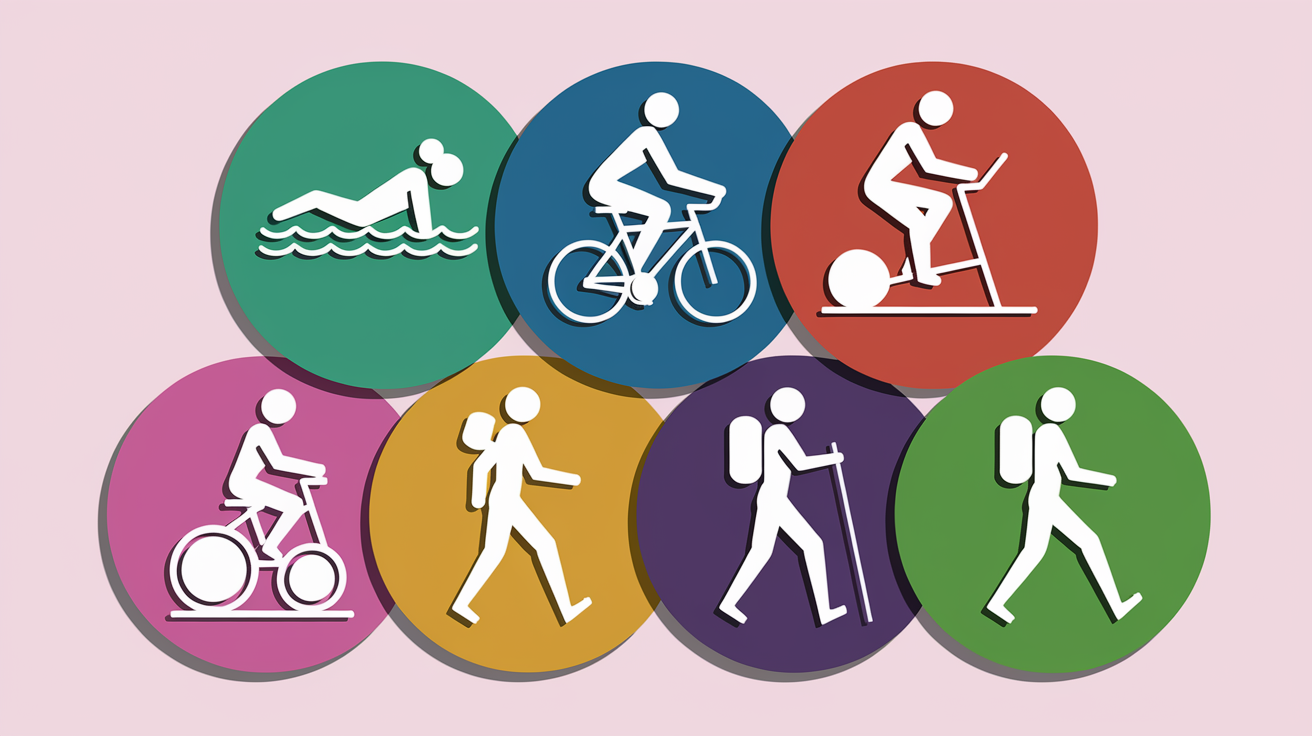
These seven modalities form the foundation of any low-impact cardio program. They give you different movement patterns, muscle recruitment, and intensity options, so you can rotate through them based on what equipment you’ve got, what you like, and what your recovery needs are.
For swimming, keep a streamlined body position with steady breathing. Don’t overreach your shoulder on repeated strokes if you feel anterior shoulder pain. For cycling, adjust your seat height so your knee has a slight bend at the bottom of each pedal stroke. Avoid excessive forward lean that loads your lower back. For rowing, drive with your legs first, hinge at your hips, and don’t round your lower back. Get the drive and recovery phases into a smooth rhythm. For elliptical work, keep your posture upright and don’t lean heavily on the moving handles. Use the full stride range to engage glutes and hamstrings. For vertical climbers, maintain a steady rhythm and engage your core to stabilize your torso as you move your limbs. Don’t hyperextend your elbows or knees at the top of each reach. For walking, land with a midfoot strike and shorten your stride on inclines. Use trekking poles if you need balance support or want to offload some weight from your knees and ankles. For hiking, choose softer trails and moderate terrain, and increase distance gradually to avoid overuse injuries.
Variations include recumbent bikes for seated back support, incline walking on a treadmill to increase calorie burn without impact, and light trail hiking that adds uneven terrain for balance and coordination work. Each option fits different injury histories, fitness levels, and access to equipment.
| Exercise | Primary Benefit |
|---|---|
| Swimming | Near-zero joint impact; full-body muscular endurance |
| Cycling | Knee-friendly lower-body work; scalable resistance |
| Rowing | Full-body cardio with posterior-chain emphasis |
| Elliptical | Gliding stride with adjustable incline and resistance |
| Vertical Climber | Rhythmic climbing motion; high calorie burn |
| Walking | Most accessible; minimal equipment; outdoor option |
| Hiking | Uneven terrain for balance; nature exposure; scalable distance |
Comparing Low-Impact and High-Impact Cardio for Intensity and Results

The difference between low-impact and high-impact cardio is joint stress, not cardiovascular challenge. High-impact activities like running and plyometric drills involve both feet leaving the ground, creating a ground reaction force that can be two to three times your body weight on landing. Low-impact keeps one foot on the ground or uses equipment that cushions the load. That matters for injury prevention, but it doesn’t limit how hard your heart and lungs work.
You can match or beat the cardiovascular output of high-impact work by raising resistance, increasing speed, or using intervals on low-impact machines. Rowing at a higher stroke rate or cycling at a steeper resistance pushes your heart rate into the same zones as moderate pace running. A pattern like 3 minutes at conversational effort followed by 1 minute at a slightly harder pace mimics interval training without the repeated impact. Swimming laps faster, adding incline to a treadmill walk, or using the elliptical at a higher resistance all produce similar heart rate responses.
Use perceived exertion or a heart rate monitor to guide intensity. Moderate effort means you can talk but not sing. That’s typically 50 to 70 percent of your maximum heart rate. If you’re doing intervals, the harder segments might push you to 70 to 85 percent, where talking becomes difficult. Low-impact doesn’t mean low intensity. It means you can reach high effort safely.
At-Home Low-Impact Cardio Options for Small Spaces
You don’t need a gym membership or expensive equipment to raise your heart rate at home. A small living room, hallway, or bedroom corner is enough space for bodyweight circuits, mini steppers, or steady marching routines that protect your joints while building endurance and burning calories.
Try these five moves in sequence:
- Marching in place for 1 minute, driving your knees toward your hips and pumping your arms.
- Step side steps, moving laterally across your space for 1 minute, keeping your knees soft and core engaged.
- Diagonal jacks, stepping one foot out at a 45 degree angle while raising your arms overhead, alternating sides for 1 minute.
- Mini stepper intervals if you have a small stepper machine: 2 minutes steady, 1 minute faster, repeat.
- Low-impact dance pattern, combining grapevines, side taps, and arm reaches for 2 minutes to add coordination work.
You can structure these moves using a 45 second work, 15 second rest interval pattern for a 20 minute session, or you can do steady marching, side steps, and diagonal jacks for 5 minutes each with 1 minute breaks in between. Both approaches raise your heart rate, improve conditioning, and require no equipment beyond a timer or a phone app.
Low-Impact Cardio Routines for Seniors, Beginners, and Injury Recovery

Seniors, beginners, and people recovering from injury get the most out of low-impact modalities because they build cardiovascular fitness without overloading healing tissues or challenging balance too aggressively. Walking, water aerobics, recumbent cycling, and seated exercises let you control intensity, monitor joint response, and progress gradually without setbacks.
If balance is a concern, use trekking poles for walking or stay near a wall for side step drills. If knee or hip pain flares with weight bearing work, switch to a recumbent bike that supports your back and offloads your joints, or move into a pool where water buoyancy reduces impact to near zero. Walking on softer surfaces like grass, dirt trails, or rubberized tracks also lowers the shock transmitted through your knees and ankles compared to concrete sidewalks.
Options for limited mobility or post surgical recovery:
- Chair aerobics, performing seated marching, arm circles, and torso twists from a stable chair.
- Seated marching with resistance bands looped around your thighs to add muscle work.
- Water jogging in chest deep water, where buoyancy supports most of your body weight.
- Supported incline walking on a treadmill, holding the rails lightly for balance while the incline increases intensity without speed.
Progression should be gradual. Bump your total weekly duration by about 10 percent each week, and monitor your perceived exertion during each session. Sharp joint pain means stop or reduce intensity immediately. Differentiate between muscle soreness, which is normal, and joint pain, which is a warning sign. Consistency matters more than intensity at this stage.
Low-Impact Cardio Sample Workouts (15, 30, and 45 Minutes)

Session length influences calorie burn, endurance gains, and how quickly you reach the 150 minute weekly guideline. Shorter sessions fit busy schedules, while longer sessions build deeper aerobic capacity and burn more total calories.
A 15 minute LIIT routine works well for tight schedules. Warm up for 3 minutes with easy marching or cycling. Then do three 3 minute blocks: 2 minutes at moderate effort, 1 minute at a harder pace. Cool down for 3 minutes with slow walking and stretches. This format gives you a heart rate spike without requiring a long time commitment.
A 30 minute routine is the standard template for most people. Warm up for 5 to 10 minutes, spend 15 to 20 minutes in your main set (either steady or intervals), then cool down for 5 minutes. A 45 minute session extends the main set to 25 or 30 minutes, letting you accumulate more work at a moderate pace or add extra interval rounds. Use the 30 minute template three times per week to hit 90 minutes, then add one or two 15 minute sessions to reach or exceed the 150 minute target.
| Workout Length | Structure | Ideal For |
|---|---|---|
| 15 minutes | 3-min warm-up, 9-min LIIT (three 3-min blocks), 3-min cool-down | Busy schedules; quick heart-rate boost; active recovery days |
| 30 minutes | 5–10 min warm-up, 15–20 min main set (steady or intervals), 5 min cool-down | Standard session; building weekly volume; sustainable frequency |
| 45 minutes | 10 min warm-up, 25–30 min main set, 5–10 min cool-down | Longer endurance work; higher calorie burn; advanced conditioning |
Monitoring Progress and Measuring Cardio Improvements

Tracking your progress helps you see when your cardiovascular fitness improves and when to adjust your routine. Perceived exertion and heart rate zones are the two most practical methods. The talk test is simple: if you can hold a conversation but your breathing is noticeably harder, you’re in the moderate zone. If talking becomes choppy and you need to catch your breath every few words, you’re in the vigorous zone. Use this feedback during every session to confirm you’re working at the right effort level.
Wearable devices like fitness trackers and heart rate monitors give you real time data. They show your average heart rate, time spent in each zone, steps taken, and distance covered. If you’re walking or hiking, step count and distance are easy benchmarks. Bump your weekly step total by 500 to 1,000 steps every two weeks, or add 5 minutes to your session duration. If you’re cycling or rowing, track your average speed or watts. Small, consistent increases signal that your cardiovascular system is adapting.
Adjust your intensity or duration weekly. If a 20 minute session at moderate effort felt hard two weeks ago but now feels manageable, add 5 minutes or increase resistance slightly. Progress isn’t always linear, but tracking helps you notice trends and make informed adjustments instead of guessing.
Low-Impact Cardio Safety, Modifications, and Gear Tips
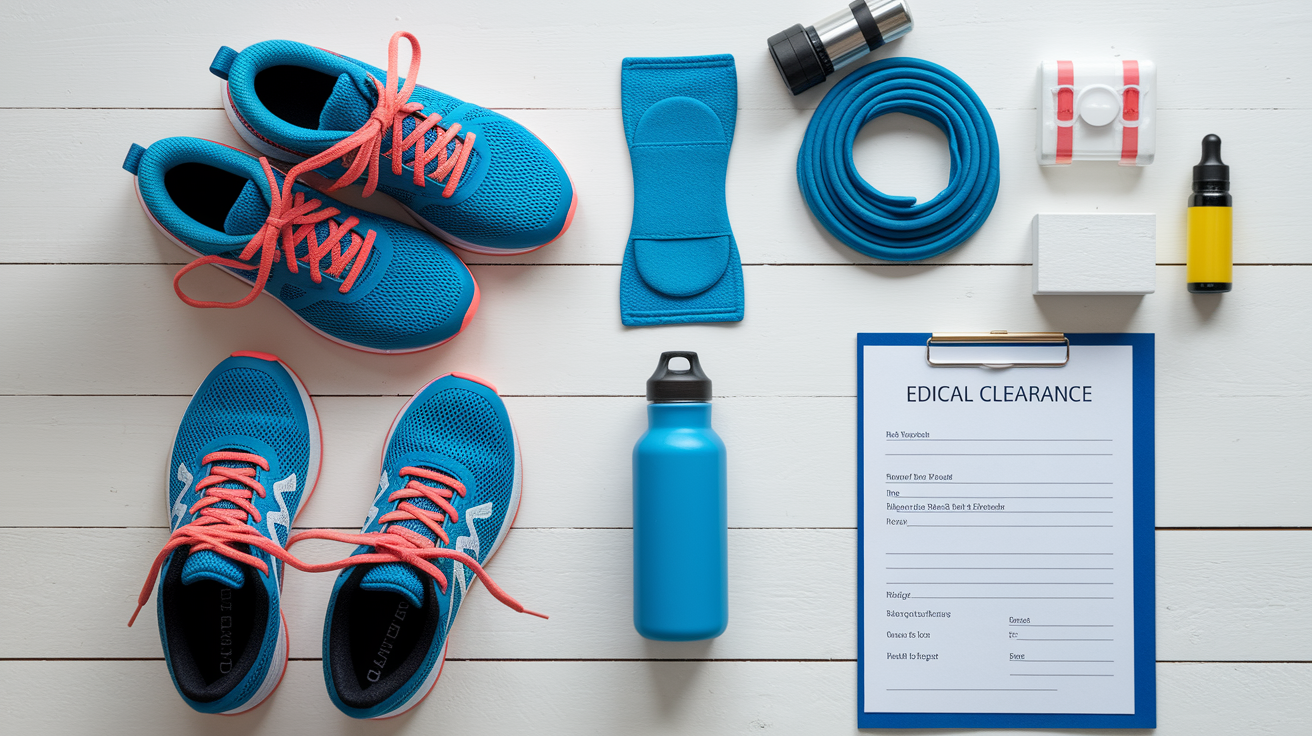
The most common mistake is starting too hard, too soon. Enthusiasm leads to long sessions at high intensity, which can inflame joints, trigger overuse injuries, and cause soreness that derails consistency. Start with two or three sessions per week, keep intensity moderate, and build from there.
Safety and modification tips:
- Use supportive footwear with cushioning and arch support for walking, hiking, and standing moves.
- Choose softer surfaces when possible (grass, dirt trails, rubberized tracks) to reduce impact.
- Shorten your stride on inclines and when you feel knee or hip discomfort.
- Adjust machine settings for proper fit: seat height on bikes, foot pedal angle on ellipticals, handle position on rowers.
- Stop or reduce intensity immediately if you feel sharp joint pain. Dull muscle soreness is normal; joint pain is a warning.
If you have a history of cardiovascular issues, uncontrolled high blood pressure, recent surgery, or chronic joint conditions, get medical clearance before starting or increasing intensity. A healthcare professional can give you specific guidelines and confirm which activities are safe for your situation.
Weekly Low-Impact Cardio Schedule for Consistency
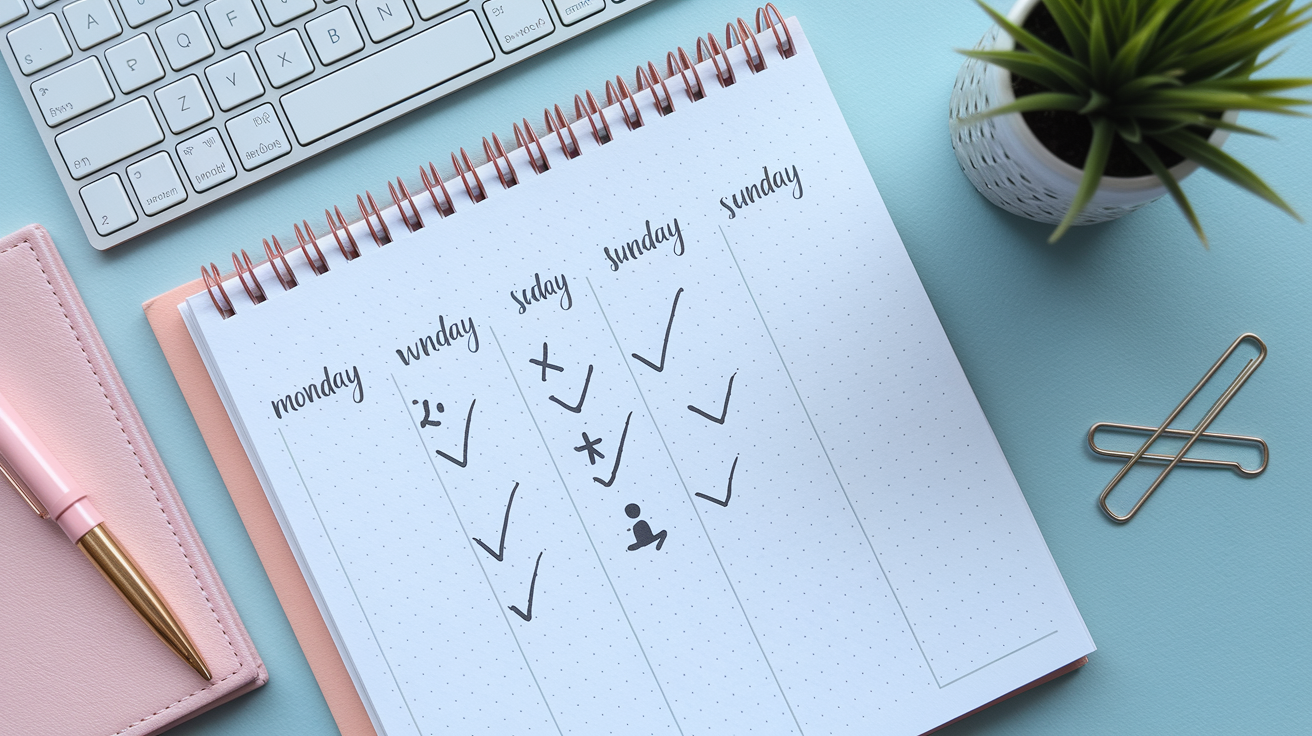
Frequency matters more than perfection. Three to five sessions per week builds cardiovascular fitness without overtraining. Start with three sessions if you’re new or returning from a break, then add a fourth or fifth session once the first three feel sustainable. Spread your sessions across the week so you have at least one rest or active recovery day between harder efforts.
Sample weekly structure:
- Monday: 30 minute moderate pace walk or recumbent bike, steady effort.
- Wednesday: 25 minute LIIT session on elliptical or rowing machine, 3 min moderate/1 min harder intervals.
- Friday: 30 minute steady swim, cycling, or hiking at conversational pace.
- Sunday: 15 to 20 minute recovery walk or easy marching in place, focusing on movement without fatigue.
You can swap days to fit your schedule. If mornings work better, do your longer sessions then. If evenings suit you, that’s fine too. The structure stays flexible as long as you hit your total weekly volume and avoid stacking hard sessions back to back without recovery time.
Final Words
Jump in: start with the 5‑minute warm-up, follow a 15–20 minute main set (3‑min moderate / 1‑min harder), then cool down. Use the at‑home moves or machine options and pick the version that fits your knees.
We covered why low‑impact cardio helps heart health, the best joint‑friendly exercises, sample 15/30/45 minute plans, safety and modification tips, and simple ways to track progress. This week, aim for one to three sessions, 15–30 minutes each.
Make this low impact cardio workout a repeating habit — small, steady steps add up and you’ll feel the benefits.
FAQ
Q: What is the best low impact cardio workout?
A: The best low-impact cardio workout is one you can do consistently and pain free, like walking, cycling, elliptical, swimming, or rowing. Aim for 20 to 45 minutes and pick what you enjoy.
Q: Can you lose weight with low impact cardio?
A: You can lose weight with low-impact cardio by creating a calorie deficit and staying consistent. Aim for 150+ minutes per week, add some strength work, and track portions for steady results.
Q: What is the 12 3 30 cardio rule?
A: The 12 3 30 cardio rule is a treadmill routine: set a 12 percent incline, walk at 3 mph for 30 minutes. It raises heart rate while keeping impact lower than running.
Q: What is the 3-3-3 rule at the gym?
A: The 3-3-3 rule at the gym generally means three exercises, three sets each, with either three reps or three-minute intervals depending on the program. It’s a simple circuit framework—check the workout details.