Think you need a studio or fancy reformer to do Pilates? You don’t.
Wall Pilates turns any sturdy wall into gentle resistance.
In just 10 to 20 minutes you can build core strength, fix posture, and gain flexibility without special gear.
This post walks you through easy, beginner-friendly moves, clear form cues, and a 15-minute routine you can do in your living room.
If you’re restarting fitness or need low-impact options, these exercises meet you where you are and help you feel stronger fast.
Beginner-Friendly Wall Pilates Routine That Delivers Immediate Results
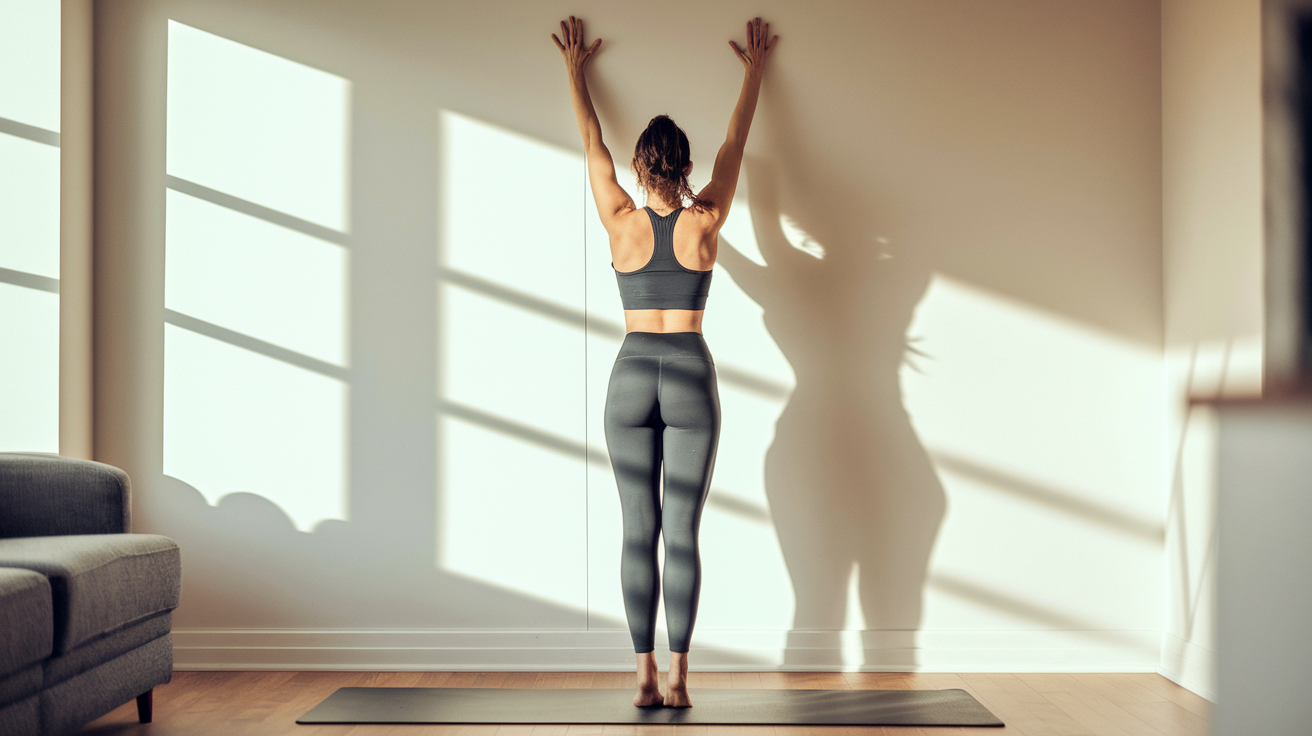
Wall Pilates turns any sturdy wall into your equipment. You press, push, and align against it to build core strength, fix your posture, and get more flexible. No reformer, no studio membership needed. It’s low impact, which makes it great if you’re just starting, getting back after time off, or dealing with mobility limits.
You need almost nothing. A clear wall, a mat, comfortable clothes. Done. Most beginner sessions run 10 to 20 minutes. You can do them in your living room, bedroom, or a hotel. The wall gives instant feedback on your alignment. When your back, hips, or shoulders touch the surface, you know you’re positioned right. That makes learning proper form easier than trying freestanding Pilates.
Wall Pilates has blown up on social media. Over 7 billion views on TikTok alone. Trends aside, the method works because it meets you where you are. You control difficulty by adjusting distance from the wall or how long you hold each position. Most exercises use 10 to 15 reps or 30 to 60 second holds. Research from 2011 and 2016 confirms that consistent Pilates practice improves both physical strength and mental well-being.
Here’s a simple sequence to start:
- Wall Roll Down
- Wall Squat
- Wall Push-Up
- Wall Bridge
- Wall Leg Lift
- Wall Side Kick
- Wall 100s
- Wall Plank
When you’re ready to build a routine, follow these guidelines:
- Duration: 10 to 20 minutes per session
- Frequency: 2 to 4 days per week
- Warm-up: 2 to 3 minutes of gentle mobility (neck rolls, shoulder circles, hip circles)
Start with one set of each movement and build from there. You’ll feel the difference in your core and posture within the first few sessions.
Essential Form Principles for a Safe Wall Pilates Workout
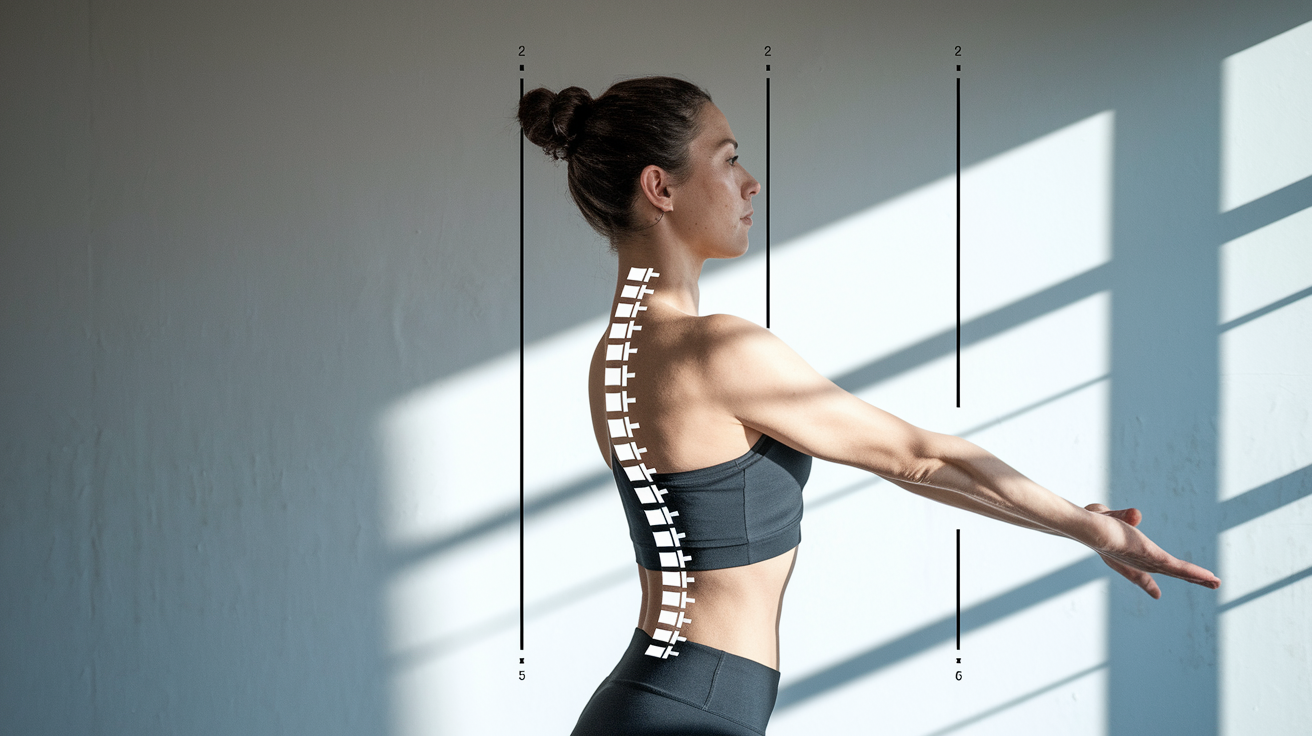
Neutral spine is the foundation of every wall Pilates move. Neutral means a gentle, natural curve in your lower back. Not flattened, not over-arched. When you stand or lie with your back against the wall, you should feel contact at your shoulders, mid-back, and tailbone. There’s a small gap at your lower back that fits about one or two fingers. The wall gives immediate feedback. If you lose the curve or press your low back flat, you’ll feel it right away.
Breathing coordinates with every movement. Inhale to prepare and set your position. Exhale during the effort phase, like pressing into a bridge or lowering into a squat. The exhale naturally engages your deep core muscles and stabilizes your spine. Wall 100s use a specific rhythm: breathe in for five counts, breathe out for five counts, repeat for 10 rounds. That controlled pace keeps you connected to the work and prevents holding your breath or rushing through reps.
Use these five alignment checks every time you start:
- Ribs stack over hips, no flaring forward
- Pelvis stays neutral, avoiding tuck or tilt
- Shoulders relax away from ears, blades slide gently down
- Neck stays long and aligned with spine, chin slightly tucked
- Core lightly braced, like you’re gently zipping up jeans without sucking in hard
These cues help you maintain stability and avoid strain in your neck, shoulders, or lower back. The wall acts like a mirror for your posture.
Step-by-Step Wall Pilates Exercises for Absolute Beginners
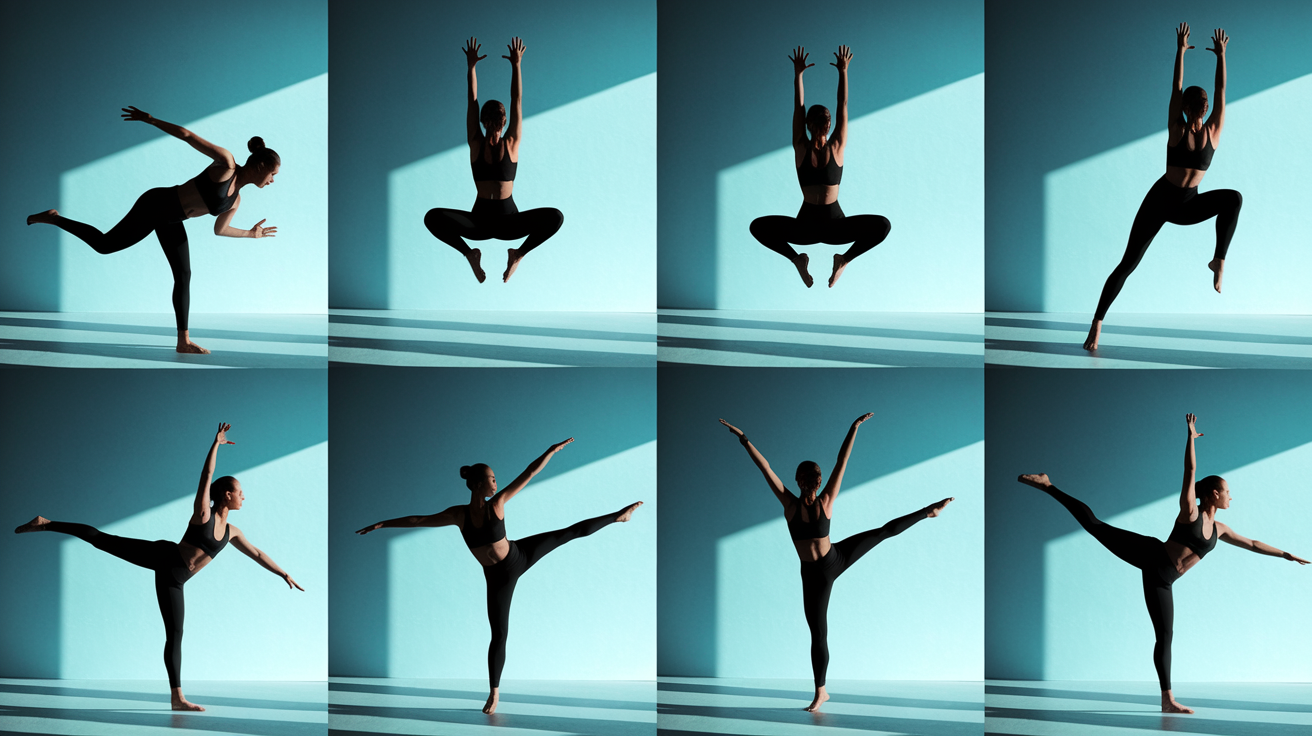
Each movement below targets specific muscle groups while teaching you control, alignment, and breathing. Work through them slowly. Quality over speed.
Wall Roll Down
Target muscles: Erector spinae, hamstrings, abdominals
Stand with your back against the wall, feet about four inches forward, hip-width apart. Press your shoulders, mid-back, and tailbone into the wall. Inhale. Exhale and tuck your chin, rolling down one vertebra at a time. Let your arms hang heavy. Roll as far as comfortable, aiming for fingertips to the floor if your hamstrings allow. Pause. Inhale at the bottom. Exhale and roll back up, stacking each vertebra from tailbone to head.
Reps: 10 repetitions
Modification: If you can’t reach the floor, roll down only halfway and focus on the spinal articulation. If it feels easy, pause at the bottom for three breaths before rolling up.
Wall Squat
Target muscles: Quadriceps, glutes, core stabilizers
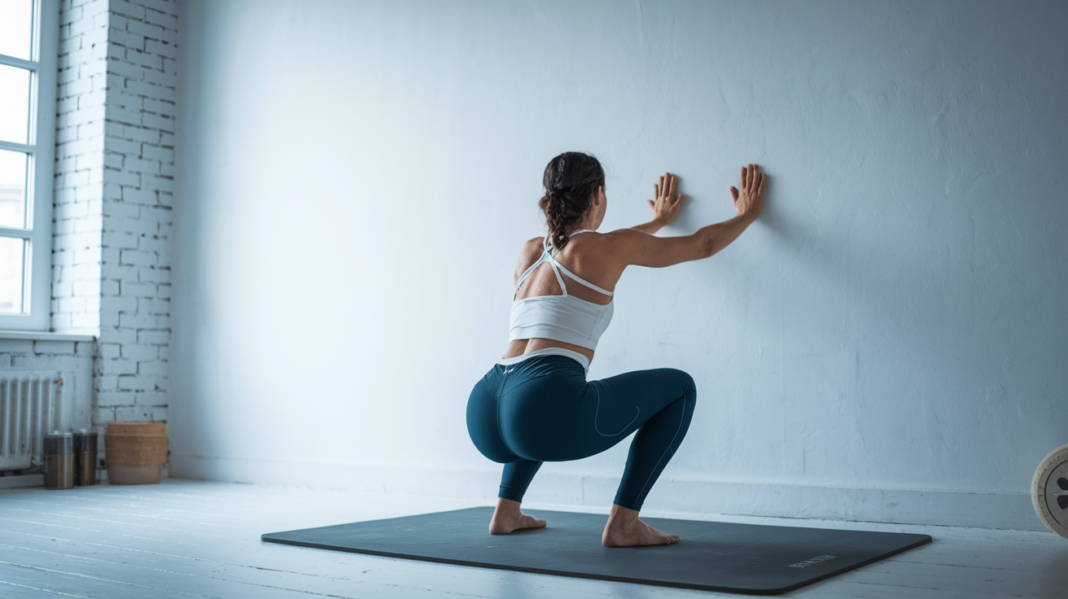
Stand with your back flat against the wall, feet shoulder-width and about 12 inches forward. Slide down the wall by bending your knees and hips, keeping your back in contact. Lower until your thighs are parallel to the floor, knees at roughly 90 degrees. Hold for two seconds. Press through your heels and slide back up.
Reps: 12 repetitions
Modification: If parallel is too deep, stop at 45 degrees. To increase difficulty, hold the bottom position for 10 seconds before standing.
Wall Push-Up
Target muscles: Pectorals, triceps, anterior deltoids, core
Face the wall and place your hands on it at shoulder height, shoulder-width apart. Step your feet back until your body forms a straight line from head to heels. Engage your core. Bend your elbows to about 45 degrees, lowering your chest toward the wall. Exhale and press back to the start.
Reps: 15 repetitions
Modification: Step closer to the wall to reduce load. To progress, step farther back or aim for four sets of 10 reps with controlled tempo.
Wall Bridge
Target muscles: Glutes, hamstrings, lower back, core
Lie on your back with your feet flat against the wall, knees bent at 90 degrees, hip-width apart. Press your shoulders and arms into the floor. Exhale and push your feet into the wall, lifting your hips until your body forms a straight line from shoulders to knees. Squeeze your glutes at the top. Hold for two seconds. Inhale and lower slowly.
Reps: 10 repetitions or hold for 30 seconds
Modification: If your hamstrings cramp, walk your feet slightly higher on the wall. Add a resistance band above your knees to increase glute activation.
Wall Leg Lift
Target muscles: Glutes, hip stabilizers, hamstrings
Stand facing the wall, hands pressed lightly against it at shoulder height, hip-distance apart. Step back about four inches. Engage your core and keep your spine neutral. Lift one leg straight back, squeezing your glute without arching your lower back. Lower with control.
Reps: 60 seconds per side (aim for 12 to 15 lifts)
Modification: Lift only a few inches if balance is tricky. To progress, pulse at the top for five counts before lowering.
Wall Side Kick
Target muscles: Hip abductors, obliques, glutes
Lie on your side with your feet against the wall, legs stacked and slightly bent. Prop yourself up on your forearm, elbow under your shoulder. Keep your hips stacked and body in a straight line. Lift your top leg toward the ceiling without rotating your hips forward or back. Lower slowly.
Reps: 3 sets of 8 per side
Modification: Reduce the range if your hip flexor pulls. Add ankle weights for extra resistance once form is solid.
Wall Leg Circles
Target muscles: Hip flexors, core stabilizers, glutes
Stand facing the wall, hands and hips lightly pressing into it, feet hip-width and about four inches back. Float one leg off the ground a few inches. Draw small, controlled circles in the air, using your hip to move, not your knee. Complete five circles in one direction, then reverse for five more. Switch legs.
Reps: 5 circles each direction per side
Modification: Make circles smaller if balance wobbles. Increase the size or add a resistance band around your ankles for progression.
Wall Sit
Target muscles: Quadriceps, glutes, core
Stand with your back against the wall, feet hip-width and about 12 inches forward. Slide down until your knees reach roughly 90 degrees. Press your back flat, engage your core, and hold. Keep your weight in your heels.
Reps: Hold 10 to 60 seconds, repeat 3 times
Modification: Start with 10-second holds and build by 5 seconds each week. To progress, lift one foot slightly off the ground during the hold.
Wall Bicycle Crunch
Target muscles: Rectus abdominis, obliques, hip flexors
Lie on your back with your feet flat on the wall, knees bent. Place your hands lightly behind your head. Lift your head, neck, and shoulders off the mat. Bring your right elbow toward your left knee while extending your right leg straight. Alternate sides in a smooth, controlled rhythm.
Reps: 3 to 4 sets of 15 total reps (15 per side if counting each side separately)
Modification: Keep both feet on the wall and twist only your upper body if the leg extension is too challenging. Slow the tempo to improve core control.
Wall 100s
Target muscles: Deep abdominals, hip flexors
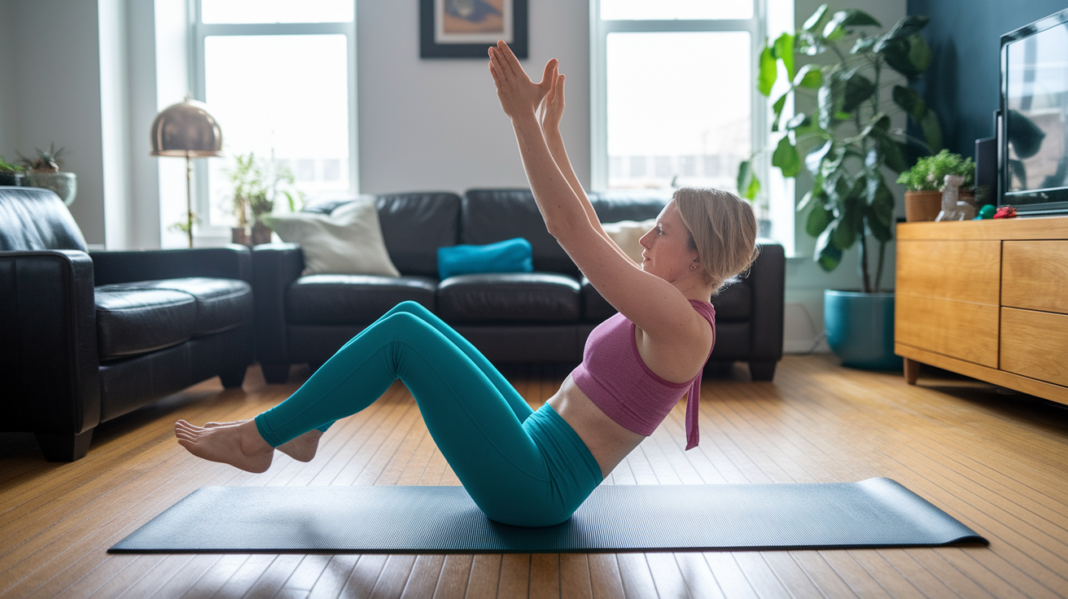
Lie on your back with your feet just touching the wall, knees bent at 90 degrees. Lift your head and shoulders off the mat, reaching your arms long by your sides, hovering a few inches off the floor. Pump your arms up and down in small, controlled pulses. Inhale for five counts, exhale for five counts. Repeat for 10 rounds, totaling 100 pumps.
Reps: 10 rounds (100 total arm pulses)
Modification: Keep your head down if your neck strains. To progress, straighten your legs up the wall or hover them a few inches away from the surface.
A 15-Minute Wall Pilates Routine for Beginners
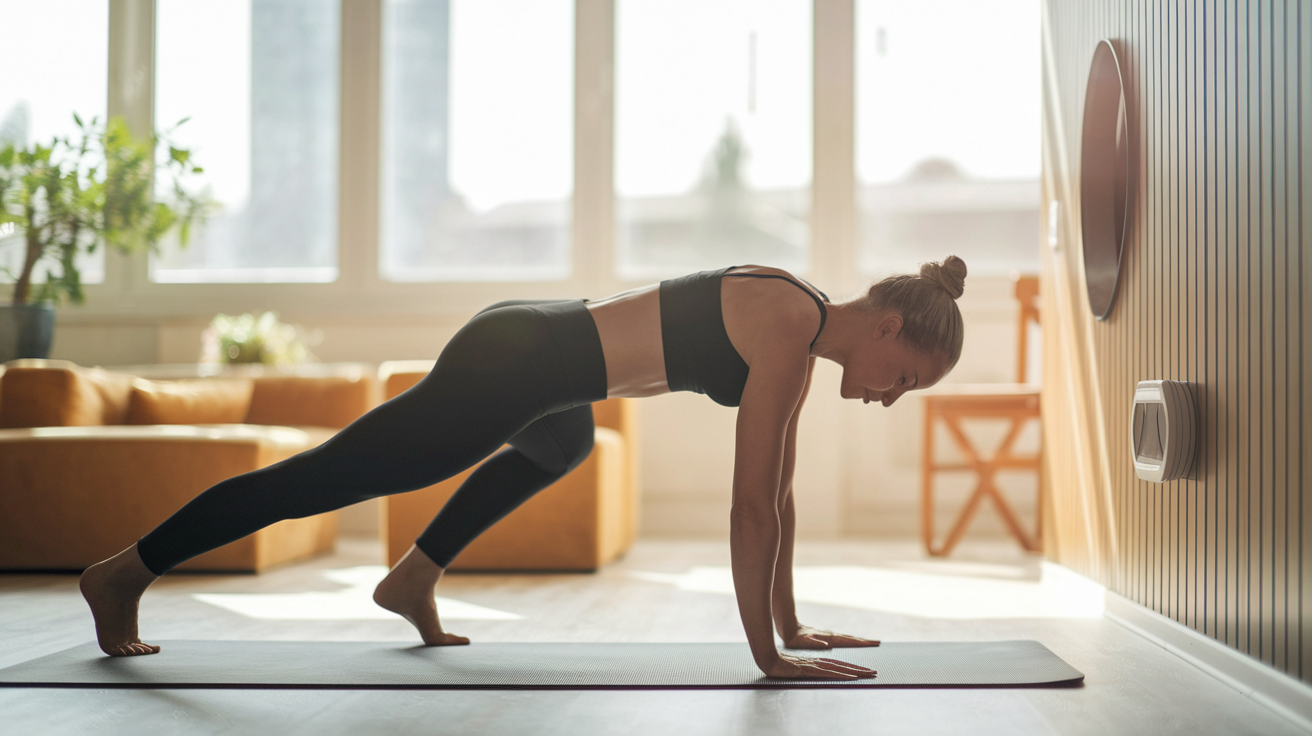
This routine fits into a short morning window or an evening wind-down. Move from one exercise to the next with minimal rest. Focus on smooth transitions and controlled breathing. The total work time is about 12 minutes, leaving three minutes for your warm-up.
| Exercise | Time | Notes |
|---|---|---|
| Wall Roll Down | 1 minute | 10 slow reps |
| Wall Squat | 1.5 minutes | 12 reps, 2-second hold at bottom |
| Wall Push-Up | 1.5 minutes | 15 reps, controlled tempo |
| Wall Bridge | 2 minutes | 30-second hold or 10 reps with pause |
| Wall Leg Lift (both sides) | 2 minutes | 60 seconds per side |
| Wall Bicycle Crunch | 2 minutes | 3 sets of 15 reps |
| Wall 100s | 2 minutes | 10 rounds, 5-in/5-out breathing |
Follow these guidelines to stay safe and consistent:
- Rest 20 to 30 seconds between exercises if needed, less as you build endurance
- Move at a steady, controlled pace, no rushing through reps
- If an exercise feels too easy, increase the hold time or add a second set
- If something feels too hard, reduce the reps or shorten the duration
Track your comfort level each session. You should feel worked but not wiped out.
Progressions and Modifications for Limited Mobility or Extra Challenge
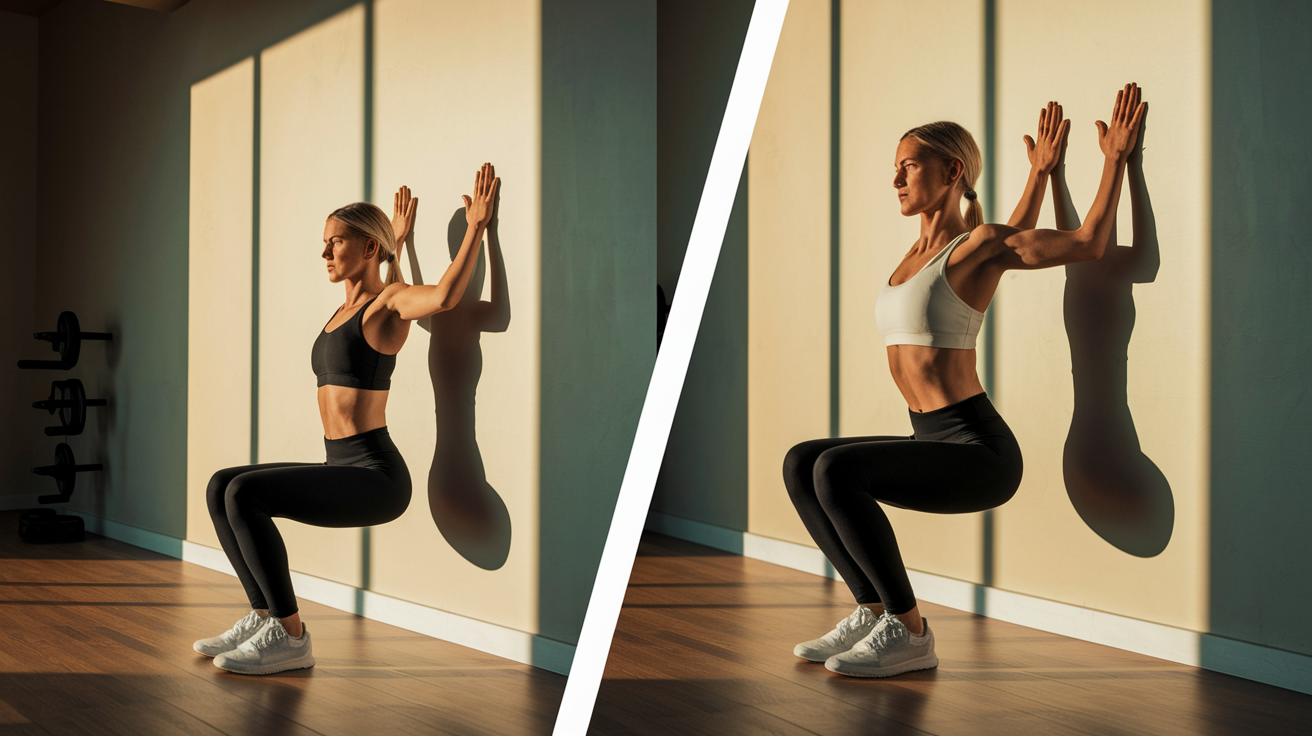
Wall Pilates scales beautifully because the wall itself controls the load. Moving your feet or hands farther from the wall increases the angle of your body, which increases resistance. For wall push-ups, stepping back six inches can double the difficulty. For wall bridges, walking your feet higher on the wall shifts more load to your hamstrings and glutes. For wall sits, dropping a few inches lower or holding an extra 10 seconds creates a noticeable burn.
If you’re working around pain, limited range, or recovering from an injury, reduce the range of motion and keep the wall closer. For leg lifts, lift only a few inches and focus on the squeeze at the top. For squats, stop at 45 degrees instead of 90. For roll downs, go only as far as your hamstrings allow without rounding your lower back. The wall provides support and feedback, so you can work within a safe range and build from there.
Here are six practical ways to adjust intensity:
- Increase distance from the wall to add load (push-ups, planks, leg lifts)
- Add 5 to 10 seconds to hold times (wall sits, bridges, planks)
- Increase reps by 2 to 5 per set each week (squats, push-ups, crunches)
- Add a resistance band above the knees (bridges) or around ankles (leg lifts, circles)
- Reduce wall contact by lifting one foot during wall sits or extending one leg during bridges
- Slow the tempo to a 3-second lower, 1-second pause, 3-second return rhythm
Progression doesn’t mean jumping to advanced moves. It means small, repeatable changes that you can measure week to week.
Benefits of Wall Pilates for Strength, Posture, and Mobility
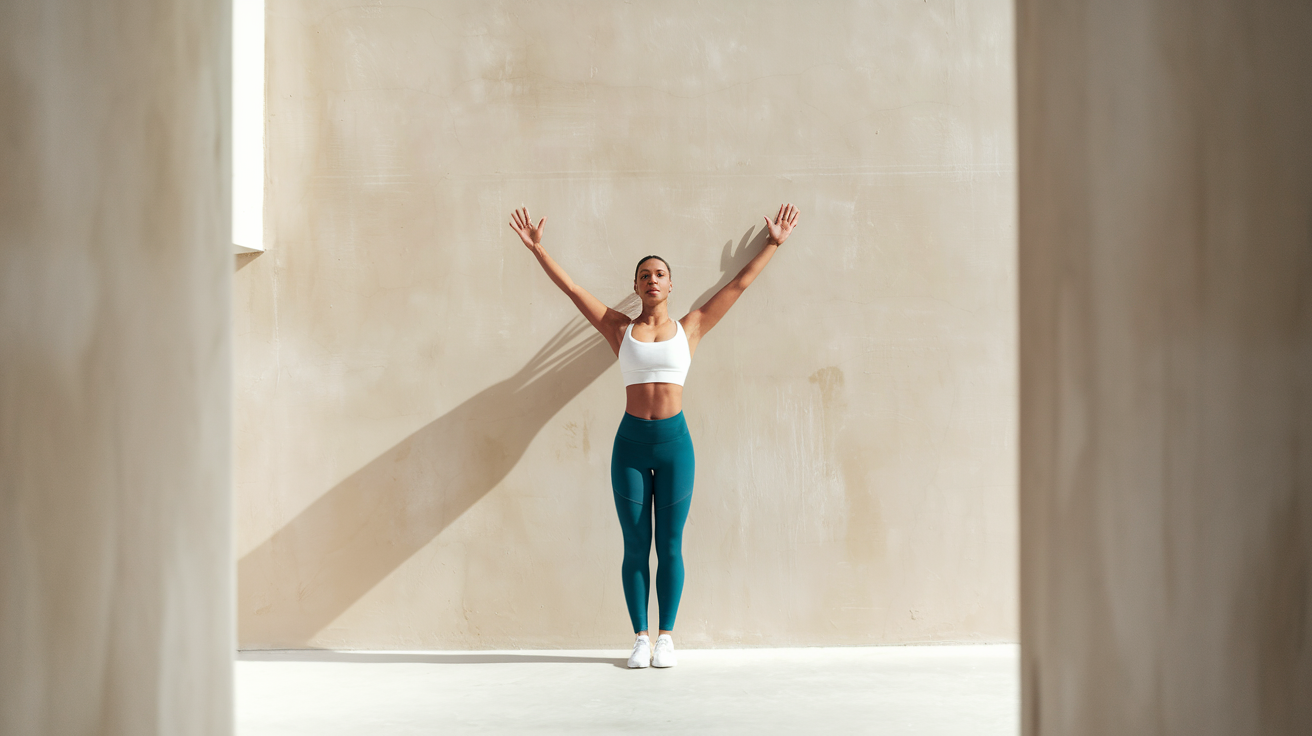
Wall Pilates builds strength in muscles you use every day. Your glutes, core, shoulders, and legs all get work without the joint stress of jumping or heavy loads. The wall provides resistance and stability, so you can focus on controlled movement and proper form. Over time, that control translates to better posture, less lower-back discomfort, and improved balance during everyday tasks like lifting, bending, or standing for long periods.
The practice also opens up your hips, shoulders, and spine. Wall roll downs mobilize each segment of your back. Wall angels improve shoulder and thoracic extension, which counteracts the hunched posture from desk work or driving. Wall bridges and leg circles strengthen hip stabilizers, which improve gait and reduce fall risk. Research published in 2011 and 2016 showed that regular Pilates practice delivers measurable improvements in both physical performance and mental well-being, including reduced stress and better body awareness.
The key benefits you’ll notice within a few weeks:
- Stronger, more stable core that supports your spine during daily movement
- Improved posture and alignment, reducing neck and shoulder tension
- Increased hip and back flexibility, making bending and twisting easier
- Better mind-body connection through focused, controlled breathing and movement
Consistency matters more than intensity. A 15-minute session three times a week will deliver more progress than one hard 45-minute workout.
A Simple Weekly Plan for Beginners Using Wall Pilates
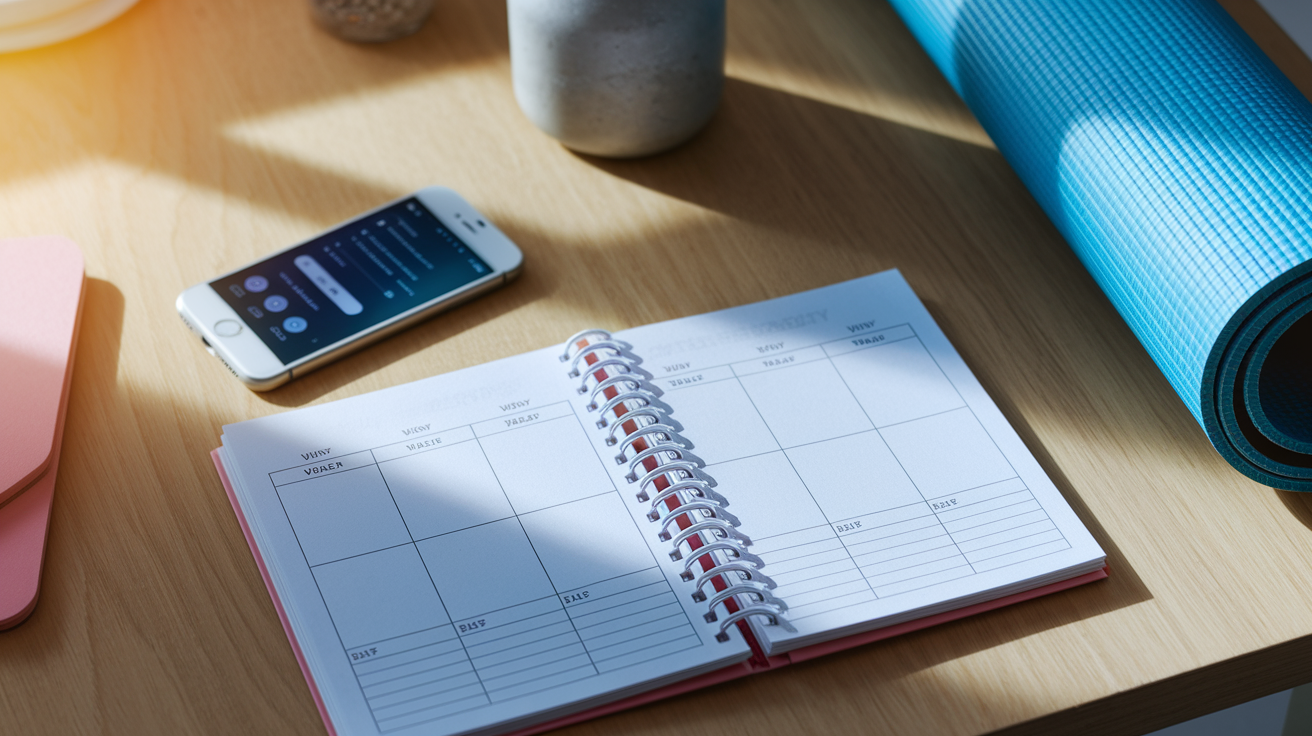
A steady weekly rhythm helps you build the habit without burnout. Research shows strength gains appear around eight weeks and balance improvements show up after about three months. That timeline works when you practice two to four times per week with at least one rest day between sessions. Your muscles need recovery to adapt and get stronger.
Start with short sessions and add time or sets as you feel ready. Here’s a four-week outline:
- Week 1: Two sessions of 10 minutes (one set of each exercise, lighter holds)
- Week 2: Three sessions of 12 minutes (one set, add 5 seconds to holds or 2 reps to movements)
- Week 3: Three sessions of 15 minutes (two sets of key moves like squats, bridges, push-ups)
- Week 4: Four sessions of 15 to 20 minutes (two sets across the board, longer holds, controlled tempo)
Track your reps, hold times, and how you feel after each session. Write it down in a notebook or notes app. You’ll spot patterns, like which moves feel easier or which days you have more energy. That data helps you adjust your plan and stay consistent without overthinking it. If life gets messy one week, drop back to two sessions and keep going. Progress isn’t linear, and that’s fine.
Final Words
Start with the 15-minute routine: roll downs, wall squats, push-ups, bridges, leg lifts, side kicks, 100s, and a short plank. Most moves use 10–15 reps or 30–60 second holds.
Use the wall to learn neutral spine, control pelvic tilt, and time your breath. Warm up 2–3 minutes and aim for 2–4 sessions per week. Progress by stepping away from the wall or adding holds.
This simple wall pilates workout for beginners builds strength, posture, and mobility in short sessions. Start small, track reps, and keep going—you’ll notice steadier movement soon.
FAQ
Q: Does wall pilates really work for beginners?
A: Wall Pilates really works for beginners by using the wall for alignment and support, letting you build core strength, posture, and mobility with short, low-impact 10–20 minute sessions, 2–4 times weekly.
Q: Is Pilates good for high cortisol?
A: Pilates can help high cortisol by reducing stress through controlled breathing, gentle movement, and focus, which calm the nervous system; aim for regular sessions (2–4 weekly) plus sleep and simple stress habits.
Q: Can people with Ehlers Danlos do Pilates?
A: People with Ehlers Danlos can do Pilates with medical clearance and a trained instructor; prioritize stability, avoid joint hyperextension, use wall support and gentle progressions, and stop if a movement causes pain or instability.
Q: Can Pilates help a weak bladder?
A: Pilates can help a weak bladder by strengthening pelvic floor muscles and improving bladder control when you use pelvic-floor cues and targeted moves; start gently and consult a pelvic-health clinician for tailored guidance.