Most home workout plans crash after a few weeks, but yours doesn’t have to.
This one is built to stick.
Three short strength sessions, a mobility day, and an optional 10- to 15-minute HIIT.
Each session fits inside 30 to 35 minutes, and the only gear you need is a yoga mat, resistance bands, and your bodyweight.
This plan focuses on consistency over perfection and gives simple progressions so you get stronger without extra gear or long workouts.
A Sustainable At‑Home Workout Plan You Can Start Today
Most workout plans collapse because they want everything up front. Six days a week, hour-long sessions, equipment you don’t have, a schedule that doesn’t match reality. This one’s built differently.
The setup is straightforward. Three strength sessions weekly, one mobility or yoga day, and a short HIIT option if you’ve got the energy. Everything fits inside 30 to 35 minutes. If things get tight, 10 to 20 minutes still moves the needle. You’re chasing consistency here, not some perfect week. The gear list is minimal: resistance bands, a yoga mat, your bodyweight. No shopping run, no gym commute.
Here’s a typical week:
- Monday – Full-body strength circuit (30 minutes): push-ups, squats, glute bridges, plank variations, resistance-band rows.
- Tuesday – Active recovery or rest: short walk, light stretching, maybe 10 minutes with a foam roller.
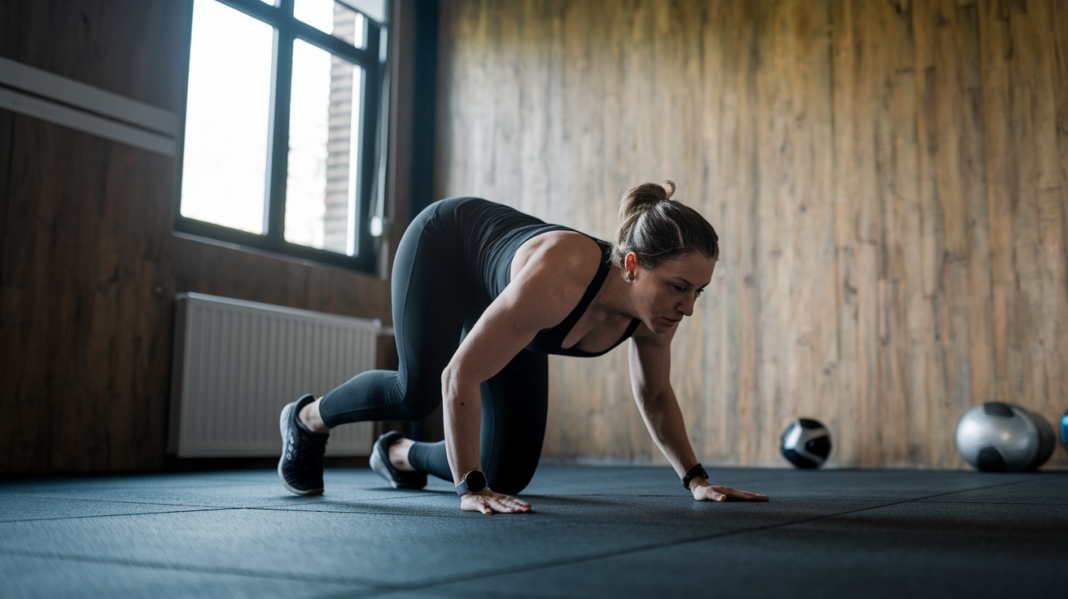
- Wednesday – Upper-body strength focus (25 minutes): pike push-ups, bear crawls, band pull-aparts, plank shoulder taps.
- Thursday – Yoga or mobility session (20–30 minutes): hip openers, spinal twists, breathing work.
- Friday – Lower-body strength focus (25 minutes): reverse lunges, Bulgarian split squats (chair works fine), single-leg glute bridges, wall sits.
Saturday or Sunday, throw in a 10- to 15-minute HIIT session if you want. Burpees, mountain climbers, jump squats. But it’s optional. Skip it and you’re still on track. The point is to train in a way you can repeat next week without torching yourself.
You’ll lean on these six movements:
- Push-ups (incline, knee, standard, or decline depending where you’re at)
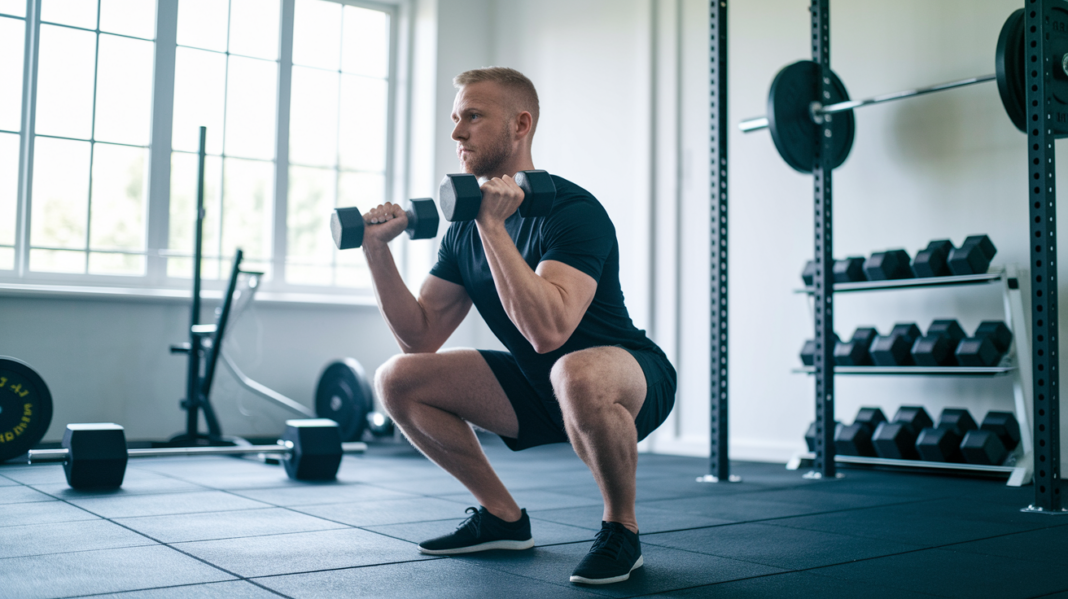
- Bodyweight squats (add pauses or go single-leg as you progress)
- Lunges (forward, reverse, walking)
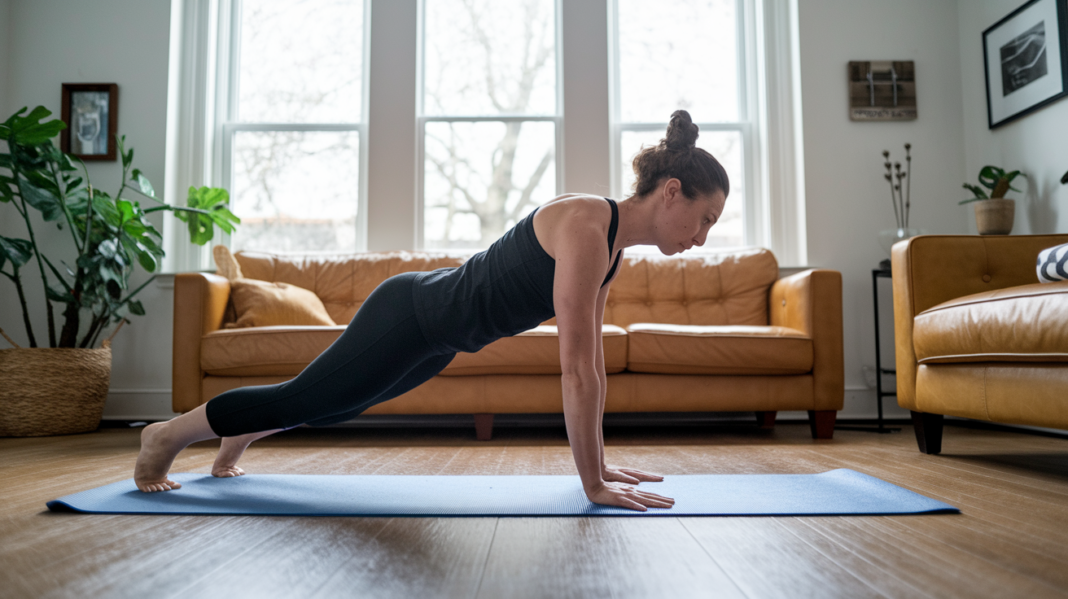
- Planks (front, side, with shoulder taps or leg lifts)
- Glute bridges (double or single-leg)
- Resistance-band rows (anchor the band on a door or something sturdy)
Every strength session starts with a 3- to 5-minute warm-up. Arm circles, leg swings, a few squats. End with 2 minutes of slow breathing or light stretching. That bookend routine keeps your nervous system settled and makes it easier to show up again.
Progressive Training Levels for Long‑Term Growth
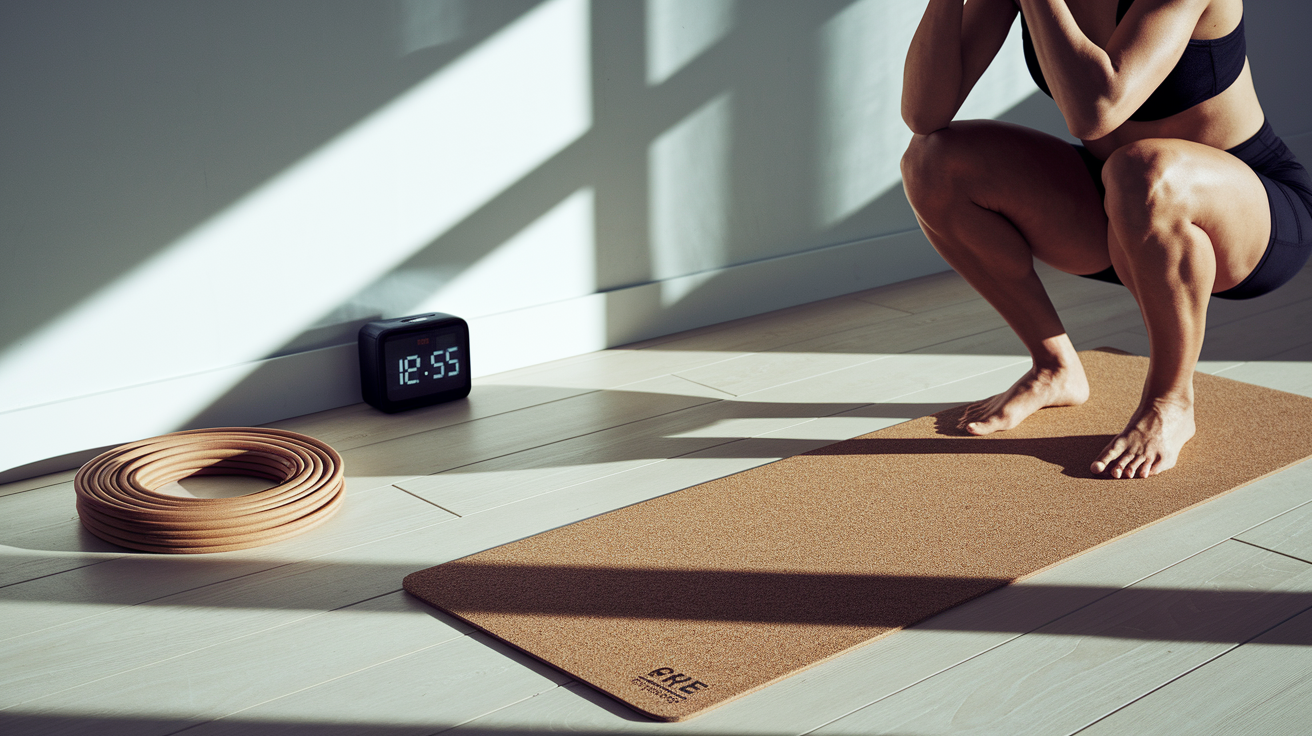
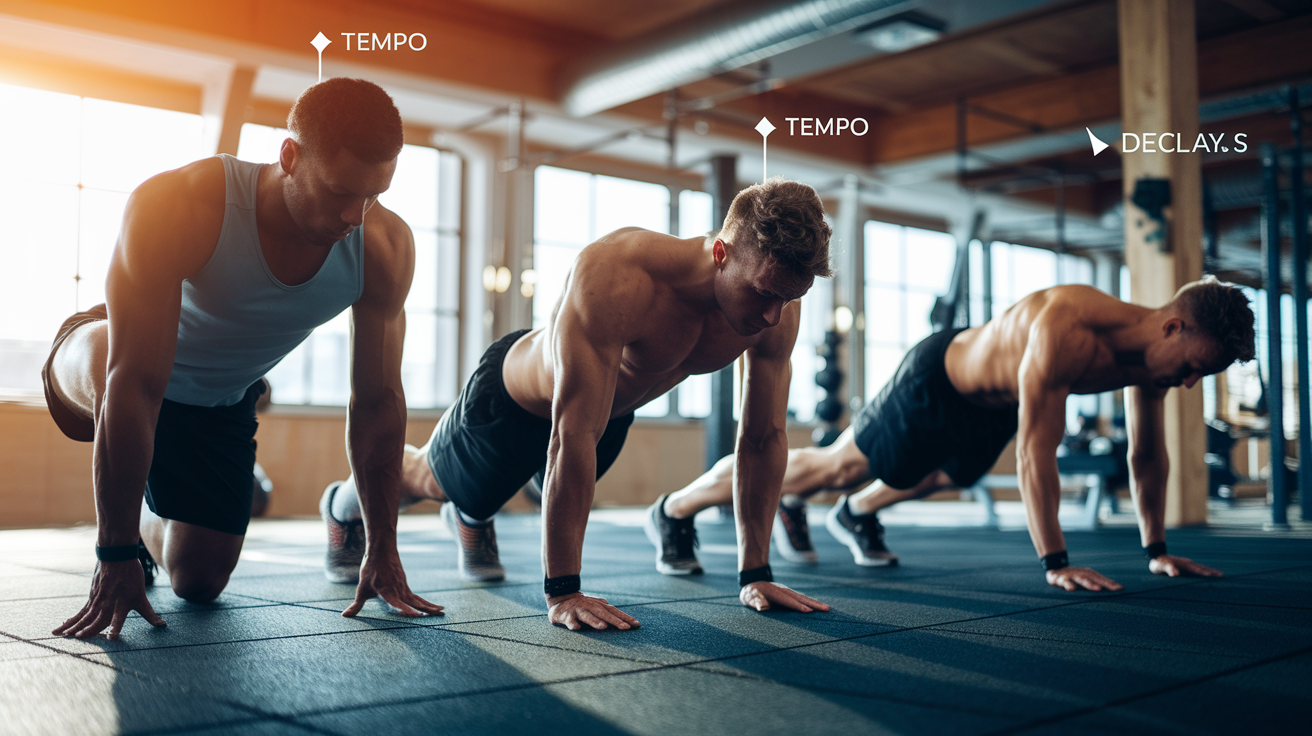
Progressive overload is your path to getting stronger at home without barbells or machines. You increase difficulty by tweaking tempo, adding reps or rounds, adjusting leverage, or switching to single-limb versions. A beginner might do knee push-ups for 8 reps. Someone intermediate does standard push-ups for 12 reps with a 2-second pause at the bottom. Advanced? Decline push-ups for 15 reps with a 3-second descent. Same movement, different challenge.
Here’s how to scale your plan as you build strength:
| Level | Key Focus | Progression Method |
|---|---|---|
| Beginner | Master form and build base strength | Regressions (knee push-ups, assisted squats), 2–3 rounds, 8–10 reps per exercise |
| Intermediate | Increase volume and control | Standard variations, tempo work (3-second lowers), 3–4 rounds, 12–15 reps |
| Advanced | Challenge leverage and stability | Single-limb moves, decline angles, isometric holds, 4+ rounds, 15–20 reps or 30+ sec holds |
Start where you actually are today. If you can hold a plank for 20 seconds, that’s your baseline. Next week, try 25. A month from now, add a shoulder tap every few breaths. Small, steady increases stack into real strength over time. Don’t jump levels because a plan tells you to. Your form and your energy dictate progression, not some arbitrary timeline.
Eco‑Friendly and Minimal Equipment Options
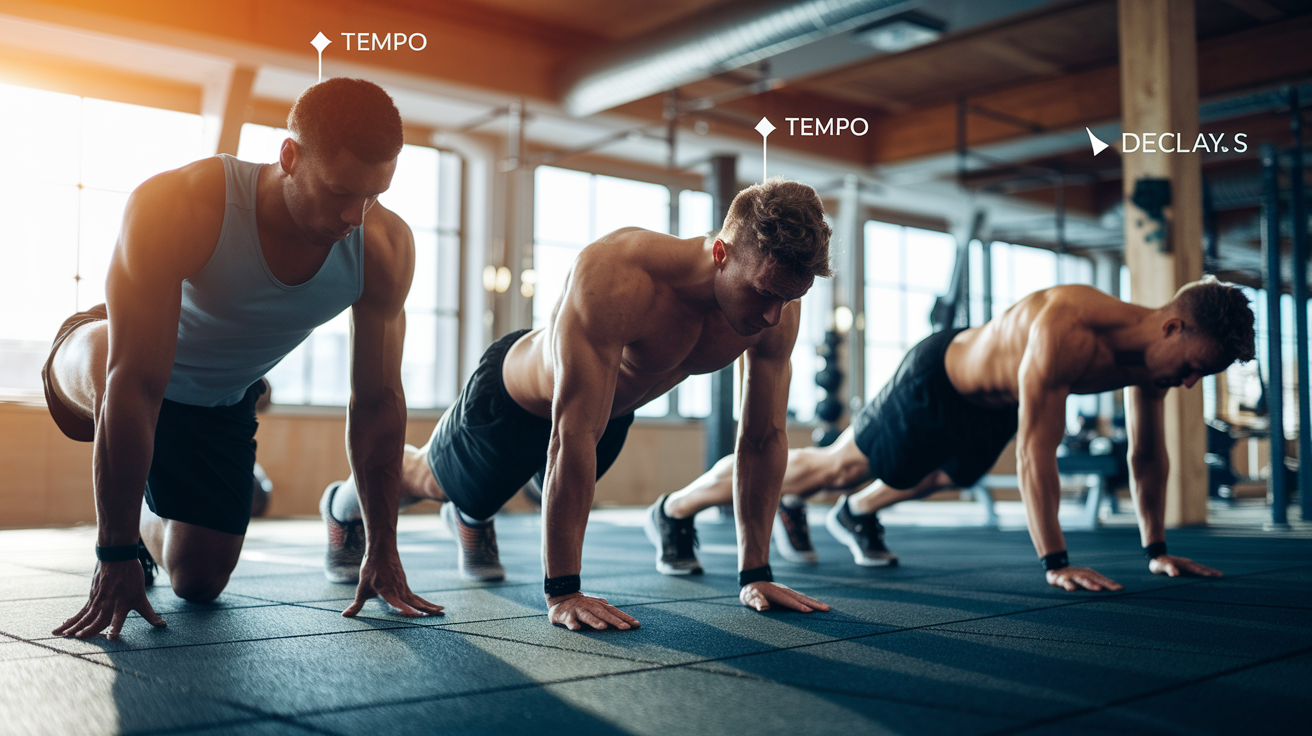
You don’t need a ton of gear to train at home, and you can pick tools that last without ending up in a landfill. Cork yoga mats, recycled-rubber resistance bands, secondhand dumbbells. All work just as well as brand-new stuff. Buying durable, multi-use items means you’re not replacing broken handles or tossing single-use junk every season.
If you’re adding a few pieces to your setup, here are five sustainable picks that fit a long-term plan:
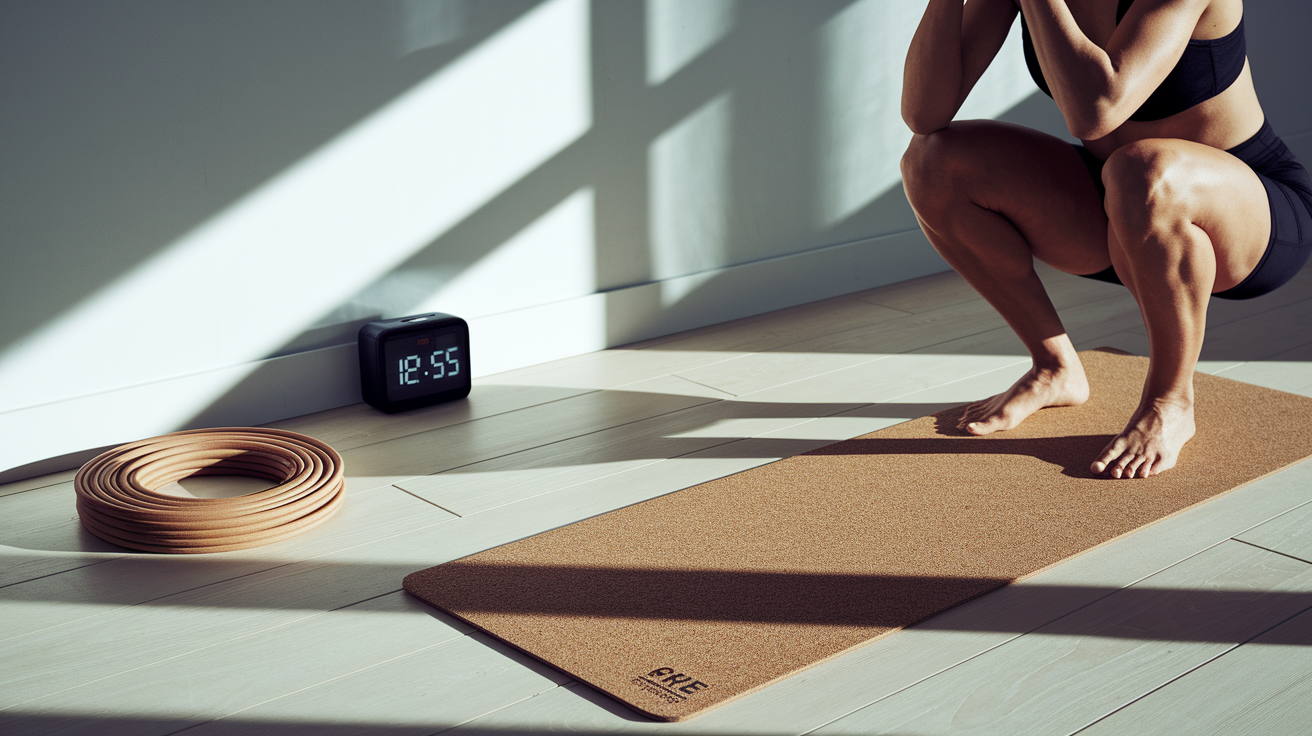
- Cork yoga mat – natural grip, biodegradable, lasts years with basic care
- Recycled-material resistance bands – made from reclaimed rubber; loop and mini-band sets cover most exercises
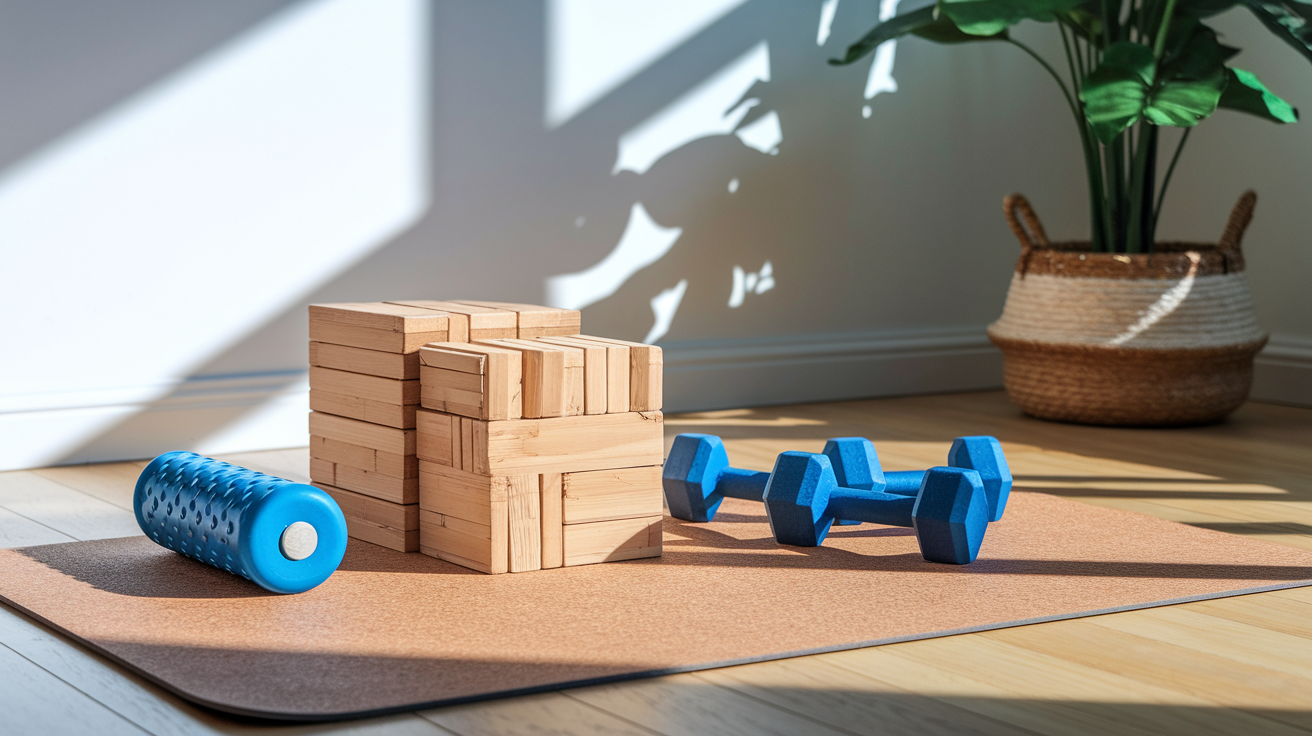
- Bamboo yoga blocks – sturdy, renewable, useful for stretching and modified push-ups
- Secondhand adjustable dumbbells – one set replaces a rack of singles; buy used to save money and waste
- Reusable foam roller – EVA or high-density foam versions hold shape longer than cheap models
Start with bodyweight first. Add bands when you need more resistance. If you want weights later, one adjustable pair is enough for years of work. Keep it simple, buy once, skip the clutter.
Recovery Practices to Support Consistent Training
Recovery isn’t something you tack on during rest days. It’s part of your weekly structure. After each strength session, spend 5 to 10 minutes stretching what you just worked. Hip flexors after lunges, chest and shoulders after push-ups, hamstrings after bridges. On full rest days, try a 10-minute morning stretch routine or light foam rolling to keep stiffness from piling up.
Hydration matters more than most people think. Drink water throughout the day, not just during your workout. Sore the day after a session? That’s normal. Delayed-onset muscle soreness (DOMS) from the tiny tears that build strength. Usually peaks around 24 to 48 hours post-workout and fades within a few days. Keep moving lightly. A short walk or gentle yoga session helps more than sitting still.
Sharp, throbbing, or joint pain is different. That’s your cue to stop and reassess. If a movement hurts in a way that feels wrong, scale back or swap it out. Give yourself a month or two of pain-free movement before you add load or intensity again.
Here are four simple recovery exercises you can do anytime:
- Cat-cow stretch – 10 slow cycles to mobilize your spine and release lower-back tension.
- Child’s pose hold – 60 seconds, focus on deep breathing and hip relaxation.
- Standing quad stretch – 30 seconds per leg, keep your knee pointing down and your hips square.
- Foam roll calves and IT band – 60 seconds per side, slow passes to release tightness.
Recovery is where consistency lives. Skip it and you’ll feel it next week when your body’s too tired or too sore to show up again.
Motivation and Habit‑Building for Sustainable Home Fitness
Motivation fades. Habits stick. The goal is to build a routine so simple and repeatable that you do it even when you’re not pumped about it. That means picking a time that fits your actual schedule, keeping your workout space ready (mat rolled out, bands visible), and starting every session the same way so your brain knows what’s coming.
Habit stacking works well here. Attach your workout to something you already do daily. “After I finish my morning coffee, I do my strength circuit.” “Before I start dinner prep, I do my mobility session.” The anchor habit triggers the new one, and over time it becomes automatic.
Here are five strategies that help people stay consistent at home:
- Set out your gear the night before – seeing your mat and bands first thing removes a decision point.
- Start with just 10 minutes – commit to showing up, even if you only do a warm-up and one round.
- Track completions, not intensity – mark each session on a calendar; the visual streak builds momentum.
- Choose workouts you actually enjoy – if you hate burpees, skip them; sustainable plans match your preferences.
- Build in flex days – life happens; if you miss Wednesday, do the session Thursday and keep moving forward.
When your routine drains you more than it energizes you, that’s the signal to scale back. A sustainable plan should leave you feeling capable, not crushed. Show up regularly, not perfectly. Repeat what works, skip what doesn’t, and trust that small, steady effort builds real strength over months and years.
Final Words
in the action we laid out a full weekly routine, simple progression steps, eco-friendly gear picks, recovery habits, and habit strategies to keep you consistent. The plan uses basic tools like bands and a mat so you can start today.
Use the progressive levels to add a little more over time. Do the recovery moves and habit tricks so this sticks.
You now have a sustainable home workout plan with minimal equipment that fits busy life. You’ve got this.
FAQ
Q: What is a sustainable at-home workout plan?
A: The sustainable at-home workout plan focuses on consistency, balanced training, and low-impact exercises you can keep long term, using simple tools like resistance bands and a mat for short, repeatable sessions.
Q: How do I start a beginner home workout routine with minimal equipment?
A: To start a beginner home workout routine with minimal equipment, pick three 20–30 minute sessions per week, focus on squats, push, pull, and core movements, and use bands or bodyweight to learn form.
Q: Can you give a ready-to-use weekly schedule (Mon–Fri)?
A: A ready-to-use weekly schedule (Mon–Fri) is: Mon — full-body strength; Tue — light cardio or mobility; Wed — lower-body strength; Thu — active recovery or mobility; Fri — upper-body strength and core.
Q: What minimal equipment exercises should I learn?
A: Minimal equipment exercises you should learn include squats, lunges, push-ups, band rows, glute bridges, and planks — all scalable for strength and easy to do at home.
Q: How does progressive overload work at home?
A: Progressive overload at home works by slowly increasing reps, sets, tempo, or band tension over weeks, while keeping good form so muscles adapt safely and you avoid plateaus without gym machines.
Q: How should beginners, intermediates, and advanced scale routines?
A: Beginners, intermediates, and advanced scale routines by starting with basic moves and fewer sets, then adding sets/reps or harder variations, and finally increasing resistance, tempo, or volume while monitoring recovery.
Q: What eco-friendly equipment options are best?
A: Eco-friendly equipment options best for home workouts include cork yoga mats, recycled-material resistance bands, bamboo blocks, natural rubber mini-bands, and secondhand kettlebells or dumbbells.
Q: What recovery practices support consistent training?
A: Recovery practices that support consistent training include daily mobility and stretching, short active recovery sessions, steady hydration, good sleep, and gradual workload increases to lower injury risk.
Q: How do I stay motivated and build exercise habits at home?
A: To stay motivated and build exercise habits at home, set tiny repeatable goals, tie workouts to daily cues, track consistency, vary sessions, and choose small rewards that keep you coming back.
Q: How do I fit workouts into a busy week?
A: To fit workouts into a busy week, schedule three 15–30 minute sessions, use morning or lunch windows, break strength into short sets, and swap active chores for extra movement when time’s tight.