

Most 12-week plans fail before week four—because they ask too much too soon.
But a 12-week routine can work if you break it into small, clear steps and build habits that fit your life.
This guide gives a simple three-phase plan—learn basic moves, add volume, then solidify strength—so you progress without burning out.
You’ll get a real weekly template (two to three short strength sessions, light cardio, and rest), easy ways to progress, and simple tracking tips to keep going past week 12.
Core Structure of the 12-Week Beginner Workout Plan
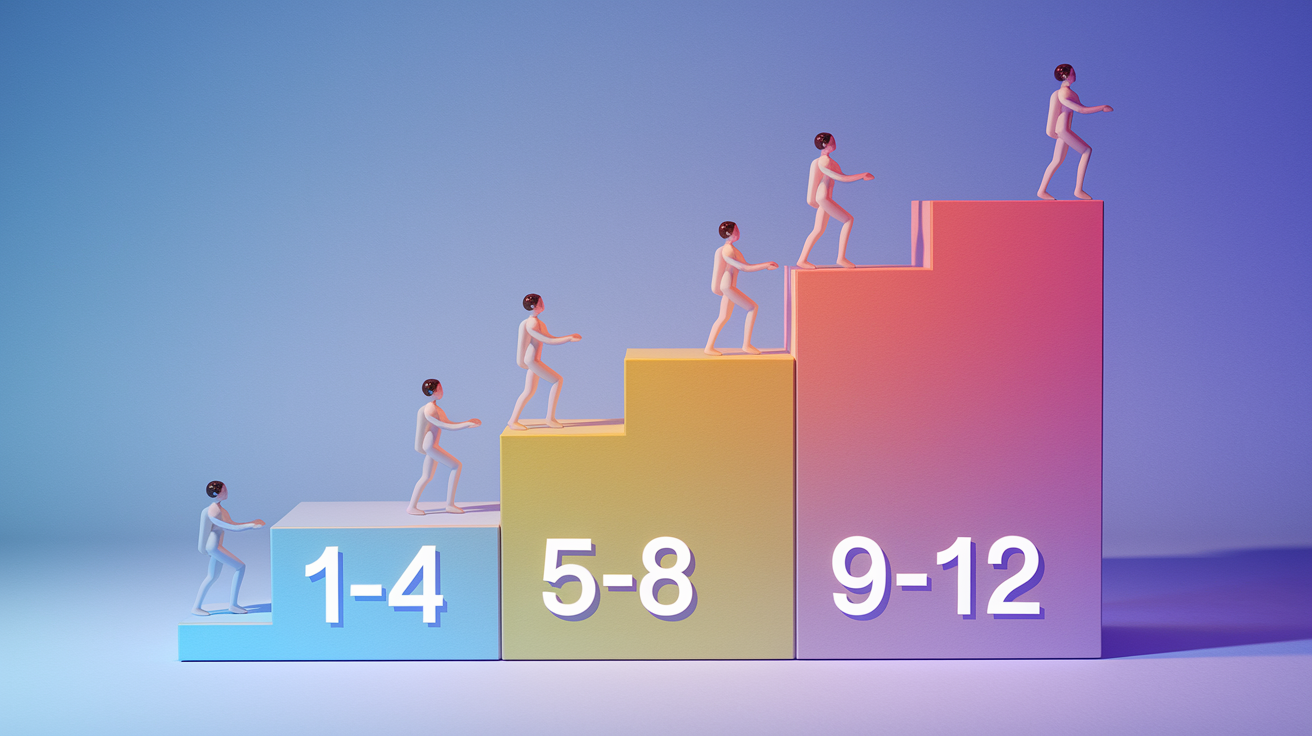
Breaking your program into three phases keeps your body adapting without stalling or burning out. Weeks 1–4 teach movement patterns and build your base. Weeks 5–8 add a bit more volume and challenge. Weeks 9–12 solidify strength gains and build confidence. This stops you from making the classic mistake of doing too much right away.
A typical week looks like 2–3 strength sessions hitting your whole body, 1–2 cardio sessions that don’t wreck your joints, and 1–2 full rest days. You’ll also throw in short mobility work a couple times a week. That’s it. Most sessions take 20–30 minutes, which actually fits into real life.
Gradual progression means you’re not repeating the exact same workout for 12 weeks straight. You’ll add a rep here, a bit more weight there, or an extra set when you’re ready. The plan builds on itself so your body keeps responding. That steady climb is what separates a real program from random workouts.
Here’s what each phase does:
- Weeks 1–4 (Adaptation): Learn proper form, establish a workout habit, and build initial strength with 2–3 full-body sessions per week.
- Weeks 5–8 (Build): Bump training frequency to 3–4 sessions, add slightly more reps or sets, and introduce moderate cardio intensity.
- Weeks 9–12 (Intensify): Push volume or load slightly higher, refine technique under more challenging conditions, and lock in your new routine as a lifestyle.
- Throughout All Phases: Rest days and mobility work prevent injury and support recovery.
Phase Breakdown and Weekly Training Structure

Weeks 1–4 focus on teaching your body the basics. You’ll do 2–3 strength workouts per week, each one working your full body with foundational movements like squats, pushups, and rows. Cardio stays light. Maybe 10–15 minutes of walking or easy cycling, 1–2 times a week. Rest days aren’t optional. Your muscles need time to adapt. If you’ve never followed a structured plan before, this phase feels manageable and builds confidence fast.
Weeks 5–8 turn up the dial just a bit. You’ll bump strength sessions to 3–4 times per week and start adding an extra set to some exercises or a few more reps when form stays clean. Cardio can stretch to 15–20 minutes if you feel good, and you might add a second session. Mobility work becomes more intentional. This is where you start seeing visible changes in how you move and how weights feel.
Weeks 9–12 are about solidifying everything. You’re handling more load, more volume, or both. Some people split their workouts by body region at this stage, others stick with full-body and just keep progressing. Either way, your body is stronger, your habit is locked in, and you’re ready to handle the final push. Rest remains critical. Don’t skip it just because you feel strong.
| Week Range | Strength Focus | Cardio Focus | Rest Strategy |
|---|---|---|---|
| Weeks 1–4 | 2–3 full-body sessions, learning movement patterns, 2–3 sets per exercise | 1–2 sessions, 10–15 minutes, low-impact (walking, easy bike) | 1–2 full rest days; light stretching or mobility on active recovery days |
| Weeks 5–8 | 3–4 full-body sessions, adding reps or sets, moderate load increases | 2–3 sessions, 15–20 minutes, moderate pace or interval introduction | 1–2 full rest days; include 2–3 mobility sessions per week |
| Weeks 9–12 | 3–4 sessions, option to split routines or continue full-body with higher volume | 2–3 sessions, 20+ minutes, sustained moderate intensity or short intervals | 1–2 full rest days; active recovery and foam rolling as needed |
Essential Exercise Descriptions for Beginners

You don’t need a hundred different movements. A handful of solid exercises done well will carry you through all 12 weeks. These core patterns teach your body how to move efficiently and build strength in the muscles you actually use in daily life.
Start with movements you can control. If your form breaks down, scale back the difficulty or the load. Progress comes from quality repetitions, not from forcing your way through sloppy sets.
Bodyweight Squat: Stand with feet shoulder-width apart, chest up, and sit back like you’re aiming for a chair. Keep your knees tracking over your toes. Go as low as you can with good form, then drive through your heels to stand.
Pushup (or Incline Pushup): Start on your hands and toes, body in a straight line from head to heels. Lower your chest toward the floor, keeping elbows at about 45 degrees. If that’s too hard, put your hands on a bench or counter.
Dumbbell Romanian Deadlift: Hold a light dumbbell in each hand, feet hip-width. Hinge at your hips, pushing them back while keeping your spine neutral. Lower the weights along your shins, feel a stretch in your hamstrings, then drive your hips forward to stand.
Dumbbell Row: Place one hand and knee on a bench, back flat. Hold a dumbbell in the free hand and pull it toward your ribcage, squeezing your shoulder blade back. Lower with control.
Plank: Hold your body in a straight line on your forearms and toes. Keep your hips level, don’t let them sag or pike. Start with 20–30 seconds and build up.
Goblet Squat: Hold a single dumbbell at your chest with both hands. Squat down between your legs, elbows brushing the inside of your knees. This version teaches depth and keeps your torso upright.
Understanding Progressive Overload for Beginners

Progressive overload just means making your workouts slightly harder over time. Your muscles adapt to the stress you put on them, so if you repeat the same thing week after week, progress stalls. The good news? You don’t need to reinvent the workout every session. Small, steady changes add up.
Pick one variable to adjust at a time. If you did 3 sets of 8 reps last week, try for 3 sets of 9 or 10 this week. If you hit 3 sets of 10 reps comfortably, add a bit more weight next time. Never sacrifice form to chase numbers. When your last rep looks shaky, stop there.
Simple ways to progress safely:
Add 1–2 reps per set when the current rep count feels doable with solid form.
Bump load by small increments (2.5–5 pounds for dumbbells) once you can complete all sets and reps cleanly.
Add an extra set to one or two exercises per session when recovery allows.
Slow down the tempo on the lowering phase to increase time under tension without adding weight.
Building Sustainable Workout Habits

Consistency beats intensity when you’re just getting started. The best workout is the one you’ll actually do this week and next week and the week after that. If you program something you dread, you won’t stick with it. Choose activities that feel manageable and maybe even a little enjoyable.
Schedule your workouts like you’d schedule a meeting. Block the time, set a reminder, and treat it as non-negotiable. Morning, lunch break, evening, it doesn’t matter as long as it’s consistent. Once your brain learns that Tuesday and Thursday mornings mean strength training, the decision fatigue disappears.
Track something small every week. Write down what you did, how it felt, or just check a box on a calendar. Seeing a streak builds momentum. You’re not chasing perfection. You’re building a pattern that lasts past the 12-week mark.
Nutrition Basics for New Exercisers

You can’t out-train a diet that works against you. Eating enough protein supports muscle repair, and balanced meals keep your energy steady. You don’t need a complicated meal plan. You need consistent, practical choices that fit your schedule.
Most beginners undereat protein without realizing it. Aim for about 0.7–1.0 grams per pound of body weight, spread across your meals. That might look like 25–30 grams at breakfast, lunch, and dinner. Pair it with carbs that fuel your training (rice, potatoes, oats, fruit) and fats that support recovery (nuts, olive oil, avocado). Hydration matters too. Drink water throughout the day, not just during workouts.
Simple nutritional guidelines:
Get protein at every meal. Eggs, chicken, fish, Greek yogurt, beans, or a shake if cooking isn’t an option.
Include complex carbs around training days. Your muscles need fuel to work and recover.
Eat plenty of vegetables and fruit. They provide fiber, vitamins, and minerals that support overall health.
Don’t skip meals or drastically cut calories. Undereating will tank your energy and sabotage strength gains.
Prep basics in advance. Cook a batch of protein and grains on Sunday so you’re not scrambling on busy weekdays.
Recovery, Sleep, and Injury Prevention

Rest days aren’t lazy days. They’re when your body actually gets stronger. Muscle growth and adaptation happen during recovery, not during the workout itself. If you train hard every single day without giving your system a break, performance drops and injury risk climbs.
Sleep is non-negotiable. Aim for 7–9 hours most nights. Your muscles repair, your hormones balance, and your brain consolidates what you learned during training. If sleep is inconsistent, everything else suffers. Quality matters as much as quantity. Keep your room cool and dark, limit screens before bed, and stick to a regular sleep schedule when possible.
Add light mobility work 2–3 times per week. Stretching, foam rolling, or a short yoga session reduces stiffness and keeps your joints moving well. If something hurts beyond normal muscle soreness, don’t push through it. Scale back, adjust the movement, or take an extra rest day. Ignoring early warning signs is how small issues become big problems.
Tracking Progress and Adjusting the Routine

Logging your workouts keeps you honest and shows you where progress is happening. Write down the exercise, sets, reps, and weight used. Add a quick note about how you felt or if anything was harder than expected. Over a few weeks, patterns emerge. You’ll see where you’re getting stronger and where you might need to adjust.
Progress isn’t just about the scale or the mirror. Track how much easier daily tasks feel. Notice if you’re sleeping better or recovering faster between sessions. Pay attention to whether you can add reps, lift more weight, or complete a cardio session with less huffing. All of that counts.
| Metric | How to Measure | Adjustment Strategy |
|---|---|---|
| Strength Gains | Log weight and reps for each exercise weekly | If reps increase for 2 weeks straight, add 2.5–5 lbs; if stuck, add an extra set or slow the tempo |
| Cardio Endurance | Track time or distance at a consistent effort level | If you finish easier than before, bump duration by 2–3 minutes or add short intervals |
| Energy and Recovery | Rate subjective energy and soreness on a 1–10 scale after sessions | If energy drops or soreness lingers, add a rest day or reduce volume for one week |
| Body Composition | Take photos and tape measurements every 3–4 weeks | If changes stall, review nutrition protein target and total calorie intake; adjust cardio frequency |
Final Words
We packed the plan into three clear phases, a weekly mix of strength, cardio, and rest, and simple progress steps you can repeat. You’ve got plain exercise cues, safe ways to increase load, nutrition basics, and recovery tips to keep you moving.
Pick a schedule, track workouts, tweak one thing at a time, and make consistency the priority. If you want a straight path to results, this is a practical guide on how to create a sustainable 12-week workout routine for beginners, doable and steady.
FAQ
Q: How is the 12-week beginner workout plan structured?
A: The 12-week beginner workout plan is divided into three 4-week phases—foundation, strength build, and increased intensity—so you learn moves, add load slowly, and finish with steady, slightly harder sessions.
Q: What does a typical weekly schedule look like?
A: A typical weekly schedule has 3-4 workouts: 2-3 full-body strength days, 1-2 low-impact cardio sessions, and 1-2 rest or mobility days to help recovery and prevent fatigue.
Q: What’s the goal of each phase (Weeks 1–4, 5–8, 9–12)?
A: The goal of each phase is: weeks 1-4 teach form and consistency; weeks 5-8 increase volume and slightly longer cardio; weeks 9-12 raise intensity and build reliable habits.
Q: How do I progress safely over the 12 weeks?
A: You progress safely over 12 weeks by changing only one variable at a time—more reps, an extra set, slightly heavier weight, or longer cardio—while watching fatigue and keeping regular rest.
Q: Which beginner exercises should I focus on?
A: Focus on squats, pushups (or knee pushups), a hip hinge pattern, rows, planks, and glute bridges to build full-body strength, stability, and good movement mechanics.
Q: How does progressive overload work for beginners?
A: Progressive overload means gradually adding small stress so muscles adapt; beginners use more reps, another set, slightly heavier load, or longer hold time, one change at a time to avoid burnout.
Q: How can I build workout habits that stick?
A: You build workout habits by picking consistent times, starting small, tracking sessions, and stacking workouts onto an existing routine—like right after breakfast—so it becomes automatic over weeks.
Q: What basic nutrition should new exercisers follow?
A: New exercisers should eat balanced meals with a protein source, whole carbs, healthy fats, and enough calories; aim for protein each meal and stay hydrated to support energy and recovery.
Q: How should I handle recovery, sleep, and injury prevention?
A: Handle recovery by aiming for 7-9 hours sleep, doing light mobility or stretching on rest days, progressing slowly, and taking extra rest for persistent pain to avoid overuse injuries.
Q: How do I track progress and adjust the routine?
A: You track progress by logging workouts, weights, reps, cardio time, and energy; adjust by adding small load or reps when progress stalls, or take a deload week if fatigue rises.