You don’t have to log every bite to make progress.
Most people think precise tracking is the only way, but that idea leads to burnout.
Using intuitive eating, learning hunger and fullness cues, and a few practical habits like plate-building, simple swaps, and smarter drink choices, you can shrink your daily calories without constant math.
This method saves time, cuts stress, and actually sticks.
Here’s how to create a steady, sustainable calorie deficit that fits your life.
Practical Ways to Reduce Calories Without Tracking

Most people underestimate their calorie intake by about 20 to 30 percent. Liquid calories? They vanish completely from memory. But you don’t need to track every gram to fix this. A few simple habits can guide you toward eating less without the mental load of logging everything.
The easiest wins come from food swaps that keep you satisfied while cutting calories. Replacing a bagel breakfast with eggs and vegetables saves around 200 calories. Swapping white rice for cauliflower rice cuts another 150 per cup. Trading regular soda for sparkling water removes 140 calories per can. These aren’t tiny tweaks. They’re structural changes that add up fast without making you feel restricted.
Eight practical methods to reduce calories automatically:
- Replace grain-based breakfasts with eggs and vegetables (saves 150 to 300 calories per meal)
- Use smaller plates and bowls so your dish looks full with less food
- Fill half your plate with non-starchy vegetables before adding anything else
- Cut out sugary drinks and replace them with water, black coffee, or unsweetened tea
- Eat protein at every meal to stay full and snack less
- Remove visible snack foods from counters and store them out of sight
- Swap creamy dressings and sauces for vinegar-based or mustard-based options
- Eat one less slice of bread or tortilla per meal
These work because they reduce calorie density, increase fullness, or remove mindless eating opportunities. You’re not wrestling with willpower or doing mental math at every meal. You’re building an environment and a routine that naturally steers you toward a deficit.
The research backs this up. In one study, women who increased protein to 30 percent of their intake ate 441 fewer calories per day without trying. That’s the power of structure over restriction.
Portion Control Methods That Don’t Require Counting
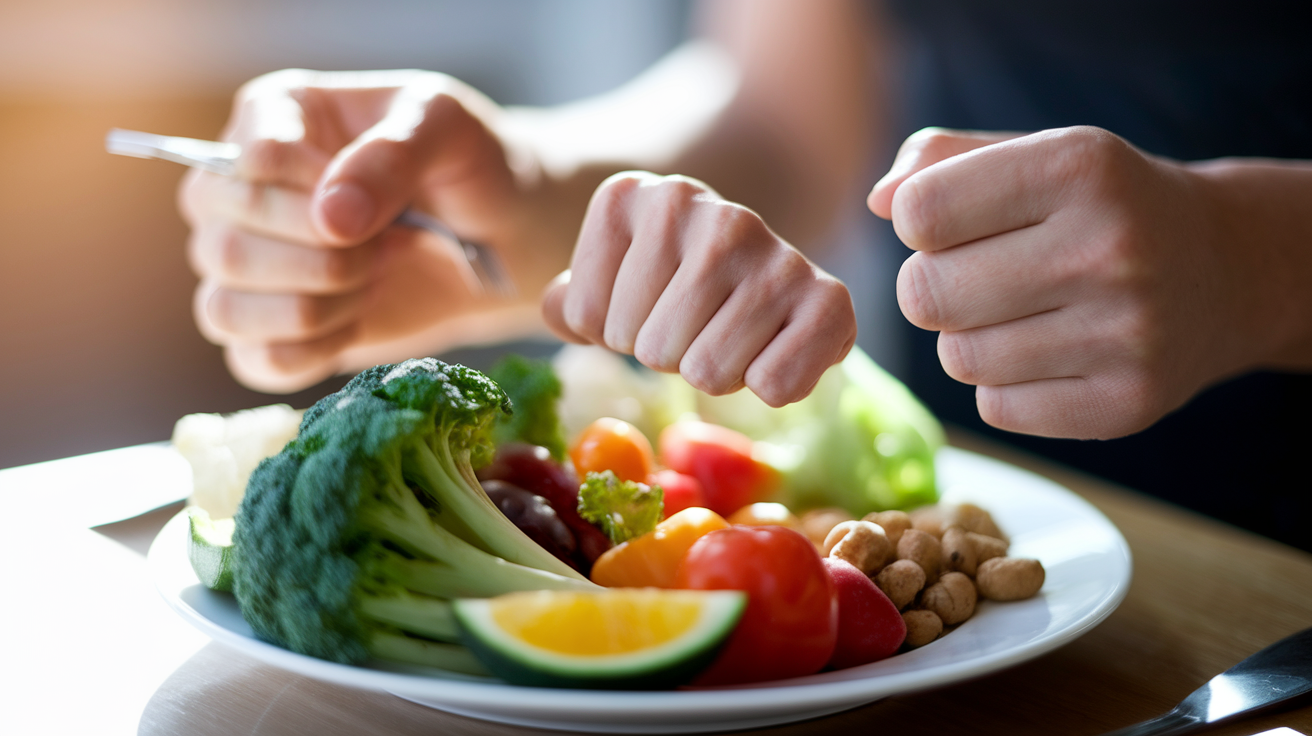
Portion sizes have quietly expanded over the past few decades, and your brain hasn’t caught up. Using your hand as a measurement tool gives you a flexible, portable reference that adapts to your body size. A palm-sized portion of protein, a fist of vegetables, a cupped handful of carbs, and a thumb of fat per meal. Simple framework that works for most people.
Smaller plates and bowls trick your perception. Studies show that people who switch to smaller dishware reduce their intake by 10 to 20 percent without feeling deprived. The plate looks full, your brain registers satisfaction, and you walk away content with less food.
Slowing down your eating pace also matters. It takes about 20 minutes for fullness signals to reach your brain. If you finish a meal in five minutes, you’re likely to overshoot.
Five portion management tactics:
- Use your palm to measure protein portions (about 3 to 4 ounces cooked)
- Use your fist to estimate vegetable servings (roughly one cup)
- Use a cupped hand for starchy carbs like rice, potatoes, or oatmeal
- Use your thumb to gauge fat portions like oils, nuts, or nut butters
- Serve meals on salad plates instead of dinner plates to control visual volume
Plate-Building Strategies That Create Automatic Calorie Reduction
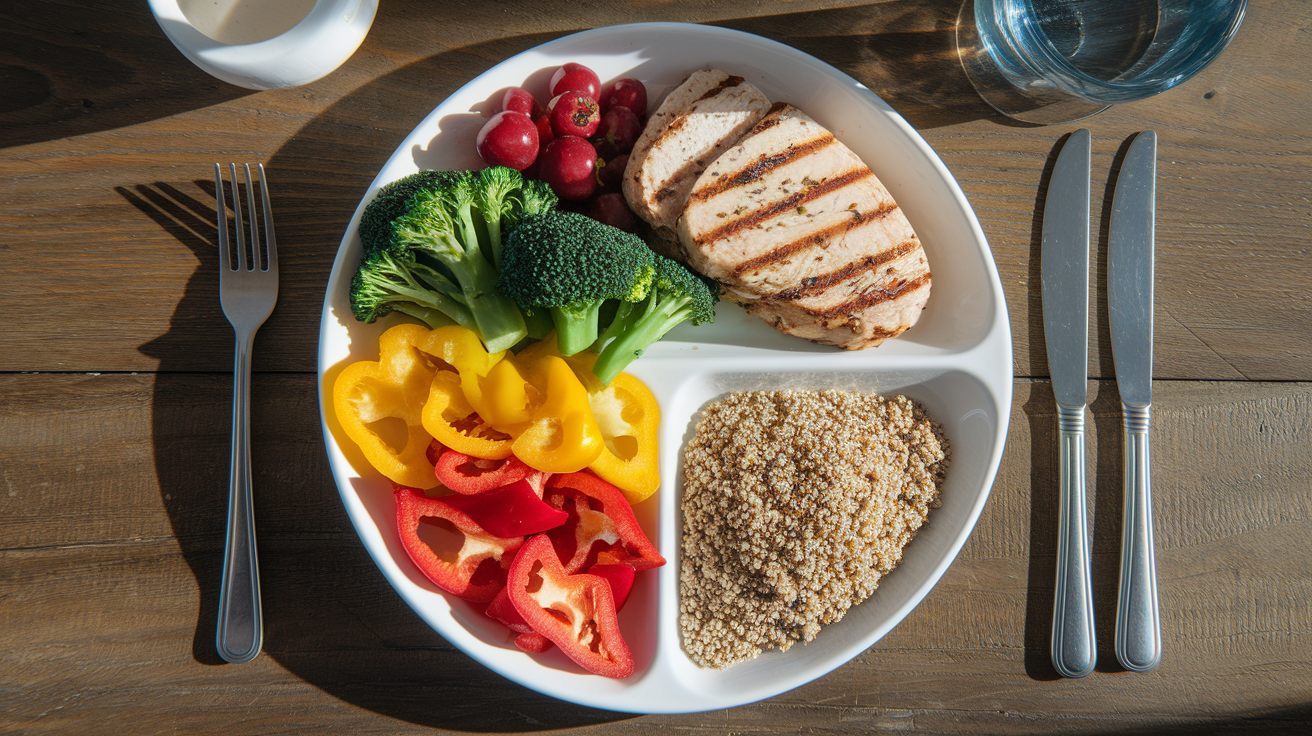
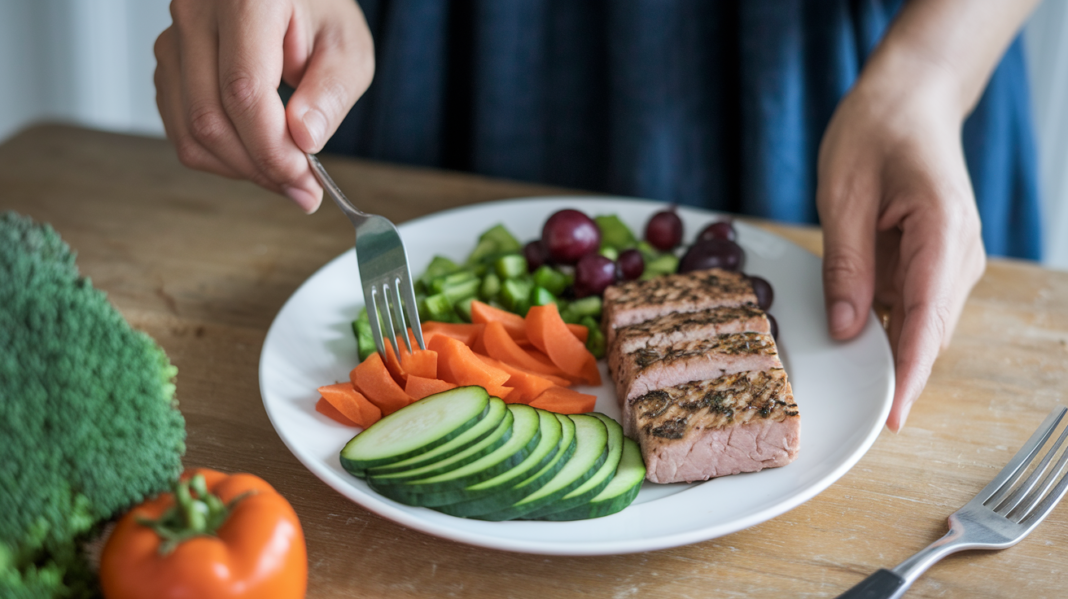
The plate method is one of the simplest tools for portion control without weighing anything. Fill half your plate with non-starchy vegetables, one quarter with lean protein, and one quarter with whole grains or starchy vegetables. This structure naturally increases fiber and protein while lowering calorie density. You eat more volume with fewer calories and stay full longer.
At home, this looks like grilled chicken, a large serving of steamed broccoli, and a small portion of quinoa or sweet potato. The vegetables take up the most space, the protein keeps you satisfied, and the starch is just enough to round out the meal. You can add a serving of dairy or a small amount of healthy fat without changing the core ratio. Most people who follow this pattern without counting end up eating 300 to 500 fewer calories per day compared to their usual intake.
When eating out, the same logic applies but you have to be more intentional. Restaurant portions are often double or triple what you’d serve at home. Ask for a to-go box right away and split the meal before you start eating. Order an extra side of vegetables and skip the bread basket. Choose grilled or baked proteins instead of fried.
You don’t need to be perfect, just aware. If half your plate is still vegetables and you’re not drowning everything in sauce, you’re probably in a reasonable range.
Behavioral Habits That Lower Daily Calorie Intake
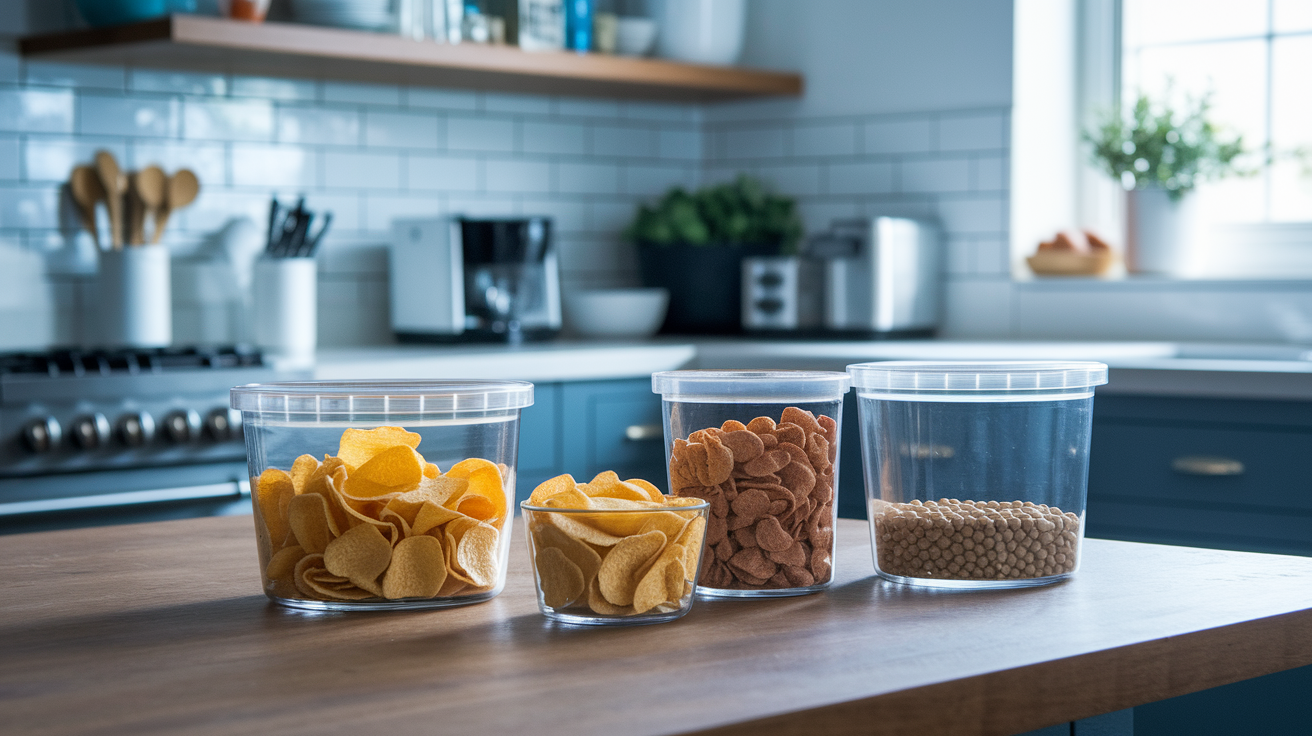
You make over 200 food-related decisions every day. Most of them happen without conscious thought. If a bag of chips is sitting on your kitchen counter, you’ll eat from it. If it’s in the pantry, you might not. One study found that removing visible snack foods reduced snacking by up to 30 percent without any additional effort. That’s not willpower. That’s environment design.
Consistent meal timing also reduces overeating later in the day. People who skip breakfast often compensate by eating more at night, and those extra calories tend to come from low-quality, high-calorie foods. Eating at regular intervals, even if the portions are smaller, stabilizes hunger and reduces the chance of making impulsive food choices when you’re starving.
Six calorie-lowering habits:
- Keep high-calorie snacks out of sight and store them in opaque containers
- Eat meals at consistent times each day to prevent extreme hunger swings
- Put all food on a plate or in a bowl instead of eating from bags or containers
- Wait 10 to 15 minutes before taking seconds to let fullness signals register
- Avoid eating in front of screens, which increases intake by up to 25 percent
- Prep vegetables in advance so they’re easier to grab than processed snacks
Mindful Eating Techniques for Natural Calorie Control
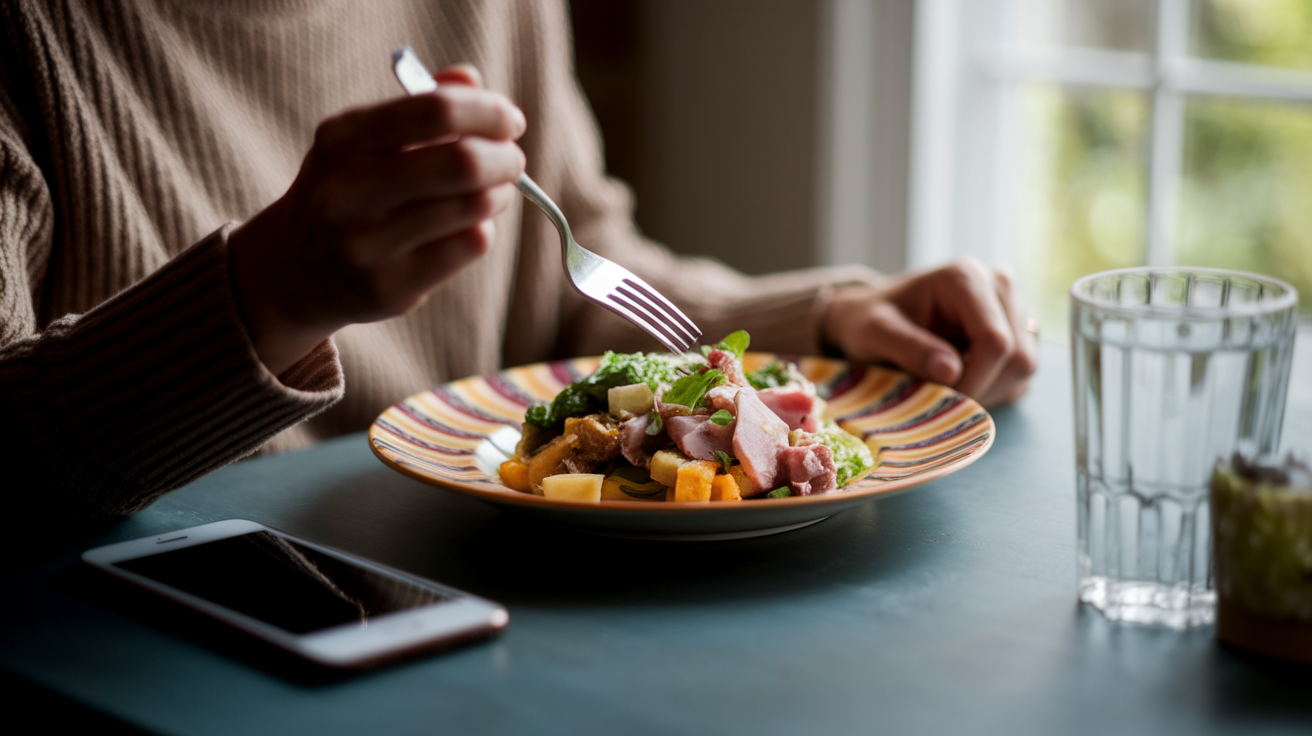
Mindful eating means paying attention to what and how much you’re eating instead of going on autopilot. It’s not meditation. It’s just slowing down and noticing. When you eat quickly or while distracted, you miss the signals that tell you you’re full. Studies show that people who eat mindfully consume about 20 percent fewer calories per meal compared to those who eat while watching TV or scrolling their phone.
Slowing your eating pace is one of the easiest ways to practice mindful eating. Put your fork down between bites. Chew thoroughly. Take a breath. Sounds simple, but most people finish their meals before their brain has time to register satisfaction. That often leads to second helpings or snacking shortly after.
The practical application is straightforward. Sit down at a table without your phone or laptop. Take a moment to notice what your food looks like and smells like. Eat at a pace where you can actually taste each bite. Check in halfway through the meal and ask yourself if you’re still hungry or just eating because the food is there. If you’re at a six or seven out of ten on fullness, you can stop. You don’t need to clean your plate.
Managing Liquid Calories Without Tracking

Beverages are one of the sneakiest sources of extra calories because they don’t fill you up the way solid food does. A single flavored latte can add 300 to 500 calories to your day without making you any less hungry at your next meal. Regular soda delivers about 140 calories per can. Fruit juice isn’t much better despite the health halo. Alcohol adds another layer of complexity at 7 calories per gram, nearly as calorie-dense as fat.
The fix is simple. Default to water, black coffee, unsweetened tea, or sparkling water for most of your fluid intake. If you need flavor, add lemon, lime, or a splash of fruit. If you drink alcohol, treat it as a calorie budget item. A glass of wine or a light beer once or twice a week is manageable. Daily drinking, especially mixed cocktails, makes it very hard to stay in a deficit without tracking.
Five practical beverage swaps:
- Replace soda with sparkling water or unsweetened iced tea (saves 140 calories per serving)
- Swap flavored lattes for black coffee or coffee with a splash of milk (saves 200 to 400 calories)
- Choose water or seltzer instead of fruit juice at breakfast (saves 110 to 150 calories per glass)
- Limit alcohol to one or two drinks per week instead of daily consumption
- Use unsweetened almond milk or oat milk instead of cream in coffee (saves 30 to 50 calories per cup)
Training Hunger and Fullness Cues for Sustainable Eating

Most people eat based on the clock or the size of the plate, not on actual hunger. Learning to rate your hunger on a scale from one to ten helps you distinguish between physical hunger and habit. A one is starving, a ten is uncomfortably stuffed, and a five is neutral. You want to eat when you’re at a three or four and stop when you reach a six or seven. That range keeps you satisfied without overeating.
Fullness cues take time to register, usually about 10 to 15 minutes. If you finish your meal quickly and immediately decide whether to take seconds, you’re making that call before your body has caught up. Waiting a few minutes gives your brain time to process the food you just ate. Most of the time, the urge for more food fades once you give it a moment.
A practical routine looks like this. Before you start eating, check your hunger level. Are you actually hungry, or are you bored, stressed, or eating because it’s mealtime? Halfway through your plate, pause and check again. Still hungry? Keep going. Feeling satisfied? You can stop.
After you finish, wait 10 minutes before deciding if you want more. This isn’t rigid or complicated. It’s just paying attention to what your body is telling you instead of eating on autopilot.
Final Words
Put these tactics to work now: plate-building, hand-portion shortcuts, mindful eating, drink swaps, and simple behavior tweaks. Each method is made to lower calories without counting every bite.
Try one or two changes this week and keep them. Small, consistent steps stack into real results and teach you how to create a sustainable calorie deficit without tracking every calorie. You’ll feel more in control and less stressed, and that’s real progress.
FAQ
Q: Is there a way to maintain a calorie deficit without a tracker?
A: Maintaining a calorie deficit without a tracker is possible by using simple rules: half your plate veggies, hand-size protein, smaller plates, smart swaps (veg for refined carbs), fewer sugary drinks, and steady meal timing.
Q: How to eat in a calorie deficit without counting calories?
A: Eating in a calorie deficit without counting calories means using the same practical tools: plate-building, hand portions, protein at each meal, drink water first, and pick lower-calorie swaps you can repeat daily.
Q: What is the 3-3-3 rule for weight loss?
A: The 3-3-3 rule for weight loss is a simple habit framework: aim for three balanced meals, include protein at least three times a day, and do resistance work three times a week to improve satiety and results.
Q: How did Kim Kardashian lose 16 lbs in 3 weeks?
A: Kim Kardashian lost 16 lbs in 3 weeks by reportedly cutting calories and carbs, increasing exercise, and using professional oversight; rapid loss is often short term and should be done with medical guidance.