

Most 6-week plans promise big gains but make you tired, sore, and stuck.
This guide shows how to periodize a 6-week strength and conditioning plan that builds real strength, keeps your conditioning, and lets you recover.
You’ll use two accumulation weeks, three intensification weeks, and a deload so you add volume, raise intensity, then let your body catch up.
Follow the simple weekly templates and rep/load targets in this post, and you’ll finish stronger, less beat up, and ready to repeat the block with clear progress to track.
How to Structure a 6-Week Strength and Conditioning Program (Core Framework)

Six weeks gives you enough time to build strength, adapt to heavier loads, and recover without burning out. The pattern’s simple. You start with accumulation weeks to add volume and nail down movement quality. Then you move into intensification, where loads get heavier and total sets pull back. A deload week at the end lets your body catch up.
Accumulation happens in weeks one and two. You’re using moderate loads, around 60 to 70 percent of your one-rep max, and cranking out three to four sets of six to twelve reps on your main lifts. This phase builds work capacity and gets your tendons and connective tissue ready for what’s coming. Conditioning during these weeks stays moderate: steady-state zone two work or longer intervals that don’t mess with recovery. Think twenty to forty minutes of low-impact aerobic training one to three times per week.
Intensification fills weeks three through five. Load climbs to 75 to 90 percent of your max, reps drop to three to six on primary lifts, and rest periods stretch to two to four minutes between heavy sets. Volume per session comes down slightly because intensity’s doing more of the work now. Conditioning shifts to shorter, higher-output sessions. Ten to twenty minutes of intervals or tempo work, scheduled on separate days or after lifting when fatigue won’t wreck your heavy sets.
Week six is your deload. Cut volume by 40 to 60 percent, drop intensity back to 30 to 50 percent of max, and use eight to twelve reps with lighter technical work. This week consolidates all the adaptations you’ve stacked up and sets you up to test progress or start another block.
Weekly structure across the six-week block:
- Week 1 (Accumulation) – 60 to 70% 1RM, 8 to 12 reps, 3 to 4 sets; moderate conditioning volume (20 to 40 min steady state or long intervals, 1 to 3 sessions).
- Week 2 (Accumulation) – Same intensity and rep range; consider small load increases if reps exceed the top of the range; conditioning stays steady.
- Week 3 (Intensification) – 75 to 85% 1RM, 4 to 6 reps, 4 to 5 sets on primary lifts; reduce total exercises per session; conditioning drops to 10 to 20 min HIIT or tempo intervals, 1 to 2 sessions.
- Week 4 (Intensification) – 80 to 90% 1RM, 3 to 5 reps, 4 to 6 sets; accessory volume stays controlled; conditioning remains short and infrequent.
- Week 5 (Intensification) – Peak intensity week at 85 to 90% 1RM, 3 to 6 reps, prioritize heavy compound lifts; minimal conditioning or light active recovery only.
- Week 6 (Deload) – 30 to 50% 1RM, 8 to 12 reps, reduce sets by half; light aerobic work or mobility-focused sessions; no high-intensity intervals.
Weekly Training Template Breakdown

Your training week should match the phase you’re in. During accumulation, you’ll usually hit three to four strength sessions and two to three conditioning sessions. As you move into intensification, conditioning frequency drops to one or two sessions per week, and strength days become fewer but heavier. The deload week keeps movement in the schedule but drastically reduces load and volume so fatigue clears out.
A typical week during accumulation might look like this: Monday lower body strength, Tuesday zone two conditioning, Wednesday upper body strength, Thursday rest or light mobility, Friday full body or posterior chain focus, Saturday tempo intervals, Sunday rest. When you hit intensification, drop one conditioning session and space your heaviest lifts farther apart. Monday heavy squat, Wednesday heavy press, Friday heavy deadlift variation, with one short interval session on Tuesday or Saturday. The deload week can be three light technical sessions with easy aerobic work or yoga on off days.
| Day | Primary Focus | Volume Level |
|---|---|---|
| Monday | Lower body strength (squat or hinge primary) | Moderate to high |
| Tuesday | Conditioning (zone two or tempo intervals) | Low to moderate |
| Wednesday | Upper body strength (press or pull primary) | Moderate to high |
| Thursday | Active recovery or rest | Very low |
| Friday | Full body or accessory-focused strength | Moderate |
| Saturday | Conditioning (HIIT or intervals in intensification; steady in accumulation) | Low to moderate |
| Sunday | Rest or light mobility work | Very low |
Exercise Selection for Sustainable Progress

Your exercise list should start with compound movements that let you track load over time. Squat variations, deadlifts or hinges, presses (bench or overhead), rows, and pull-ups cover all the major patterns. These lifts respond well to progressive overload and give you clear feedback each week. If the weight goes up or reps climb, you’re making progress.
Accessory exercises fill gaps and support weak points without adding so much fatigue that recovery becomes a problem. Single leg work like split squats or lunges, single arm rows or presses, and direct posterior chain movements like Nordic curls or back extensions round out a session. Keep accessory volume controlled. One to two movements per muscle group, two to three sets each. The goal is to complement your main lifts, not compete with them for recovery resources.
Conditioning choices matter just as much as lift selection. Low-impact aerobic work (rowing, cycling, swimming, or brisk walking) builds an aerobic base without beating up your joints or central nervous system. When you need higher output, short interval sessions (six to ten minutes of work with equal rest) give you conditioning benefits while leaving strength work intact. Avoid long, grinding metcons or high-volume plyometrics during intensification weeks. They interfere with heavy lifting and slow down strength gains.
Set, Rep, and Intensity Guidelines

The rep and set scheme you use depends entirely on which phase you’re in. Accumulation weeks use moderate loads for higher reps to build volume and movement quality. Intensification weeks flip that. Lower reps, heavier loads, longer rest. Deload weeks drop both volume and intensity so your system can recover and adapt.
Accumulation (weeks 1 to 2): Three to five sets of six to twelve reps at 60 to 70 percent of your one-rep max. Rest sixty to ninety seconds between sets for accessory work, two to three minutes for primary lifts. Focus on crisp reps and controlled tempo.
Intensification (weeks 3 to 5): Three to five sets of three to six reps at 75 to 90 percent of max. Rest two to four minutes between heavy sets. Total exercise count per session drops slightly (usually four to six movements instead of six to eight) because intensity demands more recovery between sets and sessions.
Deload (week 6): Two to three sets of eight to twelve reps at 30 to 50 percent of max. Cut total session volume by 40 to 60 percent. Use this week to practice technique, work on mobility, and let soreness fade.
Conditioning intensity: During accumulation, stay in zone two (conversational pace, around 60 to 70 percent of max heart rate) for twenty to forty minutes. During intensification, switch to intervals at 80 to 90 percent effort for shorter bursts. Thirty seconds on, thirty seconds off, repeated six to ten times. Deload week keeps conditioning very light or skips it entirely.
Conditioning Integration Without Interference

Conditioning and strength training can coexist, but only if you manage volume and placement carefully. The interference effect is real. Excessive aerobic work, especially high-intensity intervals done too close to heavy lifting, blunts strength and power gains. Zone two aerobic work is the safest bet during accumulation weeks because it improves recovery, supports mitochondrial density, and doesn’t tax your nervous system the way sprints or heavy metcons do.
High-intensity intervals belong later in the week or on separate days from your heaviest lifts. If you squat heavy on Monday, don’t run sprint intervals Tuesday morning. Schedule them Thursday or Friday so you have at least forty-eight hours between hard sessions. During intensification weeks, cut interval frequency to once or twice per week and keep total work time under fifteen minutes. When week six arrives, drop intervals completely and stick to easy aerobic movement or active recovery like walking, light cycling, or swimming. Your body uses that low-grade movement to flush metabolic waste and speed up tissue repair without adding new fatigue.
Recovery and Fatigue Management

Recovery is where progress actually happens. You stress the system in the gym, then adaptation occurs when you sleep, eat, and rest. Sleep should be seven to nine hours per night, non-negotiable. Protein intake needs to hit around 1.6 to 2.2 grams per kilogram of bodyweight daily to support muscle repair and growth. Hydration matters too. Dehydration reduces performance and slows recovery, so drink water consistently throughout the day.
Monitoring your daily readiness helps you adjust training loads before a bad week turns into an injury or a plateau. Rate of perceived exertion, or RPE, is a simple scale from one to ten that tracks how hard a set feels. During accumulation, most working sets should land around RPE seven to eight (challenging but controlled). Intensification weeks push closer to RPE nine, leaving one or two reps in reserve. If your RPE jumps unexpectedly high, like an eight-rep set that used to feel like RPE seven now feels like RPE nine, cut volume or intensity that day and add an extra rest day if needed.
Planned deloads are the simplest fatigue-management tool you have. Week six isn’t optional. Skipping it because you “feel fine” usually backfires two or three weeks later when accumulated fatigue catches up. Use the deload to move well, work on weak points with light loads, and let soreness fade. You’ll come back stronger in the next block if you actually rest during the planned recovery week.
Sample 6-Week Program Overview
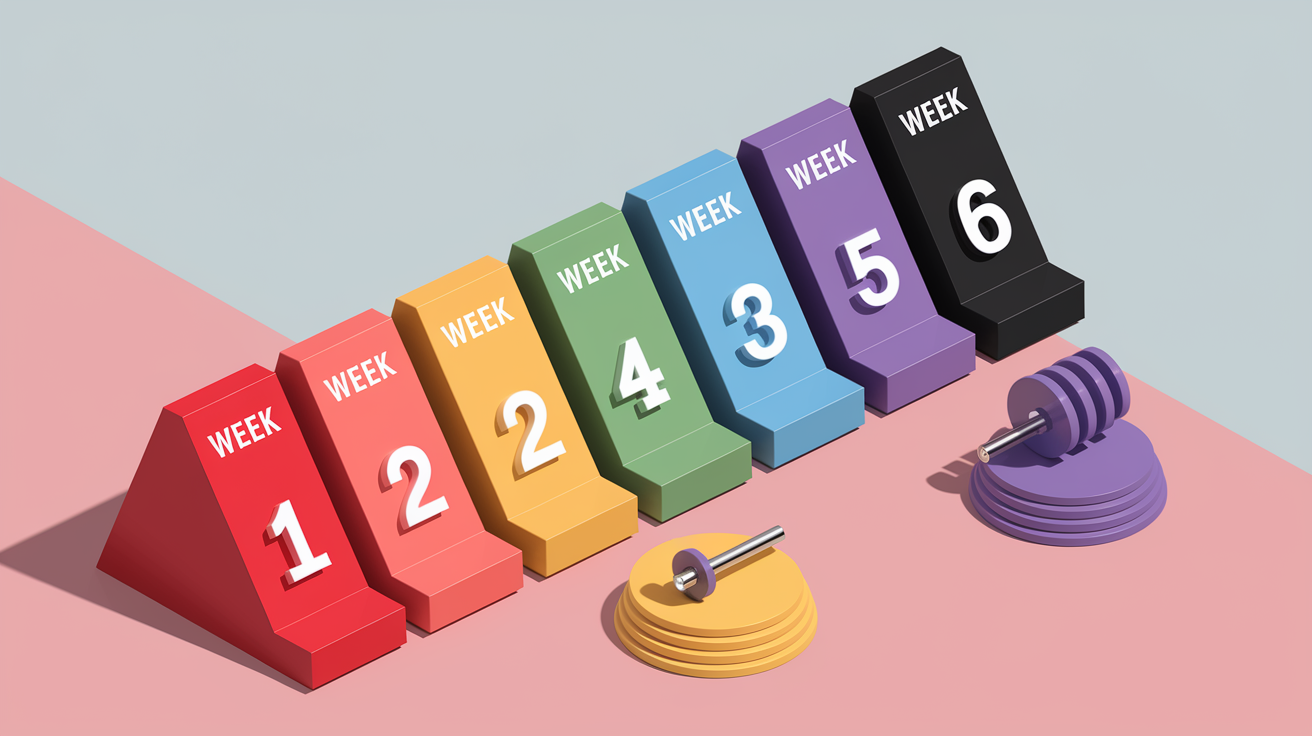
This example program uses a three-day strength split with two conditioning sessions per week during accumulation, dropping to one or two sessions during intensification. Each strength day focuses on one primary lift, two to three accessories, and optional core or single limb work. Conditioning is scheduled on separate days or after lifting when fatigue is already high and won’t interfere with the next heavy session.
| Week | Strength Focus | Conditioning Focus | Volume Level |
|---|---|---|---|
| 1 | 3 to 4 sets × 8 to 12 reps at 60 to 70% 1RM; primary compounds plus 2 to 3 accessories per session | 2 to 3 sessions of 20 to 40 min zone two steady state (row, bike, walk) | Moderate-high |
| 2 | Same rep/set scheme; add 1 to 2 reps or 2.5 to 5% load if top of range exceeded | 2 to 3 sessions zone two or long intervals (3 to 5 min efforts) | Moderate-high |
| 3 | 4 to 5 sets × 4 to 6 reps at 75 to 85% 1RM; reduce total exercises to 4 to 6 per session | 1 to 2 sessions of 10 to 20 min tempo intervals or HIIT | Moderate |
| 4 | 4 to 6 sets × 3 to 5 reps at 80 to 90% 1RM; rest 2 to 4 min between heavy sets | 1 to 2 short interval sessions (6 to 12 min total work) | Moderate |
| 5 | 4 to 6 sets × 3 to 6 reps at 85 to 90% 1RM; peak intensity on main lifts | 1 session of light intervals or active recovery only | Low-moderate |
| 6 | 2 to 3 sets × 8 to 12 reps at 30 to 50% 1RM; cut session count or duration by half | Light aerobic work (walking, easy cycling) or full rest | Very low |
Final Words
Run the mesocycle: two weeks accumulation, two weeks intensification, one deload, one peak. Build volume, then raise intensity. Keep conditioning low interference.
Use a weekly template: 3-4 strength days and 2-3 conditioning days. Pick big compound lifts, simple accessory work, and follow the set/rep guidelines. Prioritize sleep, protein, and quick RPE checks to manage fatigue.
This article showed how to periodize a sustainable 6-week strength and conditioning plan. You’ll train smart and see steady gains.
FAQ
Q: What is the purpose of a 6-week mesocycle and how do accumulation, intensification, and deload weeks fit together?
A: The 6-week mesocycle is designed to build strength and fitness by sequencing two accumulation weeks (higher volume, moderate intensity), two intensification weeks (lower volume, higher intensity), one deload week, and one peak/consolidation week.
Q: How should I structure each week during the 6-week plan?
A: The weekly structure should include 3–4 strength sessions and 2–3 conditioning sessions, with heavy lifts early and conditioning later or on separate days to reduce fatigue and support recovery.
Q: How should volume and intensity progress across the 6 weeks?
A: The volume and intensity should progress by starting with higher volume and moderate intensity, then shifting to lower volume and higher intensity, and finally cutting volume sharply during the deload to recover.
Q: Which exercises should I choose for sustainable progress?
A: Exercise selection should focus on core compounds—squat, hinge, push, pull, and carries—plus targeted accessory moves for weaknesses and low-interference conditioning like zone‑2 or short low-impact intervals.
Q: What sets, reps, and intensity guidelines should I follow per phase?
A: The sets, reps, and intensity guidelines are 3–5 sets; accumulation: 6–12 reps at moderate load; intensification: 3–6 reps at heavier load; deload: reduce volume 40–60%; condition by phase accordingly.
Q: How do I integrate conditioning without hurting strength gains?
A: Conditioning should be integrated by prioritizing zone‑2 work, placing high-intensity intervals away from heavy lifting days, and keeping conditioning volume low enough to avoid excess fatigue.
Q: How should I plan the deload week?
A: The deload week should cut weekly volume by about 40–60%, keep intensity light to moderate, emphasize technique, mobility, and easy conditioning to restore freshness and readiness.
Q: How do I manage recovery, sleep, and nutrition during the 6 weeks?
A: Recovery management means prioritizing 7–9 hours sleep, steady protein intake, hydration, planned deloads, and tracking RPE and readiness to adjust training when fatigue accumulates.
Q: How can I modify the 6-week plan if I only have 3 training days per week?
A: Modifying for three days means using full-body sessions each workout, prioritizing compound lifts, keeping 1–2 short conditioning sessions, and keeping progressive overload simple and consistent.
Q: How should beginners approach a periodized 6-week program?
A: Beginners should approach a 6-week plan by using lighter loads, fewer sets, focusing on learning core lifts, and extending the accumulation phase if technique or recovery needs more time.
Q: What simple tracking methods show progress across the 6 weeks?
A: Simple tracking methods include logging weights and reps, noting RPE each session, recording conditioning duration or zone minutes, and a quick weekly readiness check to guide adjustments.