
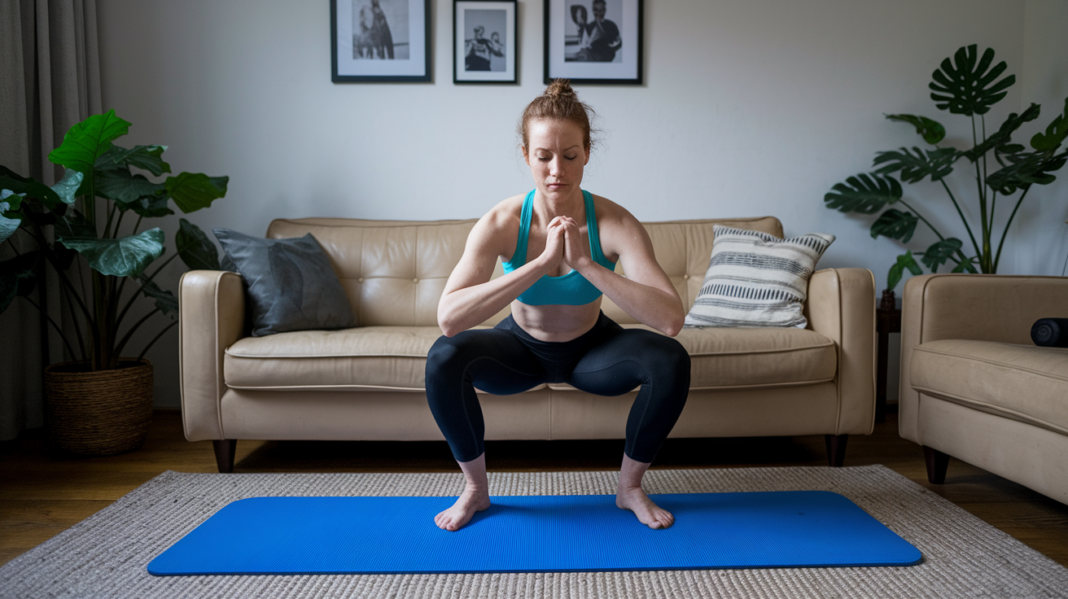
You don’t need hours in the gym to start getting stronger and moving better.
Start with 3–4 days a week, 20–30 minutes per session, using simple squats, pushes, pulls, and hinges that build good habits and protect your joints.
This plan meets beginners where they are: a 5-minute warm-up, 15–20 minutes of work, and an easy cooldown so soreness stays manageable.
Show up consistently, and small, steady steps will add up into real progress.
Beginner-Friendly Full-Body Plan to Start Your Workout Routine Safely
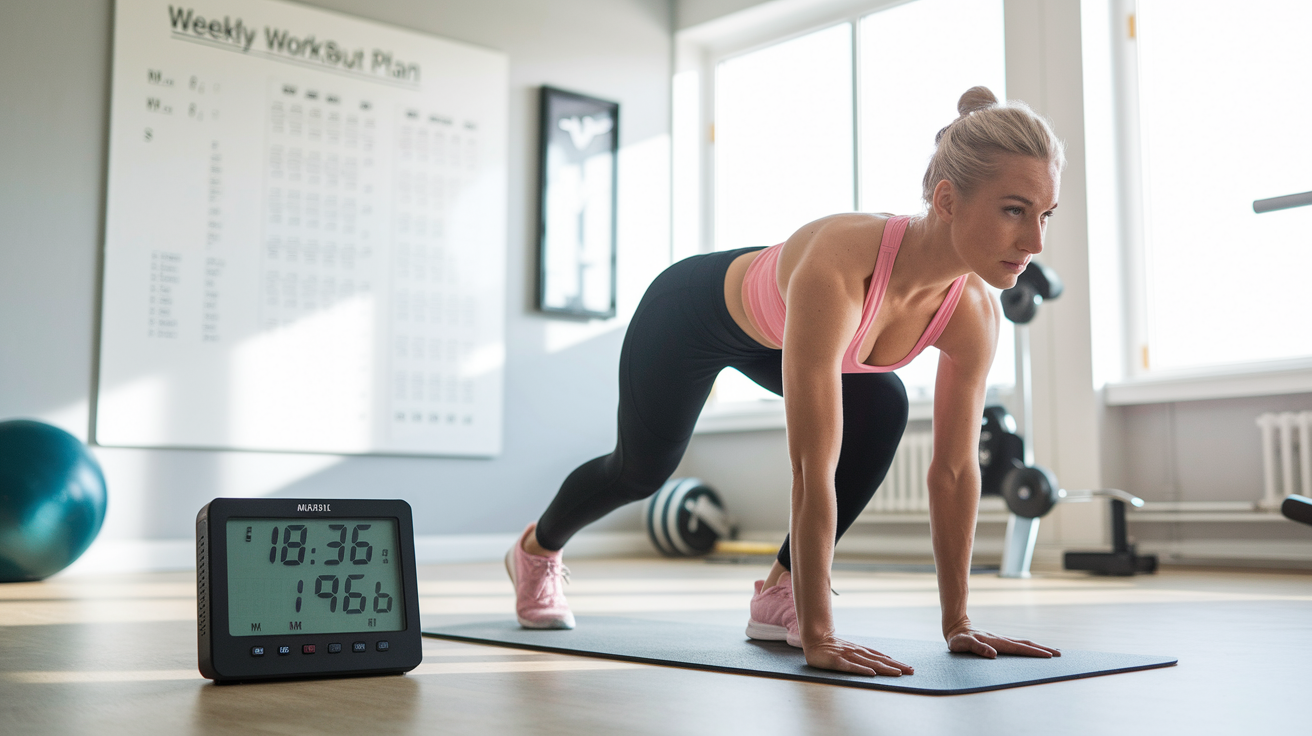
A beginner workout routine should meet you where you are. Start with 3–4 days per week, 20–30 minutes per session, simple movements you can do with confidence. Your body needs time to adapt to new demands, so pacing matters more than intensity. A safe framework includes a 5-minute warm-up, 15–20 minutes of work, and a 5–10 minute cooldown. This structure protects joints, teaches good habits, and keeps soreness manageable.
Most beginners do best with full-body sessions spread across the week. That means working legs, upper body, and core in each workout, using basic patterns like squats, pushes, pulls, and hinges. You’re building a foundation, not chasing burnout.
If you’re restarting after time off, the same approach applies. Start light, move well, add a little more each week.
Here’s a sample 3-day beginner plan:
Day 1 (Lower Body & Push): Warm-up 5 minutes, then 3 sets of box squats (10–15 reps), stationary lunges (10 per leg), glute bridges (12–15 reps), and incline push-ups (5–10 reps). Cooldown 5 minutes.
Day 2 (Cardio & Core): Warm-up 5 minutes walking or light cycling, then 20 minutes steady cardio on a treadmill or elliptical at a pace you can maintain, followed by 5 minutes of stretching.
Day 3 (Upper Body & Mobility): Warm-up 5 minutes, then 3 rounds of dumbbell chest press (8–12 reps), lat pulldown or band rows (10 reps), shoulder raises (10 reps), and a 20–30 second plank. Cooldown with 10 minutes of gentle stretching.
Start there. If a week feels too easy, repeat it with slightly more resistance or one extra set. If it feels hard, that’s normal. Progress happens when you show up consistently, not when you go all-out on day one.
Warm-Up Essentials for a Beginner Workout Plan

Warming up prepares cold muscles and stiff joints for work. A proper warm-up increases blood flow, lubricates joints, wakes up the nervous system. For beginners, this step is non-negotiable. Skipping it increases soreness and raises injury risk. You need 5–10 minutes before every session.
Start with light movement that mimics what you’re about to do. If your workout includes squats, do bodyweight squats. If you’re lifting upper body, do arm circles and light shoulder rolls. Dynamic stretching works better than static holds before exercise. Move through a full range of motion without forcing anything.
Breathe steadily and let your body warm gradually.
Here’s a simple warm-up sequence:
Foam rolling (optional): 30 seconds per side on calves, quads, or glutes if available.
Cardio moves: 30 seconds each of marching in place, arm swings, gentle jumping jacks, or bodyweight squats.
Dynamic stretches: 5 reps per side of leg swings (front-to-back and side-to-side), hip circles, and torso twists.
Activation drills: 10 glute bridges or band pull-aparts to wake up stabilizers.
If you’re short on time, prioritize cardio moves and dynamic stretches. Static stretching belongs in the cooldown, not the warm-up. Your goal is to feel loose, alert, ready to move with control.
Beginner Strength Training Fundamentals for Your First Routine
Strength training builds muscle, protects joints, supports long-term metabolism. For beginners, the key is learning movement patterns before chasing heavy weights. Start with 8–12 reps per set at a load where the last few reps feel challenging but doable. If you can’t complete 8 reps with good form, the weight’s too heavy. If 12 feels easy, it’s time to progress.
Most beginner plans use 2–3 sets per exercise. That’s enough stimulus without overwhelming recovery.
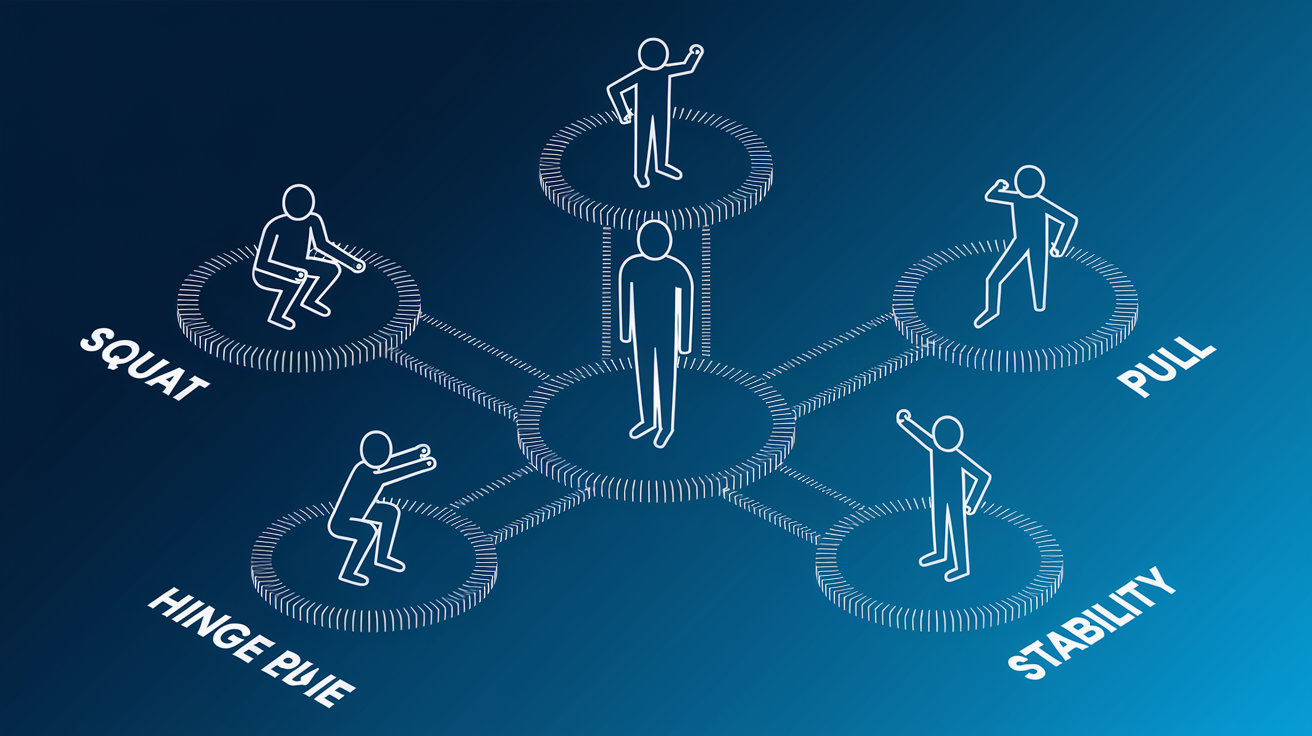
Focus on basic patterns: squat, hinge (like a glute bridge or deadlift), push (like a push-up or chest press), pull (like a row or lat pulldown), and core stability (like a plank). These movements teach your body how to move under load and build the foundation for everything else.
Progressive overload means adding a little more over time. After 3–4 weeks of bodyweight work, you can start adding dumbbells or resistance. When you do, increase weight by about 10–20% every two weeks. For example, if you’re using 10-pound dumbbells for chest press, try 12 pounds after two consistent weeks. Small jumps keep form clean and joints safe.
| Exercise Category | Reps | Notes |
|---|---|---|
| Squats, lunges, bridges | 10–15 | Bodyweight first 3–4 weeks, then add light dumbbells |
| Push-ups, chest press, shoulder press | 8–12 | Use an incline or bench if floor push-ups feel too hard |
| Rows, lat pulldown, band pulls | 10–12 | Keep shoulder blades down and back; pull with control |
Tempo matters as much as load. Lower weights slowly (2–3 seconds on the way down), pause briefly at the bottom, then press or pull back up. Controlled movement builds strength and teaches your nervous system to stabilize. Rushing through reps skips that learning step.
A Simple Home Workout Routine for Beginners with No Equipment
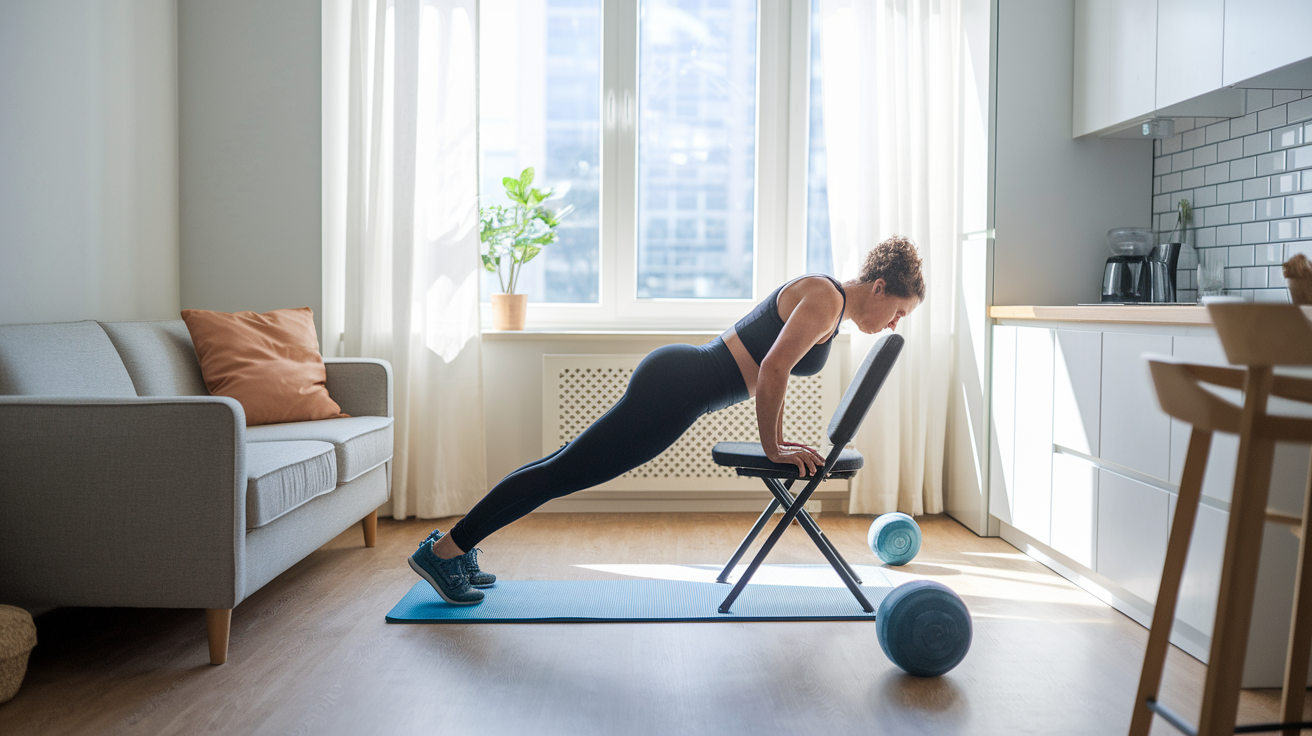
You don’t need a gym to start. A bodyweight routine builds strength, endurance, and confidence using only your floor and a chair or couch. These workouts fit into small spaces, take 10–20 minutes, require zero equipment. If you’re new or restarting, this is a practical first step.
Here’s a simple 10-minute continuous circuit. Run through it once, rest 1 minute, then repeat:
-
Incline push-up (hands on a chair or couch): 5–10 reps. Keep your body in a straight line, lower your chest toward the surface, then press back up.
-
Bodyweight squat: 10–15 reps. Feet shoulder-width, sit back like you’re reaching for a chair, then stand up. Knees track over toes.
-
Hip raise (glute bridge): 10–15 reps. Lie on your back, feet flat, press hips up until your body forms a straight line from knees to shoulders. Squeeze glutes at the top.
-
Walking push-up: 5–10 total. Start in a plank, step one hand forward, then the other, then step back. Keep core tight.
-
Mountain climbers: 20 total (10 per leg). From a high plank, drive one knee toward your chest, then switch legs quickly but under control.
Move at a steady pace. If you need to pause between exercises, take 10–15 seconds. The goal is to keep moving for the full 10 minutes, building work capacity without spiking heart rate into the red.
Low-impact swaps include marching in place instead of mountain climbers or holding a plank instead of walking push-ups.
Beginner Cardio Options to Add to Your Workout Routine

Cardio builds your aerobic base, supports heart health, helps manage body composition. For beginners, the simplest starting point is a 20–25 minute session on a machine or a brisk walk. You’re not chasing speed or breathlessness. You’re building the habit and letting your cardiovascular system adapt.
Walking is the most accessible option. Start with 20 minutes at a pace where you can still hold a conversation. If that feels easy after a week or two, add 5 minutes or pick up the pace slightly.
Treadmills, stationary bikes, ellipticals all work the same way. Set a moderate resistance (levels 1–3 on an elliptical for warm-up, 4–6 for steady work) and aim for 20–30 minutes. Over time, steady-state cardio sessions often stretch to 30–60 minutes as endurance improves.
If you want variety, try simple interval work. Here’s a sample beginner-friendly session on an elliptical or bike: warm up for 5 minutes at low resistance, then alternate 5 minutes at moderate intensity (resistance around 4–6), 3 minutes at higher intensity (resistance 7–9), and 2 minutes easy recovery (resistance 1–3). Repeat that cycle 2–3 times, then cool down for 5 minutes. The whole session takes about 30–40 minutes.
Machines like the elliptical burn an estimated 300–600 calories per hour depending on your effort and body size. Don’t chase the calorie count. Chase the consistency.
Proper Exercise Form and Safety Tips for a Beginner Workout Routine

Good form protects your joints and makes every rep count. For beginners, learning the movement is more important than adding weight. Start every session by checking your posture. Neutral spine means your lower back isn’t arched or rounded. Your core should feel gently engaged, not rigid. Knees track over toes during squats and lunges. Shoulders stay down and back during upper-body work.
Breathing matters more than most people think. Exhale during the hard part of the movement (the push or pull), inhale on the way down or back. For example, during a chest press, breathe out as you press the weight up, breathe in as you lower it. During a plank, breathe steadily and deeply. Holding your breath spikes blood pressure and makes you tense.
Let the breath guide the movement.
Stop if you feel sharp pain. Muscle burn is normal. Joint pain, pinching, or shooting sensations are not. If something feels wrong, stop the exercise, check your setup, try a lighter load or different movement.
Here are six common beginner mistakes to avoid:
Letting knees collapse inward during squats or lunges.
Rounding your back during rows, deadlifts, or planks.
Locking out elbows or knees at the top of a press or squat.
Using momentum instead of muscle to move the weight.
Skipping warm-ups or cooldowns.
Adding weight before mastering the bodyweight version.
For specific exercises, small cues make a big difference. During a lat pulldown, set the seat so your thighs fit snugly under the support pads. Grip the bar slightly wider than shoulder-width with palms facing away. Pull down to chin level, keeping elbows pointed down and shoulders away from your ears.
During a plank, maintain a straight line from head to heels. Don’t let hips sag or pike up. Engage your core like someone’s about to poke your stomach.
If you’re unsure about form, ask a trainer or watch a trusted video demo. Most gym memberships include a free orientation session with a certified trainer. Use it.
Warm-Down and Stretching Steps for Finishing a Beginner Workout Routine

Cooling down helps your heart rate return to baseline and reduces next-day soreness. After your last working set, spend 5 minutes moving at low intensity. If you were lifting, walk slowly or pedal lightly on a bike. If you finished cardio, drop the resistance to level 1–3 and coast for 5 minutes. Your breathing should settle, and your muscles should start to relax.
Stretching works best when muscles are warm. After your cooldown, spend 5–10 minutes on static stretches. Hold each position for 10–15 seconds without bouncing. Focus on the muscles you just worked. If you did lower body, stretch quads, hamstrings, calves, hip flexors. If you did upper body, stretch chest, shoulders, triceps. Gentle pressure is enough. You’re not trying to force flexibility gains on day one.
Here are four simple post-workout stretches:
Quad stretch: Stand on one leg, pull the opposite heel toward your glutes, hold 15 seconds per side.
Hamstring stretch (seated hurdler): Sit with one leg extended, fold gently forward over that leg, hold 15 seconds, switch sides.
Hip flexor stretch: Half-kneeling position, press hips forward gently until you feel a stretch in the front of the back leg’s hip. Hold 15 seconds per side.
Chest and shoulder stretch: Interlace fingers behind your back, straighten arms, lift gently. Hold 15 seconds.
Optional: foam rolling post-workout on glutes, quads, upper back can speed recovery. Spend 30 seconds to a minute per area, moving slowly over tender spots. If you have time, box breathing helps reset your nervous system. Inhale for 4 seconds, hold for 4, exhale for 4, hold for 4. Repeat 5–10 rounds or longer if it feels good.
Weekly Beginner Training Schedule Examples
Most beginners thrive on 3–5 workout days per week. Three days gives plenty of recovery. Five days builds momentum and habit. Either works. The key is spacing sessions so you’re not training the same muscles on back-to-back days. Full-body routines need at least one rest day between sessions. If you split upper and lower body, you can train more frequently.
A realistic beginner week might include two or three strength days, one or two cardio days, at least one full rest or active recovery day. Active recovery means light movement like walking, yoga, or a short mobility routine. It keeps blood flowing without taxing your system. On true rest days, you do nothing structured. Sleep, hydrate, let your body rebuild.
| Day | Focus | Duration |
|---|---|---|
| Day 1 | Full-body strength (squats, push-ups, rows, core) | 25 minutes |
| Day 2 | Cardio (treadmill, bike, or brisk walk) | 20–25 minutes |
| Day 3 | Active recovery or mobility routine | 15 minutes |
| Day 4 | Upper-body strength (chest press, lat pulldown, shoulder work, plank) | 20–30 minutes |
You can also follow a simple memory tool called the 3-3-3 rule: aim for three strength days, three cardio or mobility days, and remember to take recovery seriously every three sessions. It’s flexible, not a law. If your schedule only allows three total sessions, do three full-body strength workouts and add a 10-minute walk on off days.
Time-efficient options like EMOM (every minute on the minute) circuits fit into 20 minutes and combine strength with light cardio.
Progress Tracking and How to Scale Your Beginner Workout Routine

Tracking what you do makes progress visible and keeps you honest. Use a simple notebook, a notes app, or a dedicated workout log. Write down the date, exercises, sets, reps, weights. Add a quick note about how it felt. That’s it. Over time, you’ll see patterns. You’ll know when it’s time to add weight or reps, and you’ll catch plateaus early.
Body composition changes take longer to show than strength gains. The scale might not move much in the first month, especially if you’re building muscle and losing fat at the same time. That’s why monthly body-composition scans (like an Evolt 360 or similar device) help. They separate muscle mass from fat mass and show trends the scale misses.
If your weight stays flat but muscle goes up and fat goes down, that’s progress. Expect small fluctuations week to week. Water, food timing, stress all affect the number on the scale.
When you’re ready to progress, follow the 10–20% rule. If you’re lifting 10-pound dumbbells for chest press and hitting 3 sets of 12 reps cleanly, try 12 pounds the next session. If that feels too hard, drop back and add one more week at 10 pounds.
Progression isn’t linear. Some weeks you’ll feel strong. Some weeks you won’t. The 3-3-3 guideline helps here too: aim for three workouts per week, stick with a routine for three weeks before changing it, try to progress every three sessions. Small, steady increases beat big jumps that wreck your form or leave you too sore to train again.
Beginner Nutrition and Recovery Habits for Supporting Your Workout Routine

Exercise creates the stimulus. Recovery and nutrition deliver the results. For beginners, the nutrition side doesn’t need to be complicated. Focus on eating enough protein to support muscle repair (a palm-sized portion at most meals), staying hydrated before, during, and after workouts, eating enough overall to fuel your sessions without feeling sluggish.
Hydration starts before you walk into the gym. Drink water consistently throughout the day, not just during your workout. If your session is longer than 30 minutes or you’re sweating heavily, sip water every 10–15 minutes. After your workout, rehydrate over the next hour.
Dehydration makes you feel weaker, slows recovery, clouds your head. It’s one of the easiest fixes that most people skip.
Sleep and rest days are where your body rebuilds. Aim for 7–9 hours of sleep per night. That’s when muscle repair happens, hormones balance, your nervous system resets. On rest days, eat normally and move lightly if it feels good. A 10-minute walk or some gentle stretching counts as active recovery.
Don’t treat rest days like punishment or try to “make up” for missed workouts. They’re part of the plan, not a gap in it. Combining consistent training, simple nutrition, adequate hydration, and real rest gives your body everything it needs to adapt and get stronger.
Final Words
Start this week with 3 short sessions: 5-minute warm-up, 20–30 minute main work, 5–10 minute cool-down. Keep movements simple and focus on form.
You practiced a beginner full-body plan, warm-up moves, strength rep ranges, a no-equipment circuit, cardio options, and safety cues. Aim for 3–4 days a week, 8–12 reps for strength, and 20–25 minutes for cardio. Track progress and add small increases every 2–4 weeks.
Treat this as your baseline workout routine for beginners. Small, steady steps win — you’ll get better with consistency.
FAQ
Q: What is a good beginner workout schedule?
A: A good beginner workout schedule is 3–4 days per week, 20–30 minutes per session, with a 5-minute warm-up, 20–25 minutes of main work, and a 5–10 minute cooldown.
Q: What is the 3-3-3 rule for workout?
A: The 3-3-3 rule means doing 3 workouts per week, using about 3 sets for main exercises, and reassessing or gently increasing load after 3 weeks.
Q: How much exercise should a diabetic get a day?
A: A person with diabetes should aim for about 30 minutes of moderate activity most days (150 minutes weekly), plus two strength sessions a week, and follow medical advice.
Q: What is the best exercise for heart disease?
A: The best exercise for heart disease is regular moderate aerobic activity, like brisk walking 20–30 minutes most days, plus light strength work if your doctor clears you.