
What if protecting your knees meant getting fitter, not giving up activity?
Low-impact exercise does exactly that.
It keeps at least one foot on the ground or uses water, a bike seat, or a machine so you raise your heart rate without the pounding.
In this post you’ll get clear, practical options like walking, cycling, swimming, rowing, elliptical, yoga, Pilates, and chair routines, plus simple cues for technique and progress.
The goal: build cardio, strength, and joint longevity you can stick with.
Clear Overview of Low-Impact Exercise Options
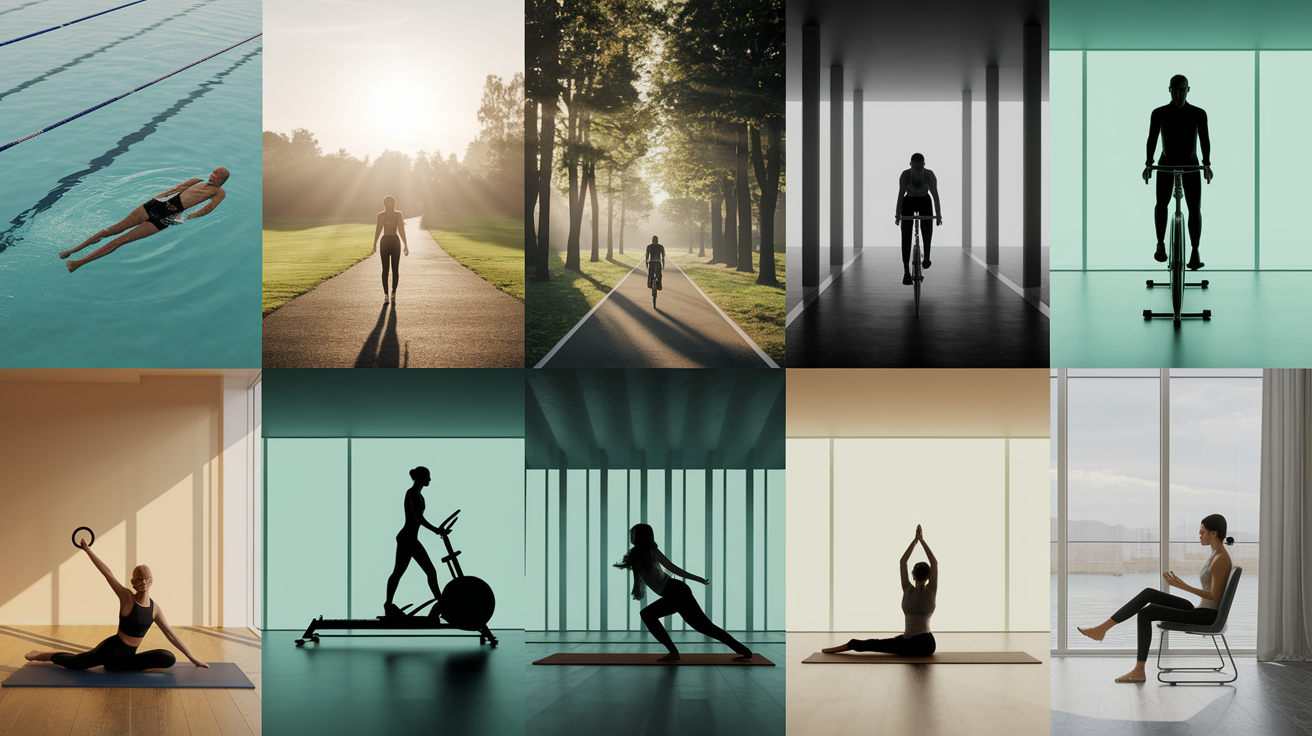
Low-impact exercise keeps at least one foot on the ground or gets your body supported by water, a bike seat, or a machine. There’s no airborne phase. No pounding. That’s the point. You still get your heart rate up and build strength, but you’re not jamming stress into your hips, knees, ankles, and spine with every rep or stride.
Who needs this? Beginners who don’t have a workout routine yet. Older adults dealing with joints that ache more than they used to. People coming back after surgery, injury, or just a long stretch of not moving much. Anyone pregnant, carrying extra weight, or managing chronic pain. Even experienced athletes use low-impact work on recovery days to stay active without wrecking themselves. Whatever your situation, these exercises let you build cardiovascular fitness, muscular endurance, and mobility without the constant pounding that eventually shuts everything down.
Research backs it up. Low-impact exercise works for improving cardiovascular health, supporting weight loss, and cutting injury risk when you do it consistently at moderate intensity.
The main options you’ll see:
- Swimming
- Walking
- Cycling
- Rowing
- Elliptical trainer
- Yoga
- Pilates
- Chair routines
Low-Impact Exercise Benefits for Cardio Health, Joint Longevity, and Fat Loss
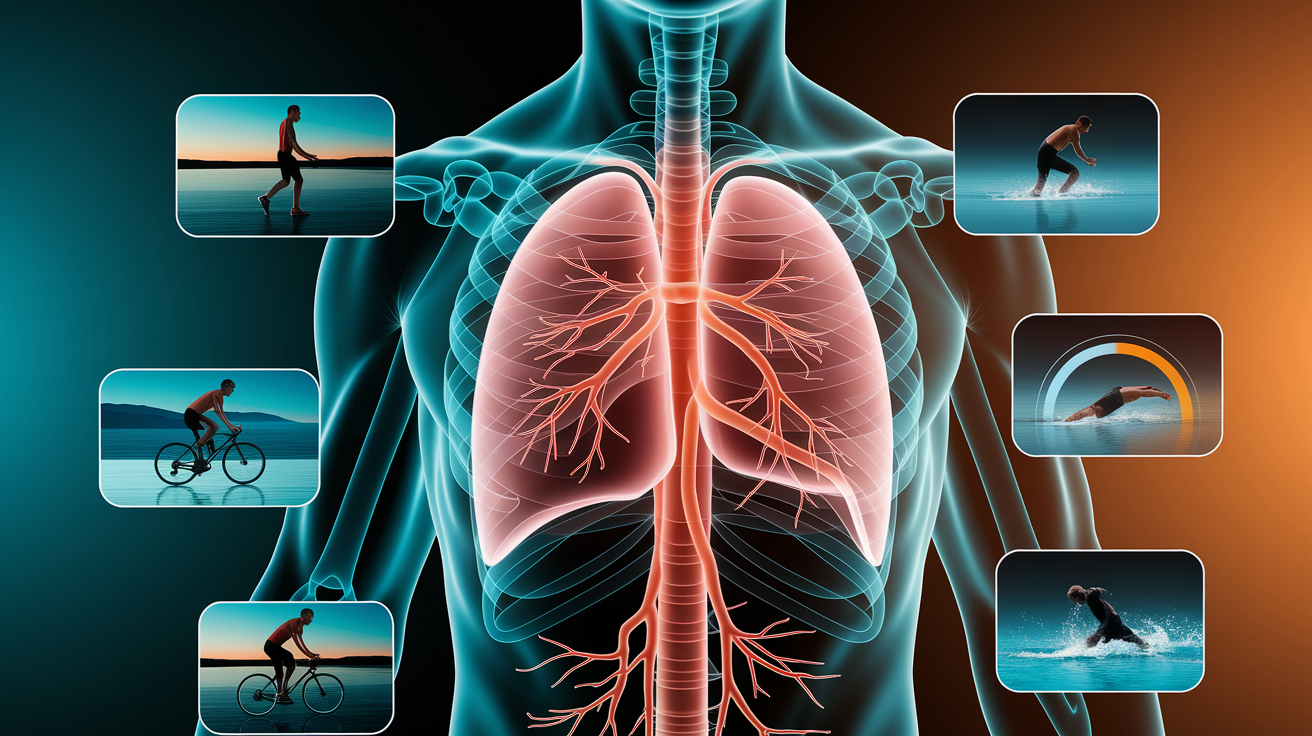
Low-impact cardio strengthens your cardiovascular system, lowers resting heart rate, and improves aerobic capacity without the repetitive joint loading that causes inflammation. Brisk walking, cycling, swimming. All of them push your heart rate into the moderate zone (you can talk but not sing), delivering the same cardiovascular adaptations as higher-impact stuff. A 2019 systematic review found that indoor cycling improved aerobic capacity and lipid profiles even without dietary changes. Low-impact doesn’t mean low-benefit.
For joint longevity, you’re reducing cumulative wear on cartilage and connective tissue. Every foot strike during running generates impact forces two to three times your body weight. Walking cuts that in half. Swimming removes it almost entirely. Cycling eliminates it by taking weight off your legs. Over months and years, that difference adds up. You’re reducing the risk of osteoarthritis progression and keeping joints functional longer. Low-impact training also supports gentle, consistent loading that stimulates bone remodeling without the shock that aggravates existing damage.
Fat loss is absolutely achievable with low-impact exercise when you’re controlling calories reasonably. Walking at 3.0 to 4.0 mph for 30 minutes burns roughly 120 to 180 calories depending on body weight. Interval formats (alternating 1 to 3 minutes of brisk effort with 30 to 60 seconds of recovery) increase calorie burn during and after the session. Swimming, rowing, and cycling all provide similar or higher energy expenditure while being joint-safe. Consistency matters more than intensity for fat loss, and low-impact formats make it easier to show up every week without needing extra recovery time.
Practical Technique Instructions for the Most Common Low-Impact Exercises
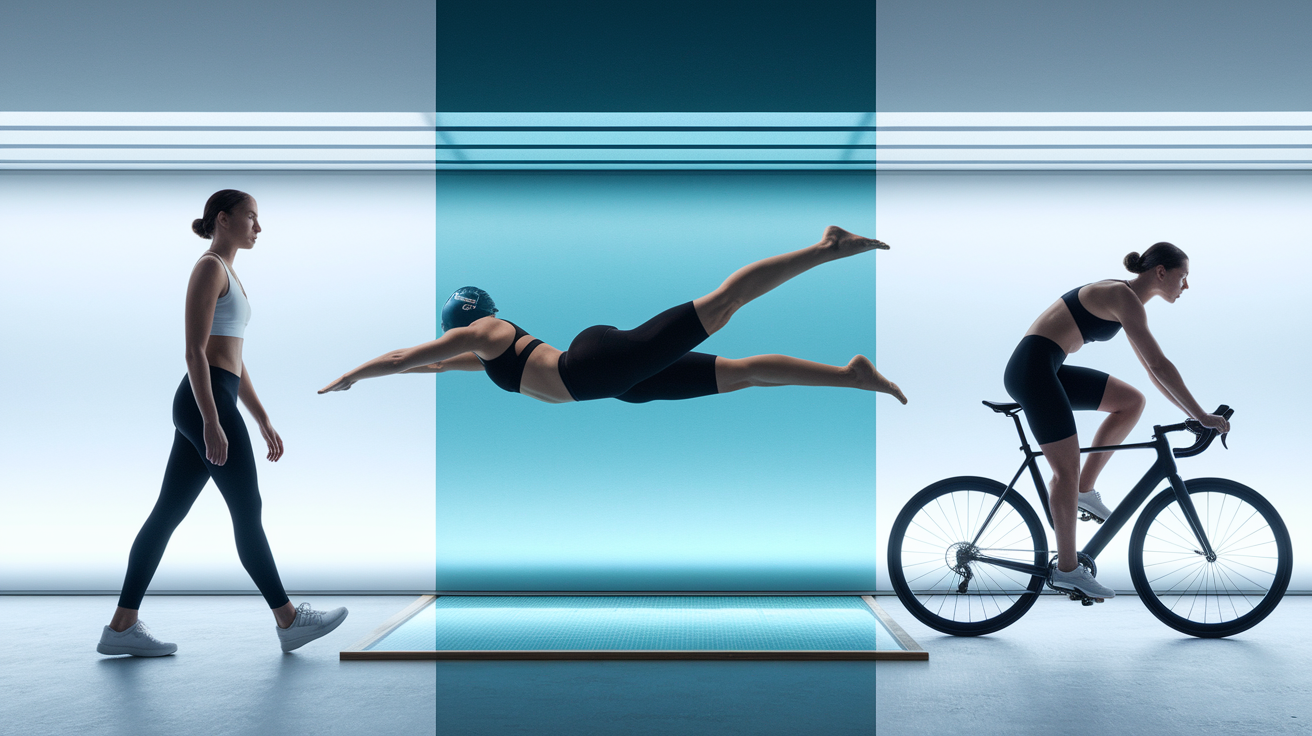
Walking technique matters more than most people think. Stand tall, shoulders back, core lightly engaged, eyes forward. Let your arms swing naturally at your sides, bending at roughly 90 degrees. Push off through your toes with each step instead of shuffling. Aim for a brisk pace, around 3.0 to 4.0 mph if you’re on a treadmill, or fast enough that conversation feels slightly harder but still possible. Softer surfaces like a track, trail, or treadmill deck reduce stress compared to concrete. If you want more intensity, add a slight incline instead of pounding harder on flat ground.
Swimming and pool work use water’s buoyancy to support 50 to 90 percent of your body weight depending on immersion depth. Ideal for anyone with significant joint pain or post-surgery restrictions. Freestyle stroke engages shoulders, triceps, chest, quads, and core. Backstroke shifts emphasis to upper back and rear deltoids. Breaststroke targets inner thighs and glutes. Even treading water or aqua aerobics in the shallow end provide cardiovascular work with near-zero impact. Focus on smooth, controlled strokes and steady breathing rather than thrashing through the water.
Cycling and recumbent bike sessions depend on proper setup. Seat height should allow a slight bend in your knee even when the pedal is at its lowest point. If your leg locks out completely, lower the seat. If your knee stays deeply bent through the entire pedal stroke, raise it. Keep your upper body relaxed and avoid rocking side to side. On a recumbent bike, adjust the seat so your extended leg has that same slight bend. Recumbent bikes are easier on the lower back and hips because the seat provides full support. Increase intensity by shifting to a higher gear or choosing hillier routes outdoors, not by pedaling faster with poor form.
Rowing machine work follows a specific sequence. Sit on the seat, strap your feet in, keep your shins vertical, lean your upper body slightly forward, and hold the handle with straight arms. Push hard through your heels to straighten your legs first. Once your legs are nearly straight, lean your upper body back to about 45 degrees while keeping your core engaged. Finish by bending your elbows and pulling the handle to your chest. Reverse the order to return: arms extend, upper body leans forward, knees bend. Elliptical trainers mimic a running stride without impact. Keep your feet flat on the pedals, stand upright, and let the machine guide your motion. Start slow to learn the rhythm before adding resistance or speed.
Quick form cues:
- Walking: Shoulders back, core engaged, push off through toes, eyes forward
- Swimming: Smooth strokes, steady breathing, use multiple strokes for balanced muscle work
- Rowing: Legs first, then lean back 45°, then arms pull; reverse order on return
- Cycling: Slight knee bend at full extension, no rocking, relaxed upper body
- Elliptical: Feet flat, upright posture, let the machine guide stride rhythm
Gentle Strength Training Options That Support Low-Impact Conditioning

Low-impact cardio builds endurance, but adding strength work protects joints by stabilizing the muscles around them, improves bone density, and supports fat loss by maintaining muscle mass during weight management. Strength training also makes everyday movement easier. Carrying groceries, climbing stairs, getting up from a chair. It reduces fall risk as you age. And you don’t need heavy barbells or high-impact plyometrics to see results. Bodyweight exercises, resistance bands, and light dumbbells all work when you focus on controlled movement and higher rep ranges.
Resistance bands and light dumbbells let you train major muscle groups without joint strain. Aim for 1 to 3 sets of 8 to 12 repetitions per exercise, choosing a resistance level that makes the last few reps challenging but still doable with good form. Keep your core tight, maintain neutral spine alignment, and move through a tempo of roughly 2 to 3 seconds lifting and 2 to 3 seconds lowering. Wall push-ups, band rows, seated overhead presses with light dumbbells, and bicep curls are all joint-friendly upper body options. For lower body, try resistance band lateral walks, clamshells, and standing heel raises.
Glute and hip strengthening without jumping is critical for knee health and balance. Weak glutes force your knees to collapse inward during walking or stair climbing, increasing strain on ligaments and cartilage. Exercises like seated hip abduction with a band, single-leg bridges (lying on your back, one foot planted, lift hips), fire hydrants on hands and knees, and standing hip extension with a band all target the glutes and hip stabilizers. These moves require no equipment beyond a band and a mat, and they directly reduce knee pain when done consistently.
Beginner low-impact strength moves to start this week:
- Sit-to-stand from a chair (8 to 12 reps, 1 to 2 sets)
- Wall push-ups (8 to 12 reps, 1 to 2 sets)
- Resistance band rows (8 to 12 reps per arm, 1 to 2 sets)
- Standing heel raises holding a countertop for balance (10 to 15 reps, 1 to 2 sets)
Comparison of Low Impact vs High Impact Training for Safety and Effectiveness
High-impact exercises include running, plyometric jumps, box jumps, and most HIIT formats that involve leaving the ground. These activities increase bone-loading stimulus and burn more calories per minute, but they also multiply joint compressive forces and raise the risk of acute injuries like ankle sprains or stress fractures. Low-impact alternatives reduce those forces dramatically while still improving cardiovascular fitness, supporting gradual fat loss, and building muscular endurance. The trade-off is slightly lower calorie burn per minute, but that gap closes when you factor in the ability to train more often without needing extended recovery.
For most people, especially beginners or anyone with joint concerns, low-impact training is safer and more sustainable. High-impact work has its place for advanced athletes chasing specific performance goals, but it’s not required for general health, weight management, or longevity. Mixed approaches, where you alternate low-impact sessions with occasional moderate-impact intervals, can offer variety without overwhelming your joints. That said, if you’re managing arthritis, recovering from surgery, or just starting after years of inactivity, stick with low-impact options until your strength and stability are solid.
| Training Type | Joint Load | Best For |
|---|---|---|
| Low-Impact (walking, swimming, cycling) | Minimal to moderate; one foot always grounded or body supported | Beginners, joint pain, rehab, seniors, daily consistency |
| High-Impact (running, plyometrics, jumping) | High; 2 to 3× body weight per foot strike | Advanced athletes, performance goals, bone-loading stimulus |
| Mixed/Interval (alternating formats) | Variable; depends on session design | Intermediate exercisers seeking variety without overload |
Modifications for Fitness Levels, Joint Pain, and Special Conditions
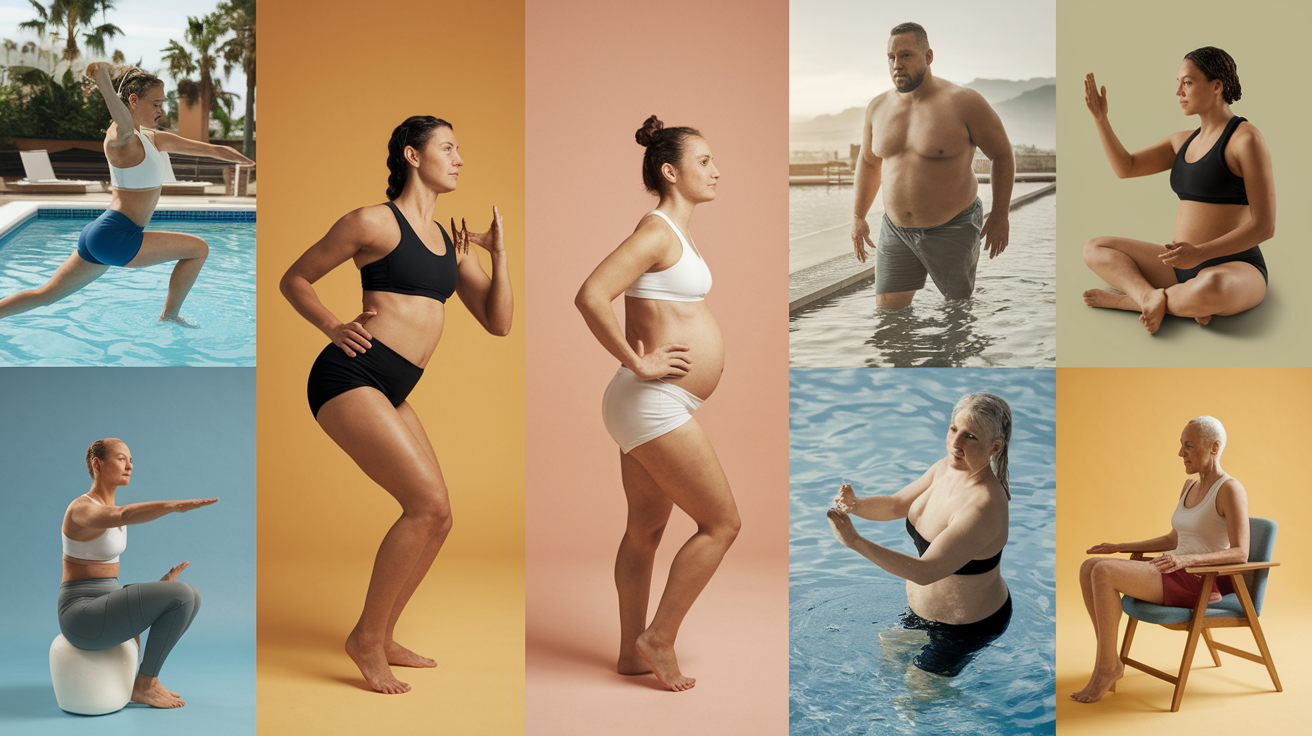
Beginners should start with 10 to 15 minute sessions, three times per week, and add 5 to 10 minutes every one to two weeks as endurance improves. Walking is the simplest entry point. Just step outside or onto a treadmill and aim for a pace that feels slightly challenging but still allows conversation. Intermediate exercisers can lengthen sessions to 30 to 45 minutes, add interval formats (1 to 3 minutes faster effort with 30 to 60 seconds recovery), or layer in resistance band strength circuits twice per week. Advanced exercisers use low-impact work as active recovery between higher-intensity sessions or as the primary format when injury risk needs to stay low.
For specific conditions, modifications keep you safe while still progressing. Knee pain responds well to pool exercise, recumbent cycling, and elliptical work because all three reduce or eliminate weight-bearing load. Avoid deep squats or lunges until pain improves. Osteoporosis requires careful attention to spine position. Skip deep forward bends, twisting under load, or any jumping. Instead, choose controlled standing weight-bearing exercises like heel raises, resistance band rows, and wall push-ups that load bones safely. Balance disorders mean using a chair, wall, or countertop for support during standing exercises, and prioritizing seated strength work until stability improves.
Pregnancy and obesity both benefit from low-resistance cardio and modified strength training. During pregnancy, stick with activities you were already doing before conception, avoid lying flat on your back after the first trimester, and keep intensity moderate (you should be able to hold a conversation). If you’re carrying extra weight, choose non-weight-bearing or water-based options like swimming, cycling, or rowing to protect knees and hips while you build cardiovascular fitness and begin gradual fat loss. Walking is fine if your joints tolerate it, but softer surfaces and supportive shoes are non-negotiable.
Specific adjustments for joint and mobility concerns:
- Knee pain: Use pool, recumbent bike, or elliptical; reduce range of motion in strength exercises
- Hip or lower back pain: Try recumbent bike, swimming, or chair strength; avoid deep hip flexion
- Shoulder issues: Skip overhead presses; use band pulls and rows at chest height
- Balance problems: Perform exercises seated or with one hand on a stable surface
- Limited mobility: Use chair yoga, seated marching, and resistance band work from a chair
- Post-surgery: Follow clearance from your surgeon; start with 5 to 10 minute sessions and progress slowly
Safety, Warm-Up, Cool-Down, and Form Guidelines for Low-Impact Sessions
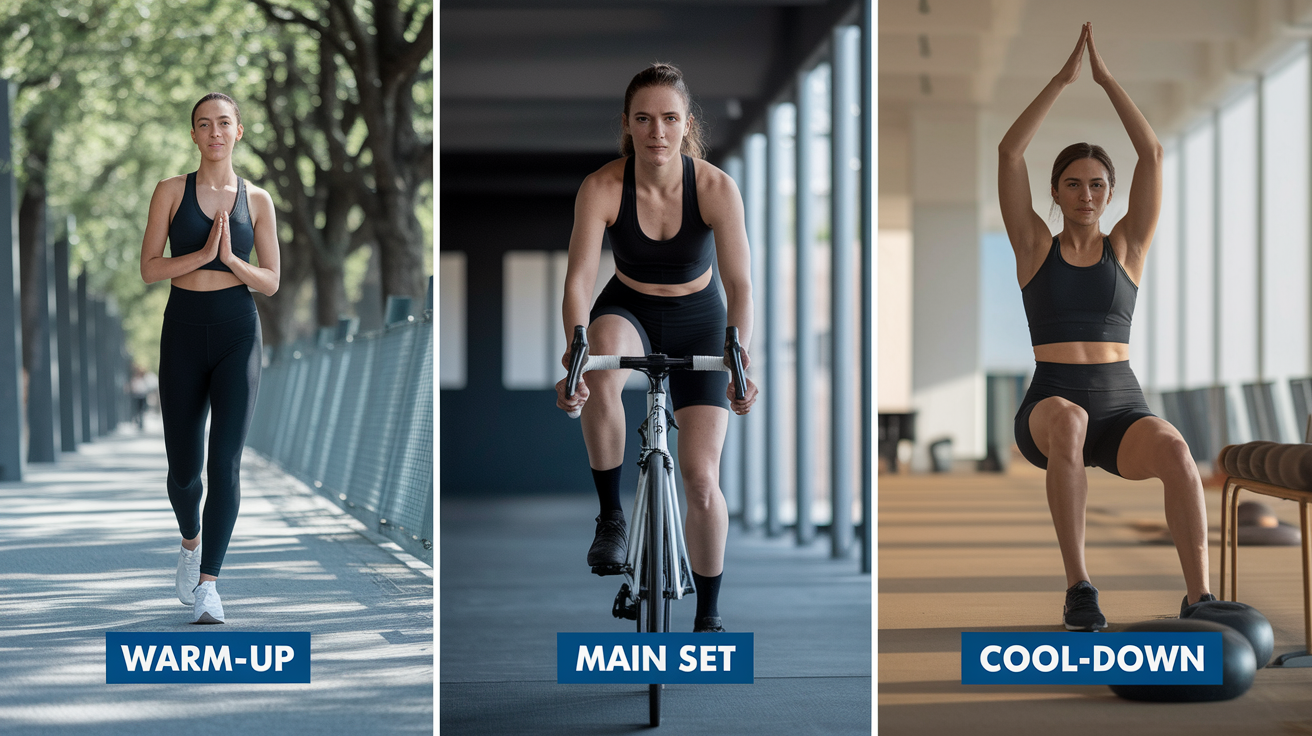
Every session should start with a 5 to 10 minute warm-up that gradually raises your heart rate and loosens stiff joints. Gentle marching in place, slow walking, or easy cycling at low resistance all work. The goal is to increase blood flow to muscles and connective tissue before asking them to work harder. Skipping the warm-up increases injury risk and makes the first few minutes of your workout feel harder than they need to.
Cool-down is just as important. After your main work, spend 5 to 10 minutes bringing your heart rate back down with slow walking or easy movement, then add static stretching. Hold each stretch for 20 to 30 seconds without bouncing. Focus on calves, hamstrings, quads, hip flexors, chest, and shoulders. Stretching while muscles are still warm improves flexibility and reduces next-day soreness. It’s also a good time to check in with your body and notice any new aches or tightness that might need attention.
Form and technique protect your joints even during low-impact work. Maintain a neutral spine with a natural curve in your lower back, not rounded or overly arched. Keep your core lightly engaged to support your spine during movement. When bending your knees, track them in line with your toes, not collapsing inward. Move with control at a tempo of about 2 to 3 seconds in each direction, especially during strength exercises. Stop immediately and consult a doctor if you experience chest pain, sudden dizziness, severe shortness of breath, or new joint swelling that lasts more than 48 hours. Those are red flags that need medical assessment, not something to push through.
Equipment for Low-Impact Training, Including Cost Ranges and Practical Recommendations
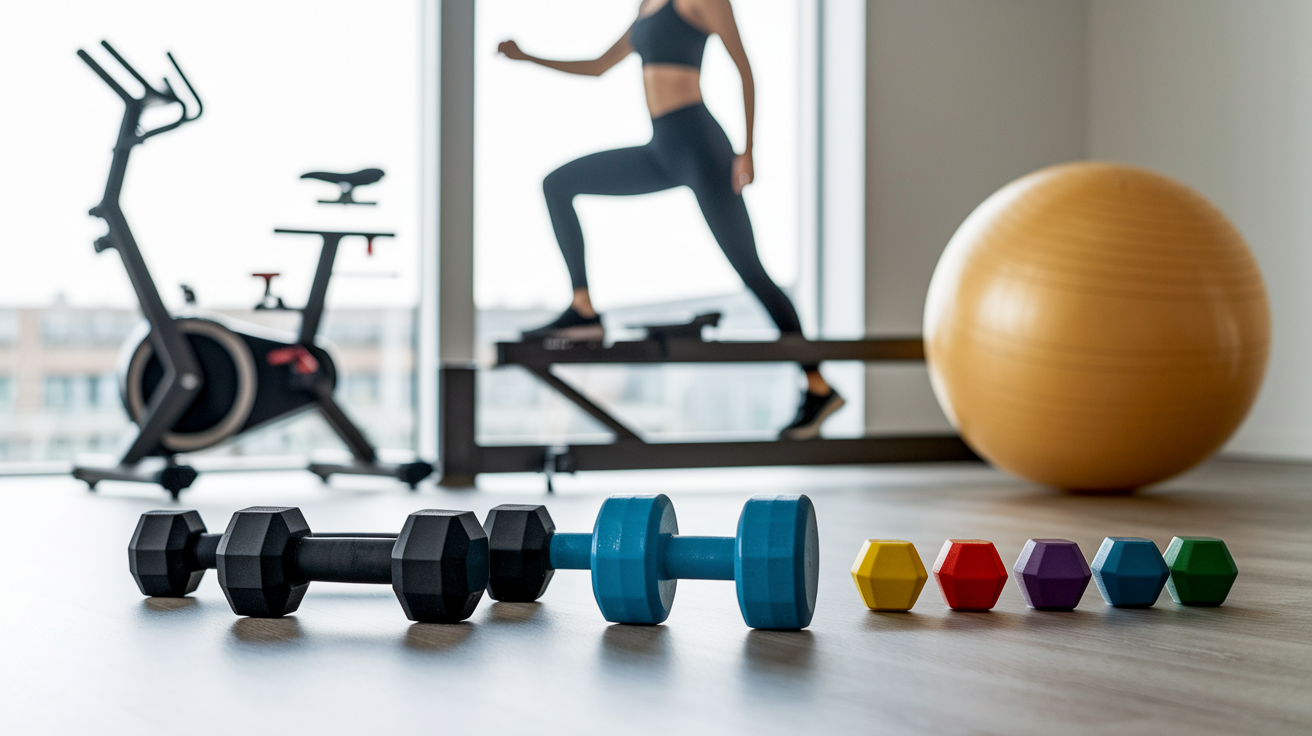
You don’t need a fully stocked gym to get started. Resistance bands are the most versatile and affordable option, costing $8 to $30 for a set. They provide adjustable resistance for upper and lower body strength work, pack flat for travel, and work in any space. Light dumbbells (2 to 10 pounds per hand) run $10 to $50 for a pair and are useful for controlled arm, shoulder, and core exercises. A stability ball ($15 to $40) adds core challenge to seated and lying exercises and doubles as a chair for active sitting.
Home cardio machines range widely in price and space requirements. A basic stationary bike starts around $200 and tops out near $1,200 for models with programmable resistance and digital tracking. Recumbent bikes are easier on the back and hips but typically cost $300 to $2,000. Elliptical trainers run $400 to $3,000 depending on stride length, resistance options, and build quality. Rowing machines fall in the $300 to $1,500 range. If budget or space is tight, start with walking and resistance bands, then add a machine later if you want more variety indoors.
Shoe selection matters for walking and any standing exercise. Look for cushioned walking or cross-training shoes with good arch support and a flexible sole. Expect to spend $40 to $150 for a solid pair. Replace them every 300 to 500 miles or roughly every six months if you walk daily. Community pools often offer affordable access for swimming or aqua aerobics, with per-class fees around $5 to $20 or monthly memberships for $20 to $60. Many senior centers and municipal recreation departments run low-cost classes specifically designed for older adults or people with joint concerns.
Essential low-impact equipment to consider:
- Resistance bands: $8 to $30; portable, versatile, beginner-friendly
- Light dumbbells (2 to 10 lb): $10 to $50; simple progression for upper body and core
- Stability ball: $15 to $40; adds core work and doubles as an active seat
- Stationary or recumbent bike: $200 to $2,000; indoor cardio without joint impact
- Walking shoes with cushioning: $40 to $150; protect feet and knees during daily movement
Sample Low-Impact Workout Routines for Beginners and Busy Adults
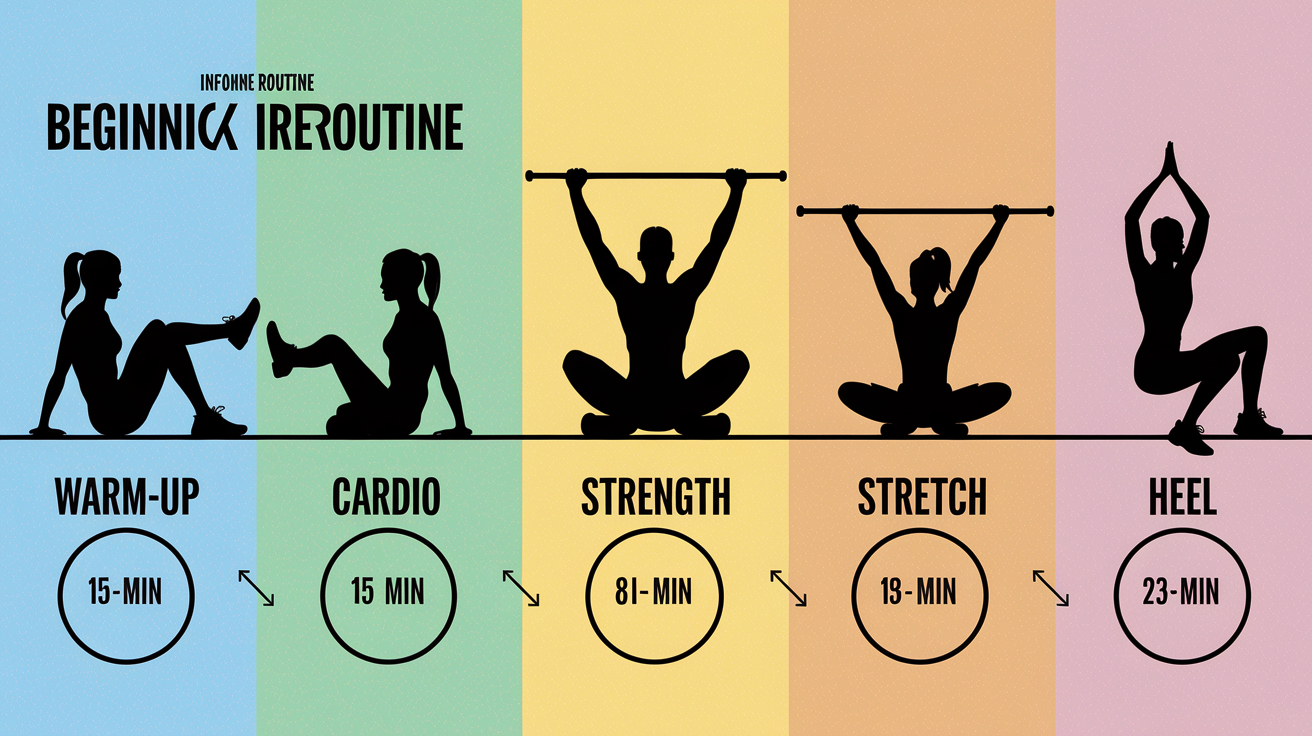
A beginner 30-minute routine builds cardiovascular fitness and foundational strength without overwhelming your schedule or your joints. Start with a 5-minute warm-up of gentle marching in place or slow walking to raise your heart rate gradually. Move into 15 minutes of moderate-intensity cardio, either brisk walking (indoors or outdoors) or stationary cycling at a pace where you can talk but not sing comfortably. Then shift to 8 to 10 minutes of strength work: 1 set of 8 to 12 reps each of sit-to-stand from a chair, wall push-ups, resistance band rows, and standing heel raises. Finish with 2 to 3 minutes of static stretching, holding each stretch for 20 to 30 seconds. Run this routine three times per week on non-consecutive days.
Interval walking adds variety and intensity without impact. After a 5-minute easy warm-up, alternate 1 to 3 minutes of brisk walking with 30 to 60 seconds of slower recovery walking. Repeat that pattern for 15 to 25 minutes total, then cool down for 5 minutes. This format improves cardiovascular endurance faster than steady-state walking and keeps sessions interesting. You can do intervals on a treadmill by adjusting speed or incline, or outdoors by picking landmarks like mailboxes or streetlights to mark your work and recovery segments.
For a quick morning flow, try 15 minutes of movement before breakfast. Spend 3 minutes marching in place or doing light arm circles. Follow with 8 minutes of bodyweight exercises: 10 sit-to-stand reps, 10 wall push-ups, 10 standing knee lifts per leg, 10 heel raises, and 10 band rows if you have a band handy. Repeat the circuit twice. Finish with 4 minutes of stretching, focusing on hamstrings, hip flexors, chest, and shoulders. This short session wakes up your body, supports habit-building, and fits into any schedule.
| Routine Type | Duration | Structure |
|---|---|---|
| Beginner 15-Min Morning Flow | 15 minutes | 3-min warm-up, 8-min bodyweight circuit (2 rounds), 4-min stretching |
| 30-Min Evening Circuit | 30 minutes | 5-min warm-up, 15-min brisk walk or cycle, 8-min strength (1 set each: sit-to-stand, wall push-ups, band rows, heel raises), 2-min cool-down stretch |
| Low-Impact Interval Session | 25 to 30 minutes | 5-min easy warm-up, 15 to 20 min intervals (1 to 3 min brisk / 30 to 60 sec recovery), 5-min cool-down |
Tracking Progress and Staying Consistent with Low-Impact Workouts

Progress in low-impact training shows up as longer walking distances, more reps completed with good form, or the same workout feeling easier week to week. Track time, distance, or number of repetitions instead of obsessing over weight on a scale. If you walked 20 minutes today and 25 minutes next week, that’s progress. If 8 reps felt hard last month and now you finish 12 reps cleanly, your strength improved. Keeping a simple log, whether on paper or in a phone app, helps you see patterns and celebrate small wins that might otherwise go unnoticed.
Consistency matters more than intensity. Showing up three to five times per week for short sessions beats doing one exhausting workout and then skipping the next two weeks. Low-impact formats make consistency easier because you don’t need long recovery windows. If joint pain lasts more than 48 hours, new swelling appears, or you feel dizzy or short of breath during exercise, stop and check in with a healthcare provider. Those are warning signs, not normal soreness.
Practical strategies to stay on track:
- Schedule workouts like appointments; treat them as non-negotiable blocks in your calendar
- Start with 10 to 15 minutes if that’s all you can manage; short sessions still build the habit
- Pair exercise with an existing routine, like a walk right after breakfast or a strength session before dinner
- Track one simple metric each week (total minutes walked, number of strength sessions completed) and aim to match or beat it
Final Words
You’ve got a simple map: what low-impact movement is, who benefits, top exercise choices, cardio and strength benefits, technique tips, safety checks, gear options, sample routines, and how to track progress.
Pick one routine for this week. Aim for 15–30 minutes, 3 times. Warm up, use the form cues, and scale to how you feel. If joints flare, switch to the pool or a recumbent bike.
Treat these low impact exercises as steady tools—small, consistent steps add up. You’ll make real progress.
FAQ
Q: What is the best low-impact workout?
A: The best low-impact workout depends on your goal and joints. Top picks are swimming for minimal joint load, and brisk walking at 3-4 mph for easy, everyday cardio you can stick with.
Q: What is the 3 3 3 rule for working out?
A: The 3 3 3 rule for working out is a simple strength template, meaning 3 sets of 3 reps on core compound lifts, using heavier weight and full rest between sets to build strength.
Q: Can exercise cause high AST?
A: Exercise can cause high AST by stressing muscle and liver. Intense or muscle-damaging sessions often raise AST temporarily, and values usually return to normal within a few days.
Q: What core exercises should a person with scoliosis avoid?
A: The core exercises a person with scoliosis should avoid include heavy twisting and deep forward flexion, like full sit-ups, Russian twists, loaded spinal rotations, and extreme side bends. Choose controlled, neutral-spine core moves instead.