

Think you need an hour to get stronger and fitter?
Think again.
A well-designed 20 to 30 minute circuit can give you strength, cardio, and recovery in one focused session, so you actually stick with it.
This post shows how to pick exercises, set work-to-rest ratios, and plan rounds so your sessions are effective and repeatable.
By the end you’ll have a simple, sustainable 30-minute circuit you can do two to four times a week for steady progress without burning out.
Why Circuit Training Works When You’re Short on Time
Circuit training solves the biggest problem most people face: not enough hours in the day. A solid circuit packs strength, cardio, and recovery into one block, usually 20 to 30 minutes, without cutting corners on results. You’re not splitting your week into separate cardio days and strength days. You’re layering them inside the same session.
The structure’s pretty straightforward. You move through a series of exercises (six to ten, typically) with short rest between each one and a slightly longer break between full rounds. One round means you’ve done one set of every exercise. Quick breather, then you repeat. Two or three rounds later, you’re done.
Research backs this up. A 2021 study found that people following a structured circuit program showed reductions in fat mass, increases in muscle mass, improvements in strength, and better VO2 max. All markers of cardiovascular and metabolic health. That’s a lot of payoff for 30 minutes or less.
The efficiency comes from density. You’re working different muscle groups back to back, so one area rests while another works. Your heart rate stays elevated, which means you get a cardio stimulus even during strength exercises. You build endurance and strength at the same time, without needing an hour in the gym or multiple trips per week.
For someone juggling work, family, and life, this matters. You don’t need perfect conditions or endless time. You need a plan that fits, delivers results, and doesn’t burn you out after two weeks.
Circuit training also adapts. Beginners can start with one round of six exercises and lighter loads. Advanced trainees can add rounds, increase weight, reduce rest, or play with tempo. The framework stays the same. The variables scale with your fitness and schedule.
The key word here is sustainable. A workout only works if you can do it consistently. If a program demands 90 minutes five days a week, most people will quit. If it asks for 25 minutes three times a week, they’ll stick with it. That consistency, over months, is what builds real change.
What Makes a Circuit “Sustainable” vs. Just Hard

A hard workout isn’t the same as a sustainable one. Hard might mean you’re wiped out for three days, skipping the next session because you’re too sore to walk. Sustainable means you finish the session, recover within 48 hours, and show up again without dread or injury.
Sustainability starts with recovery. If you’re doing full body circuits, you need roughly 48 hours before hitting the same muscle groups again at high intensity. That usually means two to four circuit sessions per week, depending on how hard you push and how well you sleep and eat.
Intensity matters, but so does control. Circuit training works at a moderate to moderately high effort (around six to eight out of ten on a rate of perceived exertion scale). That’s challenging enough to drive adaptation but controlled enough to maintain good form across multiple rounds. Compare that to true high intensity interval training, which is performed at maximal or near maximal effort. HIIT has its place, but it’s harder to recover from and harder to repeat multiple times per week without overtraining.
Sustainable circuits also respect your weekly load. If you’re already doing two heavy strength sessions, adding three all out metabolic circuits on top will bury you. But two moderate circuits and one lighter mobility day? That fits.
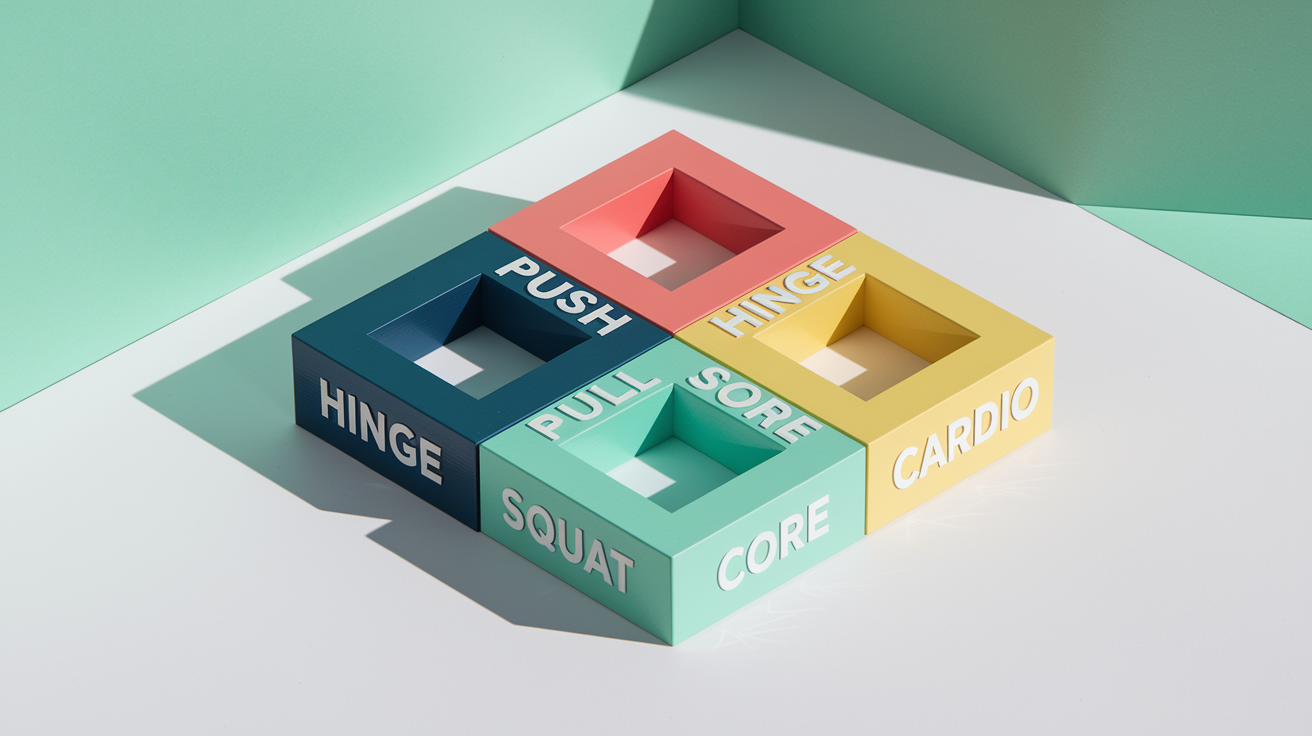
Exercise selection plays a role too. A sustainable circuit balances movement patterns (push, pull, hinge, squat, lunge, core, and cardio) so you’re not overloading one joint or muscle group. For example, pairing push ups, kettlebell swings, reverse lunges, rows, planks, and high knees gives you upper body, lower body, posterior chain, and core work without redundancy.
Time structure supports sustainability. If your work window is 40 seconds per exercise with 20 seconds rest, and you complete six exercises, that’s one six minute round. Three rounds plus a warm up and cool down lands you right at 25 to 30 minutes. You know the session will end on time. You’re not guessing or running over, which makes it easier to commit.
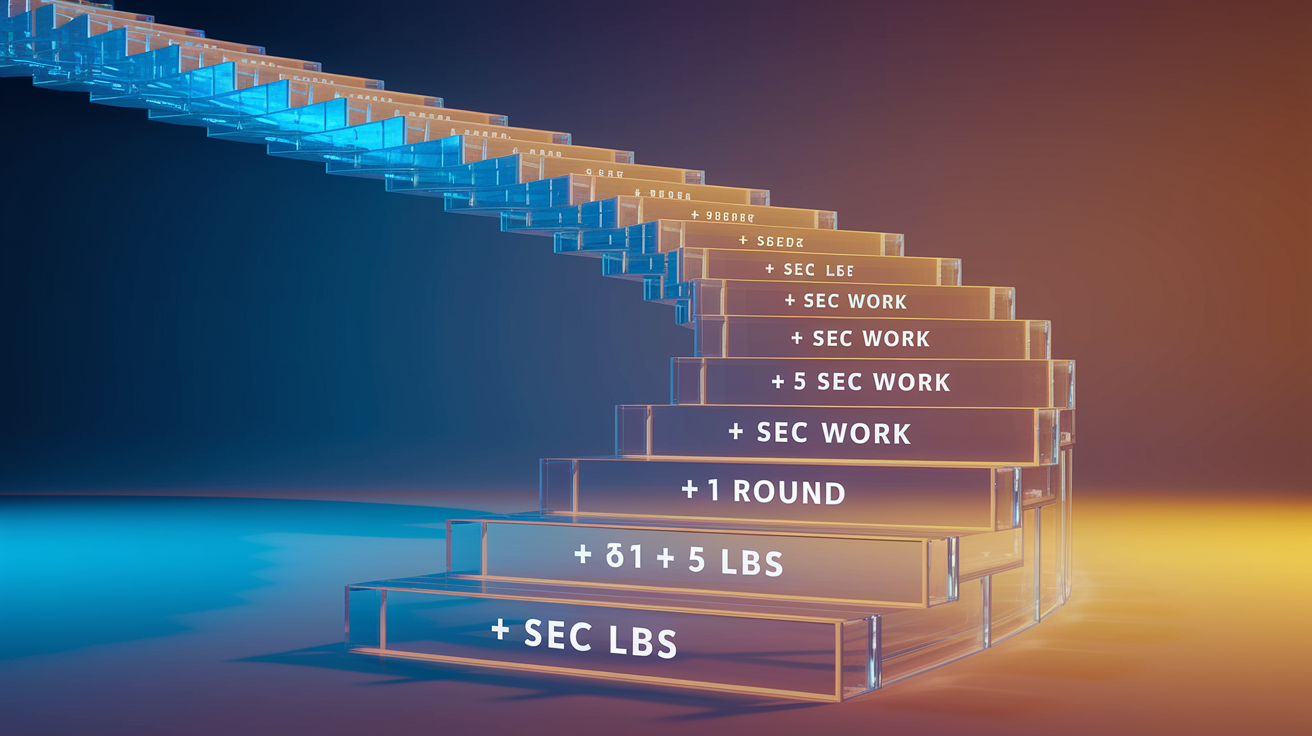
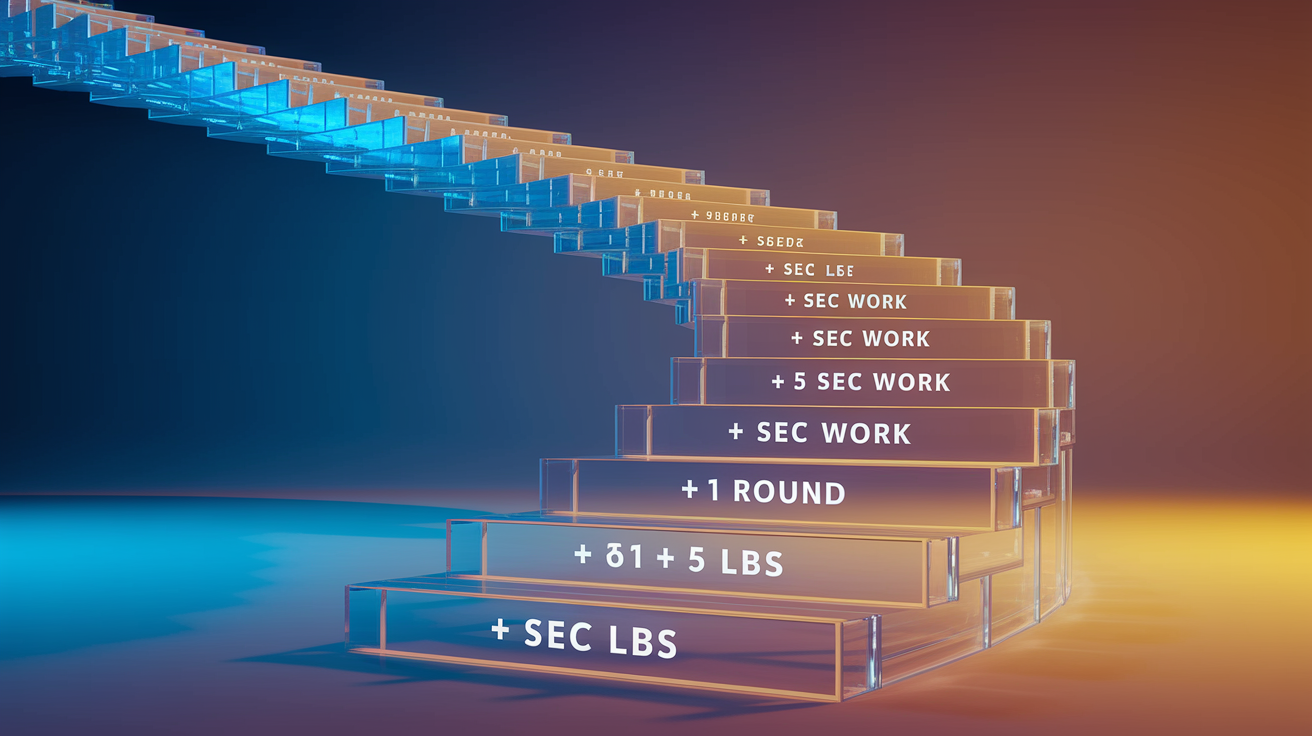
Sustainable also means progressable without chaos. You don’t need to reinvent the workout every week. Small tweaks (add five seconds of work, drop five seconds of rest, increase the dumbbell by one increment, add one round) keep the program moving forward without requiring a total redesign. Progression should feel like turning a dial, not flipping a switch.
If a circuit leaves you too tired to function, too sore to train again, or too bored to continue, it’s not sustainable. If it challenges you, fits your week, and lets you recover, it is.
How to Pick the Right Number of Exercises and Rounds
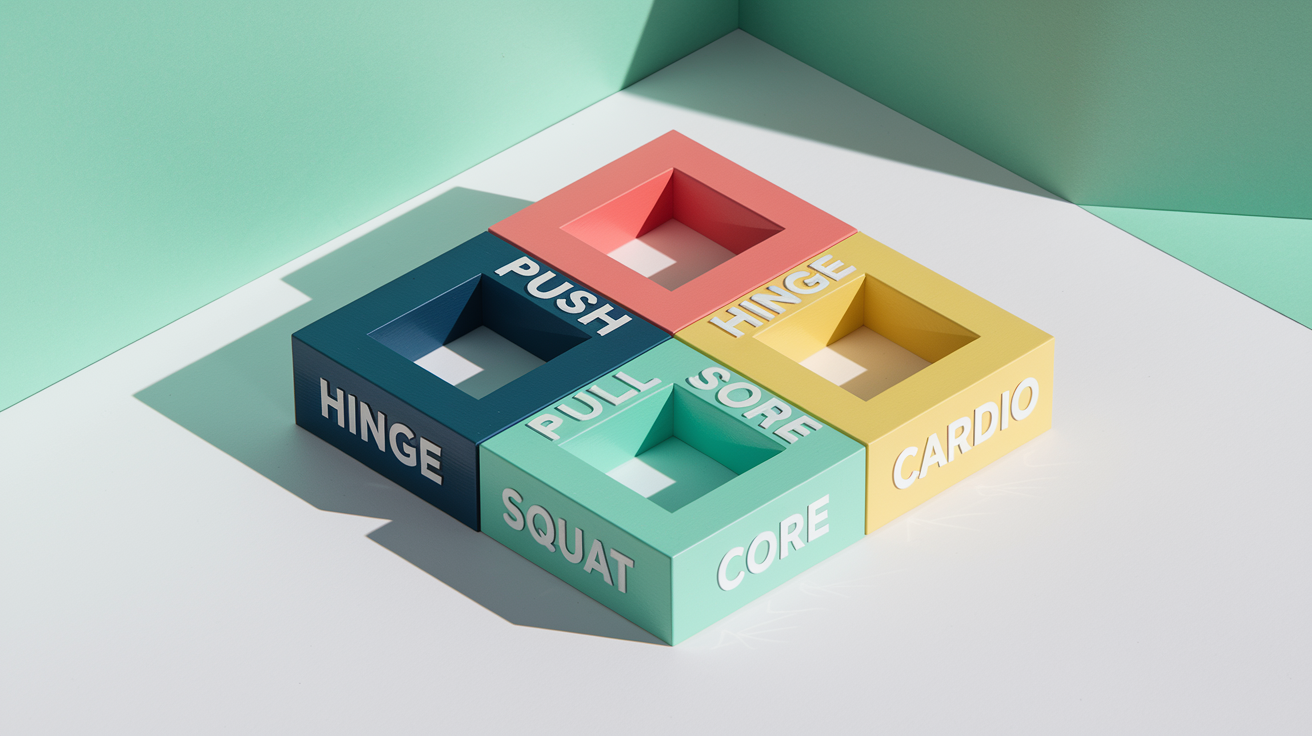
The sweet spot for most people is six to ten exercises per circuit. Fewer than six and you’re leaving out key movement patterns. More than ten and the session drags or becomes too fatiguing to maintain quality.
Start by thinking about muscle groups and movement categories. A balanced circuit includes at least one exercise from each of these:
- Push (chest, shoulders, triceps): push ups, overhead press, chest press
- Pull (back, biceps): rows, pull ups, band pull aparts
- Hinge (glutes, hamstrings, lower back): kettlebell swings, Romanian deadlifts, hip thrusts
- Squat (quads, glutes): goblet squats, bodyweight squats, jump squats
- Lunge or single leg (quads, glutes, balance): reverse lunges, step ups, Bulgarian split squats
- Core (abs, obliques, stability): planks, sit ups, anti rotation presses
- Cardio or power (heart rate, explosiveness): high knees, burpees, jump rope, mountain climbers
If you have 20 minutes, six exercises work well. If you have 30 minutes, eight to ten exercises give you more variety and volume without rushing.
Rounds depend on your work to rest ratio and total time. Let’s do the math.
| Exercises | Work | Rest | Time per Round | Rounds in 20 min |
|---|---|---|---|---|
| 6 | 40s | 20s | 6 minutes | 3 rounds |
| 8 | 40s | 20s | 8 minutes | 2 rounds |
| 5 | 40s | 20s | 5 minutes | 3 to 4 rounds |
That table assumes your circuit time is roughly 18 to 20 minutes after warm up and cool down. Add a three minute warm up and two minute cool down, and you land right at 25 minutes total.
For a 30 minute session, you have more room. Eight exercises at 45 seconds work and 15 seconds rest give you one eight minute round. Two full rounds equal 16 minutes. Add a five minute warm up and a five minute cool down, and you’re at 26 minutes. You can stretch one round slightly or add a short finisher to fill the remaining time.
Beginners should start with one or two rounds. That’s enough stimulus to adapt without overwhelming recovery. After two to four weeks, add a third round. Intermediate and advanced trainees can handle three rounds or more, especially if the work intervals are shorter or the exercises are less complex.
If you’re not sure where to start, try this: pick six exercises, do 30 seconds of work and 30 seconds of rest, complete two rounds, and see how you feel the next day. If you recover well, add a third round the following week. If you’re still sore 48 hours later, keep two rounds and focus on form or slightly lighter load.
The goal is to finish each session feeling worked but not destroyed. You should be able to repeat the same circuit two or three times that week without needing extra rest days or skipping workouts.
Choosing Work to Rest Ratios That Fit Your Goals and Recovery

Your work to rest ratio controls intensity, fatigue, and how quickly you recover between exercises. It also determines how much volume you can handle in a session and how often you can repeat the circuit each week.
Here’s a simple breakdown of common ratios and what they do.
20 seconds work, 40 to 60 seconds rest (1:2 or 1:3 ratio)
This is beginner friendly. You get enough recovery to maintain good form across all rounds. Heart rate comes down between exercises, so the session feels challenging but controlled. Use this if you’re new to circuits, coming back from a break, or prioritizing movement quality over speed.
30 seconds work, 30 seconds rest (1:1 ratio)
Balanced for most people. You work hard, then recover just enough to go again. This ratio is efficient without being punishing. It’s a good starting point for intermediate trainees who want a full body stimulus in 20 to 25 minutes.
40 seconds work, 20 seconds rest (2:1 ratio)
Time efficient and moderately intense. Your heart rate stays elevated, you accumulate more volume per round, and rest is just long enough to transition and catch your breath. This works well for 25 to 30 minute sessions when you want strength and cardio in one block. Expect to feel it.
45 seconds work, 15 seconds rest (3:1 ratio)
Higher density. You spend most of the round working, and rest is minimal. This is better for advanced trainees or shorter sessions where you want maximum output in limited time. Form can slip if you’re fatigued, so choose exercises you can perform safely under fatigue.
Tabata: 20 seconds work, 10 seconds rest (2:1 but very short intervals)
High intensity, brief work windows. Tabata style circuits are effective for metabolic conditioning, but they’re hard to sustain for more than four to eight minutes. If you use Tabata intervals, keep the total circuit short or alternate with longer rest rounds to maintain quality.
Your ratio should match your weekly training load and recovery capacity. If you’re training four days a week with heavy strength work, your circuits should use longer rest ratios (30/30 or 40/30) to avoid overtraining. If circuits are your primary training and you’re doing two or three sessions per week, you can push the ratio tighter.
Also consider your goal. If you want to build work capacity and endurance, shorter rest works. If you want to lift heavier weights within the circuit or prioritize strength, longer rest lets you recover enough to maintain load.
A sustainable ratio is one you can repeat for three rounds without your form falling apart. If you’re halfway through round two and you’re compensating with your lower back or rushing reps just to finish, the rest is too short. Add 10 seconds and reassess.
Start conservative. It’s easier to tighten the ratio over time than to recover from a session that left you too smoked to train for three days.
Sample 20 Minute Circuit (Exact Timing and Exercise Breakdown)
Here’s a plug and play 20 minute circuit. Total session time includes warm up, work, and cool down. The circuit itself is 15 minutes (three rounds of five exercises).
Session structure:
- Warm up: 3 minutes
- Circuit: 15 minutes (3 rounds, 5 exercises, 40 seconds work / 20 seconds rest per exercise)
- Cool down: 2 minutes
Warm up (3 minutes):
Spend one minute on light movement (marching in place, arm circles, hip circles). Then do 30 seconds each of:
- Bodyweight squats (slow, controlled)
- Inchworms (walk hands out to plank, walk back)
- Leg swings (front to back, side to side)
- Arm crossovers and shoulder rolls
Circuit (15 minutes, 3 rounds):
Round 1, 2, and 3 (5 minutes each):
-
Goblet squat
40 seconds work, 20 seconds rest
Hold a dumbbell or kettlebell at chest height. Feet shoulder width apart. Squat down until thighs are parallel or slightly below. Keep chest up, core tight. Push through heels to stand. -
Push up
40 seconds work, 20 seconds rest
Hands under shoulders, body in a straight line from head to heels. Lower chest toward the floor, elbows at roughly 45 degrees. Press back up. If needed, drop to knees but keep hips in line. -
Reverse lunge
40 seconds work, 20 seconds rest
Step one foot back, lower back knee toward the floor, front thigh parallel. Push through front heel to return. Alternate legs each rep. -
Plank shoulder taps
40 seconds work, 20 seconds rest
Start in a plank position. Tap right hand to left shoulder, then left hand to right shoulder. Keep hips stable, core engaged. Move slowly and controlled. -
Kettlebell swing or hip thrust
40 seconds work, 20 seconds rest
If you have a kettlebell: hinge at hips, swing the bell to chest height using hip drive, not arms. If no equipment: lie on your back, knees bent, feet flat. Drive hips up, squeeze glutes at the top, lower with control.
After exercise 5, rest 20 seconds, then start round 2. Repeat until you finish round 3.
Cool down (2 minutes):
Walk in place for 30 seconds to bring your heart rate down. Then stretch:
- 30 seconds hip flexor stretch (each side)
- 30 seconds hamstring stretch (each side)
- 30 seconds chest stretch (doorway or hands behind back)
This session works your legs, chest, core, and posterior chain. It’s simple, repeatable, and doesn’t require much equipment. If you don’t have a kettlebell, bodyweight hip thrusts or glute bridges work just fine.
Sample 25 Minute Circuit (Exact Timing and Exercise Breakdown)
This circuit adds one more exercise and extends the warm up slightly. Total time is 25 minutes. The circuit is 18 minutes (three rounds of six exercises).
Session structure:
- Warm up: 4 minutes
- Circuit: 18 minutes (3 rounds, 6 exercises, 40 seconds work / 20 seconds rest per exercise)
- Cool down: 3 minutes
Warm up (4 minutes):
Start with one minute of easy cardio (jumping jacks, marching, or light jogging in place). Then do:
- 30 seconds bodyweight squats
- 30 seconds inchworms
- 30 seconds alternating reverse lunges (no weight)
- 30 seconds arm circles (forward and back)
- 30 seconds leg swings (each leg)
- 30 seconds torso twists
Circuit (18 minutes, 3 rounds):
Round 1, 2, and 3 (6 minutes each):
-
Goblet squat
40 seconds work, 20 seconds rest
Same as the 20 minute circuit. Hold a dumbbell or kettlebell at chest height, squat to parallel, stand. -
Single arm dumbbell row

40 seconds work, 20 seconds rest
Hinge forward, one hand on a bench or sturdy surface. Row the dumbbell to your ribcage, elbow close to your side. Keep your back flat. Switch arms each round or split the 40 seconds. -
Jump rope or high knees
40 seconds work, 20 seconds rest
If you have a jump rope, use it. If not, simulate the movement (air rope) or do high knees in place. Keep a steady rhythm, light on your feet. -
Romanian deadlift

40 seconds work, 20 seconds rest
Hold dumbbells or a kettlebell in front of your thighs. Hinge at the hips, push your butt back, lower the weight down your shins, feel a stretch in your hamstrings. Drive hips forward to stand. Keep a slight bend in your knees. -
Alternating reverse lunge
40 seconds work, 20 seconds rest
Step back, lower knee, push up. Alternate legs. Add dumbbells at your sides if you want more load. -
Bicycle crunch

40 seconds work, 20 seconds rest
Lie on your back, hands behind your head. Bring right elbow toward left knee, extend right leg. Switch sides in a pedaling motion. Keep lower back pressed to the floor.
After exercise 6, rest 20 seconds, then start round 2. Repeat until you finish round 3.
Cool down (3 minutes):
Walk or march in place for 30 to 60 seconds. Then stretch:
- 30 seconds hip flexor stretch (each side)
- 30 seconds hamstring stretch (each side)
- 30 seconds quad stretch (each side)
- 30 seconds chest and shoulder stretch
- 30 seconds deep breathing (inhale for 4 counts, exhale for 6)
This circuit gives you a full body stimulus with a bit more volume than the 20 minute version. It’s still beginner friendly but offers enough variety to keep things interesting over multiple weeks.
Sample 30 Minute Circuit (Exact Timing and Exercise Breakdown)
This is the longest sustainable circuit in this guide. It includes eight exercises, two full rounds, and longer warm up and cool down windows. Total time is 30 minutes.
Session structure:
- Warm up: 5 minutes
- Circuit: 20 minutes (2 rounds, 8 exercises, 45 seconds work / 15 seconds rest per exercise)
- Cool down: 5 minutes
Warm up (5 minutes):
Start with two minutes of light cardio (march, jog in place, or jump rope at an easy pace). Then:
- 30 seconds bodyweight squats
- 30 seconds inchworms
- 30 seconds walking lunges
- 30 seconds arm circles and shoulder rolls
- 30 seconds leg swings (each leg)
- 30 seconds hip openers (90/90 or deep squat hold)
- 30 seconds torso rotations
Circuit (20 minutes, 2 rounds):
Round 1 and 2 (8 minutes each, plus 2 minutes transition/rest between rounds):
-
Kettlebell swing

45 seconds work, 15 seconds rest
Hinge at the hips, swing the kettlebell to chest height using explosive hip drive. Let the bell float, don’t lift with your arms. If no kettlebell, do fast glute bridges or jumping jacks. -
Single arm overhead press
45 seconds work, 15 seconds rest
Stand tall, dumbbell at shoulder height. Press overhead until your arm is straight, lower with control. Switch arms halfway through or alternate each rep. -
Bulgarian split squat
45 seconds work, 15 seconds rest
Rear foot elevated on a bench or step. Lower into a lunge until front thigh is parallel. Push through front heel to stand. Switch legs each round or split the time. -
Bent over row (two dumbbells or barbell)
45 seconds work, 15 seconds rest
Hinge forward, back flat, knees slightly bent. Row weights to your ribcage, elbows close to your sides. Squeeze shoulder blades together at the top. -
Plank with reach

45 seconds work, 15 seconds rest
Start in a plank. Reach one arm forward, return, reach the other. Keep hips level, core tight. Move slowly. -
Mountain climbers
45 seconds work, 15 seconds rest
Plank position. Drive knees toward chest in a running motion. Keep hips low, core engaged. Move at a controlled pace, not frantic. -
Hip thrust (barbell, dumbbell, or bodyweight)
45 seconds work, 15 seconds rest
Shoulders on a bench, feet flat, knees bent. Drive hips up, squeeze glutes hard at the top, lower with control. Add weight across your hips if you have it. -
Single leg deadlift
45 seconds work, 15 seconds rest
Stand on one leg, hold a dumbbell in the opposite hand. Hinge at the hip, lower the weight toward the floor while your other leg extends behind you. Return to standing. Switch legs each round or split the time.
After exercise 8, rest for 60 to 90 seconds, then start round 2.
Cool down (5 minutes):
Walk or march in place for one to two minutes. Then stretch:
- 60 seconds hip flexor stretch (each side)
- 60 seconds hamstring stretch (each side)
- 60 seconds quad stretch (each side)
- 60 seconds chest and shoulder stretch
- 60 seconds seated forward fold or child’s pose
- 60 seconds diaphragmatic breathing (slow inhales and exhales)
This circuit is comprehensive. It hits every major movement pattern, builds strength and endurance, and fits neatly into a 30 minute block. If 45/15 feels too aggressive at first, start with 40/20 and work up over a few weeks.
How to Progress Your Circuit Over Time Without Burning Out
Progression keeps your body adapting without requiring you to redesign your entire program every week. Small, measurable changes stack up over time.
Here are the most effective ways to progress a circuit:
Increase load.
If you’re using dumbbells, kettlebells, or bands, add 2.5 to 10 percent more weight when you can complete all prescribed rounds with good form. For example, if you’re goblet squatting with a 15 pound dumbbell and you finish three rounds cleanly, try a 20 pound dumbbell next session.
Add one round.
If you’ve been doing two rounds of your circuit for two weeks and recovery is solid, add a third round. One extra round increases total volume without changing intensity or rest.
Reduce rest between exercises.
If you’re working at 40 seconds on, 20 seconds off, try dropping rest to 15 seconds. That tightens the session, increases density, and challenges your conditioning. Only do this after you’ve completed the current rest interval comfortably for at least two weeks.
Increase work time.
Instead of 40 seconds per exercise, try 45 or 50 seconds. This adds volume per round and increases time under tension. Pair this with slightly longer rest if needed to maintain quality.
Manipulate tempo.
Slow down the eccentric (lowering) phase of each rep. For example, take three seconds to lower into a squat, then stand normally. This increases difficulty without adding weight or time.
Add exercise complexity.
Swap a bilateral movement for a unilateral one. Replace goblet squats with Bulgarian split squats. Replace push ups with single arm dumbbell presses. Unilateral work increases stability demands and often reveals strength imbalances.
Track your sessions. Write down the exercises, load, rounds, and how you felt. After two to four weeks, review. If the session feels easier and your form is still solid, pick one variable and progress it. Don’t change everything at once.
A realistic timeline looks like this:
- Weeks 1 to 2: Learn the exercises, establish baseline load and rounds.
- Weeks 3 to 4: Add one round or increase load by one increment.
- Weeks 5 to 6: Reduce rest by five seconds or increase work time by five seconds.
- Weeks 7 to 8: Add another round or swap one exercise for a harder variation.
Every four to eight weeks, plan a deload. Drop volume or intensity by 30 to 50 percent for one week. This lets your body recover fully and prevents accumulated fatigue from turning into overtraining or injury. A deload might mean doing two rounds instead of three, or keeping the same structure but using lighter weights.
Progression should feel like turning a dial, not flipping a switch. If a change makes the session unsustainable (you’re too sore to train again, form breaks down, or you start dreading workouts) you’ve gone too far. Pull back, consolidate, and progress more slowly.
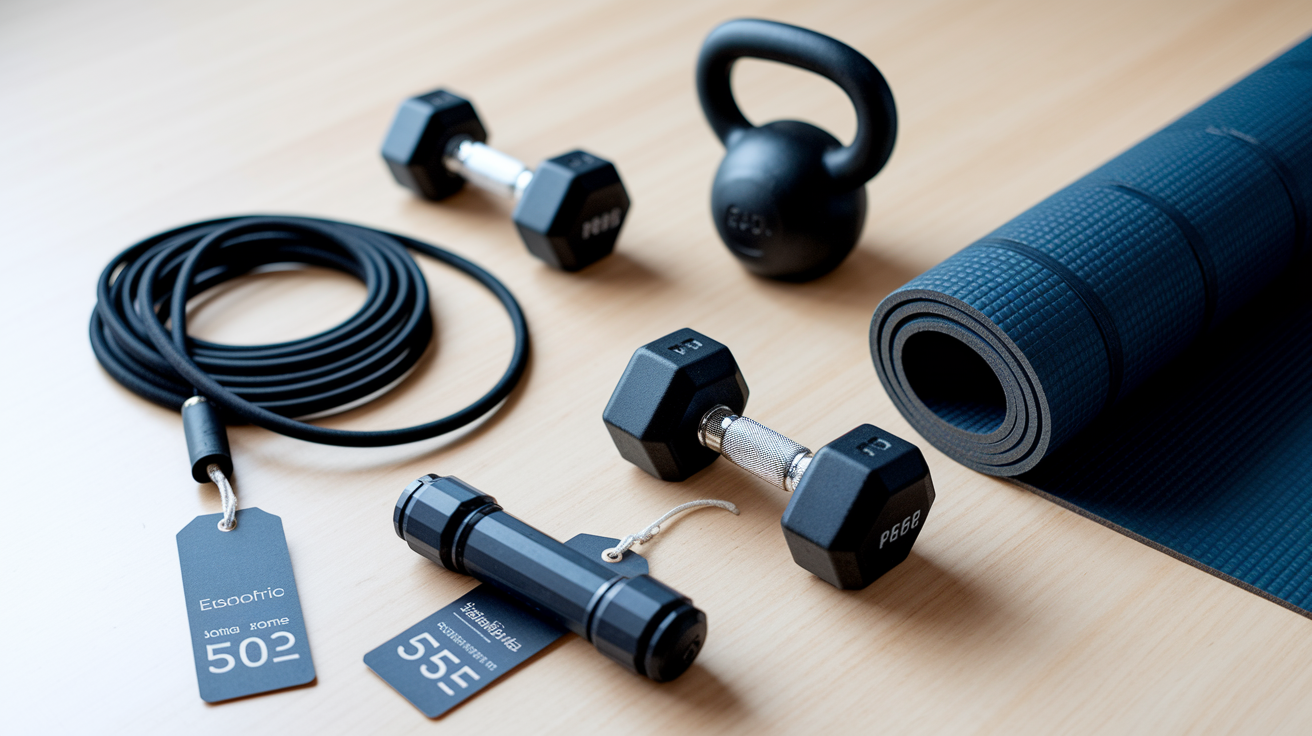
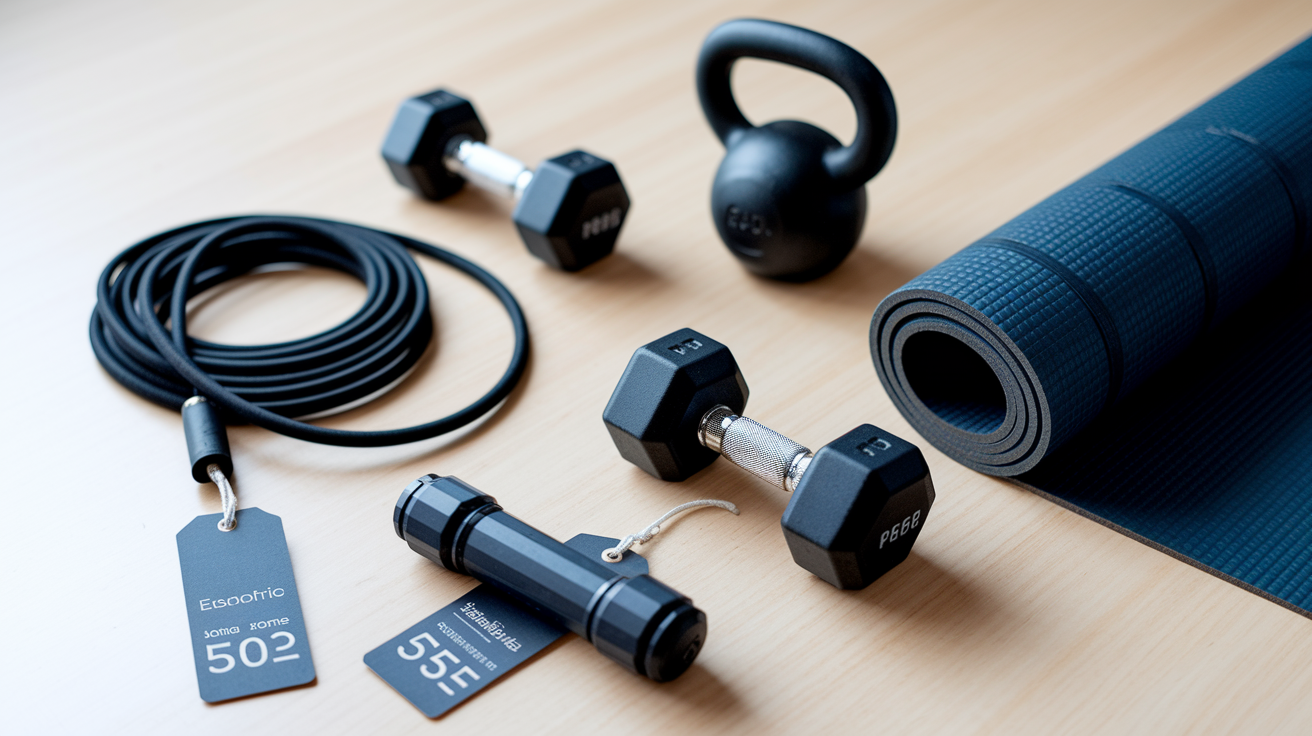
Equipment Options and Approximate Costs for Home Circuits
You don’t need a full gym to run effective circuits. A few smart purchases cover most movement patterns and last for years.
Here’s a breakdown of useful equipment and what it costs:
| Equipment | Approximate Cost | What It’s Good For |
|---|---|---|
| Resistance band set | $10 to 30 | Rows, presses, anti rotation, mobility, travel friendly |
| Jump rope | $5 to 20 | Cardio intervals, conditioning, coordination |
| Single kettlebell (8 to 16 kg / 18 to 35 lb) | $20 to 120 | Swings, goblet squats, presses, carries |
| Pair of dumbbells or adjustable set | $50 to 300 | Rows, presses, lunges, deadlifts, curls |
| Yoga or exercise mat | $10 to 40 | Floor work, planks, stretching, comfort |
If you’re starting from zero, buy a resistance band set and a mat. That’s under $50 and covers dozens of exercises. Add a single kettlebell or a pair of light dumbbells when you’re ready to progress.
For dumbbells, adjustable sets save space and money. A good adjustable dumbbell set costs $150 to $300 but replaces an entire rack. If you prefer fixed weight dumbbells, start with one pair in the 10 to 25 pound range, depending on your current strength.
Kettlebells are versatile. One 16 kilogram (35 pound) kettlebell works for swings, goblet squats, and presses for most people. Women often start with 8 to 12 kilograms, men with 12 to 20 kilograms. Buy one, learn the movement patterns, then add a heavier bell later if needed.
A jump rope is cheap and effective. Even a basic $10 rope will last years. If you don’t want to actually jump, simulate the motion (air rope) or substitute high knees.
If budget is tight, bodyweight only circuits work. Push ups, squats, lunges, planks, burpees, mountain climbers, and glute bridges require zero equipment and hit every major muscle group. You can run effective 20 to 30 minute circuits for months without spending a dollar.
When you do buy equipment, prioritize durability. Cheap resistance bands snap. Cheap dumbbells rust or have awkward grips. Spend a little more for gear that won’t break after three months.
Store everything in one spot. A small bin or corner of a room works. If setup takes five minutes, you’re less likely to skip the session.
Modifications for Beginners and Advanced Trainees
Circuits scale in both directions. Beginners need more rest and simpler movements. Advanced trainees need more load, complexity, or density.
Beginner modifications:
Start with one round. Even one round of six to eight exercises is enough stimulus if you’re new or returning from a break. Your body needs time to adapt to the movement patterns and the cumulative fatigue of back to back exercises.
Use longer rest intervals. Try 30 seconds of work and 45 to 60 seconds of rest. This gives you time to recover between exercises and maintain good form.
Choose low impact or regressed versions of exercises:
- Replace jump squats with bodyweight squats.
- Replace burpees with step back burpees or just squat to stand.
- Replace high knees with marching in place.
- Replace push ups with incline push ups (hands on a bench or wall).
Start with bodyweight only. Learn the movement before adding load. Once you can do two to three rounds with solid form, add a light dumbbell or band.
Track how you feel 24 and 48 hours after the session. If you’re extremely sore or fatigued, reduce volume or intensity. If you feel fine, you’re ready to progress.
Advanced modifications:
Increase work intervals to 50 to 60 seconds and reduce rest to 10 to 20 seconds. This creates a much denser session and challenges conditioning.
Add three to four rounds instead of two. More rounds mean more total volume, which drives hypertrophy and endurance.
Use heavier loads. If you’re doing goblet squats with a 20 pound dumbbell, try 35 or 50 pounds. Increase load gradually, 5 to 10 percent at a time.
Add tempo. Use a three second eccentric (lowering phase) on squats, lunges, or rows. This increases time under tension and makes lighter weights feel much harder.
Incorporate unilateral exercises. Replace bilateral movements with single leg or single arm variations:
- Single leg Romanian deadlifts instead of standard deadlifts.
- Single arm overhead presses instead of two arm presses.
- Bulgarian split squats instead of regular squats.
Unilateral work increases stability demands, exposes imbalances, and often requires more focus and control.
Add complexes or supersets within the circuit. For example, pair a strength exercise with an explosive movement (deadlift followed immediately by a broad jump, or a press followed by a medicine ball slam).
Use EMOM (every minute on the minute) structure. Set a timer. At the top of each minute, perform a set number of reps of one exercise, then rest for the remainder of the minute. Repeat for 10 to 15 minutes. This creates consistent work density and is easy to track.
Advanced trainees should also rotate exercises every two to four weeks to prevent adaptation plateaus and keep training interesting. Swap goblet squats for front squats, push ups for dumbbell presses, or rows for pull ups.
No matter your level, the principle is the same: start where you are, progress one variable at a time, and don’t sacrifice form for volume or intensity.
Warm Up and Cool Down: What to Do and How Long
Warm ups and cool downs aren’t optional. They reduce injury risk, improve performance, and support long term sustainability.
Warm up (3 to 6 minutes):
The goal is to raise your heart rate, increase blood flow to working muscles, and prepare your joints for loaded movement.
Start with one to two minutes of light cardio. March in place, jog slowly, do jumping jacks, or use a jump rope at an easy pace. You’re not trying to get tired. You’re just waking your body up.
Then spend two to four minutes on dynamic mobility. Move through ranges of motion that match the exercises in your circuit:
- Bodyweight squats (10 to 15 reps, slow and controlled)
- Leg swings (front to back and side to side, 10 each leg)
- Arm circles (forward and backward, 10 each direction)
- Inchworms (5 to 8 reps: bend forward, walk hands out to plank, walk back)
- Torso twists (10 to 15 reps, standing or seated)
- Hip openers (deep squat hold, 90/90 position, or hip circles)
If you’re using weights in your circuit, do one light set of each main movement. For example, if your circuit includes goblet squats with a 30 pound dumbbell, do 8 to 10 reps with a 15 pound dumbbell during the warm up.
Avoid static stretching before the circuit. Holding stretches for 30 to 60 seconds can temporarily reduce power output. Save static stretching for after the session.
Cool down (3 to 6 minutes):
The goal is to bring your heart rate down gradually, start the recovery process, and restore range of motion.
Spend one to two minutes walking or marching in place. Let your breathing return to normal.
Then spend three to five minutes on static stretching. Hold each stretch for 30 to 60 seconds. Focus on the muscle groups you just worked:
- Hip flexor stretch (kneeling lunge position, each side)
- Hamstring stretch (seated or standing, each leg)
- Quad stretch (standing, pull heel to glutes, each leg)
- Chest stretch (doorway stretch or hands clasped behind back)
- Shoulder stretch (pull one arm across your chest, each side)
- Seated forward fold or child’s pose (general lower back and
Final Words
Jump into it: warm up briefly, pick 4–6 full-body moves, set circuits of 30–45 seconds work with 15–30 seconds rest, repeat 3 rounds, finish with a cool-down.
Keep progress simple: swap in harder moves, add time or rounds, or reduce rest. Track effort, reps, or session time. Use scaled options for busy days.
That’s the quick road map for how to design a sustainable circuit training session under 30 minutes, consistent, flexible, and actually doable. Stick with it and you’ll feel the difference.
FAQ
Q: Should I proceed with Hyperlinks = na for all sections, and what happens if I don’t provide any hyperlinks?
A: Proceeding with Hyperlinks = na for all sections means I’ll produce the outline and content without links; I won’t invent URLs, and the deliverable will be link-free until you supply allowed hyperlinks.
Q: Can you include hyperlinks if I provide them later?
A: I can include hyperlinks if you provide them later; send a clear list of allowed URLs and I’ll integrate them into the next revision, using your preferred anchor text where possible.
Q: How should I format the list of allowed hyperlinks?
A: Format the allowed hyperlink list as simple lines with label, full URL, and whether it’s internal or external; include preferred anchor text and any sections where you want the link placed.
Q: Can you use both internal and external links?
A: I can use both internal and external links you provide; tell me which to prioritize and I’ll place them according to relevance and your content strategy.
Q: Will you invent hyperlinks if none are supplied?
A: I will not invent hyperlinks if none are supplied; the instruction is to never add links not on your allowed list, so content will remain link-free unless you give URLs.
Q: What do you need from me to start?
A: To start, confirm ‘Hyperlinks = na’ or provide the allowed hyperlink list; optionally add tone, target audience, and a deadline for delivery.
Q: What happens after I confirm which option I choose?
A: After you confirm, I’ll produce the complete outline or FAQ in markdown and deliver it for your review, then apply one round of revisions if you need minor changes.