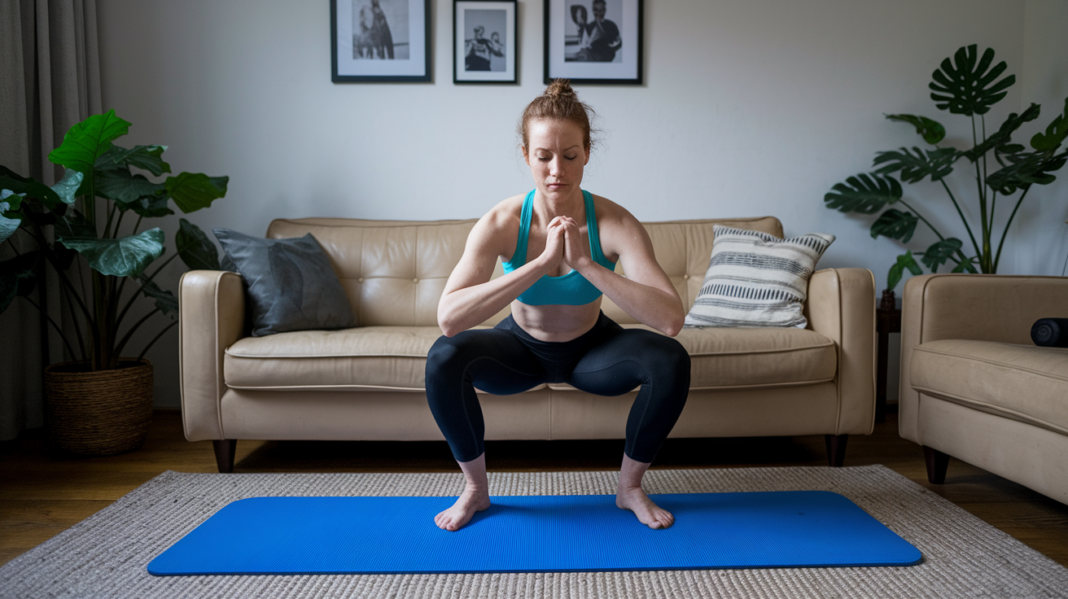
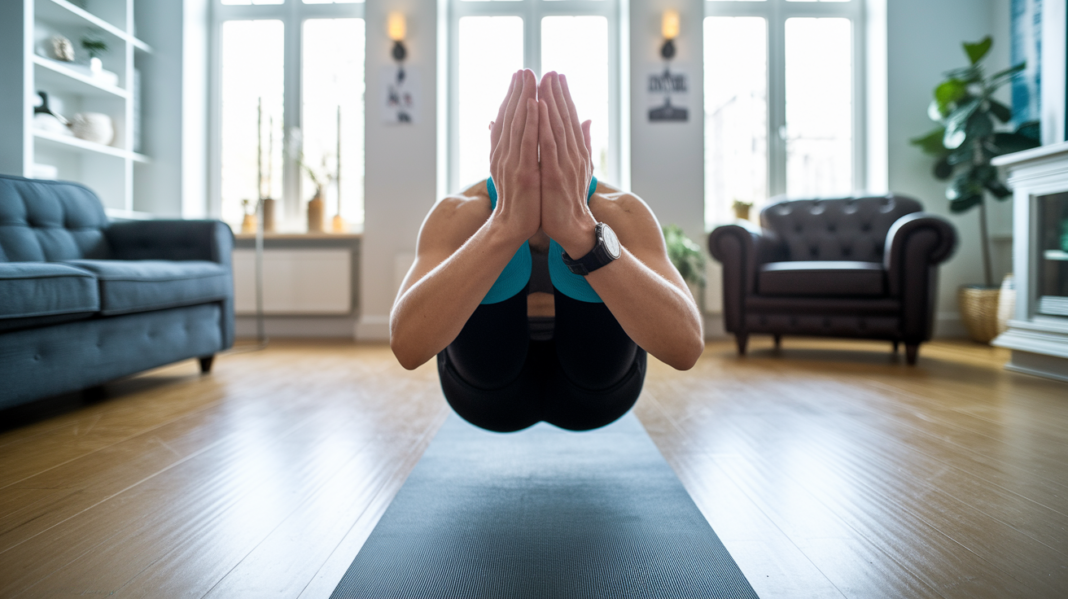
Tired of waking the neighbor below but still want an intense cardio session?
You don’t need jumps to raise your heart rate or get sweaty.
Step-based moves, planks, and controlled squats keep things quiet and joint-friendly.
This post gives a ready-to-start, apartment-safe HIIT plan: an eight-move circuit with 30 seconds on, 15 seconds off, and options to scale from about 12 up to 24 minutes.
You’ll also get progressions, form cues, and safety tips so you can train hard without the thud.
Quick No Jump HIIT Routine for Fast Results

Here’s a routine you can start right now. Each exercise runs for 30 seconds of work, then 15 seconds of rest. You’ll repeat through all eight moves for one full round. Rest 60 seconds, then go again for 2 to 4 total rounds depending on where you’re at and how much time you’ve got.
- Fast March in Place – Drive knees toward waist height, pump arms, keep core tight. 30 sec work / 15 sec rest.
- Step Back Lunge (Alternating) – Step one foot back, lower until front thigh is parallel, push back to start, switch sides. 30 sec work / 15 sec rest.
- Plank Shoulder Taps – High plank position, tap opposite shoulder while keeping hips steady. 30 sec work / 15 sec rest.
- Squat to Calf Raise – Squat down, stand, then rise onto toes. 30 sec work / 15 sec rest.
- Low Impact Burpee – Step hands down, step feet back to plank, step feet in, stand. 30 sec work / 15 sec rest.
- Standing Bicycle Crunch – Twist torso, bring opposite elbow toward lifted knee, alternate. 30 sec work / 15 sec rest.
- Lateral Step Out Squat – Step right foot wide, squat, bring feet together, repeat left. 30 sec work / 15 sec rest.
- Glute Bridge Hold with Pulses – Bridge hips up, hold, pulse hips up and down slightly. 30 sec work / 15 sec rest.
Complete all eight exercises back to back, rest one minute, then go again. Two rounds take about 12 minutes. Three rounds clock in around 18 minutes. Four rounds finish near 24 minutes.
Benefits of No Jump HIIT Training
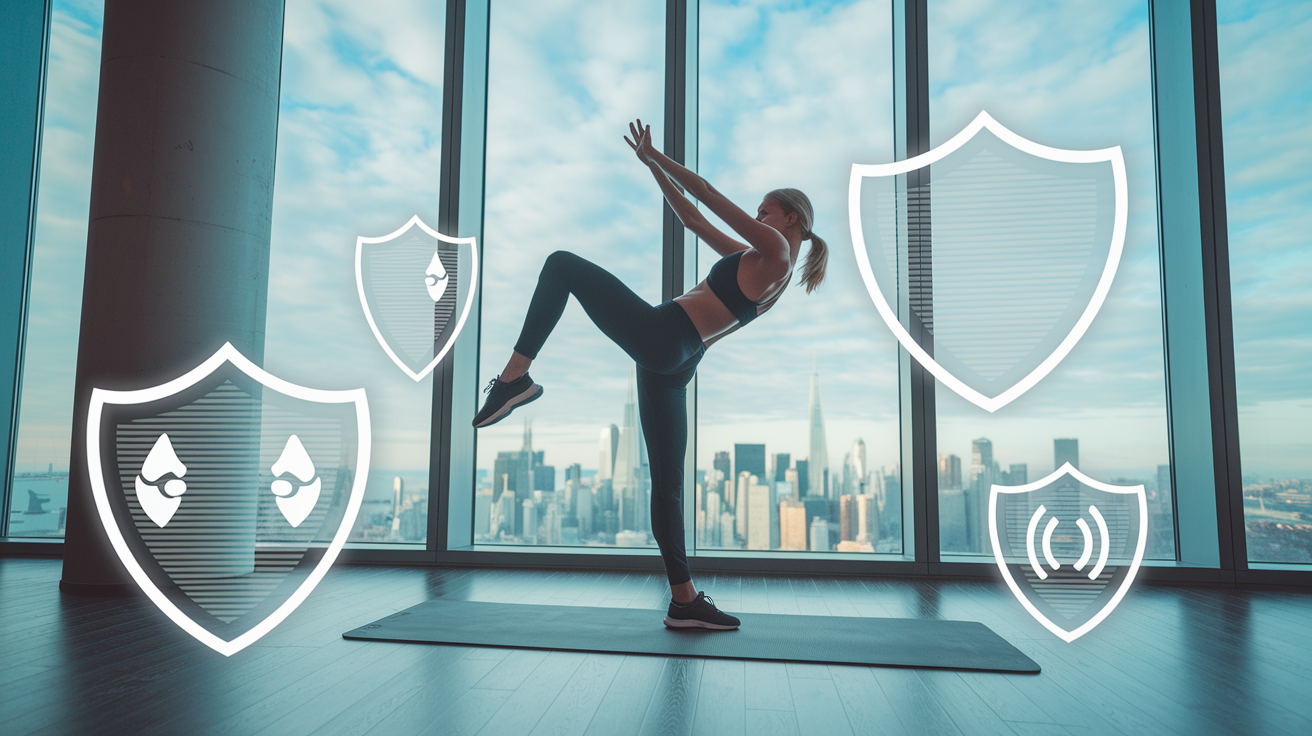
No jump HIIT delivers serious cardiovascular stimulus without pounding your joints. Every time you land from a jump, your knees, ankles, and hips absorb forces that can reach two to four times your body weight. Stepping, lunging, and controlled squat patterns keep your heart rate elevated while cutting those ground reaction forces by roughly half or more. It matters if you’re managing knee pain, recovering from an ankle sprain, or just want to train more frequently without constant soreness.
This style opens HIIT to more people. Beginners who feel intimidated by box jumps or tuck jumps can build conditioning through step-based intervals. Older adults, anyone rehabbing an injury, or people carrying extra weight often find no jump formats easier to sustain because the movement feels less jarring. The breathing stays more controlled.
If you live in an apartment or share a floor with neighbors, no jump HIIT solves the noise problem. You won’t shake the ceiling below or hear complaints about thudding at 6 a.m. A padded mat and controlled transitions make the whole session nearly silent.
Key benefits include:
- Lower stress on knees, ankles, hips, and lower back
- Reduced injury risk for beginners and people with joint sensitivity
- Quieter workouts for apartments and shared living spaces
- Easier breathing control, especially if you’re new to high intensity training
- You can train more frequently without excessive fatigue
Equipment and Space Needed
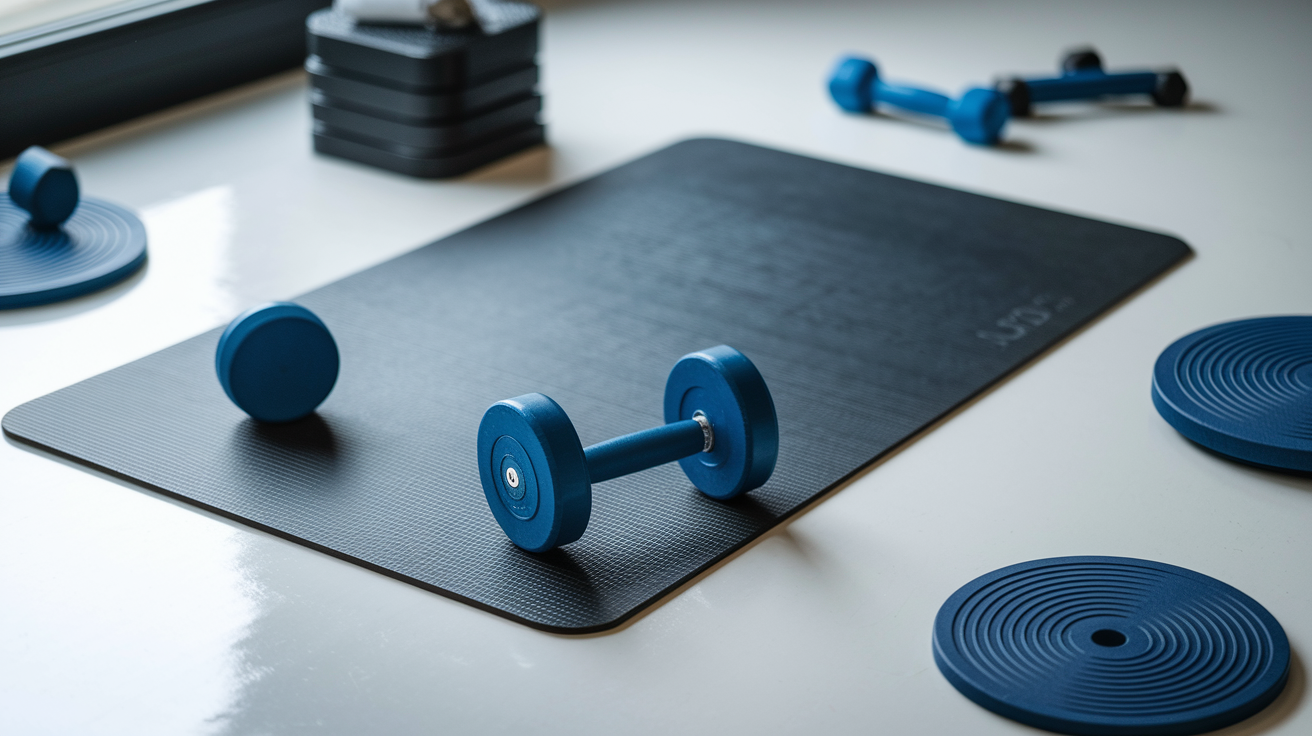
You can run a full no jump HIIT session with nothing but your body and a small patch of floor. A 6-foot by 6-foot area gives you enough room to step forward, step back, move side to side, and drop into a plank without hitting furniture. An exercise mat adds cushioning for planks and floor work. But even a folded towel works if you don’t have one yet.
Adding light equipment increases variety and resistance without sacrificing the low impact approach. None of these items are required, but each one expands what you can program into your intervals.
Optional equipment:
- Exercise mat – cushions knees and hands during floor based moves
- Light dumbbells (5 to 15 lb) – adds load to squats, lunges, rows, and presses
- Resistance bands – creates tension during lateral steps, glute bridges, and arm work
- Gliding discs or sliders – turns lunges and plank variations into smooth, controlled challenges
How to Perform No Jump HIIT Exercises Correctly
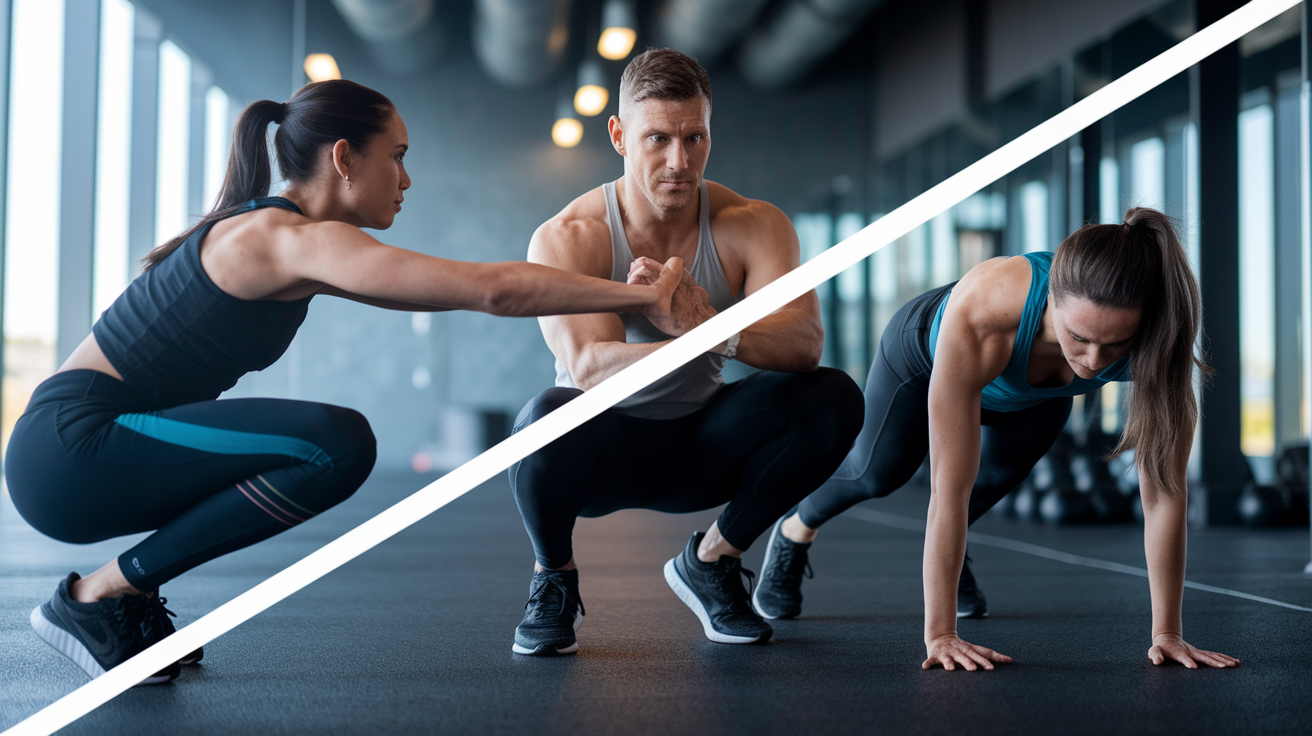
Controlled movement and alignment protect your joints when intensity climbs. During squats and lunges, keep your front knee tracking over your middle toes instead of caving inward. Push through your whole foot, not just the ball, to distribute force evenly and engage your glutes. When you step back into a reverse lunge, plant your front foot firmly before lowering your hips so you don’t wobble or twist.
Plank based moves demand stable hips and engaged abs. If your hips sag or rotate excessively during shoulder taps or walkouts, the exercise shifts stress onto your lower back instead of challenging your core. Tighten your abs as if bracing for a light punch. Keep your shoulders stacked over your wrists and move slowly enough that your torso stays quiet. Speed matters less than stillness in the trunk.
Tempo controls intensity in no jump HIIT. Rushing through reps with sloppy form defeats the purpose and raises injury risk. Aim for smooth, deliberate transitions. Lower into a squat over two seconds, stand in one, step back with control, drive the knee up without jerking. If you can’t maintain that quality for the full work interval, rest early or scale the movement.
Common technique mistakes:
- Letting knees collapse inward during squats and lunges
- Holding your breath instead of breathing steadily through each rep
- Rounding your lower back during planks or step backs
- Moving so fast that your joints absorb impact instead of muscles controlling the load
- Skipping the full range of motion to chase higher rep counts
Workout Variations by Difficulty Level
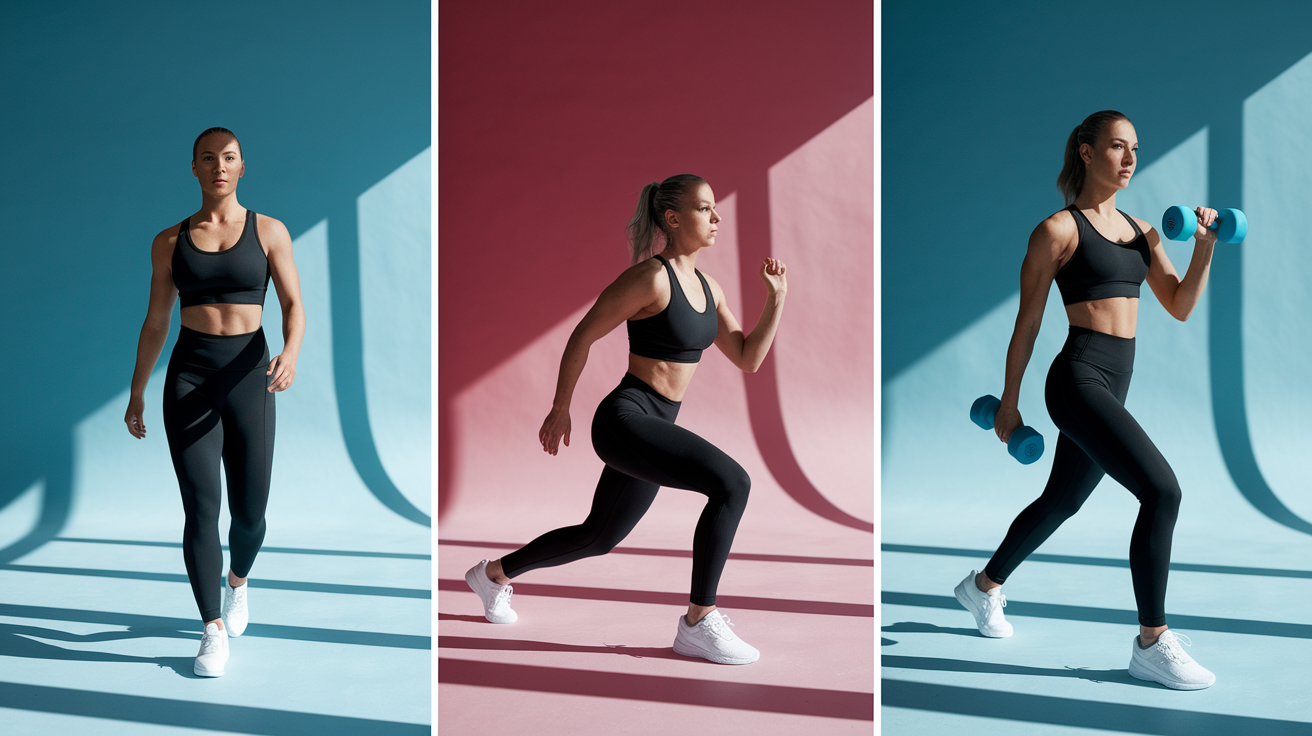
Adjusting interval length, exercise complexity, and tempo lets you match the workout to your current fitness without adding jumps. Start where you can finish every interval with good form, then progress from there.
Beginner Variation
This version uses simple movement patterns, generous rest, and a forgiving interval split. Twenty seconds of work gives you time to find your rhythm without rushing. Twenty seconds of rest lets your heart rate settle before the next exercise. Complete one full round, rest two minutes, then repeat for two to three total rounds.
- Marching in Place – Lift knees to hip height, swing arms naturally. 20 sec work / 20 sec rest.
- Partial Squat – Lower hips only halfway, keep chest lifted, stand. 20 sec work / 20 sec rest.
- Wall Push Up – Hands on wall at shoulder height, lower chest toward wall, press back. 20 sec work / 20 sec rest.
- Step Touch Side to Side – Step right foot out, bring left foot to meet it, repeat left. 20 sec work / 20 sec rest.
- Standing Knee Raise (Alternating) – Lift one knee, lower, switch sides, keep core braced. 20 sec work / 20 sec rest.
Intermediate Variation
Intermediate intervals shorten rest and introduce compound patterns that recruit more muscle at once. Thirty seconds of work raises the cardiovascular demand. Fifteen seconds of rest keeps your heart rate elevated between exercises. Aim for three rounds with 90 seconds of rest between rounds.
- Reverse Lunge to Knee Drive – Step back into lunge, push off back foot, drive knee toward chest, alternate. 30 sec work / 15 sec rest.
- Incline Push Up – Hands on bench or step, lower chest, press up. 30 sec work / 15 sec rest.
- Lateral Lunge (Alternating) – Step right foot wide, sit hips back, push off to center, repeat left. 30 sec work / 15 sec rest.
- Plank with Arm Reach – High plank, extend one arm forward, return, switch. 30 sec work / 15 sec rest.
- Single Leg Romanian Deadlift (Alternating) – Hinge at hips, extend one leg back, stand, switch sides. 30 sec work / 15 sec rest.
Advanced Variation
Advanced sessions use longer work periods, faster tempo, or added resistance to maximize metabolic stress. Forty seconds of work tests muscular endurance and breathing control. Twenty seconds of rest keeps the session moving. Complete four rounds with 60 seconds of rest between rounds, or add light dumbbells to lunges and squats for extra load.
- Walking Lunge – Step forward into lunge, bring back foot forward into next lunge, continue alternating. 40 sec work / 20 sec rest.
- Renegade Row (with or without dumbbells) – High plank, row one hand toward ribs, set down, switch sides. 40 sec work / 20 sec rest.
- Squat to Front Raise – Hold dumbbells, squat, stand, raise arms to shoulder height. 40 sec work / 20 sec rest.
- Lateral Bear Crawl – Knees hover one inch off ground, step hand and foot sideways, crawl right then left. 40 sec work / 20 sec rest.
- V Up – Lie supine, lift legs and shoulders to reach toes, lower with control. 40 sec work / 20 sec rest.
Safety and Injury Prevention Tips
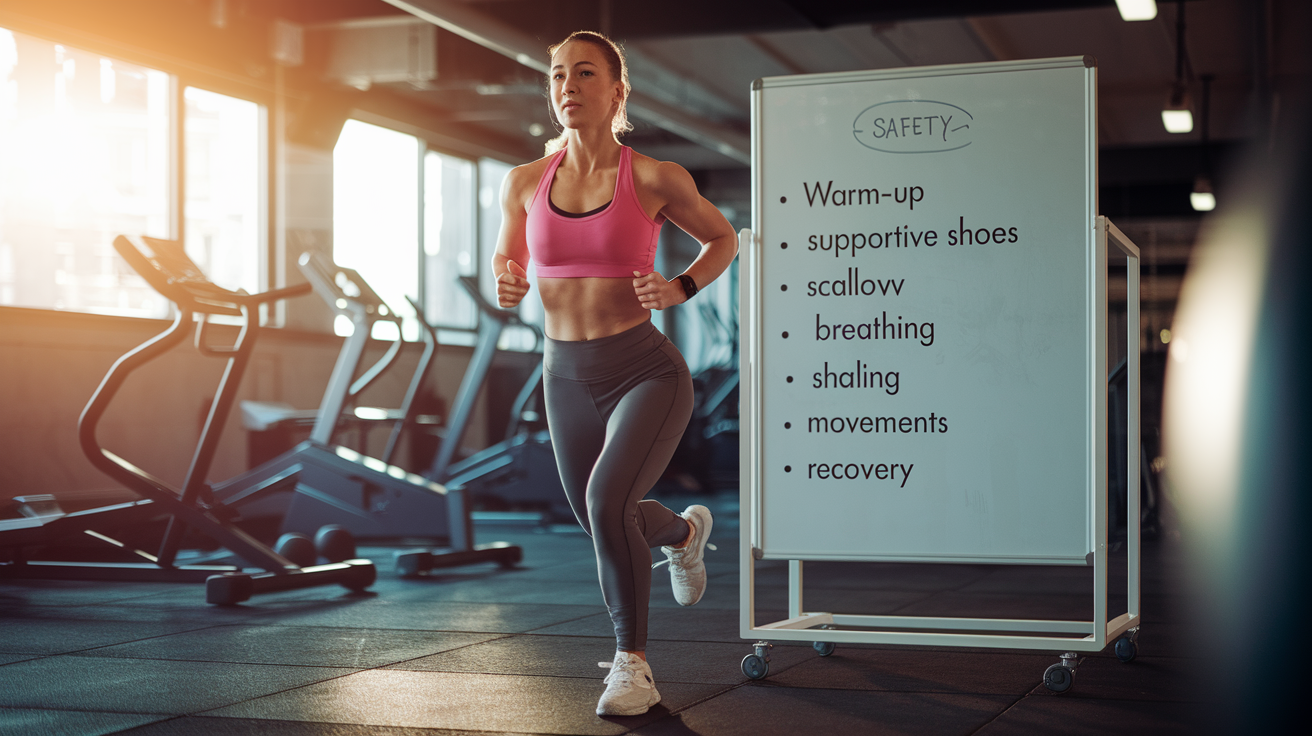
Start every session with five to ten minutes of dynamic movement to raise tissue temperature and prep joints. Leg swings, arm circles, controlled squats, and marching in place tell your nervous system you’re about to work. Skipping the warm up increases stiffness and raises the chance of a pulled muscle or tweaked joint. Especially if you’re training first thing in the morning or after sitting all day.
Listen to your body during intervals. Sharp pain, not the burn of effort, signals a problem. If your knee feels unstable or your lower back pinches during a lunge, stop that exercise and switch to a simpler variation or different movement. Pushing through joint pain rarely builds toughness. It usually builds inflammation.
Safety tips:
- Warm up for 5 to 10 minutes with dynamic stretches and light cardio before starting intervals
- Wear supportive athletic shoes with cushioning, even on carpet or a mat
- Keep a steady breathing rhythm, exhale during effort, inhale during the easier phase
- Scale any exercise that causes sharp joint pain or makes you lose control of form
- Leave 48 hours between high intensity sessions to allow for recovery
- Cool down for 5 to 10 minutes with gentle stretching and slow walking to bring your heart rate down gradually
No Jump HIIT vs Traditional HIIT

Traditional HIIT relies on explosive, high impact moves like burpees, box jumps, tuck jumps, and jumping lunges to spike heart rate quickly. Those exercises generate serious power and calorie burn, but they also load your joints heavily with every landing. No jump HIIT trades explosive plyometrics for controlled tempo, larger ranges of motion, and continuous tension to keep intensity high without the pounding.
Both styles improve cardiovascular fitness, muscular endurance, and metabolic rate. The difference lies in how they stress your body and who can sustain them long term. If your knees, ankles, or hips are healthy and you enjoy explosive movement, traditional HIIT works well. If you have joint issues, live in an apartment, or want to train more frequently without constant soreness, no jump HIIT delivers similar benefits with lower risk.
| Feature | No Jump HIIT | Traditional HIIT |
|---|---|---|
| Impact Level | Low (stepping, controlled transitions) | High (jumps, landings, plyometrics) |
| Joint Stress | Lower forces on knees, ankles, hips | Higher ground reaction forces |
| Noise | Quiet, apartment friendly | Loud, can disturb neighbors |
| Accessibility | Suitable for beginners, older adults, injury recovery | Requires baseline fitness and joint health |
| Cardiovascular Benefit | High when tempo and density are matched | High, often slightly higher peak heart rate |
Final Words
You’ve got a ready-to-go 30 sec work / 15 sec rest routine and eight low-impact moves you can do anywhere. Follow along, no loud jumps, immediate intensity.
We covered why low-impact HIIT protects joints, what gear to grab, simple form cues, safety checks, and beginner-to-advanced progressions. Use the timing rules and keep transitions controlled.
Try this hiit workout no jumping for a few sessions this week. Start with 2–3 rounds, notice small wins, and keep going — you’ll build momentum.
FAQ
Q: Can you do HIIT without jumping? What exercises can you do instead of jumping jacks?
A: You can do HIIT without jumping by using low‑impact moves like step‑backs, low‑impact burpees, fast marches, squat-to-calf raises, reverse lunges, side step‑outs, standing core twists, and plank knee‑ins for intervals.
Q: What is the 30 20 10 rule for HIIT?
A: The 30 20 10 rule for HIIT is 30 seconds moderate effort, 20 seconds harder, 10 seconds near‑max, repeated in rounds to boost intensity and keep sessions short and effective.
Q: Is HIIT cardio good for high blood pressure?
A: HIIT cardio can help lower high blood pressure by improving cardiovascular fitness, but check with your doctor first, start gently, and monitor your response to avoid sudden intensity spikes.