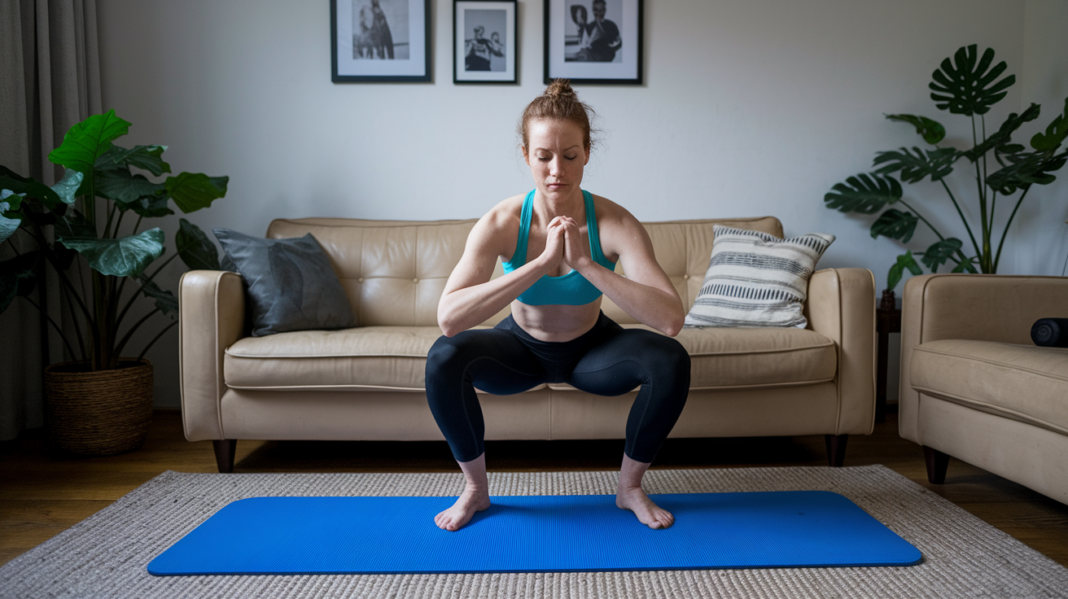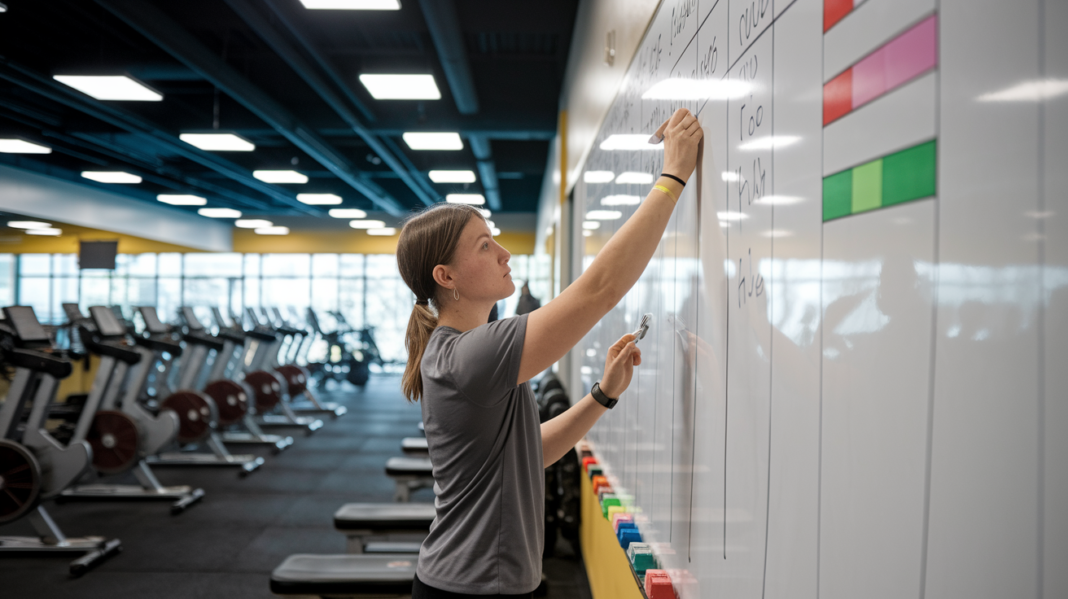

You don’t need to train five days a week to build serious muscle.
A simple three-day full-body split can outpace unfocused daily workouts.
Train Monday, Wednesday, Friday and hit every major muscle each session with compound lifts plus a few targeted accessories.
Follow the sets, reps, and rest windows, and add small weekly progressions to force steady gains.
If you’re new, drop a set or two the first couple weeks while you lock in form.
This plan balances recovery and frequency so you build more muscle without burning out.
Complete 3‑Day Full Body Workout Routine (Sets, Reps, Rest)

Run this program three times per week with at least one rest day between sessions. Monday, Wednesday, Friday works for most schedules. Each workout covers all major muscle groups through compound lifts and a few targeted accessories. Stick to the prescribed sets, control your reps, and follow the rest intervals to keep things moving. If you’re brand new to lifting, drop each exercise by one set for the first two weeks while you get comfortable with the movements.
Day 1 – Lower Push + Upper Pull Focus
- Dumbbell Goblet Squat: 4 sets x 6–8 reps, rest 90 seconds
- Dumbbell Romanian Deadlift: 4 sets x 6–8 reps, rest 90 seconds
- Flat Dumbbell Bench Press: 4 sets x 6–8 reps, rest 90 seconds
- One‑Arm Dumbbell Row: 4 sets x 6–8 reps per arm, rest 60 seconds
- Dumbbell Overhead Press: 3 sets x 8–10 reps, rest 60 seconds
- Dumbbell Hammer Curl: 3 sets x 10–12 reps, rest 60 seconds
- Plank: 3 sets x 45–60 seconds, rest 60 seconds
Day 2 – Unilateral Emphasis + Hypertrophy Work
- Bulgarian Split Squat: 3 sets x 10–12 reps per leg, rest 60 seconds
- Reverse Lunge (Dumbbell): 3 sets x 10 reps per leg, rest 60 seconds
- Incline Dumbbell Press: 3 sets x 8–12 reps, rest 60 seconds
- Bent‑Over Dumbbell Row: 3 sets x 8–12 reps, rest 60 seconds
- Seated Dumbbell Shoulder Press: 3 sets x 8–12 reps, rest 60 seconds
- Dumbbell Triceps Overhead Extension: 3 sets x 10–12 reps, rest 60 seconds
- Hanging Leg Raise or Weighted Sit‑Up: 3 sets x 10–15 reps, rest 60 seconds
Day 3 – Power Movement + Conditioning Focus
- Dumbbell Deadlift (explosive pull): 3 sets x 6–8 reps, rest 90 seconds
- Dumbbell Clean and Press: 3 sets x 6–8 reps, rest 90 seconds
- Single‑Arm Dumbbell Row: 3 sets x 8–10 reps per arm, rest 60 seconds
- Dumbbell Step‑Up: 3 sets x 8–10 reps per leg, rest 60 seconds
- Floor Press or Neutral‑Grip Dumbbell Press: 3 sets x 8–10 reps, rest 60 seconds
- Farmer Carry: 3 sets x 30–60 seconds, rest 60 seconds
- Russian Twist: 3 sets x 20 total reps (10 per side), rest 60 seconds
When you can complete all prescribed reps with solid form, add one rep per exercise the following week. Once you hit the top of the rep range for all sets in two straight sessions, bump your dumbbell weight by the smallest increment available, usually 2.5 to 5 pounds per dumbbell. If your dumbbells jump in bigger steps, tack on two or three extra reps before moving up. Or slow down the lowering phase by an extra two seconds to squeeze more out of each rep without heavier weight.
Warm‑Up and Movement Preparation Essentials

A solid warm‑up wakes up your nervous system, gets fluid moving through your joints, and sends blood to the muscles you’re about to work. Skip it and you’ll feel stiff, clunky, and more likely to tweak something. Set aside five to ten minutes before your first working set. You’re not trying to tire yourself out. You’re just getting everything online so that first heavy set feels smooth.
Dynamic movements beat static stretching before a workout. Holding stretches can temporarily dull power output. Instead, move your joints through their full range while keeping muscles active.
- Leg swings (forward and lateral): Stand next to a wall, swing one leg forward and back 10 times, then side to side 10 times. Switch legs.
- Arm circles: Arms out to your sides, make small circles and gradually go bigger. 15 circles forward, 15 backward.
- Bodyweight squats: 15 to 20 slow, controlled reps. Focus on depth and keeping your knees tracking over your toes.
- Inchworms: Stand tall, bend at the hips, walk your hands out to a push‑up position, then walk your feet back to your hands. 6 to 8 reps.
- Band pull‑aparts or scapular wall slides: If you’ve got a light band, do 15 pull‑aparts at chest height. Or stand against a wall and slide your arms up and down while keeping contact.
After the dynamic work, do one or two light sets of your first compound lift. If your working goblet squat is with a 50‑pound dumbbell, knock out one set of 8 reps with 25 pounds, then one set of 5 with 35. These ramp sets dial in the exact pattern you’re about to load.
How to Progress Your 3‑Day Full Body Training
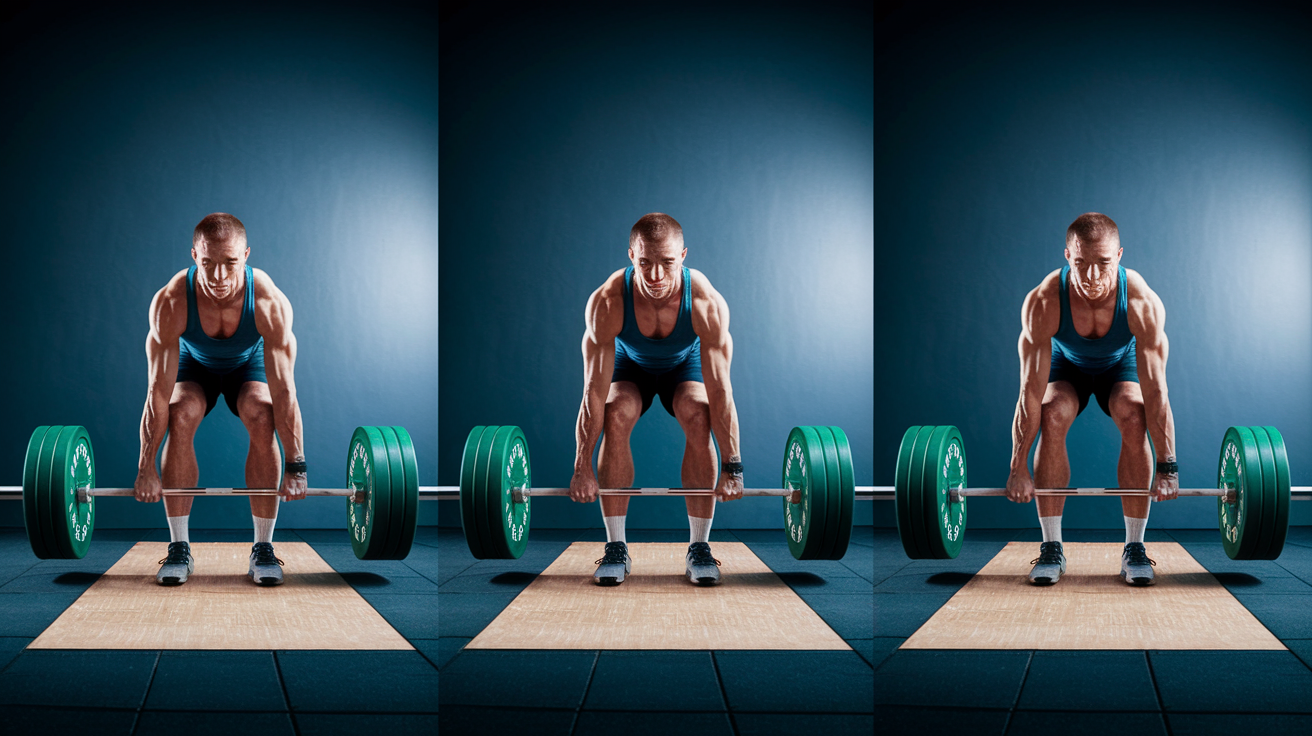
Progressive overload just means you’re gradually asking more from your muscles. Without it, your body adapts to the current stress and stops changing. The easiest method? Add weight once you can hit all your reps with clean form across every set. But weight isn’t your only tool.
You can also add reps within the target range. If the program calls for 6 to 8 reps and you’re hitting 6 on all sets, shoot for 7 next week, then 8 the week after that, before you go up in load. Works really well when dumbbell jumps are big or you’re still getting comfortable with a movement. Another option is cutting rest by 10 to 15 seconds once your performance stabilizes. That cranks up workout density and metabolic demand.
Four practical ways to move forward each week:
- Add weight. Bump load by 2.5 to 5 pounds per dumbbell (or 5 to 10 pounds total for two‑hand exercises) once you hit the top rep target for all working sets in two straight sessions.
- Add reps. Complete 3 sets of 8 reps one week? Aim for 3 sets of 9 the next, same weight.
- Add a set. After four to six weeks, throw one extra set onto one or two main lifts. Go from 3 sets to 4 on your first exercise, for example.
- Improve tempo control. Slow your lowering phase to three or four seconds while keeping the lifting phase explosive. More time under tension without needing heavier dumbbells.
Track your sessions in a notebook or app. Write down weight, sets, reps, and how each set felt. When you see steady progress over weeks, it keeps you motivated. When things stall, you’ve got data to figure out if it’s recovery, form, or time for a lighter week.
Recovery and Rest Guidelines

Your muscles don’t grow during the workout. They grow afterward. Each session creates tiny damage to muscle fibers, and your body patches and reinforces those fibers over the next 24 to 48 hours. With a three‑day full‑body split, you’re hitting each muscle three times per week. Rest days matter just as much as training days.
Schedule at least one full rest day between workouts. Monday, Wednesday, Friday gives you Tuesday, Thursday, and the weekend to recover. If your schedule forces back‑to‑back sessions sometimes, pay attention to how you feel. Soreness, mood, and performance are good signals. If your weights start dropping or motivation crashes, add an extra rest day or cut volume by one set per exercise for a week.
Nutrition powers repair. Get at least 0.7 grams of protein per pound of bodyweight daily, spread across three to five meals. Carbs refill glycogen stores, especially around your workouts, and fats keep hormones functioning. Hydration counts too. Shoot for roughly half an ounce of water per pound of bodyweight each day. 180 pounds? That’s about 90 ounces, or just under three liters.
Sleep is non‑negotiable for strength and muscle. Target seven to nine hours per night in a cool, dark room. Poor sleep tanks protein synthesis, spikes cortisol, and makes every set feel like you’re lifting through mud. If you’re consistently under six hours, progress will flatline no matter how well you train or eat.
Variations for Beginners, Intermediates, and Busy Schedules

Beginner Variation
If you’re new to lifting or coming back after a long break, dial back volume and complexity. Your nervous system needs time to learn patterns before you chase intensity. Start with two or three sets per exercise instead of three or four, and pick the simplest version of each lift.
- Swap Bulgarian split squats for reverse lunges or bodyweight split squats until balance catches up.
- Use goblet squats instead of front squats or other advanced variations.
- Try floor presses or incline push‑ups if shoulder stability is still developing, rather than jumping straight to heavy presses.
Intermediate Variation
Once you’ve been training consistently for six months or more, your body can handle more volume and intensity. Add one or two extra sets to your primary compound lifts (squats, deadlifts, presses, rows). You can also bring in tempo work. Try a three‑second lowering phase on your bench press or row to increase time under tension without needing heavier weights.
- Pair antagonistic exercises as supersets. Dumbbell bench press immediately followed by dumbbell row, for example. Saves time and keeps your heart rate up.
- Include drop sets on the final set of accessories like curls or shoulder raises. Drop the weight 20 to 30 percent and push close to failure.
- Rotate exercise variations every four to six weeks. Swap goblet squats for front squats, or flat bench for incline bench. Gives a fresh stimulus and prevents adaptation plateaus.
Time‑Efficient Variation
When life gets chaotic and you’ve only got 35 to 40 minutes including warm‑up, condense your workout with supersets and shorter rest. You’ll sacrifice some absolute strength but you’ll keep muscle and burn more calories per minute. Pick two or three non‑competing movements and alternate them with minimal rest.
- Superset lower‑body push with upper‑body pull. Goblet squat, rest 30 seconds, then dumbbell row, rest 30 seconds, repeat.
- Cut rest periods to 45 to 60 seconds across all exercises except your heaviest compound lift, which should still get 90 seconds.
- Reduce total exercises from seven to five per session by combining similar patterns. Replace separate curls and triceps extensions with one arm superset, or swap plank and Russian twists for a single core circuit at the end.
Final Words
In the action, you now have a full 3-day plan: Day 1, Day 2, Day 3 workouts with seven exercises each, plus clear sets, reps, and rest. Use the warm-up routine before every session.
Follow the progression tips — add a bit more weight, extra reps, or shorter rests — and stick to recovery advice on sleep, hydration, and protein. Choose the beginner, intermediate, or time-efficient variation that fits your week.
Stick with this 3 day full body workout split for a few weeks, track small wins, and you’ll see steady progress.
FAQ
Q: What is a 3-day full body workout split?
A: The 3-day full body workout split trains all major muscle groups each session, letting you build strength and size across three weekly workouts with steady, recoverable frequency.
Q: Who should use this 3-day routine?
A: The 3-day routine suits beginners to intermediates who want efficient progress, limited gym time, and steady recovery—especially if you can train three nonconsecutive days per week.
Q: How long will each workout take?
A: Each workout typically takes 45–60 minutes including warm-up, if you stick to 6–8 exercises, sensible rest, and keep transitions focused.
Q: How many exercises, sets, reps, and rest should I use?
A: A typical session uses 6–8 exercises, 3–4 sets each, 6–12 reps per set, and 60–120 seconds rest—lower reps for strength, higher for muscle growth.
Q: How should I warm up before each session?
A: Warm up with 5–10 minutes of dynamic movement and joint prep—leg swings, arm circles, walking lunges, band pull‑aparts, and hip mobility—to increase range and lower injury risk.
Q: How do I progress and get stronger with this plan?
A: Progress by adding small, consistent overload: increase weight 2–5%, add a rep, shorten rest, or improve form—make one change every 1–2 weeks and track it.
Q: How often should I train and rest between sessions?
A: Train three times per week with at least one full rest day between sessions—common schedule is Monday, Wednesday, Friday—to allow 48 hours for muscle recovery.
Q: What recovery and nutrition basics help muscle repair?
A: Recovery needs 24–48 hours per muscle, enough protein (around 0.6–0.8 g per pound), good hydration, and 7–9 hours sleep to support repair and strength gains.
Q: How do I modify the plan for beginners, intermediates, or busy schedules?
A: Modify by decreasing sets and choosing simpler movements for beginners; add compound lifts and volume for intermediates; use supersets or fewer rest breaks when short on time.
Q: Can I add cardio, and where should I place it?
A: You can add cardio as short 10–20 minute sessions after strength work or on rest days; prioritize strength first, then do cardio to avoid degrading heavy lift performance.
Q: How do I know when to increase weight?
A: Increase weight when you hit the top rep range with good form across all sets; add a small jump (2–5% or one plate) and keep form strict rather than forcing bigger jumps.
Q: How should I track workouts to measure progress?
A: Track exercises, sets, reps, weight, and rest times in a notebook or app, review weekly, and use trends to plan gradual increases and keep consistency.