Think you need a pricey gym membership to get fit? You don’t.
This post gives real, no-cost workout plans that fit every level and goal, from total beginners to advanced trainers.
You’ll find a complete full-body routine, a weight-loss plan, a muscle-gain path, and a balanced weekly schedule you can do at home with no gear.
Each plan includes how often to train, reps and rests, and simple progress rules so you actually get stronger.
Ready to pick a plan and start this week?
Complete No-Cost Full-Body Workout Plan
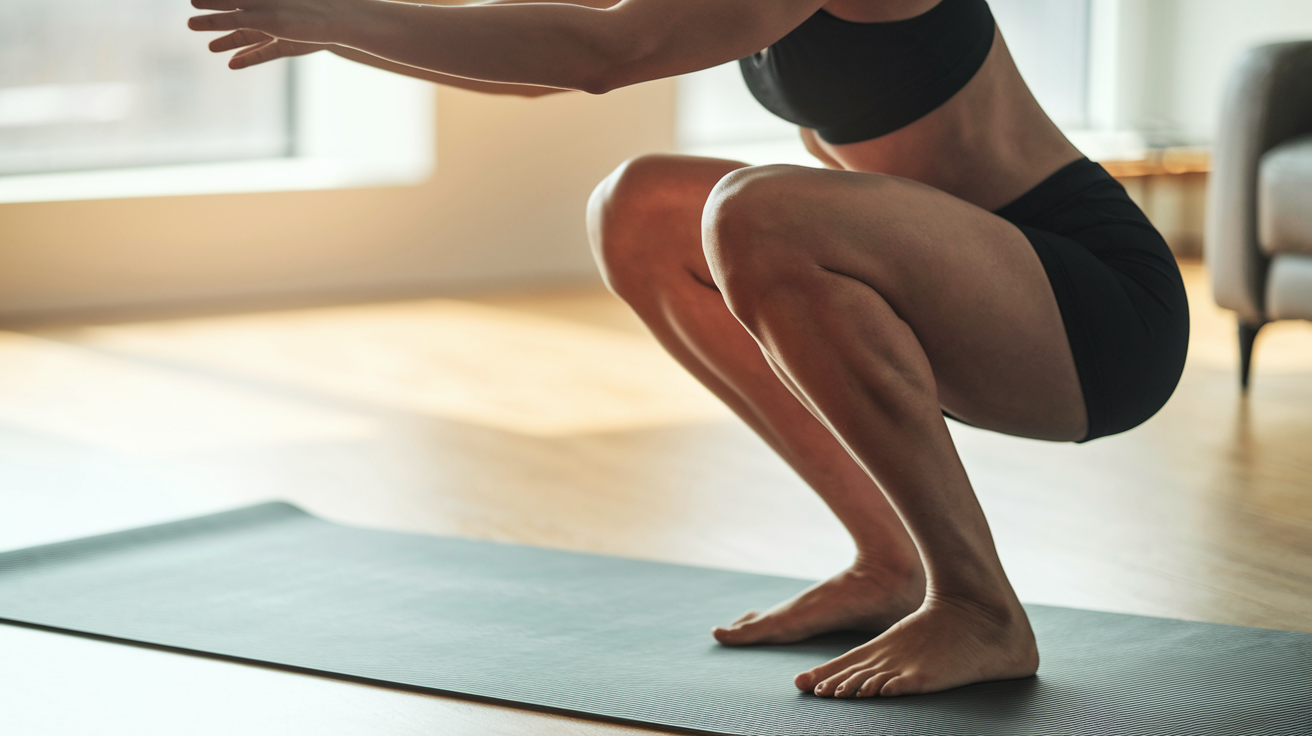
This workout hits every major muscle group in one session. No weights, no machines, no membership card. Each round takes 25 to 35 minutes depending on how you pace your rest. You’ll complete three full rounds, resting 30 to 90 seconds between exercises and 90 to 120 seconds between rounds. If you’re just starting out, do two rounds and work up to three over the first couple weeks. Rest at least one day between sessions so your muscles can recover. Shoot for three workouts per week on non-consecutive days like Monday, Wednesday, Friday. That pattern gives your body time to rebuild and keeps things sustainable for months.
The table below shows five movements that cover legs, chest, back, core, and posterior chain. Every exercise works on a mat or cleared floor space. No fancy setup. Pick rep ranges that challenge you without wrecking your form. If the top of the range feels too easy, slow your tempo to three seconds on the way down and one second on the way up. Lower yourself into the squat for a slow count of three, pause, then stand in one second. That simple tempo shift turns bodyweight squats into a serious leg burner. If a rep target feels impossible, drop to the lower number and add one rep each week. Track your numbers in a phone note or on paper so you know when you’re ready to level up.
| Exercise | Sets | Reps | Rest | Equipment Alternative |
|---|---|---|---|---|
| Bodyweight Squat | 3 | 12–20 | 60 sec | Goblet squat with water jug or backpack |
| Push-Up | 3 | 8–15 | 60 sec | Knee push-up or incline push-up on bench |
| Glute Bridge | 3 | 12–20 | 60 sec | Single-leg bridge or add weight on hips |
| Plank Hold | 3 | 20–60 sec | 60 sec | Forearm or high plank, add knee taps |
| Reverse Lunge (per leg) | 3 | 10–15 | 90 sec | Stationary lunge or add backpack for load |
If your week gets chaotic and you miss a session, don’t try to make it up by doubling workouts the next day. Just pick up where you left off. Consistency beats perfection. Run this plan for at least six weeks before switching to something new. That window gives you enough time to see real strength gains, cleaner form, and measurable progress in rep counts or hold times. Write your numbers down after every session and celebrate small wins. Holding a plank ten seconds longer or adding three reps to your squats? Those tiny steps stack into real change.
Weight Loss Workout Plan (Beginner to Advanced)

Losing weight requires a calorie deficit, but structured movement helps you burn more, protect muscle, and build habits that actually stick. These routines mix short cardio bursts and light resistance to keep sessions efficient and your heart rate elevated. Beginners should start with three 25-minute sessions per week, intermediates can move to four 30-minute sessions, and advanced folks can handle five to six sessions of 35 to 40 minutes. All three levels work without equipment, so you can do them at home, in a park, or in a hotel room.
Beginner level focuses on learning movement patterns and building a base. Each session includes a five-minute brisk walk or march in place, followed by three rounds of bodyweight squats (10 reps), knee push-ups (8 reps), glute bridges (12 reps), and mountain climbers (20 seconds). Rest 90 seconds between rounds. Finish with a five-minute cool-down walk and light stretching. This format keeps intensity moderate and gives your body time to adapt. Stick with it for four weeks, then reassess. If the mountain climbers feel comfortable and your heart rate recovers quickly during rest, you’re ready to level up.
Intermediate users add volume and reduce rest. Sessions now include a five-minute warm-up jog or jumping jacks, then four rounds of bodyweight squats (15 reps), standard push-ups (10 reps), reverse lunges (12 per leg), plank hold (30 seconds), and high knees (30 seconds). Rest drops to 60 seconds between rounds. Total time climbs to around 30 minutes. The shorter rest keeps your heart rate higher, which means more calorie burn during and after the workout. If a movement starts feeling easy, add tempo work. Lower into your squat for three full seconds, pause at the bottom, then explode up in one second. That tweak recruits more muscle fibers and makes bodyweight feel heavier.
Advanced routines push intensity with circuit-style intervals and minimal rest. Warm up for five minutes with light jogging or rope-free jump-rope movements, then complete five rounds of jump squats (12 reps), decline push-ups with feet elevated on a step (10 reps), single-leg glute bridges (10 per side), bicycle crunches (20 reps), and burpees (8 reps). Rest 45 seconds between rounds. Sessions run 35 to 40 minutes and demand solid recovery between training days. Pair this plan with 20 to 30 minutes of walking on rest days and a daily calorie deficit of 300 to 500 calories to see steady fat loss over six to eight weeks. Track your body measurements monthly instead of obsessing over the scale. Waist circumference and how your clothes fit are better progress markers than daily weight swings.
Muscle Gain Workout Plan (Beginner to Advanced)

Building muscle on a free plan is absolutely doable if you understand volume, tempo, and progressive overload. Muscle growth happens when you challenge muscles with enough tension and give them time to recover. Bodyweight routines can deliver that stimulus by tweaking reps, tempo, and exercise difficulty. Beginners should train three days per week with full-body sessions, intermediates can move to a four-day upper-lower split, and advanced users benefit from five or six days using push-pull-legs splits. Every level works without a gym if you swap exercises smartly.
Beginner muscle-gain sessions focus on higher reps and controlled tempo to maximize time under tension. Each workout includes a five-minute dynamic warm-up, then three rounds of slow-tempo squats (12 to 15 reps, three seconds down and one second up), push-ups (10 to 12 reps, same tempo), glute bridges (15 reps with a two-second squeeze at the top), and bent-over bodyweight rows using a sturdy table edge (10 to 12 reps). Rest 90 seconds between rounds. The slower tempo forces muscles to work longer per rep, which triggers growth even without heavy weights. Track your rep totals and try to add one or two reps every week. When you can hit 15 reps with perfect form, switch to a harder variation like archer push-ups or pistol squat progressions.
Intermediate lifters shift to an upper-lower split to increase weekly volume per muscle group. Upper-body days include four rounds of decline push-ups (10 to 12 reps), inverted rows (8 to 10 reps), pike push-ups for shoulders (8 to 10 reps), and dips using parallel chair backs (8 to 10 reps). Lower-body days include four rounds of Bulgarian split squats (10 per leg), single-leg Romanian deadlifts holding a backpack (10 per leg), jump squats (8 reps), and single-leg calf raises (15 per leg). Rest 60 to 75 seconds between sets. This split lets you hit each muscle twice per week with higher volume per session. If you’ve got dumbbells or a loaded backpack, use them on squats and lunges to add external load. If not, add reps or slow your tempo until you reach muscular failure in the 8 to 12 rep range.
Advanced muscle builders use push-pull-legs splits across five or six days with tempo variations and unilateral movements to keep tension high. Push days include explosive push-ups, archer push-ups, handstand holds, and tricep dips. Pull days include one-arm assisted pull-ups, wide-grip inverted rows, and bodyweight bicep curls using a resistance band looped under your feet. Leg days include pistol squat progressions, Nordic hamstring curls using a couch to anchor your ankles, and weighted glute bridges with a heavy backpack. Shoot for three to four sets of 8 to 12 reps per exercise, resting 60 seconds between sets. When bodyweight becomes too easy, add pauses at the hardest point of the movement or use a five-second eccentric phase. Track every session and reassess every six weeks. Muscle gain on bodyweight training is slower than barbell programs, but consistent effort and smart progression absolutely work.
General Fitness & Balanced Training Plan
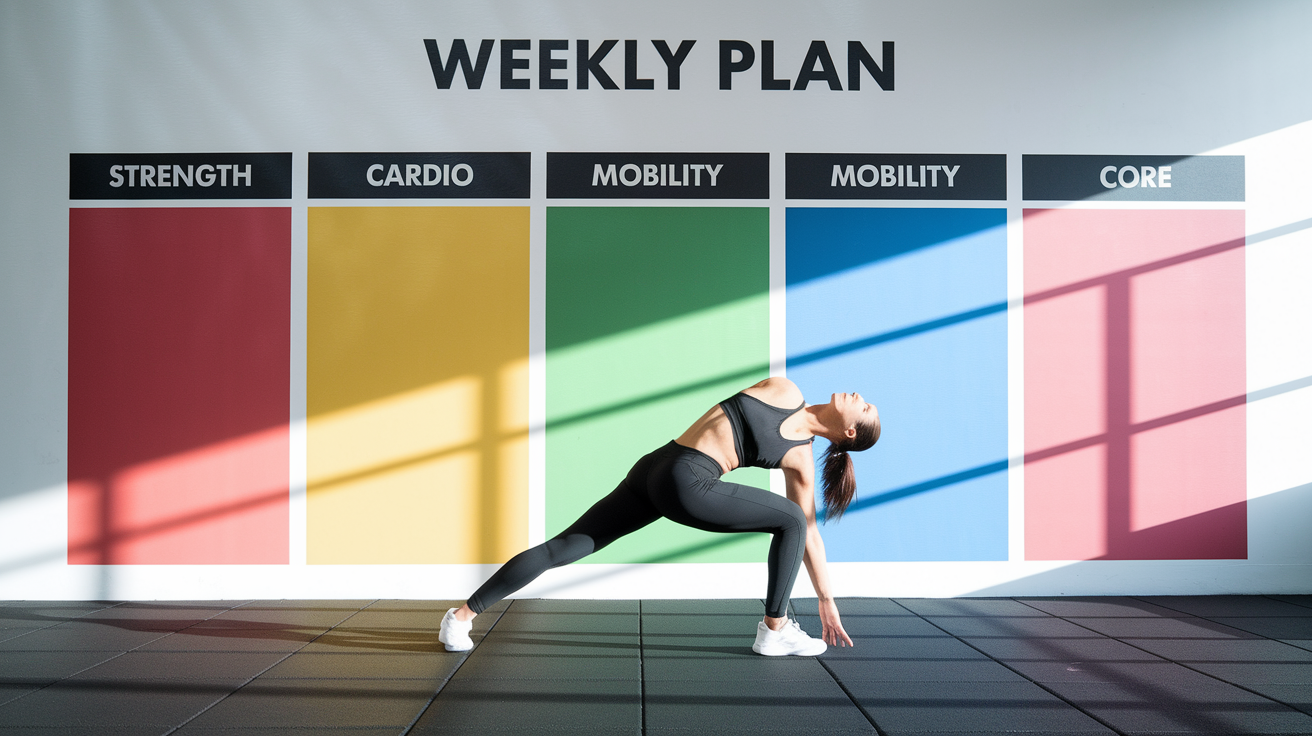
A balanced fitness plan blends strength, cardio, mobility, and core work into a sustainable weekly rhythm that fits real life. This isn’t about chasing one goal. It’s about feeling strong, moving well, and having energy for everything else you do. The schedule below runs four sessions per week, each 25 to 35 minutes, with flexibility to drop to three if your week gets messy. Monday is full-body strength using bodyweight movements like squats, push-ups, and lunges. Wednesday is a cardio and core session with 20 minutes of brisk walking, jogging, or cycling followed by 10 minutes of planks, bicycle crunches, and leg raises. Friday repeats the full-body strength with slightly different exercises or added reps. Saturday is a mobility and light cardio day with 15 minutes of stretching, yoga flows, or foam rolling plus 15 minutes of easy walking or a bike ride.
This rhythm keeps variety high and boredom low. You’re not grinding the same workout five days in a row. Every session has a different feel and focus, which makes it easier to show up consistently. If you can only commit to three days, keep Monday strength, Wednesday cardio-core, and Friday strength. Skip the Saturday mobility session or fold 10 minutes of stretching into your cool-down after the other workouts. The key is hitting strength twice a week and cardio once or twice. That combination supports heart health, muscle tone, joint mobility, and energy without requiring heroic time commitments.
For busy weeks, shorten sessions instead of skipping them. A 15-minute strength circuit of squats, push-ups, and planks is better than nothing. A 10-minute walk around the block beats sitting all day. Write your weekly plan on Sunday night and treat those time blocks like any other appointment. Track what you actually complete in a simple notes app or on paper. At the end of each month, count how many sessions you finished. If you hit 12 out of 16 planned workouts, that’s progress worth celebrating. Fitness isn’t about perfection. It’s about showing up often enough that movement becomes part of your routine, like brushing your teeth.
Final Words
Jump in with the no-cost full-body plan — it gives sets, reps, rest, and quick alternatives so you can start today.
Pick the weight-loss or muscle-gain track for your goal. Each section lays out beginner to advanced routines, session length, and safe ways to progress over 6–8 weeks. Use bodyweight tweaks when you don’t have equipment.
Use the balanced weekly schedule to mix mobility, cardio, core, and strength. These free workout plans are flexible and built for busy weeks. One small steady step wins. You’ve got this.
FAQ
Q: What workout app is 100% free?
A: A workout app that is 100% free is rare, but several, like FitOn and the free Nike Training Club tier, offer fully free guided workouts you can use without a subscription.
Q: What is the 3 3 3 rule for working out?
A: The 3 3 3 rule for working out is three sets of three reps, a low-volume, high-intensity strength format that uses heavier load and longer rest to build raw strength.
Q: Are there any free exercise plans?
A: There are free exercise plans from apps, websites, and community programs; most use bodyweight moves such as squats and planks, with 3–4 sets, 8–15 reps, and 30–90 seconds rest.
Q: What’s the best exercise for type 2 diabetes?
A: The best exercise for type 2 diabetes is a mix of brisk walking and resistance training, since combining aerobic work and strength training helps lower blood sugar and improve insulin sensitivity.