

Think walking won’t help you lose fat? Think again.
Pair regular walks with two to four resistance sessions a week and you protect muscle while quietly adding steady calorie burn.
That combo keeps strength, limits fatigue, and makes fat loss sustainable instead of a short-lived crash.
This post gives a simple weekly blueprint, easy progressions, and recovery and nutrition rules that fit a busy life.
If you want steady results without burning out, this is the plan you’ll stick with.
Weekly Training Blueprint for Combining Resistance Work and Walking
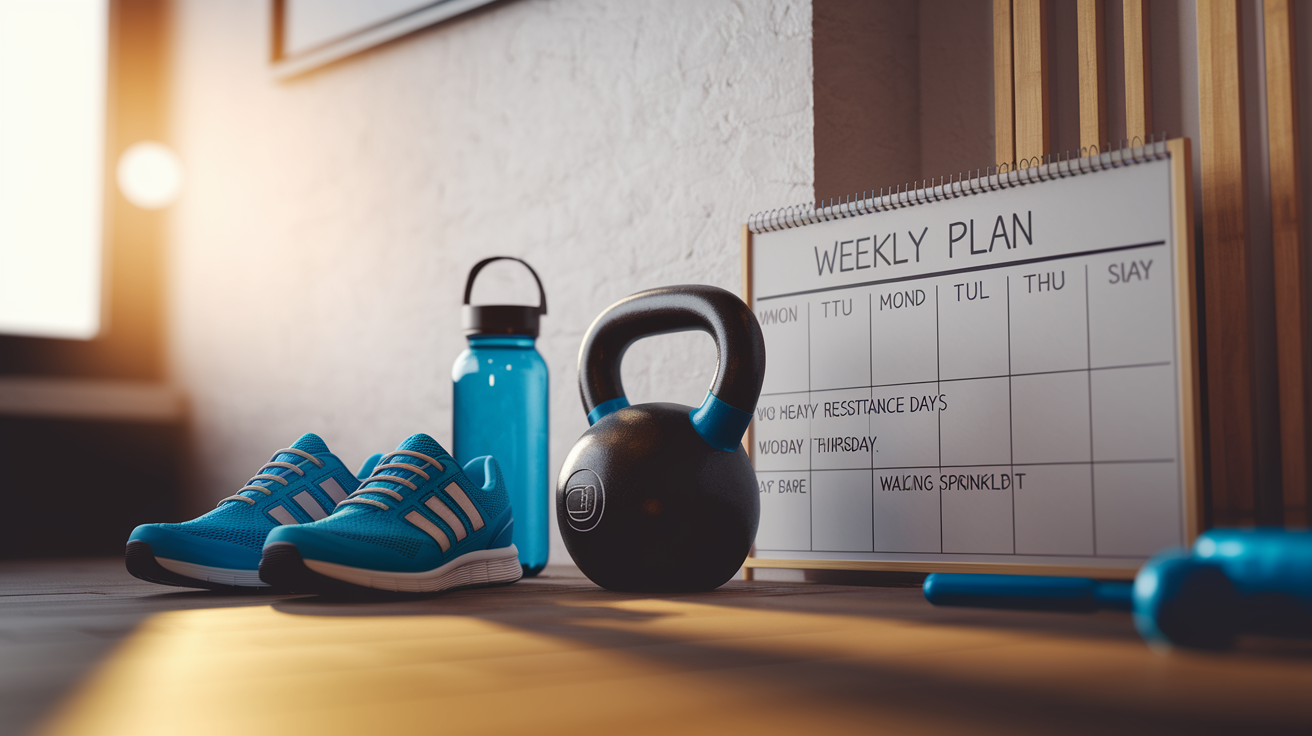
A realistic week mixes two to four resistance sessions with daily or near-daily walking. The exact split depends on your schedule and recovery, but the pattern stays simple: lift heavy two or three days, walk most days, and take at least one full rest day when life demands it.
Start by anchoring your resistance work on fixed days so the habit sticks. Mondays and Thursdays work well for two full-body sessions. If you can handle three, add Saturday or Wednesday for another round. Walking fills the gaps. Short walks after meals, a longer morning walk on rest days, or a brisk evening lap around the block. The goal is to hit around 150 to 250 minutes of walking per week without turning it into a second job.
Here’s a straightforward seven day framework you can follow or adjust based on your real life:
Monday: Full body resistance session (45 to 60 minutes), then 15 to 20 minutes of easy walking to cool down and bank a few extra steps.
Tuesday: 30 to 45 minutes of brisk walking at a pace that lets you talk but makes full sentences slightly harder. Aim for 7,000 to 9,000 steps total for the day.
Wednesday: Optional light resistance session (20 to 30 minutes focusing on muscles that feel fresh), or simply another 30 minute walk if you’re managing fatigue.
Thursday: Second main resistance session (45 to 60 minutes), followed by 15 to 20 minutes of easy walking.
Friday: 30 to 45 minutes of moderate pace walking. Use this day to check in on weekly step targets and add a short evening walk if you’re behind.
Saturday: Longer walk (45 to 60 minutes) at a comfortable pace, or break it into two shorter sessions. Great day for trails, parks, or errands on foot.
Sunday: Full rest or very light activity (20 minute easy walk, stretching, or complete downtime). Let soreness settle and sleep quality catch up.
This schedule balances effort across the week without stacking hard sessions back to back. If your week falls apart, protect the two resistance days and try to get three or four walking days in. Consistency beats perfection. A slightly messy week that you actually complete will always beat a flawless plan you abandon by Wednesday.
How Resistance Training and Walking Work Together for Fat Loss

Resistance training preserves and builds muscle tissue, which keeps your resting metabolic rate higher than it would be with diet and cardio alone. When you lose weight through calorie restriction, your body doesn’t just burn fat. It also breaks down muscle unless you give it a reason to keep that muscle around. Lifting weights two to four times per week sends that signal clearly: “We still need this strength.”
Walking adds daily energy expenditure without the recovery cost of high intensity cardio. A 30 minute brisk walk burns roughly 120 to 180 calories depending on your pace and body size, and because it’s low impact, it doesn’t interfere with your next squat session. Over a week, the difference between 3,000 steps per day and 8,000 steps per day can mean an extra 200 to 400 calories burned. Enough to create or deepen a calorie deficit without feeling like you’re training for a marathon.
The combination also manages fatigue better than either method alone. Heavy squats and deadlifts require full recovery between sessions, so you can’t lift hard every day. Walking fills those recovery days with light movement that improves circulation, supports joint health, and keeps your daily calorie burn higher. When you pair muscle preservation with steady, sustainable calorie expenditure, fat loss becomes a process you can maintain for months instead of a sprint that burns you out in three weeks.
Adjusting Intensity and Volume for Your Fitness Level

Your starting point determines how much volume and intensity you can handle right now. If you’re new to resistance training, two full body sessions per week with two to three sets of eight to twelve reps per exercise is plenty. Walking can start at 20 to 30 minutes on most days, aiming for around 6,000 to 8,000 steps total. That’s enough stimulus to drive adaptation without overwhelming your joints or your schedule.
Intermediate lifters can handle three to four resistance sessions per week, often using an upper lower split or a simple push pull legs template. Sets climb to three or four per exercise, and you might include one or two heavier days (four to six reps) alongside hypertrophy work. Walking targets rise to 8,000 to 10,000 steps on most days, and you can add one interval or tempo walk per week. Something like five rounds of three minutes faster, two minutes easy, inside a longer session.
Practical Progression Examples
Progression keeps your body adapting instead of plateauing. For resistance work, add 2.5 to 5 pounds to a lift once you can complete all your sets and reps with good form and one to two reps left in the tank. If you’re doing three sets of ten squats at 135 pounds and the last set feels easy, bump it to 140 next week. For bodyweight exercises like push ups, add reps first (from ten to twelve per set), then add a set, then add a harder variation like feet elevated push ups.
Walking progression is just as simple. If you’re consistently hitting 7,000 steps per day, aim for 8,000 for two weeks. Once that feels normal, try 9,000. You can also increase one walk per week by ten minutes, or swap one easy walk for a slightly faster tempo walk. The key is changing one variable at a time so you know what’s working and what’s adding too much fatigue.
Simple Progression Models for Sustainable Fat Loss

A linear progression model works well for the first few months. Each week, try to add a small amount of weight, one or two extra reps, or an additional set to your resistance work. For walking, increase your weekly step average by 500 to 1,000 steps every two weeks until you reach a sustainable target like 8,000 to 10,000 steps per day. Small, steady increases compound faster than you expect, and they’re easier to recover from than big jumps that leave you sore and irritable.
When linear gains slow down (usually after eight to sixteen weeks) you can switch to a block model. Spend four weeks focusing on higher volume (more sets, moderate reps), then four weeks on heavier loads (fewer reps, more rest), then a lighter week to recover before starting again. Walking stays consistent during volume blocks and can drop slightly during heavy strength phases if fatigue builds.
Here are four simple progression options you can rotate through:
Add 5 pounds to a barbell lift or 2.5 pounds to a dumbbell exercise once per week until form breaks down, then hold that weight and add reps.
Increase total weekly resistance sets by 10% every four weeks (example: from 12 sets for legs to 13 or 14 sets).
Raise daily step average by 1,000 per month until you hit a realistic ceiling based on your schedule.
Swap one easy 30 minute walk for a 40 minute walk with two or three faster intervals mixed in, once every two weeks.
Recovery Essentials to Support Combined Training

Sleep is the single biggest recovery tool you control. Aim for seven to nine hours per night, and protect that window the same way you protect your training time. Poor sleep raises cortisol, blunts muscle protein synthesis, and makes every session feel harder than it should. If your sleep is a mess, your body won’t recover from even moderate training loads, and fat loss will stall despite a calorie deficit.
Hydration and rest day movement also matter. Drink enough water that your urine stays light yellow throughout the day. Around half your body weight in ounces is a decent starting target. On full rest days, a 15 to 20 minute easy walk helps flush metabolic waste from sore muscles without adding fatigue. Think of it as active recovery, not another workout.
Deload weeks (where you cut volume or intensity by 30 to 50 percent) should happen every four to eight weeks depending on how hard you’re pushing. If you’re constantly sore, sleep quality drops, or strength starts declining instead of progressing, take a lighter week before burnout forces you to stop completely.
Nutrition Fundamentals to Enhance Results

A moderate calorie deficit of 300 to 500 calories per day supports fat loss without tanking your energy or strength. Larger deficits might speed up weight loss in the short term, but they increase muscle loss, wreck your mood, and make it nearly impossible to sustain training intensity. Aim to lose around 0.5 to 1 percent of your body weight per week. A 75 kilogram person should target roughly 0.4 to 0.75 kilograms per week, which works out to about one to one and a half pounds.
Protein intake should sit between 1.6 and 2.2 grams per kilogram of body weight per day. For that same 75 kilogram person, that’s 120 to 165 grams of protein daily, spread across three to five meals. Get protein at every meal (20 to 40 grams per sitting) to keep muscle protein synthesis elevated and hunger under control. If you’re lifting in the morning, get at least 20 grams of protein within a couple of hours after your session.
Carbs and fats fill out the rest of your calories. Keep fats around 20 to 30 percent of total intake for hormone health, then use carbs to fuel your training and daily energy. Higher carb days around your hardest resistance sessions can improve performance, while slightly lower carb days on rest or walking only days help maintain the deficit.
Three key nutrition actions to lock in now:
Track protein for at least two weeks to learn what 120 to 160 grams actually looks like on your plate.
Eat most of your daily carbs around your resistance sessions (before or after, depending on preference and schedule).
If fat loss stalls for two to three weeks straight despite consistent training, reduce portions slightly or add 1,000 to 2,000 steps per day before slashing calories harder.
Common Mistakes When Combining Resistance Work and Walking

The biggest mistake is trying to do too much at once. Adding four resistance sessions, 15,000 steps per day, and a steep calorie deficit all in the same week is a recipe for burnout, not sustainable fat loss. Your body adapts to gradual increases, so start with two or three resistance days, a realistic step target, and a moderate deficit. Build from there over weeks and months.
Another common error is prioritizing walking over lifting when time gets tight. Walking is important, but resistance training is what protects your muscle and keeps your metabolic rate from cratering during a deficit. If you can only do three or four workouts per week, make sure at least two of them are resistance sessions. Walking can be shortened or spread into smaller chunks throughout the day without losing much benefit.
Here are five mistakes that quietly sabotage progress:
Skipping rest days entirely because “more is better,” leading to poor sleep, constant soreness, and eventually a forced break due to injury or exhaustion.
Eating too little protein (under 1.4 grams per kilogram per day), which accelerates muscle loss and makes strength gains nearly impossible during a deficit.
Adding high intensity interval sessions on top of resistance work and walking without accounting for the extra fatigue and recovery cost.
Ignoring strength performance as a progress metric and only watching the scale, missing signs that you’re losing muscle along with fat.
Increasing walking volume too fast (jumping from 4,000 to 12,000 steps overnight), causing shin splints, knee pain, or general burnout that kills consistency.
Final Words
Put the weekly blueprint to work: three focused resistance sessions, daily walks, and planned recovery make this simple and sustainable.
Adjust intensity using the progression models, keep protein and a moderate calorie deficit, and protect sleep so you recover and keep gains.
If you want to know how to combine resistance training and walking for sustainable fat loss, follow the plan, scale it to your level, and aim for steady progress. You’ll build strength, keep muscle, and get results you can keep.
FAQ
Q: What is the 3-3-3 rule for fat loss, walking, and at the gym?
A: The 3-3-3 rule for fat loss, walking, and at the gym is a flexible “three-by-three” structure: three sets of three exercises, three-minute work blocks repeated three times, or three sessions per week for simple consistency.
Q: What is the 6 6 6 rule in walking?
A: The 6 6 6 rule in walking is a simple interval pattern: six minutes easy, six minutes brisk, repeated six times (or adjusted to six rounds) to raise intensity while staying manageable.