Think getting a real high-protein dinner means an hour in the kitchen? Think again.
If you’re juggling work, kids, or just too tired to cook, these 12 meals deliver 28 to 40 grams of protein and finish in 30 minutes or less.
From air-fried chicken and salmon to shrimp stir-fries, tofu bowls, and quick turkey skillets, every recipe includes protein counts so you know what you’re eating.
Read on for simple, no-fuss dinners and meal prep tips that get dinner done tonight.
Fast High-Protein Dinner Ideas for Busy Weeknights
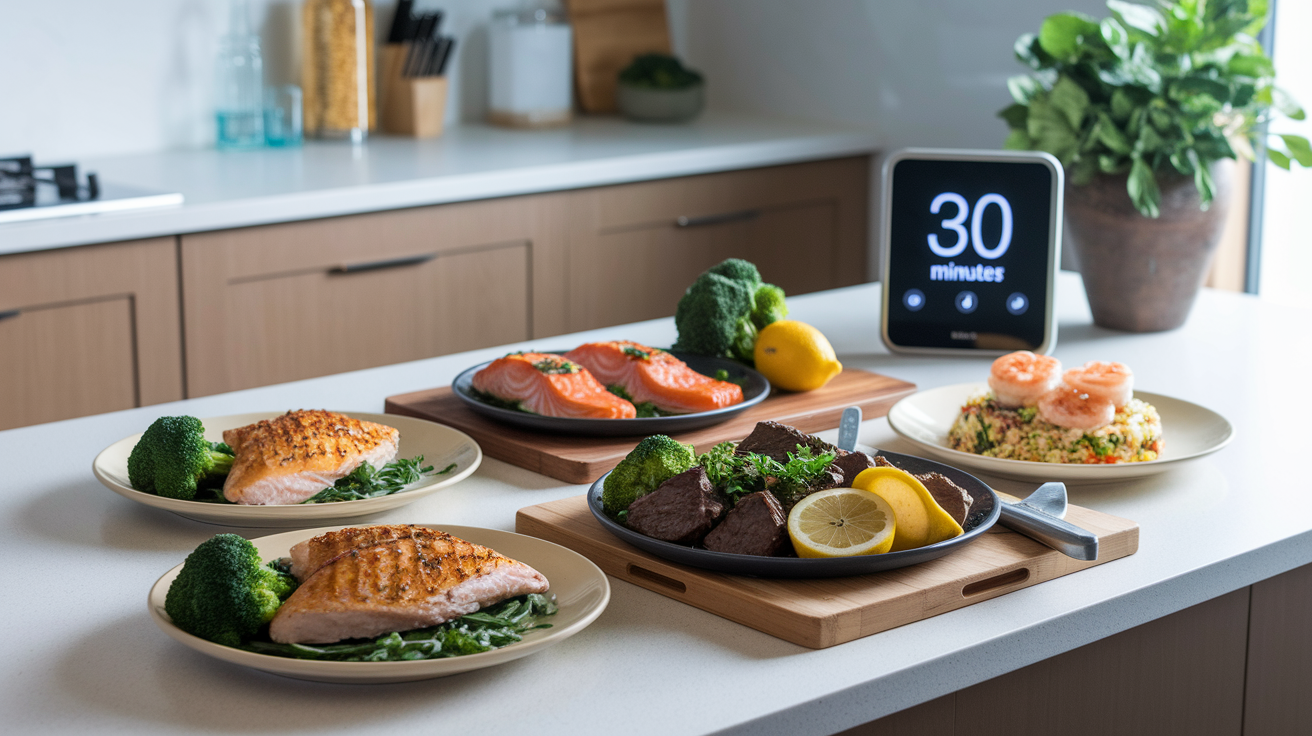
You need dinner ready now, and you want solid protein. Here are twelve meals that take 30 minutes or less. Protein counts included so you know what you’re working with.
- Air Fryer Chicken Breast with Broccoli – 35 grams of protein
- Salmon Burgers with Mango Salsa – 32 grams of protein
- Ground Turkey Stir-Fry with Bell Peppers – 38 grams of protein
- Shrimp and Quinoa Fried Rice – 30 grams of protein
- Beef and Broccoli Skillet – 40 grams of protein
- Lentil and Chicken Bowl with Cilantro Lime Rice – 34 grams of protein
- Cottage Cheese and Egg Scramble with Toast – 28 grams of protein
- Pan-Seared Pork Chops with Green Beans – 36 grams of protein
- Tofu Stir-Fry with Peanut Sauce and Veggies – 29 grams of protein
- Tuna Salad Lettuce Wraps with White Beans – 31 grams of protein
- Chickpea and Turkey Skillet with Tomatoes – 33 grams of protein
- Baked Salmon with Asparagus and Lemon – 38 grams of protein
These work when you’re tight on time. High protein without spending an hour cooking.
Types of High-Protein Ingredients for Simple Dinners
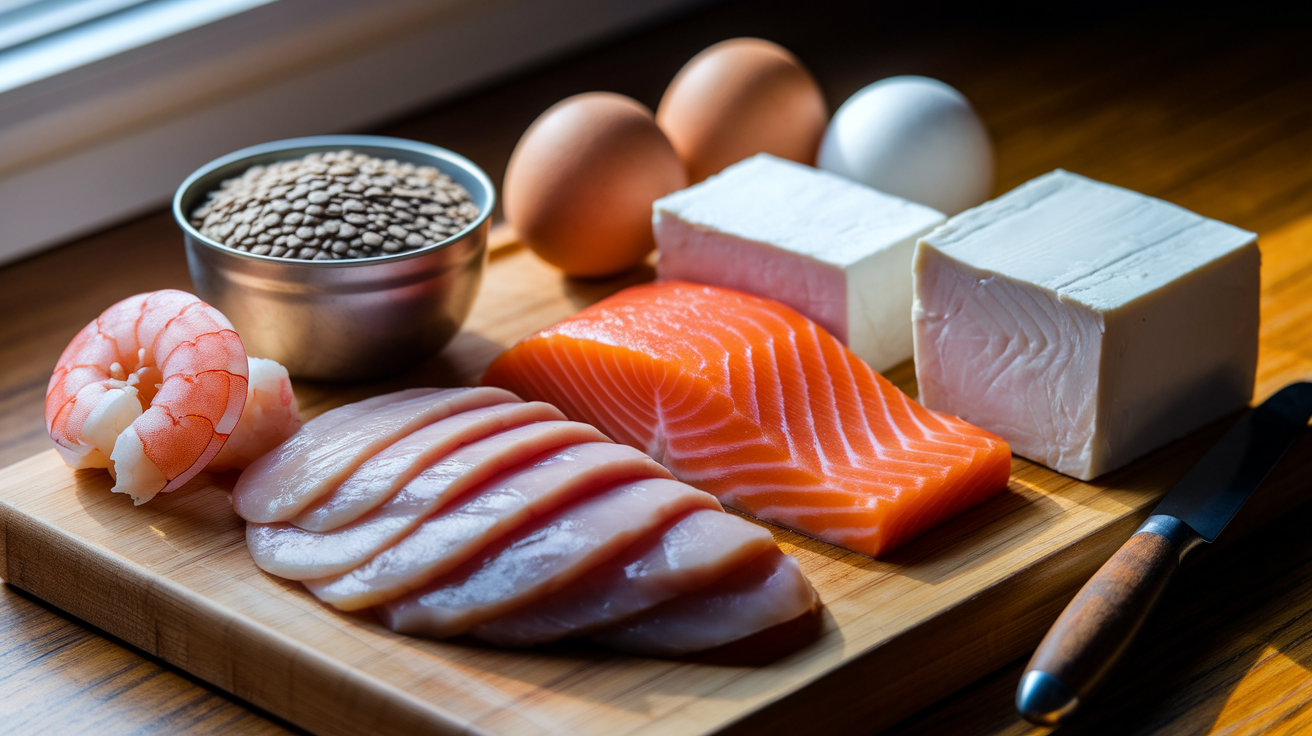
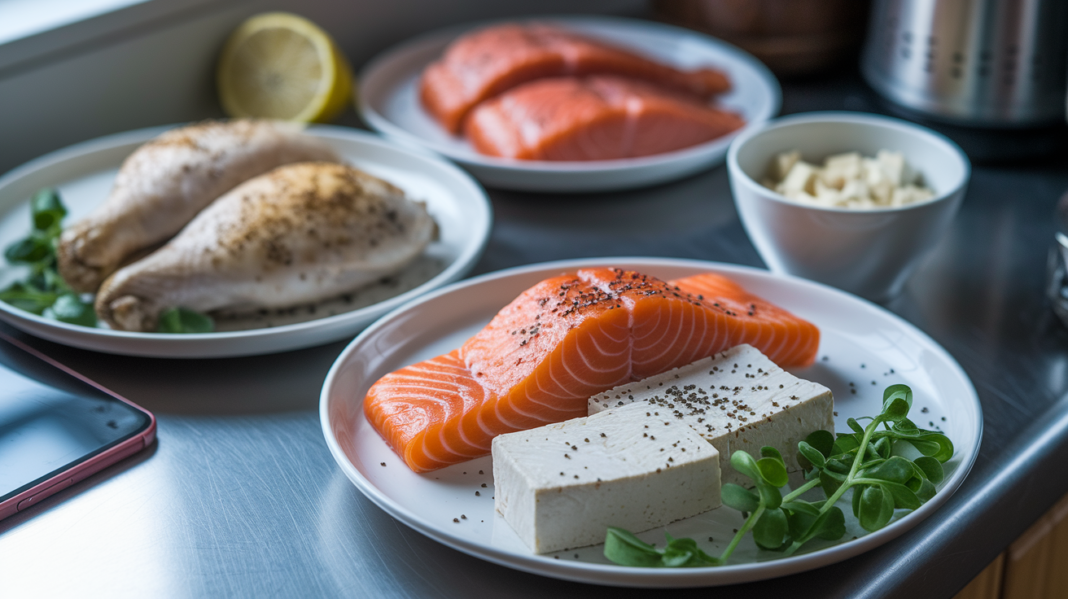
Some proteins just cook faster. Thin chicken breast, shrimp, fish fillets, tofu. More surface area means quicker heat transfer. Pre-cooked stuff like rotisserie chicken or canned tuna skips the whole cooking step and still delivers.
Frozen proteins work straight from the freezer in most cases. Frozen shrimp, chicken strips, fish fillets. No thawing wait. And refrigerated staples like eggs, Greek yogurt, cottage cheese are ready the second you open the fridge.
Eight protein options and why they’re fast:
- Chicken breast – 10 to 15 minutes when sliced thin or pounded flat
- Shrimp – 3 to 5 minutes because they’re small and cook through quick
- Salmon fillets – 12 to 15 minutes with high heat methods like air frying or pan searing
- Ground beef or turkey – 6 to 8 minutes with frequent stirring
- Tofu – 15 minutes in an air fryer or hot skillet for crispy edges
- Lentils – 15 to 20 minutes simmering, no soaking needed
- Eggs – 3 to 8 minutes depending on how you cook them
- Canned tuna or salmon – zero cooking time
These proteins pair well with skillets, air fryers, sheet pans. All three methods deliver concentrated heat and minimal cleanup, keeping total dinner time under 30 minutes. Stock your kitchen with a mix of these and you’ll always have a fast option ready.
Quick High-Protein Cooking Methods
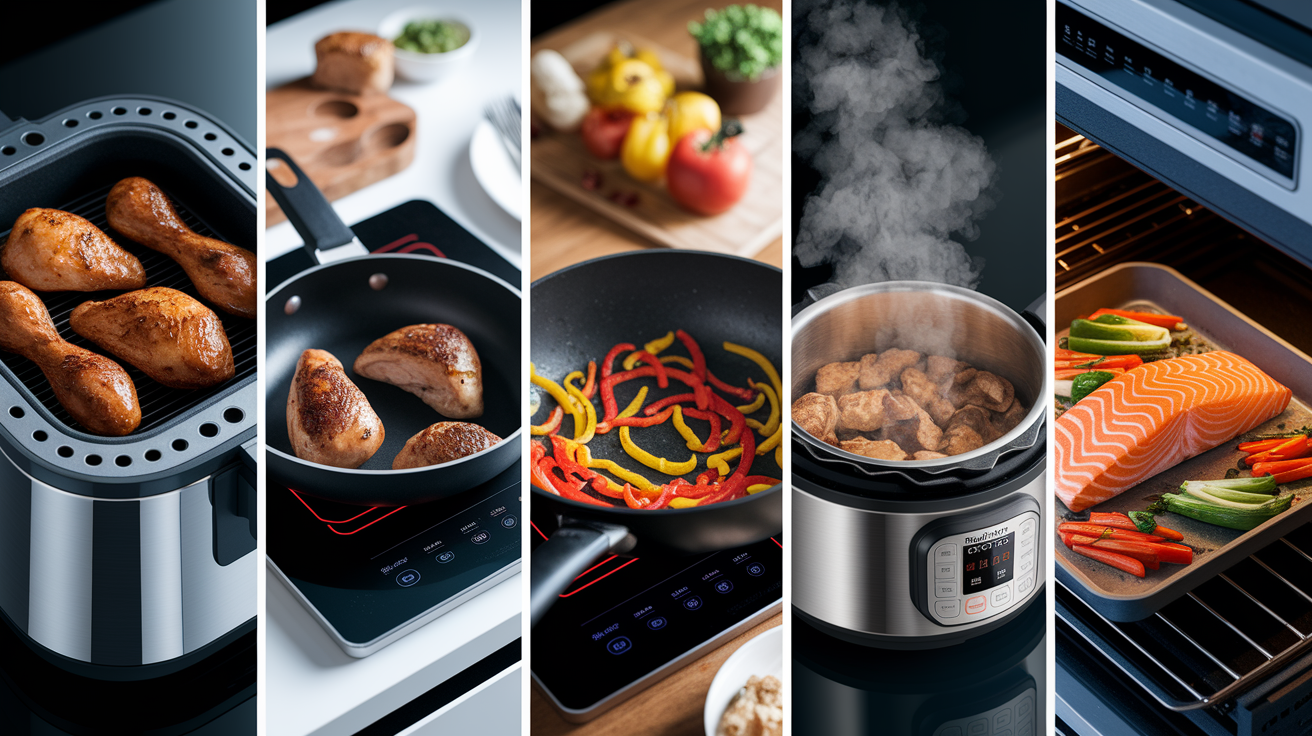
Fast methods work because they max out heat transfer and cut down hands-on time. High surface contact, direct heat, pressure. All of these reduce the gap between raw ingredients and finished dinner.
Five methods and why they save time:
- Air frying – circulates super hot air around food, creating crispy outsides and cooked insides in 10 to 15 minutes without oil or waiting for an oven to preheat
- Sautéing – thin layer of hot oil in a skillet cooks small or thin protein pieces in 6 to 10 minutes with constant contact
- Stir-frying – high heat, small protein pieces, constant movement. Everything cooks in 8 to 12 minutes while vegetables stay crisp
- Instant Pot pressure cooking – traps steam to raise internal temp above boiling, cutting cook time by 50 to 70 percent for proteins like chicken thighs or lentils
- Sheet pan roasting – spreads protein and vegetables in a single layer under high heat (400 to 450°F), cooking everything in 15 to 20 minutes with no stirring
Air fryers can cook salmon in 12 minutes and chicken breasts in 15. Skillet cooking handles ground meat, shrimp, thin-cut pork in 10 to 20 minutes. Instant Pots cook chicken from frozen in 12 minutes under pressure. Sheet pans roast a full dinner in 20. These time ranges hold across most proteins when you match the right temperature and prep size. It’s about matching your protein type to the method that delivers the most heat in the shortest window.
High-Protein 30-Minute Recipe Breakdowns
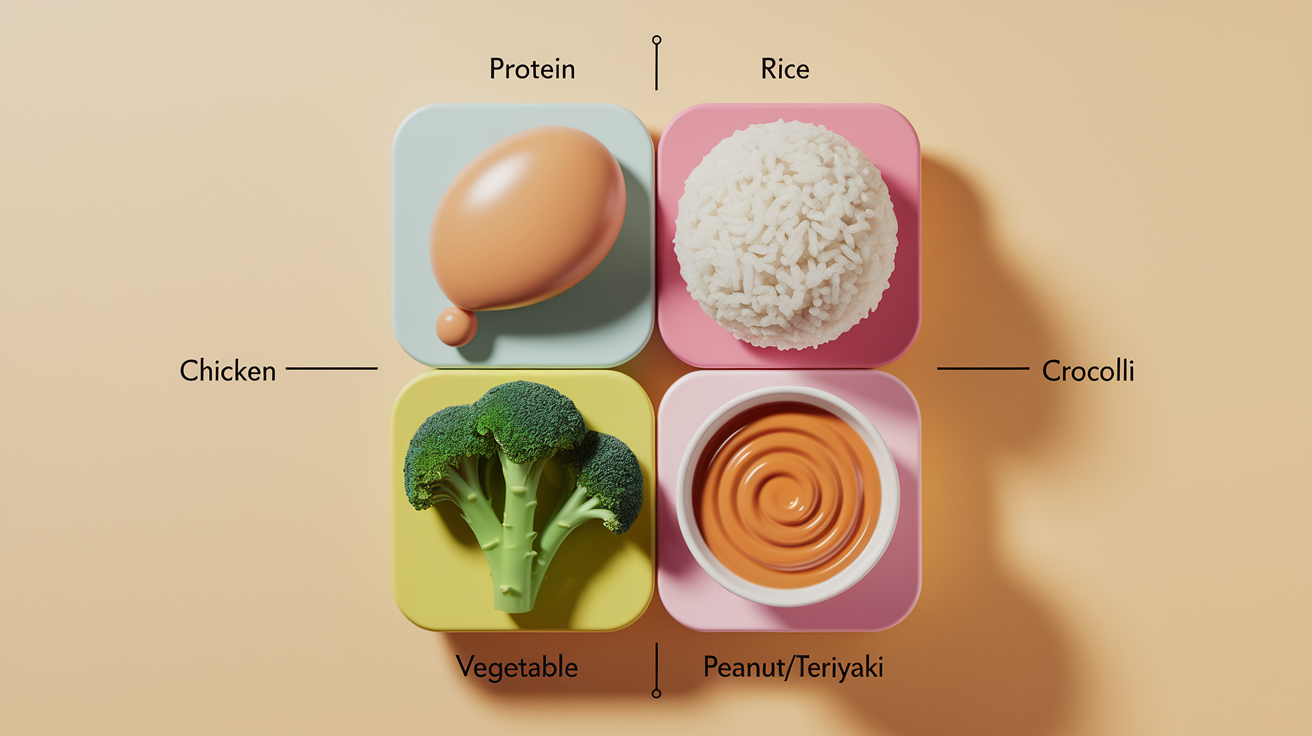
This section explains how different high-protein meals are built for speed. Not listing dishes again. Instead, looking at the mechanics that make 30-minute dinners possible. You’ll see how ingredient prep, heat application, and pairing come together across four protein categories.
High-Protein Chicken Dinners
Chicken cooks fast when you slice it thin, pound it flat, or cut it into small cubes. Thinner pieces expose more surface area to heat. Cuts cooking time in half compared to thick breasts. High heat methods like air frying, pan searing, or stir-frying work best because they brown the outside while cooking the inside in 10 to 15 minutes.
Flavor comes from simple seasonings applied before or during cooking. A coating of cornstarch and brown sugar crisps in the air fryer. A quick marinade of lime juice and cilantro soaks in while the chicken cooks. You don’t need long marinating times when you’re working with thin cuts and high heat.
Pair cooked chicken with fast sides like microwave rice, bagged salad greens, frozen vegetables. These take 3 to 5 minutes and don’t need extra pans. If you want a bowl format, layer rice, chicken, and a simple sauce like peanut or teriyaki in under 20 minutes total.
High-Protein Seafood Dinners
Seafood cooks faster than almost anything else. Shrimp take 3 to 5 minutes in a hot skillet. Salmon fillets cook in 12 to 15 minutes in the air fryer or oven. Fish naturally has high moisture content and delicate muscle fibers, so it doesn’t need long cooking times to become tender.
Minimal seasoning works because seafood has strong natural flavor. A squeeze of lemon, sprinkle of garlic powder, drizzle of olive oil. Often that’s enough. You can add a sauce at the end, but it’s not required for a complete meal.
High heat methods prevent overcooking. Pan searing salmon skin-side down for 6 minutes, then flipping for 3 minutes gives you crispy skin and moist interior. Air frying shrimp at 400°F for 5 minutes delivers a light char without drying them out. These methods finish fast and don’t leave you with rubbery seafood.
Plant-Based High-Protein Dinners
Lentils, tofu, beans, cottage cheese all work in 30-minute dinners when you use the right prep. Lentils don’t need soaking and cook in 15 to 20 minutes of simmering. Tofu crisps in 15 minutes when you press out excess moisture and cook it in an air fryer or hot skillet. Canned beans are already cooked, so you just heat them through in 5 minutes.
Cottage cheese and Greek yogurt add instant protein to bowls, wraps, sauces without cooking. Stir cottage cheese into pasta for creamy texture and 12 to 15 grams of protein per half cup. Use Greek yogurt as a base for dips, dressings, toppings.
Combining incomplete proteins creates a complete amino acid profile. Beans plus rice, lentils plus quinoa, hummus with whole grain pita all deliver the nine essential amino acids your body needs. These combinations take the same 20 to 30 minutes as non-plant meals and hit similar protein totals.
High-Protein One-Pan & Skillet Meals
One-pan cooking cuts both prep time and cleanup time. You cook the protein first, then add vegetables and grains in the same pan to absorb flavors. Works for ground meat, chicken pieces, shrimp, or tofu.
Skillets hold high, even heat. You can brown protein in 6 to 10 minutes and then cook everything else in the same fat and drippings. Sheet pans work the same way but use the oven instead of the stovetop. Both methods let you walk away while the food cooks.
Layering ingredients by cook time keeps everything from overcooking. Add protein first, then firmer vegetables like broccoli or bell peppers, then softer items like spinach or tomatoes at the end. This approach gets each component to the right texture without extra monitoring.
Four structural examples of one-pan high-protein meals:
- Fast-cooking protein (ground turkey, shrimp) plus quick carb (frozen cauliflower rice, microwaveable quinoa) plus vegetable add-ins (frozen bell peppers, bagged spinach)
- Thin-cut chicken plus canned beans plus salsa and spices, all cooked in one skillet for a protein-packed burrito bowl base
- Salmon fillet plus asparagus plus lemon and garlic, roasted together on a sheet pan in 20 minutes
- Tofu cubes plus stir-fry vegetables plus soy-ginger sauce, cooked in a hot wok or large skillet in 15 minutes
Meal Prep Tips for Fast High-Protein Dinners
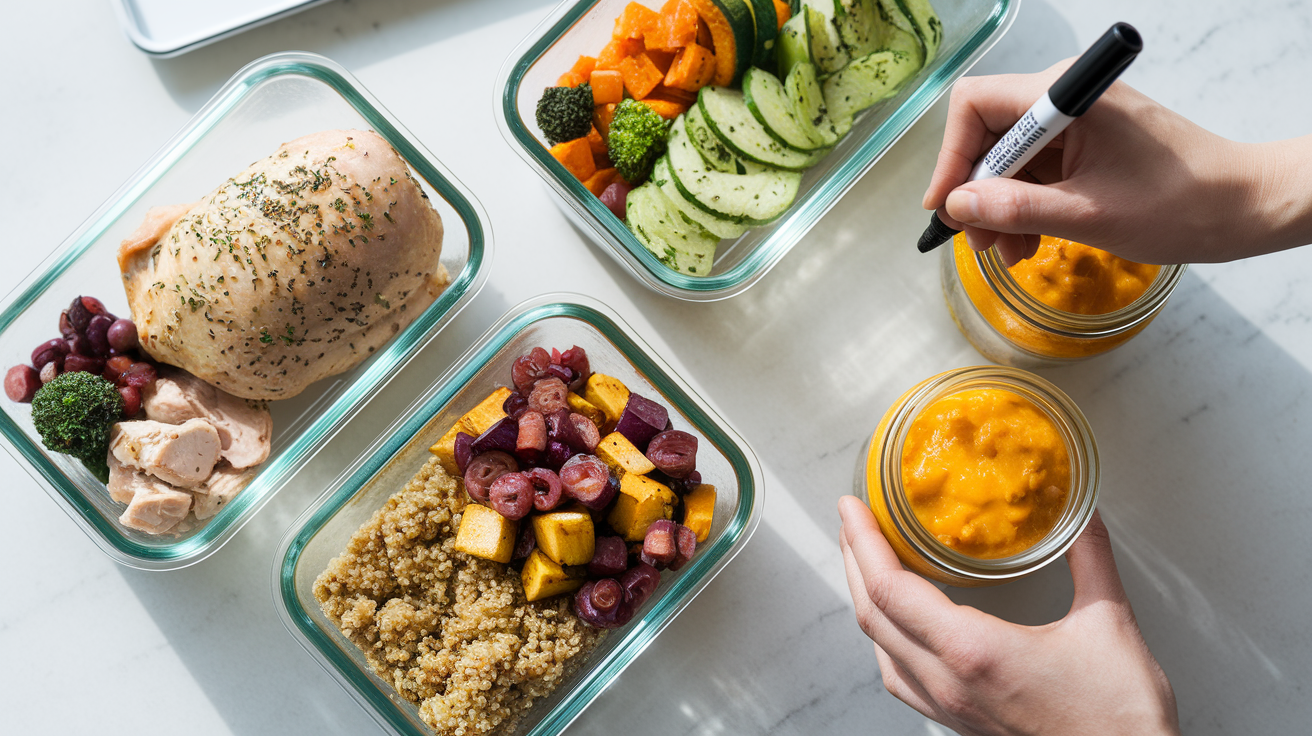
Meal prep cuts your weeknight cooking time in half. When proteins are already cooked, portioned, or prepped, dinner assembly takes 10 minutes instead of 30. You don’t have to batch-cook full meals. Small prep steps on the weekend give you speed during the week.
Pre-cooked proteins are the biggest time saver. Rotisserie chicken, hard-boiled eggs, cooked lentils stay fresh in the fridge for 3 to 4 days. You can also cook a batch of ground turkey or bake several chicken breasts on Sunday, then portion them into containers. Frozen cooked shrimp thaw in 10 minutes under cold water and are ready to toss into stir-fries or bowls.
Six actionable meal prep tips:
- Cook 2 to 3 pounds of protein on Sunday. Grill chicken breasts, brown ground beef, or bake salmon fillets, then refrigerate in portions.
- Portion frozen proteins into single-serve bags. Makes it easy to pull exactly what you need without thawing a full package.
- Prep vegetables once. Wash, chop, and store bell peppers, broccoli, and onions in containers so they’re ready to cook.
- Keep canned or frozen backup proteins stocked. Canned tuna, frozen shrimp, and frozen chicken strips work when fresh options run out.
- Batch-cook grains and legumes. Make a large pot of rice, quinoa, or lentils and refrigerate for quick bowl assembly.
- Use leftovers intentionally. Cook extra protein at dinner and pack it for the next day’s lunch or repurpose it into a different meal format.
Nutritional Guidance for High-Protein Dinners
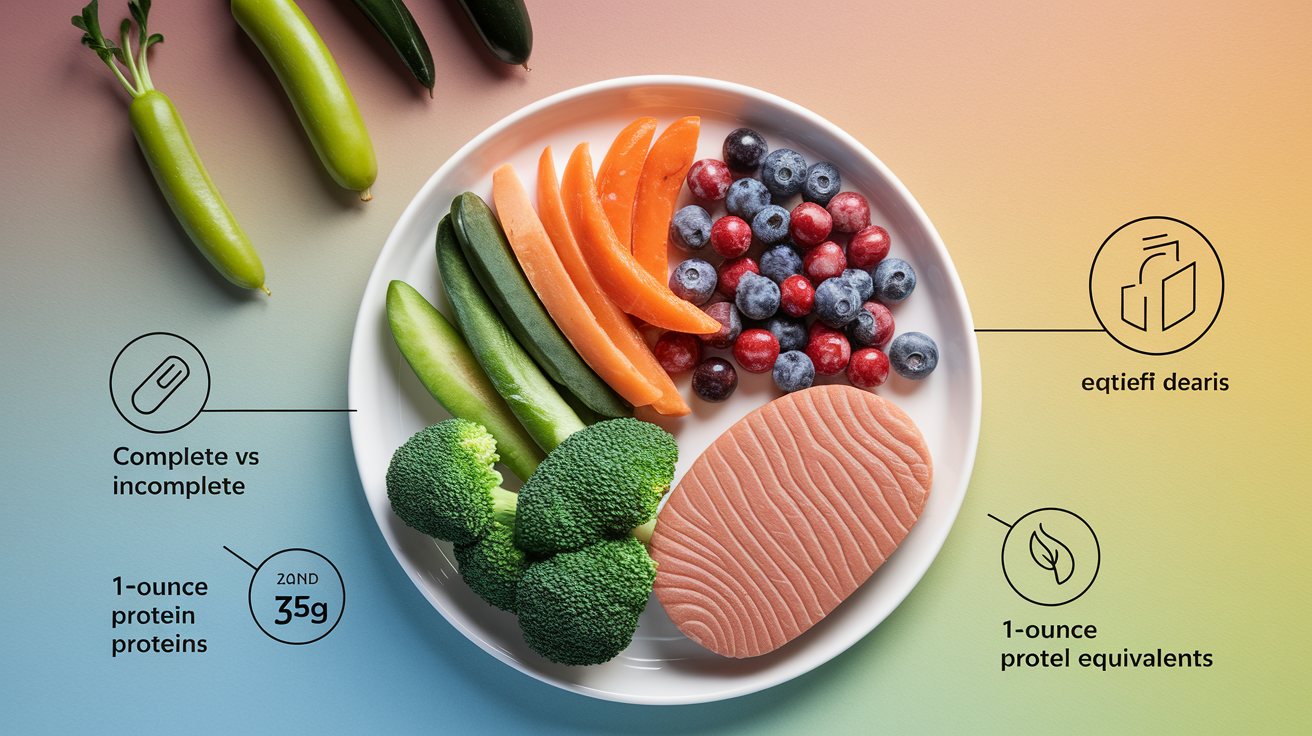
High-protein dinners should deliver 30 to 40 grams of protein per meal to support muscle repair, satiety, and steady energy. Protein alone isn’t enough. You also need vegetables for fiber, vitamins, and minerals, plus a moderate amount of carbs or healthy fats to balance the meal.
Seven nutrient facts that guide high-protein dinner construction:
- Complete proteins contain all nine essential amino acids and include meat, poultry, fish, eggs, dairy, and soy-based foods like tofu and tempeh.
- Incomplete proteins like beans, lentils, and grains can be combined within the same day to form a complete amino acid profile.
- 30 grams of protein per meal supports muscle maintenance and keeps you full for 3 to 4 hours without snacking.
- Protein co-delivers nutrients. Chicken and beef provide B vitamins and zinc. Salmon delivers omega-3 fatty acids and vitamin D. Greek yogurt supplies calcium and probiotics.
- 1-ounce protein equivalents help with portioning: 1 ounce of meat, 1 tablespoon of nut butter, 1/4 cup of tofu, 1/4 cup of cooked beans, or 1 egg all count as one ounce.
- Fiber from vegetables slows digestion and pairs well with protein to extend fullness. Aim for 2 to 3 servings of vegetables per dinner.
- Balanced macros typically look like this: 30 to 40 grams protein, 40 to 60 grams carbs, 10 to 20 grams fat, depending on your activity level and goals.
When you build a dinner, start with the protein source and target 30 to 40 grams. Add a fist-sized portion of carbs like rice, potatoes, or pasta. Fill half the plate with vegetables. This structure hits protein goals while delivering the fiber, vitamins, and minerals your body needs. If you’re tracking macros, adjust the carb and fat portions based on your daily targets, but keep the protein consistent across meals.
Budget-Friendly High-Protein Dinner Strategies
High-protein meals don’t have to be expensive. Plant-based proteins, frozen options, and smart shopping keep costs low while hitting 30 to 40 grams of protein per meal. You can build a week of high-protein dinners on a tight budget if you know which ingredients deliver the most protein per dollar.
Five cost-saving ideas:
- Buy frozen proteins in bulk. Frozen chicken breasts, shrimp, and fish fillets cost less per pound than fresh and have a long freezer life.
- Use legumes as a primary protein. Lentils, black beans, and chickpeas cost under $2 per pound and deliver 15 to 18 grams of protein per cooked cup.
- Choose ground meat over whole cuts. Ground turkey and 93% lean ground beef are cheaper than chicken breasts or steak and cook faster.
- Stock canned tuna and salmon. Both cost $1 to $3 per can and provide 20 to 25 grams of protein per serving with zero prep time.
- Combine cheaper proteins with eggs. Scramble eggs with leftover beans, ground meat, or vegetables to boost protein without buying expensive cuts.
Plan dinners around proteins that are on sale that week. If chicken thighs are discounted, cook a large batch and use them in multiple meals. If canned beans are buy-one-get-one, stock up and build dinners around bean-based dishes. Smart protein shopping means you always have affordable options on hand and you’re not paying full price for high-protein ingredients.
High-Protein Dinner Variations and Customization
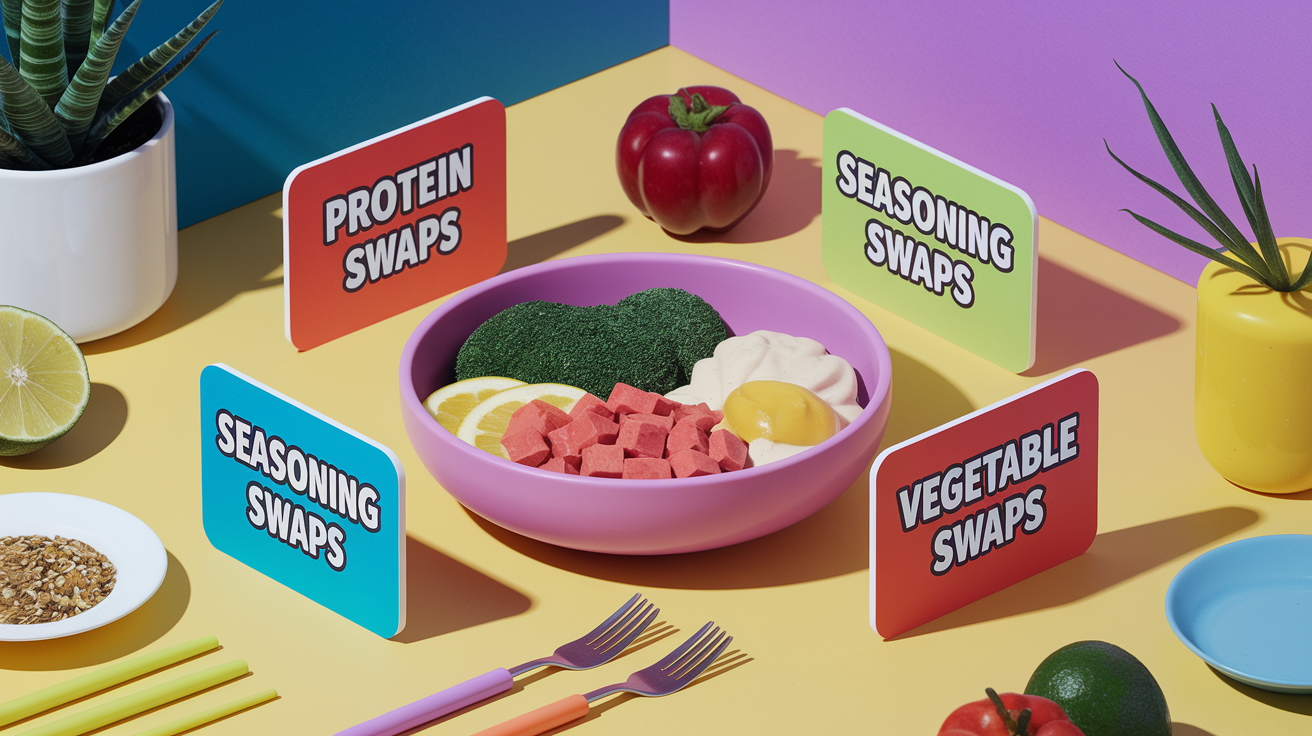
You don’t need dozens of recipes if you understand how to vary a core formula. One base recipe can become five different dinners when you swap the protein, change the seasoning, or adjust the vegetables. This approach saves you from decision fatigue and uses the ingredients you already have.
Start with a cooking method like skillet, sheet pan, or bowl. Choose your protein. Add a seasoning style like Italian, Mexican, Asian, or Mediterranean. Pick a vegetable and a carb. That structure gives you hundreds of combinations without needing new recipes.
Four variation types that work for any high-protein dinner:
- Protein swaps. Replace chicken with shrimp, tofu, or ground turkey in the same recipe without changing cooking time or method.
- Seasoning swaps. Use taco seasoning for Mexican flavor, curry powder for Indian, or soy sauce and ginger for Asian-inspired meals.
- Sauce swaps. Swap marinara for peanut sauce, teriyaki for buffalo, or tzatziki for ranch to completely change the flavor profile.
- Vegetable swaps. Use whatever vegetables are on sale or in your fridge. Broccoli, bell peppers, zucchini, and spinach all cook in similar times.
If you have a chicken stir-fry recipe, you can make it with tofu, pork, or shrimp instead. If you have a sheet pan salmon dinner, you can swap the salmon for chicken thighs and keep the same vegetables and roasting time. These small changes let you use what’s available and affordable without hunting for a completely different recipe.
Final Words
Start cooking: you now have a fast list of 30-minute high-protein dinners with protein grams included. Use those options when time’s tight.
We also covered quick-cook proteins, time-saving methods, recipe structure, meal-prep tricks, nutrition basics, budget hacks, and easy swaps to fit your taste.
Pick one of these quick high-protein dinner ideas, try it this week, and tweak as you go. Small wins stack. You’re set to eat better without extra stress.
FAQ
Q: What is a quick high-protein dinner and how do I get 40g protein in one meal?
A: A quick high-protein dinner is a 20–30 minute meal focused on a large protein. To hit ~40g, eat about 6 oz cooked chicken, 5 oz salmon, or combine tofu, lentils, and Greek yogurt.
Q: How do I get 150g of protein a day and how do I eat 100g of protein a day?
A: Getting 100–150g of protein a day means spreading 25–50g per meal plus protein snacks. Use 4–6 oz meat/fish portions, Greek yogurt, cottage cheese, eggs, or a protein shake to reach your target.