

What if 25 minutes, three times a week, beat your hour-long gym sessions?
Short, focused workouts that mix high-intensity intervals with resistance training can burn fat and protect muscle at the same time.
They fit lunch breaks and chaotic weeks without taking over your life.
This post lays out a practical 20 to 45 minute plan, sample sessions, and simple nutrition and recovery rules.
No fluff. Just a real program you can repeat, track, and stick with.
The Most Time‑Efficient Workout Plan for Fat Loss and Muscle Preservation (Fast Overview)

Time-efficient workouts work because they pack serious effort into short sessions. When you mix high-intensity intervals with resistance training, you’re hitting metabolic stress and mechanical tension at the same time. Both drive fat loss and muscle adaptation. A 20 to 45 minute session built around compound movements and smart rest periods can match much longer, easier programs. Intensity matters more than the clock.
HIIT and resistance training make a strong combination. HIIT jacks up your heart rate and keeps calorie burn elevated for hours afterward (that’s the EPOC effect). Resistance work three or four days a week protects lean tissue when you’re eating in a deficit and tells your body to burn fat instead of muscle. They attack the problem from different angles: one torches calories, the other defends what you’ve built.
Short, intense sessions give you some real advantages.
They fit into lunch breaks, early mornings, or evening windows without taking over your day. High intensity means more calories burned per minute, plus you keep burning after you stop. Compound movements train multiple muscle groups at once, cutting session time while building useful strength. And you’re way more likely to stick with a plan that doesn’t demand an hour-plus every time.
If your week’s a mess, that’s fine. A 25-minute session three times beats some perfect 90-minute plan you never actually do. The structure below is built for real life. Short enough to repeat, hard enough to count.
Weekly Structure for Efficient Fat‑Loss and Muscle‑Retention Training
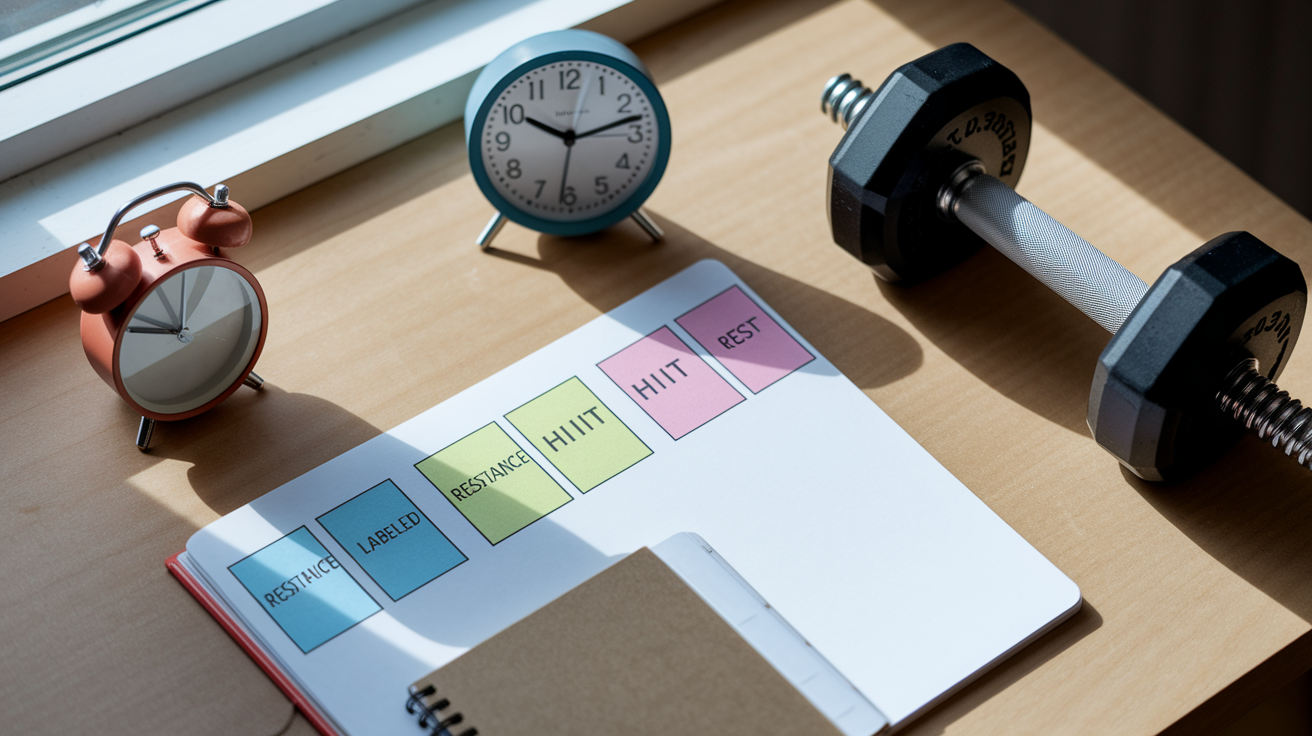
A solid weekly plan balances resistance days, interval sessions, and recovery. Three to four resistance days keep muscle intact, one or two HIIT sessions push fat loss, and planned rest lets your body adapt. Space your training so you’re not stacking two brutal days back to back unless you’ve got a reason.
Here’s a simple five-day setup you can start now.
- Monday: Resistance training (full body or lower focus), 30 to 40 minutes.
- Tuesday: HIIT session, 15 to 20 minutes.
- Wednesday: Rest or light movement (walk, stretch, yoga).
- Thursday: Resistance training (full body or upper focus), 30 to 40 minutes.
- Friday: Resistance training (opposing muscle groups or full body), 30 to 40 minutes.
- Saturday: Optional second HIIT or steady cardio, 20 to 30 minutes.
- Sunday: Rest.
If you’ve only got three days, do resistance Monday, Wednesday, Friday and throw in one short HIIT on Saturday. Four days? Use the Monday, Thursday, Friday resistance pattern and slot HIIT on Tuesday or Saturday. The structure bends to fit your life. Just keep resistance consistent and HIIT brief.
Sample 20–45 Minute Workouts
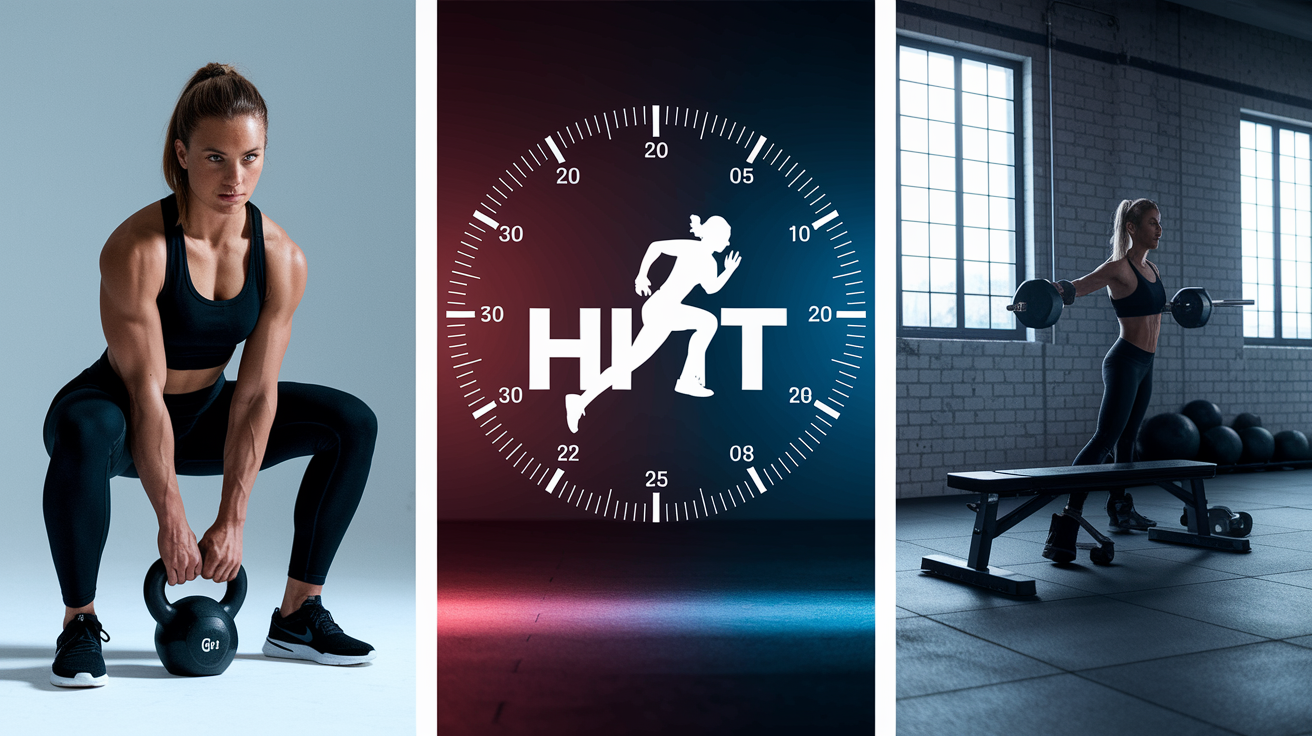
These sessions are built on compound lifts and smart intervals. Each one hits multiple targets in a short window, so you’re not choosing between fat loss and muscle. You’re working both.
Session A: Full-Body Resistance Circuit (35 minutes)
- Goblet squats: 3 sets of 10 to 12 reps, rest 90 seconds.
- Push-ups (standard or elevated): 3 sets to near failure, rest 60 seconds.
- Dumbbell or barbell rows: 3 sets of 10 to 12 reps per side, rest 90 seconds.
- Romanian deadlifts: 3 sets of 12 to 15 reps, rest 90 seconds.
Do one exercise, rest as written, then move to the next. Finish all sets before advancing. You’ll hit legs, chest, back, and posterior chain without wasting movements.
Session B: HIIT Intervals (20 minutes)
- Warm up: 3 to 5 minutes easy jogging, biking, or jumping jacks.
- Work intervals: 30 seconds all-out effort (sprint, bike sprint, burpees, kettlebell swings), then 60 seconds active recovery (walk or slow pace).
- Repeat the work/rest cycle 10 to 12 times.
- Cool down: 2 to 3 minutes easy movement and light stretching.
Keep the work intervals genuinely hard. You shouldn’t be able to talk. The recovery lets you repeat that effort without falling apart.
Session C: Upper-Lower Superset (30 minutes)
- Superset: Back squats or Bulgarian split squats (3 sets of 8 to 10 reps) paired with overhead press (3 sets of 8 to 12 reps). Rest 2 minutes after each superset.
- Superset: Bench press or dumbbell press (3 sets of 6 to 10 reps) paired with hamstring curls or glute bridges (3 sets of 12 to 15 reps). Rest 2 minutes after each superset.
- Finish with plank holds: 3 sets of 30 to 60 seconds, rest 60 seconds.
Supersets cut total time by pairing movements that don’t compete. Your legs rest while your shoulders work, and the other way around.
Progressive Overload for Sustainable Results

Progressive overload means you slowly crank up the demand on your muscles over time. In practice, that’s adding one rep per set each week, or bumping weight once you can finish all prescribed reps with solid form. Without progression, your body adapts to the current load and stops changing. Weight loss stalls, muscle retention gets harder, motivation tanks.
Track your lifts in a notebook or app. Write down weight, sets, and reps for each main movement. When you hit the top of your rep range two sessions in a row, add 2.5 to 5 pounds (or one tougher band, or one extra push-up). If that new weight drops your reps below the bottom of your range, stay there another week. This steady climb is what separates a program that works for months from one that dies in three weeks.
Nutrition Fundamentals for Fat Loss and Muscle Retention
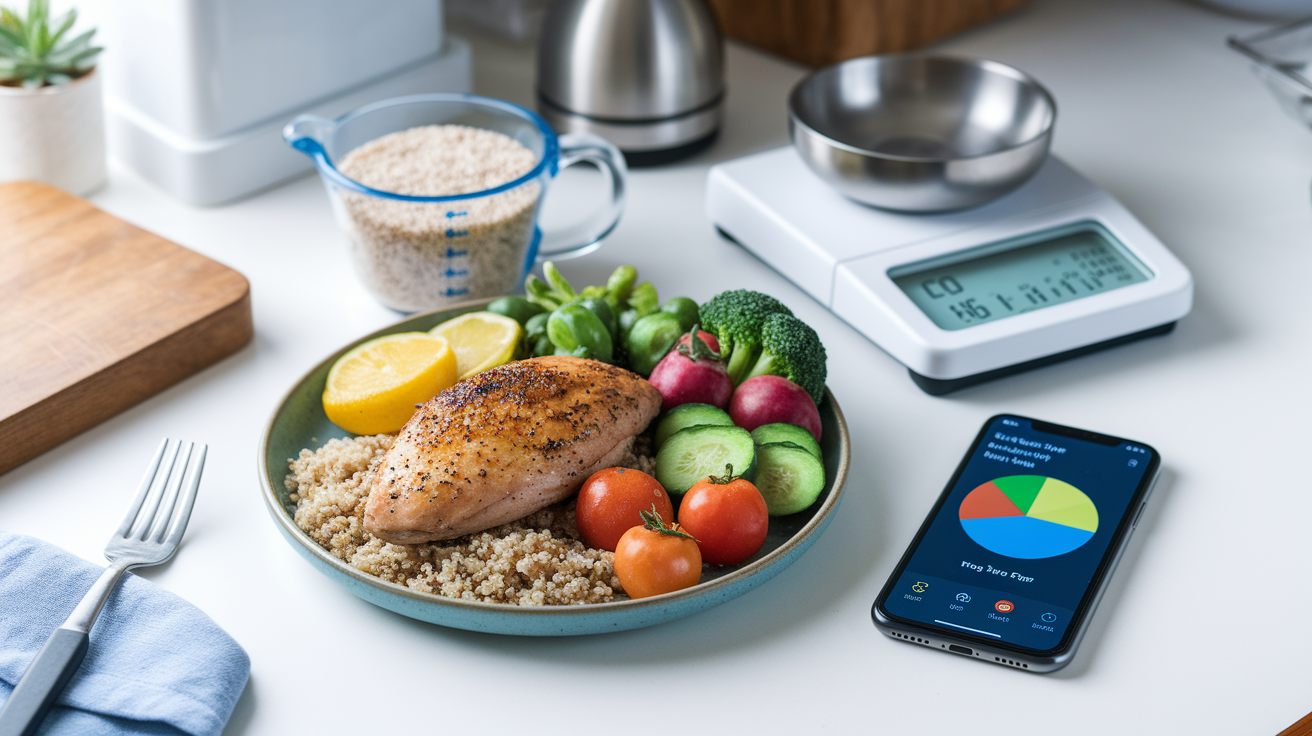
Nutrition decides whether your training turns into visible results or just exhaustion. A moderate calorie deficit (roughly 300 to 500 calories below your total daily energy expenditure) sets up fat loss without triggering the extreme hunger and fatigue that wreck consistency. Cut too deep and your body will burn muscle to save energy. Cut too shallow and progress crawls.
Protein is non-negotiable. Aim for 1.6 to 2.2 grams per kilogram of body weight each day. For a 70 kg person, that’s roughly 112 to 154 grams daily. Protein protects lean tissue during a deficit, supports recovery from resistance work, and has a higher thermic effect than carbs or fats (your body burns more calories digesting it). Spread intake across three or four meals so each one has 25 to 40 grams. Your morning eggs, your lunch chicken, your evening salmon all count.
Key nutrition targets to track this week.
- Calorie deficit of 300 to 500 below maintenance (use an online calculator or app to estimate).
- Protein at 1.6 to 2.2 g per kg of body weight, spread across meals.
- Carbs timed around training for performance, with fats filling the remaining calories to support hormones and keep you full.
Don’t demonize carbs or fats. Both fuel your workouts and your life. Carbs help you lift hard, fats help you recover and think clearly. Adjust the ratio based on preference, but keep protein high and total calories in check.
Recovery Strategies That Support Lean Mass and Fat Loss

Recovery is where adaptation happens. When you lift or sprint, you create micro-damage and drain energy stores. Sleep, rest days, and low-intensity movement let your body repair tissue, restock glycogen, and balance the hormones that control hunger, stress, and muscle growth. Skip recovery and you’ll plateau fast. Or worse, get injured and lose weeks of progress.
Aim for seven to nine hours of sleep per night. Studies show that poor sleep undermines fat loss (your body clings to fat when cortisol’s elevated) and muscle retention (protein synthesis drops when you’re chronically under-slept). If you can only control one recovery variable, make it sleep. On rest days, move gently. A 20-minute walk, light yoga, or stretching keeps blood flowing without taxing your system. Treat rest as part of the plan, not weakness. Your muscles grow and your metabolism resets when you’re not training.
Realistic Timelines and Expected Results

Healthy fat loss runs at roughly 0.5 to 1 percent of your body weight per week when training and nutrition align. For an 80 kg person, that’s 400 to 800 grams weekly. Faster losses often mean you’re burning muscle alongside fat, slowing your metabolism and setting up future regain. Slower is fine if life’s unpredictable. Consistency beats speed every time.
You’ll feel stronger within two to three weeks as your nervous system adapts and movement patterns improve. Visible changes (looser clothes, definition in your arms or legs) typically show up around the 8 to 12 week mark if you’re hitting your protein target and progressing your lifts. Muscle retention or small gains are realistic for beginners. Intermediates should expect to hold lean mass while steadily dropping fat.
Progress markers to watch.
- Strength increases on key lifts (squats, presses, rows) week over week.
- Waist circumference shrinking even when scale weight bounces around.
- Energy and recovery improving, not declining, as weeks pass.
If the scale stalls for two weeks but your lifts are climbing and your measurements are tightening, you’re winning. Body composition matters more than the number on the scale. Track multiple data points, stay patient, and let the process compound.
Final Words
Start training: three to four 20–45 minute resistance sessions and one to two HIIT workouts each week. Keep reps, sets, and rest simple so you can be consistent. Keep intensity and structure.
Pair that with a moderate calorie deficit, solid protein targets, and 7–9 hours of sleep. Track progress weekly and tweak what isn’t working.
This approach gives time-efficient sustainable workouts for weight loss and muscle retention you can actually stick with. Small steps add up. You’ve got this.
FAQ
Q: What is the most time-efficient workout for fat loss and muscle preservation?
A: The most time-efficient workout for fat loss and muscle preservation mixes short HIIT sessions with focused resistance training, using high effort and clear structure to burn calories while protecting lean muscle.
Q: How does combining HIIT with resistance training optimize results?
A: Combining HIIT with resistance training optimizes results by boosting calorie burn quickly with HIIT while resistance work keeps or builds muscle, so your metabolism stays higher and strength carries through a deficit.
Q: How often should I train each week for fat loss and muscle retention?
A: Training each week for fat loss and muscle retention should include 3–4 resistance sessions and 1–2 HIIT sessions, spread with rest days so you recover and keep training quality high.
Q: Are 20–45 minute workouts effective for fat loss and muscle preservation?
A: Twenty to forty-five minute workouts are effective when they use compound moves, intervals, and steady intensity—short sessions work if you focus on effort, structure, and consistency.
Q: What are sample 20–45 minute workouts I can try?
A: Sample 20–45 minute workouts include a full-body resistance circuit (squats, push, pull, core), a kettlebell AMRAP with intervals, and an upper-lower split with compound sets and brief rests for intensity.
Q: What is progressive overload and how do I use it during fat loss?
A: Progressive overload means slowly increasing weight, reps, or intensity to avoid plateaus; during fat loss, add small weekly increases or extra reps to maintain strength and muscle.
Q: What should I eat to lose fat but keep muscle?
A: To lose fat and keep muscle, follow a moderate calorie deficit, prioritize protein around 1.6–2.2 grams per kilogram bodyweight, and balance carbs and fats to fuel training and recovery.
Q: How much sleep and recovery do I need to support results?
A: You need about 7–9 hours of sleep per night and planned rest days; good sleep and recovery help hormones, lower injury risk, and keep training intensity consistent.
Q: What realistic timelines can I expect for fat loss and muscle retention?
A: Realistic timelines show about 0.5–1% bodyweight loss per week; with proper training and protein, you can retain most muscle, so expect steady, month-by-month progress.
Q: What are the main benefits of short but intense training sessions?
A: The main benefits of short intense sessions are time savings, higher calorie burn per minute, better adherence for busy schedules, and maintenance of muscle when paired with resistance work.