You don’t need hours in the gym to build real strength.
This 30-minute full body routine hits every major muscle with six compound moves.
No fancy equipment required, dumbbells, a bench or a band will do, and bodyweight works too.
Warm up for 5 to 7 minutes, keep rests short, and repeat three rounds for a quick, effective session.
In this post you’ll get exact exercises, simple form cues, scaling options, and a weekly plan to make steady progress even on a busy schedule.
Ready-to-Use Full Body Strength Routine

This routine hits every major muscle group in 30 to 40 minutes. Six compound movements that give you the best bang for your time. You’ll need dumbbells (or a barbell), a bench or something sturdy to sit on, and a pull-up bar or resistance band. Don’t have those? Bodyweight works fine when you’re starting out.
Warm up for 5 to 7 minutes. Light cardio, some dynamic stretching. Leg swings, arm circles, a few bodyweight squats to get your joints ready. Then jump straight into the main work. Rest stays short between exercises because the movements don’t overlap much, so your heart rate stays elevated while specific muscles recover.
After you’re done, spend 5 minutes stretching quads, hamstrings, chest, and shoulders. Hold each stretch 20 to 30 seconds. Track your weights and reps every session. That’s how you’ll know when it’s time to push harder.
The Routine (Do all exercises in order, rest as noted, repeat for 3 total rounds):
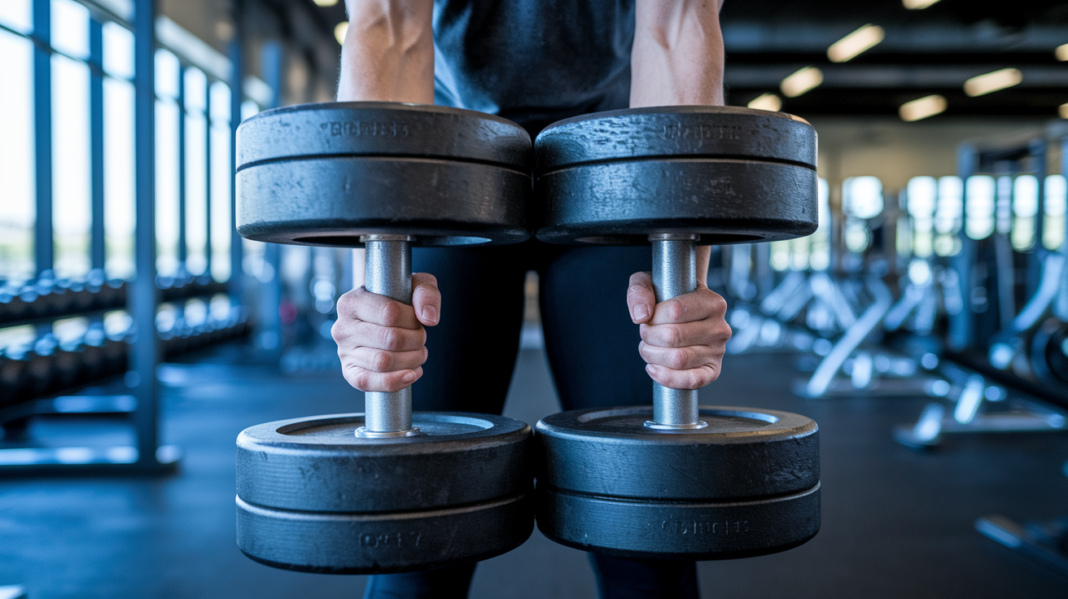
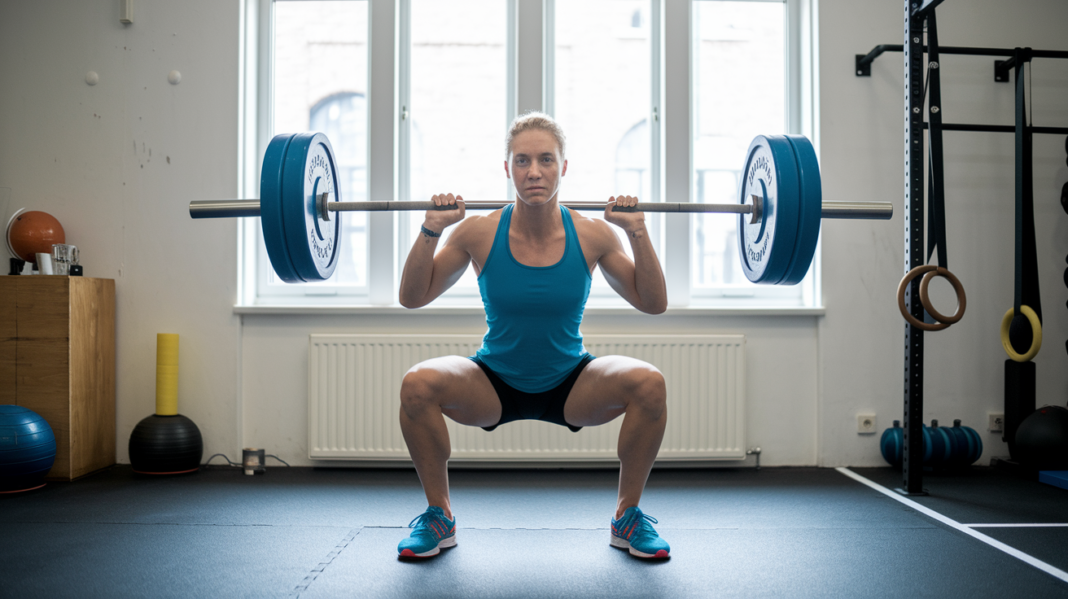
- Goblet Squat – 3 sets × 10 reps, 60 seconds rest. Hold one dumbbell vertically at chest height.
- Dumbbell Romanian Deadlift – 3 sets × 10 reps, 60 seconds rest. Hinge at hips, slight knee bend, weights close to legs.
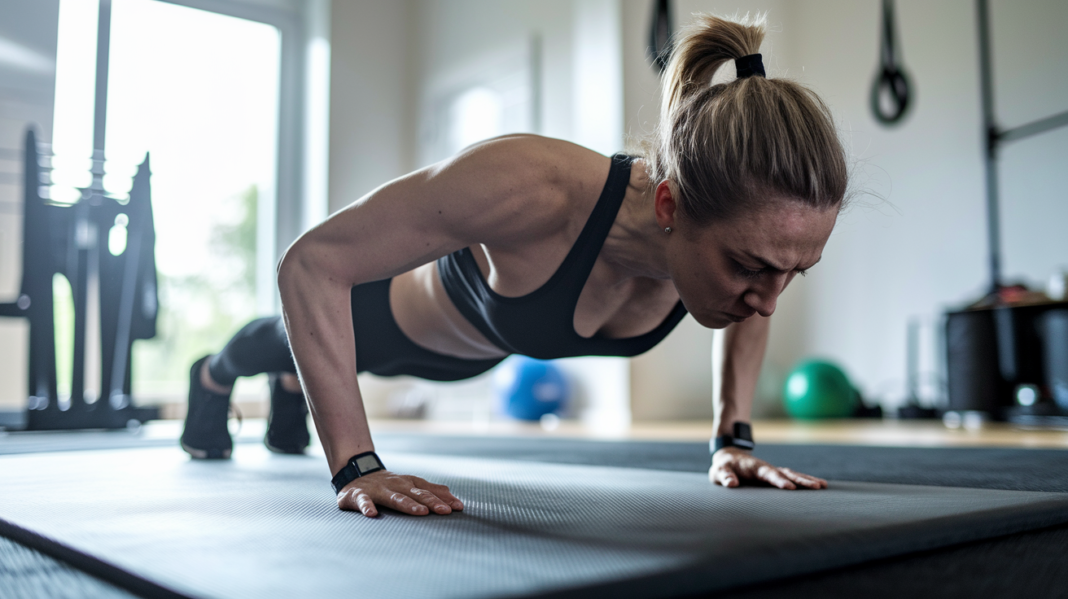
- Push-Up (or Dumbbell Bench Press) – 3 sets × 8–12 reps, 60 seconds rest. Hands slightly wider than shoulders, lower chest to ground or bench.
- Bent-Over Dumbbell Row – 3 sets × 10 reps per arm, 60 seconds rest. Hinge forward, pull elbow to ribcage, squeeze shoulder blade.
- Overhead Dumbbell Press – 3 sets × 8–10 reps, 60 seconds rest. Press weights overhead in line with ears, core braced.
- Plank Hold – 3 sets × 30–45 seconds, 30 seconds rest. Straight line from head to heels, don’t let hips sag.
Exercise Breakdown and Proper Form Notes
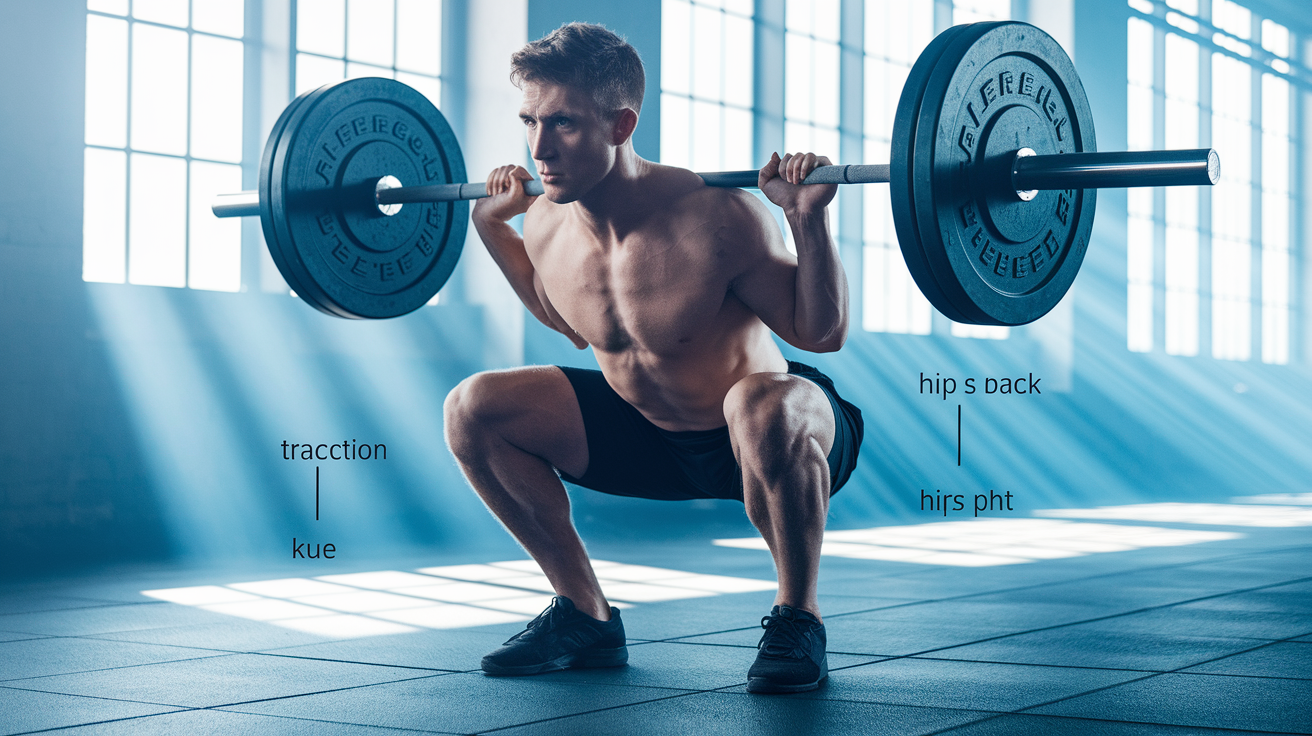
Lower body. Goblet squat starts with feet roughly shoulder width, toes pointed slightly out. Hold the dumbbell close to your chest, both hands under the top plate. As you drop, push knees out over your toes and sit back like you’re aiming for a low chair. Go as deep as your mobility allows without your lower back rounding. Drive through your full foot to stand, squeeze glutes at the top. Breathe in on the way down, out as you push up. Romanian deadlift starts standing with dumbbells at thigh height, shoulders back. Push your hips backward, keep a micro-bend in your knees. Weights travel down the front of your legs. You should feel a stretch in your hamstrings. Stop when you feel tension or when your back wants to round, then drive hips forward to return. Keep your neck neutral the whole time.
Upper body push. Whether it’s push-ups or dumbbell bench press, setup matters. Push-ups: hands just outside shoulder width, body forms one rigid plank from head to heels. Lower until your chest nearly touches the ground, elbows angled roughly 45 degrees from your torso. Press back up without letting hips sag or pike. Bench press with dumbbells: plant your feet flat, retract shoulder blades into the bench, lower the weights with control until elbows reach about 90 degrees. Press the weights up and slightly in, stop just short of locking out elbows at the top. Inhale as you lower, exhale as you press.
Upper body pull. Bent-over dumbbell row builds your back and balances all that pressing. Hinge at your hips with a flat back. One hand braced on a bench if you’re working one arm at a time. Let the dumbbell hang straight down, then pull it toward your hip by driving your elbow back and squeezing your shoulder blade toward your spine. Lower under control. Don’t yank the weight or rotate your torso to cheat the rep up. Using both arms at once? Same rules apply. Controlled pull, tight core, no rounding through your lower back.
Core. Plank is your anti-movement anchor. Set up on forearms and toes, elbows directly under shoulders. Squeeze glutes, brace abs like someone’s about to poke your stomach, keep your body in one straight line. Don’t let hips drop or butt rise into the air. If holding a strict plank gets easy, try lifting one foot an inch off the ground for a few seconds per side. Breathe steady and shallow. The goal is tension and control, not holding your breath until you collapse.
Progression and Scaling Options
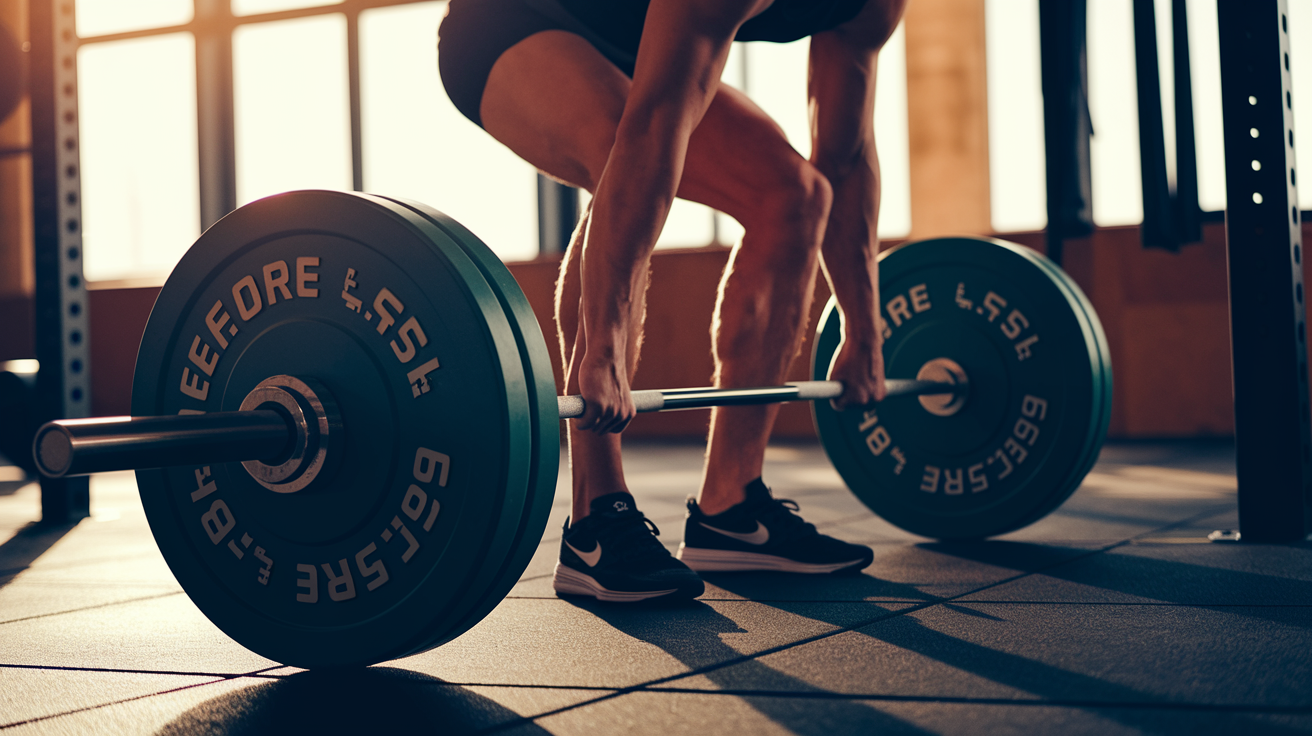
Add 2.5 to 5 pounds to upper body lifts when you can complete all prescribed reps with solid form for two sessions in a row. For lower body moves like goblet squat and Romanian deadlift, jump 5 to 10 pounds once you hit the top of the rep range cleanly across all sets.
Can’t add weight yet? Add one or two reps per set instead. Moving from 3 sets of 8 to 3 sets of 10 with the same load still counts. Track it. When you consistently hit 12 reps, it’s time to increase the weight and drop back to 8 reps.
Beginners can start with bodyweight squats, glute bridges instead of Romanian deadlifts, and incline push-ups against a bench or countertop. Use lighter dumbbells or even water jugs for rows and presses until the movement feels smooth. Planks can be done on knees or hands instead of forearms if a full plank is too much at first.
Want to make things harder? Slow down the lowering phase to 3 or 4 seconds per rep. Add a pause at the bottom of squats or the stretch position of deadlifts. Use tempo like 3-1-1 (3 seconds down, 1 second pause, 1 second up) to increase time under tension without needing heavier weights right away. You can also tack on a fourth set to each exercise or cut rest periods to 45 seconds if conditioning is a priority.
Weekly Training Schedule Recommendations
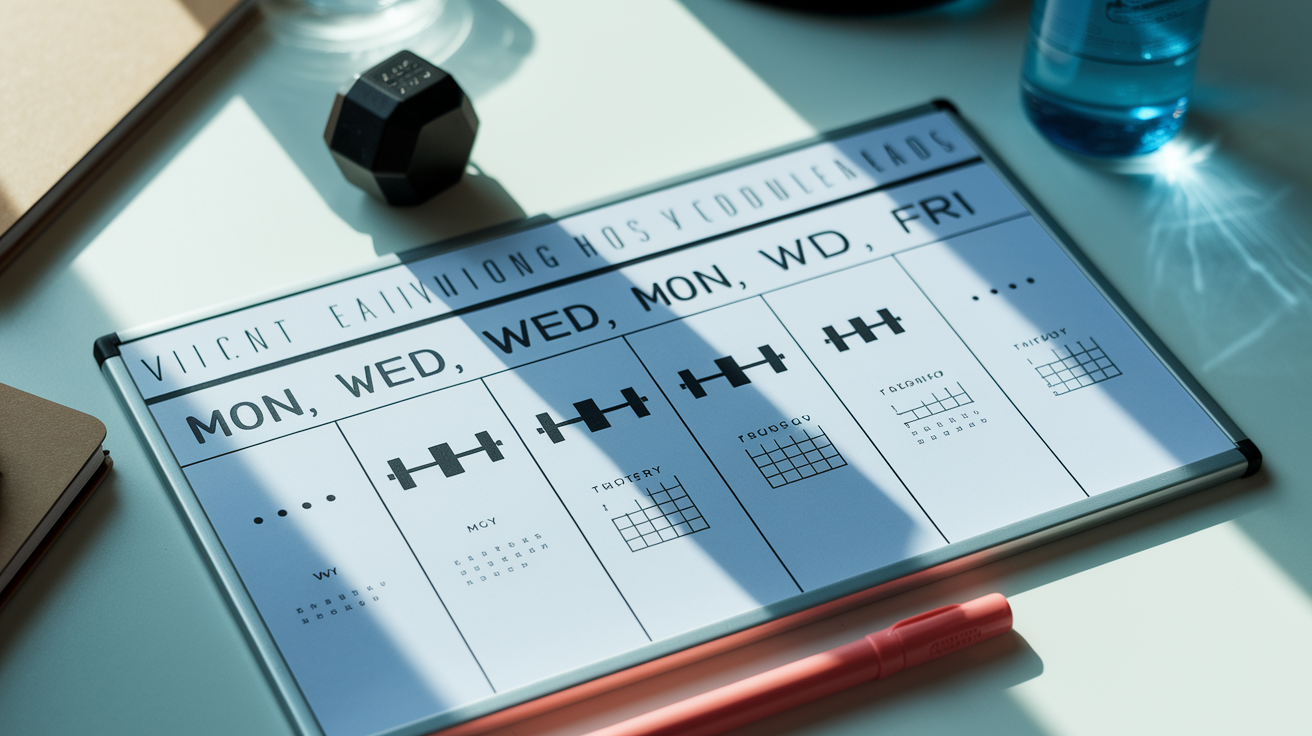
Run this routine two or three times per week with at least one full rest day between sessions. Your muscles grow during recovery, not during the workout itself. Train Monday, Wednesday, and Friday? You give each session 48 hours of recovery before the next one. That spacing works for most people balancing strength work with other activity.
Two sessions per week is enough to maintain strength and see slow, steady progress if you’re new or if your schedule is tight. Three sessions per week is the sweet spot for most intermediate people who want consistent strength gains without overdoing it. Four sessions can work if you split the routine into upper and lower days, but that’s beyond what a true full body program does.
Sample weekly layouts:
- Minimal (2× per week): Monday and Thursday. Use the other days for easy movement, stretching, or complete rest.
- Recommended (3× per week): Monday, Wednesday, Friday. Weekend stays open for longer walks, sports, or life.
- Active recovery option: Train Monday, Wednesday, Friday. Add a 20 minute walk, yoga session, or light swim on Tuesday or Saturday to keep blood moving without taxing your muscles.
Equipment Alternatives and Home Workout Modifications
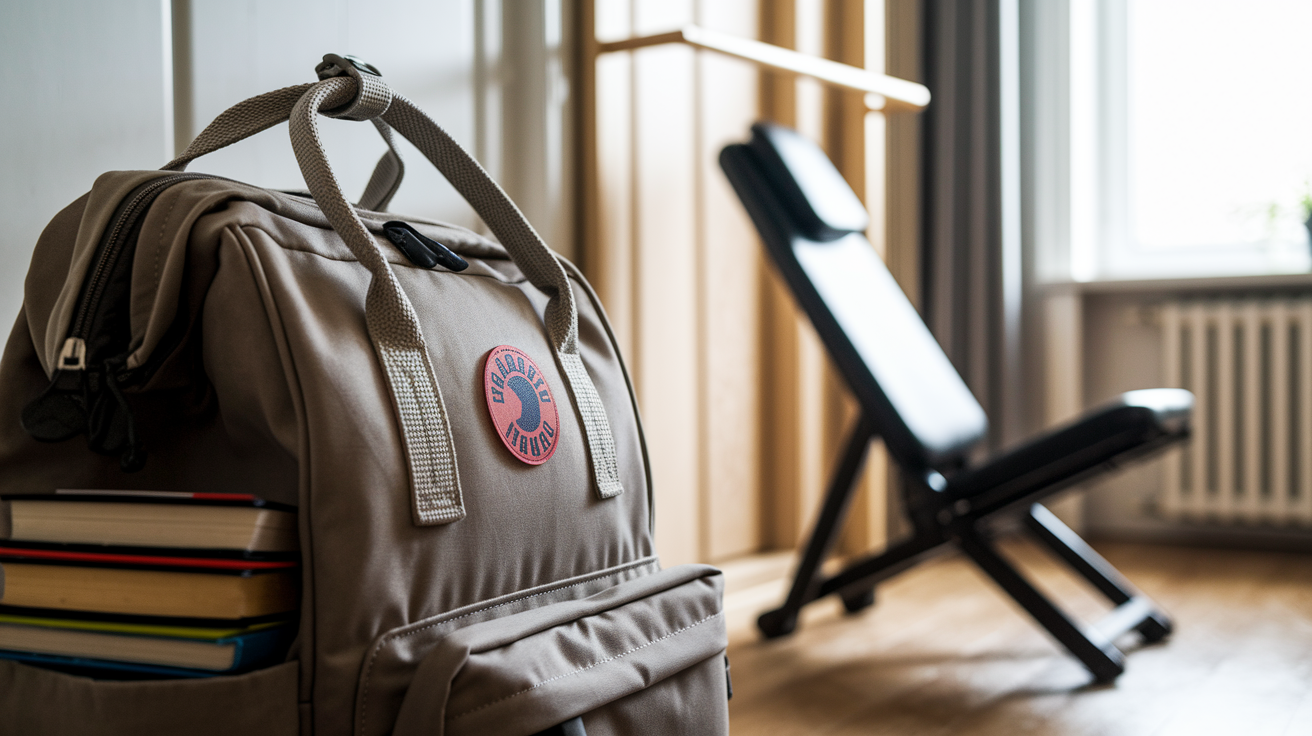
You don’t need a full gym to make this work. A sturdy backpack loaded with books or water bottles can replace dumbbells for squats, deadlifts, and rows. Hold it at chest height for goblet squats or let it hang in front of you for Romanian deadlifts. For rows, drape the straps over your shoulders and pull it tight to your torso, or set it on the ground and hinge to lift it like a suitcase deadlift.
Push-ups replace any bench press if you don’t have a bench or weights. Elevate your hands on a chair or countertop to make them easier, or elevate your feet on a low step to make them harder. For overhead presses, water jugs with handles work surprisingly well. Grip them by the handle, press them overhead just like dumbbells, and control the descent.
Rows can be done under a sturdy table. Lie on your back, grip the table edge with both hands, keep your body straight, and pull your chest up to the table. Adjust difficulty by changing your foot position. Feet closer to the table makes it easier. Extend your legs fully to increase the challenge.
Quick substitution list:
- Dumbbells – backpack with books, water jugs, resistance bands anchored low
- Bench – sturdy chair, couch edge, or floor for floor press variation
- Pull-up bar – resistance band rows, table rows, or doorway anchor band
- Barbell – single heavy dumbbell, loaded backpack, or two equal objects held together
Final Words
Jump into the 30–40 minute routine now: squats, deadlifts, push-ups, rows, and planks with the sets, reps, and rest laid out so you can start today.
Use the form notes for safe technique—foot placement, neutral spine, and breathing. Follow the progression tips (add a little load or reps every 1–2 weeks), follow a simple Mon/Wed/Fri plan, and try the home equipment swaps if needed.
Stick with this full body strength workout two to three times a week, track one small change, and expect steady, real progress. You’ve got this.
FAQ
Q: What is a good full body strength workout?
A: A good full body strength workout mixes compound moves like squats, deadlifts, push-ups, rows, and planks. Do 2 to 3 sessions weekly, 2–4 sets of 6–12 reps, 60–90 seconds rest.
Q: What is the 3 3 3 rule in weight lifting?
A: The 3 3 3 rule in weight lifting means 3 sets of 3 heavy reps to build maximal strength. Use a challenging load, full rest (2–5 minutes), and strict form.
Q: Can strength training improve bone density?
A: Strength training can improve bone density by stressing bones with weight or resistance. Aim for 2 to 3 sessions a week, include weight-bearing progressive loading, and consult your clinician if needed.
Q: What exercise is best for high blood pressure?
A: The exercise best for high blood pressure is regular moderate-intensity aerobic activity, like brisk walking 30 minutes most days. Add two short strength sessions weekly and check with your doctor first.