You don’t need a big gym to build serious muscle.
Dumbbell strength training does the heavy lifting with simple gear and clear rules.
It forces each side to work on its own, fixes imbalances, and uses compound moves that trigger growth while smaller isolation exercises finish the job.
This post gives exact exercises, setup tips, RPE targets, and a full body routine you can run 3 times a week to get stronger and add real size without wasting time.
Core Principles of Effective Dumbbell Strength Training Workouts
Dumbbell strength training uses handheld free weights to build muscle, boost force output, and improve how you move. It works because each side of your body has to stabilize and lift on its own. That fixes imbalances and fires up more stabilizer muscles than any machine can.
Compound moves like presses, rows, and squats push your whole body to adapt. Isolation work refines the smaller muscles that need extra attention.
RPE and RIR take the guessing out of load selection. RPE is Rate of Perceived Exertion, scored 1 to 10. RIR means Reps In Reserve, how many solid reps you’ve got left before your form falls apart. RPE8 is about 2 reps in reserve. RPE9 leaves roughly 1 rep in the tank.
When your program says “RPE8,” stop when you think you could squeeze out two more clean reps. This keeps intensity high enough to grow without frying your system or risking injury.
A standard full body dumbbell session runs 60 to 90 minutes, rest included. Most programs call for 3 to 4 sessions weekly with at least one rest day between. Rest between sets is typically 1 to 2 minutes. Shorter for accessories, longer for heavy compounds. That pacing keeps things efficient and your muscles under productive tension without rushing form or cutting recovery short.
Six reasons dumbbell strength training works:
- Builds muscle and functional strength with minimal gear.
- Fixes left to right imbalances since each side works independently.
- Strengthens joint stability and coordination through free weight patterns.
- Fits anywhere from a garage corner to a cramped apartment.
- Scales from beginner to advanced by tweaking load, reps, or tempo.
- Supports fat loss when paired with a calorie deficit, protecting lean tissue during a cut.
Essential Equipment and Setup for Dumbbell Strength Workouts
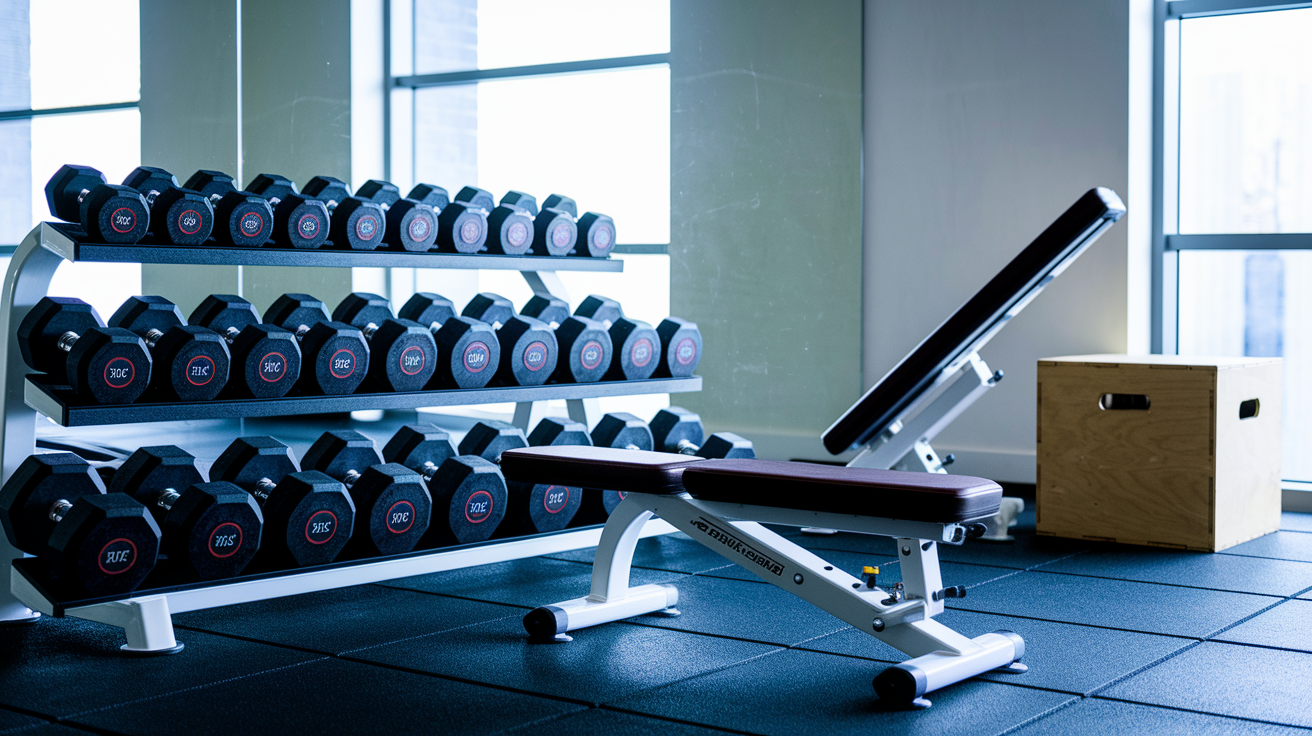
Fixed dumbbells come in pairs at set weights, usually 5 lb up to 100+ lb per dumbbell. They cost around $1.50 to $3.00 per pound, so a full rack gets pricey and eats floor space. Adjustable dumbbells use selector pins or twist locks to change weight on a single handle, typically spanning 5 lb to 50 or 90 lb per dumbbell.
Basic adjustable sets run $150 to $300. Premium models with smoother adjustment and higher max loads cost $300 to $600. For a home setup, two pairs of fixed dumbbells (one heavy for compounds, one lighter for isolations) or a quality adjustable pair will cover most needs without filling a room.
An adjustable bench is the second must have. Set it flat for rows and floor presses, or tilt the backrest 15 to 30 degrees for incline presses that hit the upper chest and front shoulders. You also need a stable platform about knee height for Bulgarian split squats. A standard flat bench, aerobic step, or plyo box works. Just make sure it doesn’t wobble under load and gives enough clearance for your rear foot while your front leg does the work.
| Equipment | Key Use |
|---|---|
| Fixed dumbbells (pairs) | Compound and isolation exercises; $1.50–$3.00/lb; fast weight changes between exercises |
| Adjustable dumbbells | Space-saving option; $150–$600 retail; one handle adjusts from light to heavy loads |
| Training bench (flat + adjustable incline 15–30°) | Pressing, rowing support, split-squat platform; provides stability and angle variation |
Foundational Dumbbell Exercise Technique for Major Muscle Groups
Compound Lower Body Dumbbell Movements
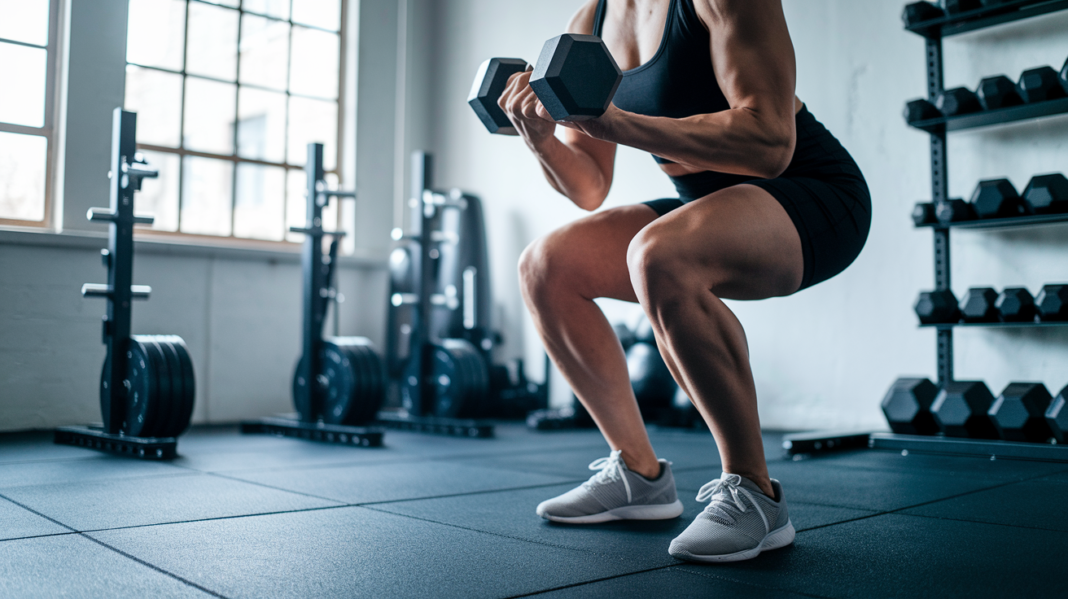
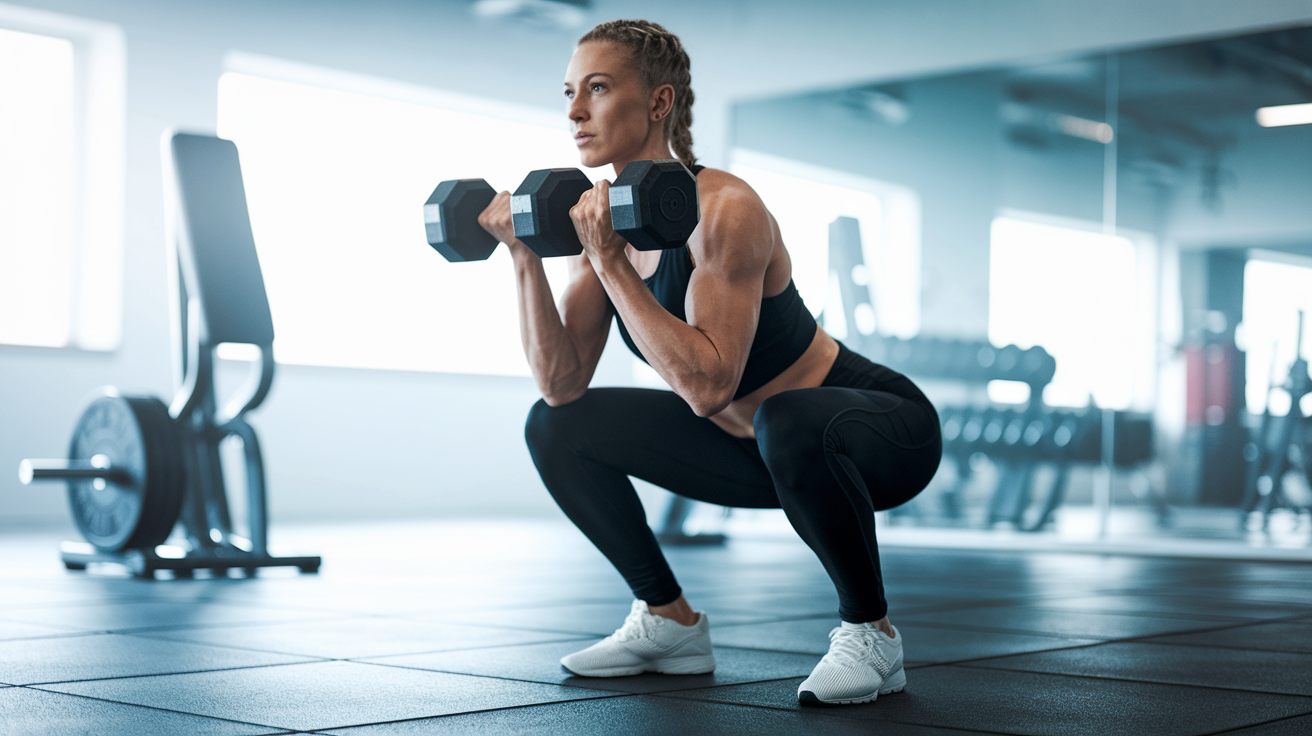
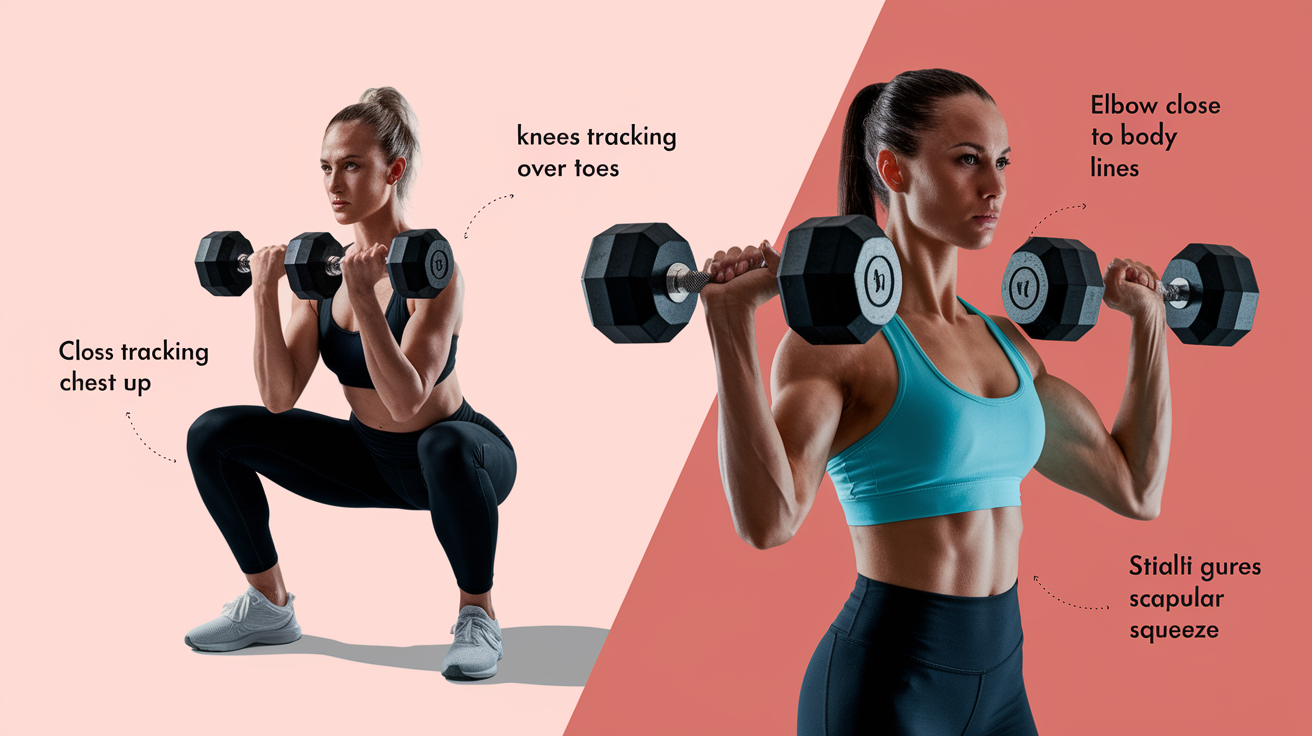
Goblet squats, lunges, and Romanian deadlifts anchor lower body dumbbell work. On goblet squats, hold one dumbbell vertically at chest height, feet shoulder width, and drop until your thighs hit roughly parallel. Keep your knees tracking over your toes, chest upright, core tight. Drive through your heels to stand.
Lunges need a big forward step, lowering your back knee toward the floor until both legs form 90 degree angles, then pushing through the front heel to return. Your torso stays mostly vertical. Your front knee should never cave inward.
Romanian deadlifts hammer the hamstrings and lower back through a hip hinge. Hold dumbbells at thigh level, feet hip width, knees slightly bent. Push your hips back, lowering the weights down your shins while keeping your spine neutral. No rounding, no excessive arching.
Stop when you feel a stretch in your hamstrings or when your torso reaches roughly parallel. Then drive your hips forward to stand. Never let your lower back round. Think about pulling your shoulders back and keeping your chest proud the whole way.
Compound Upper Body Dumbbell Movements
Pressing and rowing build the chest, shoulders, back, and arms. On any dumbbell press (flat, incline, or overhead), set your shoulder blades down and back before you start. Press the dumbbells up in a controlled arc, elbows at a natural angle, not flared wide.
Breathe out as you press, breathe in as you lower. Use the full range. Let the dumbbells descend until you feel a stretch in the target muscle, then drive them back up. No bouncing.
Rowing exercises need a stable base. For single arm rows, place one knee and hand on a flat bench, torso roughly parallel. Pull the dumbbell toward your hip, leading with your elbow and keeping it close to your body. Squeeze your shoulder blade in at the top, then lower under control.
Don’t twist your torso or yank the weight up. Proper rowing builds a thick mid back and lats while protecting your lower spine.
Key Isolation Dumbbell Exercises
Curls, lateral raises, and tricep extensions isolate smaller muscles and add finishing volume. For dumbbell curls, stand with arms extended, palms forward, and curl the weights toward your shoulders by bending at the elbow. Keep your upper arm still. Don’t swing your torso. Lower the dumbbells slowly. Controlled eccentrics build more strength than letting gravity take over.
Lateral raises target the side delts. Hold dumbbells at your sides, elbows slightly bent, and raise your arms out to shoulder height. Lead with your elbows, not your hands. Don’t shrug the weight up with your traps. Lower slowly and stop before momentum kicks in.
For overhead tricep extensions, hold one dumbbell overhead with both hands, lower it behind your head by bending your elbows, then extend back to the start. Keep your elbows pointed forward and your core braced to protect your lower back.
Complete Dumbbell Strength Training Routine for Full Body Results
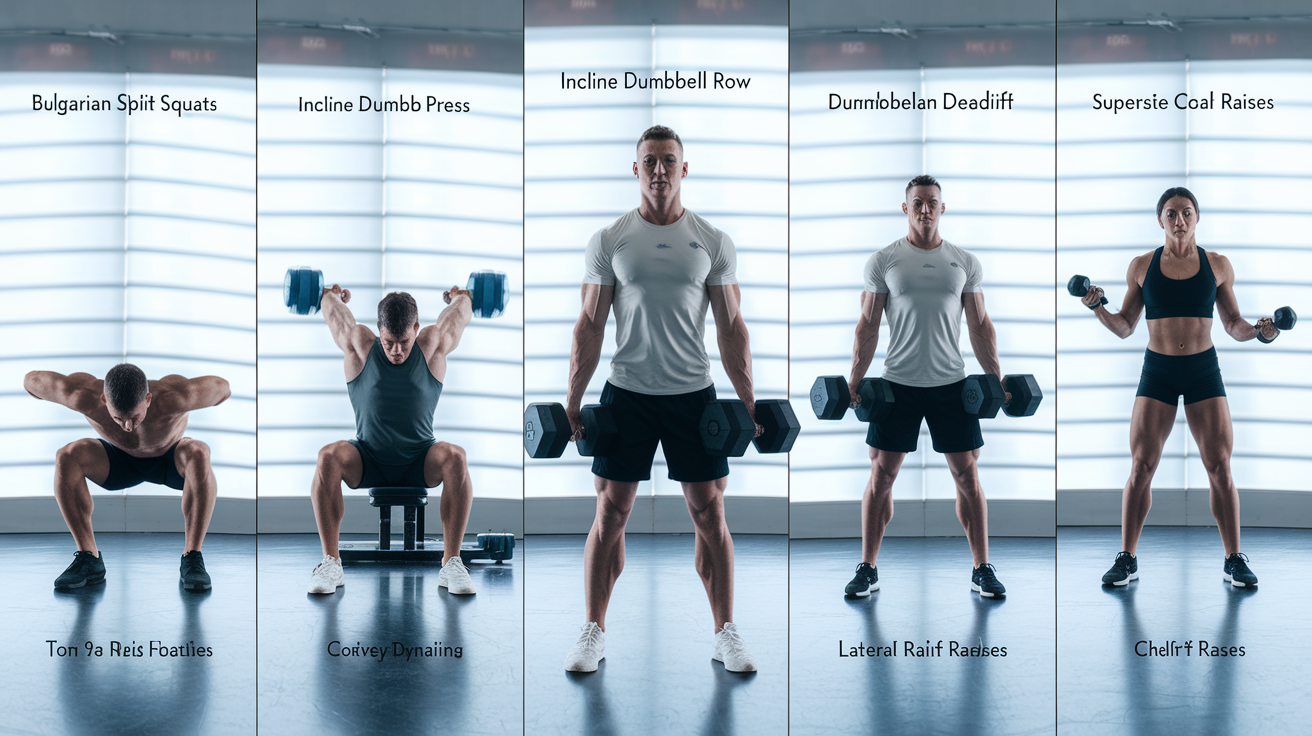
This full body dumbbell workout hits every major muscle group in one session. Use compound movements and one superset for efficiency. Run it every other day, roughly 3 to 4 times per week. Leave at least one full rest day between sessions. Each exercise includes sets, reps, and target RPE so you don’t need complicated percentages.
-
Bulgarian Split Squats — 4 sets of 8–12 reps per leg at RPE8. Place your rear foot on a knee height bench or platform. Step forward so your front shin stays vertical at the bottom. Lower until your front thigh is parallel, drive through your front heel to stand. Rest 1 to 2 minutes between sets.
-
Incline Dumbbell Bench Press — 4 sets of 8–12 reps at RPE8. Set the bench to 15 to 30 degrees. Press dumbbells from chest level to full extension overhead, keeping elbows at a natural angle. Lower under control. Rest 1 to 2 minutes.
-
Single Arm Dumbbell Row — 4 sets of 8–12 reps per side at RPE8. Support yourself on a flat bench with one hand and knee. Pull the dumbbell toward your hip, elbow close to your body, squeezing your shoulder blade at the top. Rest 1 to 2 minutes.
-
Dumbbell Romanian Deadlifts — 3 sets of 8–12 reps at RPE7. Keep knees slightly bent, hinge at the hips, lower dumbbells along your shins with a neutral spine. Stop when you feel a hamstring stretch or hit parallel, then drive hips forward. Rest 1 to 2 minutes.
-
Superset: Lateral Raises + Dumbbell Curls — 3 sets of 8–12 reps each at RPE9. Do lateral raises immediately followed by curls with no rest between exercises. After both, rest 1 to 2 minutes before the next superset round.
-
Weighted Calf Raises — 2 sets of 15–20 reps at RPE9. Hold dumbbells at your sides, rise onto your toes, pause at the top, lower slowly. Training barefoot boosts range. Don’t let your heels touch the floor between reps. Rest 1 to 2 minutes.
Work through all six exercises in order, taking the prescribed rest between sets. The whole session typically takes 60 to 90 minutes depending on your rest discipline and setup time. Cutting downtime between sets keeps workout length under control and maintains training intensity without rushing form.
Use your heavier dumbbells for the first four exercises and your lighter set for the superset and calves. Adjust as needed to hit the target RPE on each movement.
Beginner, Intermediate, and Advanced Dumbbell Strength Programs
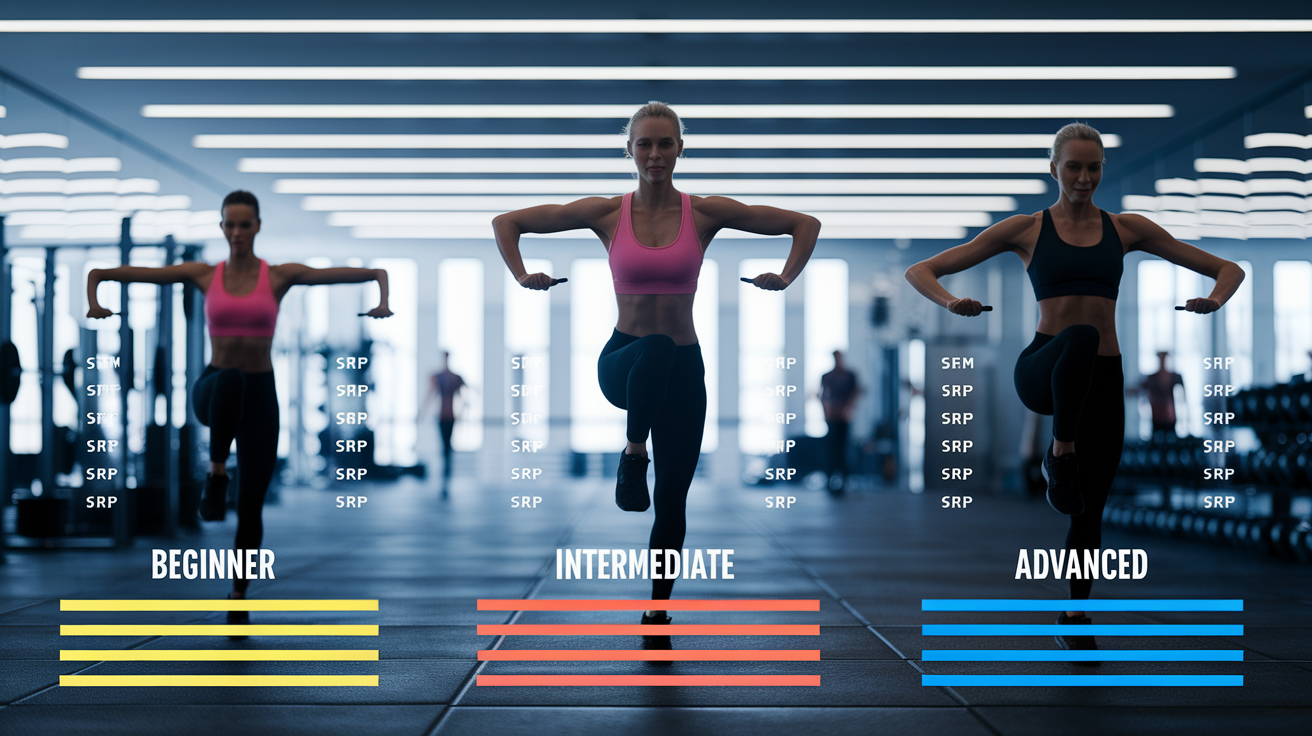
Program structure shifts as you gain strength and work capacity. Beginners do well with simple full body routines that teach movement patterns and build a base. Intermediates add volume and intensity to keep muscle growth going. Advanced lifters tweak tempo, exercise selection, and periodization to break through plateaus.
Beginner level (first 8–12 weeks):
Train 3 days per week on non consecutive days, Monday/Wednesday/Friday or Tuesday/Thursday/Saturday. Focus on 6–8 exercises per session. Prioritize compounds like goblet squats, presses, and rows. Use rep ranges of 8–12 for most exercises. Learn proper form before chasing heavy loads.
Intermediate level (3–12 months of consistent training):
Continue 3 full body sessions per week or split into upper/lower if recovery allows. Bump total volume by adding a fourth set to primary compounds or introducing more variation (incline press, Bulgarian split squats, single leg RDLs). Add strength focused sets of 6–8 reps on key lifts, using heavier dumbbells and longer rest periods.
Advanced level (1+ years of structured training):
Use 3 or 4 day splits, dedicating sessions to specific movement patterns or muscle groups. Add advanced techniques like pause reps, slow eccentrics (3–4 seconds lowering), or drop sets to increase time under tension. Plan 8–12 week training blocks with a deload week every 4–8 weeks, reducing volume by 40–60% or cutting intensity to allow full recovery.
Session duration stays around 40 to 60 minutes of work sets across all levels, plus warm up time. Progress by adding reps, sets, or load within your chosen rep range. Every 4 weeks, check your training max or test how many reps you can do with a given weight to confirm you’re still moving forward. Stick with one program long enough to see results before switching exercises or formats.
Progressive Overload Strategies for Dumbbell Strength Training
Progressive overload means you gradually increase the demand on your muscles over time. Without it, your body adapts to the current stimulus and stops growing. Dumbbells make overload simple. You can adjust load, volume, or density in small, measurable steps.
Start by adding reps week to week. If you complete 4 sets of 8 reps at a given weight this week, aim for 4 sets of 9 next week. Once you hit the top of your rep range (say, 12 reps on all sets), bump the dumbbell weight by 2.5 to 5 lb per hand and drop back to the lower end of the range. That cycle repeats as long as you’re getting stronger.
Five ways to apply overload:
Add reps per set until the top of your target range, then add weight. Tack on an extra set to compound lifts once you consistently hit your rep and RPE targets across all working sets. Cut rest intervals from 2 minutes down to 1:45, then 1:30. Makes the same volume harder without changing load.
Slow down the eccentric (lowering) phase to 3 or 4 seconds. This increases time under tension and muscle damage. Track total weekly volume (weight × reps × sets) and aim to boost it by 5–10% every 2 to 4 weeks.
Log every workout. Write down the exercise, weight used, sets, reps, and how it felt. After 4 to 6 weeks, compare your logs to see if you’re lifting heavier, doing more reps, or finishing the same work in less time. If progress stalls for two weeks straight, add a deload or change one variable. Don’t keep hammering the same weight hoping for different results.
Safety, Warm Up, and Injury Prevention Guidelines for Dumbbell Workouts
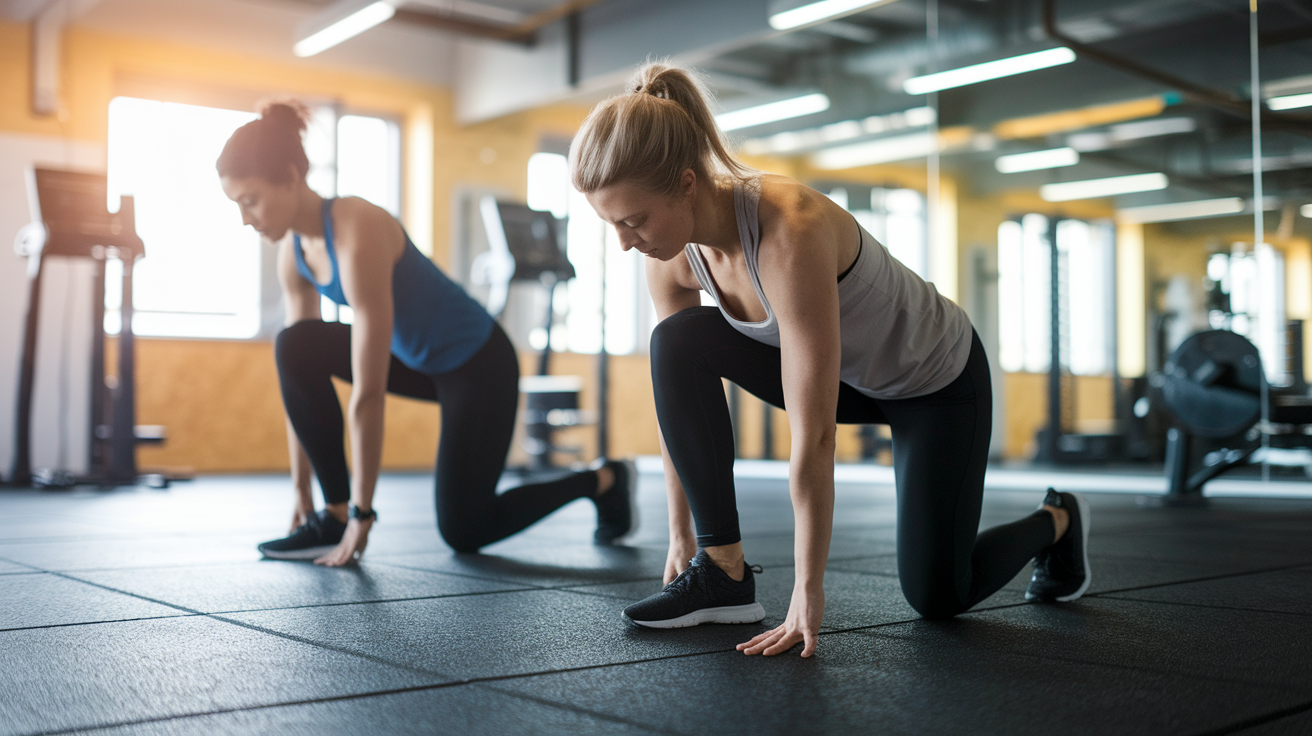
Warm up before every session to prep your joints, nervous system, and muscles for load. Spend 5 to 10 minutes on general cardio. Walking, cycling, or rowing at low intensity raises core temperature and gets blood flowing. Follow that with 5 to 8 minutes of dynamic mobility: leg swings, arm circles, bodyweight squats, and controlled rotations through the shoulders and hips.
After general movement prep, do movement specific warm up sets. If your first working set is a 40 lb goblet squat, do one set of 10 reps with a 15 lb dumbbell, then one set of 6 reps with 25 lb before jumping to your working weight. This primes the exact motor pattern and cuts injury risk.
Cool down with 5 minutes of walking and light stretching after your last set to kickstart recovery and prevent stiffness.
Six key safety cues:
Keep your spine neutral on all lifts. No excessive arching or rounding, especially on deadlifts and rows. Track your knees over your toes on squats and lunges. Never let them collapse inward. Brace your core before every rep on compound movements by taking a deep breath and tightening your midsection.
Use controlled tempo on both lifting and lowering phases. Never drop the weight or bounce out of the bottom. Stop a set immediately if you feel sharp pain, not to be confused with normal muscle burn. Replace any exercise that consistently causes joint discomfort with a safer variation. Floor press instead of bench press, or goblet squats instead of barbell back squats.
Weight Selection and Intensity Guidelines for Dumbbell Training
Picking the right dumbbell weight determines whether you stimulate growth or waste time. For compounds like presses, rows, and lower body exercises, use your heavier set. For isolation work like curls, lateral raises, and tricep extensions, use lighter weights that still challenge the target muscle in the prescribed rep range.
The goal is to hit technical failure (where you can’t complete another rep with good form) with 1 to 2 reps left in the tank.
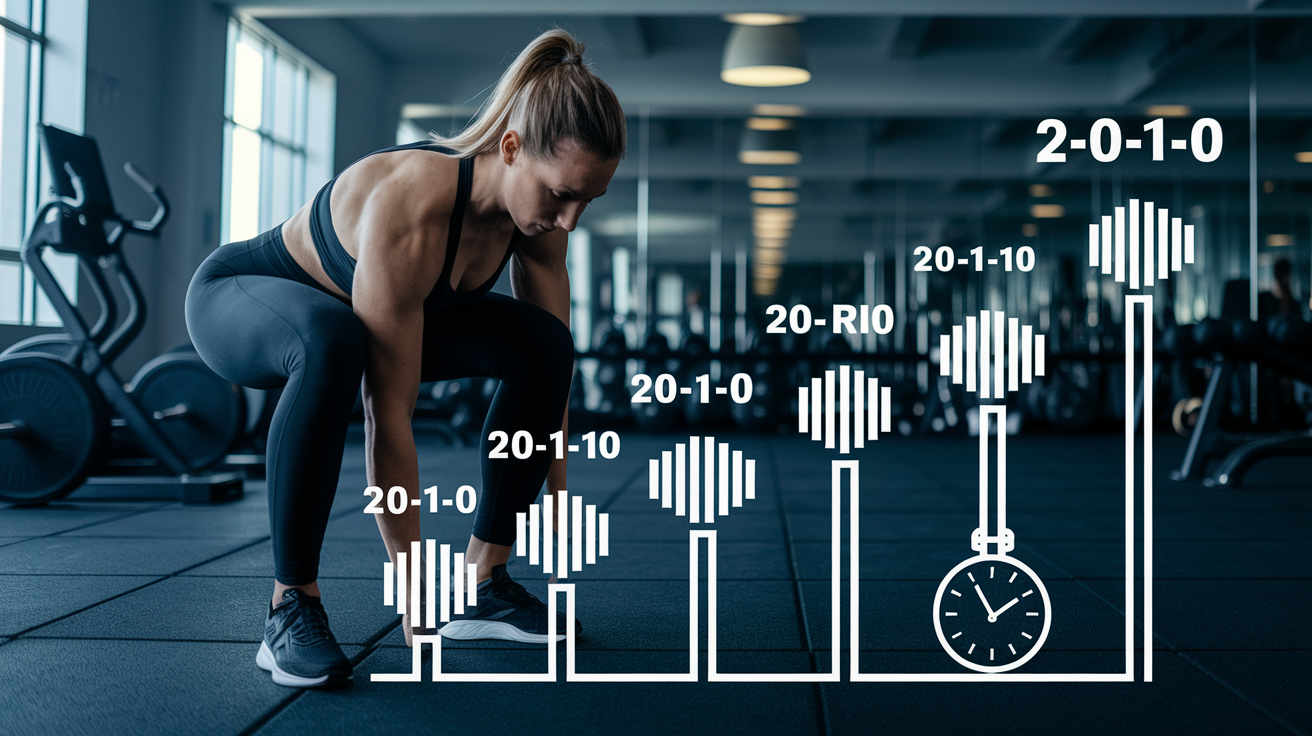
Tempo controls how fast you lift and lower the weight. A standard tempo is written 2-0-1-0: 2 seconds to lower (eccentric), no pause at the bottom, 1 second to lift (concentric), no pause at the top. Slowing the eccentric phase to 3 or 4 seconds boosts time under tension and builds more strength, especially for beginners or when you hit a plateau. Faster concentrics with controlled eccentrics work well for power and muscle growth.
Four ways to refine intensity:
Start each new exercise at the lower end of the rep range with a weight that feels moderately hard, leaving 3 to 4 reps in reserve. Progress by adding reps each week until you hit the top of the range, then bump weight and reset to the lower rep count.
Use slower eccentrics (3–4 seconds) as a progression tool when you can’t add more weight or reps. Test your working weight every 4 to 6 weeks by doing a max rep set to verify you’re still progressing.
Final Words
Grab your dumbbells: you’ve now got the core principles, gear checklist, key form cues, a full 60–90 minute routine, leveled programs, overload methods, and safety steps ready to use.
Run the plan 3–4 times a week (or a 3-day full-body split for starters), follow the warm-up and rest guidance, and track sets, reps, and weight.
Stick with the steady progressions and you’ll see real gains. This dumbbell strength training approach fits busy lives and builds lasting strength.
FAQ
Q: Can you build strength with just dumbbells?
A: You can build strength with just dumbbells. Use compound moves, progressive overload (add weight or reps), train 3–4 times weekly, and include heavy and lighter sets for 60–90 minute sessions.
Q: What is the 3 3 3 rule for working out?
A: The 3 3 3 rule for working out typically means three exercises, three sets each, done three times per week—a simple structure to build consistency, track progress, and apply progressive overload.
Q: Can you lift weights with high blood pressure?
A: You can lift weights with high blood pressure, but check with your doctor first. Use controlled breathing, avoid maximal lifts, start light, monitor symptoms, and progress slowly under guidance.
Q: Do dumbbells help with bone density?
A: Dumbbells help with bone density by providing weight-bearing, progressive loads that stimulate bone. Use safe gradual increases, include compound moves, and train regularly; consult healthcare if you have bone loss.