Think you need heavy weights to get stronger? Think again.
Bodyweight strength training uses just your body, and it builds muscle, endurance, and functional strength you can actually use.
No gym membership, no equipment, just simple moves, smart progressions, and short circuits you can do in 20 minutes.
Read on for clear progressions, practical routines, and step-by-step tweaks so you keep getting stronger at home, week after week.
It works with progressions like slower reps, single-leg work, and adding reps so you never plateau.
Foundational Overview of Bodyweight Strength Training Essentials

Bodyweight strength training uses your own mass as resistance. That’s it. Push-ups, squats, planks. No barbells, no machines, no gym membership required. Just you moving through space with intention.
It works because it forces you to stabilize, balance, and generate tension in ways that look a lot like real-world movement. And when you’re consistent, bodyweight training delivers measurable gains in muscle size, endurance, and functional capacity.
The muscle-building mechanism? Progressive overload. You gradually increase training demand over time. You don’t need to add weight to a bar. You add reps. Slow down the tempo. Reduce rest. Or shift to harder variations like decline push-ups or single-leg squats.
Your muscles adapt to the stress you impose. As long as you keep making small, deliberate adjustments each week, you’ll continue getting stronger. That principle holds whether you’re training at home, in a park, or in a hotel room.
A standard beginner circuit takes about 20 minutes and includes six movements performed one after the other. You complete all six exercises in a row without stopping if possible, then repeat the full sequence two or three times. If your form starts breaking down, you stop. Consistency and correct movement patterns matter more than chasing exhaustion.
- Walking lunges: 10 reps per leg
- Dumbbell or one-arm rows (milk jug, backpack, or suitcase): 10 reps
- Bodyweight squats: 20 reps
- Push-ups: 10 reps
- Plank hold: 15 seconds
- Jumping jacks: 30 reps
Major Bodyweight Strength Training Movement Patterns and Exercise Library
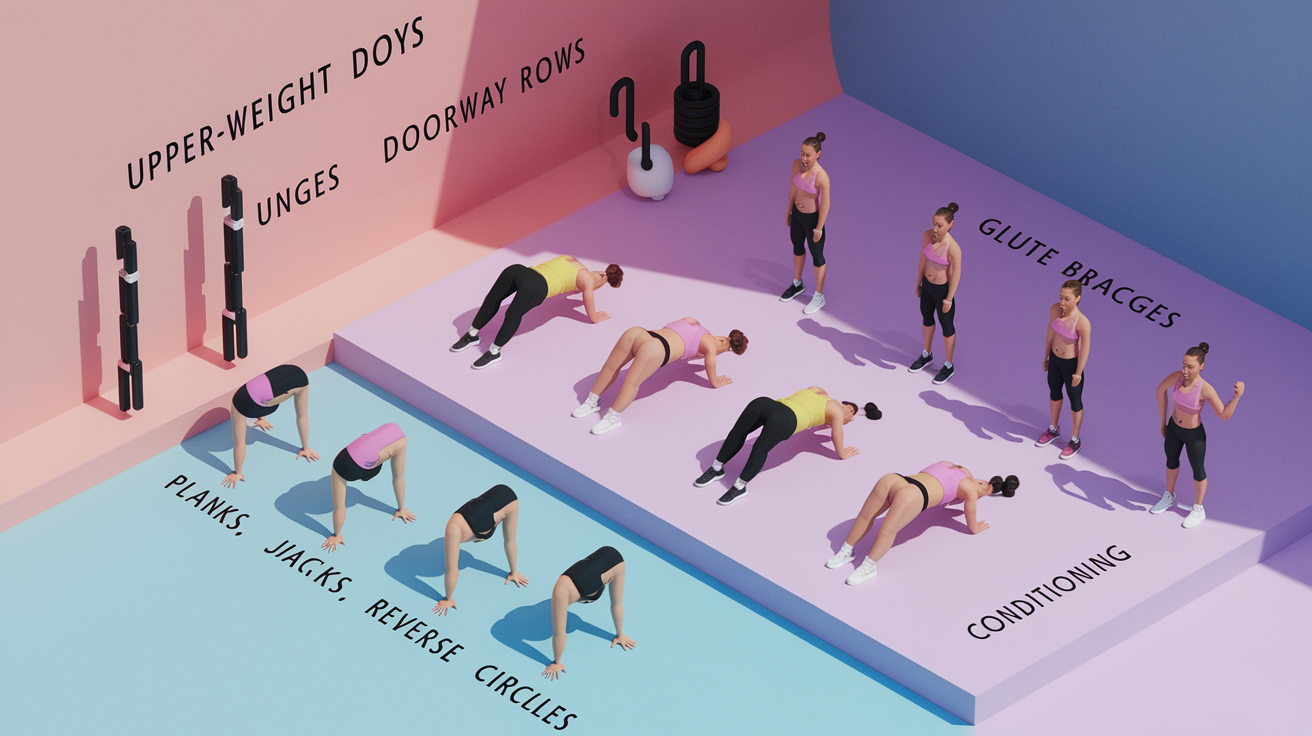
Every effective bodyweight program is built around a handful of fundamental movement patterns. Organize your training by category, and you’ll cover the whole body without gaps or redundancy.
Upper-Body Strength Patterns
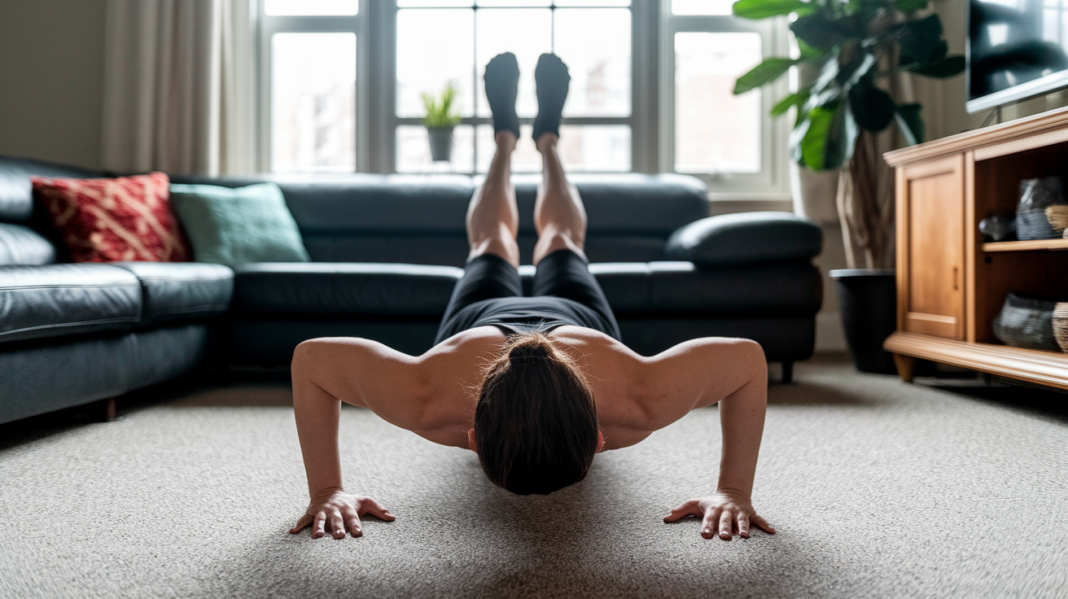
Push-ups are the foundation. Start with wall push-ups if standard push-ups are too difficult, then move to elevated push-ups with hands on a bench or step, then knee push-ups, then full push-ups from the floor. Each regression builds the strength and motor pattern you need for the next level.
Dips target the triceps, chest, and shoulders. Use parallel bars, a sturdy chair, or the edge of a low table. Lower your body until your upper arms are roughly parallel to the ground, then press back up with control.
Doorway rows work the back and biceps when you don’t have a free weight. Stand in a doorway, grip the frame, lean back, and pull your chest toward your hands. If you have a milk jug or suitcase, one-arm rows let you load each side independently.
Lower-Body Strength Patterns
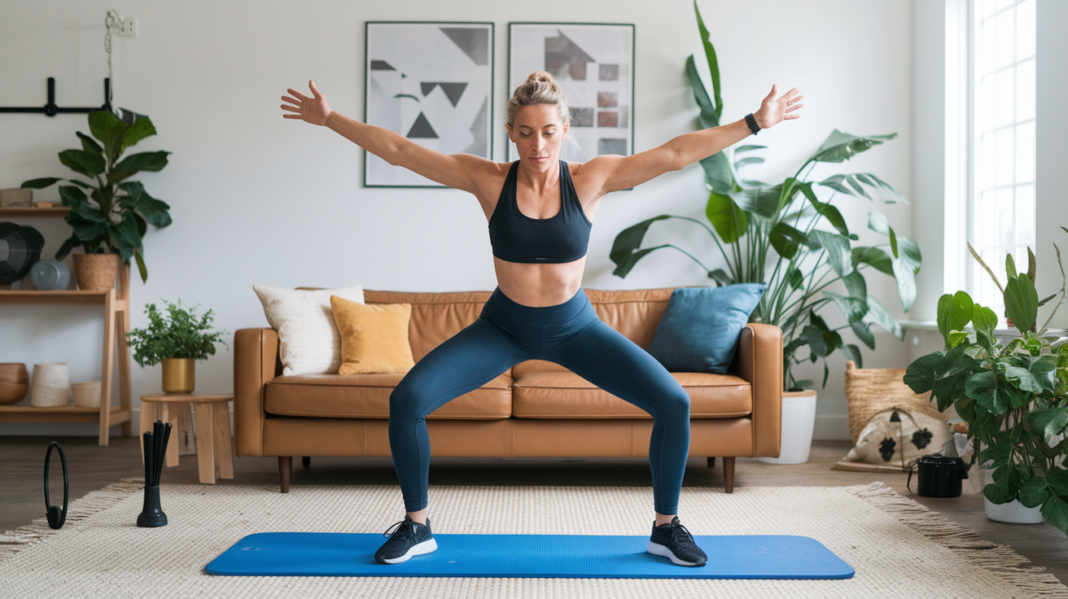
Squats and lunges form the base. Stand with feet shoulder-width apart and lower until your thighs approach parallel with the floor. Keep your weight balanced over the midfoot. Maintain a neutral spine.
For lunges, step forward, drop both knees to around 90 degrees, keep your front knee over your ankle, and push back to the starting position. If balance is an issue, use supported lunges with a hand on a wall. Or perform reverse lunges stepping backward instead.
Glute bridges build the posterior chain. Lie on your back, plant your feet hip-width apart, press through your heels, and lift your hips until you form a straight line from knees to shoulders. Squeeze your glutes hard at the top, then lower with control.
Core Bracing and Isometric Patterns
Planks teach total-body tension. Hold a straight line from head to heels with your navel pulled toward your spine and your glutes engaged. If a standard plank is too hard, drop to your knees.
Side planks target the obliques and lateral stability. Lie on your side, prop yourself up on one forearm, and lift your hips off the ground.
Reverse crunches isolate the lower abs. Lie on your back, bend your knees to 90 degrees, and lift your hips slowly off the mat using your lower abdominals. Keep your lower back pressed down to avoid strain.
Conditioning and Auxiliary Movements
Jumping jacks raise your heart rate and prep your nervous system. If impact is a concern, use walking jacks, stepping one foot out at a time while raising your arms overhead.
Arm circles activate the shoulders and upper back with minimal equipment. Extend your arms to the sides and make small or large circles, forward and backward, to build endurance in the rotator cuff and deltoids.
Progressive Overload Methods for Bodyweight Strength Training
Muscle grows when you consistently ask it to do slightly more than it did last time. Without dumbbells or plates, that progression comes from manipulating variables inside the exercise itself.
Decrease rest periods between sets or circuits to increase metabolic demand. Add one or two reps each session. Tack on an extra circuit once the current volume feels manageable. Each small step forward compounds over weeks.
Harder variations are the most reliable long-term strategy. Start with an elevated push-up, move to a knee push-up, then a standard push-up, then a decline push-up with feet elevated. Each change shifts leverage and increases the load on your muscles.
Slower reps, known as increased time under tension, force your muscles to work longer during each repetition. Use a fast, explosive concentric phase, like pressing up quickly in a push-up, then control the eccentric by lowering yourself over three or four seconds. That controlled descent builds strength and protects your joints.
- Decrease rest intervals: drop from 60 seconds between circuits to 45, then 30
- Increase reps or circuits: add one rep per movement each week, or add a fourth circuit
- Upgrade to harder variations: wall push-up → elevated → standard → decline
- Slow the tempo: 1-second concentric, 3 to 4 second eccentric
- Add unilateral or single-limb work: split squats, single-leg glute bridges, archer push-ups
| Strategy | Example |
|---|---|
| Harder variation | Standard push-up to decline push-up |
| Extended time under tension | Lower squat over 4 seconds, explode up in 1 second |
| Increased volume | 3 circuits to 4 circuits, or 10 reps to 12 reps |
Avoid grinding through reps when your form starts to collapse. Training close to failure every session taxes your central nervous system and slows recovery. Leave a couple of reps in reserve most of the time. Crisp, explosive repetitions with correct form deliver better long-term results than wobbly max-effort sets.
Complete Home Bodyweight Strength Training Routine Templates
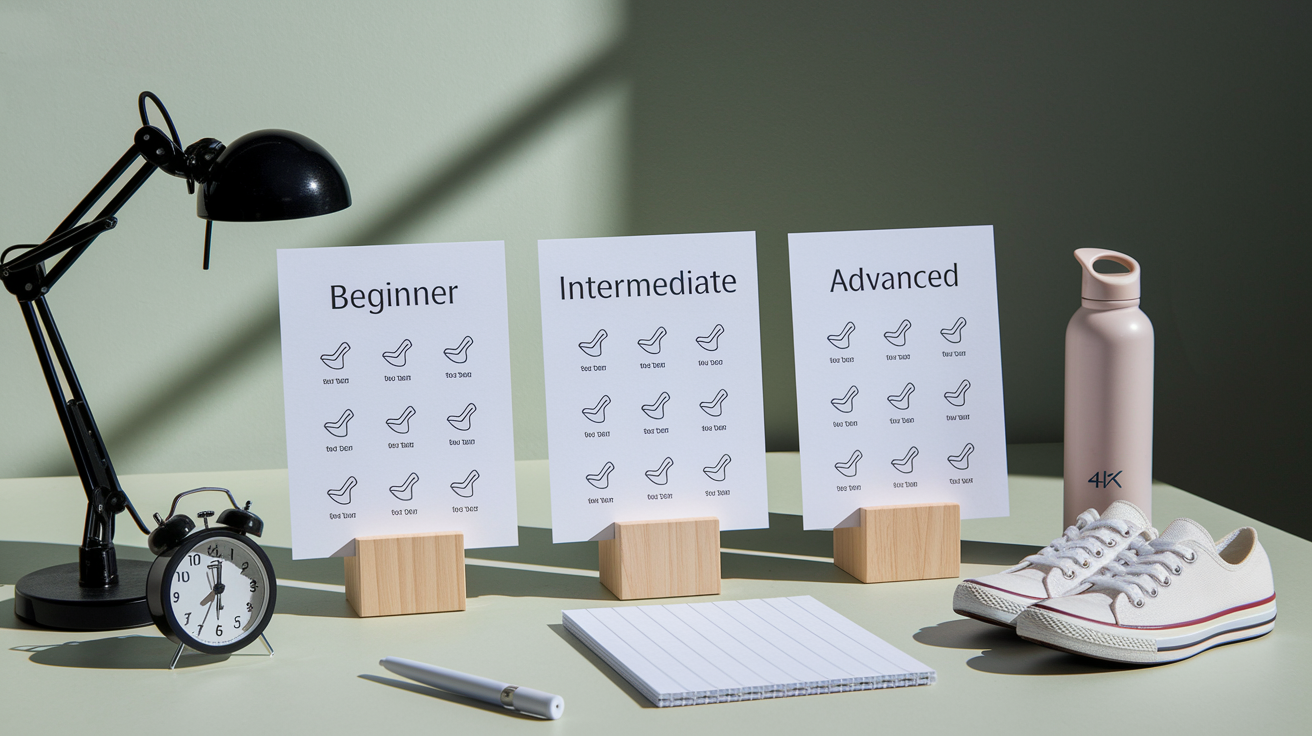
You need a simple structure you can follow two to four times per week. Each session should take around 20 minutes, and you should give yourself about 48 hours of rest before training the same muscle groups again.
Warm up with five to ten minutes of dynamic movement like jogging in place, marching, arm swings, or jump rope. Cool down with five to ten minutes of light stretching. The circuits below are performed consecutively. Do all the exercises in order, rest briefly if needed, then repeat the full circuit.
Beginner Template
This circuit is designed to build foundational strength and motor patterns. If an exercise is too difficult, use the regressions listed in the exercise library. Complete two to three rounds.
- Walking lunges: 10 reps per leg
- Rows with household weight (milk jug, backpack): 10 reps
- Bodyweight squats: 20 reps
- Push-ups (use regression if needed): 10 reps
- Plank hold: 15 seconds
- Jumping jacks: 30 reps
Intermediate Template
Once you can complete three rounds of the beginner circuit with good form, progress to this version. Harder variations increase the load without adding equipment.
- Split squats (rear foot elevated on a step): 12 reps per leg
- Decline push-ups (feet elevated): 12 reps
- Single-leg glute bridges: 10 reps per leg
- Side plank hold: 20 seconds per side
- Jump squats (low impact or full): 15 reps
Advanced Template
Advanced circuits add explosive movements, longer holds, and single-limb challenges. Aim for three to four rounds with minimal rest.
- Pistol squat progressions (assisted or full): 6 reps per leg
- Plyometric push-ups (hands leave the ground): 8 reps
- Walking lunges with jump (alternating jump lunges): 10 reps per leg
- Extended plank hold with shoulder taps: 30 seconds
- Burpees (chest to floor, full jump): 12 reps
Bodyweight Strength Training Progressions for Upper, Lower, and Core Power
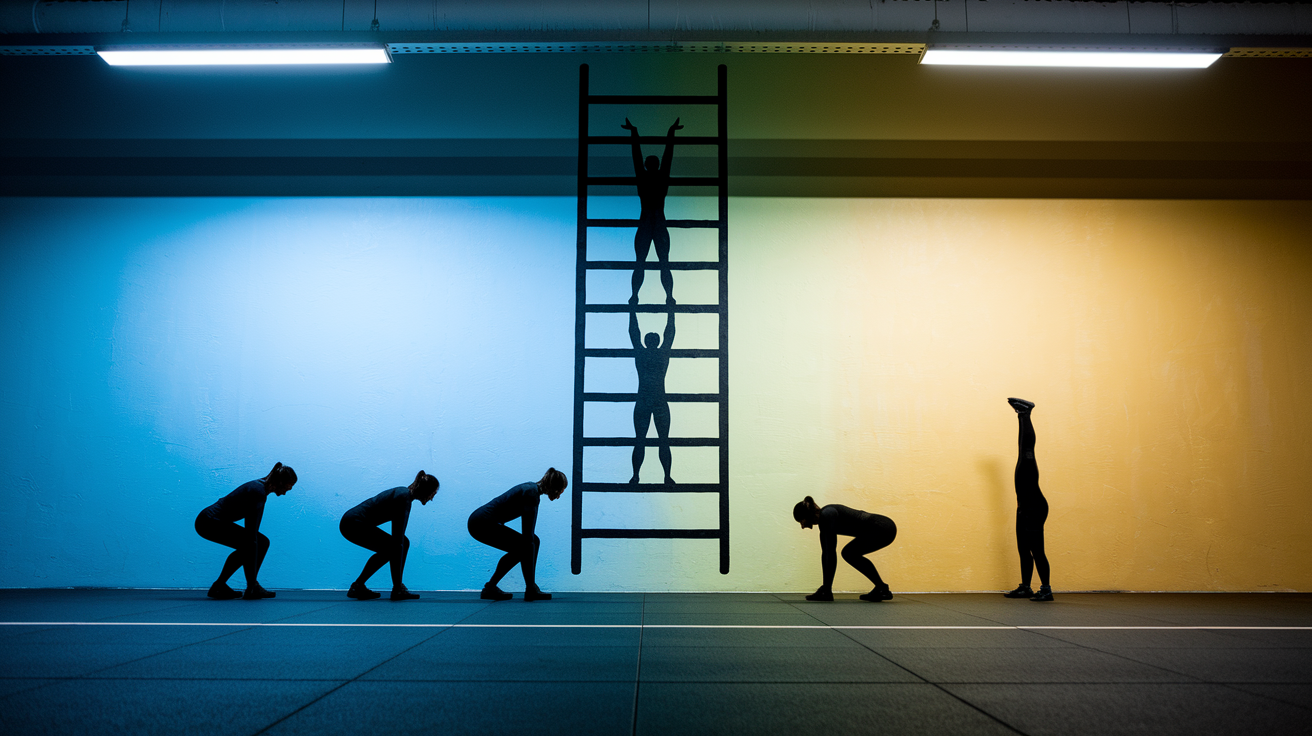
Long-term bodyweight training requires a clear progression path for each major movement category.
Single-leg strength is the gateway to pistol squats, one of the most demanding lower-body skills. Start with assisted pistol squats, holding a doorframe or suspension strap for balance. Lower yourself on one leg as far as you can with control, then use the assistance to stand back up. Over weeks, reduce the help until you can perform the full movement unassisted. Split squats, single-leg glute bridges, and elevated rear-foot split squats all build the balance, ankle mobility, and quad/glute strength required for pistols.
Upper-body vertical progression begins with wall-supported handstand holds. Eventually it leads toward freestanding handstands and handstand push-ups. Start by kicking up into a handstand against a wall, holding for time, and building shoulder endurance. Progress to handstand holds with less wall contact, then pike push-ups with hips elevated, then wall-supported handstand push-ups lowering your head toward the floor. Each step takes weeks or months. Patience and consistent practice matter more than rushing.
Straight-arm core strength shows up in skills like the L-sit, where you support your bodyweight on your hands with legs extended parallel to the ground. Begin with knee tucks, sitting on the floor with hands beside your hips and knees bent, then pressing your hips off the ground. Hold for five to ten seconds. Gradually straighten your legs over time. L-sits build the hip flexor strength, core compression, and shoulder stability needed for advanced movements like planches and front levers.
- Plyometric push-up variations: clap push-ups, archer push-ups, Superman push-ups
- Explosive squat jumps: box jumps, tuck jumps, broad jumps
- Plyo lunges: alternating jump lunges, split-stance bounds
- Depth drops and rebounding push-ups: step off a box into a push-up and explode back up
- Reactive plank variations: plank jacks, mountain climbers with speed emphasis
Warm-Up, Mobility, and Injury Prevention for Bodyweight Strength Training
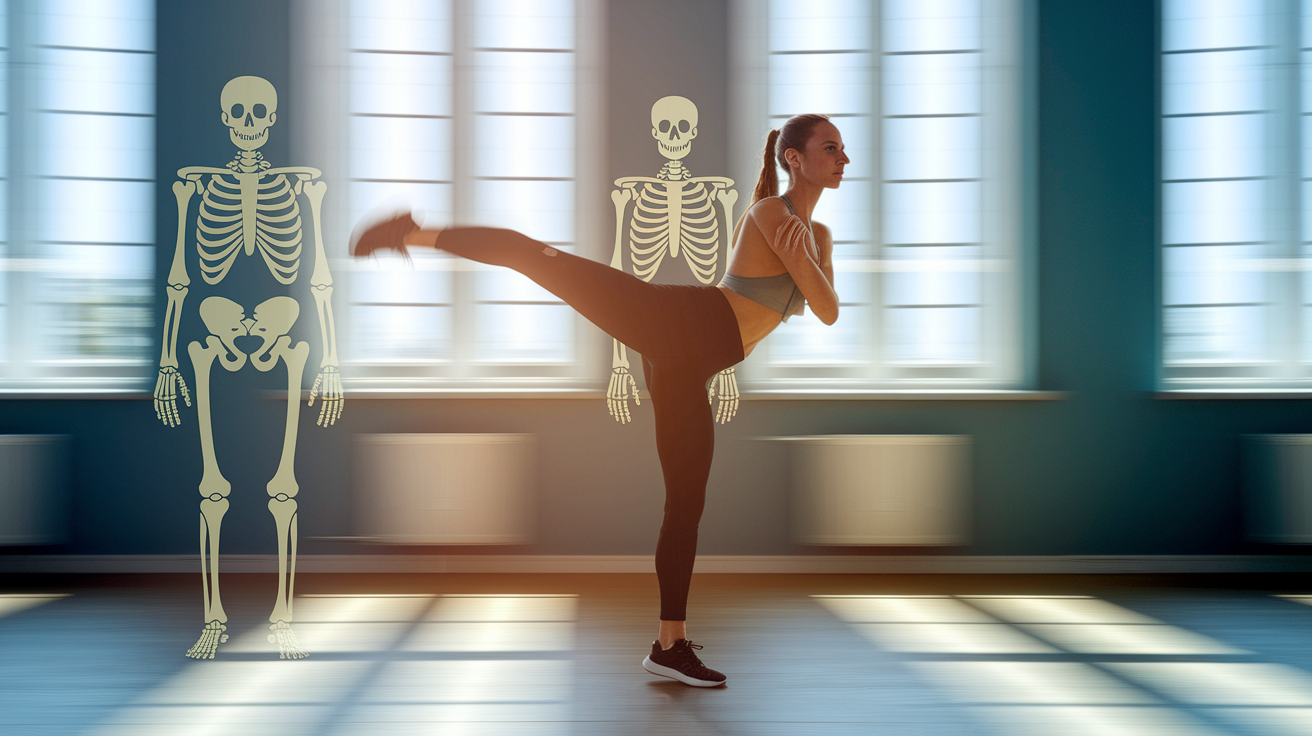
Dynamic warm-ups prepare your nervous system and joints for loaded movement patterns. Five to ten minutes is enough. The goal is to raise your core temperature, increase range of motion, and rehearse the movement shapes you’ll use in the workout.
Jogging in place, high knees, butt kicks, and jumping jacks all work. Arm circles, leg swings forward and back, leg swings side to side, and hip openers like walking lunges with a twist activate the shoulders, hips, and ankles without fatigue.
Cool-down stretching helps restore range of motion after the workout and signals your nervous system to shift into recovery mode. Spend five to ten minutes holding static stretches for the hip flexors, hamstrings, quads, chest, and shoulders. Breathe slowly and let the muscle relax into the stretch.
Mobility work and proper warm-ups also prevent injury by ensuring you move through full ranges of motion with control, rather than compensating with poor positions that overload tendons and ligaments.
- Jogging in place or marching with high knees
- Jump rope or simulated jump rope
- Arm swings and arm circles, forward and backward
- Leg swings, forward/back and side to side
- Walking lunges with torso rotation
- Brisk walk or light cycling for 3 to 5 minutes
Nutrition and Recovery Foundations for Better Bodyweight Strength Training Results
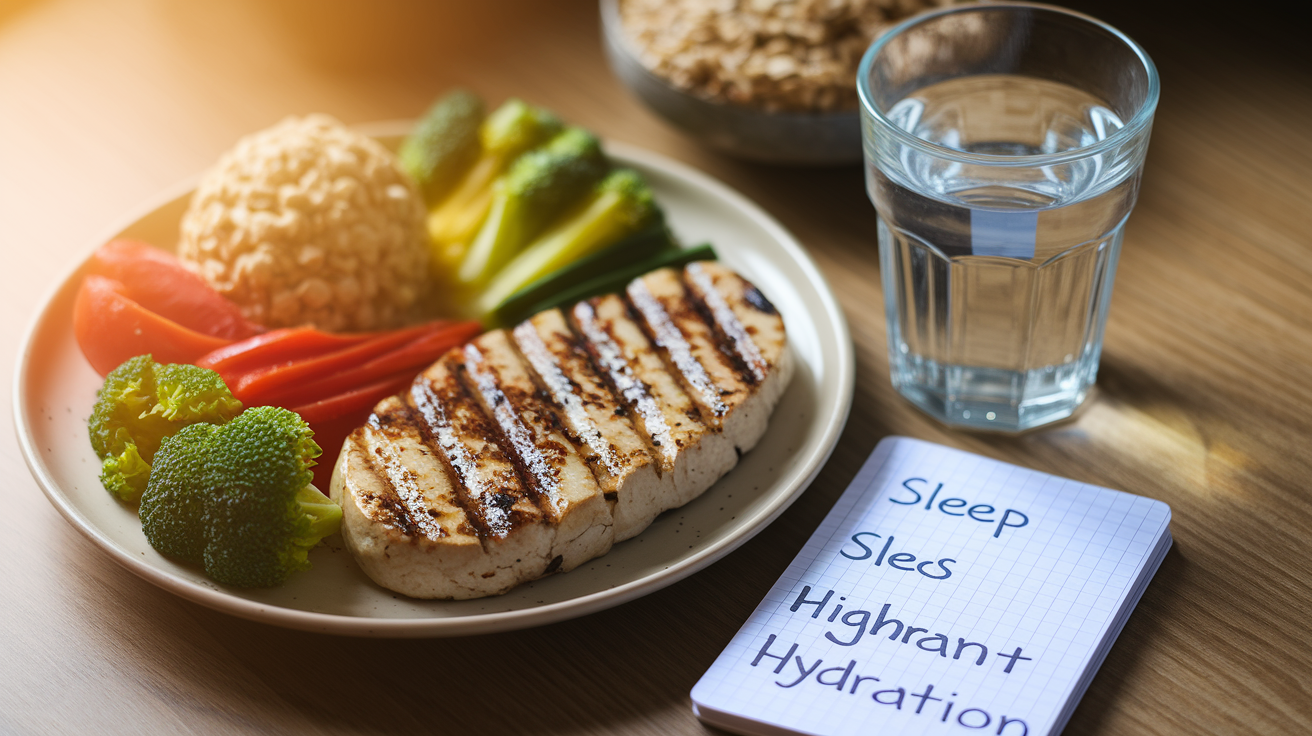
Diet accounts for roughly 80 percent of your success or failure when it comes to body composition. Training contributes about 10 to 20 percent. You can execute perfect workouts and still stall if your nutrition is inconsistent.
Eating mindfully, limiting liquid calories, adding vegetables and fruit to every meal, and controlling portion sizes of fats and carbohydrates form the foundation. Protein is non-negotiable. Aim for a serving of meat, fish, chicken, eggs, or a high-quality plant equivalent at each meal to support muscle repair and growth.
Recovery is where adaptation happens. Training two to four times per week with 48 hours between sessions that target the same muscle groups gives your body time to rebuild stronger tissue. Sleep, hydration, and active recovery days, like walking or gentle yoga, all support the process. If you’re constantly sore, irritable, or seeing performance drop, you’re likely under-recovering. Scale back volume, prioritize sleep, and let your nervous system catch up.
- Eat mindfully and track portion sizes using your hand or a simple plate method
- Limit liquid calories from soda, sweetened coffee, and alcohol
- Add a serving of vegetables or fruit to each meal
- Ensure adequate protein at breakfast, lunch, and dinner
- Schedule 48-hour rest windows between strength sessions for the same muscle groups
Progress Tracking and Long-Term Planning for Bodyweight Strength Training

You need a simple, repeatable structure to measure improvement and organize your training. A four-week block is the standard unit. During those four weeks, you alternate between two workouts, A and B, three times per week.
Week one might look like A, B, A. Week two: B, A, B. Repeat that pattern for weeks three and four. By the end of the block, you’ve completed each workout six times, enough repetitions to see measurable progress in reps, form quality, or difficulty level.
| Week | Session Sequence | Focus |
|---|---|---|
| 1 | A, B, A | Learn movements, establish baseline |
| 2 | B, A, B | Add 1 rep per exercise or decrease rest |
| 3 | A, B, A | Increase tempo control or add circuit |
| 4 | B, A, B | Test harder variations, finalize block |
After four weeks, take an off-week or a deload week with reduced volume and intensity. Then progress to the next level by upgrading exercise variations, adding circuits, or increasing time under tension.
Track your sets, reps, rest periods, and perceived exertion in a simple notebook or app. Write down what variation you used for each exercise so you know where to start next session.
Every four to six weeks, you can run an optional benchmark test, like a three-minute all-out set of push-ups, pull-ups, squats, and burpees, to quantify your progress. The goal is steady, repeatable improvement over months, not dramatic jumps week to week.
Final Words
Start with a 20-minute multi-round circuit, like lunges, doorway rows, squats, push-ups, plank, and jumping jacks. Warm up 5 to 10 minutes, keep form, and do 2 to 4 sessions a week with about 48 hours rest.
Progress by adding reps, slowing tempo, or picking harder variations. Track sets and reps and use simple 4 to 6 week blocks. Don’t rush failure. Protect recovery.
Keep it consistent, aim for small wins, and trust the process. bodyweight strength training pays off when you show up, so pick one plan and start this week.
FAQ
Q: Can I do strength training with bodyweight?
A: You can do strength training with bodyweight. Do 2–4 sessions/week of 20-minute circuits (10 lunges/leg, 10 rows, 20 squats, 10 push-ups, 15‑sec plank, 30 jumping jacks). Progress by more reps or harder variations.
Q: What is the 3 3 3 rule for working out?
A: The 3-3-3 rule usually refers to doing 3 sets of 3 reps for a strength focus, or as an easy template: 3 exercises × 3 sets across 3 days per week for consistency.
Q: Is strength training good for bone density?
A: Strength training is good for bone density because loading bones stimulates growth. Use weight‑bearing bodyweight moves (squats, lunges, push-ups) 2–4 times/week and increase difficulty over time.
Q: What is the 5 5 5 30 rule?
A: The 5-5-5-30 rule commonly means 5 exercises, 5 sets, 5 reps with 30 seconds rest — a simple strength template. Adjust reps, sets, or rest to match your goals and fitness level.