
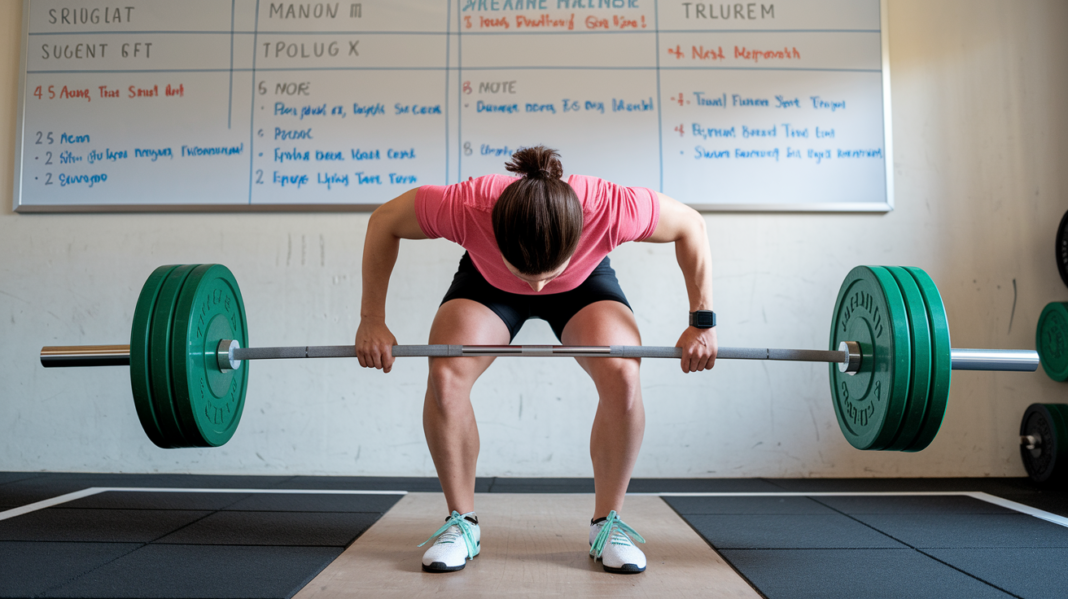
Think training each muscle once a week is enough? Think again.
If you’re not hitting major muscle groups twice weekly, you’re slowing progress and inviting long plateaus.
This post, Strength Training Schedule: Weekly Split Routines That Actually Work, lays out simple, ready-to-follow weekly plans for 2 to 6 training days.
You’ll get who each split suits, target set and rep ranges, warm-up and rest rules, and clear progression steps you can use this week.
No fluff, just practical schedules that fit busy lives and actually move the needle.
Weekly Strength Training Layout That Provides a Ready-to-Follow Schedule

Strength-training frequency is about how many days you lift each week and how often each muscle group gets hit. You want to train each major muscle group twice per week. That gives your muscles enough stimulus to grow or get stronger while leaving room for recovery between sessions. Train chest once a week? You’re leaving gains on the table. Four times without managing volume? You risk overtraining and garbage recovery.
Weekly volume sits between 10 and 20 working sets per major muscle group. Chest, back, quads usually need 12 to 20 total sets. Hamstrings, shoulders, arms, calves respond well to 8 to 16. Most sessions run 45 to 75 minutes, warm-up included. Rest intervals depend on what you’re chasing. Strength work needs 2.5 to 5 minutes between heavy sets so your nervous system can recover. Hypertrophy work takes 60 to 120 seconds to manage fatigue and keep metabolic stress high. Endurance or accessory work can drop to 30 to 60 seconds.
Warm-up and ramp sets aren’t optional. Spend 5 to 10 minutes on dynamic prep: leg swings, band pull-aparts, light cardio, mobility drills for hips and shoulders. Then do 2 to 4 ramp sets for your first main lift. Start with the empty bar for 10 reps, 50% of your working weight for 5, then 70% for 3, then your working weight. This primes movement patterns and cuts injury risk.
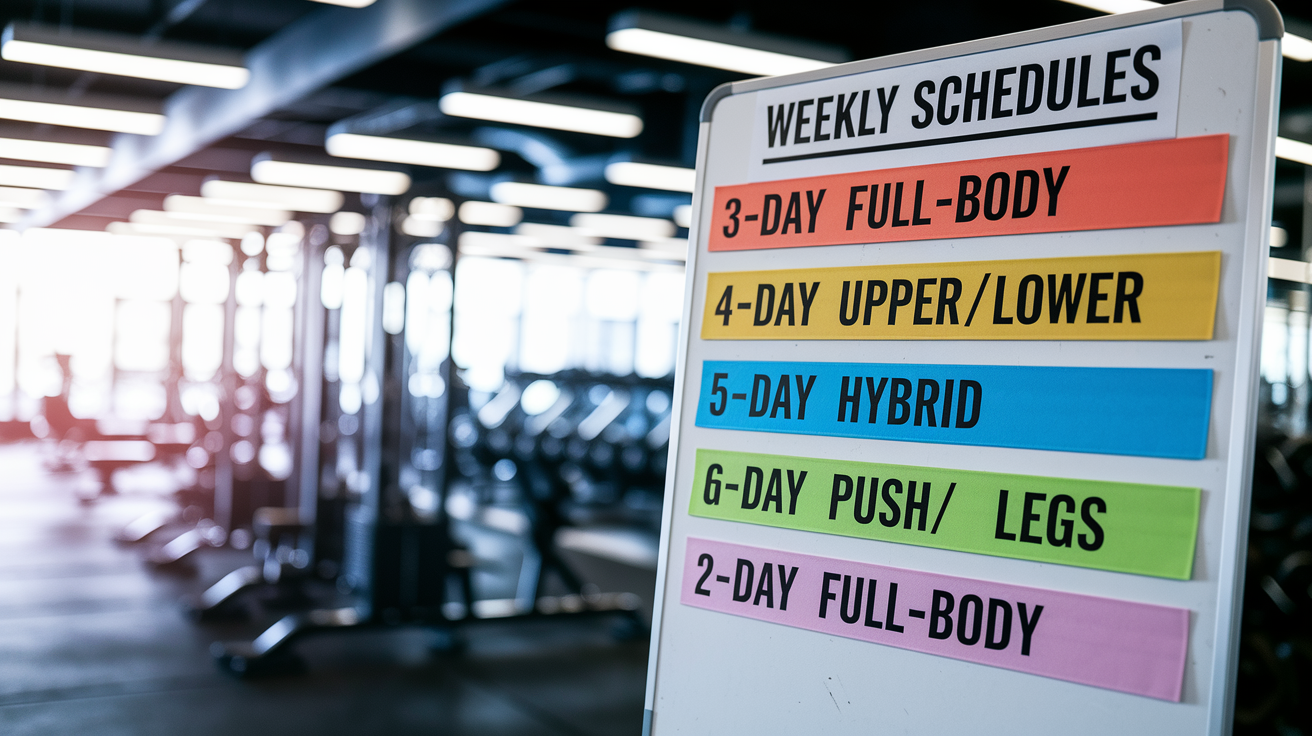
Here are five ready-to-use weekly schedules:
3-Day Full-Body Schedule – Monday, Wednesday, Friday. One rest day between each session. Perfect for beginners or anyone short on time.
4-Day Upper/Lower Schedule – Monday upper, Tuesday lower, Thursday upper, Friday lower. Weekend rest. Works well for intermediates wanting balanced muscle frequency.
5-Day Hybrid Split – Monday push, Tuesday pull, Wednesday legs, Thursday upper accessories, Friday lower accessories. Saturday and Sunday rest. Lets you hammer weak points.
6-Day Push/Pull/Legs Schedule – Monday push, Tuesday pull, Wednesday legs, Thursday push, Friday pull, Saturday legs, Sunday rest. Advanced volume distribution with twice-per-week muscle hits.
Time-Efficient 2-Day Plan – Tuesday and Saturday full-body. Each session hits all major patterns. Minimum effective dose for maintaining strength during busy stretches.
Exercise Selection & Muscle Group Structure for a Strength Training Schedule
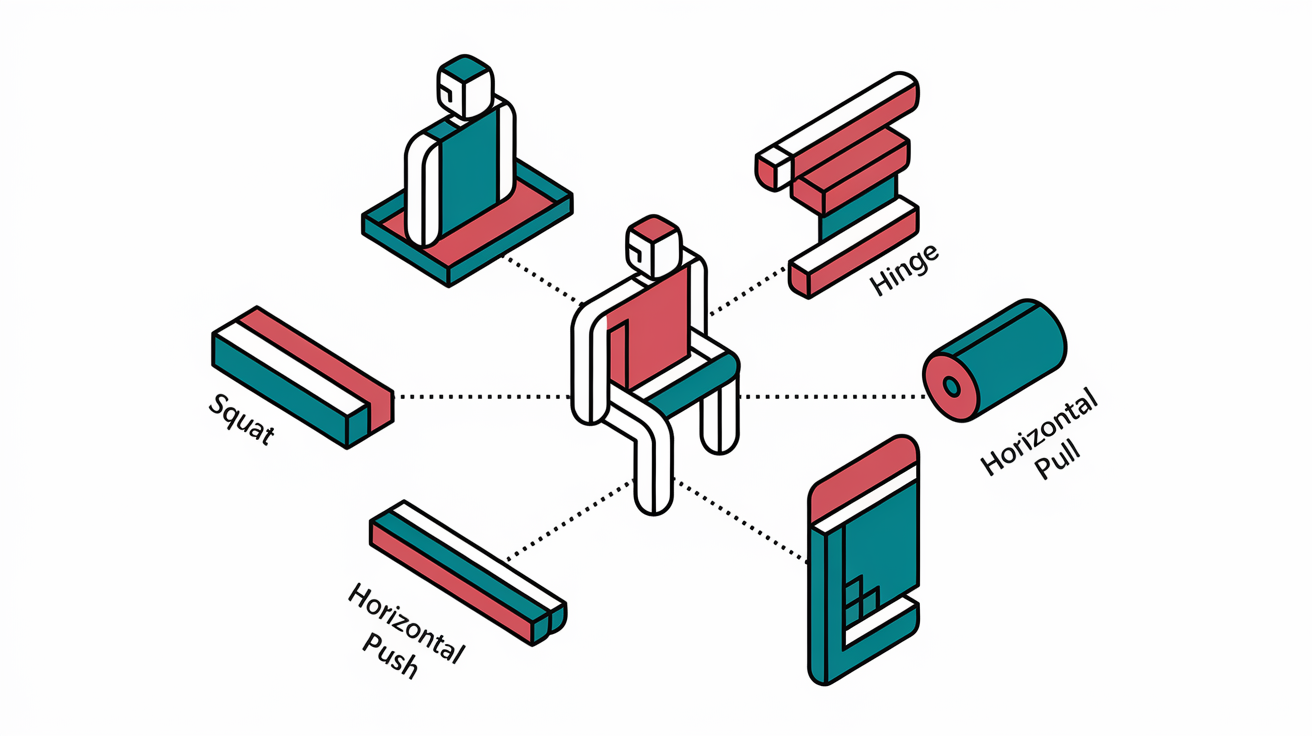
Exercise selection starts with movement patterns, not muscle groups. Every week should include a squat pattern (back squat, front squat, goblet squat), a hinge pattern (deadlift, Romanian deadlift, hip thrust), a horizontal push (bench press, floor press), a horizontal pull (barbell row, dumbbell row), a vertical push (overhead press, push press), and a vertical pull (pull-up, lat pulldown). Put compound lifts early in the session when your nervous system is fresh. Starting with biceps curls and finishing with squats? You’re programming backwards. Compounds recruit the most muscle, demand the most coordination, and benefit most from full energy.
Accessory selection fills gaps and adds volume to smaller muscle groups. After your 2 to 3 main compound lifts, add 2 to 4 accessory exercises at 2 to 4 sets each. These can be isolation moves like leg curls, lateral raises, or triceps pushdowns, or secondary compounds like lunges or incline presses. Balance push and pull work across the week. If you bench three times, row three times. Supersets can save time during accessory work without hurting performance. Example: superset hamstring curls with calf raises.
| Muscle Group | Primary Compounds | Accessory Options |
|---|---|---|
| Chest | Bench press, incline press | Dumbbell press, chest flyes, dips |
| Back | Deadlift, bent-over row, pull-up | Lat pulldown, single-arm row, face pull |
| Quads | Back squat, front squat, leg press | Lunges, Bulgarian split squat, leg extension |
| Hamstrings | Romanian deadlift, stiff-leg deadlift | Leg curl, glute-ham raise, hip thrust |
| Shoulders | Overhead press, push press | Lateral raise, rear delt fly, upright row |
| Arms | Close-grip bench, chin-up | Barbell curl, hammer curl, triceps pushdown |
Sample Weekly Strength Training Schedules (3 to 6 Day Splits)
Who each schedule suits depends on training age, time availability, and recovery capacity. Beginners do well on 3-day full-body routines because they need practice with movement patterns and can’t yet handle high weekly volume. Intermediates benefit from 4 or 5 day splits that allow more volume per muscle group without pushing individual sessions past 75 minutes. Advanced lifters often thrive on 6-day schedules with higher frequency and smart volume distribution across heavy and moderate sessions. If you can only train 30 to 45 minutes per session, stick to 3 or 4 days. If you have 60 to 75 minutes and solid recovery, 5 or 6 days becomes viable.
Weekly volume distribution means spreading your 10 to 20 sets per muscle across multiple sessions. A 3-day full-body plan might assign 4 to 6 sets of chest work per session (12 to 18 total sets per week). A 6-day PPL splits the same 18 sets across two push days (9 sets each). Higher frequency per muscle lets you train closer to failure more often without excess fatigue in a single session. Lower frequency demands higher per-session volume, which can extend rest periods and total session time.
Rest-day placement should follow logical fatigue patterns. After two or three consecutive training days, insert a rest day. Most people place rest days on weekends for scheduling ease, but mid-week rest works if your heaviest lower-body session falls on Wednesday. Don’t train the same muscle groups on back-to-back days unless you’re running an advanced daily undulating program. If you squat heavy on Monday, don’t program another quad-dominant lift on Tuesday. Allow at least 48 hours between direct muscle-group hits.
Progression across weeks starts simple. During weeks 1 to 3 of a 4-week block, add 1 to 2 reps to your working sets or bump load by 2.5 to 5 pounds when you hit the top of your rep range. Week 4 is a deload. Cut volume by about 50% and intensity by 10 to 20% to allow supercompensation. Then start the next block at slightly higher weights or reps than the previous block’s week 1.
3-Day Full-Body Schedule
Monday, Wednesday, Friday. Each session roughly 60 minutes including warm-up.
Squat – 3 sets × 5 reps, 3 to 5 minutes rest (strength focus)
Bench Press – 3 sets × 5 reps, 3 to 5 minutes rest
Bent-Over Row – 3 sets × 6 to 8 reps, 90 seconds rest
Overhead Press – 2 sets × 6 to 8 reps, 2 to 3 minutes rest
Romanian Deadlift – 2 sets × 6 to 8 reps, 90 seconds rest (or substitute leg curl 3×10)
Core Work – 2 sets × 10 to 15 reps (plank, dead bug, or hanging knee raise), 60 seconds rest
This layout hits every major pattern three times per week. Total weekly volume per muscle lands around 9 to 12 sets, good for beginners or anyone returning after a break.
4-Day Upper/Lower Schedule
Monday (Upper Heavy), Tuesday (Lower Heavy), Thursday (Upper Hypertrophy), Friday (Lower Hypertrophy). Roughly 50 to 70 minutes per session.
Monday – Upper Heavy
Bench Press – 4 sets × 4 to 6 reps, 3 minutes rest
Barbell Row – 4 sets × 6 reps, 2.5 minutes rest
Overhead Press – 3 sets × 5 reps, 2.5 minutes rest
Pull-Up – 3 sets × 6 to 8 reps, 90 seconds rest
Biceps Curl – 2 sets × 8 to 12 reps, 60 seconds rest
Triceps Pushdown – 2 sets × 8 to 12 reps, 60 seconds rest
Tuesday – Lower Heavy
Back Squat – 4 sets × 4 to 6 reps, 3 to 5 minutes rest
Deadlift – 1 to 2 sets × 3 to 5 reps, 5 minutes rest (or skip and use RDL only on Friday)
Lunges – 3 sets × 8 to 10 reps per leg, 90 seconds rest
Calf Raise – 3 sets × 10 to 15 reps, 60 seconds rest
Thursday – Upper Hypertrophy
Incline Dumbbell Press – 3 sets × 8 to 12 reps, 90 seconds rest
Seated Cable Row – 3 sets × 8 to 12 reps, 90 seconds rest
Lateral Raise – 3 sets × 10 to 15 reps, 60 seconds rest
Face Pull – 3 sets × 12 to 15 reps, 60 seconds rest
Hammer Curl – 2 sets × 10 to 12 reps, 60 seconds rest
Overhead Triceps Extension – 2 sets × 10 to 12 reps, 60 seconds rest
Friday – Lower Hypertrophy
Leg Press – 3 sets × 10 to 12 reps, 90 seconds rest
Romanian Deadlift – 3 sets × 8 to 10 reps, 90 seconds rest
Leg Curl – 3 sets × 10 to 12 reps, 60 seconds rest
Goblet Squat – 2 sets × 12 to 15 reps, 60 seconds rest
Seated Calf Raise – 3 sets × 12 to 15 reps, 60 seconds rest
This split gives you two muscle-group hits per week with varied rep ranges to target strength and hypertrophy adaptations.
5-Day Hybrid Split
Monday (Push), Tuesday (Pull), Wednesday (Legs), Thursday (Upper Accessories), Friday (Lower Accessories). Roughly 45 to 75 minutes per session. Rest Saturday and Sunday.
Monday – Push
Bench Press – 4 sets × 4 to 6 reps, 3 minutes rest
Overhead Press – 3 sets × 6 to 8 reps, 2.5 minutes rest
Incline Dumbbell Press – 3 sets × 8 to 10 reps, 90 seconds rest
Triceps Dip or Close-Grip Bench – 3 sets × 8 to 10 reps, 90 seconds rest
Lateral Raise – 3 sets × 12 to 15 reps, 60 seconds rest
Tuesday – Pull
Deadlift – 3 sets × 3 to 5 reps, 5 minutes rest
Barbell Row – 3 sets × 6 to 8 reps, 2.5 minutes rest
Pull-Up – 3 sets × 6 to 10 reps, 90 seconds rest
Face Pull – 3 sets × 12 to 15 reps, 60 seconds rest
Barbell Curl – 3 sets × 8 to 10 reps, 60 seconds rest
Wednesday – Legs
Back Squat – 4 sets × 5 to 6 reps, 3 to 5 minutes rest
Romanian Deadlift – 3 sets × 6 to 8 reps, 2.5 minutes rest
Leg Press – 3 sets × 10 to 12 reps, 90 seconds rest
Leg Curl – 3 sets × 10 to 12 reps, 60 seconds rest
Calf Raise – 3 sets × 12 to 15 reps, 60 seconds rest
Thursday – Upper Accessories
Incline Barbell Press – 3 sets × 8 to 10 reps, 90 seconds rest
Chest Flye – 3 sets × 10 to 12 reps, 60 seconds rest
Single-Arm Dumbbell Row – 3 sets × 10 to 12 reps per arm, 90 seconds rest
Rear Delt Fly – 3 sets × 12 to 15 reps, 60 seconds rest
Hammer Curl – 2 sets × 10 to 12 reps, 60 seconds rest
Overhead Triceps Extension – 2 sets × 10 to 12 reps, 60 seconds rest
Friday – Lower Accessories
Front Squat or Goblet Squat – 3 sets × 8 to 10 reps, 2 minutes rest
Leg Extension – 3 sets × 12 to 15 reps, 60 seconds rest
Bulgarian Split Squat – 3 sets × 8 to 10 reps per leg, 90 seconds rest
Glute-Ham Raise or Nordic Curl – 2 sets × 6 to 10 reps, 2 minutes rest
Seated Calf Raise – 3 sets × 15 to 20 reps, 60 seconds rest
This plan offers dedicated accessory days to address weak points or lagging muscle groups without extending main-lift sessions.
6-Day PPL Schedule
Monday (Push Heavy), Tuesday (Pull Heavy), Wednesday (Legs Heavy), Thursday (Push Moderate), Friday (Pull Moderate), Saturday (Legs Moderate), Sunday rest. Roughly 50 to 75 minutes per session.
Monday – Push Heavy
Bench Press – 5 sets × 3 to 5 reps, 3 to 5 minutes rest
Overhead Press – 4 sets × 4 to 6 reps, 3 minutes rest
Incline Dumbbell Press – 3 sets × 6 to 8 reps, 90 seconds rest
Triceps Dip – 3 sets × 6 to 8 reps, 90 seconds rest
Lateral Raise – 2 sets × 12 to 15 reps, 60 seconds rest
Tuesday – Pull Heavy
Deadlift – 4 sets × 3 to 5 reps, 5 minutes rest
Barbell Row – 4 sets × 5 to 6 reps, 3 minutes rest
Weighted Pull-Up – 3 sets × 5 to 8 reps, 2.5 minutes rest
Face Pull – 3 sets × 12 to 15 reps, 60 seconds rest
Barbell Curl – 2 sets × 8 to 10 reps, 60 seconds rest
Wednesday – Legs Heavy
Back Squat – 5 sets × 3 to 5 reps, 4 to 5 minutes rest
Romanian Deadlift – 3 sets × 5 to 6 reps, 3 minutes rest
Leg Press – 3 sets × 8 to 10 reps, 2 minutes rest
Leg Curl – 3 sets × 8 to 10 reps, 90 seconds rest
Standing Calf Raise – 3 sets × 10 to 12 reps, 60 seconds rest
Thursday – Push Moderate
Incline Barbell Press – 4 sets × 8 to 10 reps, 90 seconds rest
Dumbbell Overhead Press – 3 sets × 8 to 12 reps, 90 seconds rest
Chest Flye – 3 sets × 10 to 12 reps, 60 seconds rest
Close-Grip Bench – 3 sets × 8 to 10 reps, 90 seconds rest
Lateral Raise – 3 sets × 12 to 15 reps, 60 seconds rest
Friday – Pull Moderate
Pendlay Row or T-Bar Row – 4 sets × 8 to 10 reps, 90 seconds rest
Lat Pulldown – 3 sets × 10 to 12 reps, 90 seconds rest
Single-Arm Dumbbell Row – 3 sets × 10 to 12 reps per arm, 90 seconds rest
Rear Delt Fly – 3 sets × 12 to 15 reps, 60 seconds rest
Hammer Curl – 3 sets × 10 to 12 reps, 60 seconds rest
Saturday – Legs Moderate
Front Squat – 4 sets × 6 to 8 reps, 2.5 minutes rest
Bulgarian Split Squat – 3 sets × 8 to 10 reps per leg, 90 seconds rest
Leg Extension – 3 sets × 12 to 15 reps, 60 seconds rest
Leg Curl – 3 sets × 12 to 15 reps, 60 seconds rest
Seated Calf Raise – 3 sets × 15 to 20 reps, 60 seconds rest
This schedule delivers twice-per-week frequency for every muscle group with controlled volume per session, good for advanced folks with strong recovery capacity.
Sets, Reps, Intensity, and Load Guidelines for Any Strength Training Schedule

Rep-range logic is straightforward. Lower reps (3 to 6) with heavier loads build maximal strength by training your nervous system to recruit high-threshold motor units. Moderate reps (6 to 12) balance mechanical tension and metabolic stress, driving muscle hypertrophy. Higher reps (12 to 20+) improve muscular endurance and work capacity. You can chase all three goals in a single week by varying rep ranges across exercises or sessions. Strength-focused folks emphasize 3 to 6 reps on main compound lifts, then use 6 to 12 reps on accessories. Hypertrophy-focused folks center most work in the 6 to 12 range with occasional heavy triples or light pump sets.
Intensity and RPE guidelines help you auto-regulate effort without strict percentage-based programming. RPE (rate of perceived exertion) runs from 1 to 10. An RPE of 7 means you could do 3 more reps. RPE 8 means 2 more reps. RPE 9 means 1 more rep. RPE 10 is absolute failure. For strength work, use RPE 8 to 9 on your top sets, leaving 1 to 2 reps in reserve. For hypertrophy work, RPE 7 to 8 is ideal, leaving 2 to 3 reps in reserve. Accessories can push to RPE 9 occasionally. If you prefer percentages, strength work sits at 85 to 95% of your 1-rep max, hypertrophy at 65 to 80%, and endurance below 65%.
Warm-up sequence details protect joints and prime movement quality. Start with 5 to 10 minutes of general movement: jump rope, rowing, bike, or dynamic stretches like leg swings, arm circles, and hip openers. Then do exercise-specific ramp sets. If your working weight on the squat is 225 pounds, do 10 reps with the empty bar (45 pounds), 5 reps at 135 pounds, 3 reps at 185 pounds, then 1 to 2 reps at 205 pounds before your first working set at 225. This sequence wakes up the pattern without inducing fatigue.
Here are four key mistake-avoidance tips:
Don’t load too heavy too soon. Chasing a new 1-rep max every session fries your CNS and increases injury risk. Save true max attempts for testing weeks or competition prep.
Don’t stay too light for too long. If every set feels easy (RPE 5 to 6), you’re not providing enough stimulus. Push closer to RPE 7 to 8 on most working sets.
Don’t skip warm-up sets. Jumping straight to working weight without ramping increases injury risk, especially on complex lifts like squats and deadlifts.
Rest intervals matter. Cutting rest to 60 seconds on a heavy set of 3 reps sabotages performance. Give your ATP-PC system time to recover between max-effort sets.
Progressive Overload & Week-to-Week Adaptations in a Strength Training Schedule

Linear progression and microloading work best for novices. Add 2.5 to 5 pounds to upper-body lifts (bench, overhead press, rows) every session or every week. Add 5 to 10 pounds to lower-body lifts (squat, deadlift) every session or week. If you can’t add weight, add reps. Once you hit the top of your rep range (say, 3 sets of 8 reps), bump the load by 2.5 to 5% and drop back to 3 sets of 6 reps. Over the next few weeks, work back up to 3 sets of 8 at the new weight. This method works until it stops working, which for true beginners can be 8 to 16 weeks.
Intermediate progression requires more nuance. You can’t add weight every session forever. Instead, plan 3 to 4 week microcycles. Week 1 starts at a moderate load (RPE 7), week 2 increases slightly (RPE 8), week 3 pushes harder (RPE 9), and week 4 deloads (RPE 6 to 7 with reduced volume). After the deload, start the next block 2.5 to 5% heavier than the previous block’s week 1. RPE adjustments let you auto-regulate based on daily readiness. If you slept poorly or feel beat up, aim for RPE 7 instead of forcing RPE 9. This prevents accumulating excessive fatigue.
Volume cycling and plateaus go hand-in-hand. If strength stalls, first check recovery: sleep, nutrition, stress. If those are solid, consider a volume block. Add 1 set per exercise every 2 to 4 weeks until total weekly sets per muscle group approach 20. After 4 to 6 weeks at higher volume, deload for a week, then return to moderate volume with heavier loads. Alternatively, if high volume isn’t recovering well, reduce sets and bump intensity. Some people respond better to fewer hard sets than many moderate sets.
Here are four progression templates you can rotate:
Linear Progression – Add 2.5 to 5 pounds per week or 1 to 2 reps per set until stall. Deload when stuck for two consecutive sessions.
Rep Cycling – Week 1: 4×8. Week 2: 4×9. Week 3: 4×10. Week 4: deload 3×8. Week 5: restart at higher weight for 4×8.
Load Cycling – Week 1: 3×5 at 80%. Week 2: 3×5 at 82.5%. Week 3: 3×5 at 85%. Week 4: deload 3×5 at 75%. Restart next block at 82.5%.
Volume Cycling – Week 1: 3 sets per exercise. Week 2 to 3: 4 sets. Week 4: 5 sets. Week 5: deload 3 sets. Next block starts at 4 sets with higher load.
Periodization Structures for Multi-Week Strength Training Schedules

Periodization is the systematic variation of training variables (volume, intensity, frequency, exercise selection) across weeks, months, or even a year. The purpose is to manage fatigue, prevent adaptation plateaus, and peak performance for a specific goal or event. Without periodization, you either burn out from constant high intensity or stagnate from constant moderate effort. Structured variation keeps progress steady and sustainable.
Linear periodization progresses from high volume and lower intensity toward lower volume and higher intensity across an 8 to 12 week mesocycle. Week 1 to 4 might emphasize hypertrophy (4×10 at 65 to 70% 1RM). Week 5 to 8 shift to strength (4×5 at 80 to 85%). Week 9 to 12 peak with low volume and high intensity (3×3 at 90 to 95%). This model suits beginners and intermediates preparing for a strength test or competition. Undulating periodization varies intensity within the same week or even the same session. Monday might be heavy squats (4×4), Wednesday moderate (4×8), Friday light (3×12). This method provides frequent exposure to different rep ranges and reduces monotony. Block periodization dedicates entire 3 to 6 week blocks to one primary adaptation: accumulation (high volume, moderate intensity), intensification (moderate volume, high intensity), or realization (low volume, peak intensity). Advanced folks often use block models when preparing for powerlifting meets or physique competitions.
Deload parameters are simple. Every 3 to 8 weeks (depending on training age and accumulated fatigue) insert a deload week. Cut total weekly volume by 40 to 60% (drop 1 to 2 sets per exercise or skip accessory work entirely). Reduce intensity by 10 to 20% (use 70 to 80% of your normal working weight or stay at RPE 6 to 7). Maintain frequency. Don’t skip sessions. The deload allows connective tissue, the CNS, and muscle fibers to recover fully. After a deload, most people hit new PRs in the following 1 to 2 weeks due to supercompensation.
Macrocycle phases map out an entire training year or competitive season. A hypertrophy phase (8 to 12 weeks) builds muscle mass and work capacity. A strength phase (6 to 10 weeks) converts that mass into force production. A peaking phase (2 to 4 weeks) fine-tunes technique and tests maximal lifts. A maintenance phase (4 to 8 weeks) reduces volume and intensity to allow mental and physical recovery before the next cycle. Athletes might run two or three complete macrocycles per year, timed around competitions.
| Phase | Duration | Primary Focus | Rep Range |
|---|---|---|---|
| Hypertrophy | 8 to 12 weeks | Muscle mass, volume tolerance | 8 to 12 reps, moderate load |
| Strength | 6 to 10 weeks | Force production, heavy lifting | 3 to 6 reps, high load |
| Peaking | 2 to 4 weeks | Maximal performance, technique refinement | 1 to 3 reps, near-maximal load |
| Maintenance | 4 to 8 weeks | Recovery, injury prevention | Variable, reduced volume |
Strength Training Schedule Options for Beginners, Intermediates, and Advanced Lifters

Training age affects how you structure your weekly schedule more than any other variable. A true beginner (someone with fewer than six months of consistent lifting) can make rapid strength gains on almost any reasonable program. Volume tolerance is low, technical proficiency is developing, and recovery capacity hasn’t been tested yet. An intermediate (6 months to 3 years of consistent training) has learned the movement patterns, built a base of strength, and now needs more sophisticated programming to keep progressing. An advanced lifter (3+ years of dedicated training) requires precise manipulation of volume, intensity, and frequency to eke out small gains while managing accumulated fatigue and injury history.
Volume tolerance and technical demands scale with experience. Beginners fatigue quickly from neural and coordination demands, not muscular failure. A novice might struggle with 3 sets of squats because the movement pattern itself is exhausting. Intermediates can handle 4 to 6 working sets per muscle group per session without excessive soreness. Advanced folks might do 6 to 10 sets per muscle per session across multiple exercises, relying on years of adaptation to recover. Technical demands also rise. Beginners focus on mastering the squat, hinge, push, and pull with light to moderate loads. Intermediates refine technique under heavier loads and learn accessory exercises. Advanced folks manipulate tempo, pauses, and partial ranges to address specific weaknesses.
Recovery requirements increase as training intensity and volume climb. Beginners recover quickly (often within 24 to 48 hours) because absolute loads are lighter and total work is lower. They can train the same muscle groups every other day without issue. Intermediates need 48 to 72 hours between heavy sessions for the same muscle group, and they benefit from planned deloads every 4 to 6 weeks. Advanced folks may need 72 to 96 hours between peak-intensity sessions and require deloads every 3 to 4 weeks to prevent overtraining. Sleep, nutrition, and stress management become non-negotiable at higher levels.
Beginner Weekly Layout
3-day full-body schedule. 30 to 60 minutes per session. Monday, Wednesday, Friday.
Focus on compound lifts: squat, bench, deadlift (or Romanian deadlift), overhead press, row, pull-up progression.
Start with 1 to 2 working sets per exercise for the first month, then progress to 3 sets.
Use 12 to 15 reps initially to practice form. Transition to 8 to 12 reps after 4 to 6 weeks.
Add 2.5 to 5 pounds per week to upper-body lifts, 5 to 10 pounds to lower-body lifts.
Prioritize consistency over intensity. Show up three times per week for 8 to 12 weeks before adding complexity.
Intermediate Weekly Layout
4 or 5 day schedule. 45 to 75 minutes per session. Upper/lower or push/pull/legs split.
Train each muscle group 2 times per week with 12 to 16 working sets per muscle per week.
Use 3 to 4 week progression blocks: increase reps or load weeks 1 to 3, deload week 4.
Include both strength-focused sessions (3 to 6 reps) and hypertrophy sessions (8 to 12 reps).
Add accessory exercises to address weak points (lateral raises for shoulders, hamstring curls for posterior chain).
Track weekly volume and aim for gradual increases over 4 to 8 week mesocycles.
Advanced Weekly Layout
5 or 6 day schedule. 60 to 90 minutes per session. Push/pull/legs with undulating or block periodization.
Use autoregulation (RPE) or percentage-based programming tied to tested 1-rep maxes.
Rotate mesocycles: 8 weeks hypertrophy, 6 weeks strength, 3 weeks peaking, 4 weeks maintenance.
Employ advanced methods: cluster sets (multiple mini-sets with short rest), paused reps (2 to 3 second pause at bottom), tempo manipulation (4-second eccentrics).
Manage total weekly volume carefully. Advanced folks often need to reduce volume slightly to accommodate higher intensity.
Deload every 3 to 4 weeks and monitor recovery metrics (HRV, sleep quality, subjective readiness).
Time-Efficient & Home-Based Strength Training Schedule Variations

Time-saving structure relies on supersets, compound-lift prioritization, and minimal accessory fluff. A 30-minute session can deliver meaningful stimulus if you focus on 3 compound lifts done at 3 sets of 5 to 8 reps each, with 2 to 3 minutes rest between sets. Supersets (pairing two exercises that don’t interfere with each other) cut total session time by 25 to 40%. Example: superset bench press with a rowing variation, or
Final Words
Use the weekly layouts, exercise order, sets/reps, warm-up steps, and progression templates right away. Pick the plan that fits your time and experience.
Aim for hitting muscles about 2× a week, 10–20 effective sets per muscle, and a quick 5–10 minute dynamic warm-up before heavy work.
Choose one template, log sets and RPE, and tweak progression every few weeks. Stick with the strength training schedule, be consistent, and you’ll see steady improvements.
FAQ
Q: What is the best schedule for strength training?
A: The best schedule for strength training is to hit each muscle about twice weekly, usually with 3–4 sessions (example: Mon/Wed/Fri full-body or a 4-day upper/lower split).
Q: What is the 3 2 1 rule in gym? What is the 3 3 3 rule for weight lifting?
A: The 3-2-1 and 3-3-3 rules are gym shorthand that vary by program; they commonly denote set/rep schemes or tempo (seconds). Check your coach or program notes to confirm their exact meaning.
Q: Can strength training improve bone density?
A: Strength training can improve bone density by applying load and prompting bone remodeling; aim for progressive, weight-bearing sessions 2–3 times per week and include multi-joint lifts.