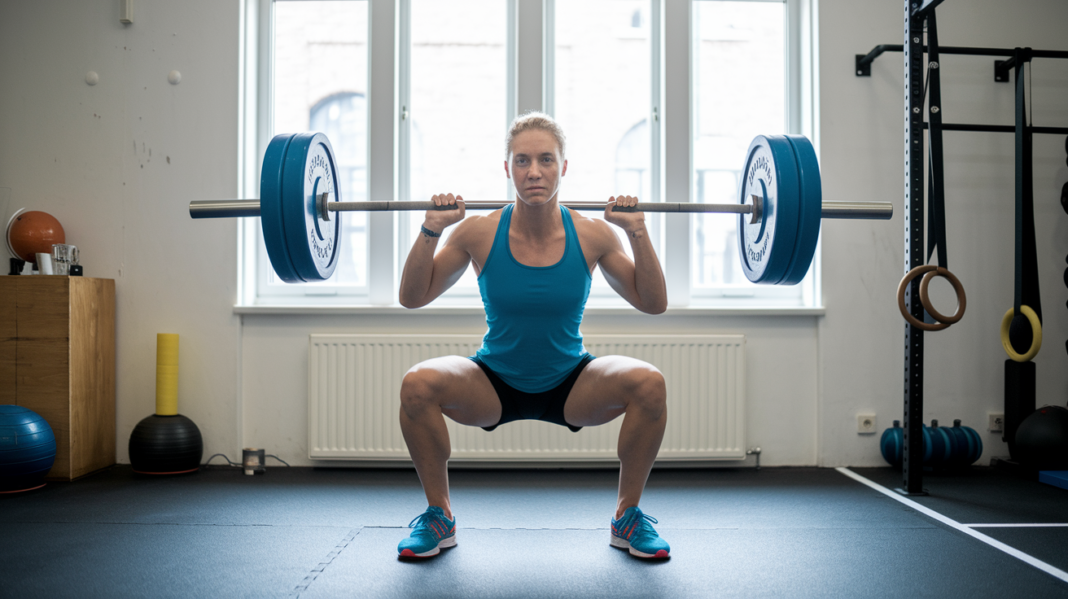
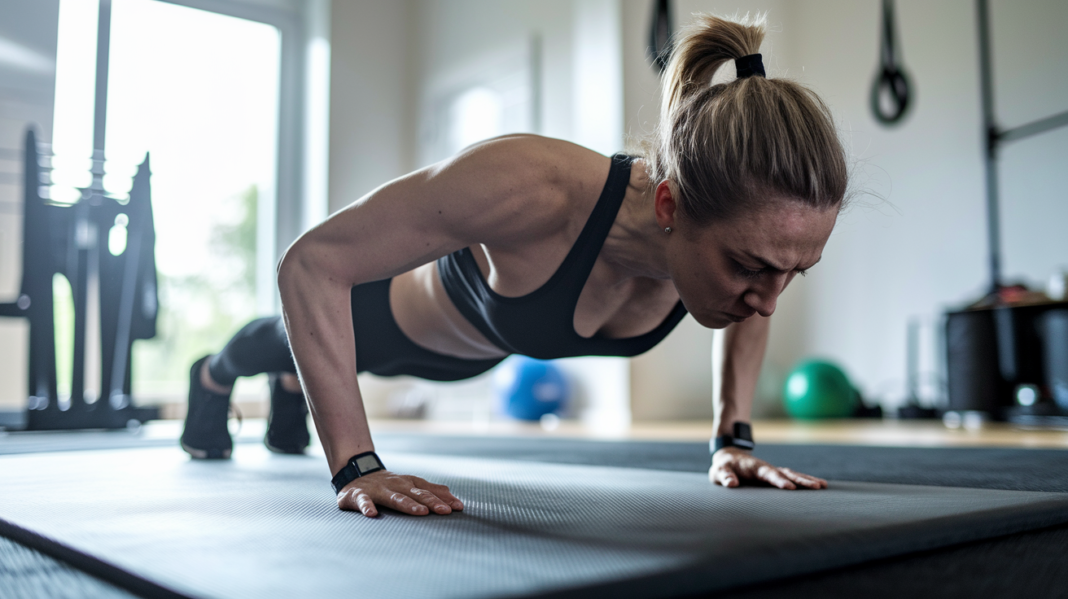
You can build real muscle without a single dumbbell.
Bodyweight training creates the same mechanical tension as weights by using your mass, changing leverage, slowing tempo, and working close to fatigue.
It’s about progressing reps, harder variations, and time under tension, not buying gear.
This guide gives simple step-by-step progressions, sets and rep targets, and a three-day plan so you can get stronger at home, track real progress, and skip the guesswork.
How Bodyweight Training Builds Muscle Effectively

Bodyweight training builds muscle by creating mechanical tension in your muscles using your own mass as resistance. When you do a push-up, hold a plank, or squat with just your body, your muscles generate force to move or stabilize your frame. That tension, especially when you push close to fatigue, triggers the same hypertrophy response as lifting weights.
The key difference is how you increase difficulty. Instead of adding weight to a bar, you manipulate leverage, tempo, range of motion, or switch to single-limb variations. A standard push-up becomes a decline push-up, then a diamond push-up, then an archer push-up. Each step makes the exercise harder without touching a dumbbell.
Here’s a starting list that covers every major muscle group:
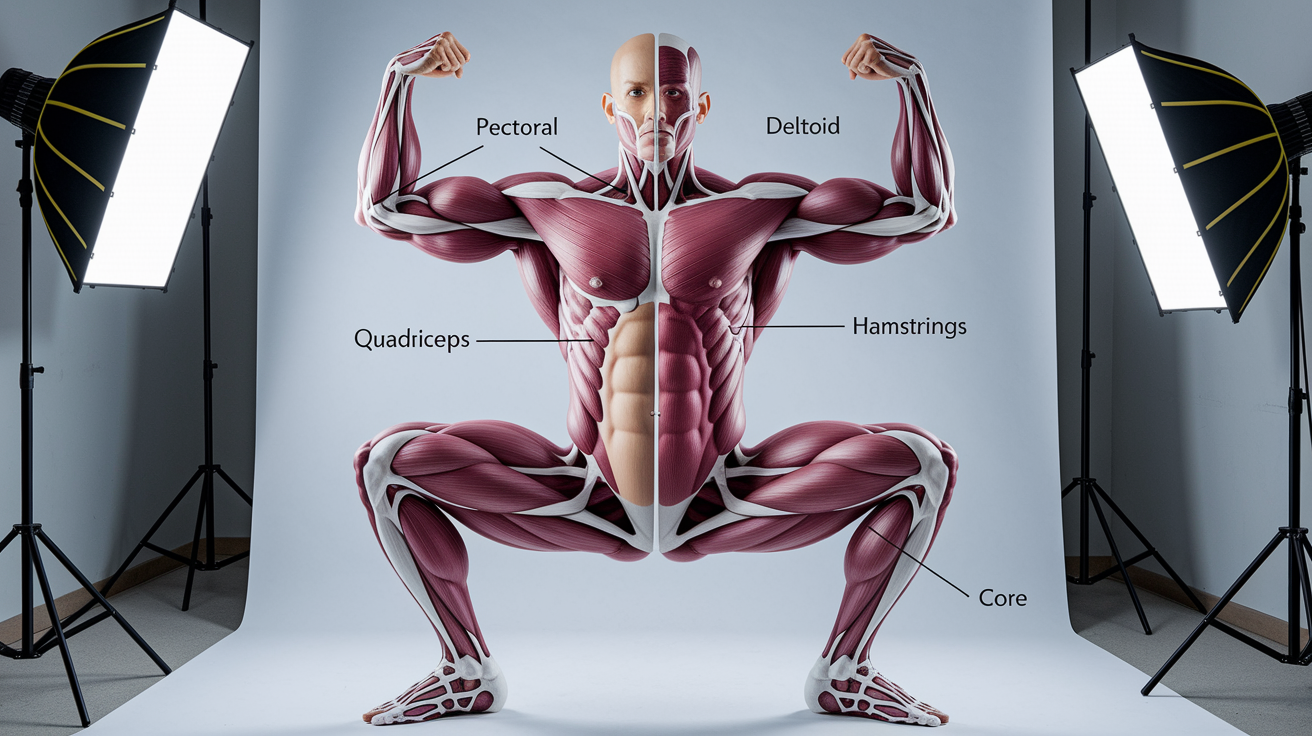
- Push-ups (chest, shoulders, triceps)
- Dips using a chair or bench (triceps, chest, front shoulders)
- Squats (quads, glutes, calves)
- Lunges (quads, glutes, hamstrings)
- Glute bridges (glutes, hamstrings, lower back)
- Plank (entire core, shoulders)
- Side plank (obliques, glute stability)
- Inverted row using a table or sturdy bar (back, biceps)
To use these for muscle growth, pick 4 to 6 exercises per session and perform 3 sets of 8 to 15 reps, stopping 1 to 2 reps before failure. Train 3 days per week on non-consecutive days. Each week, try to add one or two reps to at least one set, or make the movement slightly harder by slowing the descent to a 3 second count. That’s the simplest hypertrophy blueprint using only bodyweight.
Fundamentals of Bodyweight Strength and Hypertrophy

Mechanical tension is the primary driver of muscle growth. When your muscle fibers contract hard enough and sustain that contraction through a full range of motion, they experience microscopic damage that the body repairs, adding a bit more size and strength. Bodyweight exercises create this tension by forcing muscles to move or stabilize your entire body mass against gravity. A full push-up loads roughly 70% of your bodyweight onto your chest, shoulders, and triceps. Hold a plank and your core, shoulders, and glutes fire hard to keep your body rigid.
Training volume matters as much as tension. Volume is calculated as sets multiplied by reps. For hypertrophy, most people respond well to 10 to 20 sets per muscle group per week, spread across 2 to 4 sessions. With bodyweight training, you hit this volume by doing multiple exercises that target the same muscles from different angles and by adding extra sets as you get stronger. A beginner might do 3 sets of 10 push-ups twice a week for a total of 6 sets. An intermediate lifter might do 4 sets of 15 regular push-ups, 3 sets of 10 decline push-ups, and 3 sets of 8 diamond push-ups across two sessions, totaling 10 sets of pressing volume.
Training close to failure is critical when you can’t easily add external load. Stopping your set at 5 reps when you could’ve done 12 won’t trigger much growth. You want to work until the last 1 to 3 reps feel genuinely hard, where your form starts to wobble or your tempo slows down. That’s where the real stimulus happens. You don’t have to go to absolute failure every set. Leaving 1 or 2 reps in reserve is fine and often safer. But coasting through easy reps won’t build muscle.
Progressive Overload Techniques Without Equipment
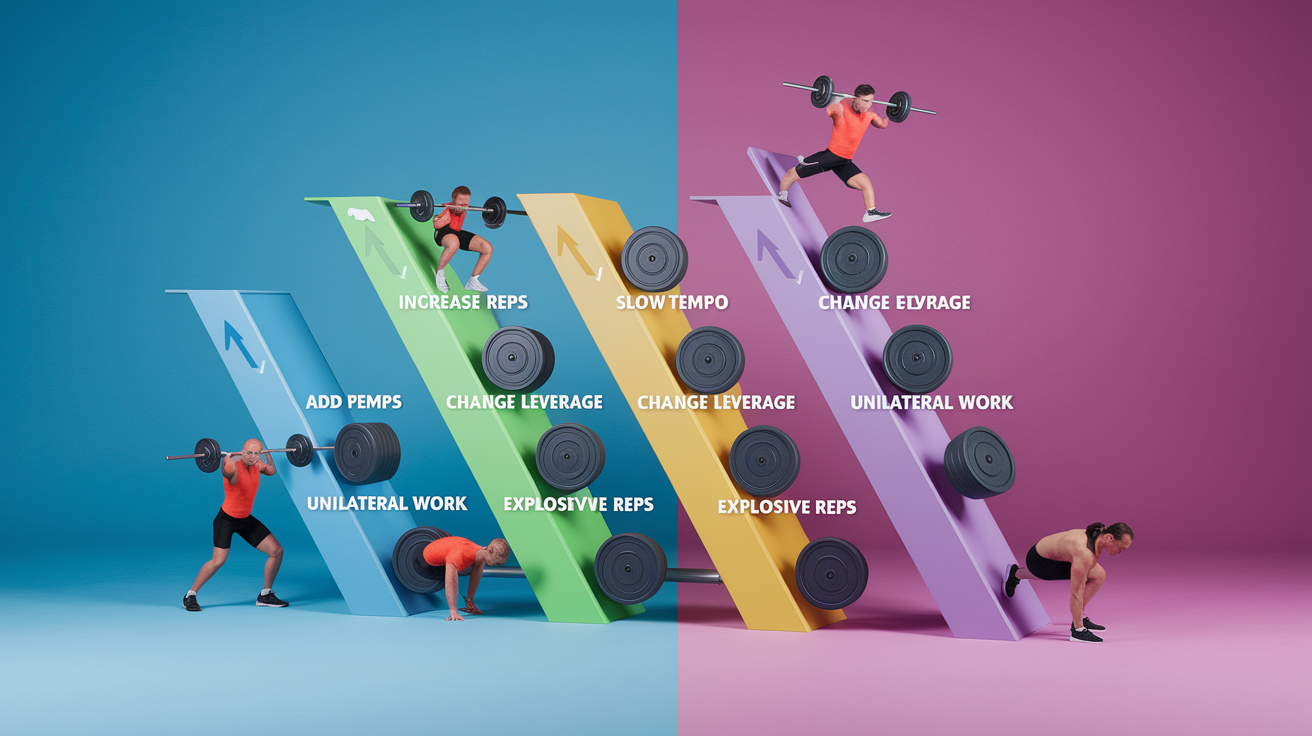
Progressive overload means making your training harder over time so your muscles are forced to adapt. Without weights, you manipulate exercise difficulty instead of adding plates.
Six practical ways to increase intensity:
- Increase reps or sets. Add 1 to 2 reps per set each week, or add an extra set to an exercise.
- Slow the tempo. Lower yourself over 3 to 5 seconds during the eccentric (lowering) phase. This increases time under tension.
- Change leverage. Elevate your feet during a push-up, perform a pistol squat instead of a regular squat, or use an archer push-up instead of a standard one.
- Add pauses. Hold the bottom of a squat or push-up for 2 to 5 seconds before pressing back up.
- Use unilateral (single-limb) variations. Single-leg squats, one-arm push-ups, and single-leg glute bridges double the load on one side of your body.
- Incorporate explosive reps. Jump squats, clap push-ups, or plyometric lunges train power and recruit more muscle fibers.
Apply these methods one at a time. If you’re doing 3 sets of 10 push-ups this week, aim for 3 sets of 11 or 12 next week. Once you can do 3 sets of 15 comfortably, switch to a harder variation like decline push-ups and drop back to 3 sets of 8. Keep a simple log. Your phone’s notes app works fine. Track reps, sets, and any tempo or variation changes. Progress happens when you can look back four weeks and see clear improvement in one of those variables.
Key Muscle Group Exercises and How to Perform Them
Upper Body Push
Push-up
Start in a high plank with hands slightly wider than shoulder width, body forming a straight line from head to heels. Lower your chest toward the floor by bending your elbows to about 45 degrees from your body, not flared straight out. Press back up until your arms are straight. Keep your core tight and glutes squeezed the entire time. If a full push-up is too hard, start with hands elevated on a bench or table, or drop to your knees.
Decline push-up
Same form as a standard push-up, but place your feet on a stable surface like a chair, bench, or step. This shifts more load onto your shoulders and upper chest. Keep the same body alignment and controlled tempo.
Dips
Use two sturdy chairs, a bench, or parallel bars if you have access. Place your hands on the edge of the surface, feet together in front of you or elevated behind you. Lower your body by bending your elbows until your upper arms are roughly parallel to the floor. Press back up to straight arms. Lean forward slightly to emphasize chest. Stay more upright to target triceps. Avoid letting your shoulders shrug up toward your ears.
Lower Body Training
Squat
Stand with feet shoulder width apart, toes slightly turned out. Push your hips back and bend your knees, lowering until your thighs are at least parallel to the floor or as deep as you can go while keeping your heels down and chest up. Your knees should track over your toes. Drive through your whole foot to stand back up.
Lunge
Step forward with one leg and lower your back knee toward the floor until both knees are bent about 90 degrees. Your front shin should stay vertical and your torso upright. Push through your front heel to return to standing. Alternate legs. For a reverse lunge, step backward instead, which is often easier on the knees.
Step-up
Find a stable box, bench, or step about knee height. Step one foot fully onto the surface and drive through that heel to lift your body up, bringing your other foot to meet it. Step back down with control. This builds single-leg strength and mimics real world movement.
Pistol squat progression
The pistol squat is a single-leg squat where the non-working leg extends straight out in front of you. Start by practicing the bottom position. Sit on a low box or bench and stand up on one leg. Progress to lowering yourself slowly with assistance (hold a door frame or suspension strap), then work toward the full unassisted movement. It takes time. Don’t rush it.
Core and Midline
Plank
Hold a high plank or forearm plank position with your body in a straight line from head to heels. Squeeze your glutes, brace your abs like someone is about to punch your stomach, and keep your neck neutral. Hold for 20 to 60 seconds. If your hips sag, drop to your knees or shorten the hold time.
Hollow body hold
Lie on your back, press your lower back into the floor, and lift your shoulders and legs a few inches off the ground. Extend your arms overhead or keep them by your sides. Your body should form a slight “C” shape. Hold for 10 to 30 seconds. This is a foundational gymnastics drill that builds serious core strength.
Hanging knee raise
If you have access to a pull-up bar, hang from it with your arms straight. Lift your knees toward your chest by contracting your abs, not by swinging. Lower with control. For a harder version, keep your legs straight (hanging leg raise). This hits the lower abs and hip flexors hard.
Rotational core work
Side planks, plank shoulder taps, or mountain climbers train anti-rotation and dynamic core stability. These movements prepare your core for real world tasks and athletic performance, not just static holds.
| Exercise | Main Muscle Worked | Difficulty Level |
|---|---|---|
| Push-up | Chest, triceps, shoulders | Beginner |
| Dip (chair or bench) | Triceps, chest | Intermediate |
| Squat | Quads, glutes | Beginner |
| Pistol squat | Quads, glutes (single leg) | Advanced |
| Plank | Core, shoulders | Beginner |
| Hollow body hold | Abs, hip flexors | Intermediate |
Bodyweight Training Programs for All Levels
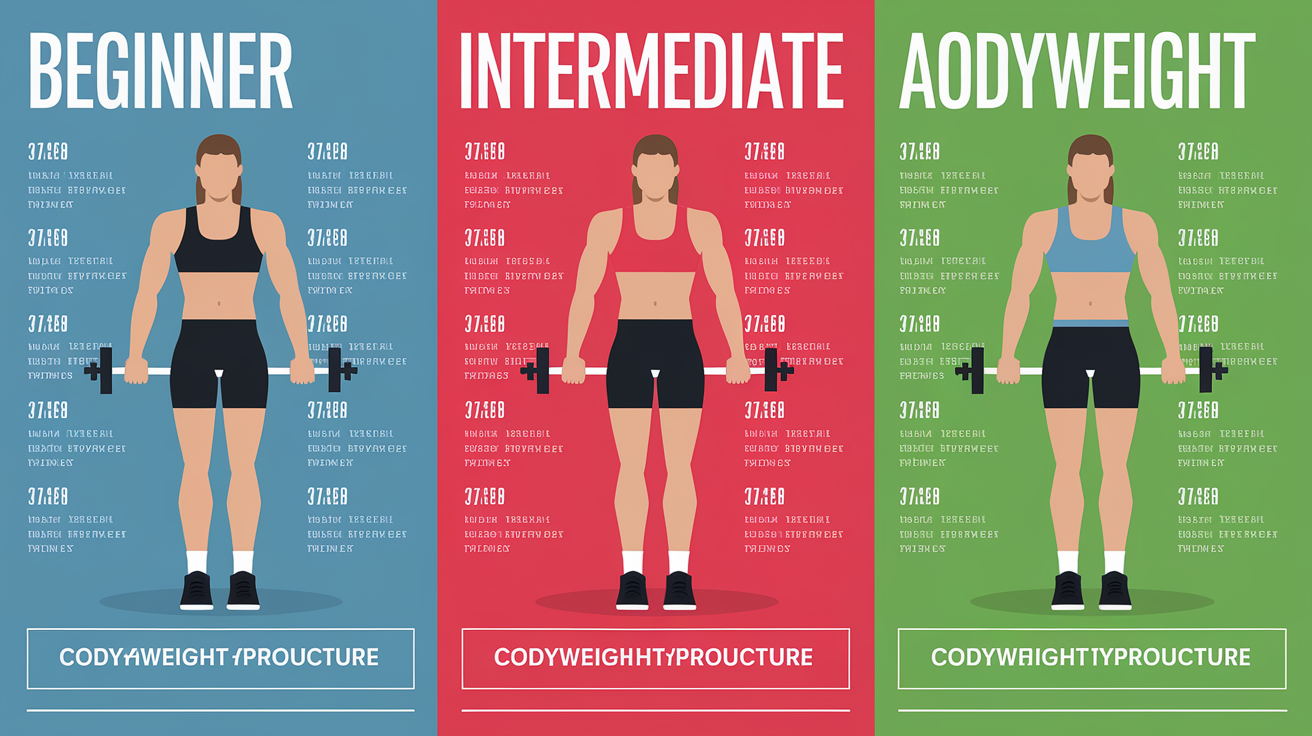
Structured programs give you a clear path forward instead of guessing what to do each session. They also help you balance volume, intensity, and recovery so you don’t overtrain one muscle group and neglect another.
Beginner routine (3 days per week, full body)
- 3 sets of 8 to 12 push-ups (use an incline if needed)
- 3 sets of 10 to 15 squats
- 3 sets of 8 to 12 glute bridges
- 3 sets of 8 to 12 inverted rows (under a table) or assisted pull-ups if you have a bar
- 3 sets of 20 to 45 second plank holds
Each week, try to add 1 or 2 reps to each set. Rest 60 to 90 seconds between sets. If you can hit 3 sets of 15 reps on an exercise, move to a harder variation next session.
Intermediate routine (4 days per week, upper/lower split)
Upper day (2 times per week):
- 4 sets of 6 to 10 decline push-ups
- 4 sets of 6 to 10 inverted rows
- 3 sets of 8 to 12 pike push-ups (for shoulders)
- 3 sets of 10 to 15 dips
- 3 sets of 30 to 60 second side plank (each side)
- 2 sets of 10 plank shoulder taps
Lower day (2 times per week):
- 4 sets of 8 to 12 Bulgarian split squats (rear foot elevated on a bench)
- 4 sets of 6 to 10 single-leg Romanian deadlifts (bodyweight, focus on balance and control)
- 3 sets of 12 to 15 glute bridges
- 3 sets of 10 to 15 step-ups (each leg)
- 3 sets of 10 to 15 jump squats
- 2 sets of 20 to 30 second hollow body holds
Advanced routine (5 to 6 days per week, push/pull/legs split or skill work)
Push day:
- 5 sets of 5 to 8 archer push-ups or one-arm push-up progressions (each side)
- 4 sets of 6 to 10 handstand push-ups (wall-assisted if needed)
- 4 sets of 8 to 12 ring or parallel bar dips
- 3 sets of 10 to 15 diamond push-ups
- 3 sets of max reps decline push-ups (drop set at the end)
- 3 sets of 45 to 90 second plank or RKC plank (intense contraction version)
Pull day (if you have a bar):
- 5 sets of 5 to 10 pull-ups or chin-ups
- 4 sets of 6 to 10 archer rows or one-arm rows
- 3 sets of 8 to 12 inverted rows (feet elevated)
- 3 sets of 10 to 15 hanging knee raises
- 3 sets of 30 to 60 second dead hangs for grip and shoulder health
Leg day:
- 5 sets of 5 to 8 pistol squats (each leg)
- 4 sets of 8 to 12 Bulgarian split squats with a 3 second eccentric
- 4 sets of 10 to 15 single-leg glute bridges
- 3 sets of 10 to 15 jump lunges or box jumps
- 3 sets of 20 to 30 second single-leg balance holds or single-leg RDLs
Adjust volume based on how you recover. If you’re consistently sore for days, sleeping poorly, or your performance drops week over week, reduce sets by 10 to 20 percent or take an extra rest day. Training hard matters. But so does recovering well enough to train hard again the next session.
Tips for Maximizing Muscle Growth Without Weights

Recovery and nutrition are just as important as your training sessions. Muscle doesn’t grow during the workout. It grows during the hours and days after when your body repairs the damage. Protein is the building block. Aim for roughly 1.6 to 2.2 grams per kilogram of bodyweight per day. If you weigh 70 kg, that’s 112 to 154 grams. Spread it across 3 to 4 meals. Chicken, eggs, Greek yogurt, lentils, tofu. Whatever fits your diet.
Sleep quality directly affects muscle recovery and performance. Seven to nine hours per night is the standard recommendation for a reason. If you’re training hard on five hours of sleep, you’re limiting your gains. Your body releases growth hormone during deep sleep, and poor sleep tanks testosterone and increases cortisol, both of which hurt muscle growth.
Consistency beats intensity over the long run. Training three times per week for six months will build more muscle than going all in for two weeks, burning out, and quitting. Pick a schedule you can actually stick to, even on busy or stressful weeks. Two solid sessions are better than zero.
Five common mistakes to avoid:
- Skipping progressions. Doing the same routine at the same difficulty for months without adding reps, sets, or harder variations.
- Ignoring tempo. Rushing through reps without control, especially on the eccentric (lowering) phase where a lot of growth happens.
- Training through pain. Soreness is normal. Sharp or joint pain is a warning sign. Back off and fix your form or rest.
- Not eating enough. Bodyweight training still requires fuel. If you’re undereating, you won’t recover or grow.
- Neglecting rest days. Muscles grow during recovery, not during the workout. Take at least one or two full rest days per week.
Start using the core moves and progressions we covered: push-ups, squats, rows, tempo work, and leverage changes. Do them near failure, then add reps or harder variations.
Use the sample programs and adjust volume based on how you recover. Keep protein, sleep, and consistency steady.
Stick with this simple system and you can build real strength with strength training without weights. Small, steady steps add up. You’ve got this.
FAQ
Q: Is it possible to do strength training without weights, and can you build muscle without weight lifting?
A: Doing strength training without weights and building muscle without weight lifting is possible by using bodyweight moves that create mechanical tension, progressing with harder variations, more reps, slower tempo, and training near failure.
Q: What is the 3 3 3 rule for exercise?
A: The 3 3 3 rule for exercise usually means three sets of three reps for strength work; some people use it as a simple plan: three exercises, three sets, three sessions per week.
Q: Can strength training improve bone density?
A: Strength training improves bone density by loading bones, which stimulates remodeling and strength; weight-bearing and resistance moves done 2 to 3 times weekly help increase and maintain bone mass.