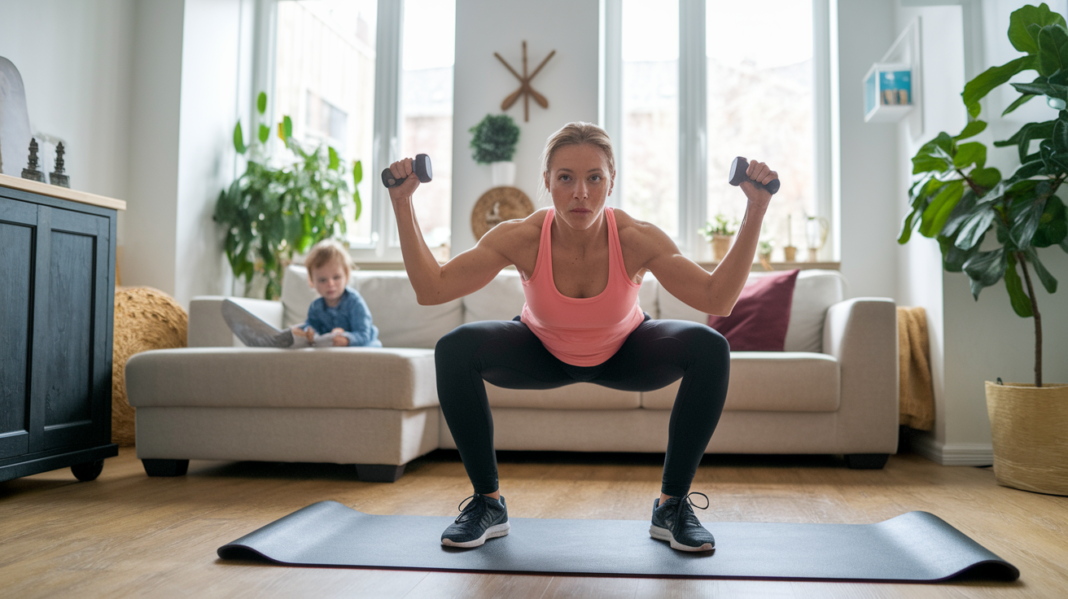
You don’t have to wait months to feel strong after giving birth. This 15–25 minute postpartum-safe beginner strength circuit uses bodyweight and light support, teaches breathing and pelvic floor cues, and rebuilds glutes, legs, back, and upper body without high abdominal pressure. Read on for the full 8-exercise circuit, quick safety checks, simple modifications, and a step-by-step plan you can do 1–3 times a week. If you’re tired or just starting, one round is enough, no guilt, just steady progress.
The Complete Beginner Strength Circuit Designed For Safe Postpartum Recovery
This circuit keeps everything bodyweight or lightly supported. Nothing spikes abdominal pressure or strains a healing pelvic floor. You’ll move through eight exercises that restore strength from the inside out, starting with breath and pelvic floor activation before loading glutes, legs, back, and upper body. Each exercise sits in a 6–15 rep range with short rest windows to keep things efficient without pushing you past fatigue.
Run the circuit for 2–3 full rounds. Rest 30–60 seconds between exercises and 1–2 minutes between rounds. Total time is around 15–25 minutes, depending on your rest needs and how many rounds you complete. If you’re just starting or feel extra tired, one full round is enough. Two rounds is the sweet spot for most new mothers in weeks 2–6 of training.
Every exercise pairs with a gentle exhale on the effort phase and a soft inward lift of the pelvic floor. No breath holding. No bearing down. This breathing pattern protects your core and pelvic floor while you rebuild strength.
Full 8-Exercise Postpartum-Safe Circuit
• Diaphragmatic breathing + pelvic floor activation, 6–10 gentle lifts, 2–3 second hold
• Heel slides (supine), 8–12 reps per side, 2 sets
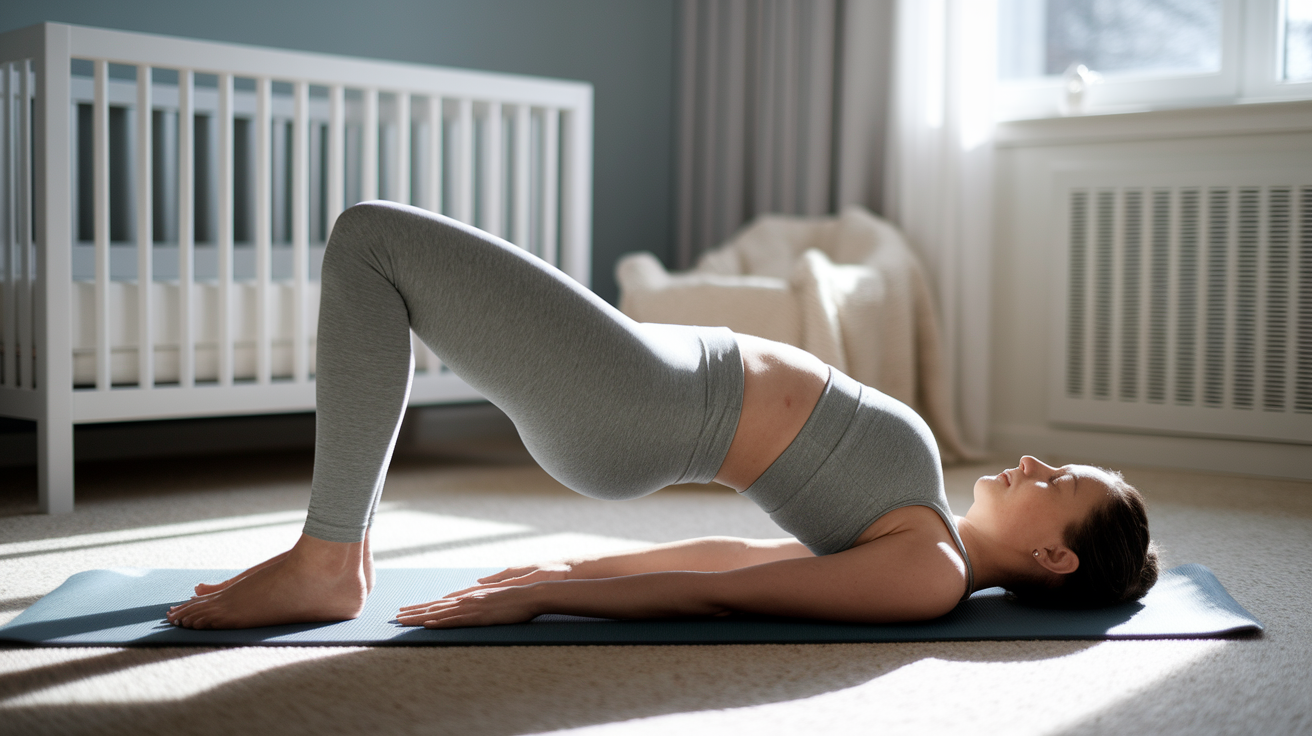
• Glute bridge (feet hip width), 10–15 reps, 2–3 sets
• Supported squat to chair, 8–12 reps, 2–3 sets
• Standing band row or bent over row with light dumbbells, 8–12 reps, 2–3 sets
• Bird dog (kneeling, opposite arm and leg), 8–10 reps per side, 2 sets
• Side lying clamshell, 10–15 reps per side, 2 sets
• Wall or incline push up, 6–12 reps, 2 sets
Pre-Circuit Safety Checks To Ensure Your Beginner Strength Routine Is Postpartum-Safe
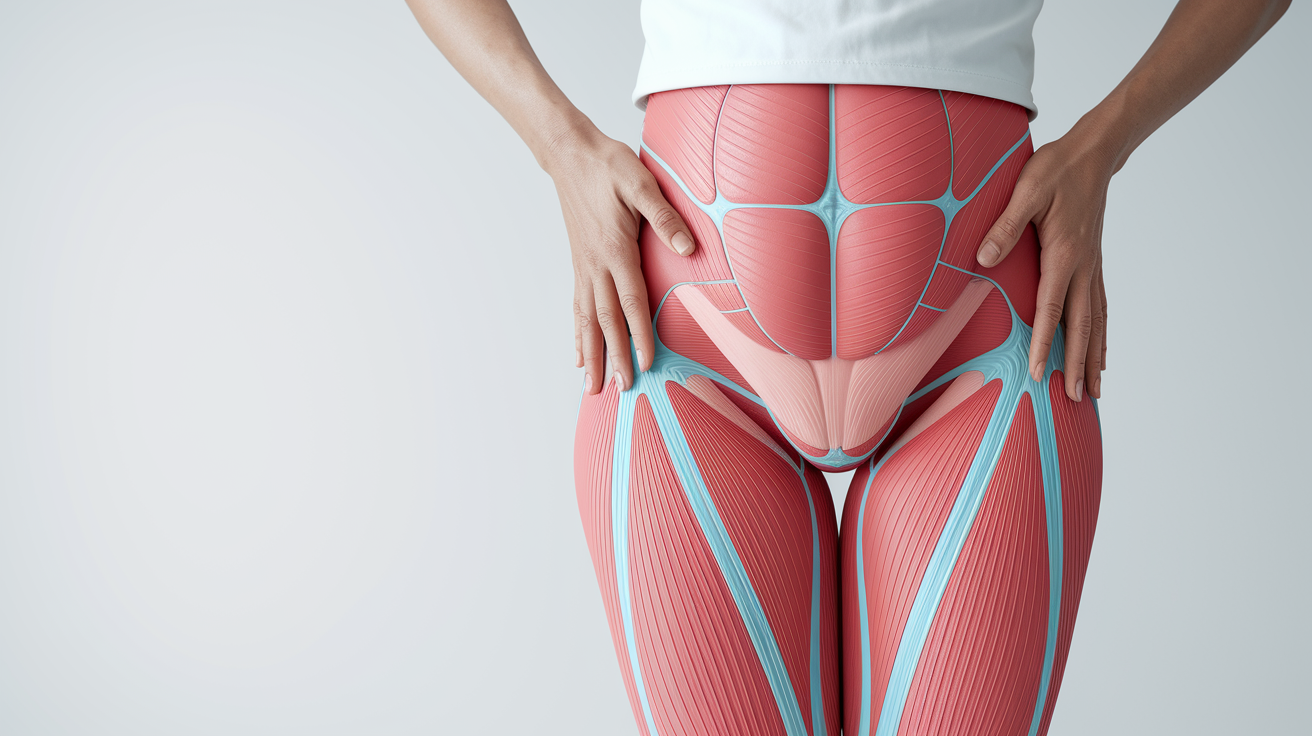
Lie on your back with knees bent and feet flat. Try a gentle pelvic floor squeeze, like you’re stopping the flow of urine or holding in gas. You’re looking for a subtle inward and upward lift that you can hold for 2–3 seconds without straining your face, holding your breath, or bearing down. If you can’t feel anything or the squeeze feels weak, prioritize daily pelvic floor practice before loading any exercise. No judgment. Many new mothers start here.
For a quick diastasis recti check, stay supine with knees bent. Place two or three fingers just above your belly button. Slowly lift your head and shoulders an inch off the floor. If you feel a gap wider than two fingers or see a visible dome or cone shape rising along the midline, stop loading your abs with traditional exercises. Focus on gentle transverse activation instead. A small gap without doming is usually fine. A wide gap with bulging needs careful management and possibly specialist input.
| Check | How to Perform | Red Flags |
|---|---|---|
| Pelvic floor test | Gentle inward/upward squeeze; hold 2–3 seconds | No sensation, inability to hold, bearing down instead of lifting |
| Diastasis recti check | Supine head lift; measure gap above navel with fingers | >2 finger widths or visible doming/coning at midline |
| Incision/perineal check | Gentle palpation of C-section scar or perineum for tenderness | Sharp pain, redness, warmth, or open areas |
| Bleeding/pain screening | Note current discharge color and pain level at rest | Heavy bright red bleeding, sharp pelvic pain, or bulge sensation |
Warm-Up Essentials To Prepare Your Body For a Postpartum-Safe Strength Circuit
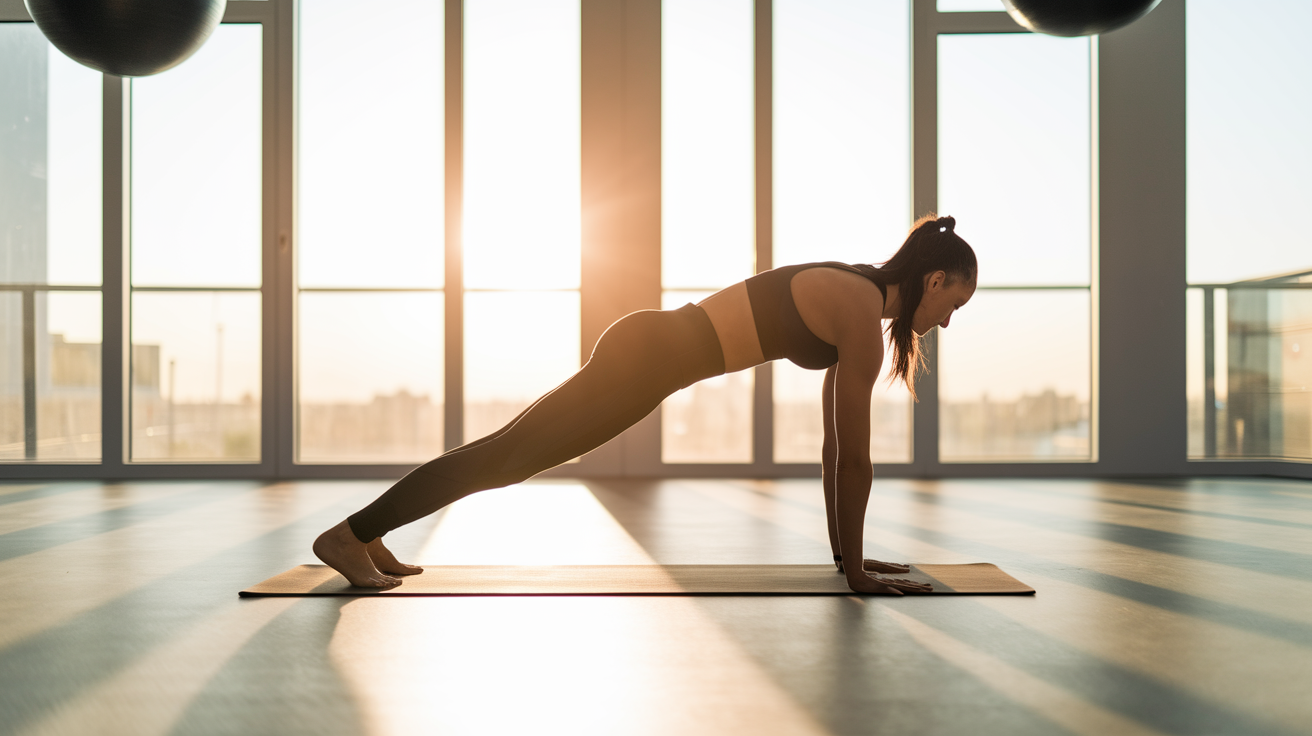
A 5–10 minute warm up gives your nervous system, joints, and recovering tissues a heads up that movement is coming. Three to five minutes of light walking or marching in place increases blood flow without spiking heart rate or intra abdominal pressure. Follow that with simple mobility drills that rehearse the movement patterns you’ll use in the circuit, like pelvic tilts and hip opening.
Mobility work matters more postpartum than it did before pregnancy. Your ligaments are still settling after months of relaxin, and your posture has shifted from carrying a baby in front. Gentle cat cow spinal waves and ankle pumps restore normal range of motion and reduce compensatory strain on your lower back and hips.
5-Step Postpartum Warm-Up Sequence
- Light marching in place or slow walking, 3–5 minutes
- Pelvic tilts (supine or standing), 8–12 reps
- Cat cow (on hands and knees), 6–8 slow cycles
- Ankle pumps and circles (seated or supine), 10 reps each direction per foot
- Diaphragmatic breathing with gentle pelvic floor activation, 6–8 breaths
Brief Timing & Clearance Guidance Before Beginning Postpartum Strength Training

Most providers clear new mothers around 6 weeks postpartum after an uncomplicated vaginal delivery and 8–12 weeks after a C-section, though individual healing timelines vary. Clearance doesn’t mean you jump straight into pre pregnancy workouts. It means you’re safe to begin gentle, progressive loading if your body signals readiness.
Getting formal clearance helps confirm that your cervix has closed, bleeding has resolved to light spotting or stopped entirely, and any perineal or abdominal incisions have healed enough to handle low impact stress. This check in also gives you a chance to ask about diastasis recti, pelvic floor symptoms, or lingering discomfort before you start a regular routine.
Key Signs of Readiness to Begin Gentle Strength Training
• Lochia (postpartum bleeding) has shifted to light pink or brown discharge or stopped completely
• No sharp or persistent pain in the pelvic region, perineum, or C-section incision site
• Medical provider has given explicit clearance at your postpartum visit
Modifications & Symptom-Based Adjustments For Your Postpartum Strength Circuit
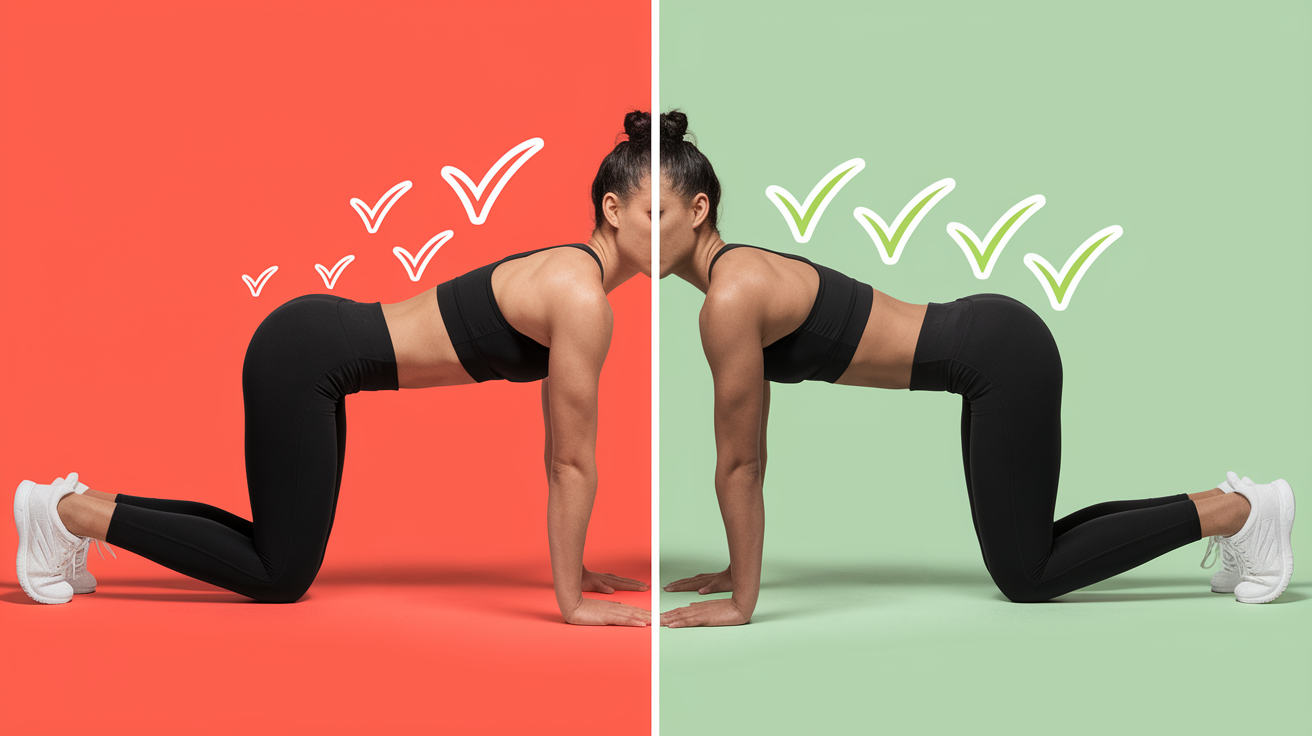
If an exercise causes a visible dome or bulge along your midline, a sensation of pelvic heaviness, or any urine leakage, stop that movement and drop to an easier variation. For example, swap a standard glute bridge for a single leg bridge with the working foot closer to your hips, or replace a wall push up with a hands on counter push that keeps your torso more upright. Smaller range, lighter load, and supported positions almost always solve the problem.
Some days you’ll feel stronger than others. Breastfeeding, broken sleep, and hormonal shifts all affect energy and joint stability. On low energy days, cut reps to 6–8, complete just one or two rounds, or use a chair or wall for extra support on every standing exercise. Progress isn’t linear postpartum. Flexibility beats rigidity.
6 Safe Modification Strategies for Postpartum Training
• Reduce range of motion (partial squats, shorter lunges, smaller arm circles)
• Use external support (chair back for squats, wall for push ups, elevated surface for rows)
• Lower starting reps to 6–8 and rounds to 1–2
• Avoid double leg movements if single leg or staggered stance variations feel more stable
• Shorten hold times on static exercises like wall sits or bird dog
• Skip any exercise that triggers doming, pelvic pressure, or leakage and replace with a gentler alternative
Cool-Down Stretches To Finish Your Postpartum-Friendly Strength Circuit Safely

Your cool down closes the session with 5–7 minutes of diaphragmatic breathing, gentle stretching, and intentional pelvic floor relaxation. Lie on your back with knees bent or propped on a pillow. Place one hand on your chest and one on your belly. Breathe slowly into your belly, allowing it to rise, then exhale fully and let your pelvic floor soften and release. This teaches your pelvic floor to lengthen, not just contract.
Follow breathing with light stretches for the hip flexors, chest, and upper back. New mothers spend hours in forward leaning positions while feeding, carrying, and soothing babies. Stretching these areas counteracts that posture and reduces neck and shoulder tension.
4 Recommended Cool-Down Stretches
• Diaphragmatic breathing with pelvic floor relaxation cues, 6–10 slow breaths
• Supine hip flexor stretch (one knee to chest, opposite leg extended), 20–30 seconds per side
• Doorway chest stretch or hands clasped behind back shoulder opener, 20–30 seconds
• Child’s pose or cat stretch for low back and lats, 30–60 seconds
Progression Guidelines For Advancing Your Postpartum Beginner Strength Circuit
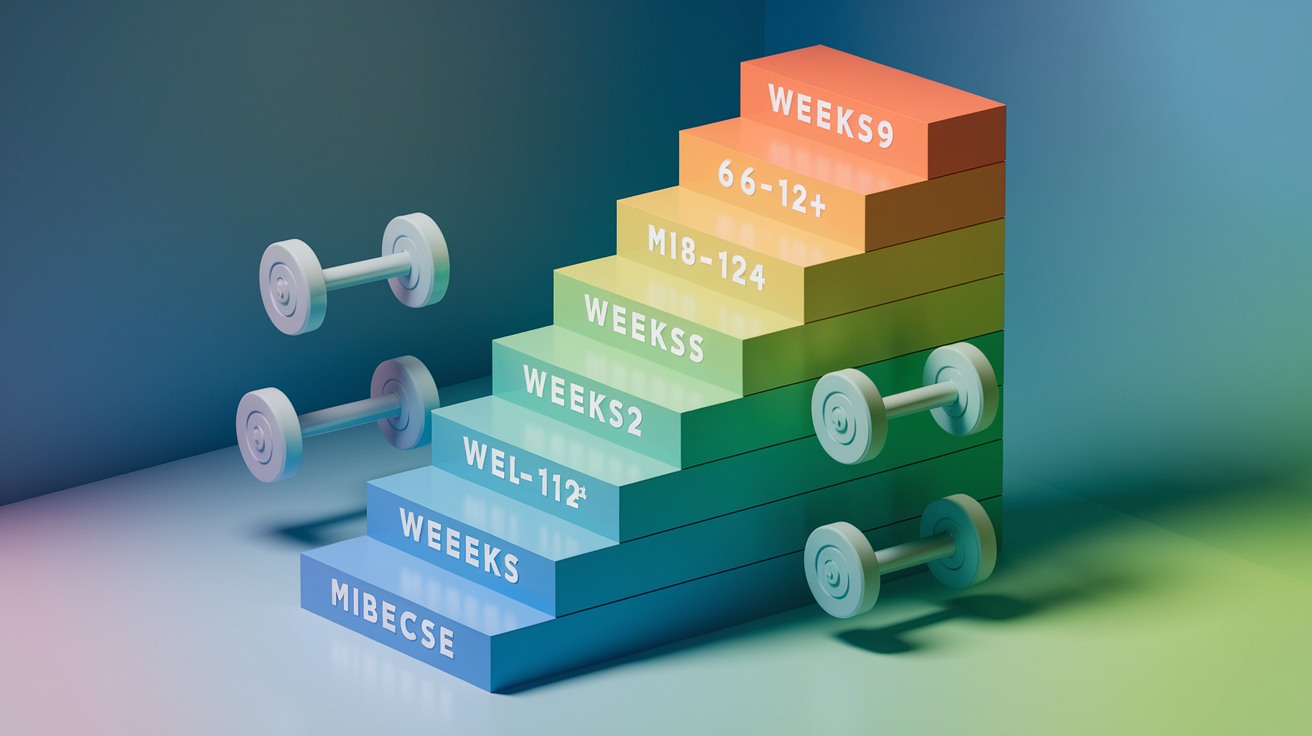
Start with 2 sessions per week for the first 2–4 weeks, allowing 48 hours of rest between training days. Once you’re completing 2–3 full rounds with stable pelvic floor control and no doming or discomfort, add a third weekly session. From there, build volume before intensity. Add one set to each exercise, then increase reps by 2–4, then consider adding 1–2 pounds of resistance with light dumbbells or a slightly stronger resistance band.
After 6–12 weeks of symptom free training and clearance from your provider or a pelvic floor physical therapist, you can begin advancing movement complexity. That might mean progressing from a supported squat to a bodyweight squat, from wall push ups to incline push ups on a bench, or from bird dog holds to bird dog with small pulses. Always exhale with effort. Never hold your breath or bear down.
| Week Range | Volume | Progression Target |
|---|---|---|
| 1–2 | 1–2 rounds, 6–8 reps, 2 sessions/week | Build movement confidence and pelvic floor coordination |
| 3–6 | 2–3 rounds, 8–12 reps, 2–3 sessions/week | Increase sets and reps; maintain form and breathing |
| 6–12+ | 2–3 rounds, 10–15 reps, 3 sessions/week | Add light weight or resistance; advance exercise variations |
Exercises To Avoid Early In a Postpartum Strength Circuit
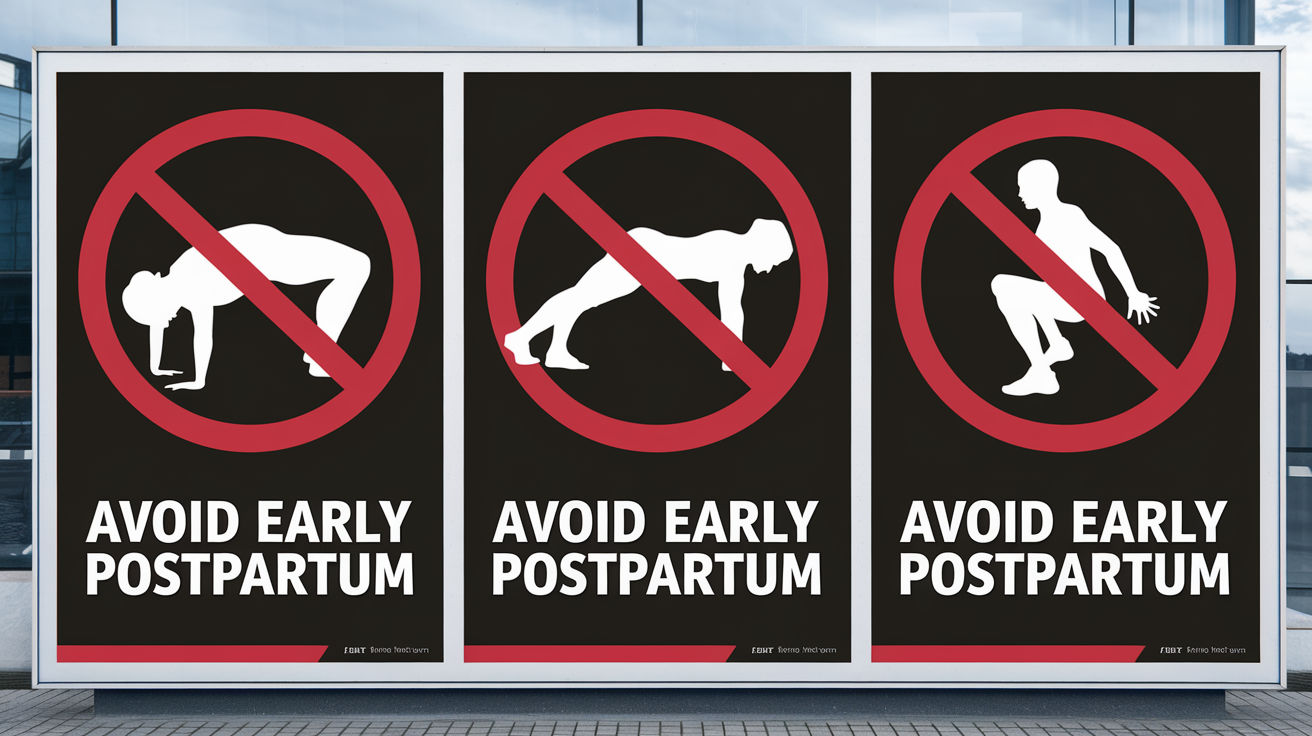
Traditional crunches, full sit ups, and long hold planks create high intra abdominal pressure and can worsen diastasis recti or pelvic floor dysfunction if introduced too early. Skip them until you’ve rebuilt deep core control and your midline shows no doming during gentler loaded movements. Heavy barbell squats or deadlifts that encourage breath holding fall into the same category. Wait until your pelvic floor can handle pressure spikes without leaking or bulging.
6 Movements to Skip Until Cleared by a Specialist
• Standard crunches and full sit ups
• Full planks if you see doming or feel pelvic pressure
• Heavy loaded squats or deadlifts with Valsalva (breath holding)
• High impact plyometrics like jump squats, box jumps, or burpees
• Loaded twisting exercises (Russian twists, woodchops with weight)
• Double leg lowers or hanging leg raises
Essential Equipment For a Beginner Postpartum Strength Circuit
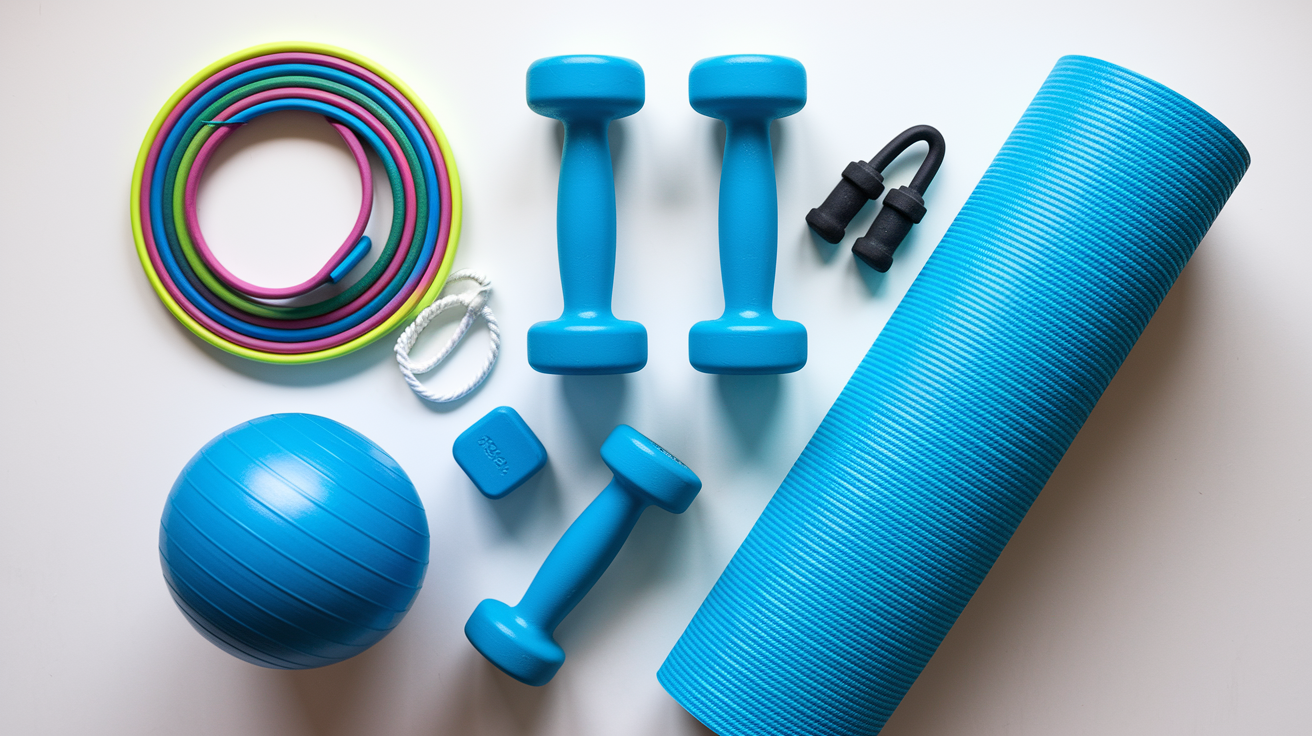
Bodyweight alone covers every exercise in the basic circuit. You can complete heel slides, glute bridges, supported squats, bird dogs, clamshells, and wall push ups with zero gear. When you’re ready to add light resistance, a set of loop bands and a pair of 3–8 pound dumbbells will carry you through months of progressive training without a large investment or storage footprint.
| Item | Approximate Cost | Purpose |
|---|---|---|
| Resistance band set (light to medium tension) | $10–25 | Rows, clamshells, and upper body work |
| Light dumbbells (3–8 lb per hand) | $15–60 per pair | Rows, arm lifts, and progressive loading |
| Yoga mat | $15–40 | Cushioning for floor exercises |
| Stability ball | $20–40 | Optional support for bridges and stretches |
Warning Signs, Red Flags & When To Seek Professional Postpartum Support

Stop your session immediately if you notice new or heavier bright red vaginal bleeding during or after exercise. Light pink or brown spotting can be normal in early postpartum weeks, but a return to period like flow signals that you’re doing too much too soon. Sharp or persistent pelvic pain, pain at a C-section incision site, or a sensation that something is bulging or dropping in your pelvic area all require a same day call to your provider or a visit within the week if symptoms don’t resolve with rest.
If you experience new or worsening urinary leakage, fecal incontinence, or pelvic pressure that gets worse as the day goes on, pause your training program and consult a pelvic floor physical therapist. These specialists assess pelvic floor strength, coordination, and organ support, then build an individualized rehab plan. Most symptoms improve with targeted exercises and manual therapy. Waiting months to get help usually makes recovery longer and harder.
7 Red Flags That Require Immediate Medical or Specialist Evaluation
• New or increased heavy vaginal bleeding (soaking a pad in an hour or less)
• Sharp, sudden pelvic pain or pain at the C-section or episiotomy site
• Sensation of a bulge, heaviness, or something “falling out” in the pelvic area
• New onset or worsening urinary or fecal incontinence
• Visible doming or coning at the midline greater than 2 finger widths during gentle head lifts
• Dizziness, shortness of breath, or chest pain during or after low intensity exercise
• Persistent severe pain that doesn’t improve with rest or modification within 1–2 weeks
Final Words
Start the circuit with diaphragmatic breathing, a gentle warm-up, and the 8 exercises—short rounds, steady reps, and safe progressions. Keep rests to 30–60 seconds and watch for pelvic pressure or doming.
Do the pre-checks, use modifications when needed, and finish with a calm cool-down. If something feels off, pause and get medical clearance.
Use this postpartum-safe beginner strength circuit slowly, aim for two to three sessions a week, and celebrate small wins. You’ll build strength, one steady step at a time.
FAQ
Q: What is the complete postpartum-safe beginner strength circuit?
A: The complete postpartum-safe beginner strength circuit is an eight-exercise, full-body routine using gentle, modified moves to rebuild strength while protecting the pelvic floor and healing tissues.
Q: Which eight exercises and rep ranges are in the circuit?
A: The eight exercises are diaphragmatic breathing (6–10 breaths), heel slides (8–12), glute bridges (8–15), supported squat to chair (6–12), standing band row (8–15), bird-dog (6–12 each side), clamshell (8–15 each side), wall/incline push-up (6–12).
Q: How is the circuit structured—sets, rounds, and rest?
A: The circuit is structured as 2–3 rounds, 6–15 reps per exercise depending on tolerance, with 30–60 seconds rest between exercises or rounds to allow recovery and avoid excess pelvic pressure.
Q: What breathing cues should I use to manage pressure during exercises?
A: The breathing cues are diaphragmatic breathing, exhale on effort, avoid breath-holding, and think gentle pelvic-floor engagement on inhale with a soft release on exhale to control internal pressure.
Q: What safety checks should I do before starting this postpartum circuit?
A: Before starting, do a pelvic-floor contraction test (gentle 2–3 second lift), a diastasis check (supine head lift), inspect incision/perineum, and screen for ongoing bleeding or sharp pain.
Q: How do I check for diastasis recti and when should I be cautious?
A: To check diastasis recti lie on your back, lift head slightly, feel for a gap; a gap wider than two fingers or visible doming means proceed cautiously and seek guidance.
Q: What warm-up should I do to prepare for the circuit?
A: The warm-up is 5–10 minutes: 3–5 minutes light cardio, then mobility drills like pelvic tilts (8–12), cat–cow (6–8), ankle pumps, and gentle movement to reduce pressure on healing tissues.
Q: When should I get medical clearance to begin postpartum strength training?
A: You should get medical clearance about six weeks after a vaginal birth and 8–12 weeks after a C-section, and only start if bleeding is light, pain is minimal, and your clinician approves.
Q: How can I safely modify exercises if I feel symptoms or low energy?
A: To modify, reduce range of motion, use wall or chair support, cut reps to 6–8, slow tempo, skip movements that cause doming, leaking, or pelvic pressure, and stop if symptoms worsen.
Q: How should I progress this postpartum circuit over time?
A: Progress by training 2–3 times weekly, add 2–4 reps first, then extra sets or 1–2 lb increments, and advance only after 6–12 weeks of symptom-free training while keeping normal breathing.
Q: Which exercises should I avoid early in postpartum recovery?
A: Avoid early high-pressure moves like crunches, full sit-ups, long planks if doming occurs, heavy deadlifts or squats with breath-holding, loaded twisting, and jump training until cleared and symptom-free.
Q: What equipment do I need for a beginner postpartum circuit?
A: The circuit needs minimal gear: optional resistance bands ($10–25), light dumbbells ($15–60), a mat ($15–40), or stability ball ($20–40); you can also do the program with bodyweight alone.
Q: What warning signs mean I should stop exercising and seek professional help?
A: Warning signs to stop are heavy bleeding, sharp pelvic or incision pain, a bulge or pressure in the vagina, new urine or stool leakage, or visible doming greater than two fingers.