Think you need a gym to get strong and conditioned? Think again.
One kettlebell and 20 to 30 minutes is enough to train your whole body.
This beginner kettlebell strength circuit uses six basic moves, done back-to-back for three rounds with short rests.
It builds strength, improves conditioning, and fits into a busy week.
Do it two to three times per week, keep form tight, and progress by adding weight or cutting rest.
In a few weeks you’ll see real, measurable results.
Quick-Start Beginner Kettlebell Circuit Overview
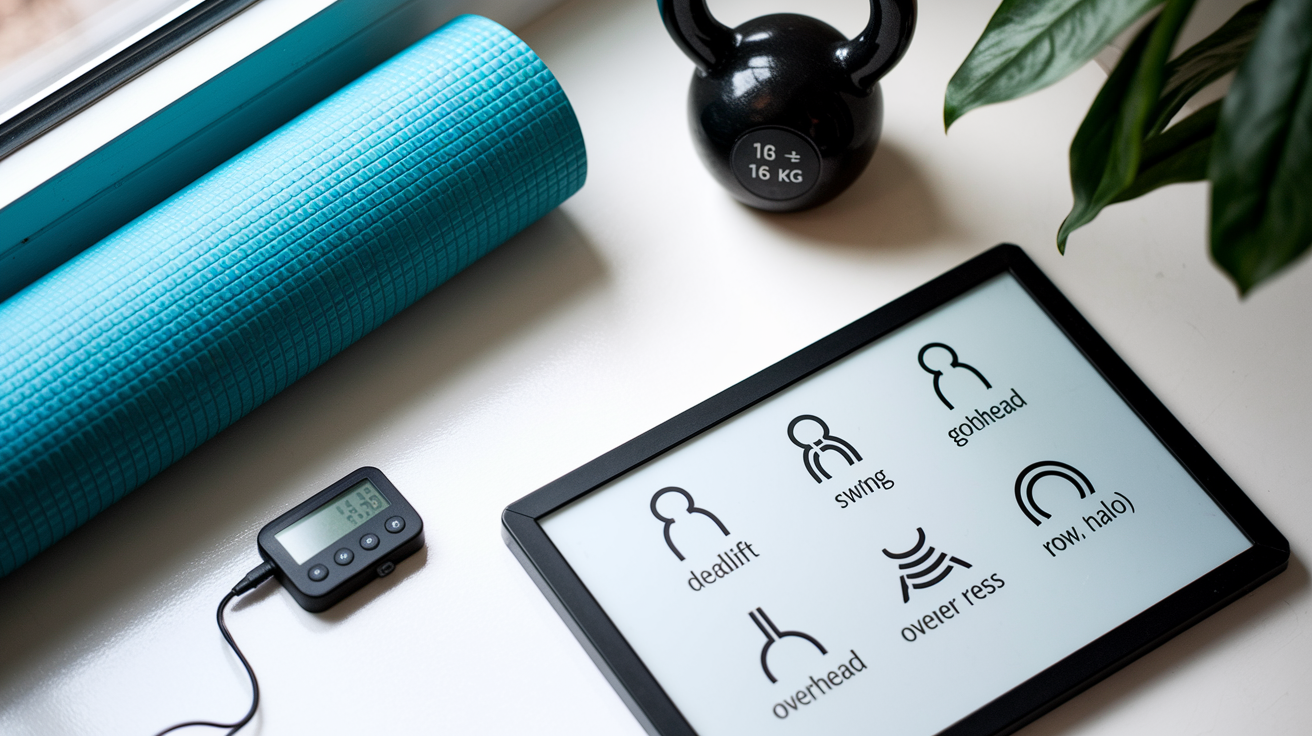
A beginner kettlebell circuit takes 20 to 30 minutes and uses just one kettlebell to train your whole body. You’ll work through 6 foundational movements in order, rest briefly, then repeat that same loop for 3 rounds total. The structure keeps you moving, builds strength, and improves conditioning without complicated equipment or a gym membership.
Start with a kettlebell weight you can control for every exercise. For most women, an 8 to 12 kilogram bell works well. Most men should start around 12 to 16 kilograms. If your form starts breaking down during presses or swings, you went too heavy. If the circuit feels easy by round three, add weight next session. One bell is all you need. It fits in a corner and you can train at home.
The workout is built around a simple loop. Perform each exercise back to back for the listed reps, rest 30 to 60 seconds after the final move, then start the circuit again. Three full rounds is the target. If you can only finish two, that’s fine. You’ll build up to three over the next few weeks.
The circuit includes:
- Kettlebell Deadlift – 10 reps
- Two-Hand Kettlebell Swing – 10 reps
- Goblet Squat – 10 reps
- Overhead Press – 5 reps per side
- Bent-Over Row – 8 reps per side
- Kettlebell Halo – 8 reps each direction
Step-by-Step Technique Guide for Each Exercise

Kettlebell Swing
Stand with your feet shoulder-width apart and place the kettlebell about one foot in front of you. Hinge at your hips by pushing them back while keeping your chest up and back straight. Grab the handle with both hands, then hike the bell back between your legs like you’re snapping a football. Drive your hips forward hard, squeeze your glutes, and let the bell swing to chest height.
Your arms stay nearly straight and guide the bell. They don’t lift it. Control the bell back down by hinging at the hips again, let it swing between your legs, then immediately drive forward for the next rep. The bell should never touch the floor between swings.
Breathe out sharply as you drive your hips forward and breathe in as the bell swings back down. Your power comes from your hips and glutes, not your shoulders or lower back. If your lower back feels the work instead of your hamstrings and glutes, reset your hinge and push your hips farther back on the descent.
Goblet Squat
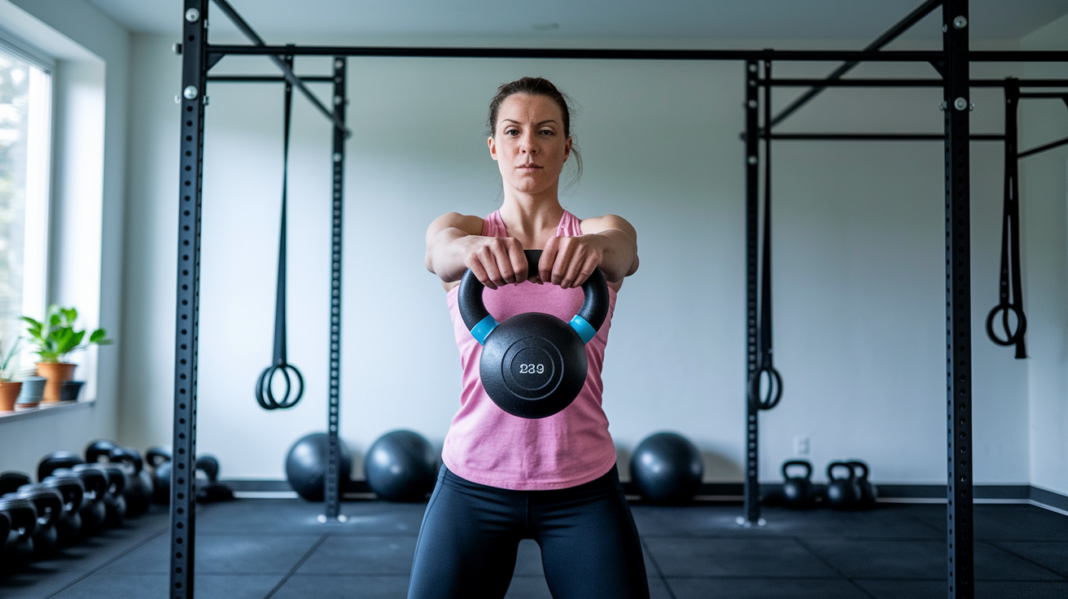
Hold the kettlebell by the horns (the sides of the handle) with both hands at chest height. Keep your elbows tight to your ribs. Stand with your feet roughly shoulder-width apart, toes pointed slightly out. Lower yourself by bending your knees and sitting back into your hips. Go as deep as you can while keeping your chest up and your heels flat on the floor.
Your elbows should travel between your knees at the bottom. Press through your entire foot to stand back up, squeezing your glutes at the top.
Focus on depth over speed. A controlled squat to full range beats fast half-reps every time. Breathe in on the way down, breathe out as you stand.
Overhead Press
Rack the kettlebell at shoulder height with the handle running diagonally across your palm, the bell resting on the back of your forearm. Your elbow stays tight to your ribcage. Brace your core, squeeze your glutes, and press the bell straight overhead until your arm is fully extended and your bicep is near your ear. The handle should rotate slightly so your fist points up at the top.
Lower the bell under control back to the rack position, keeping your elbow close to your side the entire time. That tight elbow path engages your lat and protects your shoulder.
Perform all reps on one side, then switch. Don’t lean back or arch your lower back to get the bell up. If you can’t press it with a neutral spine, use a lighter bell.
Kettlebell Deadlift
Place the kettlebell on the floor between your feet, which should be about hip-width apart. Hinge at your hips by pushing them back and keeping your chest lifted. Your back stays flat, not rounded. Grip the handle with both hands, engage your core, and push through your feet to stand up. Drive your hips forward and squeeze your glutes at the top.
To lower the bell, hinge at the hips again and set it down gently. Your back stays straight the entire time. The lift comes from your legs and hips, not your arms or lower back.
If your back rounds when you pick the bell up, start with a lighter weight or elevate the bell on a step or yoga block so you don’t have to reach as far.
Warm-Up and Safety Fundamentals for Beginners
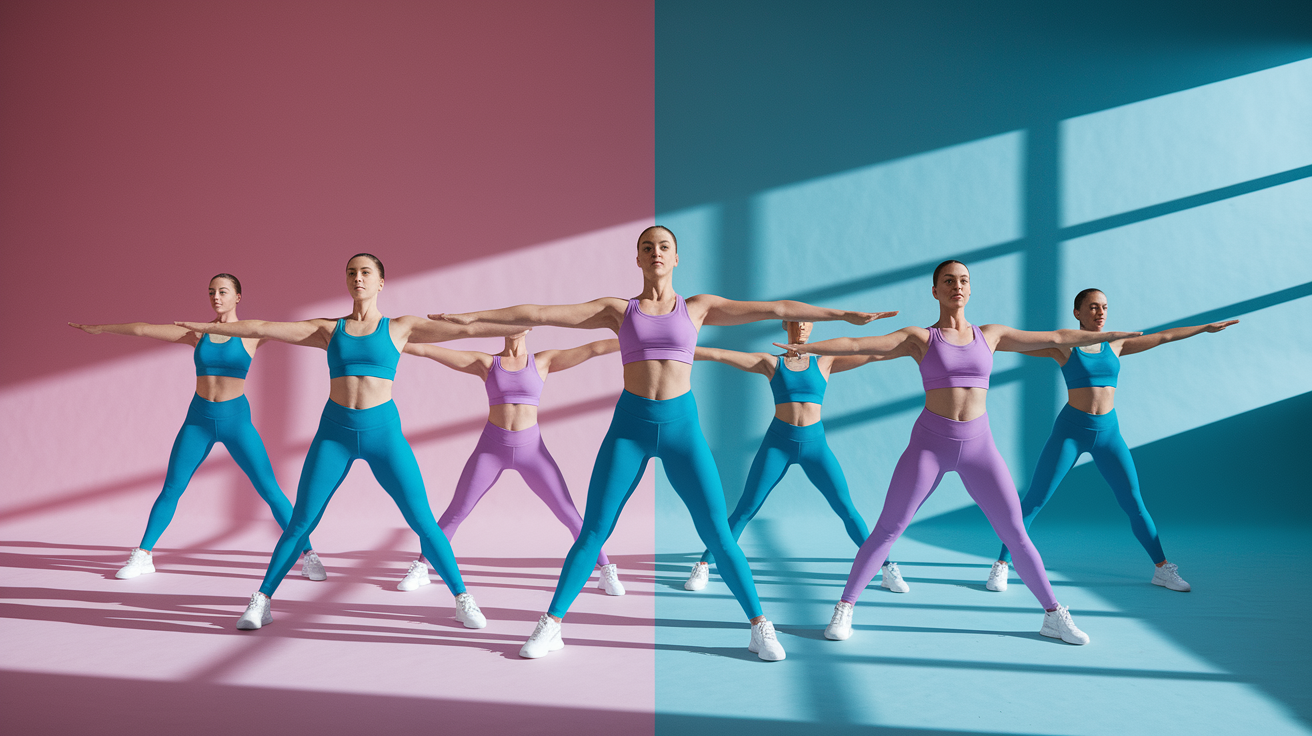
Spending 5 to 7 minutes on a warm-up prepares your joints and muscles for loaded movement. Skipping it increases the chance of tweaking something during swings or presses. A proper warm-up raises your heart rate slightly, opens up your hips and shoulders, and rehearses the movement patterns you’re about to load with a kettlebell.
Safety comes down to two things. First, keep your spine neutral. Never round your lower back under load. Second, choose a weight that lets you complete every rep with good form. If your technique falls apart halfway through a set, the bell is too heavy.
Take a rest day between kettlebell sessions so your muscles can recover and adapt.
Here’s a simple 5-step mobility warm-up:
- Hip circles – Stand on one leg, lift the other knee to 90 degrees, and draw slow circles with your knee. 5 circles each direction, then switch legs.
- Arm circles – Extend both arms out to the sides and make small circles forward for 10 reps, then backward for 10 reps.
- Bodyweight squats – Perform 10 slow squats, focusing on depth and balance without weight.
- Hip hinges – Practice the deadlift hinge pattern for 10 reps with no weight, pushing your hips back and keeping your back flat.
- Arm swings – Swing both arms across your body and back out to the sides for 10 reps to loosen your shoulders.
Progression Strategies for Building Strength and Endurance

When all three rounds feel controlled and you finish the circuit without form breakdown, it’s time to progress. The simplest method is to add 2 to 4 kilograms of load. For example, if you’ve been using a 12 kilogram bell for four sessions and the last session felt manageable, move to a 14 or 16 kilogram bell next time. Expect the new weight to feel harder for the first two or three workouts, then your body will adapt.
Another option is to keep the same weight and shorten your rest periods. If you’ve been resting 60 seconds between circuits, try 45 seconds. If 45 feels fine after a couple of weeks, drop to 30 seconds. Shorter rest increases the cardio demand and builds work capacity without changing the exercises or adding more rounds.
You can also expand the circuit once the base routine feels easy. Add a fourth round, or insert a new exercise like the reverse lunge or renegade row.
Frequency matters too. Start with two sessions per week, leaving at least one full rest day between workouts. After a month, you can move to three sessions per week if recovery feels solid and your performance isn’t dropping session to session.
Common Beginner Mistakes and How to Fix Them
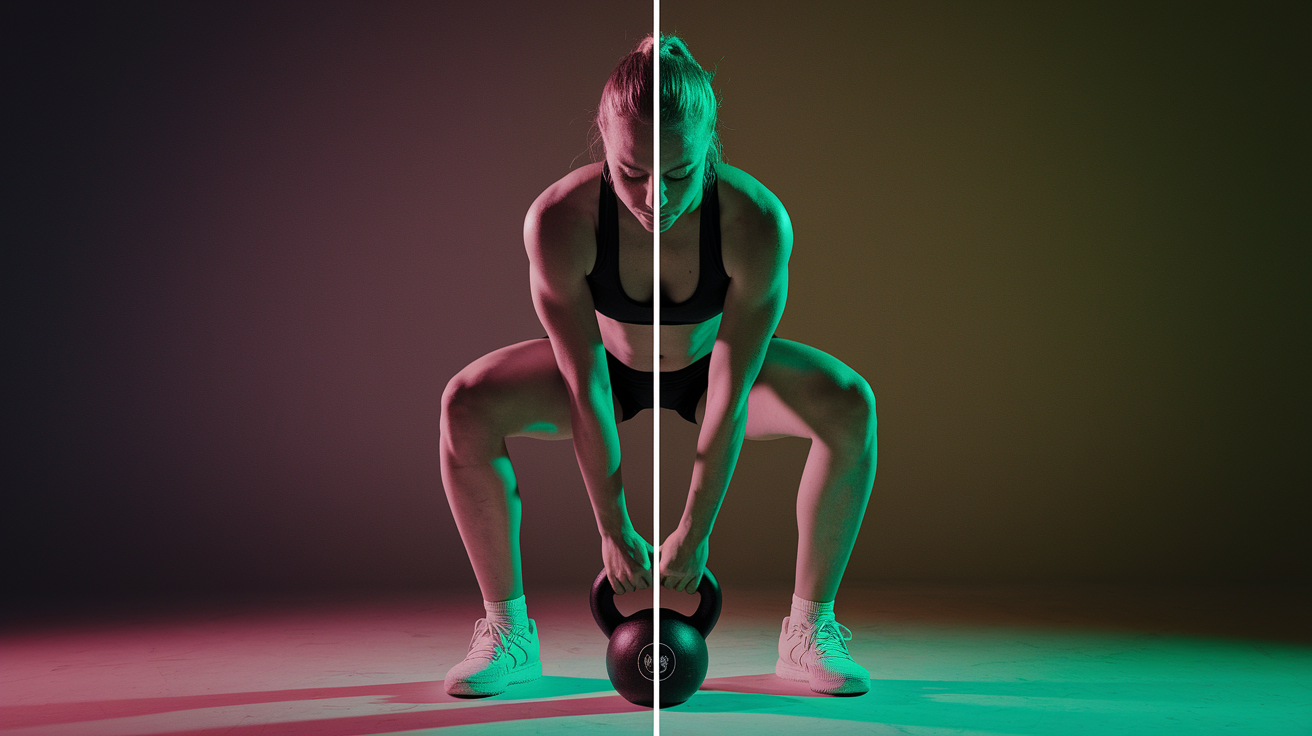
Correcting mistakes early keeps you safe and helps your body learn the right motor patterns. Once a bad habit sets in, it’s harder to fix. The errors below show up in almost every beginner session, so check your form against this list every few workouts.
If you catch yourself making one of these mistakes, pause, reset, and finish the set with better form. It’s better to stop at rep six with solid technique than grind out ten sloppy reps.
- Rounding your back in the hinge – Keep your chest up and push your hips back farther. If you can’t maintain a flat back, the bell is too heavy or you need to practice bodyweight hinges first.
- Lifting the swing with your arms – Your arms are ropes. The power comes from snapping your hips forward, not pulling with your shoulders. Let your hips do the work.
- Squatting too shallow – Go as deep as your mobility allows while keeping your heels down and chest up. Partial squats leave gains on the table.
- Pressing with a loose core – Brace your abs and squeeze your glutes before you press overhead. A loose core lets your lower back hyperextend, which can cause pain.
- Gripping the handle too tight – A death grip tires out your forearms fast. Hold firm enough to control the bell, but relax your grip between reps.
- Skipping rest days – Muscle grows during recovery, not during the workout. If you train every day, performance will drop and soreness will pile up. Take at least one full day off between sessions.
Final Words
Start the circuit: pick a manageable kettlebell, warm up for 5–7 minutes, and set aside 20–30 minutes. Use swings, goblet squats, presses, and deadlifts in 2–4 rounds to hit the whole body.
Focus on technique. Hinge for swings, keep a neutral spine, brace for presses, and fix common mistakes as you go. Progress slowly—add a little weight or another round when it feels easy.
This beginner kettlebell strength circuit for full-body conditioning is practical and repeatable. Start small, stay consistent, and you’ll get stronger.
FAQ
Q: What is a quick-start beginner kettlebell circuit?
A: The quick-start beginner kettlebell circuit is a 20–30 minute full‑body routine that cycles foundational moves into 3–5 short rounds, giving a simple, efficient workout for strength and conditioning.
Q: What kettlebell weight should beginners use?
A: The recommended beginner kettlebell weight is about 8–12 kg for most women and 12–16 kg for most men, picking a weight that lets you move cleanly for each rep.
Q: Which exact exercises are included in the beginner circuit?
A: The circuit includes kettlebell swings, goblet squats, kettlebell deadlifts, overhead presses, bent‑over rows, and farmer carries to hit hips, legs, back, shoulders, and grip.
Q: How long should each circuit take and how many rounds do I do?
A: The circuit should take 20–30 minutes total, which usually means 3–5 rounds of the exercise set with about 60–90 seconds rest between rounds.
Q: How should I warm up before a kettlebell session?
A: A proper warm-up is 5–7 minutes of mobility and light movement to prime hips and shoulders, raising heart rate slightly and rehearsing key movement patterns.
Q: What simple warm-up moves should I do?
A: A simple warm-up includes hip hinges, shoulder circles, bodyweight squats, walking lunges, and glute bridges done for 30–60 seconds each to improve mobility and blood flow.
Q: What safety basics should beginners follow?
A: The main safety basics are maintain a neutral spine, pick a manageable load, move with control, keep feet stable, and stop if pain—not normal effort—appears.
Q: How do I perform a proper kettlebell swing?
A: A proper kettlebell swing uses a hip hinge stance, powerful hip drive (not arms), a neutral spine, and a controlled return; aim for a steady tempo and full hip extension each rep.
Q: How do I do a correct goblet squat?
A: A correct goblet squat keeps feet stable, chest up, elbows inside knees, and reaches roughly parallel depth while breathing out on the drive and keeping weight on the heels.
Q: How should I press a kettlebell overhead safely?
A: A safe kettlebell overhead press uses a tight core, a straight vertical path for the bell, avoid shrugging the shoulders, and press with control rather than relying on momentum.
Q: How do I perform a kettlebell deadlift with good form?
A: A proper kettlebell deadlift begins with a hip hinge, hips back, shoulders over the bell, neutral spine, and drive through the heels while keeping the chest lifted.
Q: How should I progress my kettlebell training as a beginner?
A: Progress by small steps: increase weight by 2–4 kg when form stays clean, add rounds or reps slowly, or increase session frequency to build strength and endurance without rushing.
Q: How often should a beginner do this kettlebell circuit each week?
A: A beginner should aim for 2–3 circuit sessions per week, leaving a day or two between workouts for recovery while building consistency and skill.
Q: What common beginner mistakes happen and how do I fix them?
A: Common mistakes are rounding the back, using arms for swings, and gripping too tight; fix them by practicing the hinge, focusing hip drive, relaxing the grip, and using lighter weight.