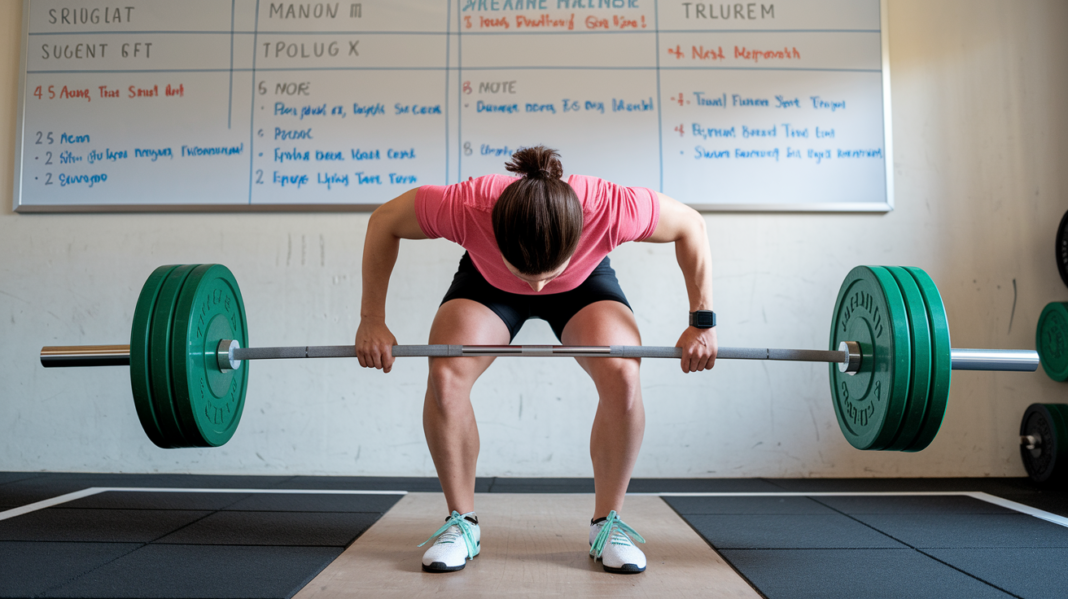
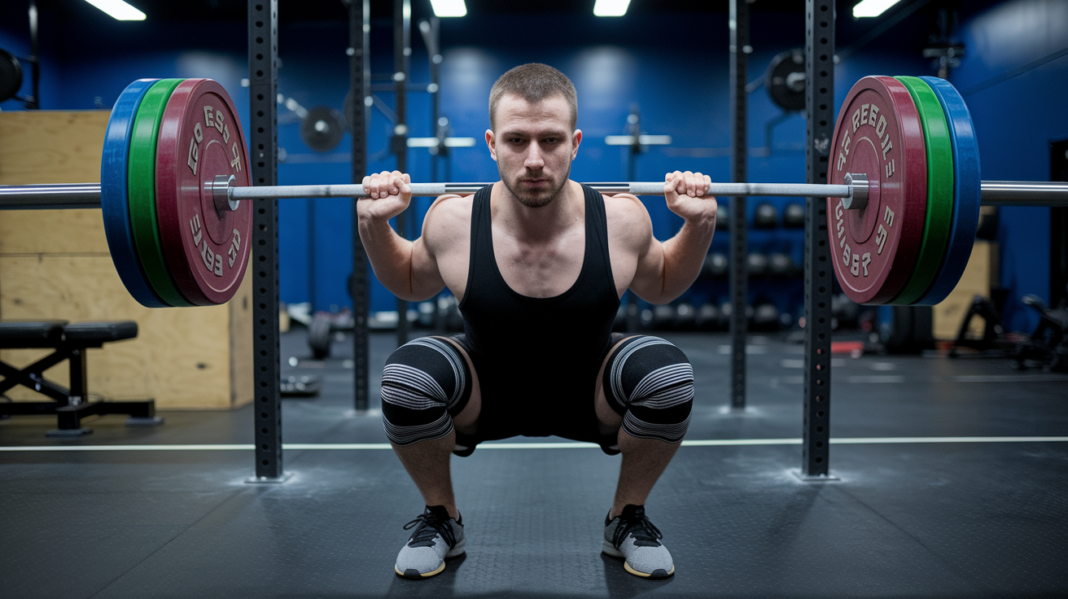
You don’t need to live in the gym to get stronger.
Three 45 to 60 minute full-body sessions a week will do it for most beginners.
This simple 3-day split uses compound lifts like squats, deadlifts, presses, and rows so you build balanced strength, not weird gaps.
You’ll get a clear plan: what to do each day, warm-ups, form cues, how to progress, and quick safety tips so you can keep getting stronger without burnout.
Complete Beginner Strength Routine Overview
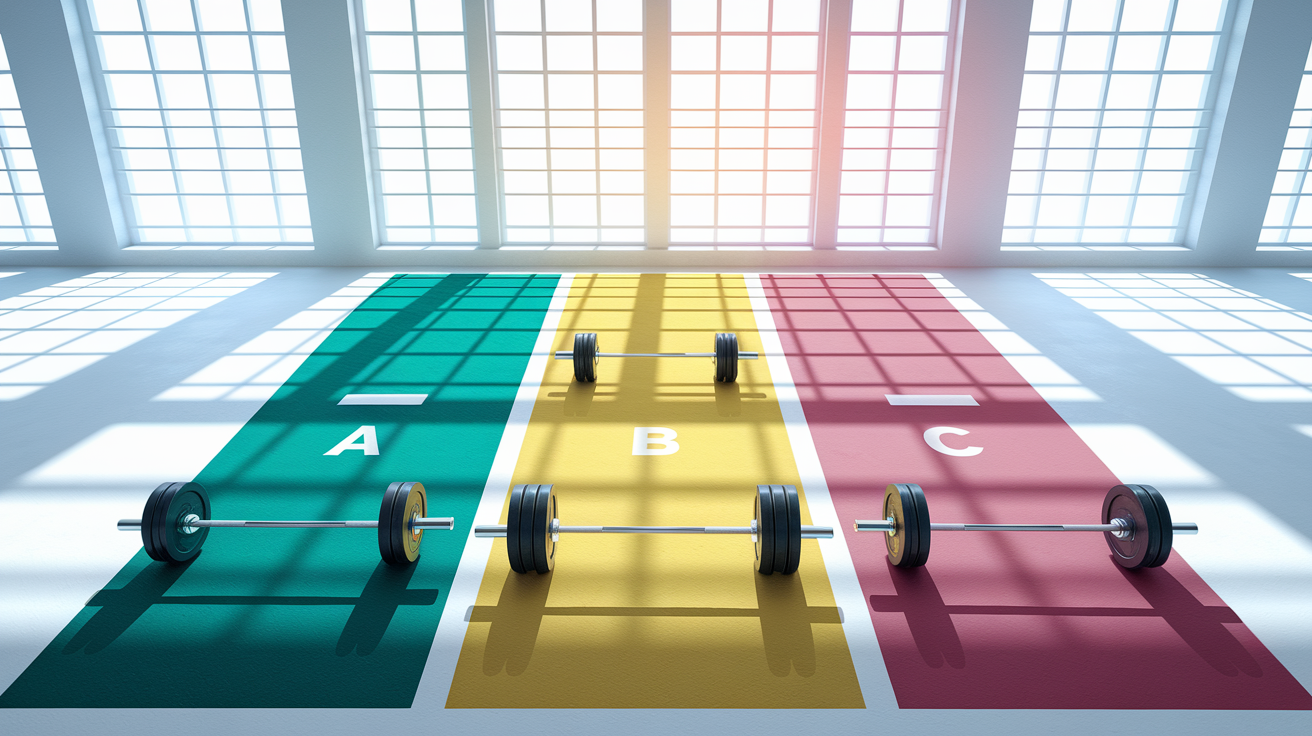
This routine gives you three full-body workouts each week. You’ll do compound movements that hit multiple muscle groups at once, so you build balanced strength without living in the gym.
Each session runs 45 to 60 minutes. You train Monday, Wednesday, and Friday. That 48-hour gap between workouts? That’s when your muscles actually repair and get stronger.
Training days:
- Workout A: Squat, bench press, bent-over row, plank
- Workout B: Deadlift (or Romanian deadlift), overhead press, pull-up or lat pulldown, farmer carry
- Workout C: Goblet squat, incline dumbbell press, single-arm dumbbell row, glute bridge
- Rotate A, B, C across three days each week
Exercises in each session:
- One main lower-body movement (squat, deadlift, or variation)
- One main upper-body push (bench press, overhead press, or incline press)
- One main upper-body pull (row, pull-up, or pulldown)
- One core or carry movement (plank, farmer carry, glute bridge)
- Optional: one accessory lift for arms or shoulders if time allows
- Total: 4 to 6 movements per day
Rest 60 to 90 seconds between sets. For compound lifts, shoot for three sets of 5 to 8 reps. Start with a weight that lets you finish every rep cleanly, stopping when you’ve got maybe 1 or 2 reps left in you. If you wrap up a set and could still chat like nothing happened, it’s too light. Bump the weight by 2.5 to 5 lb for upper-body lifts and 5 to 10 lb for lower-body lifts once you can nail all three sets at the top of your rep range.
Exercise Form Fundamentals
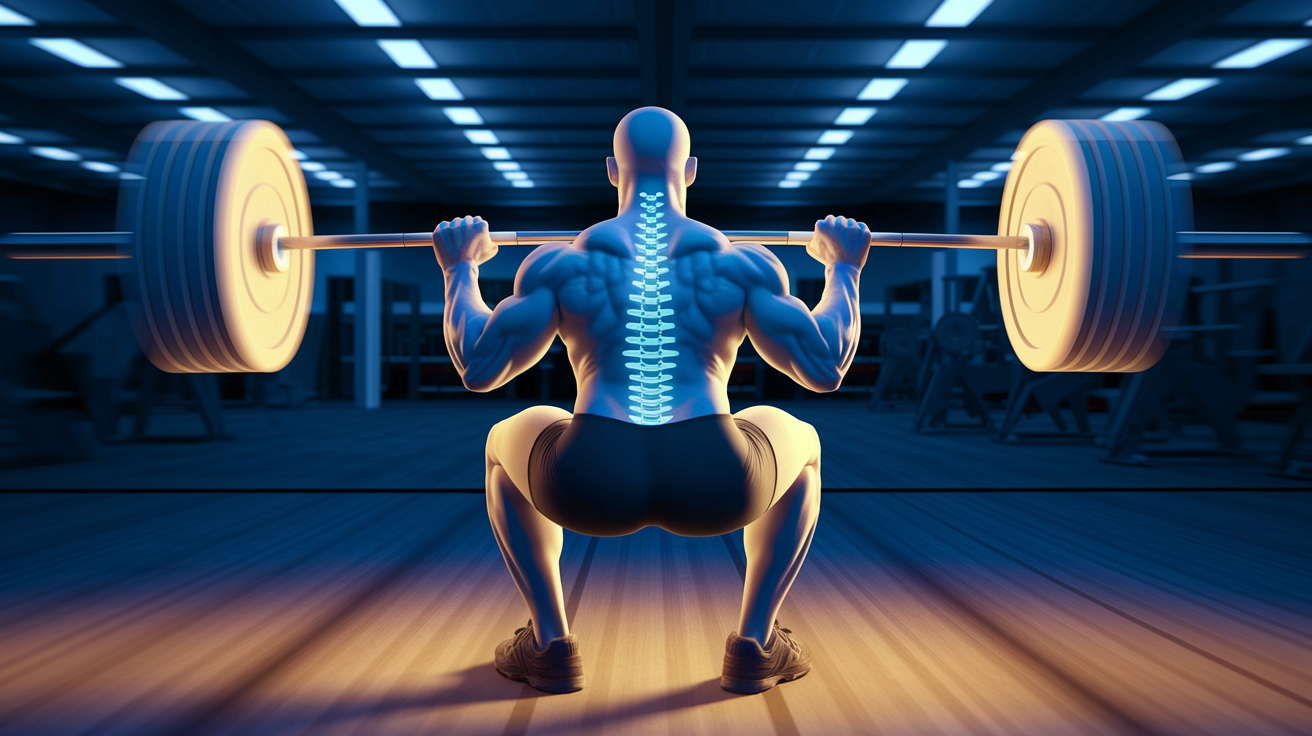
Good technique starts with your spine. Keep it neutral from your neck down to your lower back. No excessive arching, no rounding. Your ribcage should stack over your pelvis, and your head should follow the line of your spine.
Control every inch of every rep. Lower the weight slower than you lift it. A decent rule: one second to lift, brief pause at the top, then two seconds to lower. That tempo builds strength through the full range and cuts down injury risk. When you rush, momentum does the work and your muscles miss out on the load they need.
Range of motion matters. On a squat, drop until your hips sit just below your knees if you can. On a press, bring the bar or dumbbell to chest level, then push to full lockout without hyperextending your lower back. On a row, pull until your elbows pass your torso and squeeze your shoulder blades together. Partial reps can have their place later, but right now you’re teaching your body full-range strength patterns. Moving through complete ranges builds mobility, recruits more muscle, and sets you up for heavier loads down the road.
Warm-Up Essentials for Beginners

A good warm-up takes 5 to 10 minutes and primes your joints and nervous system for what’s coming. Start with light cardio to raise your core temperature, then add dynamic movements that mirror the patterns you’re about to load.
Simple warm-up sequence:
- 5 minutes brisk walking, light cycling, or rowing
- 10 leg swings (forward and lateral, each leg)
- 10 hip circles in each direction
- 10 arm circles forward and back
- 10 bodyweight squats or lunges to rehearse your squat pattern
After your general warm-up, do 2 to 3 lighter sets of your first compound lift. Say you’re planning to squat with 95 lb. Do one set with an empty bar for 10 reps, then one set with 65 lb for 5 reps. Those ramp sets let your muscles and connective tissue adapt to the specific movement before you add your working load.
Cool-Down and Recovery Basics

After your last set, spend 5 to 10 minutes bringing your heart rate down and stretching the muscles you just worked. Walk slowly on a treadmill or around the gym for 3 to 5 minutes, then move into static stretches.
Hold each stretch for 20 to 30 seconds without bouncing. Focus on your hips, hamstrings, quads, chest, and shoulders. Stretching while your muscles are still warm helps maintain or improve mobility and can reduce next-day soreness.
Post-workout stretches:
- Standing quad stretch (pull one heel toward glutes)
- Seated hamstring stretch (reach toward toes with a flat back)
- Hip-flexor lunge stretch
- Doorway chest stretch (arm at 90 degrees against a wall or frame)
Recovery happens between sessions. Shoot for 7 to 9 hours of sleep each night and eat enough protein to support muscle repair. About 0.7 to 1.0 gram of protein per pound of bodyweight works well for most beginners. Stay hydrated, and take at least one full rest day each week where you skip resistance training.
Equipment Needed for a Simple Strength Routine
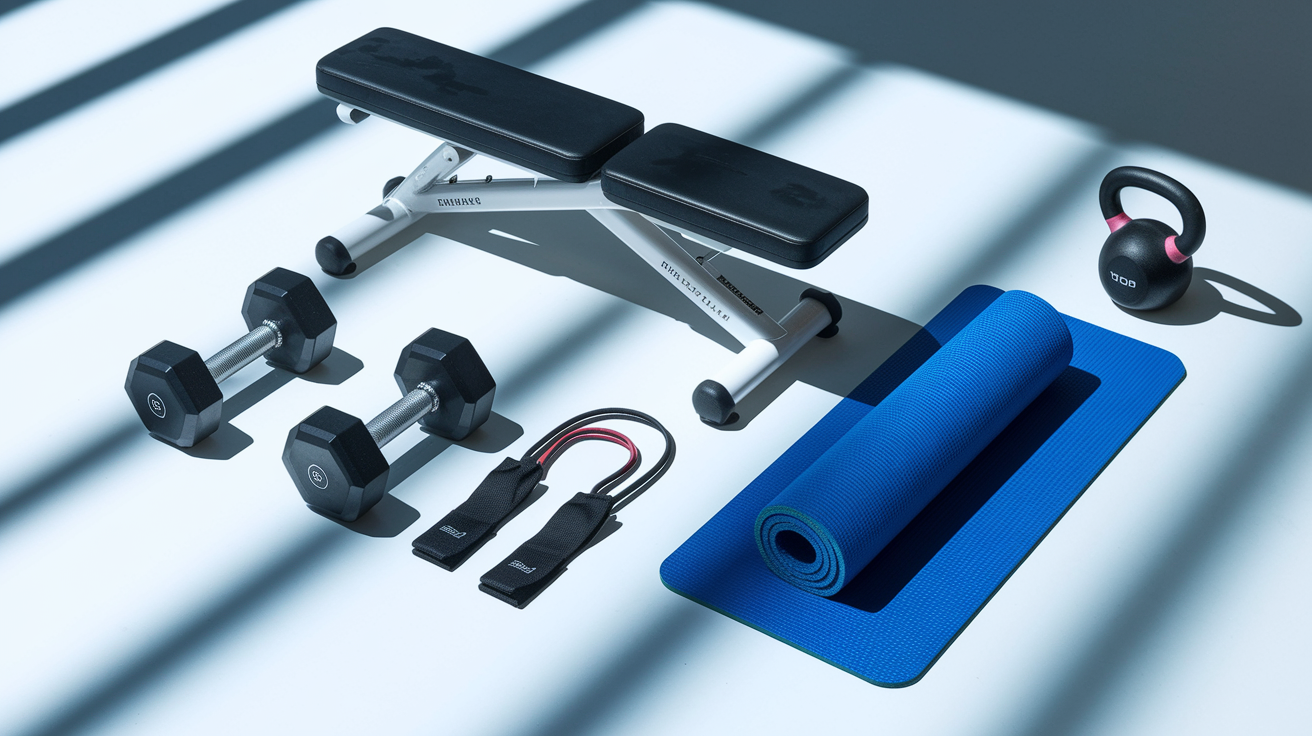
You can run this routine with minimal gear. If you’re training at home, one pair of adjustable dumbbells and a sturdy bench cover most exercises. If you’ve got gym access, you’ll add a barbell, squat rack, and pull-up bar.
Adjustable dumbbells let you scale weight without filling a room with iron. Look for a set that adjusts from 10 to 50 lb. That range supports upper-body presses, rows, and lower-body goblet squats for the first several months.
Suggested starter equipment:
- One pair of adjustable dumbbells (10 to 50 lb)
- Flat or adjustable workout bench
- Resistance bands (light, medium, heavy) for assisted pull-ups or warm-ups
- Yoga mat for floor work and stretching
- Optional: barbell and weight plates if training in a gym, kettlebell (12 to 24 kg) for carries and swings
Bodyweight variations work when equipment isn’t available. Push-ups replace bench press, inverted rows under a table replace barbell rows, and single-leg squats replace loaded squats. Progress by adding reps, slowing tempo, or shifting to single-limb versions.
Understanding Progressive Overload
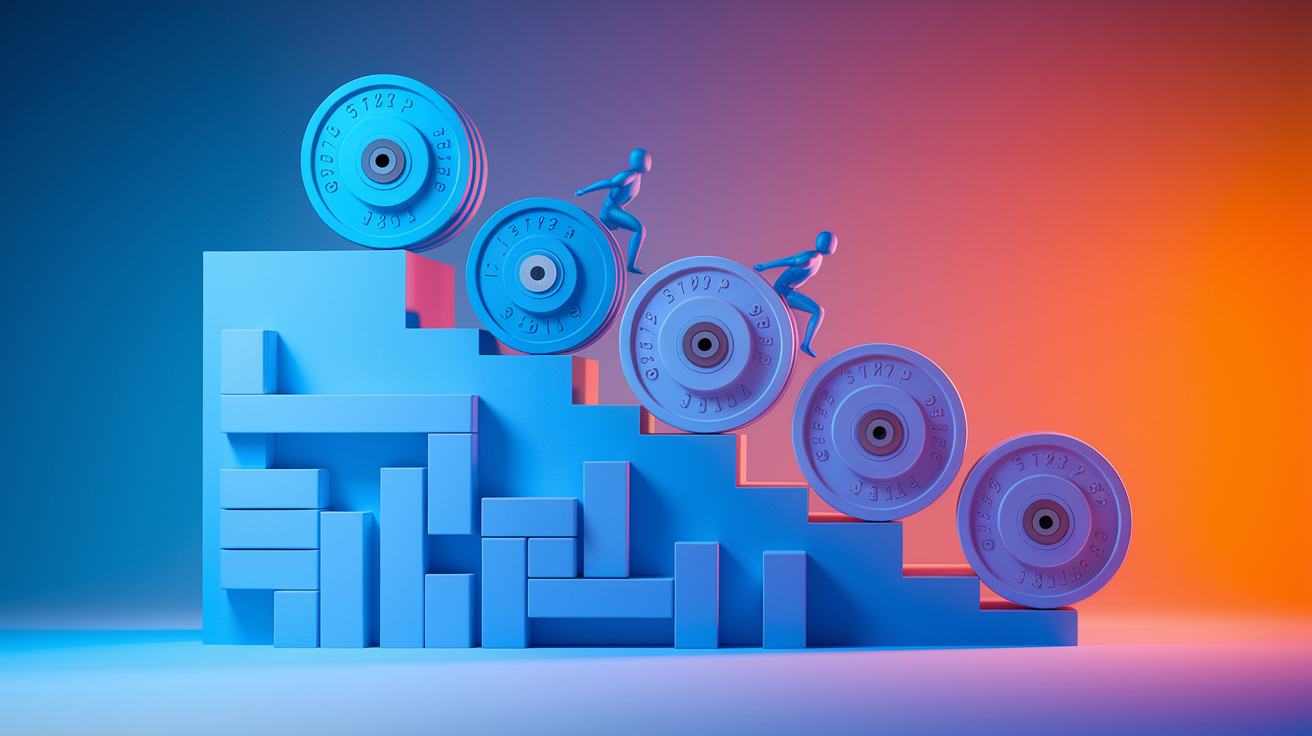
Progressive overload means gradually increasing the demand you place on your muscles. Without it, your body adapts to the current load and stops getting stronger. The simplest method is adding a small amount of weight once you can complete all your target sets and reps with solid form.
Start with a weight that challenges you by the last couple of reps but still lets you finish every set. Once you hit the top of your rep range (say, 3 sets of 8 reps) for two consecutive workouts, add weight. For upper-body lifts, increase by 2.5 to 5 lb. For lower-body lifts, add 5 to 10 lb. If you don’t have small plates, add one more rep per set until you reach 10 or 12 reps, then jump up in weight and drop back to 8 reps.
Two-week progression example:
Week 1, Workout A: Dumbbell bench press, 25 lb dumbbells, 3 sets of 8 reps.
Week 1, Workout C: Dumbbell bench press, 25 lb dumbbells, 3 sets of 8 reps.
Week 2, Workout A: Dumbbell bench press, 30 lb dumbbells, 3 sets of 8 reps (increased load because previous weight was completed twice).
Track your lifts in a notebook or app. Write down the exercise, weight, sets, and reps each session. That log shows you when you’re ready to progress and helps you spot patterns when progress stalls.
Common Mistakes Beginners Should Avoid
Mistakes slow progress and raise injury risk. Most beginners make one or more of these errors in the first few weeks.
Top mistakes:
Loading too heavy too soon. Form breaks down when the weight exceeds your current strength, and poor movement patterns become habits.
Skipping the warm-up. Cold muscles and stiff joints increase injury risk and reduce performance.
Using momentum instead of muscle. Swinging, bouncing, or jerking the weight means lighter loads and higher injury risk.
Not tracking workouts. Without a log, you won’t know when to add weight or whether you’re actually progressing.
Training too often without rest. Muscle growth happens during recovery, not during the workout. Overtraining leads to fatigue, stalled progress, and potential injury.
Beginners often want to train every day because motivation is high. Don’t. Three full-body sessions per week with a day of rest between each session will deliver faster strength gains than six unfocused workouts crammed into a week.
Safety Guidelines for New Lifters

Safe lifting protects your joints and keeps you training long term. Start every movement with a braced core. Inhale, pull your belly button toward your spine, and tighten your abs like someone’s about to poke you in the stomach. Maintain that brace through the lift.
Use a spotter or safety bars when working near failure on bench press or squat. If you train alone at home, keep loads conservative and stop sets before you risk getting pinned under a barbell. When in doubt, leave one or two reps in reserve.
Four core safety rules:
Prioritize form over weight. Master the movement pattern with lighter loads before adding plates.
Stop if you feel sharp pain. Muscle burn and fatigue are normal. Joint pain or sudden sharp sensations aren’t.
Breathe deliberately. Inhale before the hard part of the lift, exhale during the push or pull.
Increase load gradually. Jumps bigger than 10% per session raise injury risk and often sacrifice technique.
If you’re unsure about your form on a particular lift, record a short video from the side and compare it to reliable tutorials. Most gyms allow phone use for this. Thirty seconds of self-review can prevent weeks of bad habits.
Expected Results and Timeline

Strength gains appear faster than visible muscle changes. Most beginners notice they can lift more weight or complete more reps within 2 to 4 weeks. That early jump comes from improved coordination and nervous-system adaptation, not new muscle tissue.
Measurable strength improvements continue through the first 8 to 12 weeks. You might add 10 to 30% to your main lifts during that window if you’re consistent with sessions and progressive overload. Visible changes in muscle size usually start around week 8 to 12, depending on your nutrition and training intensity.
Typical progress markers:
Weeks 2 to 4: Exercises feel smoother, working weights increase by 5 to 15%, soreness decreases as your body adapts.
Weeks 6 to 10: Noticeable strength in daily tasks (carrying groceries, climbing stairs), continued load increases, improved posture and core stability.
Weeks 12 to 16: Visible muscle definition in arms, shoulders, and legs. Major lifts may have increased 20 to 30% from baseline. Movement patterns feel automatic.
Commit to at least 8 weeks before evaluating the program. Twelve to sixteen weeks gives you a clearer picture of how your body responds to consistent training. Progress isn’t linear. Some weeks you’ll add weight. Other weeks you’ll maintain. As long as the overall trend moves upward, the program is working.
Final Words
You have a compact plan: full-body sessions 2-4 times per week, a short warm-up, clear form cues, simple equipment, and a basic progression plan.
Start where you are. If your week is tight, do two sessions. Focus on controlled reps and steady progression, add reps or weight slowly. Rest and cool-down matter.
Use this beginner strength training routine for a few weeks, track one or two simple metrics like weight or reps, and you’ll notice stronger movement and more confidence. Small, steady steps win.
FAQ
Q: What is the 3 3 3 rule for working out?
A: The 3 3 3 rule for working out is a simple structure: three exercises per session, three sets each, done three times a week; some people use it to mean 3 sets of 3 reps for heavy strength work.
Q: How should a beginner start strength training?
A: A beginner should start strength training by doing full-body workouts 2 to 4 times weekly, focusing on basic compound moves, light loads with proper form, and steady progression (add weight or reps slowly).
Q: Can I lift weights while taking Zepbound?
A: You can usually lift weights while taking Zepbound, but check with your clinician first; start gradual, watch for dizziness or low blood sugar if diabetic, stay hydrated, and adjust calories for energy.
Q: What is the 5 5 5 30 rule?
A: The 5 5 5 30 rule describes brief circuits or strength formats: commonly five moves, five rounds, 30 seconds per move, or five sets of five reps with 30 seconds rest, choose the version that fits your goal.