

Think you need an hour at the gym to get stronger?
Think again.
This 15-minute beginner strength circuit sneaks solid strength and mobility into gaps in your calendar.
Seven simple moves, 60-second stations, no fancy gear.
Do one round on a busy day or two when you have time.
In a few weeks you’ll sit more comfortably, stand taller, and move better between meetings.
Read on for the exact sequence, warm-up, and easy progressions that fit your workday.
Fast, Time‑Efficient Strength Circuit Overview for Busy Professionals
Sitting at a desk for eight hours turns your hip flexors into rusty hinges and your glutes into couch cushions. This 15-minute beginner strength circuit uses 60-second work stations, minimal rest, and alternating muscle groups to build baseline strength, improve mobility, and reverse the damage of prolonged sitting. No gym membership, no complicated programs. Just seven movements you can run in your living room or office during a coffee break.
The circuit structure’s simple. You’ll perform each exercise for 60 seconds, rest 15 to 30 seconds, then move to the next station. Alternating lower body, upper body, and core keeps you moving without gasping for air or burning out one muscle group. The entire loop takes about 12 to 15 minutes depending on your rest intervals, which means you can finish before your next meeting starts.
The 7-Exercise Circuit:
- Bodyweight Squats (60 seconds, 15–30 seconds rest). Feet shoulder width apart, chest up, descend until thighs are roughly parallel, push through heels to stand.
- Push-Ups (60 seconds, 15–30 seconds rest). Toes or knees, hands under shoulders, elbows point back, lower chest to floor, press back up.
- Alternating Reverse Lunges (60 seconds, 15–30 seconds rest). Step back with one foot, drop rear knee toward floor, front knee at 90 degrees, push through front heel to return, alternate sides.
- Bent-Over Rows (60 seconds, 15–30 seconds rest). Hinge at hips about 45 degrees, back flat, pull hands toward chest, squeeze shoulder blades together, lower with control.
- Glute Bridges (60 seconds, 15–30 seconds rest). Lie on back, knees bent, feet flat, lift hips until body forms a straight line from shoulders to knees, squeeze glutes at top, lower.
- Plank Hold (60 seconds, 15–30 seconds rest). Forearms and toes (or knees for modification), body straight, core engaged, breathe steadily.
- Jumping Jacks or Step-Jacks (60 seconds, 15–30 seconds rest). Full jump or step one foot out at a time, arms overhead, keep breathing steady.
You can run one round for maintenance on extremely busy days or stack two to three rounds when time allows. Within two to four weeks of consistent sessions, you’ll notice looser hips, stronger posture muscles, and the ability to sit, stand, and move without stiffness shadowing every transition.
Warm-Up Preparation to Start a 15-Minute Beginner Strength Circuit

Your joints have been locked in the same position all morning. Jumping straight into squats or push-ups without waking up your shoulders, hips, and spine is how you tweak something small that derails your week. A three-minute warm-up’s enough to increase blood flow, lubricate joints, and remind your nervous system which muscles are about to work.
Arm Circles (30 seconds). Forward and backward circles, shoulder width radius, wakes up the shoulder capsule and upper back.
Hip Circles (30 seconds). Hands on hips, circle clockwise then counterclockwise, loosens hip flexors and lower back.
Cat-Cow Stretch (30 seconds). On hands and knees, arch and round your spine slowly, mobilizes thoracic and lumbar segments.
Imaginary Jump Rope (60 seconds). Light jog in place with small arm swings, elevates heart rate and primes calves and ankles.
This warm-up supports better squat depth, cleaner push-up alignment, and reduced injury risk. It also gives you a mental transition from email mode to movement mode, which matters when you’re squeezing a workout into a calendar gap.
Exercise Technique and Form Cues for a 15-Minute Beginner Strength Circuit

Fast-paced circuits make it tempting to rush through reps and count speed as intensity. But sloppy form under fatigue is where shoulders click, knees complain, and lower backs tighten up for the rest of the day. Prioritize controlled movement and steady breathing, even if that means fewer total reps during the 60-second window.
Universal alignment cues apply across most of the circuit. For squats and lunges, keep your chest up and knees tracking over your toes. For rows and push-ups, maintain a flat back. Imagine balancing a water bottle on your spine. During planks and bridges, engage your core by gently pulling your belly button toward your spine without holding your breath. Elbows should point back during push-ups, not flare wide, and your neck stays neutral in every position. That means looking at the floor a few feet ahead instead of craning up.
Practical Modifications for Common Beginner Limitations
If full push-ups are out of reach, place your hands on a bench, chair, or wall to reduce the load. “Incline push-ups.” Gradually lower the surface height as you build strength. For squats, sit back onto a chair or box and tap lightly before standing, which teaches depth and control. Reverse lunges can be shortened to a smaller step if balance is shaky or knees are sensitive. Planks can start on your knees or with hands elevated on a bench, and glute bridges work just as well with feet closer to your hips if hamstring cramps appear.
Breathing rhythm matters as much as movement quality. Inhale during the easier phase (lowering in a squat, descending in a push-up), exhale during effort (standing, pressing). If you’re gasping or holding your breath, slow your pace or extend your rest interval by 10 seconds.
Minimal Equipment Options for a 15-Minute Beginner Strength Circuit
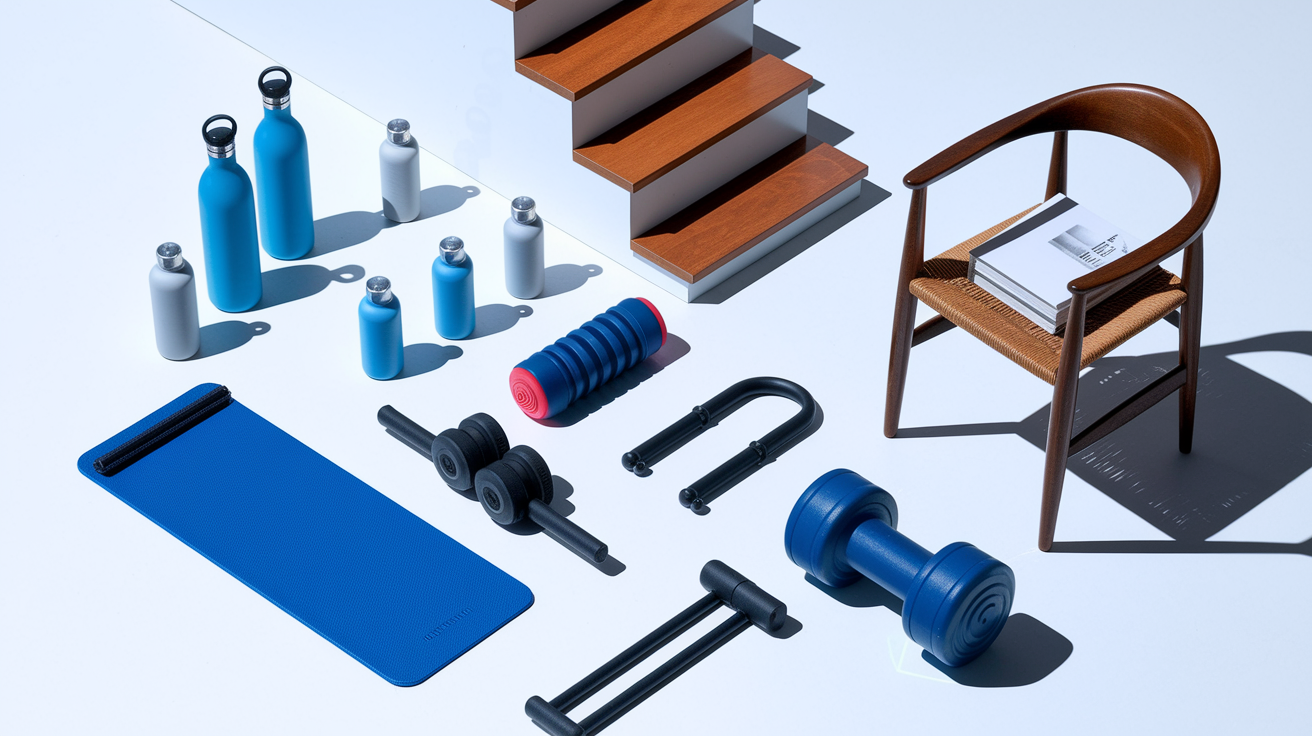
You don’t need a home gym to run this circuit. The bodyweight version covers all seven exercises with zero equipment, which means you can do it in a hotel room, office, or park. If you want to add light resistance for rows or shoulder presses, filled water bottles, a backpack loaded with books, or a single resistance band will do the job.
| Equipment | Substitute Exercise | Where to Use |
|---|---|---|
| Dumbbells | Filled water bottles or backpack | Home, office, hotel |
| Bench or box | Sturdy chair, couch edge, or stairs | Living room, office, outdoor steps |
| Resistance band | Loop band or tube band with handles | Anywhere with a door anchor or stable post |
| Jump rope | Imaginary jump rope or marching in place | Any floor space |
Pick whatever fits your current environment and swap freely. The goal is consistency, not perfect equipment. A backpack filled with two textbooks provides enough resistance for bent-over rows, and a kitchen chair works fine for incline push-ups or tricep dips if you decide to expand the circuit later.
Interval Timing, Sets, and Rest Structure for a 15-Minute Strength Routine

The 15-minute total comes from simple math. Seven exercises at 60 seconds each equals 7 minutes of work. Add 15 to 30 seconds of rest after each exercise and you land between 8.75 and 10.5 minutes for one full round. Running the circuit twice with slightly shorter rest brings you to the 15-minute mark, or you can extend rest and complete a single focused round if you’re newer to strength training.
Two common interval formats fit this structure. EMOM (every minute on the minute) means you start each exercise at the top of a new minute, work for a set duration (like 40 seconds), then rest for the remainder. AMRAP (as many rounds as possible) means you complete as many quality reps as you can within a fixed time window. Beginners usually benefit from simple work/rest intervals because they’re easier to follow and allow for pacing adjustments without mental math mid-workout.
4 Timing Templates You Can Use:
- 60 seconds work / 15 seconds rest. Fast-paced option for those comfortable with the movements, one round = ~9 minutes.
- 60 seconds work / 30 seconds rest. Standard beginner tempo, one round = ~11 minutes.
- 40 seconds work / 20 seconds rest. Slightly easier work window, two rounds = ~14 minutes.
- 45 seconds work / 15 seconds rest. Middle ground for progression, two rounds = ~14 minutes.
Shorter rest increases cardiovascular demand and keeps your heart rate elevated, which is useful for conditioning. Longer rest allows better form and higher quality reps, which is more important when you’re still learning the movements. Adjust based on how you feel halfway through. If you’re gasping or form is crumbling, add 10 seconds of rest and keep moving.
Progressive Overload and Weekly Planning for Busy Professionals

Beginners improve quickly because almost any consistent stimulus is new. Your first win is simply completing the circuit two to three times per week for two weeks straight. After that, small progressions keep results coming without requiring more time or complexity.
Increase weight or resistance. Add a light dumbbell to squats, hold a backpack during lunges, or use a thicker resistance band for rows.
Increase rounds. Move from one full circuit to two, or from two to three as conditioning improves.
Reduce rest intervals. Drop from 30 seconds to 20, then to 15 once movements feel automatic.
Scheduling matters as much as progression. Mornings before email opens work well for people who fade by evening. Lunch breaks create a natural pause and reduce afternoon energy crashes. Evening sessions help decompress after a long workday. Pick two to four windows per week that already exist in your calendar. Don’t try to create new time, just fill gaps that are currently spent scrolling or sitting.
Consistency beats perfection. One round on a chaotic day still strengthens the habit and keeps momentum alive. Missing one session doesn’t erase progress, but skipping two weeks does. Treat the circuit like brushing your teeth: small, regular, non-negotiable.
Tracking Progress and Adjusting Difficulty During a 15-Minute Circuit

Busy people need simple tracking methods that take 30 seconds after a workout. Complicated spreadsheets and five-metric logs usually get abandoned within a week. Focus on the variables that actually matter for a beginner strength circuit.
Rounds completed per session. Did you finish one circuit or two?
Reps per 60-second station. Count squats, push-ups, lunges. Aim to add 1–3 reps every one to two weeks.
Rest duration. Note whether you used 30, 20, or 15 seconds. Shorter rest = higher conditioning.
Weight or resistance used. Log the backpack load, dumbbell size, or band tension.
Perceived exertion (RPE). Rate the session from 1 to 10. Aim for a 6 to 7 as a beginner.
When you can complete two full rounds with 15-second rest intervals and still hit the same rep counts as week one, it’s time to add light resistance or increase reps. If your squat count jumps from 18 reps per minute to 24 over three weeks, you’ve built real strength. These small, measurable wins keep motivation steady when your schedule tries to sabotage consistency.
Desk-Worker Benefits of a 15-Minute Beginner Strength Circuit
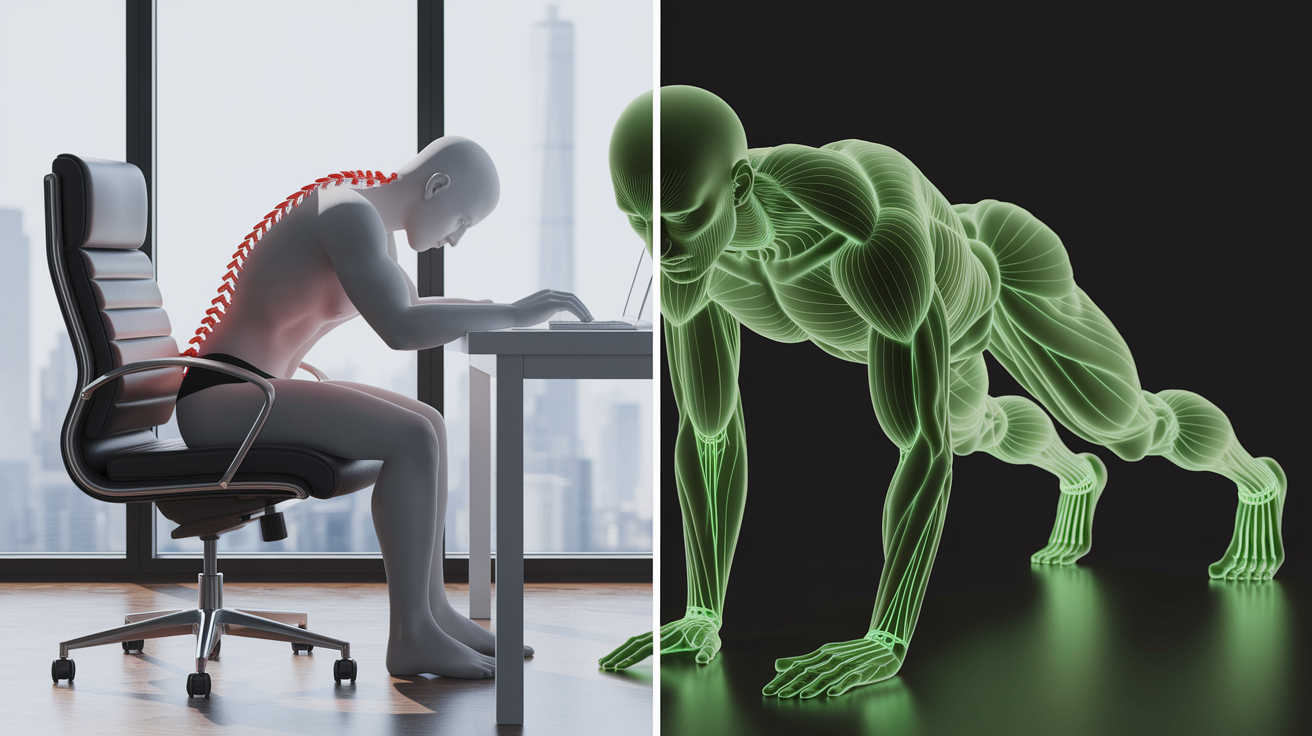
Eight hours in a chair shortens your hip flexors, weakens your glutes, rounds your shoulders forward, and turns your mid-back into a stiff plank. This circuit directly counters every one of those patterns by activating the muscles that sitting shuts off.
Strengthens glutes and posterior chain. Glute bridges and lunges wake up dormant hip extensors, improving posture and reducing lower-back strain.
Engages core and mid-back. Planks and rows pull your shoulders back and stabilize your spine, reversing the rounded-forward desk posture.
Improves hip and shoulder mobility. Squats and push-ups take joints through full ranges of motion, reducing stiffness and improving circulation.
Elevates heart rate and metabolism. Short bursts of full-body work increase calorie burn and energy levels for hours after the session ends.
Over time, these benefits compound. Your default posture improves because your muscles can hold better alignment. You move more easily when standing up from a chair or reaching overhead. Daily tasks (carrying groceries, playing with kids, walking up stairs) feel lighter and require less effort.
Cool-Down and Recovery After a 15-Minute Strength Circuit
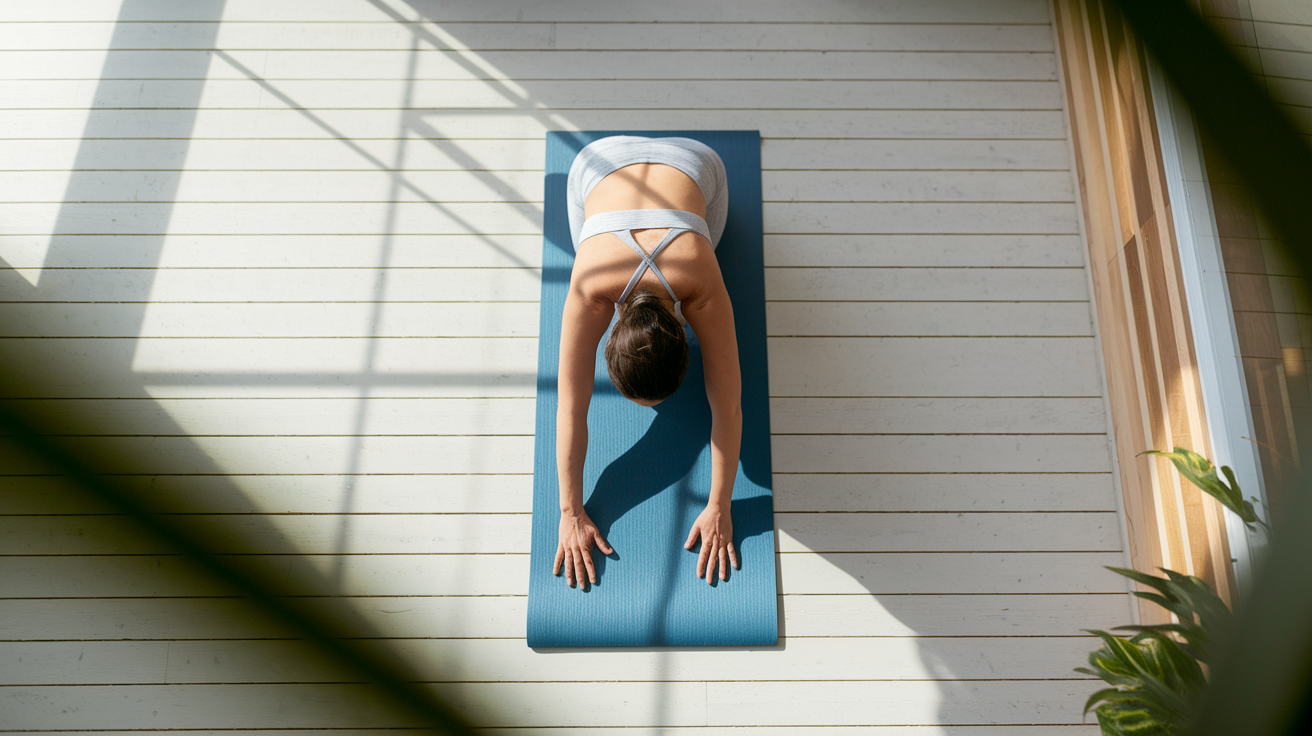
Your heart rate’s elevated, your muscles are warm, and your breathing’s still slightly accelerated. Stopping abruptly and returning to your desk can leave you feeling tight or lightheaded an hour later. A three-minute cooldown helps your body transition back to rest mode and reduces next-day soreness.
- QL Stretch (1 minute per side). Sit on the floor, extend one leg, lean sideways toward the extended leg with the opposite arm reaching overhead. Targets the deep lateral muscles of your lower back.
- Couch Stretch (1 minute per side). Rear foot on a couch, bench, or chair, front leg in a lunge position, torso upright. Opens hip flexors and quads that tighten from sitting.
- Child’s Pose (1 minute). Knees wide, hips back toward heels, arms extended forward on the floor, forehead resting down. Gently stretches hips, back, and shoulders while calming breathing.
Hold each stretch without bouncing. Breathe slowly and deeply. Inhale for four counts, exhale for six. This controlled breathing helps lower your heart rate and signals your nervous system to shift out of work mode. If you have a foam roller, spend an extra minute rolling your quads, glutes, or upper back, but static stretching alone is enough for most beginners.
Final Words
Get moving: this 15-minute circuit gives a full-body session with a quick warm-up, seven simple stations, clear timing templates, and minimal equipment options. It’s built to fit into a busy day.
You also got plain form cues, beginner-friendly modifications, progression tips, tracking ideas, and a fast cool-down to reduce stiffness and improve posture.
Use this 15-minute beginner strength circuit for busy professionals three times a week or one round on hectic days. Stick with it, log the basics, and you’ll feel stronger and more mobile in weeks.
FAQ
Q: What is the 3 3 3 rule at the gym?
A: The 3 3 3 rule at the gym means doing three sets of three reps (a 3×3 strength scheme) with heavy compound lifts, using 2–4 minutes rest to build raw strength efficiently.
Q: What is Jennifer Aniston’s 15-15-15 workout?
A: Jennifer Aniston’s 15-15-15 workout is three different exercises done for 15 reps each, repeated in rounds to build lean strength and conditioning, often using bodyweight or light weights at a steady pace.
Q: Is a 15 minute strength workout enough?
A: A 15 minute strength workout can be enough when done consistently, using compound moves, good effort, and progressive overload; aim for 2–4 sessions weekly to maintain or slowly improve strength.
Q: What are the fitness workouts for busy professionals?
A: Fitness workouts for busy professionals are short, focused sessions (15–30 minutes) like 15-minute full-body circuits, quick HIIT, mobility breaks, or strength micro-sessions—prioritize compound moves and consistency.