
Think you need a gym to get stronger? Think again.
This dumbbell-only beginner strength circuit is made for home workouts and busy schedules.
Six full-body moves, done back-to-back, build strength and keep your heart rate up in about 15 minutes once you learn the flow.
Use one pair of dumbbells, pick a conservative weight that lets you finish each set with good form, and repeat the mini-circuit four times with a 2-minute rest between rounds.
By the end you’ll train legs, back, chest, shoulders, arms, and core without fancy gear.
Complete Beginner Dumbbell Circuit Overview
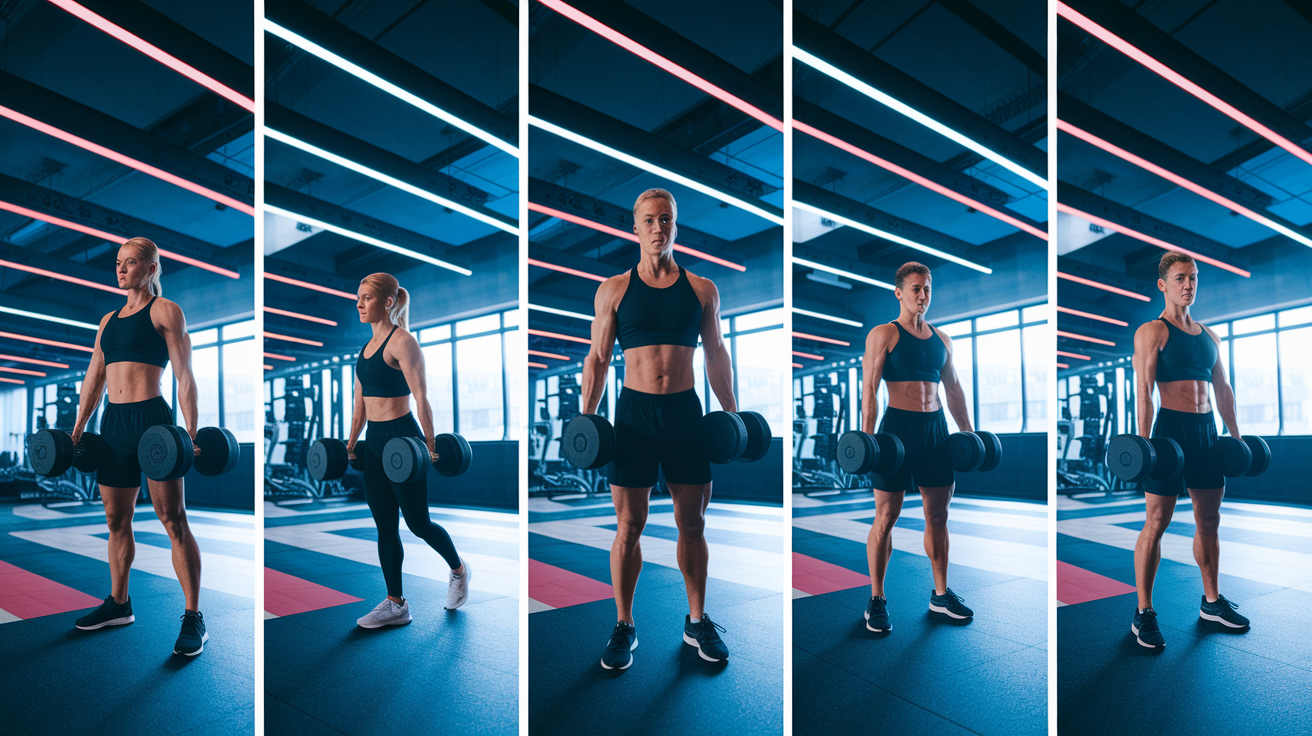
This circuit includes 6 full-body movements performed back to back with no rest. After finishing the 6th exercise, rest for 2 minutes, then repeat. Complete 4 total rounds. The whole session takes about 15 minutes once you’re familiar with the flow.
Choose a single pair of dumbbells. Pick a weight that lets you finish your hardest lift with good form. For most beginners, that means starting conservative. If your form breaks down on the last few reps of overhead press or renegade row, the weight’s too heavy. You’ll increase it weekly as your body adapts.
Here’s the full circuit in order:
- Squat — 15 reps
- Alternating lunge — 12 reps each side
- Overhead press — 12 reps
- Hammer curl — 12 reps
- Renegade row — 6 reps each side
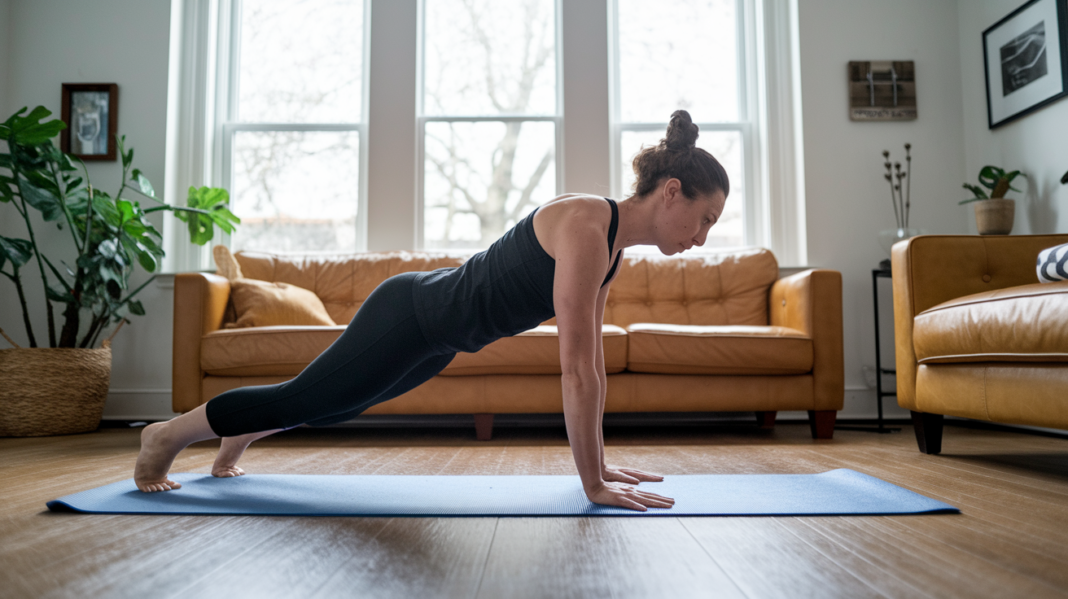
- Press-up — 15 reps
This format trains your legs, shoulders, arms, back, chest, and core in one efficient block. You don’t need a gym, a bench, or any machines. Just dumbbells and a small workout area. The zero rest transitions keep your heart rate up while building strength, making this a practical option for busy schedules.
Warm-Up Essentials for a Beginner Dumbbell Circuit

Jumping straight into loaded movements with cold muscles raises injury risk and limits your performance. A 5 minute dynamic warm-up prepares joints, activates stabilizers, and gets blood flowing to working muscles. You’re not chasing a burn here. You’re preparing your body to move safely under load.
Focus on movements that mirror what you’re about to do in the circuit. Hit your hips, shoulders, ankles, and spine. Here’s a simple sequence:
- Arm circles — 10 forward, 10 backward, medium pace
- Torso twists — 10 slow rotations each side, standing tall
- Leg swings — 8 forward-back, 8 side to side per leg
- Jumping jacks — 20 reps, controlled tempo
- Jogging in place — 30 seconds, knees up
- Hip circles — 6 per side, slow and controlled
By the time you finish, you should feel loose and slightly warm. Not fatigued. If you’re sweating hard, you went too aggressive. Save that energy for the circuit.
Foundational Dumbbell Movements for Strength Circuits
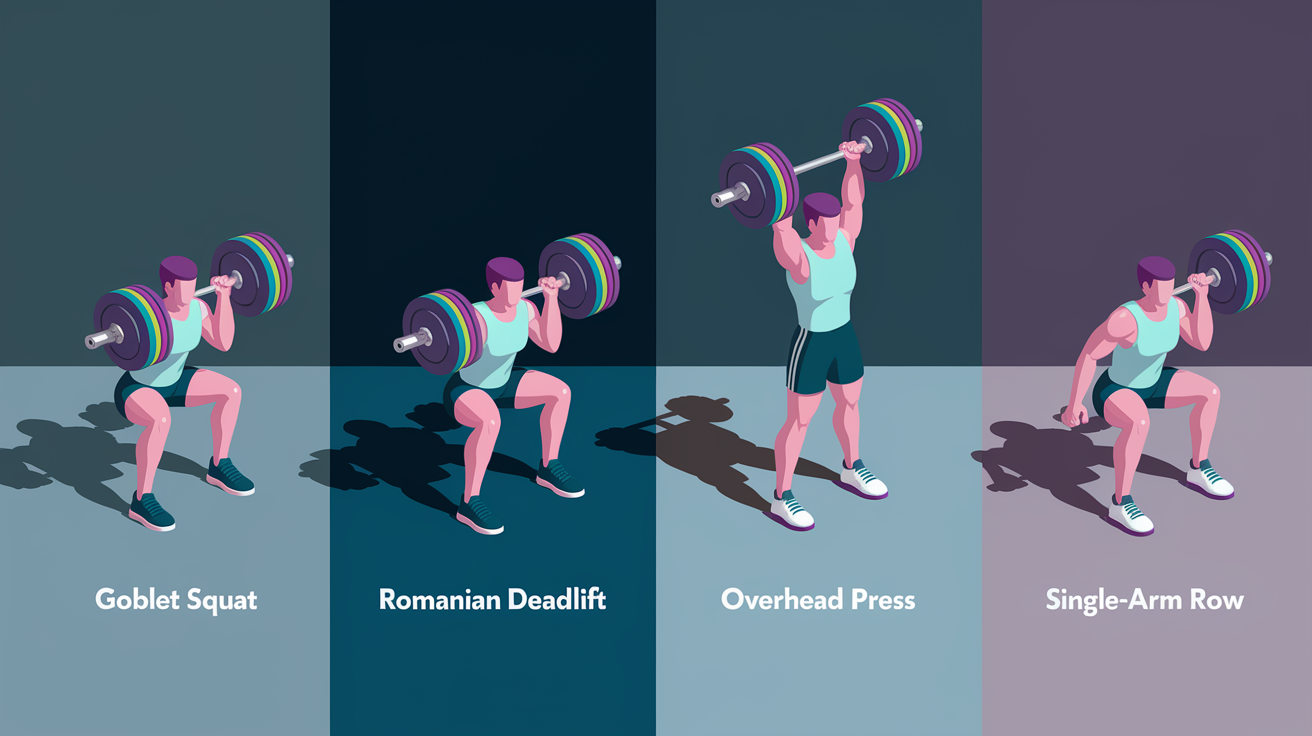
These four movement patterns form the foundation of almost every beginner dumbbell circuit. They train multiple muscle groups at once, build coordination, and transfer to real-life tasks like lifting groceries or getting off the floor. Mastering these basics early lets you build safely and progress faster.
Goblet Squat
This squat variation targets your quads, glutes, hamstrings, calves, and core in one move. Holding a single dumbbell at chest height forces your torso to stay upright. Makes it easier to find proper depth compared to holding weights at your sides. It’s one of the most beginner friendly lower body patterns because the load naturally counterbalances you, letting you sit deeper without tipping forward. Keep your feet about hip width apart, chest tall, and push through your heels as you stand.
Romanian Deadlift
The RDL builds your posterior chain. Glutes, hamstrings, lower back, and calves. It’s a hip hinge pattern, meaning you push your hips back while keeping a slight bend in your knees and a neutral spine. This move teaches you how to load and unload your hamstrings safely, which protects your lower back in daily life. Hold dumbbells in front of your thighs, hinge at the hips until you feel a stretch in your hamstrings, then drive your hips forward to stand. The weight stays close to your legs the entire time.
Overhead Press
This press trains your shoulders, upper chest, triceps, and traps while demanding full body stability. Start with dumbbells at shoulder height, elbows slightly forward, and your core braced. Press the weights overhead until your arms are fully extended but not locked out. Lower under control. Because you’re standing, your core has to work hard to prevent your lower back from arching. That makes this more than just a shoulder exercise.
Single-Arm Row
Rows build your lats, rhomboids, traps, and rear delts while training anti-rotation core stability. You can perform this move with one knee and hand on a bench, or in a staggered stance leaning forward. Either way, the goal is to pull the dumbbell toward your hip by driving your elbow back, not by twisting your torso. Keep your shoulders square to the floor and let your lat do the work. This unilateral pattern helps correct left right imbalances that show up when you only train with barbell or machine rows.
Selecting the Right Dumbbell Weight for a Beginner Circuit

Start lighter than you think you need. A common beginner mistake is choosing a weight that feels fine on squats but turns overhead presses into a struggle. Your smaller shoulder and arm muscles fatigue faster than your legs, so the weight you pick has to work for your weakest link in the circuit. If you can’t finish 12 overhead presses with good form, drop the weight. Better to complete every rep cleanly than to cheat your way through a set with momentum and compensation.
Most beginners will land somewhere in the light to medium range for the first few weeks. As you get stronger, certain moves will feel easy while others still challenge you. That’s normal. Increase the weight weekly if you can complete every prescribed rep without form breakdown. On unilateral moves like single arm rows or split squats, expect to handle slightly less weight than you would on bilateral exercises like goblet squats. One side of your body is doing all the work without help from the other.
| Weight Category | Suggested Use Cases |
|---|---|
| Light (3–5 lbs) | Isolation moves (curls, raises), rehab work, or total beginners learning movement patterns |
| Medium (5–15 lbs) | Most beginner circuits, upper body compound moves, unilateral lower body work |
| Heavy (15+ lbs) | Bilateral lower body moves (goblet squats, RDLs) once form is solid and strength improves |
Technique and Coaching Guidance for the Dumbbell Circuit
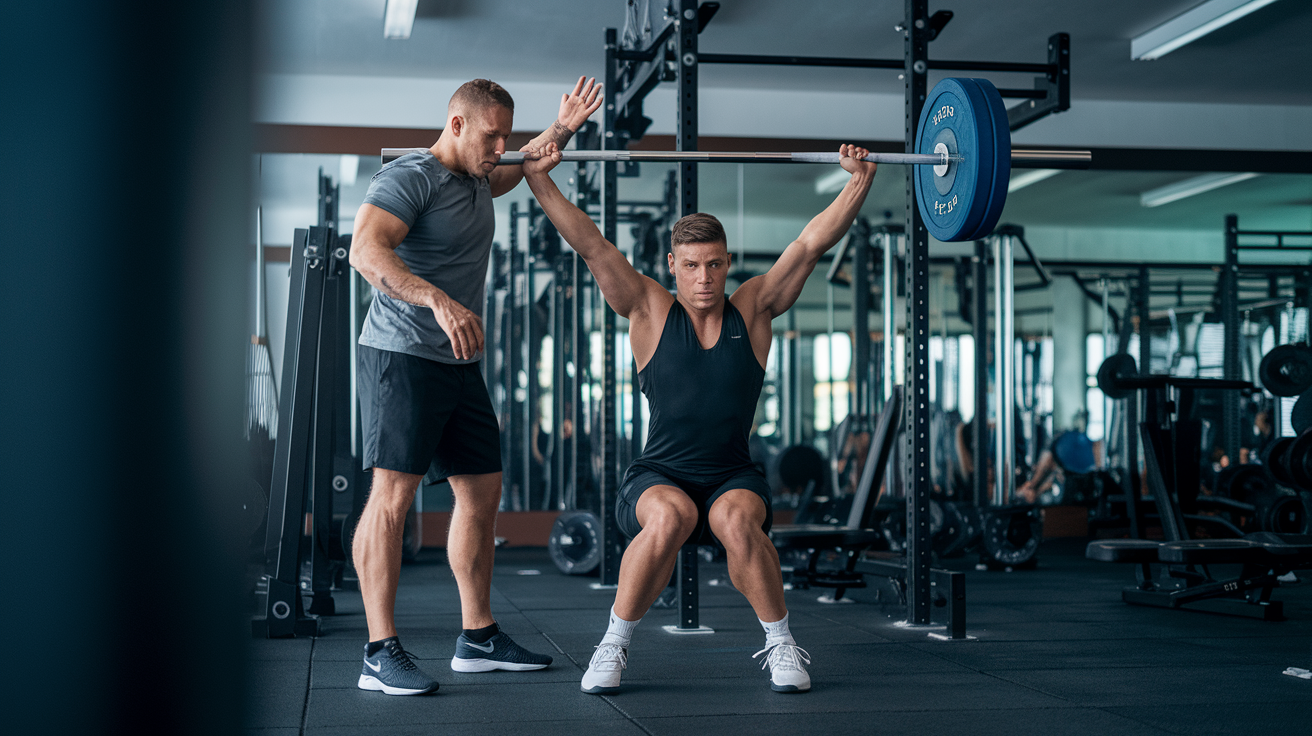
Pacing between exercises matters more than most beginners realize. You’re not racing. Move deliberately from one station to the next, set your dumbbells down if you need a breath, then reset your posture before the next rep. Rushing transitions usually means sloppy setup. And sloppy setup leads to bad reps. Take three seconds to brace your core, check your foot position, and get your shoulders where they need to be. That small pause keeps your form clean when fatigue builds.
Breathing is simple but easy to forget under load. Exhale during the hard part. Standing up from a squat, pressing overhead, pulling a row. Inhale on the way down or during the easier phase. Holding your breath might feel natural when things get heavy, but it spikes blood pressure and cuts oxygen to working muscles. If you catch yourself holding, reset and re-establish rhythm. Smooth, steady breathing keeps your core engaged and your movement controlled.
Here are six non-negotiables for every rep in this circuit:
- Brace your core before every lift like someone’s about to poke your stomach.
- Keep your chest up and shoulders back on all standing moves.
- Drive through your heels on squats and lunges, not your toes.
- Lock your elbows tight to your sides during curls and presses to isolate the target muscle.
- Stabilize your hips and glutes hard during rows and press-ups to prevent rotation or sagging.
- Move the weight with control in both directions. No bouncing, dropping, or using momentum to cheat reps.
Tempo doesn’t need to be complicated. A simple two second lower, one second pause, one second lift works for almost everything in this circuit. Slowing down the lowering phase builds more strength and reduces injury risk compared to letting gravity do the work. When you’re tired and want to speed up, that’s exactly when you need to slow down. If your last few reps look nothing like your first few, stop the set. Rest, reset, or drop the weight.
Modifying a Dumbbell Circuit for All Fitness Levels
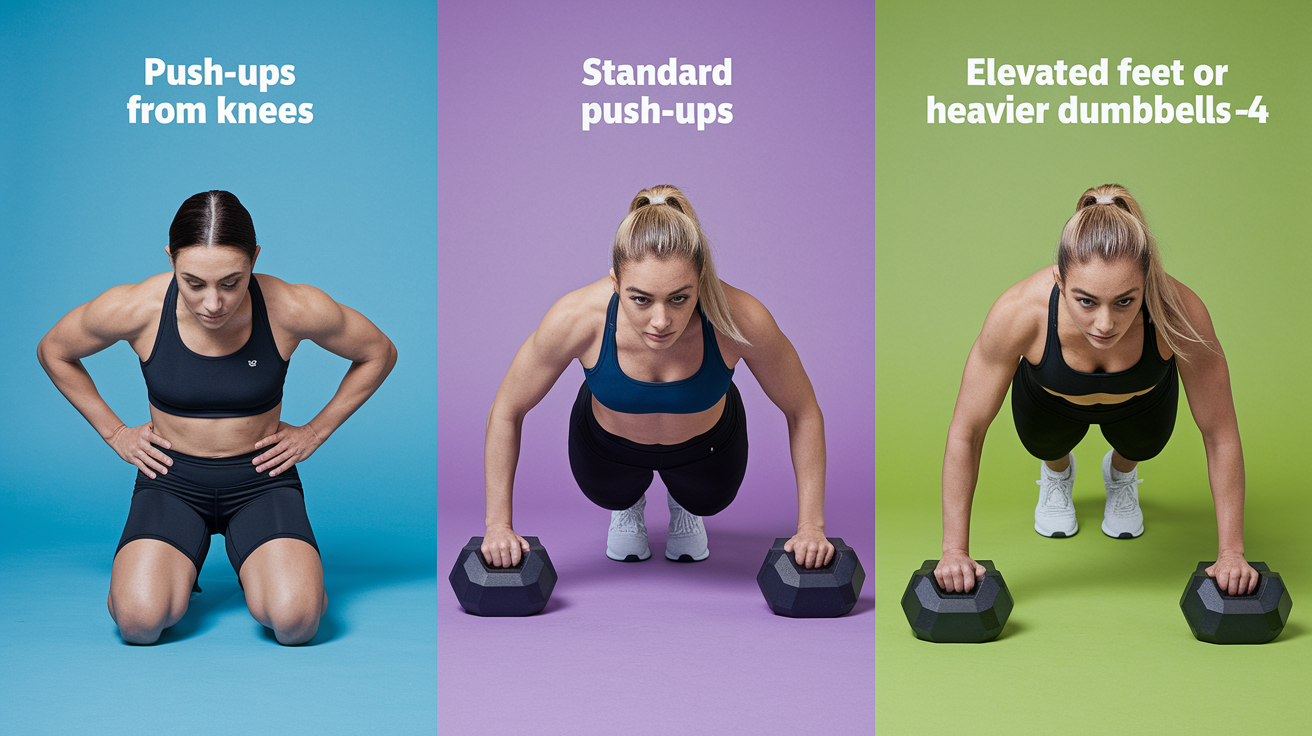
Not every beginner starts from the same place. Some people have prior training experience but took time off. Others are dealing with old injuries, joint limitations, or just lack the mobility to hit full depth on certain moves. That’s fine. The circuit works because it’s adaptable, not because it’s rigid.
If standard lunges bother your knees, swap them for split squats where your back foot stays elevated on a low step or bench. You get the same quad and glute work with less stress on the knee joint. If renegade rows feel unstable or your lower back sags, drop to your knees or swap them for a supported single arm row using a bench. For press-ups, start from your knees or with hands elevated on a sturdy surface. You still train your chest, shoulders, and triceps, just with a more manageable load. Progression happens when the modified version gets easy, then you move to the full variation.
Common beginner friendly swaps and adjustments:
- Replace alternating lunges with split squats (stationary stance, less balance demand).
- Swap renegade rows for bent over or supported single arm rows if core stability is still developing.
- Use kneeling press-ups instead of full press-ups if you can’t maintain a neutral spine for 15 clean reps.
- Lower squat and lunge depth to a pain free range if you lack hip or ankle mobility. Partial reps done right beat full range reps done poorly.
- Reduce hammer curl reps to 8–10 if your biceps fatigue before other muscle groups, then build back up over a few weeks.
Post-Circuit Cool-Down and Mobility Routine

Your body just moved through four rounds of loaded, full range exercises. Skipping the cool-down won’t ruin your progress, but taking two minutes to stretch helps manage soreness, maintain range of motion, and signal to your nervous system that work is done. This isn’t about flexibility gains. It’s about bringing your heart rate down and giving attention to the muscles you just trained.
Focus on hips, shoulders, and your back. Hold each stretch for about 10 seconds. Long enough to feel the pull, short enough to stay practical. Breathe slowly and avoid bouncing. If a position feels sharp or painful, back off. Stretching should feel like relief, not punishment.
Short cool-down sequence to try:
- Standing quad stretch — pull one heel to your glute, hold 10 seconds each side.
- Doorway chest stretch — place forearm on a wall or doorframe, turn body away gently, hold 10 seconds each side.
- Seated forward fold — sit with legs extended, reach toward toes, hold 10 seconds.
- Child’s pose — knees wide, hips back toward heels, arms extended forward, hold 15–20 seconds for back and shoulders.
Weekly Training Schedule for Beginner Dumbbell Circuits
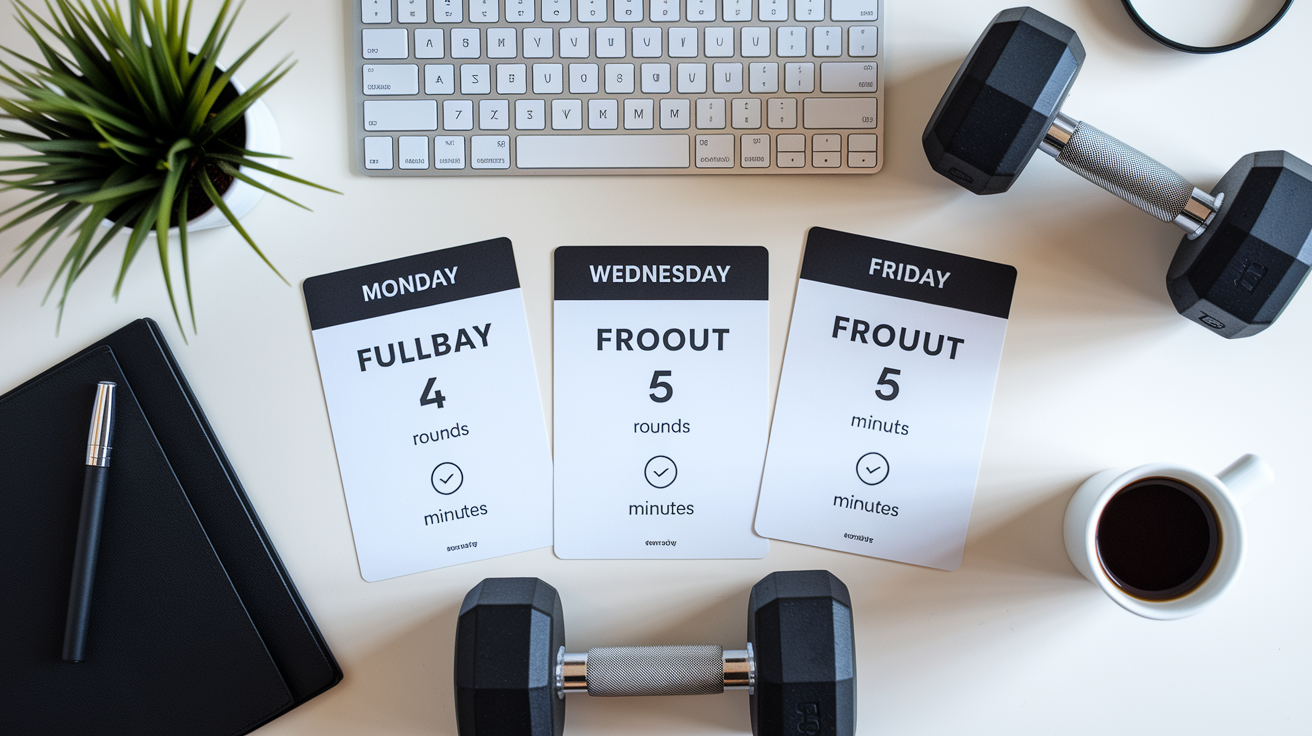
Two to four sessions per week is the sweet spot for most beginners. Your muscles grow and adapt during recovery, not during the workout itself. If you train full body circuits back to back without rest days, you’ll accumulate fatigue faster than you build strength. Allow at least 48 hours between sessions that hit the same muscle groups. Three weekly sessions (Monday, Wednesday, Friday, for example) gives you structure and plenty of recovery time.
As you adapt over a few weeks, you can add a fourth session or eventually push to five if your schedule and energy allow it. The 15 minute session length makes it realistic to fit into lunch breaks, early mornings, or evenings without rearranging your entire day. Consistency over perfection. Three short sessions you actually complete beat five planned sessions you skip because life happened.
Sample beginner week using this circuit:
- Monday — Full body dumbbell circuit (15 minutes)
- Tuesday — Rest or light walk
- Wednesday — Full body dumbbell circuit (15 minutes)
- Thursday — Rest or light mobility work
- Friday — Full body dumbbell circuit (15 minutes)
- Saturday — Rest or active recovery (yoga, stretching, easy bike ride)
- Sunday — Rest
Progress Tracking and Strength Improvements With Dumbbell Circuits

Tracking your workouts doesn’t have to be complicated. Write down the date, the dumbbell weight you used, and whether you completed all four rounds with good form. If you finished every rep cleanly, increase the weight by 2.5 to 5 pounds the following week. If your form broke down or you couldn’t finish a round, repeat the same weight next session and focus on smoother execution. That’s progressive overload in its simplest form. Adding a little more over time.
Rate of perceived exertion, or RPE, is another useful tool. After each circuit, ask yourself how hard that felt on a scale of 1 to 10. A 7 or 8 out of 10 is a good training zone for beginners. Challenging but sustainable. If you’re consistently hitting a 5 or 6, it’s time to increase the load. If you’re at a 9 or 10 every session, you’re probably pushing too hard too soon and risking burnout or injury. Use RPE alongside your written log to guide weekly adjustments without overthinking it.
Research shows that 12 weeks of structured circuit training improves overall physical fitness, cardiovascular health, body composition, and metabolic markers like blood pressure and cholesterol. You won’t see all of that in week two. But if you stick with it, track your sessions, and add weight gradually, the improvements stack. Strength gains show up first. Presses feel lighter, squats get deeper, rows get smoother. Body composition changes follow if your nutrition supports it.
| Progress Indicator | How to Measure |
|---|---|
| Strength gain | You can complete all prescribed reps with heavier dumbbells than you used in week one |
| Form improvement | Reps look cleaner, you hit full range of motion, and you maintain posture under fatigue |
| Recovery speed | You feel ready to train again within 48 hours; soreness decreases week over week |
Final Words
Start the circuit now: six moves done back-to-back, four rounds, about 15 minutes total with 2 minutes rest between rounds. Use a quick 5-minute warm-up and pick a weight that lets you keep good form.
Focus on steady tempo, breathing, and simple progress tracking. Scale movements if needed and finish with a brief cool-down.
Stick with the plan. Follow the dumbbell-only beginner strength circuit routine, track small wins, and you’ll see steady strength and confidence build over time.
FAQ
Q: What is the beginner dumbbell circuit and how does it work?
A: The beginner dumbbell circuit is a 6-move, full-body routine done back-to-back with no rest between exercises, completed for 4 rounds with about 2 minutes rest between rounds, roughly 15 minutes total.
Q: What exercises and reps are in the circuit?
A: The circuit includes squats 15, alternating lunges 12 each side, overhead press 12, hammer curl 12, renegade row 6 each side, and press-up 15.
Q: What equipment do I need and how do I choose the right weight?
A: You need one pair of dumbbells; pick a weight that lets you complete the hardest lift with good form and a challenge on the final reps. Start lighter and increase weight weekly.
Q: How should I warm up before the circuit?
A: To warm up before the circuit, do a 5-minute dynamic routine: arm circles, torso twists, leg swings, jumping jacks, jogging in place, and hip and ankle mobility drills.
Q: Which foundational dumbbell moves should beginners learn first?
A: Beginners should learn goblet squat, Romanian deadlift, overhead press, and single-arm row; these train legs, hamstrings, shoulders, and back while teaching core bracing and full range of motion.
Q: How do I pace, breathe, and keep form during the circuit?
A: To pace, breathe, and keep form during the circuit, use a controlled tempo, exhale on the effort and inhale on the return, brace your core, and slow down if form breaks.
Q: How can I modify the circuit for lower fitness or injuries?
A: To modify the circuit for different fitness levels or injuries, reduce weight, limit range of motion, swap lunges for split squats, RDLs for single-leg RDLs, and press-ups to knees while keeping a neutral spine.
Q: What cool-down should I do after the circuit?
A: After the circuit, do a 2-minute cool-down with light stretches held about 10 seconds each, focusing on hips, shoulders, and back while breathing slowly and relaxed.
Q: How often should beginners do this circuit each week?
A: Beginners should do the circuit 2 to 4 times per week, allowing about 48 hours between full-body sessions; workouts take 10 to 30 minutes and frequency can increase with proper recovery.
Q: How should I track progress and when should I increase dumbbell weight?
A: To track progress and know when to increase weight, record reps, sets, weights, and RPE; increase weekly when target reps feel easy and RPE drops, using small weight jumps.