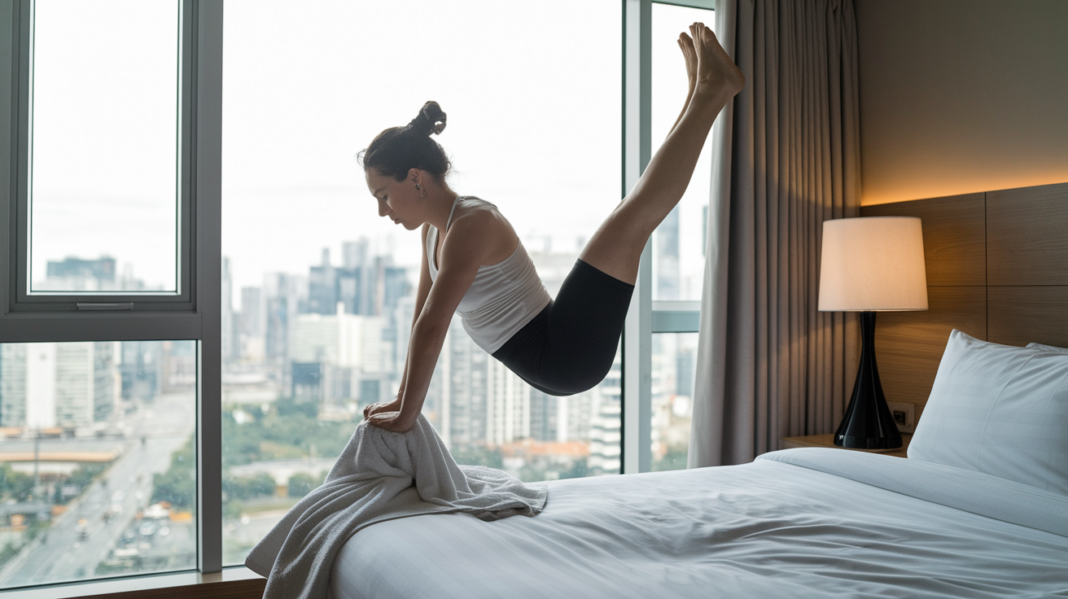

What if you could undo hours of sitting in one 10‑minute break?
This office-friendly circuit uses only a chair and a desk.
Five quiet bodyweight moves target hips, glutes, shoulders, chest, and core.
Do one or two rounds—two rounds takes about ten minutes—and you’ll feel looser and more focused without breaking a sweat.
This post gives a beginner-friendly, discreet strength routine you can do in business casual to reverse stiffness, boost circulation, and get back to work feeling better.
Quick 10‑Minute Circuit to Counter Prolonged Sitting

This 10 minute beginner strength circuit fits into a single break. You need a desk and a chair. That’s it.
You’ll run through five bodyweight movements that target the muscle groups most affected by hours at a screen. Hips, glutes, shoulders, chest, core. Beginners should complete one to two rounds of the full sequence, performing five to fifteen reps per exercise. Two rounds takes about ten minutes. If you only have five minutes, do one round and call it done.
The routine uses slow, controlled movement so you stay office appropriate. No jumping, no heavy breathing, no visible sweat. You can do every move in business casual and return to your desk looking exactly as you did before. The exercises rely on your own body weight and simple furniture, so you never need to change clothes, book a conference room, or explain yourself to a curious coworker.
Short strength circuits like this one improve blood sugar control, cardiovascular fitness, and fat metabolism even when total exercise time is brief. Ten minute bursts also reduce stiffness in the hips and shoulders, improve circulation in the lower body, and reverse the postural drift that comes from sitting. Research shows these quick sessions lower long term chronic disease risk, especially for older adults who spend most of the day seated.
The five exercises in the circuit are:
- Chair squats
- Desk push ups
- Reverse lunges
- Standing twists
- Lateral hops (or side to side lunges for a quieter option)
To keep intensity discreet, use the lower end of the rep range. Five to eight reps per move. Limit yourself to one or two rounds. Replace lateral hops with side to side lunges if you share an open office or need to stay silent. Perform each rep at a three second tempo: lower for two counts, pause, push back up. That controlled pace activates muscle without raising your heart rate enough to break a sweat, so your shirt stays dry and your hair stays in place.
Technique Principles for Safe, Discreet Office Strength Training
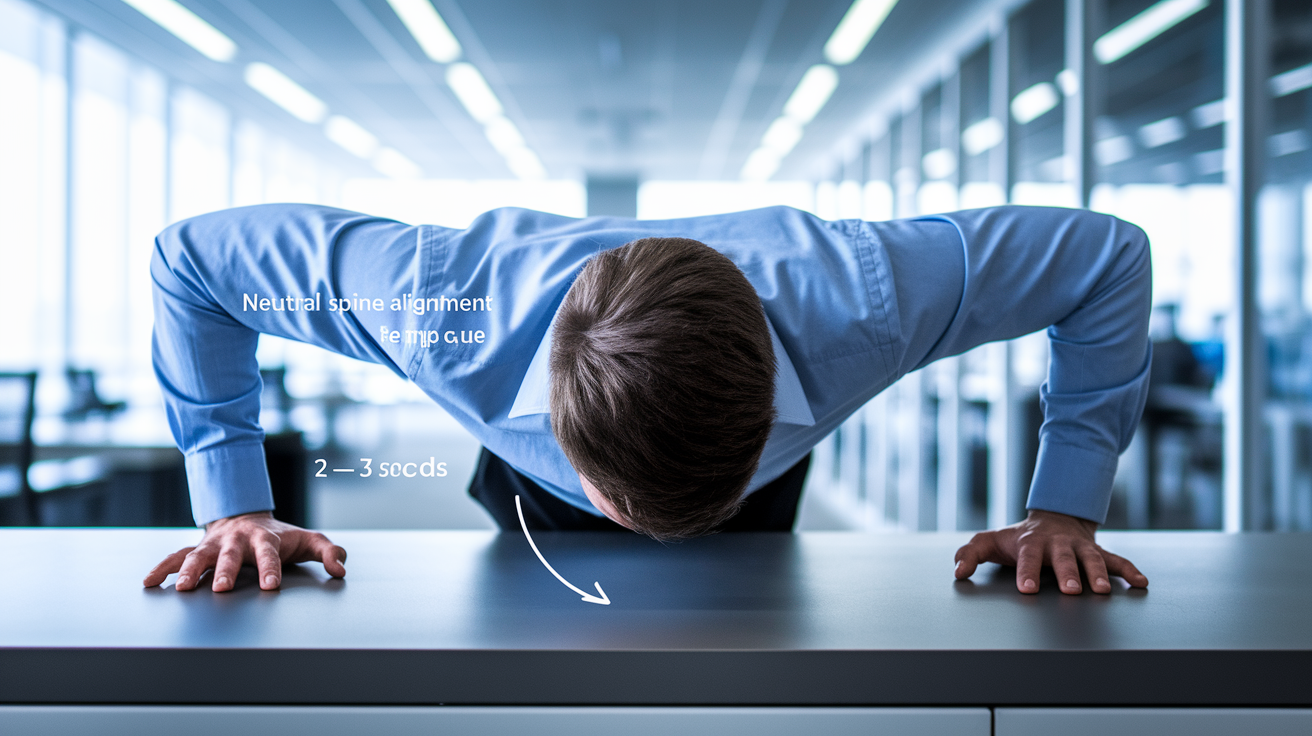
Every exercise in this circuit relies on three shared principles. Neutral spine alignment, controlled tempo, and joint stacking.
Neutral spine means your lower back holds a gentle natural curve. Not arched, not rounded. From the first rep to the last. Controlled tempo means you move deliberately, taking two to three seconds on the way down and one to two seconds on the way up. Joint stacking means your knee stays over your ankle during lunges, your wrist stays under your shoulder during push ups, and your hips stay level during single leg work. These three rules protect your joints, maximize muscle activation, and keep the movements quiet enough for an office environment.
To modify intensity without changing the exercise list, adjust surface height or range of motion. Push ups become easier when you place your hands higher on the desk edge. Squats become easier when you only lower halfway to the chair before standing. Lunges become easier when you shorten your stride and reduce knee bend to forty five degrees instead of ninety. Slower reps also reduce perceived effort and help you stay in control, which matters when you’re wearing dress shoes on a hard floor or working in a cubicle where any thud will turn heads.
Lower Body Alignment Basics
For chair squats and reverse lunges, start with your feet roughly shoulder width apart and toes turned out ten to fifteen degrees. As you lower into a squat, push your knees out slightly so they track in line with your second toe. That outward push activates your glutes and keeps stress off the inside of your knee.
When you tap the chair seat during a squat, keep your chest up and your weight centered over the middle of your foot. Not your toes, not your heels. For reverse lunges, step back far enough that both knees can bend to about ninety degrees without your front knee sliding past your toes. Push through the heel of your front foot to stand, and let your back foot stay light.
If balance feels shaky, rest one hand lightly on your desk edge or chair back. That’s not cheating. It’s smart.
Upper Body and Core Engagement Essentials
Desk push ups require a straight line from your head to your heels. Before you lower, pull your belly button toward your spine and squeeze your glutes so your hips don’t sag. Place your hands shoulder width apart on the desk edge, fingers pointing forward. Lower your chest toward the desk by bending your elbows back at roughly forty five degrees. Not flaring straight out to the sides. Press back up until your elbows are almost straight, but not locked.
For standing twists, hold a water bottle, a book, or nothing at all in both hands at chest height. Keep your knees slightly bent, hips facing forward, and feet planted. Rotate your torso to the right, pause, return to center, then rotate to the left. The twist comes from your mid back and shoulders, not your lower back. If you feel any pinch in your spine, reduce the range of motion by half. Small controlled rotation is more effective and far safer than big sloppy swings.
Beginner Modifications for an Office Friendly Strength Circuit
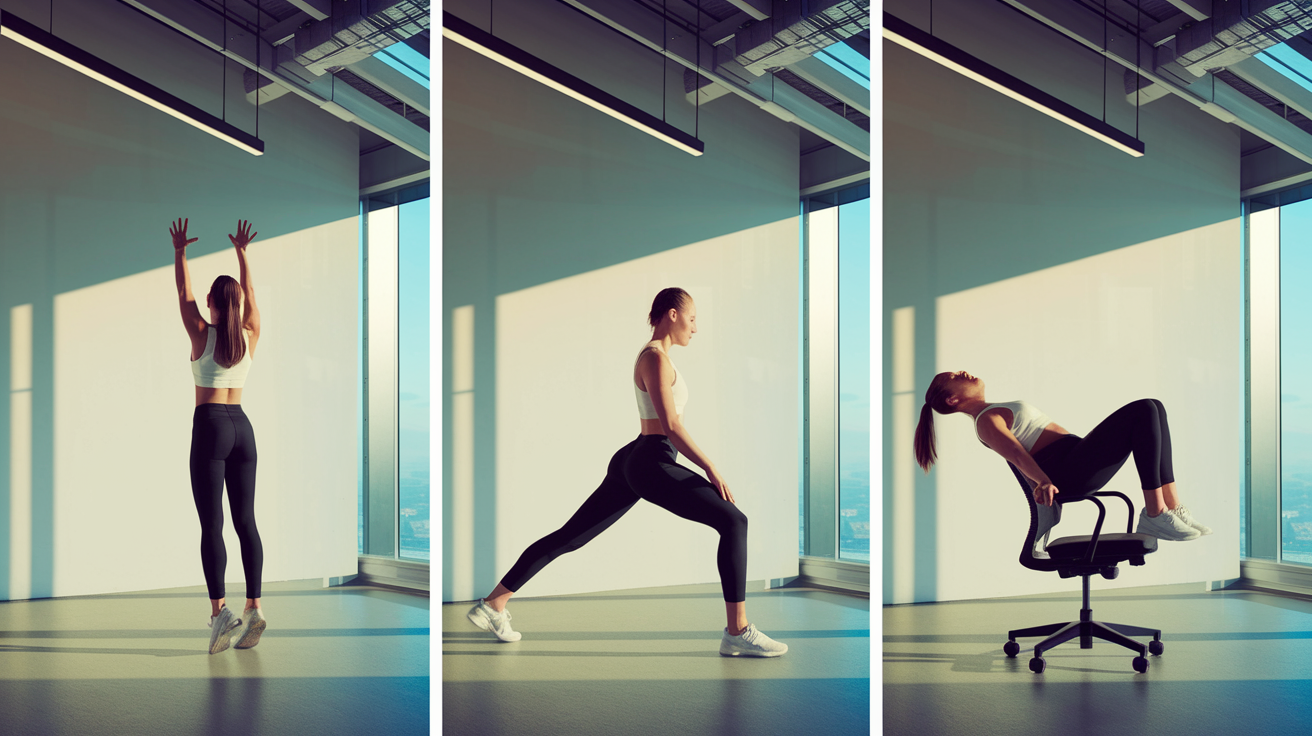
If the standard five to fifteen rep range feels too hard, start with five reps per exercise and only one round. That gives you a five minute routine you can repeat twice a day. Once mid morning, once mid afternoon. Without fatigue.
If desk push ups still feel challenging, move to a wall and perform wall push ups instead. Stand an arm’s length from the wall, place your hands flat against it at shoulder height, and lower your chest toward the wall by bending your elbows. The more upright your body, the easier the push up becomes.
Lateral hops are the highest impact move in the circuit, so beginners should swap them for side to side lunges. Step your right foot wide to the side, bend your right knee, and push your hips back as if sitting into a chair on that side. Your left leg stays straight. Push through your right heel to return to standing, then repeat on the left. This gives you the same lateral hip work without any jumping, which keeps the move silent and low sweat.
Here are five beginner friendly modifications you can use immediately:
- Replace desk push ups with wall push ups, standing two to three feet from the wall.
- Reduce reps to five per exercise and complete only one round (total time: five minutes).
- Swap lateral hops for side to side lunges to eliminate impact.
- Use a three to four second tempo on every rep to reduce intensity and improve control.
- Rest one hand lightly on your desk or chair during squats and lunges if balance is unstable.
In tight or shared workspaces, choose exercises that require minimal floor space. Chair squats, desk push ups, and standing twists all happen within a two foot radius of your desk. Reverse lunges need about three feet of clear floor behind you. If that’s not available, substitute a static glute bridge: sit on the edge of your chair, plant your feet flat, and lift your hips until your thighs and torso form a straight line. Hold for ten seconds, lower and repeat. That targets the same muscles without requiring you to step backward into a coworker’s path.
How Strength Circuits Improve Posture, Circulation, and Energy at Work

Ten minute strength circuits trigger measurable metabolic and cardiovascular benefits even though total exercise time is short. Research shows that brief, frequent movement breaks improve blood glucose control by increasing muscle glucose uptake during and after exercise. These circuits also improve fat metabolism and cardiovascular fitness markers, and they reduce long term chronic disease risk more effectively than a single long workout at the end of a sedentary day. When you move multiple times throughout the workday, your body never fully settles into the low energy, low circulation state that comes from uninterrupted sitting.
The circuit also addresses the specific postural and muscular problems caused by desk work. Prolonged sitting shortens hip flexors, weakens glutes, rounds shoulders forward, and reduces circulation in the lower legs. Each exercise in the routine reverses one or more of these patterns. Chair squats and reverse lunges lengthen hip flexors and activate glutes. Desk push ups open the chest and strengthen shoulders. Standing twists mobilize the thoracic spine. Lateral work, whether hops or side lunges, wakes up the hip abductors that stay silent when you’re seated.
Here are six specific benefits you can expect from this routine:
- Reduced lower back tension by strengthening glutes and improving hip mobility.
- Improved shoulder posture by activating the muscles that pull your shoulder blades back and down.
- Relief from tight hip flexors through repeated hip extension during squats and lunges.
- Better circulation in the calves and feet, reducing the pooling and swelling that comes from sitting.
- Decreased neck stiffness by encouraging upright posture and engaging upper back muscles.
- Lower perceived stress and higher reported energy, partly due to improved blood flow and partly due to the mental break from screen work.
Productivity improvements from movement breaks are real and measurable. When you interrupt long sitting bouts with short strength work, you return to your desk with better focus, faster reaction times, and lower reported fatigue. The routine also reduces absenteeism and healthcare costs over time by lowering the incidence of musculoskeletal complaints and metabolic dysfunction.
Basically, ten minutes of movement pays you back in both immediate energy and long term health.
Implementing the 10 Minute Strength Circuit Into a Busy Workday
The easiest time to fit this circuit is right before lunch. You’ve been sitting for two to three hours, your energy is starting to dip, and you’re about to eat. A quick strength session before your meal improves insulin sensitivity, so your body handles that lunch more efficiently. It also gives you a natural transition from work mode to break mode, which can help you actually step away from your desk instead of eating while you type.
If a pre lunch block doesn’t work, aim for a five minute break every sixty minutes. Set a recurring calendar reminder or use a simple timer app. When the alert goes off, stand up and run through one round of the circuit. Five exercises, five to eight reps each. That takes about five minutes. Do this three times during an eight hour workday and you’ve logged fifteen minutes of strength training without a single trip to a gym or a wardrobe change.
Here are five steps to integrate the workout into a busy schedule:
- Block two ten minute windows on your calendar at mid morning and mid afternoon, or set a recurring hourly reminder for a single five minute round.
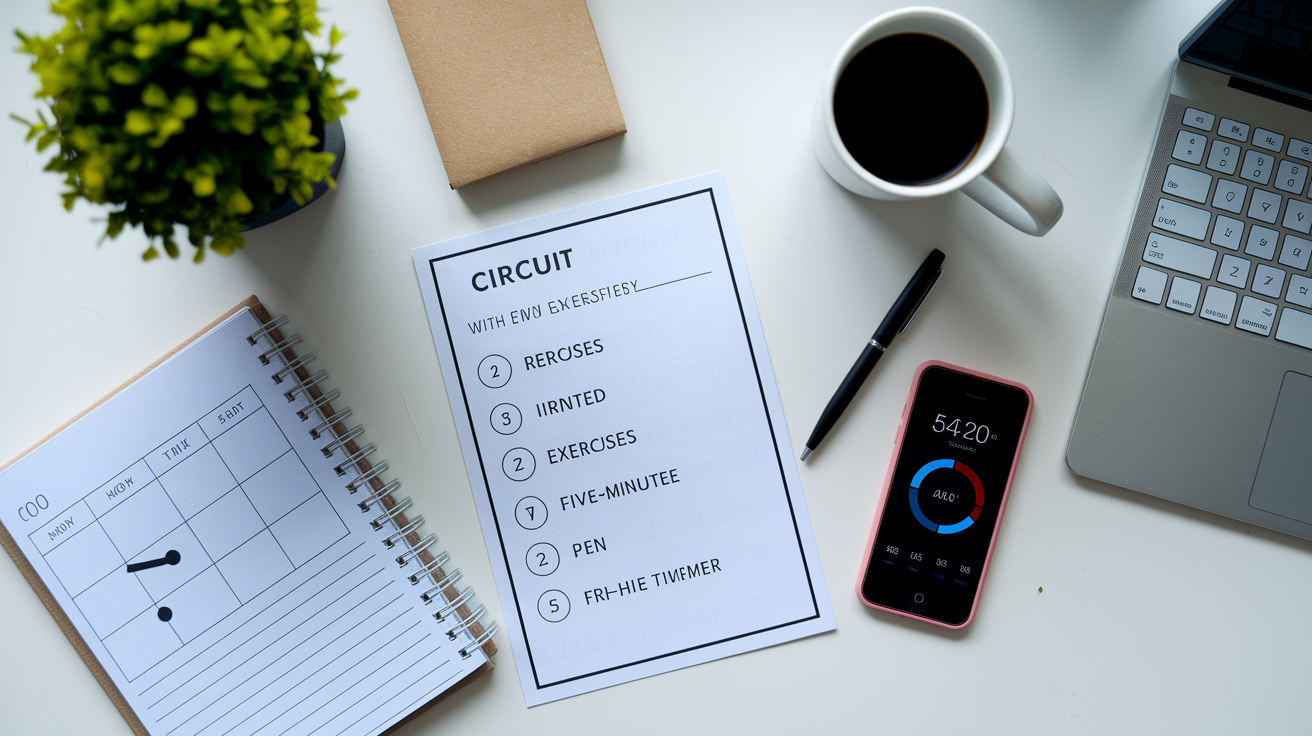
- Keep a printable routine card taped inside a desk drawer or saved as a phone screenshot so you never have to remember the exercise order.
- Choose the beginner modifications (wall push ups, side lunges, reduced reps) on days when you’re tired, wearing restrictive clothing, or short on time.
- Track completion with a simple tally in a notebook or a recurring task in your to do app. Consistency beats intensity.
- If you miss a session, do a single round before you leave for the day instead of skipping entirely. One round is always better than zero.
Printable routine cards and short video clips make it easier to stay consistent. A single page card should list the five exercises, the rep range, the number of rounds, and one or two key form cues for each move. Laminate it or slip it into a plastic sleeve so it survives coffee spills. Short fifteen to thirty second video demos, stored on your phone or bookmarked in a browser, let you check your form without hunting through a long article.
When the barrier to starting is low, you’re far more likely to actually do the work. And doing the work, even imperfectly, is the entire point.
Final Words
Do the 5-move, 10-minute circuit right at your desk: chair squats, desk push-ups, reverse lunges, standing twists, lateral hops. Aim for 5–15 reps per move and 1–2 rounds to start.
Keep tempo slow and controlled so you’re office-friendly and avoid sweat. Use wall push-ups, side lunges, or fewer rounds if you need to be discreet.
This short routine eases stiffness, boosts circulation, and lifts energy. Try one office-friendly 10-minute beginner strength circuit to combat sitting today and build from there.
FAQ
Q: Is 10 minutes of strength training enough for beginners?
A: Ten minutes of strength training can be enough for beginners when done as a focused circuit—5 exercises, 5–15 reps, 1–2 rounds. Do it daily or every other day and gradually add rounds.
Q: How to combat sitting at a desk all day?
A: To combat sitting at a desk all day, break up sitting every 30–60 minutes with short walks or movement breaks, use desk-friendly strength moves, fix posture, and stand during calls when possible.
Q: What is the 3 3 3 rule at the gym?
A: The 3 3 3 rule at the gym usually means three sets of three reps — a strength-focused plan using heavier weight, controlled reps, and longer rests (about 2–3 minutes) to build strength safely.
Q: How to strengthen your core while sitting at your desk?
A: You can strengthen your core while sitting at your desk by doing seated bracing, pelvic tilts, seated marches, and short isometric holds; do 30–60 second sets several times daily and keep good posture.