Think kettlebells are only for bulky athletes? Think again.
One properly chosen bell plus 20 minutes can build real strength for busy people.
This routine walks you through five beginner-friendly moves: goblet squat, swing, press, row, deadlift, done back-to-back for three rounds.
No fluff, no guessing.
Follow the form cues and warm-up, and you’ll get stronger without wasting time or risking injury.
By the end, you’ll know what weight to use and how to progress.
This is a starter plan that works.
Simple Beginner Kettlebell Workout Routine
This routine gives you everything you need to start building strength with a single kettlebell. You’ll hit all the major movement patterns in about 20 minutes. No guessing, no fluff.
The Workout:
-
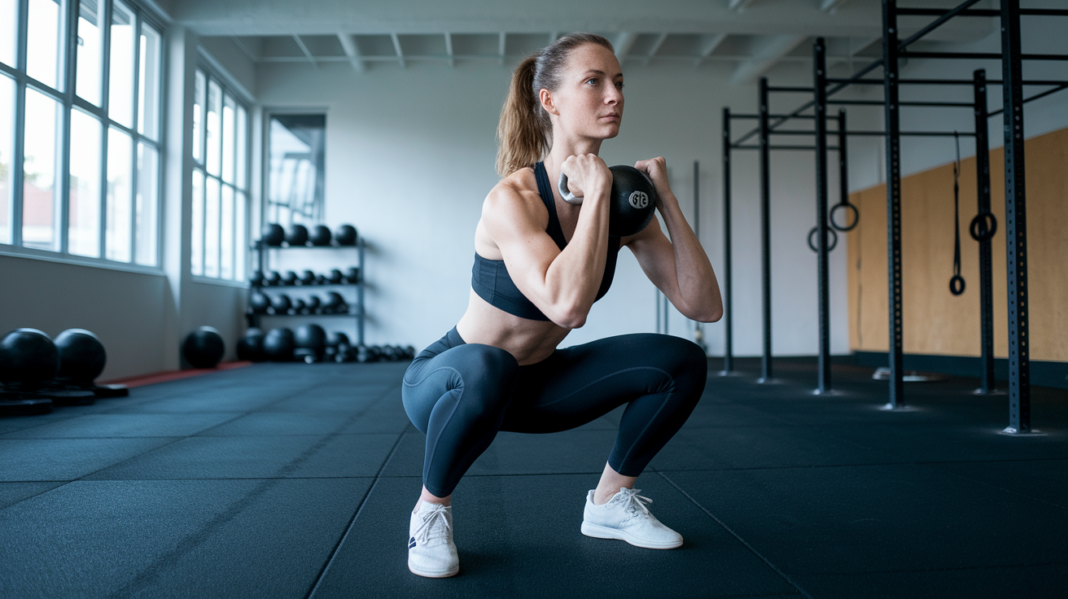
Goblet Squat – 10 reps. Hold the kettlebell at chest height with both hands on the sides of the handle. Squat down until your thighs are at least parallel to the floor. Stand back up. Rest 30 seconds. If you’re new, start with 8 to 12 kg. If you’ve trained before, try 12 to 16 kg.
-
Kettlebell Swing – 15 reps. Feet shoulder width apart, kettlebell between your feet. Hinge at the hips, grab the bell, snap your hips forward to swing it to chest height. Let it swing back between your legs and repeat. Rest 30 seconds. Same weight as your goblet squat works here.
-
Single Arm Overhead Press – 5 reps per side. Clean the kettlebell to shoulder height (rack position). Press it straight overhead. Lower it under control. Switch sides. Rest 45 seconds. You might need to drop 2 to 4 kg lighter than your squat weight.
-
Single Arm Row – 8 reps per side. Hinge forward at the hips, one hand on a bench or your knee for support. Pull the kettlebell toward your ribcage, driving your elbow back. Lower slowly. Switch sides. Rest 30 seconds.
-
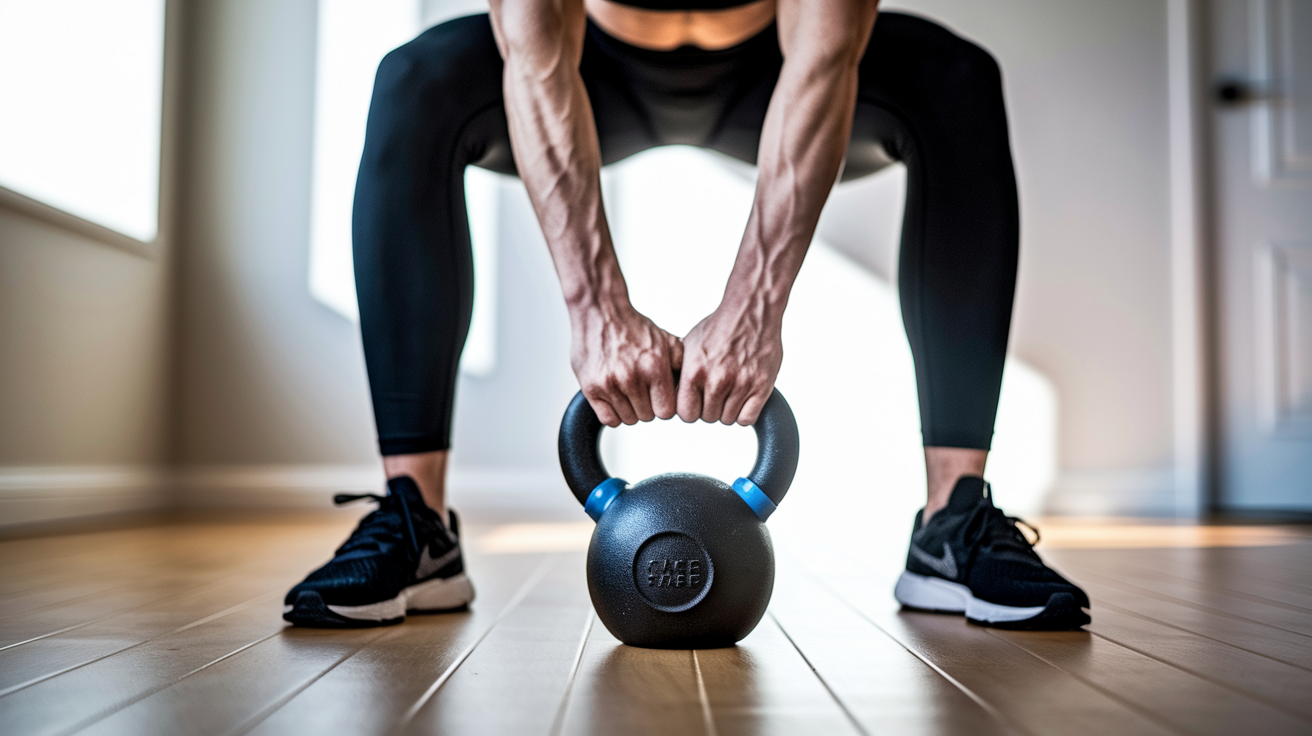
Kettlebell Deadlift – 12 reps. Feet hip width, kettlebell on the floor between your feet. Hinge at the hips, grab the handle with both hands, keep your back flat. Drive through your feet to stand tall. Lower the bell back to the floor with control. Rest 60 seconds before starting the next round.
Complete all five exercises back to back. That’s one round. Rest 60 to 90 seconds, then repeat. Aim for three total rounds. The whole workout should take 18 to 22 minutes, including rest. If you finish faster, you’re probably rushing your reps. Slow down and focus on control.
As you get comfortable with the flow, try shortening your rest between exercises to 20 seconds and keeping the 60 to 90 second break between full rounds. That’s when the workout starts to feel like conditioning, not just lifting.
Key Form Cues for Each Beginner Exercise
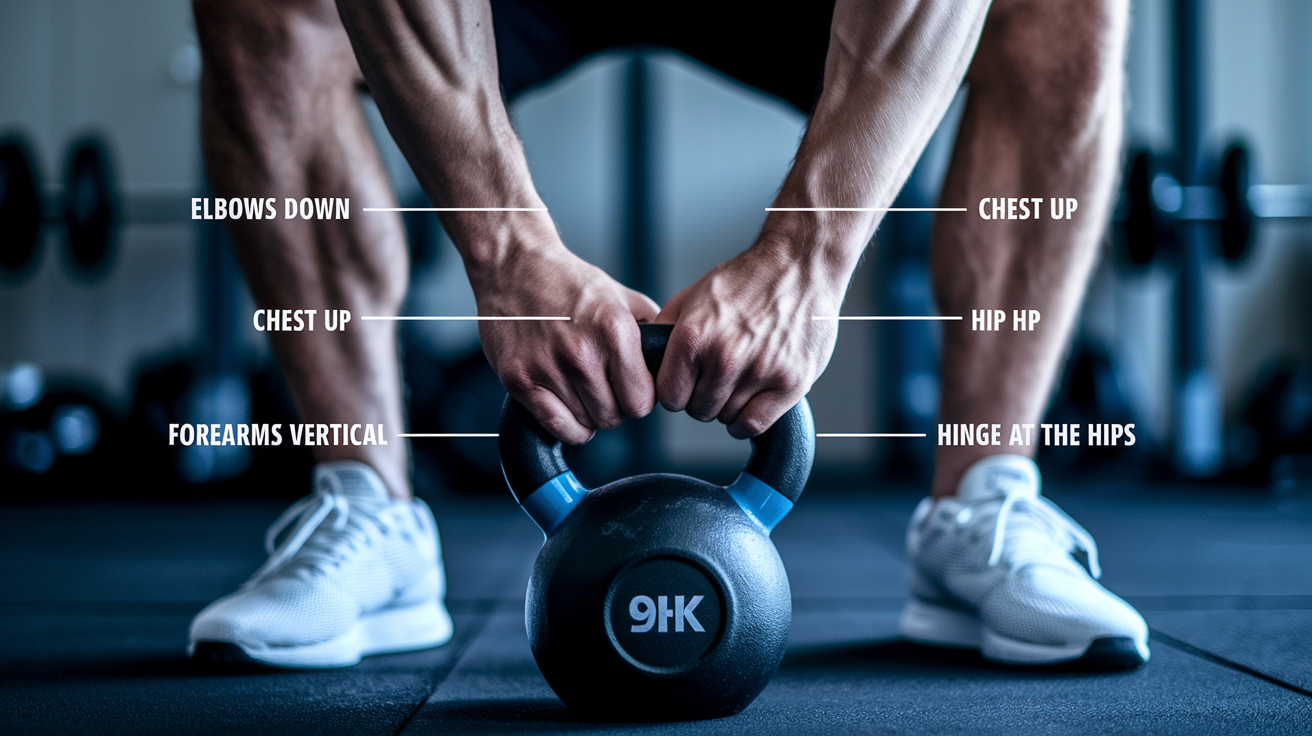
Most beginner mistakes happen because people skip the basics. The goblet squat looks simple, but if your torso leans too far forward or your elbows flare out, you lose the benefit. Keep your chest proud, elbows pointing down, forearms as vertical as possible. Heels lifting off the floor? Widen your stance slightly or work on ankle mobility separately.
The kettlebell swing is not a squat. It’s a hinge. Your knees bend a little, but the power comes from snapping your hips forward, not lifting with your back or squatting the weight up. A lot of beginners treat the swing like a front raise and try to muscle it with their shoulders. Let the hips do the work. If you feel it in your lower back instead of your glutes and hamstrings, you’re either rounding your spine or not hinging properly.
On the overhead press, people tend to arch their lower back to get the bell overhead. That’s a compensation for weak shoulders or tight lats. Keep your ribs down, core braced, press straight up. If you can’t get full lockout without leaning back, use a lighter bell or regress to a floor press until your shoulder strength catches up.
Universal form rules for kettlebell work:
- Brace your core before every rep like someone’s about to punch you in the stomach.
- Keep your shoulders pulled down and back, not hunched up near your ears.
- Hinge at the hips, not the lower back. Think about closing a car door with your glutes.
- Breathe. Exhale on the hard part (standing up, pressing up, pulling). Inhale on the way down or back.
Warm Up Routine Before Kettlebell Training
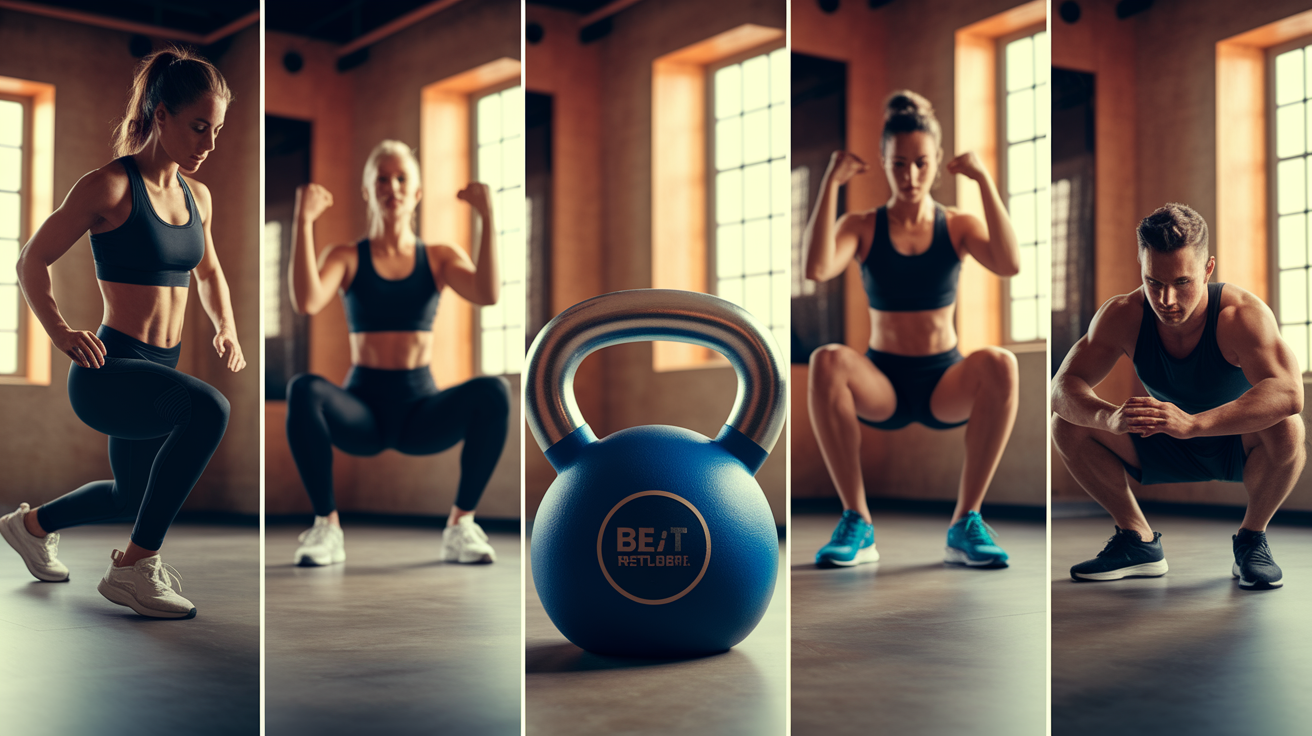
Warming up isn’t optional. Cold muscles don’t move well, and kettlebells demand full ranges of motion at the hips, shoulders, and spine. A few minutes of prep reduces your injury risk and helps you get more out of every rep.
Simple warm up (5 to 8 minutes total):
- Hip circles – Stand on one leg, swing the other leg in a big circle forward and backward. 5 circles each direction, each leg. Wakes up your hip joint before goblet squats and swings.
- Arm circles and shoulder openers – Big circles forward and backward, then clasp your hands behind your back and lift your arms up to stretch the chest. 10 circles each way, 3 chest stretches.
- Glute bridges – Lie on your back, feet flat, drive through your heels to lift your hips. Squeeze your glutes at the top. 10 reps. This primes the hinge pattern.
- Bodyweight squats – Just squat down and stand up. Focus on depth and staying upright. 8 to 10 reps.
- Dead bugs or bird dogs – Lie on your back (dead bug) or get on all fours (bird dog). Extend opposite arm and leg slowly, return, switch. 6 reps per side. Teaches core bracing before you add load.
You can do this as a circuit. Move from one drill to the next without rest. Repeat the whole thing twice if you want. By the time you pick up the kettlebell, your body should feel loose and ready.
Safety Guidelines for Beginners
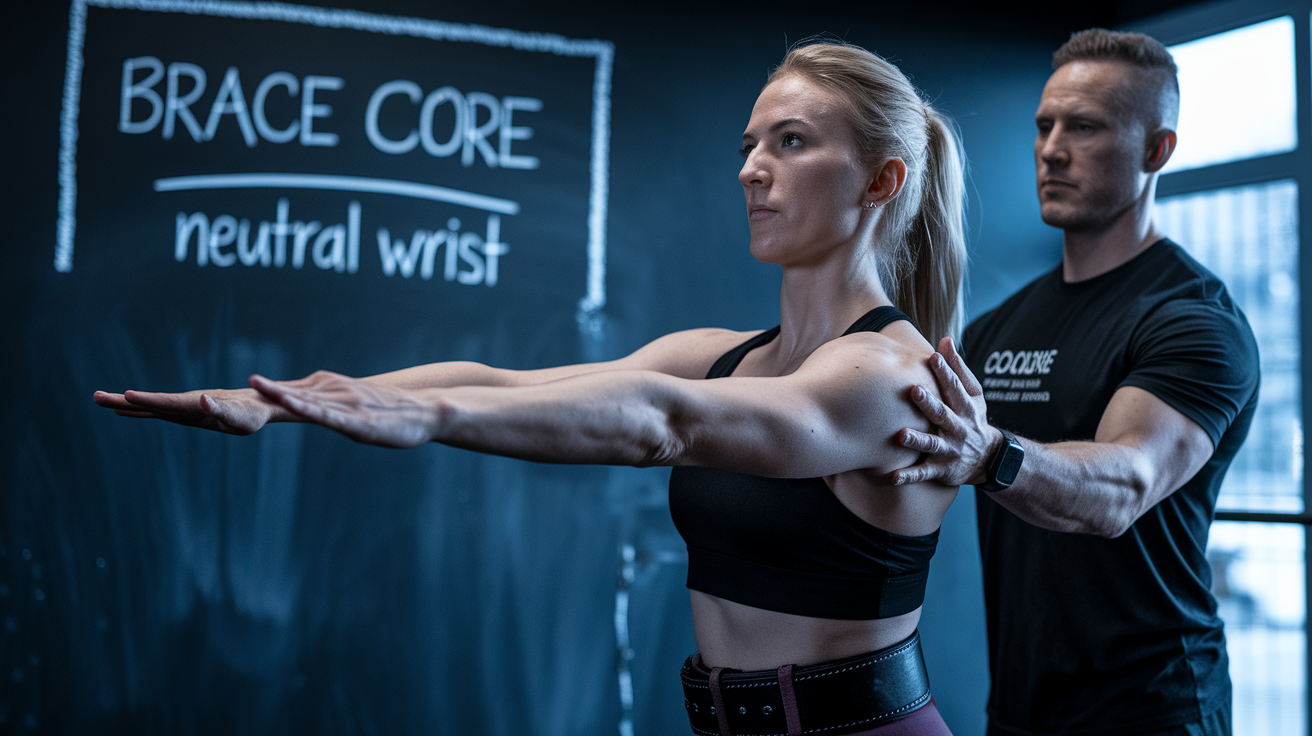
The biggest mistake beginners make is picking a weight that’s too heavy and then grinding through reps with bad form. Ego has no place here. If you can’t complete a set with tight technique, the weight is wrong. Drop down and rebuild. Kettlebells are unforgiving. The load sits away from your center of mass, so even a moderate weight feels heavy if your form breaks.
Wrist pain usually means the bell is resting too far back in your hand during the rack position (when the bell sits on your shoulder). The handle should sit diagonally across your palm, not jammed into your wrist joint. If your wrist bends backward under load, you’ll feel it fast. Adjust your grip and keep a strong, neutral wrist. For presses and cleans, think about “threading” your hand through the handle smoothly instead of flipping it.
Lower back pain is almost always a hinge problem. If you round your spine during swings or deadlifts, you’re asking for trouble. Practice the hip hinge without weight first. Stand a few inches from a wall, facing away. Hinge at the hips until your glutes touch the wall. Your back should stay flat the whole time. That’s the pattern. If you can’t do it unloaded, you’re not ready to add a kettlebell yet.
How to Progress Your Kettlebell Training
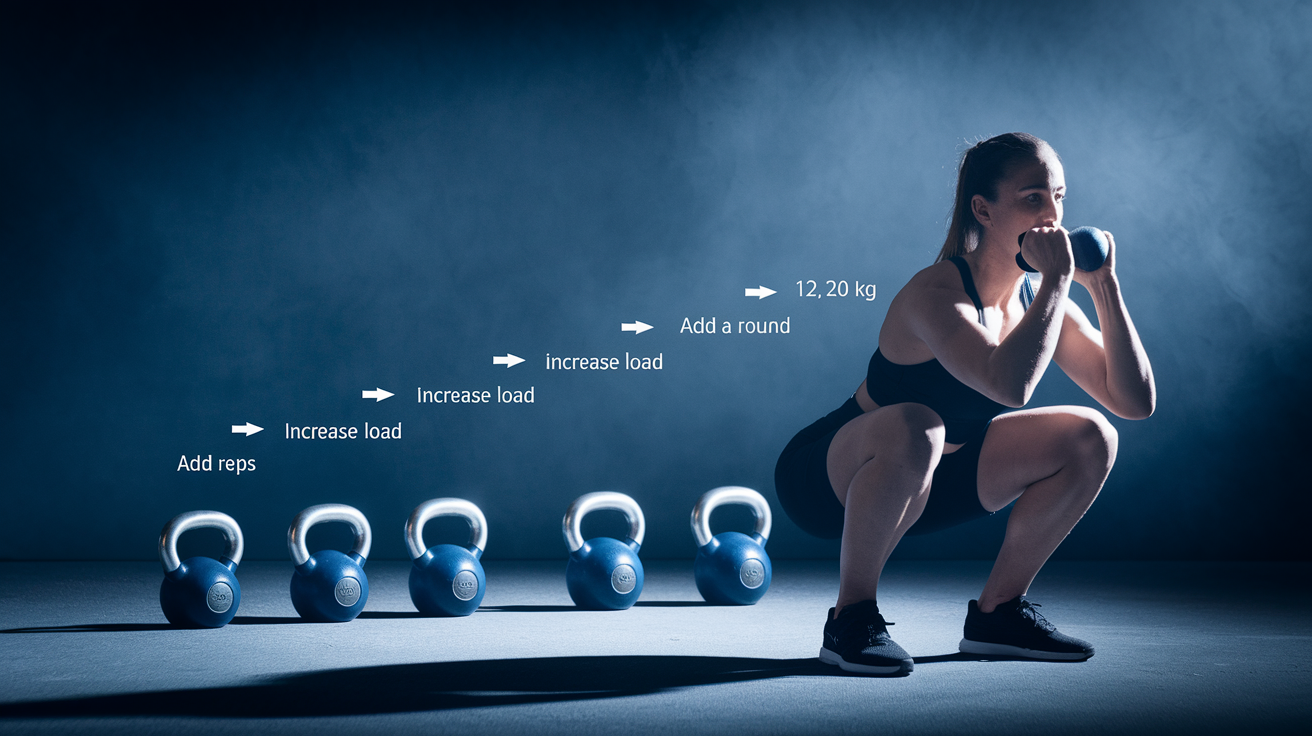
Progression is simple. You either add reps, add weight, do more rounds, or shorten your rest. Pick one variable and improve it slowly.
Four ways to progress:
- Add reps. If the workout calls for 10 goblet squats and you can do 12 with perfect form, do 12. Keep adding one rep per week until you hit 15, then consider moving up in weight.
- Increase load. When your current kettlebell feels light and your form stays tight through all three rounds, jump up by 2 to 4 kg. Don’t skip weights. Small jumps let your body adapt without breaking down.
- Add a fourth round. Three rounds not enough? Add one more. Keep rest intervals the same. This builds work capacity without changing the exercises.
- Cut rest time. If you’re resting 60 seconds between rounds, try 45. If you’re resting 30 seconds between exercises, try 20. Shorter rest makes the workout harder without adding weight.
You’re ready to increase weight when you can complete all three rounds with zero form breakdowns, you finish feeling like you could do another round, and you’ve been using the same bell for at least two weeks. Technique first, always. If your form starts to slip in round two, you’re not ready to go heavier. Stay where you are and tighten up the movement quality.
Don’t try to progress every week. Some weeks you just maintain. That’s normal. Progress happens in waves, not straight lines.
Choosing the Right Kettlebell for Beginners
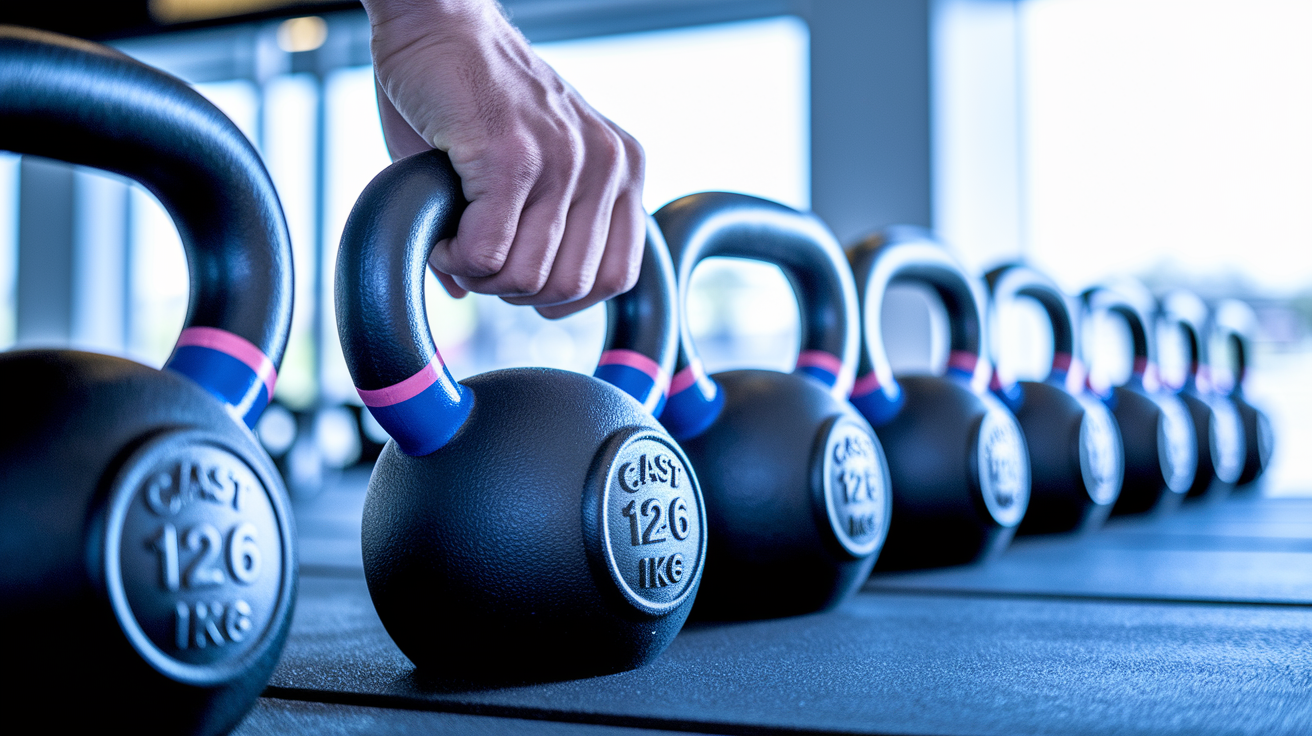
You’ll see two main types of kettlebells in stores and gyms. Cast iron bells are the classic option. They’re usually cheaper, the handle thickness varies depending on the weight, and the bell itself gets bigger as you go heavier. Competition style kettlebells stay the same size no matter the weight. The color changes, but the dimensions don’t. That consistency helps if you’re doing a lot of cleans and snatches, but for a beginner it doesn’t matter much.
Handles matter more than you’d think. Thicker handles (around 35 mm or more) can fatigue your grip faster. If the handle is too smooth, it might slip when your hands sweat. A little texture helps. Some bells have a powder coat or slight roughness that improves grip without tearing up your hands. Avoid bells with sharp seams or rough welds along the handle. You’ll know it when you feel it.
| Type | Key Feature | Best For |
|---|---|---|
| Cast Iron | Handle and bell size increase with weight; often cheaper; durable | Home gyms, beginners on a budget, general strength work |
| Competition Style | Uniform dimensions across all weights; color coded; consistent handle feel | Kettlebell sport athletes, advanced users, anyone doing high rep ballistic work |
| Adjustable | Dial or pin to change weight; saves space; can feel bulky or awkward | Small home gyms, beginners testing different loads before committing to fixed bells |
If you’re just starting, one solid cast iron bell in the 12 to 16 kg range (if you’re a man) or 8 to 12 kg range (if you’re a woman) will cover most of this routine. Test it in person if you can. Grip the handle, do a few swings, see how it feels. If buying online, look for return policies. A kettlebell that feels wrong in your hand will sit in the corner unused.
Final Words
Start with the warm-up, then do the five-move routine: swings, deadlifts, goblet squats, presses, and a carry. Do 8–12 reps, rest 45–60 seconds, and aim for 3 rounds; this takes about 20–30 minutes.
Focus on form: hinge at the hips, brace your core, keep an upright torso for squats, and protect your wrists. Follow safety tips, pick the right kettlebell, and only add weight when technique is solid.
This beginner kettlebell workout is simple to repeat. Start light, be consistent, and you’ll see steady progress. You’ve got this.
FAQ
Q: What weight kettlebell should a beginner use?
A: The kettlebell weight a beginner should use is about 8–12 kg for many women and 12–16 kg for many men; pick one you can swing with good form for 8–12 reps.
Q: Are kettlebells good for bone density?
A: Kettlebells are good for bone density because weight-bearing, dynamic moves stimulate bone; do them 2–3 times weekly with safe progression and check with your clinician if you have low bone mass.
Q: What is a good kettlebell workout for beginners?
A: A good kettlebell workout for beginners is swings, deadlifts, goblet squats, overhead presses, and farmer carries, done for 8–12 reps with 45–60 seconds rest.
Q: How long should a kettlebell workout be for beginners?
A: A kettlebell workout for beginners should be about 20–30 minutes including warm-up; three rounds of five exercises usually fit that time and help you progress safely.