Think you need an hour to get stronger?
Think again.
This 30-minute beginner circuit pairs machines for stable, guided movement with free weights that build balance and core control.
Below you’ll get the full plan, moves, sets, rest, and simple form cues, so you can walk into the gym, finish a complete session, and know exactly how to progress next time without overcomplicating things.
Full 30-Minute Beginner Strength Circuit (Machines + Free Weights)
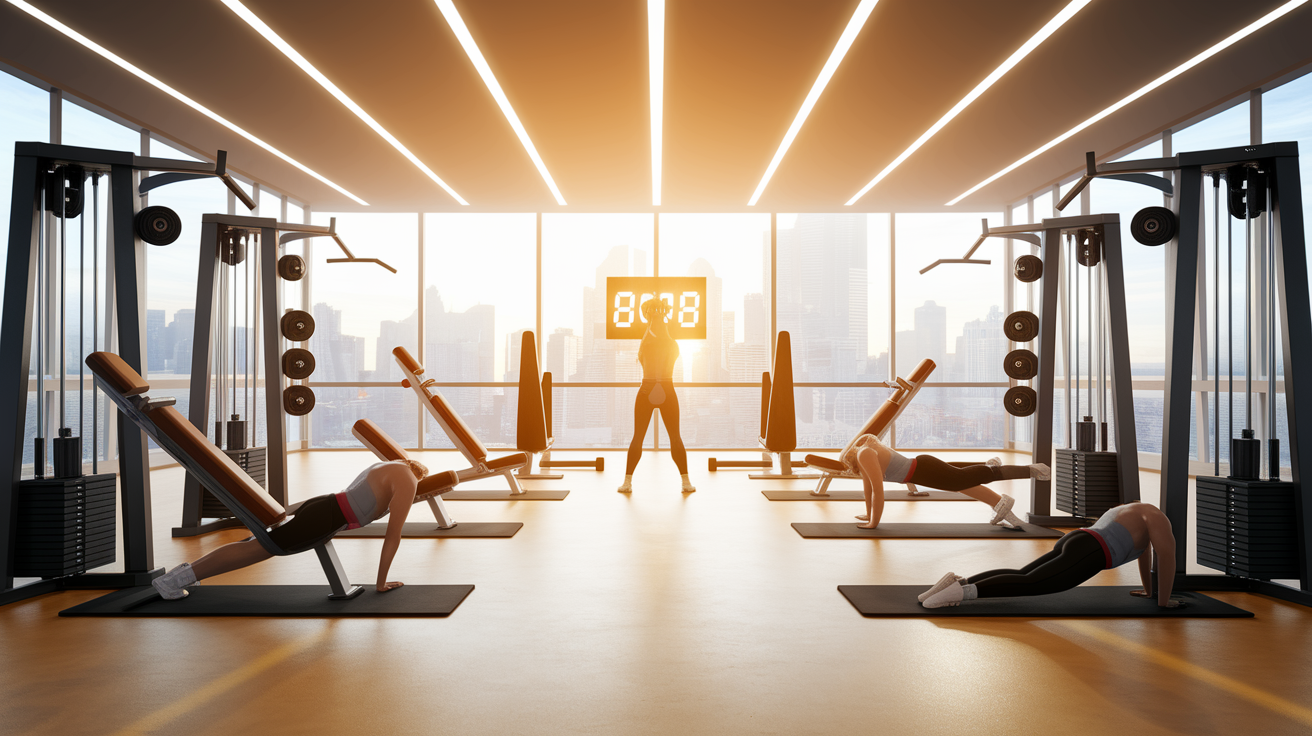
Here’s your complete workout. Just the moves, timings, and targets you need to walk in and get it done.
This circuit mixes machines and free weights so you get guided movement plus the balance work that comes with dumbbells or cables. Move through each exercise in order with 30 to 60 seconds of rest between stations. Repeat the entire circuit once if you’re new, or twice if you feel strong and want to push a bit harder.
| Exercise | Equipment | Sets/Reps | Time | Target Muscles |
|---|---|---|---|---|
| Leg Press | Leg press machine | 2 x 12 | ~3 min | Quads, glutes, hamstrings |
| Chest Press | Chest press machine | 2 x 12 | ~3 min | Chest, shoulders, triceps |
| Lat Pulldown | Lat pulldown machine | 2 x 12 | ~3 min | Lats, upper back, biceps |
| Dumbbell Shoulder Press | Light dumbbells | 2 x 12 | ~3 min | Deltoids, triceps |
| Cable Bicep Curl | Cable machine with bar | 2 x 12 | ~3 min | Biceps |
| Dumbbell Goblet Squat | Light dumbbell | 2 x 12 | ~3 min | Quads, glutes, core |
| Ab Machine | Ab crunch machine | 2 x 12 | ~3 min | Abs, deep core |
| Plank Hold | Mat | 2 x 30–45 sec | ~2 min | Core, shoulders, glutes |
Run through each station once, taking 30 to 60 seconds between exercises. If you finish in 15 minutes and feel good, rest a couple minutes, then repeat. If your first round took 20 to 25 minutes and you’re wiped, that’s fine. One round is a complete session. Add a second next week.
Exercise Form Tips for Each Movement

Good form beats heavy weight. Machines guide the path, but you still need to move with control. Free weight exercises demand a bit more balance, so brace your core and slow down if anything feels wobbly.
Here’s what to focus on for each exercise.
Leg Press: Feet shoulder width apart in the middle of the platform, knees tracking over your toes. Press through your heels and stop just short of locking your knees at the top.
Chest Press: Adjust the seat so handles line up with mid chest. Keep your back flat against the pad, shoulders down, and push straight forward without locking your elbows.
Lat Pulldown: Sit with knees secured under the pads. Grip the bar a little wider than shoulder width, lean back slightly, and pull the bar to your chest (not your neck). Squeeze your shoulder blades together at the bottom.
Dumbbell Shoulder Press: Sit or stand with a tight core. Hold dumbbells at shoulder height, palms forward, and press straight up without arching your lower back. Lower with control.
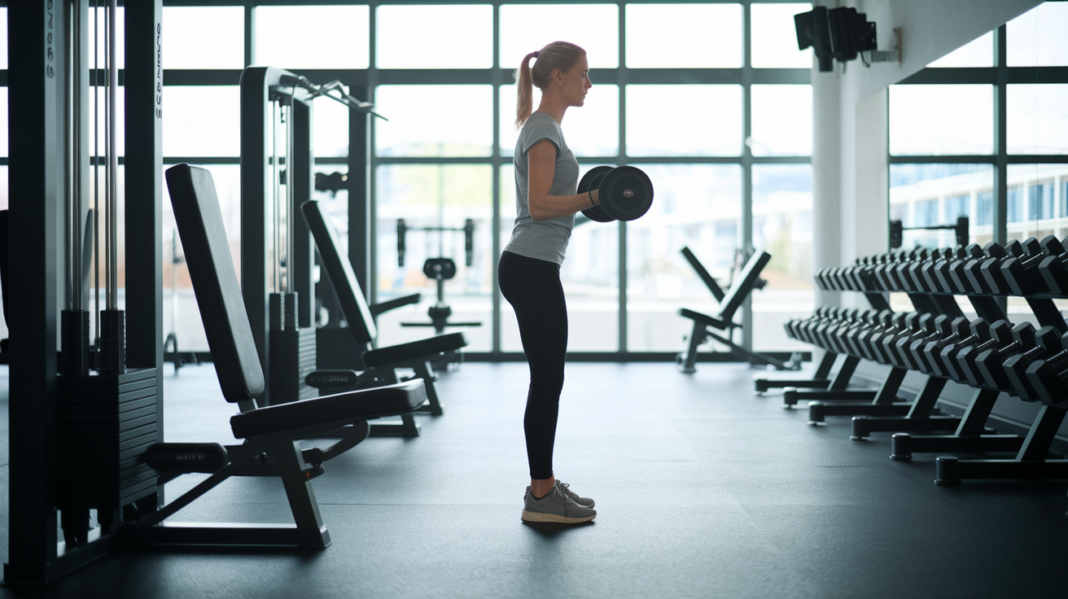
Cable Bicep Curl: Stand upright, elbows pinned to your sides. Curl the bar or rope toward your shoulders, pause briefly, and lower slowly. No swinging.
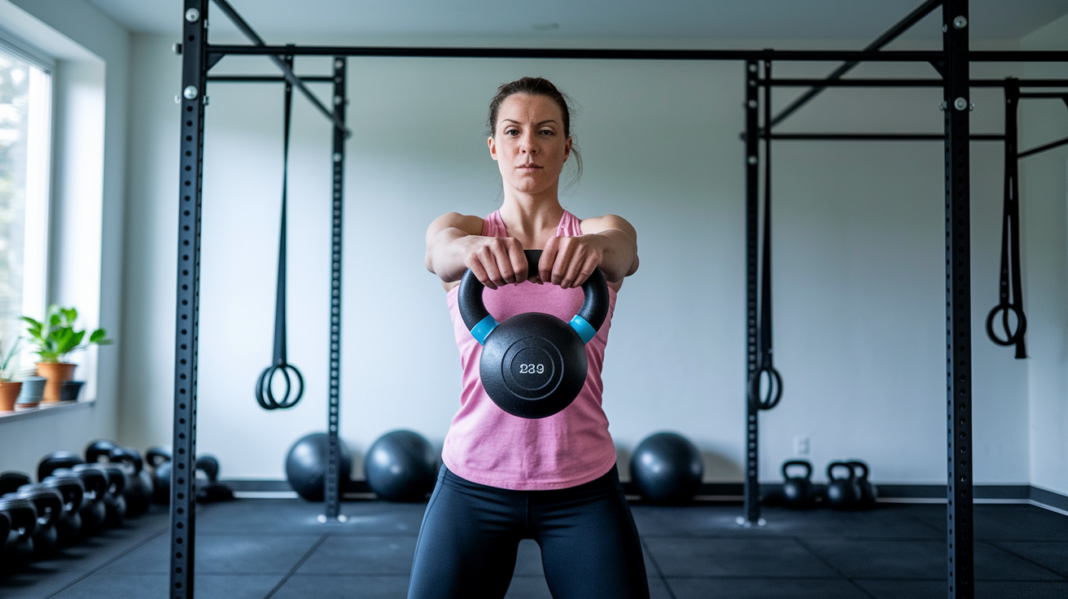
Dumbbell Goblet Squat: Hold one dumbbell vertically at chest height, elbows pointing down. Squat until your thighs are parallel to the floor, knees tracking over your toes, then drive through your heels to stand.
Ab Machine: Adjust the seat and pads so your elbows rest comfortably. Grip the handles, brace your abs, and crunch forward slowly. Hold the squeeze for a second, then return with control.
Plank Hold: Forearms flat on the ground, elbows under your shoulders, body in a straight line from head to heels. Don’t let your hips sag or pike up. Breathe steadily and hold.
Every rep should feel controlled. If you’re jerking the weight or losing position, drop the load and nail the movement first.
Warm-Up Routine Before the Circuit

Walk into the gym and spend five minutes getting your body ready. You don’t need anything fancy. Light movement, a few stretches, and a quick activation drill prep your muscles and lower injury risk.
Start with three to five minutes on a treadmill, bike, or elliptical at an easy pace. You’re raising your heart rate a little and getting blood flowing, not tiring yourself out. Next, do a few dynamic stretches like leg swings, arm circles, and hip openers to loosen up the joints you’re about to load. Then activate the muscles you’ll be using with a quick bodyweight drill. Ten air squats, ten push-ups against a wall, or ten slow arm raises. Finally, set your equipment and adjust the machines so you’re not fumbling mid workout.
Here’s a simple four step warm-up you can repeat every session:
Light cardio: Three to five minutes at a conversational pace on any cardio machine.
Mobility work: Leg swings front to back and side to side, arm circles, hip circles. Ten reps each direction.
Activation: Ten bodyweight squats, ten standing knee drives, ten slow shoulder raises with no weight.
Equipment check: Adjust seat heights and pin loads on the machines you’ll use first so you can move smoothly through the circuit.
This whole routine takes five minutes. It’s not exciting, but it works.
Cool-Down and Recovery Guidance

When you finish your last plank, don’t just grab your bag and leave. Spend five minutes stretching and letting your heart rate come down. Your muscles just worked hard, and a little static stretching releases tension and keeps you from feeling stiff tomorrow.
Walk slowly for two to three minutes or pedal lightly on the bike until your breathing returns to normal. Then find a quiet corner and hold each stretch for 20 to 30 seconds. Focus on the muscles you trained. Quads, hamstrings, chest, shoulders, lats, and hip flexors. No bouncing, just steady holds.
Here are five stretches that cover the whole body:
Standing quad stretch. Pull one foot toward your glutes, hold, switch sides.
Seated hamstring stretch. Sit with one leg extended, reach toward your toes.
Doorway chest stretch. Place one arm on a wall or doorframe, gently rotate your torso away.
Overhead tricep and shoulder stretch. Reach one arm overhead and pull your elbow gently with the other hand.
Child’s pose or cat cow for lower back and core.
Drink water before you leave. If you’re sore the next day, that’s normal. Move a little (walk, light stretching) rather than sitting still. Recovery happens between sessions, not just during them.
How to Adjust the Circuit for Your Fitness Level

This circuit is built for true beginners, but you can scale it up or down depending on how you feel each week. If two sets of 12 reps feels easy by week three, add a third set or bump the weight slightly. If you’re struggling to finish even one round with good form, drop the reps to eight or ten per set or use lighter resistance until your strength catches up.
Progress looks different for everyone. Some people add weight every week. Others add reps or shorten rest intervals. All of those paths work. The key is to track what you did last time and push just a little more this time without sacrificing form. Write down your weights, reps, and how the workout felt. That simple log tells you when it’s time to level up.
If the full 30 minutes feels like too much right now, cut the circuit in half. Do the first four exercises one day and the last four the next. Or run through the whole thing once instead of twice. There’s no shame in starting small and building up. Consistency beats intensity when you’re just getting going.
Equipment Overview for Beginners
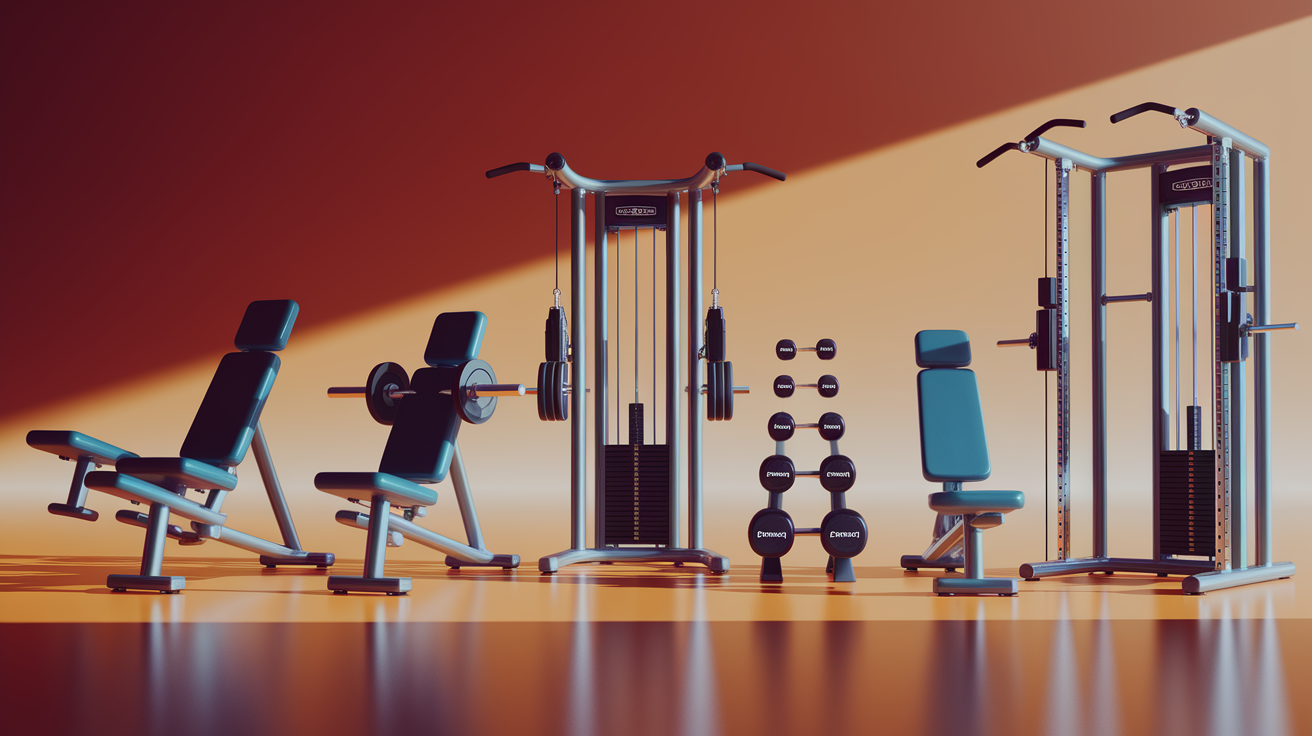
Machines and free weights each bring something useful. Machines lock you into a fixed path, so you can focus on pushing or pulling without worrying about balance. That makes them safer and less intimidating when you’re learning. Free weights (dumbbells, cables, kettlebells) force your stabilizer muscles to work, which builds coordination and functional strength.
This circuit uses both. The machines handle your big compound lifts (leg press, chest press, lat pulldown) where you want stability and can safely push a little heavier. The free weight moves (goblet squat, shoulder press) teach you to control a load in space, which transfers better to real life and keeps smaller stabilizing muscles engaged.
| Equipment | Purpose | Beginner Benefit |
|---|---|---|
| Leg press machine | Quad, glute, hamstring strength | Stable seated position; easy to adjust load |
| Chest press machine | Chest, shoulder, tricep push | Guided path reduces shoulder instability |
| Lat pulldown machine | Back and bicep pull | Knee pads secure you; simpler than a pull-up |
| Dumbbells (light pair) | Shoulder press, goblet squat | Builds balance and unilateral control |
| Cable machine | Bicep curls, rows, other pulls | Smooth, adjustable resistance; versatile |
| Ab crunch machine | Core flexion | Adjustable seat and weight; easier than floor crunches for some |
You don’t need to master every piece of equipment in the gym. These six tools cover all the major movement patterns and muscle groups. Stick with them for a few weeks, get comfortable, then branch out if you want.
Final Words
Hit the circuit now: 8 exercises alternating machines and free weights, 1–2 sets each, short rests. Start with the warm-up, focus on controlled form, and keep a steady pace.
Use the quick form cues and run the circuit in order. Cool down and stretch after. If it’s too hard, lower the weight or add rest; if it’s easy, add a rep or two.
Try the sample 30-minute beginner gym strength circuit with machines and free weights this week and aim for small, steady progress.
FAQ
Q: What is the full 30-minute beginner strength circuit?
A: The 30-minute beginner strength circuit is a ready-to-do sequence of eight exercises mixing machines and free weights, 1–2 sets each, minimal rest, designed to build strength and stamina in one gym session.
Q: How do I run the circuit—order, rest, and pacing?
A: To run the circuit, follow the exercise order, rest 30–60 seconds between moves, keep a controlled tempo, do 1–2 sets each, and move briskly to finish within 30 minutes.
Q: What warm-up should I do before the circuit?
A: The warm-up before the circuit should be 5–7 minutes: light cardio, joint mobility, muscle activation drills, and quick equipment setup—each step about 30–90 seconds to raise heart rate and prep muscles.
Q: What cool-down and recovery should I do after the circuit?
A: The cool-down after the circuit should be 5–8 minutes of gentle walking or slow cardio, then 4–5 static stretches holding 20–30 seconds; hydrate, rest well, and note any unusual pain.
Q: How can I scale the circuit for my fitness level?
A: You scale the circuit by increasing weight, reps, or reducing rest to progress, or regress with lighter loads, machine assistance, fewer sets, or longer rest—change one thing at a time.
Q: Which machines and free weights are used and why are they good for beginners?
A: The workout uses selectorized machines, cable pulls, dumbbells, and leg press; machines add stability and guide movement, while dumbbells build balance, control, and functional strength for everyday tasks.
Q: How many sets and reps should beginners use?
A: Beginners should use 1–2 sets per exercise with moderate weight, aiming for 8–12 reps on most moves or 10–15 on machine-assisted exercises to learn form and build base strength.
Q: What simple form tips should I focus on for each movement?
A: Focus on stable posture, a braced core, controlled tempo, safe joint alignment, and full range of motion; cue specifics include neutral spine for lifts and knees tracking over toes for squats.
Q: What if I only have 15 minutes for this workout?
A: If you only have 15 minutes, pick four compound exercises, do one set each with minimal rest, keep intensity steady, and prioritize big moves: squat, push, pull, and hinge.