
What if you could get stronger and cut your workout time in half?
Sound too good? It isn’t.
Circuit strength training strings together heavy lifts with short rests so you keep load and progress like normal strength work, but work faster and get a cardio boost too.
This post shows the benefits, how to pick exercises, sample workouts from beginner to advanced, and exactly how to start safely so you don’t waste time or technique.
By the end you’ll know how to build a simple, time-smart strength circuit that fits your schedule.
Comprehensive Breakdown of Circuit Strength Training Fundamentals

Circuit strength training sequences multiple resistance exercises back to back with minimal rest between movements. You do one set of each exercise in order, then repeat the whole thing. Usually three rounds total. Each circuit typically includes 3 to 10 exercises, and you rest 30 to 60 seconds between individual movements. Rest between complete circuits can stretch to 2 or 3 minutes when you need it.
Resistance circuits are different from cardio circuits because they emphasize load, progressive overload, and strength rep ranges. A cardio circuit might use light dumbbells for high-rep metabolic work. A strength circuit uses loads that match your training goal. Heavy weights (85% or more of your 1-rep max) for strength work, or moderate loads (65 to 85%) for hypertrophy. The exercise selection, sets, reps, and tempo all stay consistent with conventional strength programming. You’re just changing the rest structure.
Research shows that circuit sessions reduce total workout time by 35 to 60% compared to straight-set training while delivering matched training volume. When load, sets, reps, and tempo are held equal, circuits produce similar long-term gains in muscle size, maximal strength, and power. The time savings come from overlapping rest periods. While one muscle group recovers, you’re training another.
Key characteristics that define strength circuits:
- Exercises performed in fixed sequence with short inter-exercise rest (30 to 60 seconds recommended)
- Minimal downtime increases training density and cardiovascular demand during the session
- Full body or balanced movement pattern coverage across the circuit to allow localized muscle recovery
- Load and rep ranges aligned with your specific goal (strength, hypertrophy, or power)
- Progressive overload applied through the same methods used in straight-set programs (adding weight, reps, or sets over time)
Practical Structure for Strength-Based Circuit Training Sessions

A properly designed circuit requires at least three exercises. Using only two movements doesn’t allow enough recovery time for the same muscle groups between sets. You’ll fatigue too quickly and compromise performance. Three exercises provide adequate rotation, and most people find that three to five exercises per circuit hits the sweet spot for balancing recovery, session density, and total work completed.
When training variables (load, sets, reps, and lifting tempo) are matched to conventional programming, circuits produce similar hypertrophy and strength outcomes over 6 to 15 weeks. The structural difference is rest distribution. You rest 30 to 60 seconds between exercises within a circuit, then take a longer break of 2 to 3 minutes between full rounds if needed. Most strength sessions target 15 to 25 total work sets, so a three-exercise circuit might include 5 to 8 sets per movement. A five-exercise circuit drops to around 3 to 5 sets per movement to keep total volume in range.
Your session time will typically fall between 20 and 50 minutes for a well-designed strength circuit, excluding warm-up. If a session stretches beyond 60 minutes, you’re either resting too long or using loads that are too heavy for the circuit format. Adjust rest periods or reduce the load slightly to maintain the intended pace without sacrificing technique.
| Exercise Count | Recommended Use | Notes |
|---|---|---|
| 3 exercises | A/B split structure, 4+ days/week | Perform each circuit twice weekly; allows higher sets per movement (5–8 work sets) |
| 4 exercises | Same circuit each session, 3+ days/week | Often includes one whole-body lift or loaded carry; moderate sets per movement (4–6 work sets) |
| 5 exercises | Same circuit each session, 3–5 days/week | Covers all major patterns; fewer sets per movement (3–5 work sets) to control fatigue |
Exercise Selection Principles for Effective Strength Circuits

Prioritize multi-joint compound movements that recruit large muscle groups and deliver the most strength transfer. Squats, rows, deadlift variations, overhead presses, bench presses, and pull-ups form the foundation of effective strength circuits. These exercises allow you to use meaningful loads and build both strength and work capacity across major movement patterns.
Power circuits can include explosive lifts like hang cleans, snatches, kettlebell swings, or plyometric movements such as box jumps and medicine ball slams. When you’re programming power work, make sure rest periods are long enough to maintain velocity and output. Short rest works for hypertrophy or conditioning, but true power development requires fuller recovery between high-intensity efforts. Circuits are adaptable to bodyweight-only sessions, dumbbell or kettlebell setups, resistance bands, or full barbell and machine access. You can design effective training around the equipment available to you.
Movement patterns to cover across your circuits:
- Vertical push (overhead press, push press, handstand push-up)
- Vertical pull (pull-up, chin-up, lat pulldown)
- Horizontal push (bench press, floor press, push-up variations)
- Horizontal pull (bent-over row, inverted row, single-arm dumbbell row)
- Squat pattern (front squat, goblet squat, back squat, split squat)
- Hinge pattern (deadlift, Romanian deadlift, kettlebell swing, good morning)
Sample Full-Body Circuit Strength Training Workouts (Beginner to Advanced)
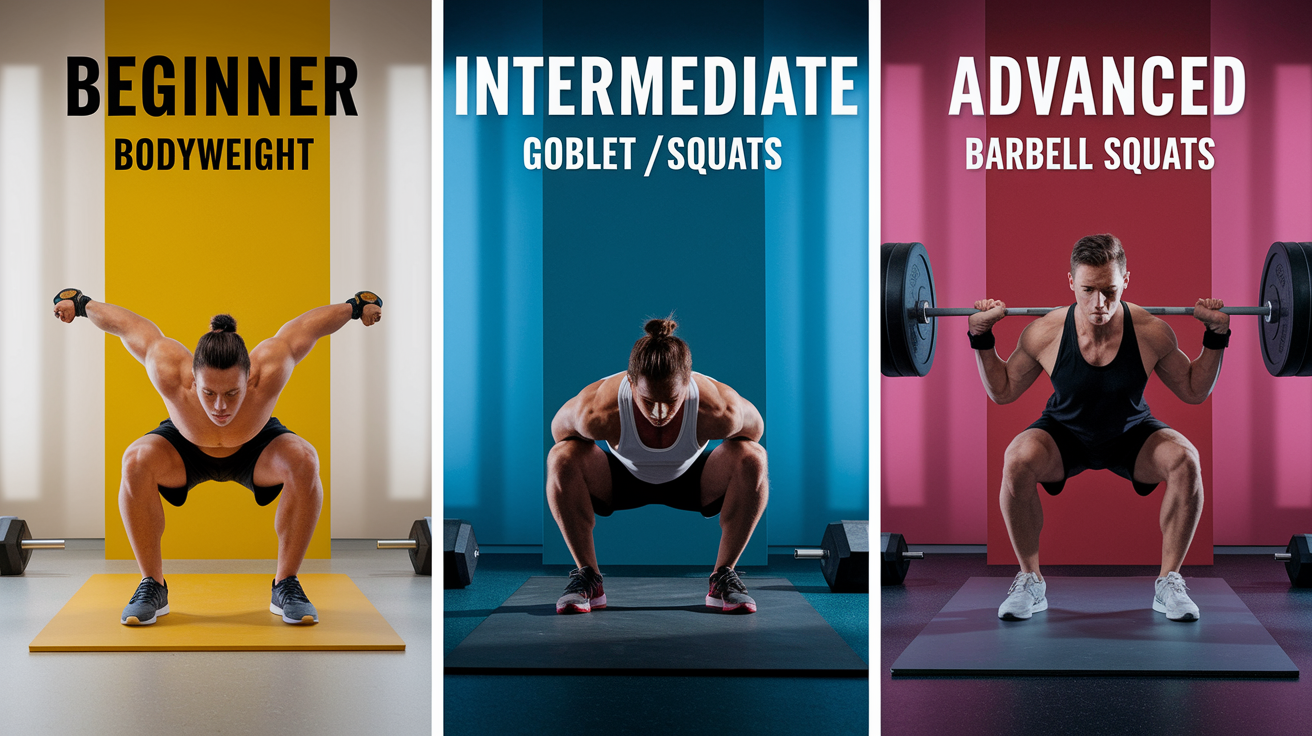
Beginner Bodyweight Circuit (3 rounds, 30 to 60 seconds rest between exercises):
- 15 bodyweight squats
- 10 push-ups (elevate hands on a bench or box if needed)
- 10 walking lunges per leg
- 10 inverted rows using a bar or table edge
- 20-second plank hold
- 20 jumping jacks
- Rest 2 minutes, then repeat
Intermediate Dumbbell and Kettlebell Circuit (3 rounds, 45 seconds rest between exercises):
- 10 goblet squats (moderate kettlebell or dumbbell)
- 8 overhead presses per arm (single dumbbell or kettlebell)
- 10 Romanian deadlifts (pair of dumbbells or single kettlebell)
- 8 bent-over rows per arm (dumbbell)
- 6 reverse lunges per leg holding dumbbells at sides
- 15 kettlebell swings or dumbbell swings
- Rest 2 to 3 minutes, then repeat
Advanced Barbell-Based Strength Circuit (3 rounds, 60 seconds rest between exercises, loads >85% training max):
- 4 front squats
- 3 bench presses
- 4 trap-bar or barbell deadlifts
- 3 barbell rows (Pendlay or bent-over style)
- 2 push presses
- Rest 3 minutes, then repeat
This advanced example uses a lower rep range (2 to 4 reps per set) with heavier loads to target maximal strength. Expect higher perceived exertion and elevated heart rate compared to conventional straight-set training at the same load.
Comparing Circuit Strength Training to Conventional Strength Training

When exercise selection, load, sets, reps, and tempo are matched, circuit training produces similar long-term outcomes in muscle hypertrophy, 1-rep max strength, peak power, and functional performance. Multiple studies lasting 6 to 15 weeks report no meaningful differences in lean body mass gains, strength improvements, or agility between circuit and conventional groups. The main advantage of circuits is time. Participants complete the same total work in 35 to 60% less session time.
Circuits do create higher cardiovascular and metabolic demands during the workout. Heart rate, oxygen consumption, and blood lactate levels all run higher in circuit sessions compared to conventional training with long rest periods. You’ll feel more winded and experience greater cardiovascular stress, even though the resistance work itself remains comparable. Some research shows slightly higher immediate peripheral fatigue and reduced maximal voluntary contraction right after a circuit, but this short-term fatigue doesn’t impair long-term strength development.
Older adults and clinical populations can benefit from strength circuits, with some evidence showing greater improvements in lower-body power and functional tests like the Short Physical Performance Battery in circuit groups compared to conventional formats. But the higher cardiovascular strain means you should monitor intensity carefully if you have cardiovascular concerns or are new to high-density resistance training.
Key comparison points:
- Long-term muscle and strength gains are similar when training volume and load are equated between formats
- Circuits cut total session time by roughly one-third to one-half while preserving training stimulus
- Heart rate and oxygen demand run higher throughout circuit sessions, adding a conditioning component
- Immediate post-session fatigue (measured by maximal voluntary contraction) can be slightly higher in circuits, but doesn’t affect recovery or next-session performance when rest days are adequate
- Circuit training allows simultaneous strength and cardiovascular adaptation, making it efficient for general fitness and fat loss goals
Safety, Technique, and Fatigue Management in Circuit Strength Training

The elevated heart rate and metabolic stress in circuits can feel intense, especially during the first few sessions. Expect a 2 to 4 session adaptation period where perceived exertion and breathing demand will be higher than you’re used to, even with familiar loads. Start conservatively with slightly lighter weights than you’d use for straight sets, and give your body time to adjust to the pacing before pushing loads or volume.
Technical quality must remain non-negotiable. Fatigue accumulates quickly in circuits, and rushing between exercises or cutting rest too short can degrade lifting mechanics. If you notice form breaking down (rounding in the lower back during deadlifts, elbows flaring excessively on presses, or knees caving on squats), either reduce the load, extend rest periods, or end the session. Circuits should challenge your work capacity, not compromise movement safety.
Safety and management guidelines:
- Perform a thorough 5-minute warm-up including dynamic movements and light sets of the exercises you’ll use in the circuit
- Choose loads that let you complete all prescribed reps with controlled tempo and proper form across all rounds
- If cardiovascular demand feels excessive (dizziness, nausea, inability to catch your breath during rest intervals), extend rest or reduce load
- Avoid attempting true maximal lifts (100% 1RM attempts) immediately after a high-fatigue circuit. Peripheral fatigue and lactate can impair force output
- Older adults or people returning from injury should start with bodyweight or light resistance and gradually increase load over several weeks
Progression Strategies for Long-Term Strength Gains in Circuit Training

Double Progression
Use a fixed load and a target rep range, such as 4 to 6 reps per set. Your goal is to hit the upper end of that range on all work sets with the same weight, then increase the load the following workout. For example, if you perform three rounds of a five-exercise circuit with 5 sets per movement and hit 6, 6, 6, 5, 5 reps across your sets at 200 pounds, your next session adds weight. Try 205 pounds and work back up through the range. This method works with any circuit size and is straightforward to track.
Hepburn Method
Start at roughly 80% of your 1-rep max and perform 8 work sets of 2 reps each session. Over the following weeks, convert one set at a time from doubles to triples until you’re completing 8 sets of 3 reps. Once you reach 8×3, add 2 to 3% load and reset to 8×2. This progression is especially effective with a three-exercise A/B structure where you perform each circuit twice per week. Expect to increase load every 4 to 5 weeks per movement, making it sustainable for long training blocks.
Technical Mastery with Singles
Perform many submaximal singles at 85 to 90% of your training max to practice technique and build neurological efficiency. Start with around 5 singles per movement per session, then gradually add one single each workout until you reach 10 singles. Once you hit your target volume (typically 25 to 40 total singles across the full session), add a small weight increment and reset the volume. This approach emphasizes quality of movement and is ideal when you want to refine technique under meaningful load without accumulating high fatigue.
5-4-3-2-1 Countdown
Each round of the circuit uses a different rep and load scheme. Round one uses 5 reps at approximately 80% of your training max, round two drops to 4 reps at 85%, round three to 3 reps at 90%, round four to 2 reps at 95%, and round five uses a single rep at 100% of your training max. This format works best with four or five-exercise circuits and creates high neurological demand. It’s effective for short training blocks of 6 to 8 weeks but requires planned deloads because fatigue accumulates quickly. Add load every 5 to 6 workouts when all reps across all rounds are completed with solid technique.
Final Words
Start a simple circuit: pick 3–5 compound moves, set 30–60 second rests, and aim for 3 rounds.
This article showed what a circuit is, how resistance circuits differ from cardio, how to structure sessions, choose safe exercises, and follow sample beginner-to-advanced workouts.
You also got safety tips and progression systems to keep improving without burning out.
Try one focused session this week. Circuit strength training saves time and builds strength when you manage load and fatigue. Small steps, steady wins.
FAQ
Q: Can you build strength with circuit training?
A: Circuit training can build strength by using resistance-focused circuits with compound lifts, heavier loads, short rests, and progressive overload; when volume and load match traditional training, strength gains are comparable.
Q: What is the 3 3 3 rule for weight lifting?
A: The 3 3 3 rule for weight lifting is typically three sets of three reps per exercise, a low-rep strength protocol using heavy loads to build maximal strength and reinforce lifting technique.
Q: What is the 5 5 5 30 rule?
A: The 5 5 5 30 rule commonly means a circuit-style plan: five exercises, five rounds of five reps, with about 30 seconds rest between stations to combine strength work and conditioning.
Q: Is strength training good for bone density?
A: Strength training is good for bone density because weight-bearing and resistance exercises stimulate bone growth; aim for at least two sessions per week and gradually increase load for best results.